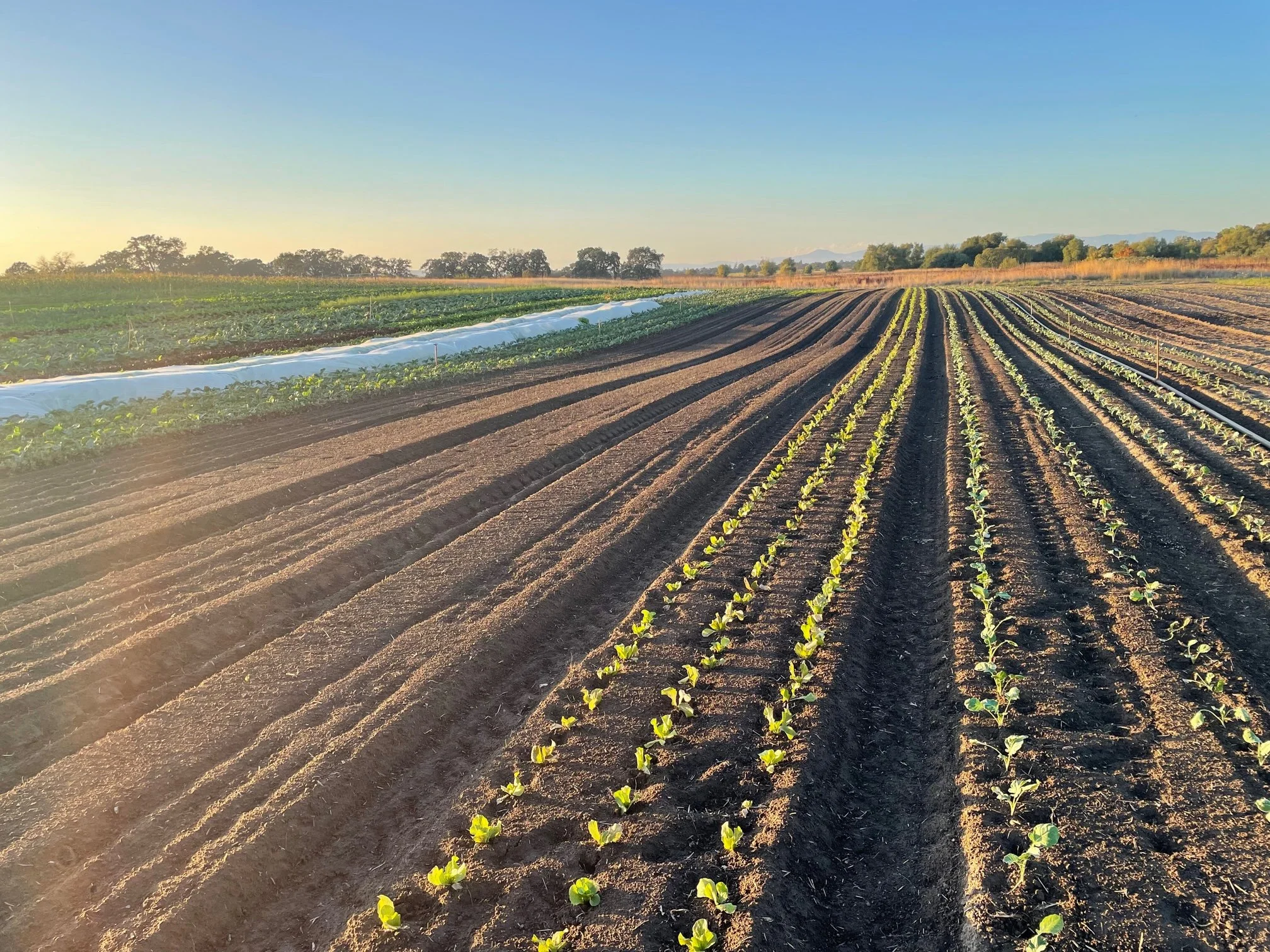
Harvest Week 19 - Leaves

THIS WEEK’S HARVEST

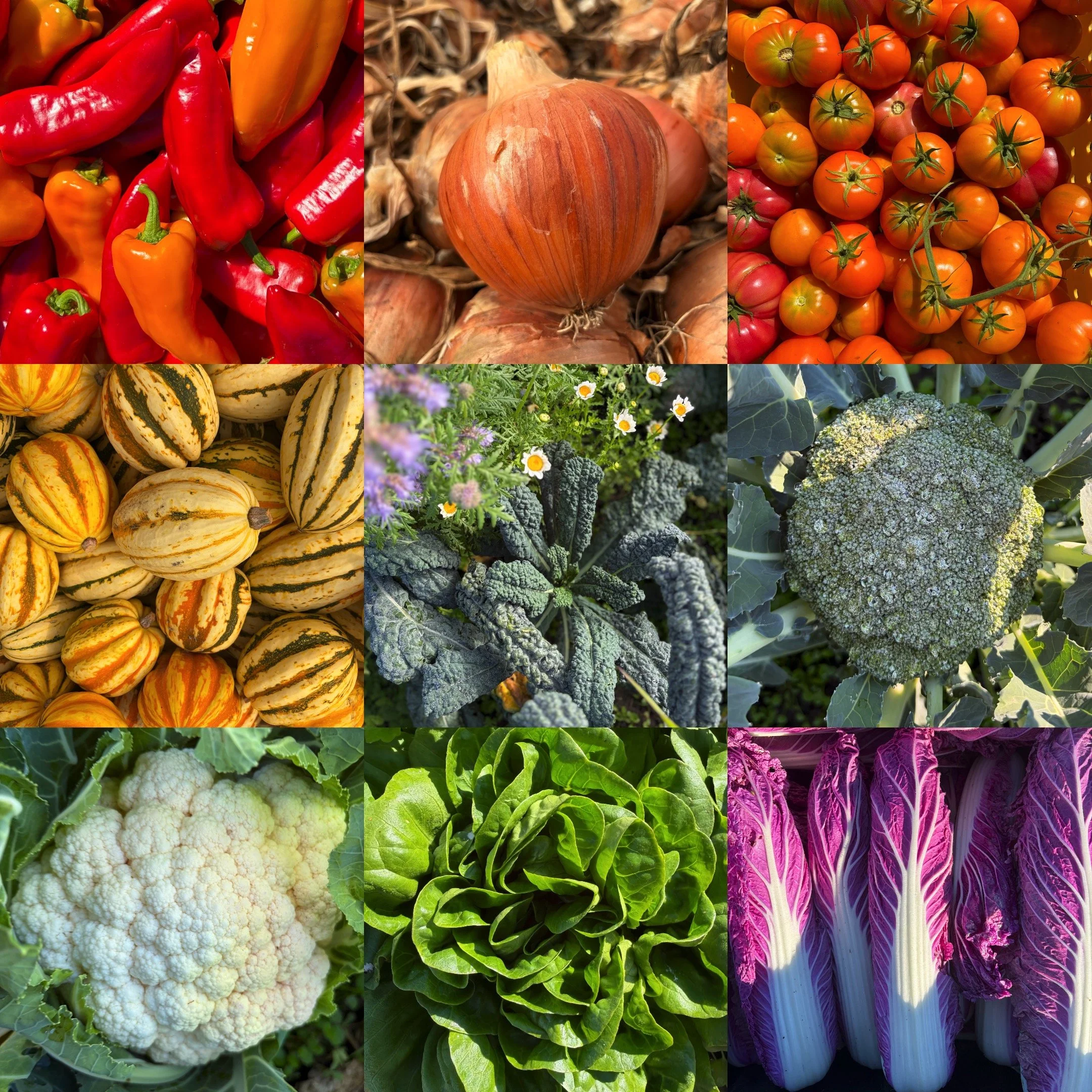
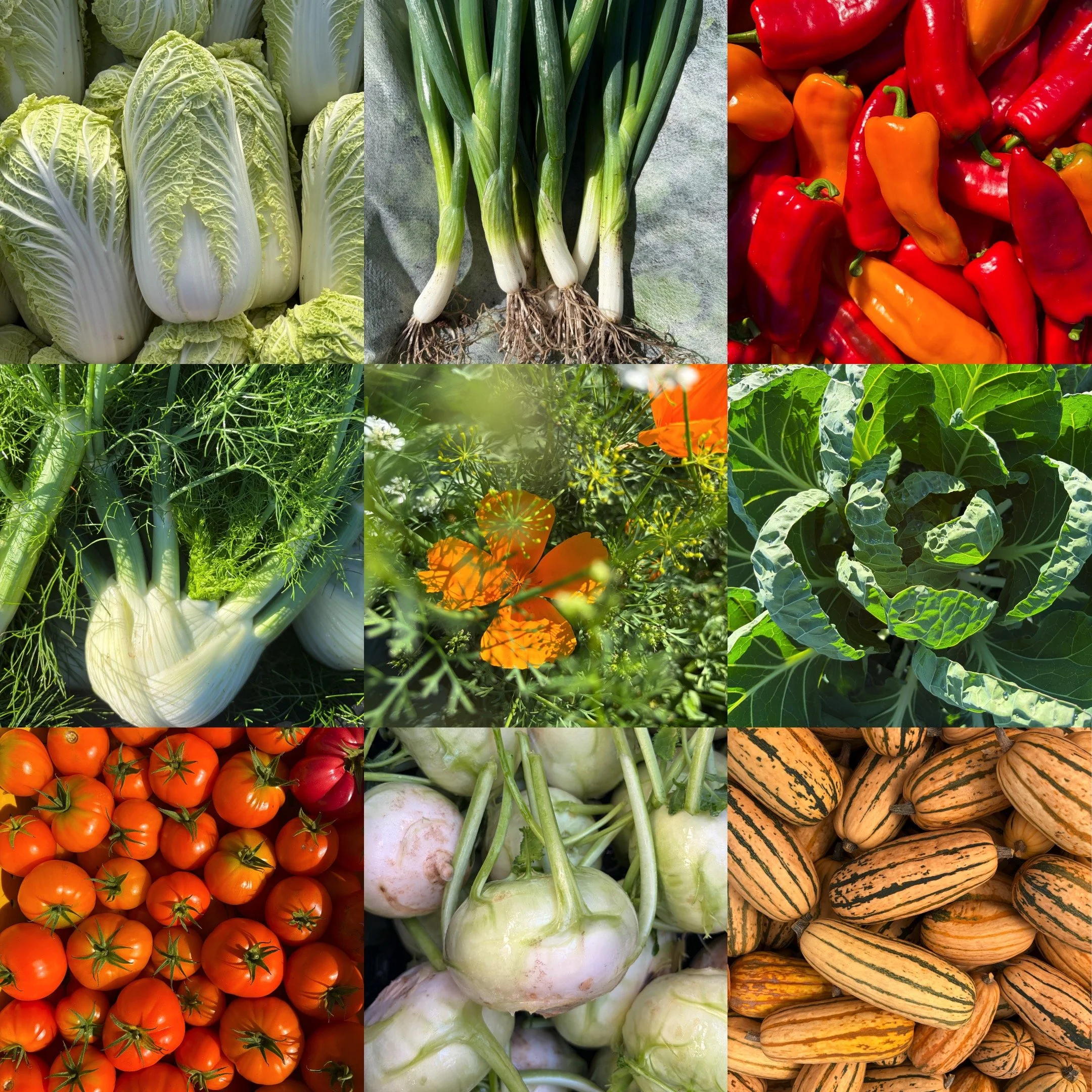
Arugula, Mustard Mix, Green Salanova Butter Lettuce, Lady Murasaki Komatsuna, Brussel Sprout Tops, Black Magic Dino Kale, Green Magic Broccoli, Cauliflower, Celery, Kohlrabi, Carrots, Yellow Onions, Huckleberry Gold Potatoes, Assorted Purple & Green Napa Cabbage, Sweet Peppers, Tomatoes (last week!), Jester Winter Squash
U-PICK

Check the u-pick board in the barn for weekly u-pick limits.

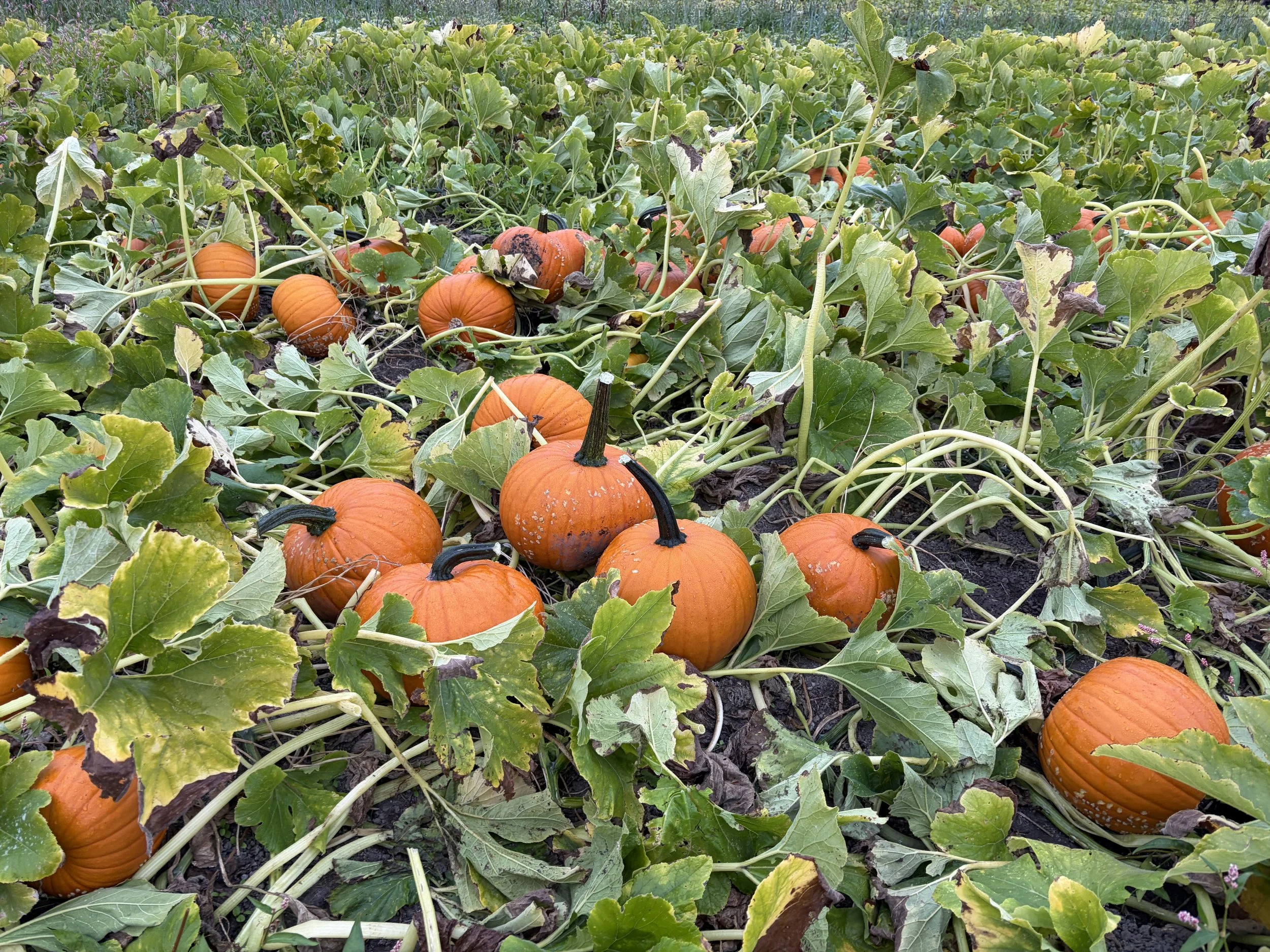
  • 🎃 Jack-o-Lantern Pumpkins 🎃: Pumpkin Limit update! We are lifting the limit on Jack-O-Lantern Pumpkins! Take what you’ll use!

  • Albion Strawberries: ✨1 pint per share✨ The strawberries are beginning to wind down but there are still some delicious berries to be had this week!

  • Cherry Tomatoes: Gleanings

  • Goldilocks Beans: Gleanings

  • Frying Peppers:

    • Padrons: Gleanings

    • Shishitos: Gleanings

  • Hot Peppers:

    • Jalapeños: Gleanings

    • Thai Chilis: No limit — take what you’ll eat!

    • Habaneros: 3 peppers per share

    • Ot Hiem Pepper: No limit — take what you’ll eat!

  • Herbs & Edible Flowers: Husk Cherries, Lemon Bergamot, Dill, Cilantro, Purple Basil, Thai Basil, Lemon Basil, Italian Basil, Tulsi, Parsley, Chamomile, Calendula, Nasturtium, Pansies/Viola, Garlic Chives, Tarragon, Thyme, Oregano, Marjoram, Lemon Balm, Lemon Verbena, Vietnamese Coriander, Shiso/Perilla, Catnip, French & Culinary Lavender, Sorrel, & Assorted Mints

  • Flowers!

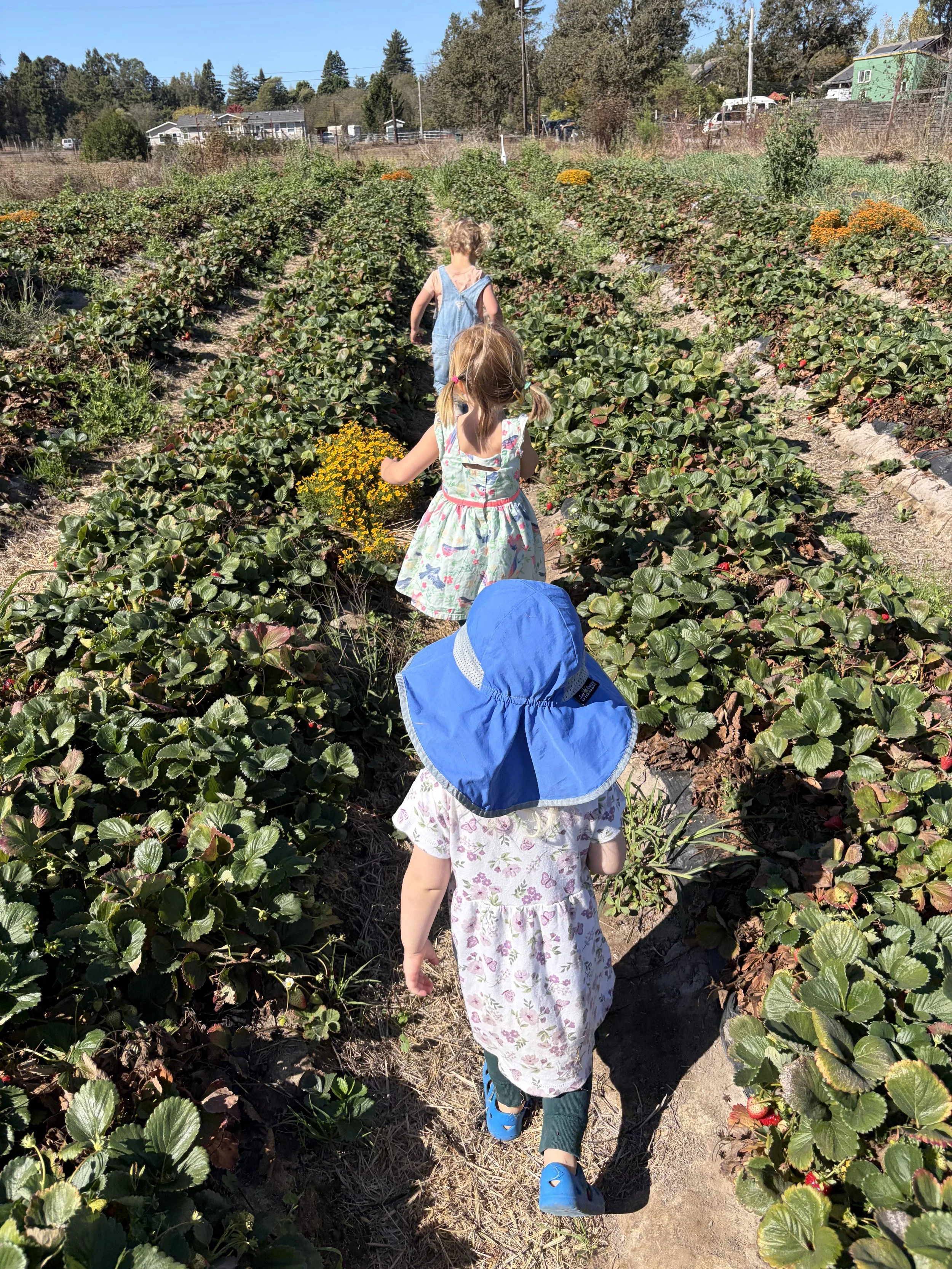
It’s been a good strawberry season.

HARVEST NOTES

  • Jester Winter Squash: These striped cuties are a delicata-type that look like a fancy acorn squash. A good Jester can be among the sweetest of squashes, and is David’s personal favorite. They’re not great keepers, so we recommend eating them soon! For the easiest preparation, cut in half, scoop out the seeds and roast, face down, until tender (adding a little water to your pan to keep the squash moist!). Unlike other Delicata, Jester skin is too thick to be edible.

  • Cauliflower: If you’re ever in doubt of what to do with cauliflower or broccoli, roast it! Just cut into florets (including the lightly-peeled stem), toss with olive oil and roast in a hot oven (anywhere from 400-450 degrees depending on how fast/crispy you want it). Or, if you’d like to try something a little more elaborate, check out the Cauliflower Ragu recipe below.

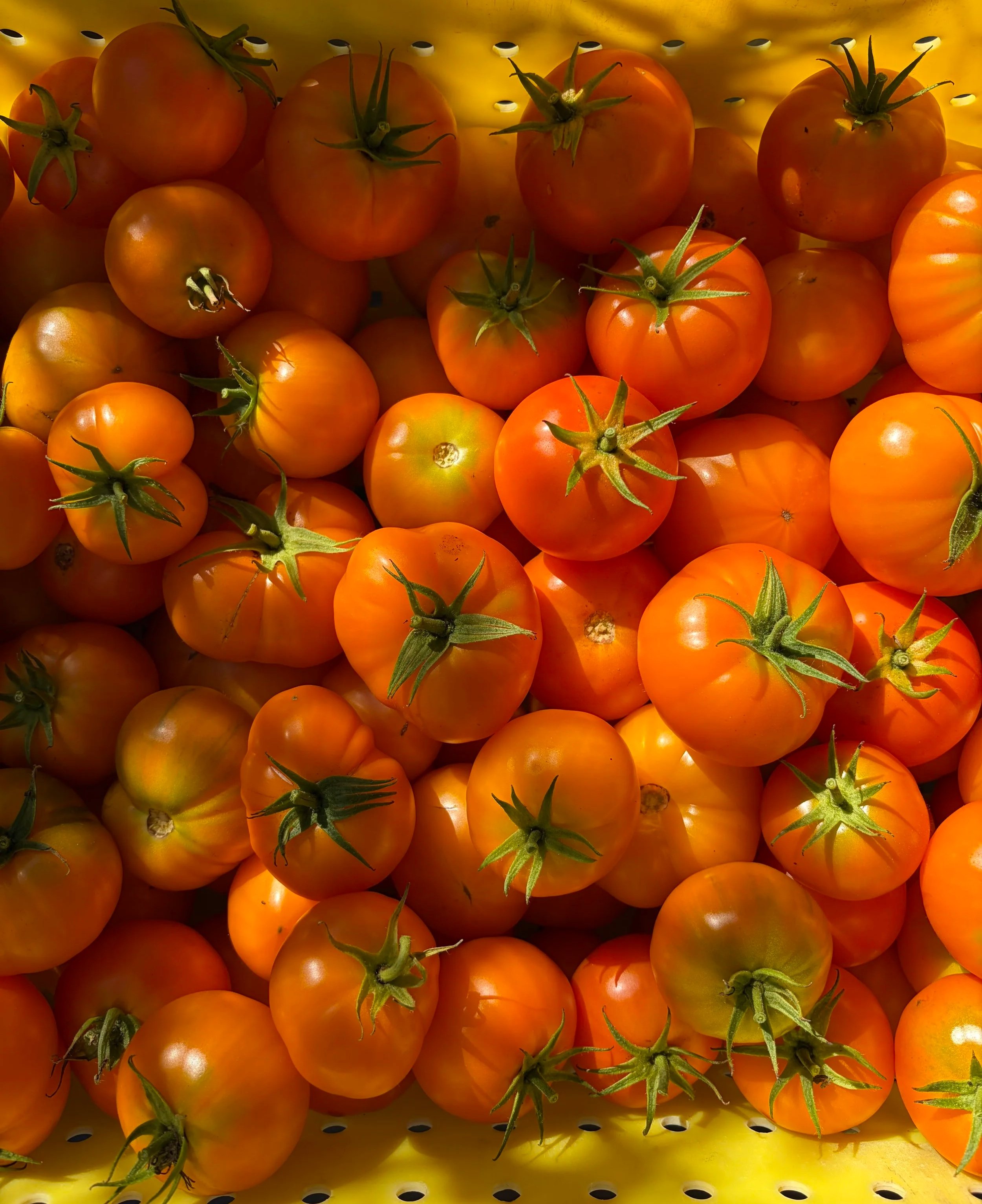
  • Last week of tomatoes! We hope you’ve indulged fully in the glory of summer tomatoes, and are ready to move into fall flavors with us, but if not, please take this week to stuff yourself to the gills. As a side note, the sweet peppers will also be leaving us soon, as they’re not a fan of the cold night temperatures we’ve been having.
CAULIFLOWER RAGÙ

From Six Seasons by Joshua McFadden

Riley just reminded us of this cozy recipe, in which you cook cauliflower down into a cheesy, winey sauce that coats your noodles perfectly.

INGREDIENTS

  • 1 large head cauliflower or Romanesco (1 1/2 to 1 3/4 pounds)

  • Extra virgin olive oil

  • 3 garlic cloves, smashed and peeled

  • 1/4 teaspoon dried chile flakes

  • 1 medium yellow onion, diced

  • 1/2 cup dry, unoaked white wine

  • 1 big sprig rosemary

  • Kosher salt and freshly ground black pepper

  • 12 ounces fusilli or other spiral- or tube-shaped pasta

  • 1 cup freshly grated Parmigiano-Reggiano cheese

  • 3 tablespoons unsalted butter

  • 1 tablespoon lemon juice

DIRECTIONS

If the cauliflower still has outer leaves and they look fresh, chop them. Cut the center stem from the cauliflower and cut the head into small florets. Chop the stem into small chunks.

Heat 1/4 cup olive oil, the garlic, and the chile flakes in a large deep skillet or Dutch oven over medium-high heat. Add about two-thirds of the cauliflower florets and chopped stems (you’ll add the last third in a bit) and the onion. Add the wine, 1 cup water, rosemary sprig, 1 teaspoon salt, and several generous twists of black pepper. Tumble everything together.

Cover the pan and adjust the heat so the mixture simmers nicely. Cook until the cauliflower is fairly tender, about 25 minutes, stirring and smashing with a wooden spoon or spatula a few times as you cook.

Add the rest of the cauliflower and 1/2 cup water and cook until the second batch of cauliflower is very tender, though it will have more tooth to it than the first batch, which should be quite sloppy by now. This second cooking should take another 20 minutes or so. The ragù at this stage should be loose but not watery, so if it seems dry or tight, add a few more spoonfuls of water.

Meanwhile, bring a large pot of water to a boil and add salt until it tastes like the sea. Add the pasta and cook until 2 minutes shy of al dente (according to the package directions). The pasta will finish cooking in the ragù. With a ladle or a measuring cup, scoop out about 1 cup of the pasta cooking water and then drain the pasta well.

Add the pasta to the ragù, along with the Parmigiano, butter, and lemon juice and fold everything together. Taste and adjust with more salt, lemon, black pepper, or cheese, and adjust the texture to make it creamy by adding a splash or two of the reserved pasta water. Serve right away.
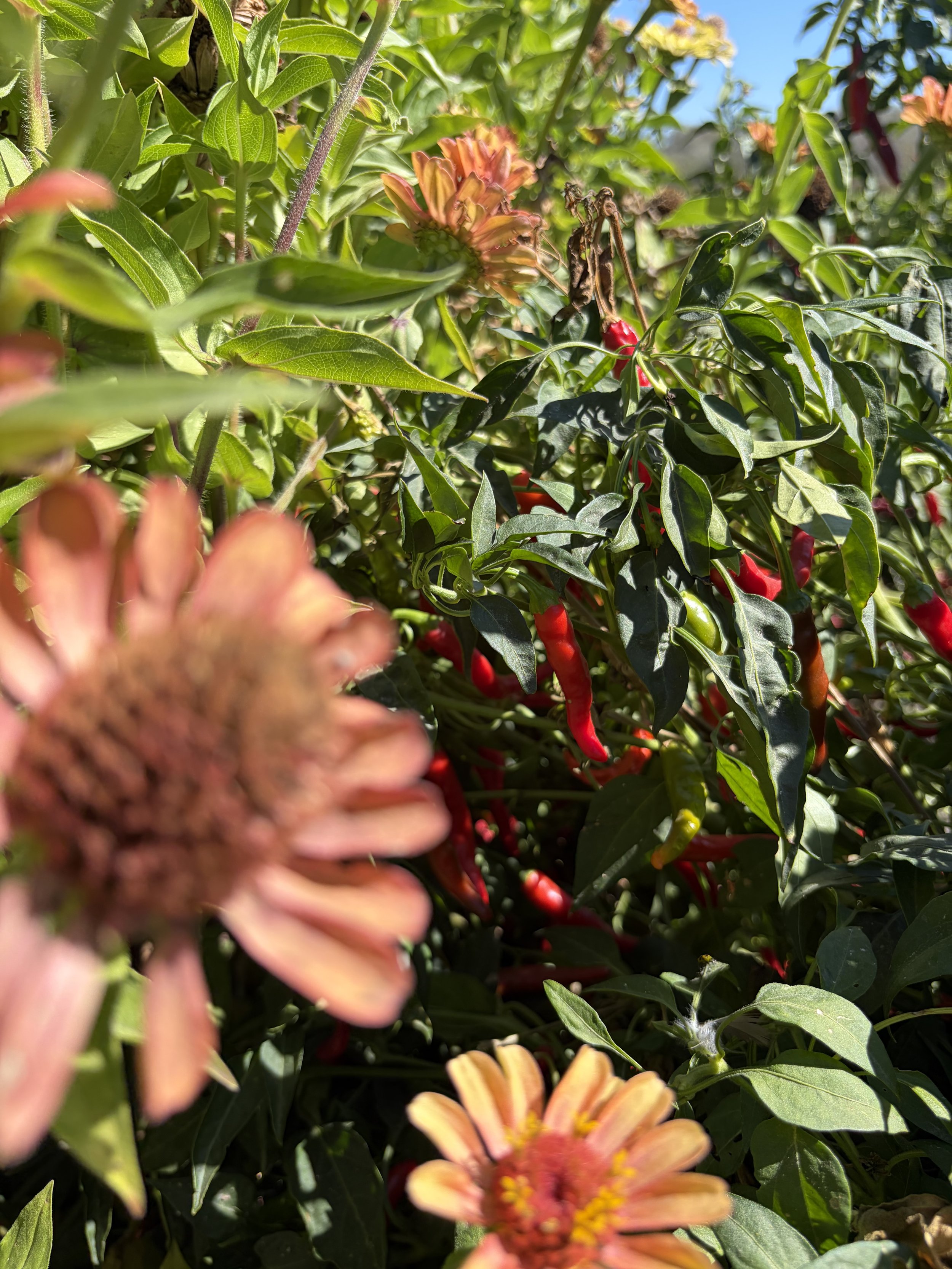
Thai Peppers and fading Zinnias.

FARMER’S LOG

In this busy week, full of bulky harvests, irrigation mainline woes, frost in the morning and heat in the afternoon, and light through the falling and fading oak leaves, we’ll leave you with this poem from one of our favorites…


* * * * *

Leaves
by Ursula K. Le Guin

Years do odd things to identity.
What does it mean to say
I am that child in the photograph
at Kishamish in 1935?
Might as well say I am the shadow
of a leaf of the acacia tree
felled seventy years ago
moving on the page the child reads.
Might as well say I am the words she read
or the words I wrote in other years,
flicker of shade and sunlight
as the wind moves through the leaves.

* * * * *

See you in the fields,
David & Kayta


CSA BASICS

Check out our Brief Membership Guide: A quick-reference on the essentials of being a member.

Harvest pick-up times:

  • Friday harvest pick-ups run from 1:00 pm - 6:00 pm

  • Saturday harvest pick-ups run from 9:00 am - 2:00 pm

  • Tuesday harvest pick-ups will run from 1:00 pm - 6:00 pm

U-pick hours: Oriented members can come to the farm any time, 7 days a week, sunrise to sunset, to u-pick and enjoy the farm.

2026 CSA program dates: This year’s harvest season will run from Friday, June 12th through Tuesday, December 8th this year.

Where is the farm? The member parking lot is located at 1720 Cooper Rd., Sebastopol, CA 95472.

Slow on Cooper Rd. Please drive slowly on Cooper Road — 20 mph. It's a neighborhood with lots of kids and animals who generously share the road with us.
Harvest Week 18 - Squash Courtship

THIS WEEK’S HARVEST

Mustard Mix, Green Little Gem Lettuce, Cherokee Lettuce, Brussel Sprout Tops, Fennel, Kohlrabi, Carrots, Assorted Onions, Masquerade Potatoes, Napa Cabbage, Daikon Radish, Scallions, Sweet Peppers, Tomatoes

U-PICK

Check the u-pick board in the barn for weekly u-pick limits.

  • 🎃 Jack-o-Lantern Pumpkins 🎃: SEASON LIMIT: 2 per share, or 1 per child for households with more children. We have enough pumpkins that households that are alternating weeks can also take 2 per share or 1 per child! Follow the map by the barn entrance to find the pumpkins!

  • Albion Strawberries: ✨1 pint per share✨

  • Cherry Tomatoes: Gleanings

  • Goldilocks Beans: No limit — take what you’ll eat!

  • Frying Peppers:

    • Padrons: Gleanings

    • Shishitos: No limit — take what you’ll eat!

  • Hot Peppers:

    • Jalapeños: Gleanings

    • Thai Chilis: 20 peppers per share

    • Habaneros: 3 peppers per share

    • Ot Hiem Pepper: No limit — take what you’ll eat!

  • Herbs & Edible Flowers: Husk Cherries, Lemon Bergamot, Dill, Cilantro, Purple Basil, Thai Basil, Lemon Basil, Italian Basil, Tulsi, Parsley, Chamomile, Calendula, Nasturtium, Pansies/Viola, Garlic Chives, Tarragon, Thyme, Oregano, Marjoram, Lemon Balm, Lemon Verbena, Vietnamese Coriander, Shiso/Perilla, Catnip, French & Culinary Lavender, Sorrel, & Assorted Mints

  • Flowers galore!

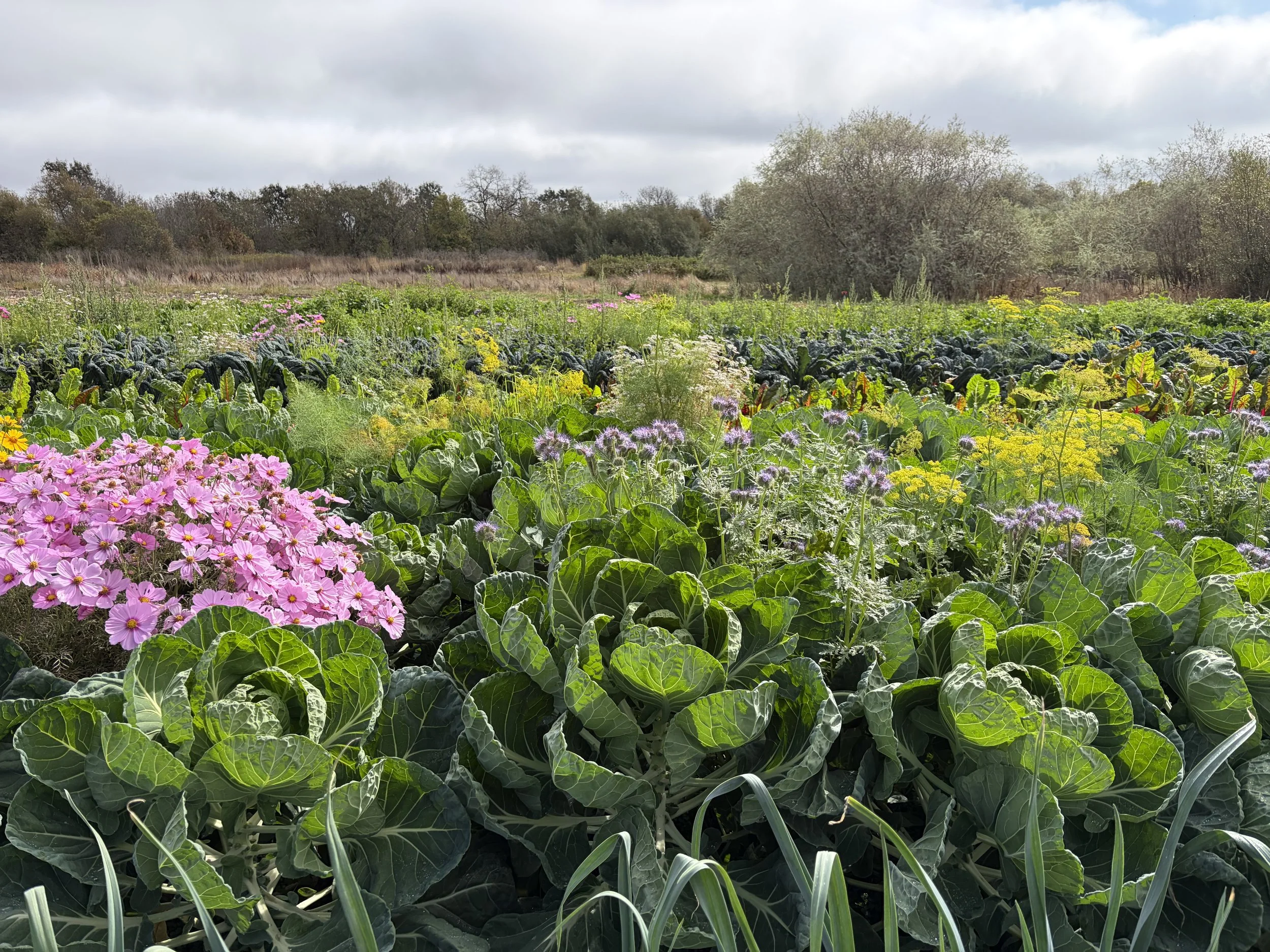
Brussel sprout tops in the field.

HARVEST NOTES

  • Brussel Sprout Tops: Each year around this time we trim the tops off of the Brussel Sprout plants to spur the sprouts to size up evenly. This annual necessity has the delicious benefit of giving us delicate bunches of cooking greens with that lovely Brussel Sprout flavor. Use as you would kale or collards. We love them sautéed with lots of garlic.

  • Honey Boat Delicata Winter Squash: Delicata are a perennial favorite of ours. Versatile, and sweet, they even have edible skins. For the easiest preparation, cut in half, scoop out the seeds and roast, cut-side down, until tender (adding a splash of water to your pan keeps the squash moist!). They are also delicious cut into rings or half circles, tossed with an oil of your choice (coconut is particularly scrumptious) and then roasted until caramelized. Enjoy!

Pumpkin patch at sunrise.

BRUSSEL SPROUT TOPS & DELICATA SALAD

Adapted from NYTimes Cooking

This perfect fall salad was originally written for kale, but we’ve subbed in Brussel sprout tops here. The almond butter dressing brings a creamy richness to tie everything together. If you’d like, embellish with salty cheeses, fresh herbs (parsley would be particularly delicious) or toasted nuts.

INGREDIENTS

  • 1 ½ pounds Delicata, halved lengthwise, seeded and sliced crosswise ½ inch thick (peel lightly if you prefer)

  • 2 tablespoons extra-virgin olive oil

  • Kosher salt

  • 2 crisp eating apples such as Honeycrisp or Pink Lady

  • 1/2 small red onion, or 1 bunch of scallions, thinly sliced

  • 1 teaspoon lemon zest plus ¼ cup fresh lemon juice (from about 2 lemons)

  • 1 large bunch Brussel Sprout tops (about 1 pound), ribs removed and leaves sliced about ¼ inch thick

  • ¼ cup almond butter

  • 1 teaspoon Dijon mustard

  • ½ teaspoon black pepper or red-pepper flakes, plus more to taste

    DIRECTIONS

  1. Place a rack in the bottom third of the oven and heat the oven to 425 degrees. Toss the squash with the olive oil and a generous sprinkling of salt, then spread into an even layer and roast until tender and browned underneath, 15 to 25 minutes. Remove from the oven and cool.

  2. Meanwhile, core the apples and slice ¼ inch thick. In a large bowl, toss together the apples, onion or scallions and 2 tablespoons lemon juice. Add the brussel sprout tops, season generously with salt, then toss.

  3. In a small bowl, stir together the lemon zest and remaining 2 tablespoons lemon juice with the almond butter, Dijon mustard and black pepper. Stir in enough water until it’s pourable (about ¼ cup, depending on the almond butter; the mixture will thicken at first, but when enough water is added, it will loosen). Season the dressing to taste with salt and pepper.

  4. When the squash is cool enough to handle, add it to the kale mixture. Drizzle with most of the dressing. Toss until coated, adding more dressing as needed. Taste and adjust seasonings with more salt and pepper. (To make ahead, refrigerate the dressing and salad separately for up to 3 days. Adjust thickness and flavor of dressing with salt, pepper and lemon juice, then toss.)

TIPS ON SELECTING THE TASTIEST WINTER SQUASHES

POV: You approach a macro-bin of West County Winter Squash in the barn with hundreds of edible orbs. Which will you choose!?

Selecting a sweet, ripe winter squash is a little like selecting a ripe melon; you never really know what lies within until you take a bite, but you can take certain cues from the outside of the squash to make sure you get a sweet one.

In general, it is best to select squashes with rich color and deep, warm hues like oranges and reds. Bonbon Buttercup, for example, is a dark green squash but tends to be sweetest when it has a nice deep orange spot on one side. Sunshine Kabocha is best when a deep orange-red. A nice golden-brown-orange Delicata will likely be much tastier than a paler green compadre.

We try to avoid harvesting or putting out unripe squash, but in general, avoid squash that are pale or green. Go for the warm colors!

A vine-ripened, locally grown winter squash will be delicious just roasted and appreciated unadorned.

FARMER’S LOG

AN ODE TO WINTER SQUASH

This week on the farm we made a big push to finish clipping the last of our 2026 winter squash.

A few weeks ago, we penned an ode to the mighty potato. This week we save one for the beloved oldest-domesticated of the three sisters — the winter squash.

She takes on infinite forms, from voluptuous to svelte; from burning red to the palest blue. She has been kindling a loyal love in humanity's heart for over 10,000 years.

The ancestral plants of what we call squash (the species including zucchini, melons, gourds, cucumbers, pumpkins, and all winter squash) are millions of years old and native to the Americas. The earliest evidence for human domestication dates back 10,000 years to southern Mexico, earlier than the domestication of corn or beans.

Word travelled fast and inspiration abounded. By 2,000 B.C., squash had become a part of life for almost every Native American culture from Southern Canada to Patagonia. (The English word "squash" comes from the Narragansett word askutasquash, meaning fresh vegetable, and similar words can be found in the Algonquian language family.) Squash varieties were developed and cherished for everything from their protein-rich and medicinal seeds to their sweet flesh and winter-hardy skins. Botanists note at least six separate domestication events occurring in the Americas.

Here at West County Community Farm, the human + squash love affair burns bright — and we're lucky to have at our fingertips the unparalleled modern library of heirloom squash seeds to explore. Over the winter, Kayta hunkered down with a seed catalogue and a good cup of coffee and laid out a season-long love sonnet to squash: We felt the summer wind with a cool slice of Persian cucumber; we dined by candlelight over pasta with Costata Romanesca zucchini; and once we tasted a Sarah's Choice cantaloupe, we could never forget.

But in the winter, our true love came — the winter squash.

We'll have a new squash for you to get to know almost every week from now until our last CSA pickup day, December 8th. Allow us to introduce you…

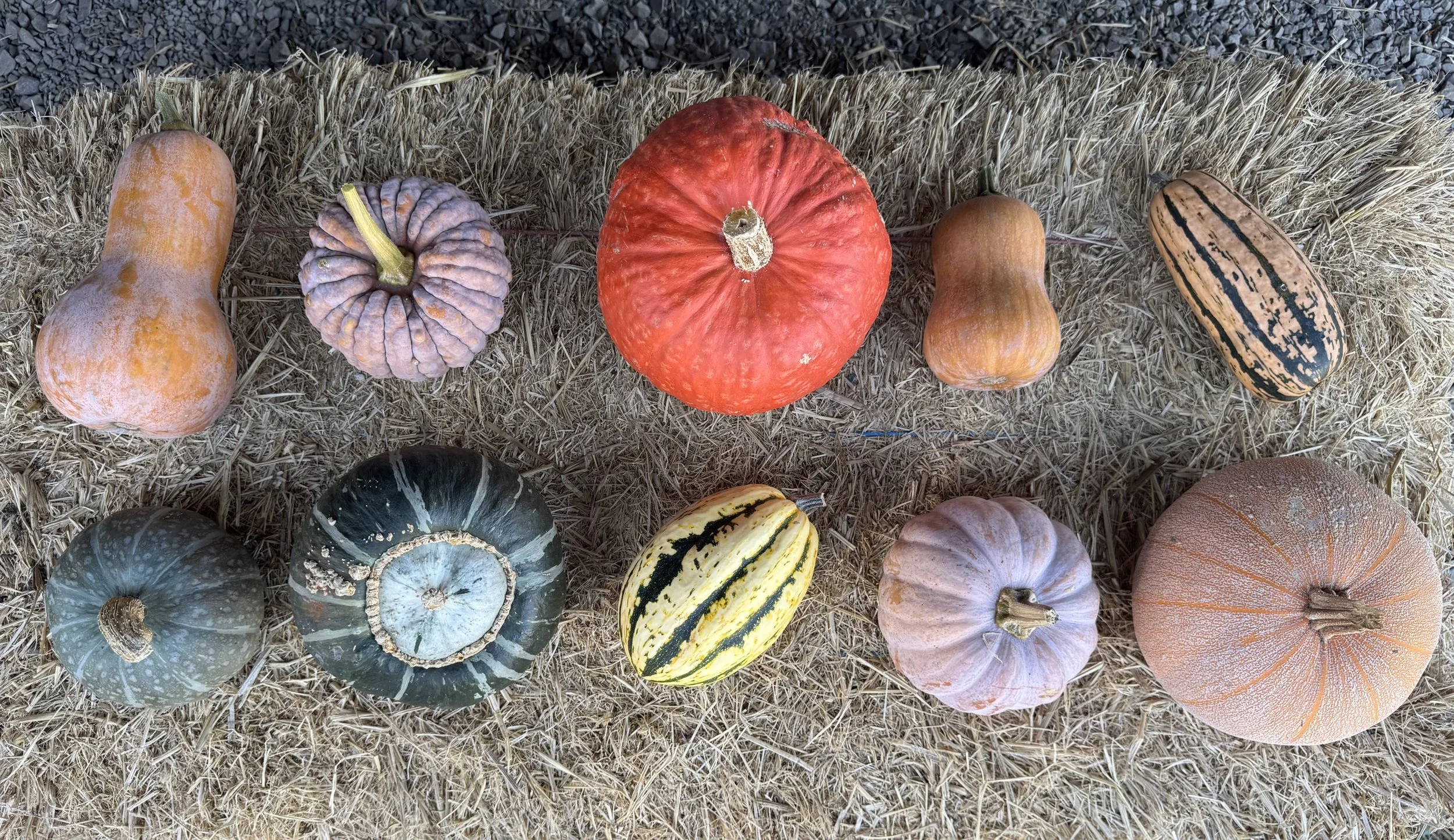
Top row from L to R: Sonca Orange Butternut, Black Futsu, Sunshine Kabocha, Honeynut Mini-Butternut | Bottom row L to R: Sweet Jade, Bon Bon Buttercup, Jester, Koginut, Winter Luxury Sugar Pie Pumpkin *NOT PICTURED = Jack-O-Lantern pumpkins. Don’t bother cooking or making those into pie, they are bred for their size, not for taste, and any of the squash above will make a much better pie filling than the Jack-O-Lantern pumpkins. Our favorites for pie are Sunshine Kabocha and Winter Luxury Sugar Pie Pumpkins, which we’ll distribute at Thanksgiving..

  • Sonca Orange Butternut: This Hungarian variety, new to us this year, whose name apparently translates to 'ham pumpkin,' comes recommended by our amazing neighbor, farmer, and seed saver Sara McCamant, who was raving about its unparalleled sweetness to us last winter. We can't wait to taste it.

  • Black Futsu: A beloved Japanese delicacy, this bite-sized, mini Butternut relative has bright orange flesh with unique fruity flavor and edible skin with a gorgeous frosted look.

  • Sunshine Kabocha: The village beauty. A fiery-red Kabocha squash with sugar-sweet and flaky flesh. An all-time farmer favorite that can be cooked any which way. Exceptional for pumpkin pie and straight roasted eating.

  • Honeynut Butternut: A highly educated squash developed by the Cornell Vegetable Breeding Institute. We fell in love with its deep orange, sweet flesh and beauty when we grew it for the first time last year.

  • Delicata: A real heartbreaker. The sweetest. Easiest to cook, even easier to eat.

  • Sweet Jade: A real cutie — a personal-sized grey-green Kabocha.

  • Bonbon Buttercup: The girl next door. Unassuming, humble, and cute as a button. Bonbon Buttercup is, in farmer David's opinion, the best squash ever. Marriage material.

  • Jester Acorn: A Delicata type that looks like a fancy Acorn Squash. A good Jester can be among the sweetest of squashes.

  • Koginut: A very expensive date (the priciest seed of all squash), this cutie is a hybrid of Kabocha and Butternut and has a nutty flavor with notes of citrus and vanilla. Very popular with chefs.

  • Winter Luxury Sugar Pie Pumpkins: The supreme pie pumpkin in lacy lingerie. The only pie pumpkin that can compete with a Sunshine Kabocha. We'll distribute this one around Thanksgiving with our go-to pumpkin pie recipe.

Set the table, pour the wine, and light the candles — we hope you fall in love with a winter squash this autumn!

See you in the fields,
David & Kayta

*PS: Don't bother cooking or making your Jack-O-Lantern pumpkins into pie — they are bred for their size, not for taste. Any of the squash above will make a much better pie filling than a Jack-O-Lantern pumpkin. Our favorites for pie are Sunshine Kabocha and Winter Luxury Sugar Pie Pumpkins.


CSA BASICS

Check out our Brief Membership Guide: A quick-reference on the essentials of being a member.

Harvest pick-up times:

  • Friday harvest pick-ups run from 1:00 pm - 6:00 pm

  • Saturday harvest pick-ups run from 9:00 am - 2:00 pm

  • Tuesday harvest pick-ups will run from 1:00 pm - 6:00 pm

U-pick hours: Oriented members can come to the farm any time, 7 days a week, sunrise to sunset, to u-pick and enjoy the farm.

2026 CSA program dates: This year’s harvest season will run from Friday, June 12th through Tuesday, December 8th this year.

Where is the farm? The member parking lot is located at 1720 Cooper Rd., Sebastopol, CA 95472.

Slow on Cooper Rd. Please drive slowly on Cooper Road — 20 mph. It's a neighborhood with lots of kids and animals who generously share the road with us.
Harvest Week 17 - 🎃 Pumpkin Patch Open!

We need your help! Please remember to sign-in at the front table when you come to CSA pickup. It helps us determine how much food to harvest to ensure every pickup is abundant. Thank you!

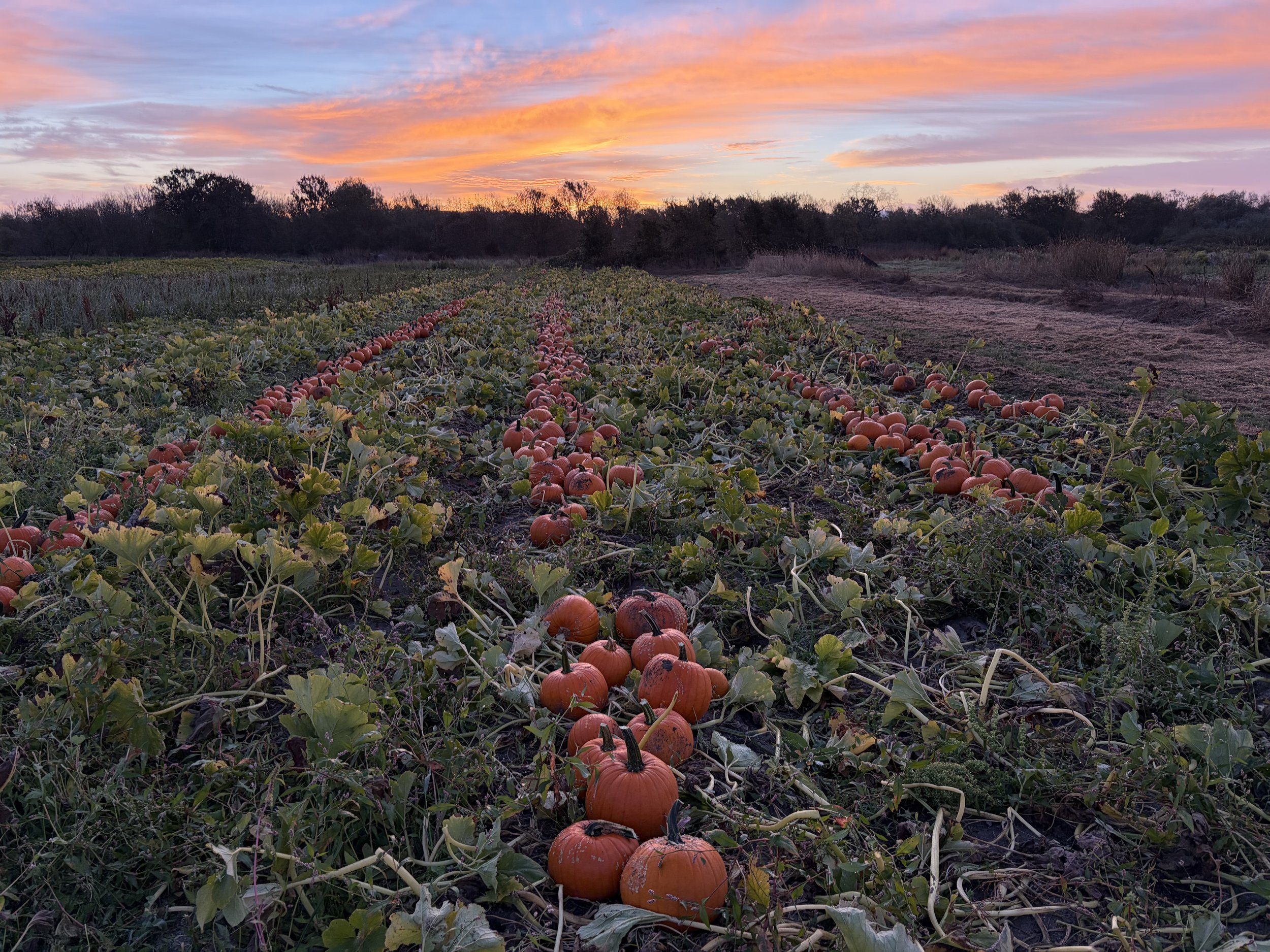
🎃PUMPKIN PATCH NOW OPEN!🎃

Spooky season is here and your Halloween pumpkins await you! The pumpkin patch is located in Creek Field —to find them, continue on past the north end of the garden (farthest from the barn) and look to your right after the grassy berm.

  • 🌟 SEASON LIMIT: 2 per share, or 1 per child for households with more children. Note: We have enough pumpkins that households that are alternating weeks can also take 2 per share or 1 per child!

THIS WEEK’S HARVEST

Spinach, Green Little Gem Lettuce, Green Oakleaf Lettuce, Lacinato Rainbow Kale, Dandelion Greens, Fennel, Assorted Zucchini & Summer Squash (last week!), Carrots, Cipollini Onions, German Butterball Potatoes, Napa Cabbage, Daikon Radish, Scallions, Sweet Peppers, Bulk Tomatoes

U-PICK

Check the u-pick board in the barn for weekly u-pick limits.

  • Albion Strawberries: ✨1 pint per share✨

  • Cherry Tomatoes: Gleanings | There are still cherry tomatoes to be had, but they are starting to wind down (particularly the Sungolds! — branch out to other varieties if you want to harvest more.)

  • Goldilocks Beans: No limit — take what you’ll eat!

  • Frying Peppers:

    • Padrons: No limit — take what you’ll eat!

    • Shishitos: No limit — take what you’ll eat!

  • Hot Peppers:

    • Jalapeños: No limit — take what you’ll eat!

    • Thai Chilis: 15 peppers per share

    • Habaneros: 3 peppers per share | Look for the orange peppers hiding low down under the plant.

    • Ot Hiem Pepper: 15 peppers per share

  • Herbs & Edible Flowers: Husk Cherries, Lemon Bergamot, Dill, Cilantro, Purple Basil, Thai Basil, Lemon Basil, Italian Basil, Tulsi, Parsley, Chamomile, Calendula, Nasturtium, Pansies/Viola, Garlic Chives, Tarragon, Thyme, Oregano, Marjoram, Lemon Balm, Lemon Verbena, Vietnamese Coriander, Shiso/Perilla, Catnip, French & Culinary Lavender, Sorrel, & Assorted Mints

  • Flowers galore!

Your pumpkin babies away you!

HARVEST NOTES

  • Kimchi Week! After an intense couple of years of pest pressure, we are excited to welcome back Kimchi Week — when we harvest Daikon Radish, Napa Cabbage and Scallions! We’ll include a recipe below for classic mak kimchi, where the cabbage is chopped before being seasoned. For a more mellow, version without red pepper, that’s also vegan, check out this white Kimchi recipe shared with us years ago by Robin Kim.

  • Dandelion Greens: We think these succulent Italian dandelions are the perfect bitter green. As with chicories, they pair well with rich, sharp flavors. For a simple and delicious side dish, try sautéing with olive oil (or bacon fat), plenty of garlic and a dash of red wine vinegar and salt. Or check out this recipe for Chickpea Pancakes with Dandelions and Caramelized Onions from a past newsletter!

THANK YOU!

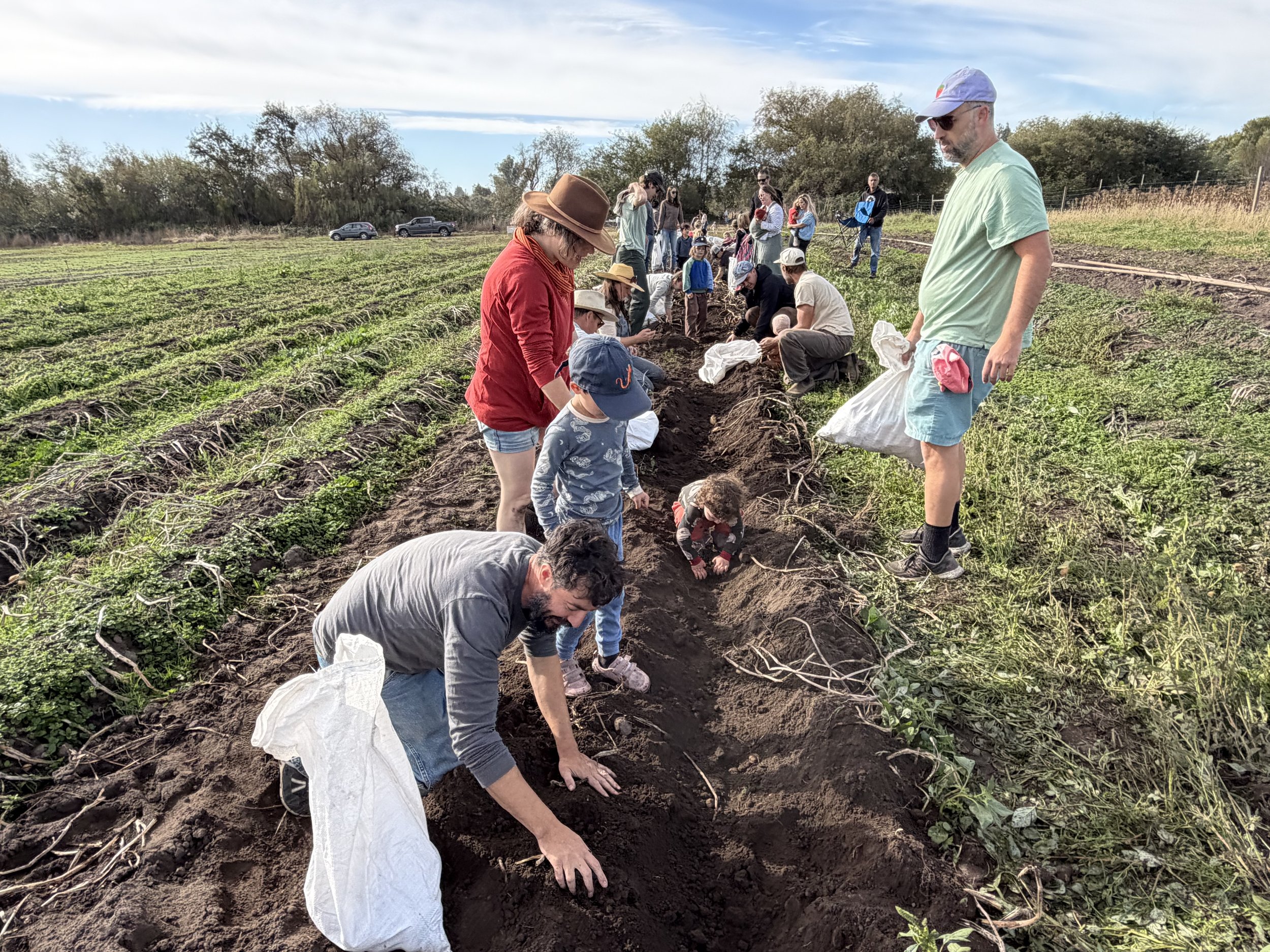
Thanks to everyone who came out for a Potato Harvest Party for the ages. It was a beautiful and fun day for us farmers. We were so happy to get to meet and work with so many of you and your hardworking kids (wow)! Together we harvested almost 3000 lbs of German Butterball and Masquerade Potatoes.

KIMCHI RECIPE

Adapted from Amy Kim of Kimchi Mom, via Steamy Kitchen

INGREDIENTS

  • 7 pounds of napa cabbage

  • about 1/3 cup kosher salt

  • 1 cup sweet rice flour (Mochiko is a popular brand)

  • 2 cups water

  • 3/4 cup red pepper flakes, medium coarseness

  • 1/4 cup chopped saewoo jjut (salted shrimp)

  • 3 tablespoons fish sauce

  • A scant 1/2 cup sugar

  • 5-7 stalks green onion, chopped

  • 2 ounces ginger (2-inch long, 1-inch diameter piece), minced

  • 8-9 medium garlic cloves, minced

  • 3 medium carrots, julienned

  • 1 medium-sized daikon or 1 small mu (Korean radish), thinly sliced in 2-inch sections

  • water

DIRECTIONS

 Preparing the sweet rice flour paste:

  • Whisk together the sweet rice flour and water in a small saucepan. Keep whisking the mixture until bubbles form on the surface, then take the saucepan off the heat and set aside to cool.

Preparing the cabbage:

  • Starting at the base of the stem, cut the cabbage about one-third of the way down. Then pull apart the cabbage halves to completely separate them. Do the same with the halved portions - cut and pull apart. Repeat for all the cabbage heads. Give the quarters a quick rinse under running water and shake off any excess water.

  • Trim the core at a diagonal. Cut the quarters into 2-inch wide pieces and place in an oversized bowl (I used a 12 qt. bowl) or use a couple of large bowls. Sprinkle generously with salt. Alternate layers of cabbage and salt. Once all the cabbage is cut, give the cabbage a toss and sprinkle more salt on top. Place a weight (like two dinner plates) on top of the cabbage.

  • Let the salted cabbage sit for at least 3 hours, tossing after the first hour. Don't worry if you go over!

Preparing the sauce:

  • When the cabbage is close to being ready, prepare the red pepper sauce. In a medium bowl, mix kochukaru (red pepper flakes), water, saewoo jjut, fish sauce, green onions, sugar, ginger, garlic, rice flour paste, and about a 1/2 cup water. Mix thoroughly. Taste. It should be balanced – not too salty, not too fishy, not to spicy and not too sweet. Adjust seasonings as needed. Add in a bit more water if needed to bring the consistency to that of a thick batter. Mix in carrots and radish. Set aside.

  • Once the cabbage is ready (the volume of the cabbage should have decreased, and it should be a bit wilted), rinse it under cold running water and let drain in a colander.

  • In a large bowl, add the sauce to the cabbage. Thoroughly mix the sauce and cabbage and make sure every piece of cabbage is coated with the red pepper sauce. Taste. If it needs more salt, add a bit of fish sauce. But you don’t want it to be too salty.

  • Transfer the cabbage mixture into a large glass jar. Press down on the cabbage as you are filling the jar. Leave about 1-inch of space from the top.

  • Don’t throw the empty bowl in the sink just yet! Pour about 1 cup of water into the bowl, add about a teaspoon of salt to start, and stir. Swirl the water around to make sure you get all the remaining pepper mixture. Taste. Again, you don’t want it too salty – just a hint of salt. Fill the jar with the water until it barely covers the cabbage.

  • Press down on the cabbage again and make sure the liquid has made its way throughout the jar. Close the lid tightly.

  • Leave the jars at room temperature for about a day, away from direct sunlight. I leave mine out for about 24-30 hours. This is when the magic happens. You may want to place the jar in a shallow bowl or plate in case there is leakage.

  • After those 24 or so excruciating hours, sample the kimchi. There should be a slight tang. At this point it is ready to be refrigerated. You can eat the kimchi right away, but I prefer to wait at least a week to indulge. The kimchi will continue to ferment at a much slower pace in the refrigerator and will keep for about 4 weeks. The kimchi will turn really sour at this point and if you have any left in the jar, it will be perfect for jigae, fried rice, ramen or jun.

FARMER’S LOG

a RICH MASH

This week was all about harvest. We're in the thick of our fall harvest push — with macro bins of storage crops pouring out of the fields — and we are about to begin the liminal shoulder-season work of strawberry planting, compost spreading, and cover cropping before the rains.

We harvested about two-thirds of our potato crop over the weekend — 3,000 lbs of gorgeous tubers on Saturday (thanks to a gaggle of member volunteers at our Potato Harvest Party) and another 6,000 lbs on Sunday (along with a couple of macros of celery root). On Tuesday and Wednesday we brought in 17 macro bins of winter squash. The next round of late-curing winter squash is being clipped as we speak. We chipped away at a bed of fall carrots yesterday, and another 6 beds await.

We'll leave you this evening with the carefully and lovingly placed words of Mary Oliver.

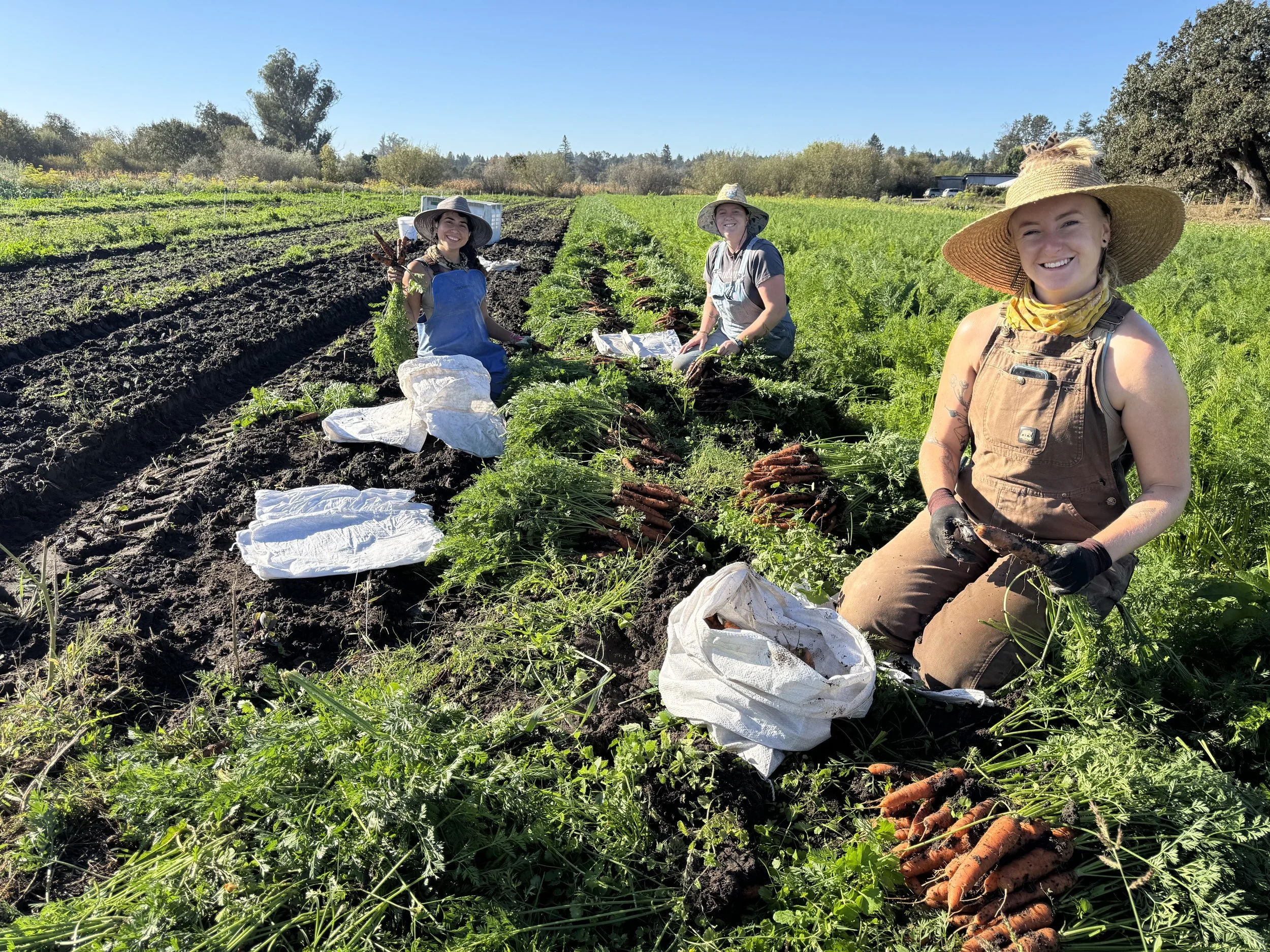
Harvest, harvest, harvest! Shanga, Riley, and Arabella in the fall carrots

Lines Written in the Days of Growing Darkness
by Mary Oliver

Every year we have been
witness to it: how the
world descends
into a rich mash, in order that
it may resume.
And therefore
who would cry out

to the petals on the ground
to stay,
knowing, as we must,
how the vivacity of what was is married

to the vitality of what will be?
I don’t say
it’s easy, but
what else will do

if the love one claims to have for the world
be true?
So let us go on

though the sun be swinging east,
and the ponds be cold and black,
and the sweets of the year be doomed.


* * * * *

See you in the fields,
David


CSA BASICS

Check out our Brief Membership Guide: A quick-reference on the essentials of being a member.

Harvest pick-up times:

  • Friday harvest pick-ups run from 1:00 pm - 6:00 pm

  • Saturday harvest pick-ups run from 9:00 am - 2:00 pm

  • Tuesday harvest pick-ups will run from 1:00 pm - 6:00 pm

U-pick hours: Oriented members can come to the farm any time, 7 days a week, sunrise to sunset, to u-pick and enjoy the farm.

2026 CSA program dates: This year’s harvest season will run from Friday, June 12th through Tuesday, December 8th this year.

Where is the farm? The member parking lot is located at 1720 Cooper Rd., Sebastopol, CA 95472.

Slow on Cooper Rd. Please drive slowly on Cooper Road — 20 mph. It's a neighborhood with lots of kids and animals who generously share the road with us.