Harvest Week 16 - Potato Harvest Party!

POTATO HARVEST PARTY!

THis Saturday, September 26th, 9:00 am - 11:20 am

Join us for our 9th annual potato harvest party this Saturday morning as we watch potatoes shower up out of the ground in the wake of the tractor and then bag them, fresh from the soil, with friends & neighbors. It’s an unforgettable experience, especially for kiddos. All ages and abilities welcome.
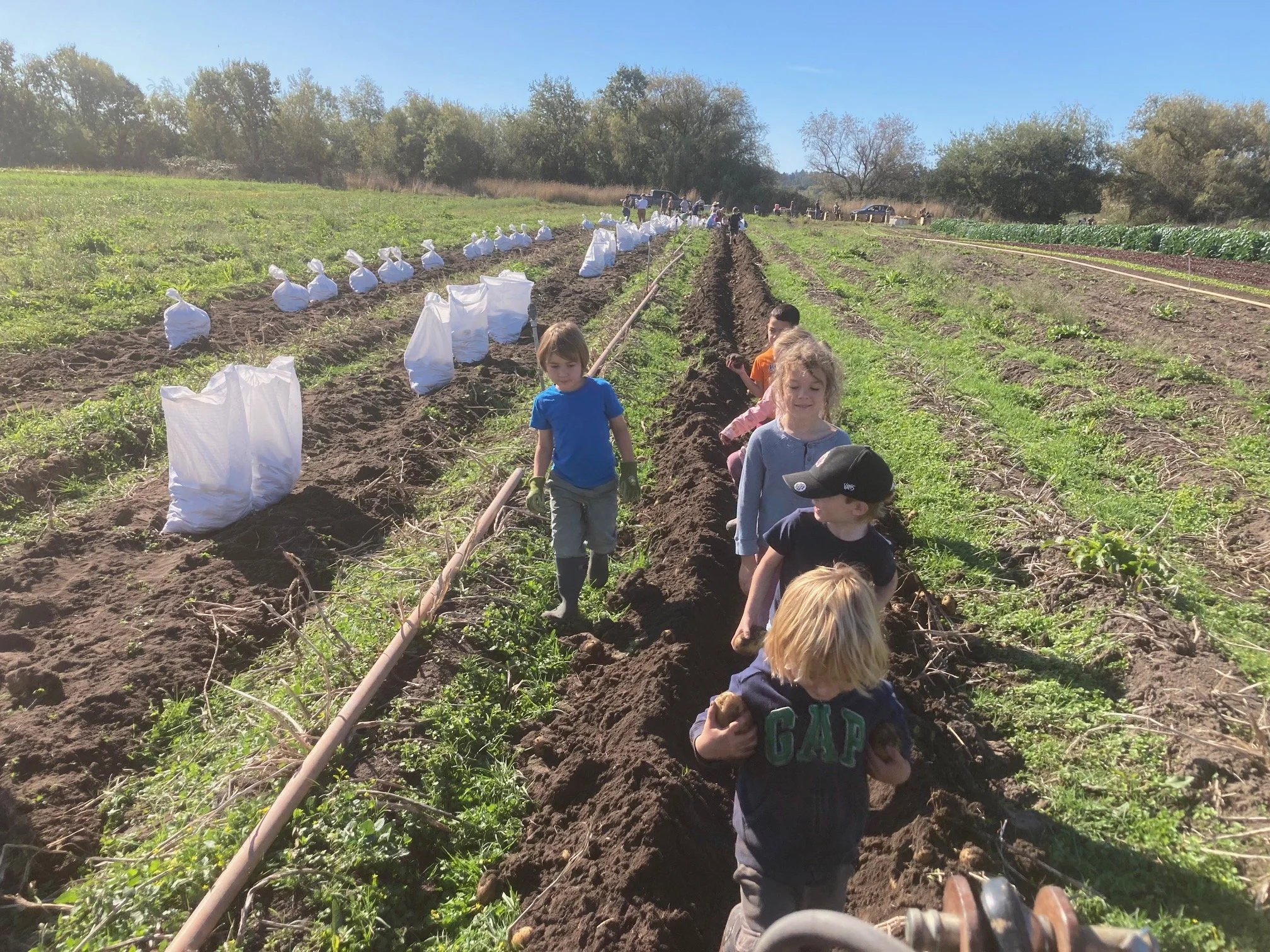
We recommend clothes you don’t mind getting dirty. Some people prefer using light gloves. We’ll have some light refreshments, music from the boombox, and an agrarianly awesome time. (For new members: This potato harvest is not required in any way for members to enjoy potatoes. We will be distributing them every week whether or not you come to harvest!)

THIS WEEK’S HARVEST

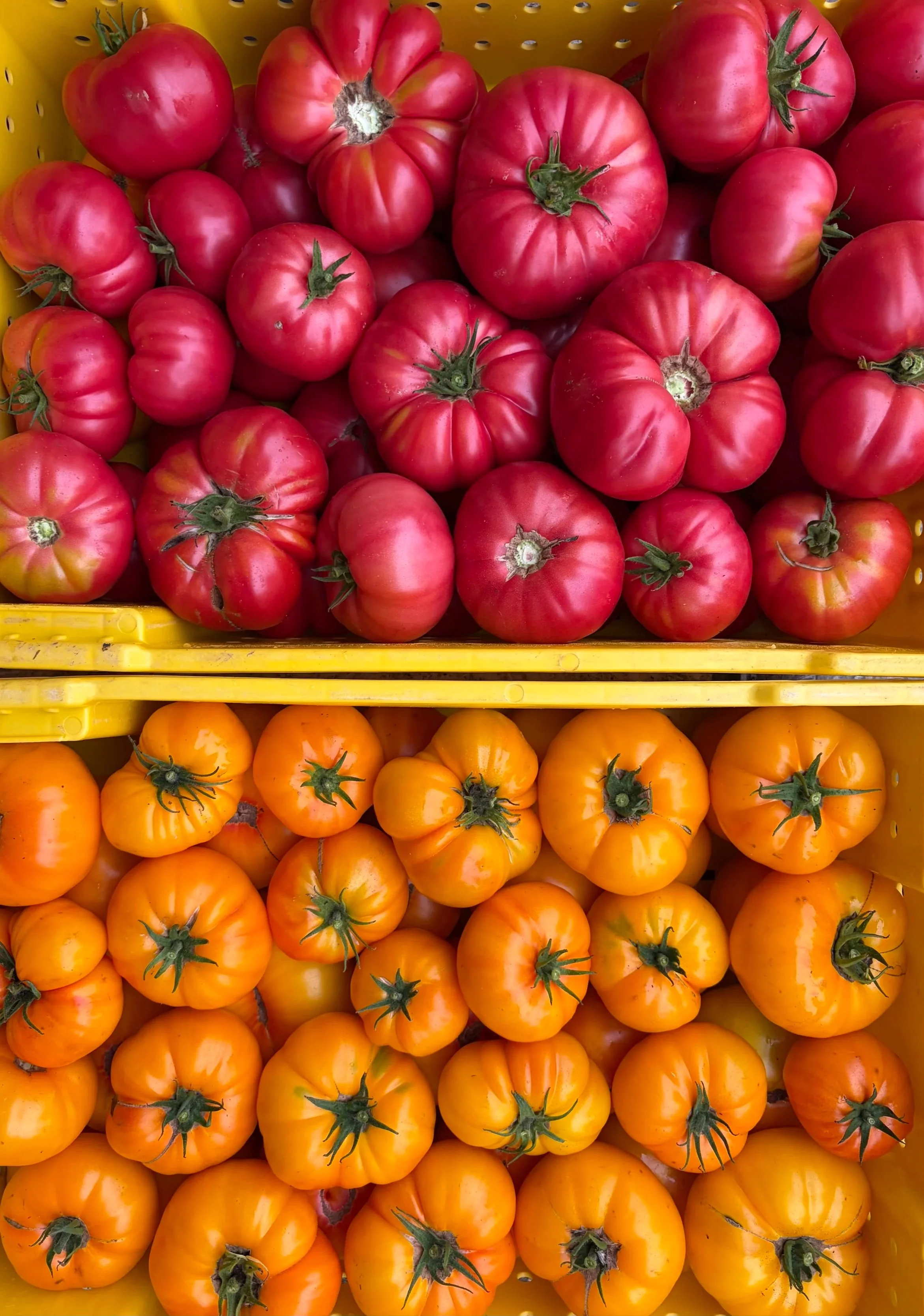
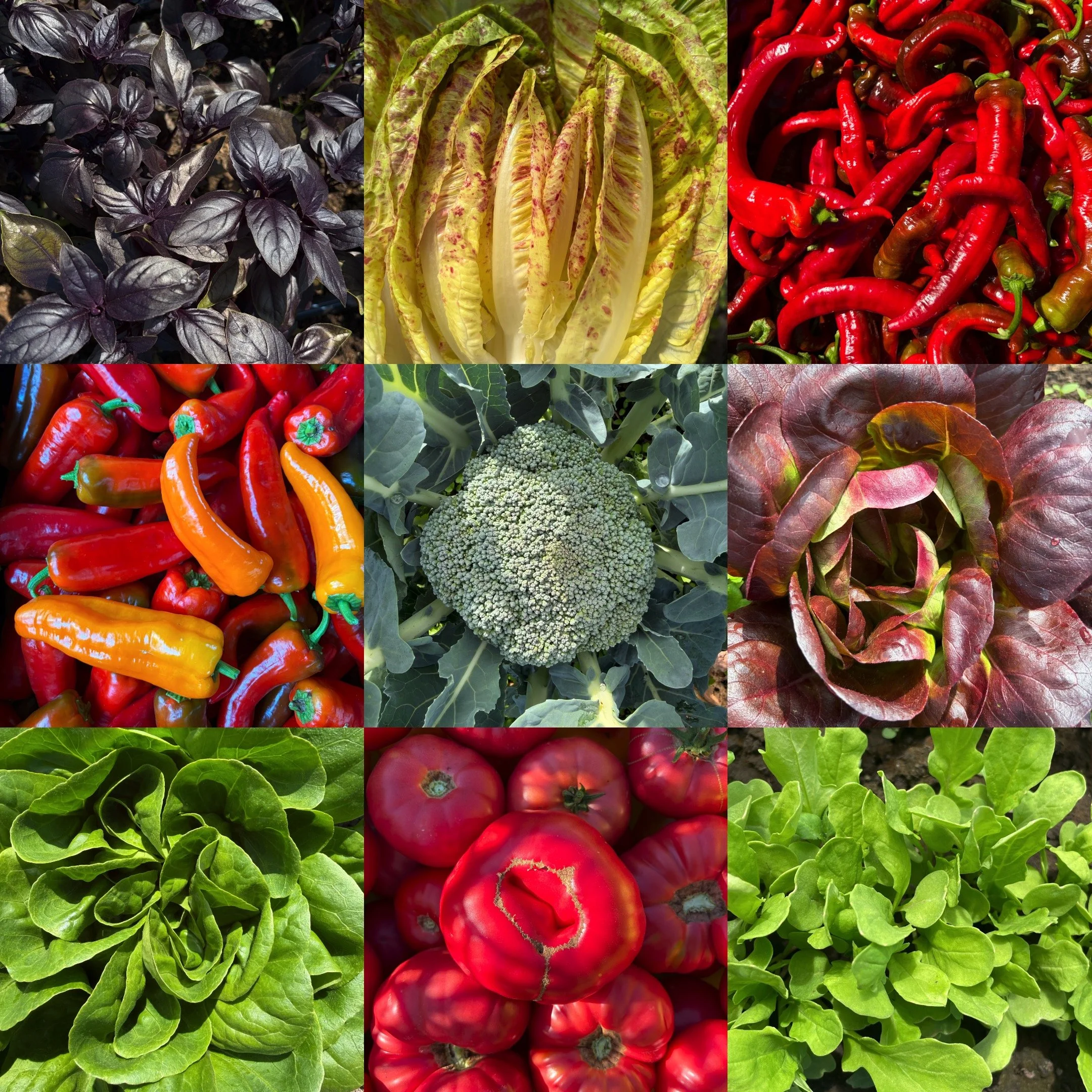
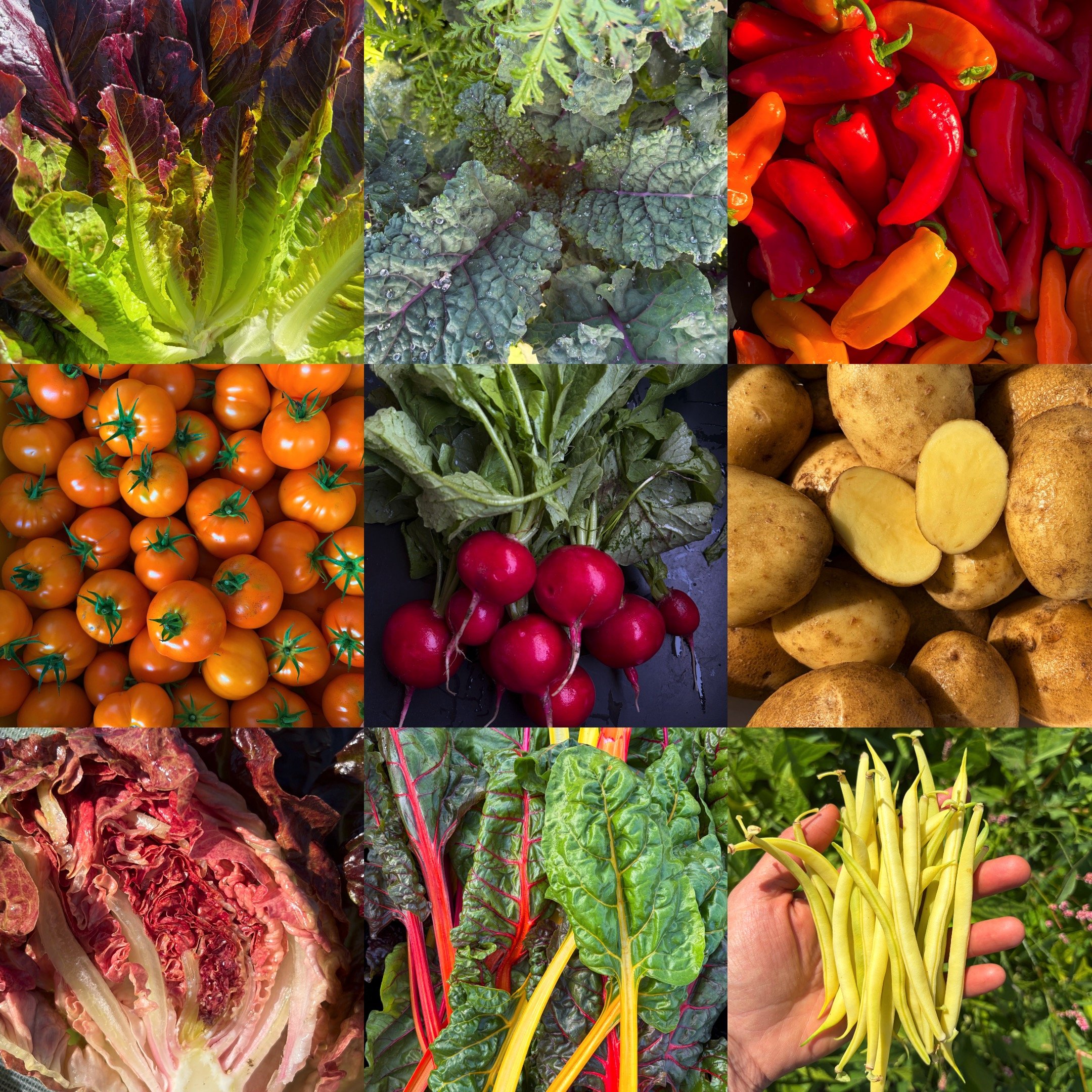
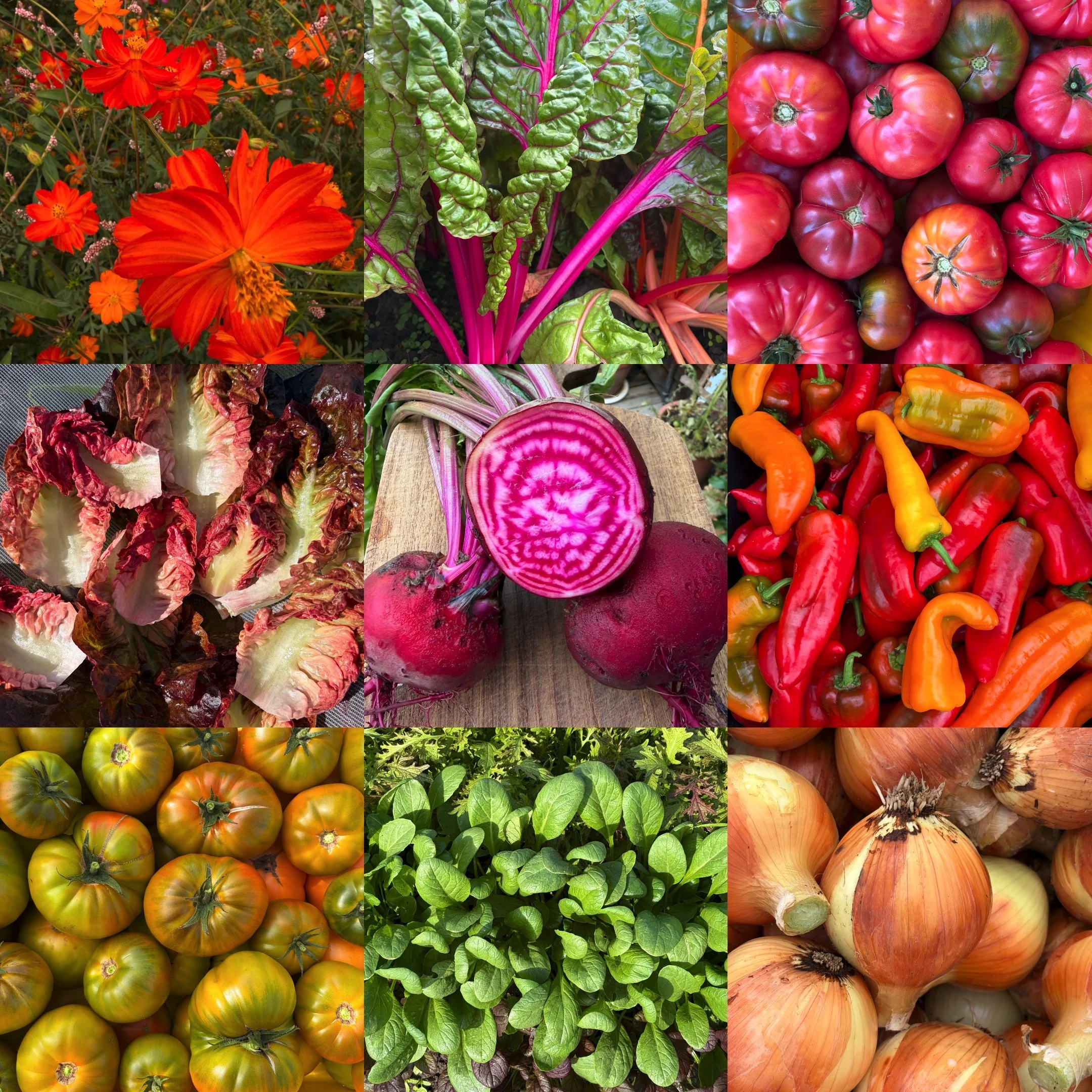
Mustard Mix, Pink Volcana Little Gem Lettuce, Red Romaine Lettuce, Rainbow Chard, Lacinato Rainbow Kale, Bunched Beets, Red Radishes, Assorted Zucchini & Summer Squash, Carrots, Fresh Yellow Onions, German Butterball Potatoes, Eggplant, Sweet Peppers, Poblano Peppers, Bulk Tomatoes
U-PICK

Check the u-pick board in the barn for weekly u-pick limits.

  • Albion Strawberries: ✨2 pints per share✨

  • Cherry Tomatoes: Gleanings | There are still cherry tomatoes to be had, but they are starting to wind down (particularly the Sungolds! — branch out to other varieties if you want to harvest more.)

  • 🌟 Goldilocks Beans: No limit — take what you’ll eat! | Check out the harvest notes below for more info!

  • Frying Peppers:

    • Padrons: No limit — take what you’ll eat!

    • Shishitos: No limit — take what you’ll eat!

  • Hot Peppers:

    • Jalapeños: No limit — take what you’ll eat!

    • Thai Chilis: 15 peppers per share

    • Habaneros: 3 peppers per share | Look for the orange peppers hiding low down under the plant.

    • Ot Hiem: 10 peppers per share

  • Herbs & Edible Flowers: Husk Cherries, Lemon Bergamot, Dill, Cilantro, Purple Basil, Thai Basil, Lemon Basil, Italian Basil, Tulsi, Parsley, Chamomile, Calendula, Nasturtium, Pansies/Viola, Garlic Chives, Tarragon, Thyme, Oregano, Marjoram, Lemon Balm, Lemon Verbena, Vietnamese Coriander, Shiso/Perilla, Catnip, French & Culinary Lavender, Sorrel, & Assorted Mints

  • Flowers galore!

HARVEST NOTES

  • How much longer will we have tomatoes? Is the 64 million dollar question in the barn these days. We are feeling confident that we’ll be able to offer them this week and next (Week 17) but beyond that, we make no promises! If you’ve been struggling to find the time to process your bulk tomatoes, remember that you can always just throw them in a ziplock bag in the freezer and deal with them later (think of how delightful it will be to be stewing tomato sauce when it’s cold and rainy outside!). Or, if you pick out canning tomatoes that are on the less ripe side, they’d be happy to sit on your counter for most of a week til you’re ready (the smooth, elongated paste tomatoes without stripes are best for this).

  • Goldilocks Beans: These beautiful, pale yellow beans are our last bean succession of the year, and the one we look forward to the most. They’re delicate and sweet — perfect for fresh eating, dilly beans, or, if you haven’t made it yet this season, salade niçoise! Really, given this week’s luscious potatoes we think that’s definitely the way to go. Check out Bon Appétit’s great niçoise dressing recipe here.

  • German Butterball Potatoes: Seed potato grower David Ronniger introduced it in 1988 while collecting old European-style varieties, and it went on to win first place in Organic Gardening magazine's potato taste-off. It's been a cult favorite with growers and cooks ever since. The name is accurate: under the lightly netted golden skin is deep yellow flesh so rich and buttery that it barely needs any butter at all. They're a true all-purpose potato, great mashed, fried, or baked, but roasting is where they shine: cut them into chunks, toss them in olive oil and salt, and roast them hot until the outsides crisp up around a creamy, pillowy center.
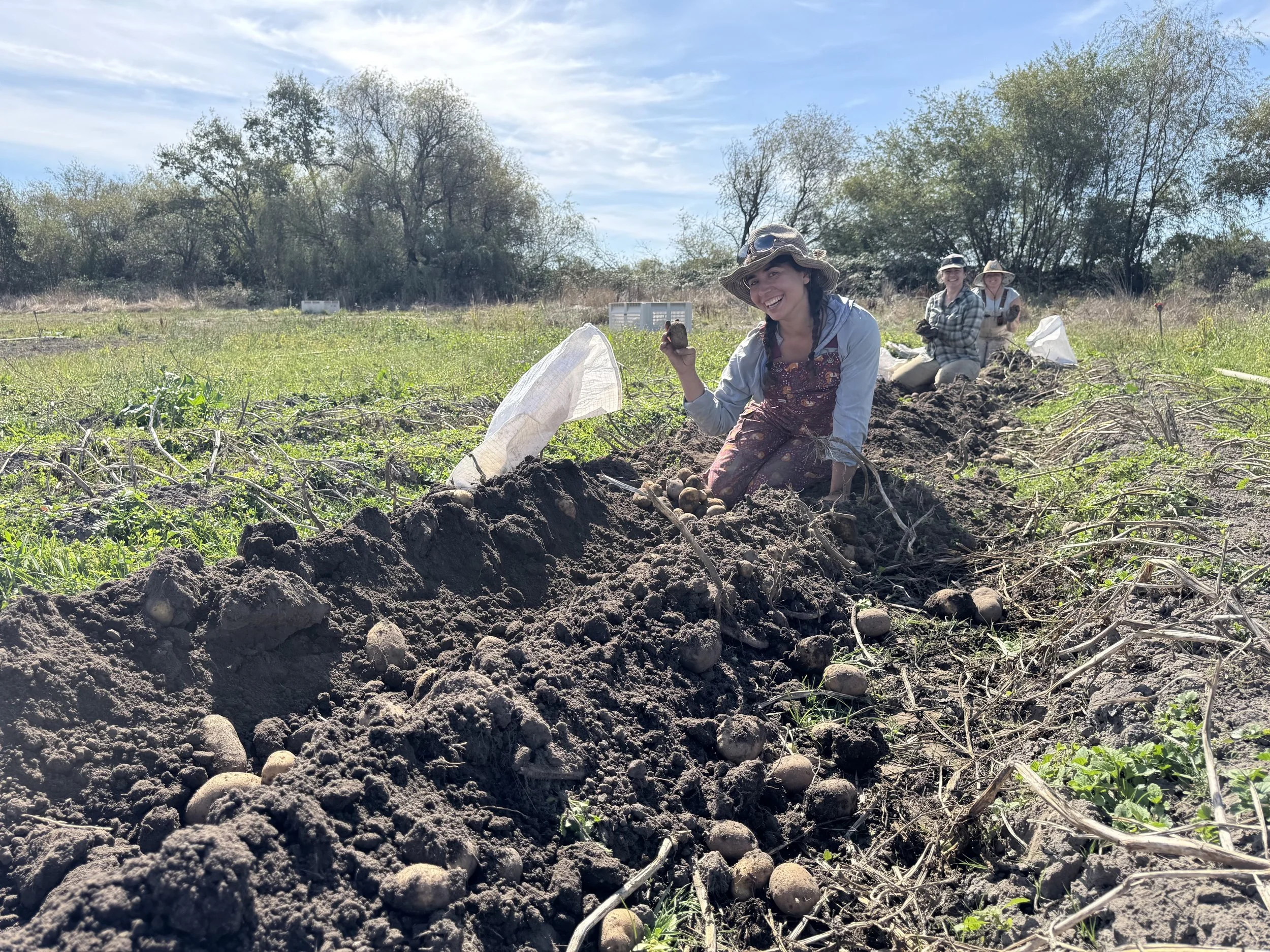
Shanga, Melinda, and Riley harvesting German Butterballs this morning

RATATOUILLE

Recipe adapted from The Kitchn

Ratatouille is made with summer veggies, but as cozy as a cool fall evening.. This recipe calls for an artful arrangement, but if you’re feeling in a rush, you can always chop the ingredients, toss with olive oil and roast on a sheet pan. And if you still have any Floriani Red Flint cornmeal hanging out in your freezer, ratatouille is delicious paired with polenta!

ingredients

  • 1 medium zucchini

  • 1 medium yellow summer squash

  • 2 medium Asian eggplant or 1 Italian

  • 2 medium Roma tomatoes

  • 1 small yellow onion

  • 1 small sweet pepper

  • 3 cloves garlic

  • 1/2 small bunch fresh thyme

  • 1/2 small bunch fresh basil

  • 4 tablespoons olive oil, divided

  • 1 1/4 teaspoons kosher salt, divided

  • 1/4 teaspoon freshly ground black pepper

  • 1 cup tomato purée

  • 1 teaspoon red wine vinegar

DIRECTIONS

  1. Arrange a rack in the middle of the oven and heat the oven to 375ºF.

  2. Trim and cut the following with a mandoline or sharp knife crosswise into 1/16-inch-thick rounds: 1 yellow summer squash, 1 zucchini, 2 Asian eggplants, and 2 medium Roma tomatoes.

  3. Dice 1 small yellow onion and 1 sweet pepper. Mince 3 garlic cloves. Pick the leaves from 1/2 small bunch fresh thyme until you have 4 teaspoons. Pick the leaves from 1/2 small bunch fresh basil and finely chop until you have 1/4 cup.

  4. Heat 2 tablespoons of the olive oil in a 10-inch oven-safe or cast iron skillet over medium heat until shimmering. Add the onion, bell pepper, 1 teaspoon of the kosher salt, and 1/4 teaspoon black pepper. Cook, stirring occasionally, until softened, 8 to 10 minutes.

  5. Add the garlic, 2 teaspoons of the thyme, and basil, and cook until fragrant, about 30 seconds. Add 1 cup tomato purée and stir to combine. Bring to a simmer. Reduce the heat to maintain a gentle simmer and cook, stirring occasionally, until the flavors meld and the sauce is slightly thickened, about 10 minutes.

  6. Remove the skillet from the heat. Add 1 teaspoon red wine vinegar and stir to combine. Spread the sauce into an even layer.

  7. Arrange the zucchini, yellow squash, eggplant, and Roma tomatoes on top of the sauce in a concentric circle: Start at the outer edge of the skillet and work inward, alternating the vegetables and overlapping the slices so that just a little bit of each slice is visible.

  8. Drizzle the remaining 2 tablespoons of the olive oil over the vegetables. Sprinkle the remaining 2 teaspoons thyme and remaining 1/4 teaspoon kosher salt over the top.

FARMER’S LOG

a Potato Digging

This Saturday morning, we'll come together to perform a quintessential autumn ritual: The potato harvest. 

As we kneel down on the Earth, bagging cool tubers, we will join in concert thousands of people around the world performing the same ritual. We will also join untold millions of ancestors who knelt together and harvested potatoes. We will be connected, via a living, breathing chain of seed potatoes to hundreds of historic potato harvests in Europe and Asia and to thousands of harvests in the Andes and northwestern Bolivia — the cultural birthplace of this amazing crop.

There is nothing quite like an abundant potato harvest and the feeling, afterwards, of storing them away — in a pit, a cooler, a cave; the potatoes themselves alive, breathing slowly, promising food, promising life, throughout the winter months. 

Potatoes have been the staff-of-life for many cultures throughout history.

When healthy, potatoes produce the most calories per acre than corn, wheat, or rice. And potatoes are the only one of these staff-of-life crops that grow (the food part, at least) in the Earth — shrouded in the dark and in mystery until they are lifted up into the light at harvest.

While we farmers check the potatoes as they grow every so often, every potato harvest is a mystery for us farmers until we hook the middle-buster shovel onto the tractor and split open the mounds.

Many have known the feeling of incredible abundance that potatoes can give and many have known the opposite. From 1845 - 1852, due to limited potato genetics in the region and the cold shoulders of powerful men, a million people starved in the poorer parts of Western Ireland and the Scottish highlands as a blighted potato crop rotted in the fields. The potato has been a powerful and painful bond between people and Mother Earth, in feast and in famine, for millennia.
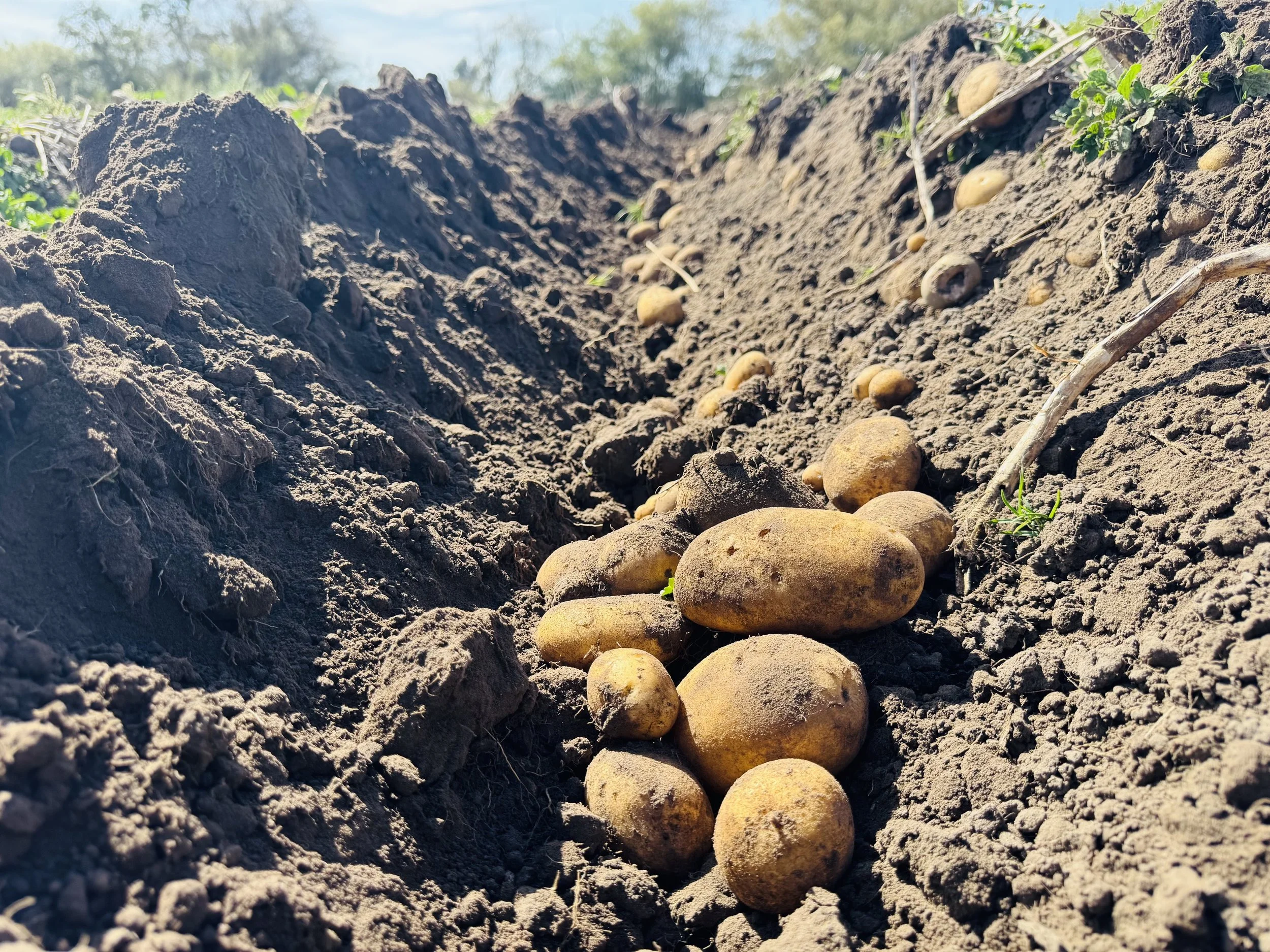
Unearthed into the light

The Nobel Prize winning Irish poet, Seamus Heaney, speaks to this history in his poem, “At a Potato Digging”.

* * * * *

I.

A mechanical digger wrecks the drill,
  Spins up a dark shower of roots and mould.
  Labourers swarm in behind, stoop to fill
  Wicker creels. Fingers go dead in the cold.

 Like crows attacking crow-black fields, they stretch
  A higgledy line from hedge to headland;
  Some pairs keep breaking ragged ranks to fetch
  A full creel to the pit and straighten, stand

 Tall for a moment but soon stumble back
  To fish a new load from the crumbled surf.
  Heads bow, trucks bend, hands fumble towards the black
  Mother. Processional stooping through the turf

 Turns work to ritual. Centuries
  Of fear and homage to the famine god
  Toughen the muscles behind their humbled knees,
  Make a seasonal altar of the sod.
  
  
II.
  
  Flint-white, purple. They lie scattered
  Like inflated pebbles. Native
  to the blank hutch of clay
  where the halved seed shot and clotted
  these knobbed and slit-eyed tubers seem
  the petrified hearts of drills. Split
  by the spade, they show white as cream.

  Good smells exude from crumbled earth.
  The rough bark of humus erupts
  knots of potatoes (a clean birth)
  whose solid feel, whose wet inside
  promises taste of ground and root.
  To be piled in pits; live skulls, blind-eyed.
  
  
III.
  
  Live skulls, blind-eyed, balanced on
  wild higgledy skeletons
  scoured the land in 'forty-five,'
  wolfed the blighted root and died.

 The new potato, sound as stone,
  putrified when it had lain
  three days in the long clay pit.
  Millions rotted along with it.

 Mouths tightened in, eyes died hard,
  faces chilled to a plucked bird.
  In a million wicker huts
  beaks of famine snipped at guts.

 A people hungering from birth,
  grubbing, like plants, in the earth,
  were grafted with a great sorrow.
  Hope rotted like a marrow.

Stinking potatoes fouled the land,
  pits turned pus in filthy mounds:
  and where potato diggers are
  you still smell the running sore.
  
  
IV.
  
  Under a white flotilla of gulls
  The rhythm deadens, the workers stop.
  White bread and tea in bright canfuls
  Are served for lunch. Dead-beat, they flop

 Down in the ditch and take their fill,
  Thankfully breaking timeless fasts;
  Then, stretched on the faithless ground, spill
  Libations of cold tea, scatter crusts.

* * * * *

We include this poem, with its dark memory, not for its shock value, but for the bond it invokes.

Modern markets divorces us from the primal bond we have to our staple food crops — and from the planet that cradles them. To be sure, this bond is still as strong as ever, but we rarely, if ever, feel it like Seamus Heaney asks us to. On the eve of the harvest of one of our staple crops, we think it is important to feel it. While this bond can be scary, it is also the source of our life and deserves our most profound gratitude.

At West County Community Farm this year, we are thankful. This year’s potato crop will be super abundant and it will fill our bellies long into winter.

The potato field in July was a vision to behold — a sea of purple and white flowers. The shimmering green foliage reached to our belly-buttons, covering every inch of ground so that it was hard to walk. All that energy, all that delight, all that sunlight, was sent down below to the tubers, which are waiting for us now to unearth.

Join us Saturday for our 9th annual potato harvest as we "shower" up the living roots and scatter libations in remembrance and thanks.

See you in the fields,
David
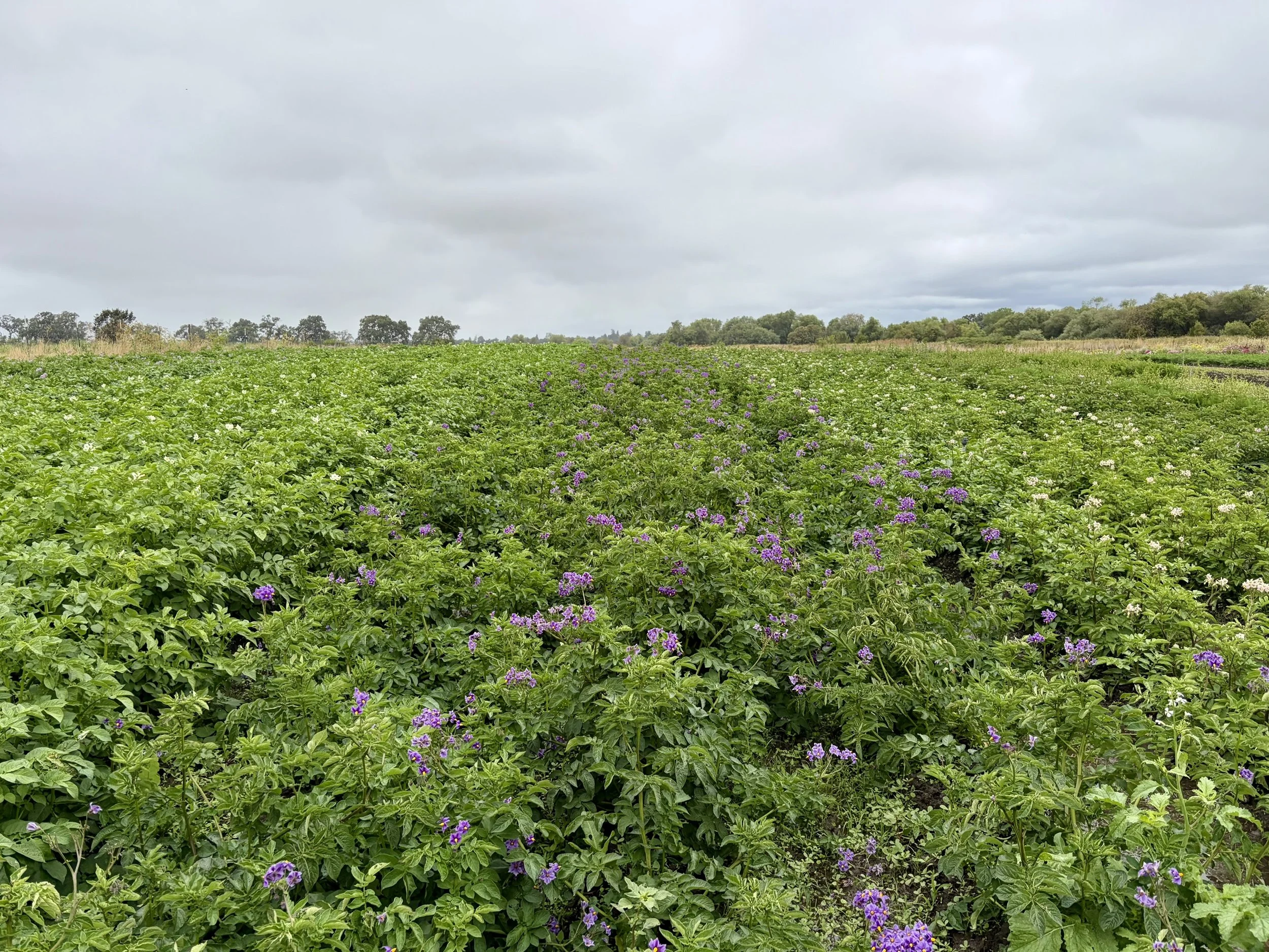
The potato field in flower on July 22nd


CSA BASICS

Check out our Brief Membership Guide: A quick-reference on the essentials of being a member.

Harvest pick-up times:

  • Friday harvest pick-ups run from 1:00 pm - 6:00 pm

  • Saturday harvest pick-ups run from 9:00 am - 2:00 pm

  • Tuesday harvest pick-ups will run from 1:00 pm - 6:00 pm

U-pick hours: Oriented members can come to the farm any time, 7 days a week, sunrise to sunset, to u-pick and enjoy the farm.

2026 CSA program dates: This year’s harvest season will run from Friday, June 12th through Tuesday, December 8th this year.

Where is the farm? The member parking lot is located at 1720 Cooper Rd., Sebastopol, CA 95472.

Slow on Cooper Rd. Please drive slowly on Cooper Road — 20 mph. It's a neighborhood with lots of kids and animals who generously share the road with us.
Harvest Week 15 - Equinox Musings

POTATO HARVEST PARTY!
SATURDAY, SePTEMBER 26th, 9:00 am - 11:30 am

Join us for our 9th annual potato harvest party! There’s nothing like watching potatoes shower up out of the ground in the wake of the tractor and then bagging them, fresh from the soil, with friends. It’s an unforgettable experience and a blast for kids. All ages and abilities welcome. Come prepared to get dirty!

THIS WEEK’S HARVEST

Mustard Mix, Pink Volcana Little Gem Lettuce, Assorted Head Lettuce, Rainbow Chard, Bunched Chioggia Beets, Assorted Zucchini & Summer Squash, Carrots, Fresh Yellow Onions, Huckleberry Gold Potatoes, Sweet Peppers, Poblano Peppers, Bulk Tomatoes, Farao Cabbage

U-PICK

Check the u-pick board in the barn for weekly u-pick limits.

  • Albion Strawberries: ✨2 pints per share✨

  • Cherry Tomatoes: No limit — take what you’ll eat!

  • Dragon Tongue Beans: Gleanings | Gleanings are available when the plants’ main production is done, but there’s still a bit to be had if you’re willing to search (especially at the back)!

  • Frying Peppers:

    • Padrons: No limit — take what you’ll eat!

    • Shishitos: No limit — take what you’ll eat!

  • Hot Peppers:

    • Jalapeños: No limit — take what you’ll eat!

    • Thai Chilis: 10 peppers per share

    • Habaneros: 3 peppers per share | Look for the orange peppers hiding low down under the plant. Habaneros make an incredible fresh salsa chopped with lime and salt!

    • Ot Hiem: 10 peppers per share | Ot Hiem are Vietnamese peppers whose name means Danger Chili. We got our seeds from True Love Seeds, and they’re ripening to both red and yellow. Brightly fragrant and spicy, they’re delicious in chili pastes, jams, or eaten fresh chopped into citrusy fish sauce! 

  • Herbs & Edible Flowers: Husk Cherries, Lemon Bergamot, Dill, Cilantro, Purple Basil, Thai Basil, Lemon Basil, Italian Basil, Tulsi, Parsley, Chamomile, Calendula, Nasturtium, Pansies/Viola, Garlic Chives, Tarragon, Thyme, Oregano, Marjoram, Lemon Balm, Lemon Verbena, Vietnamese Coriander, Shiso/Perilla, Catnip, French & Culinary Lavender, Sorrel, & Assorted Mints

  • Flowers galore!

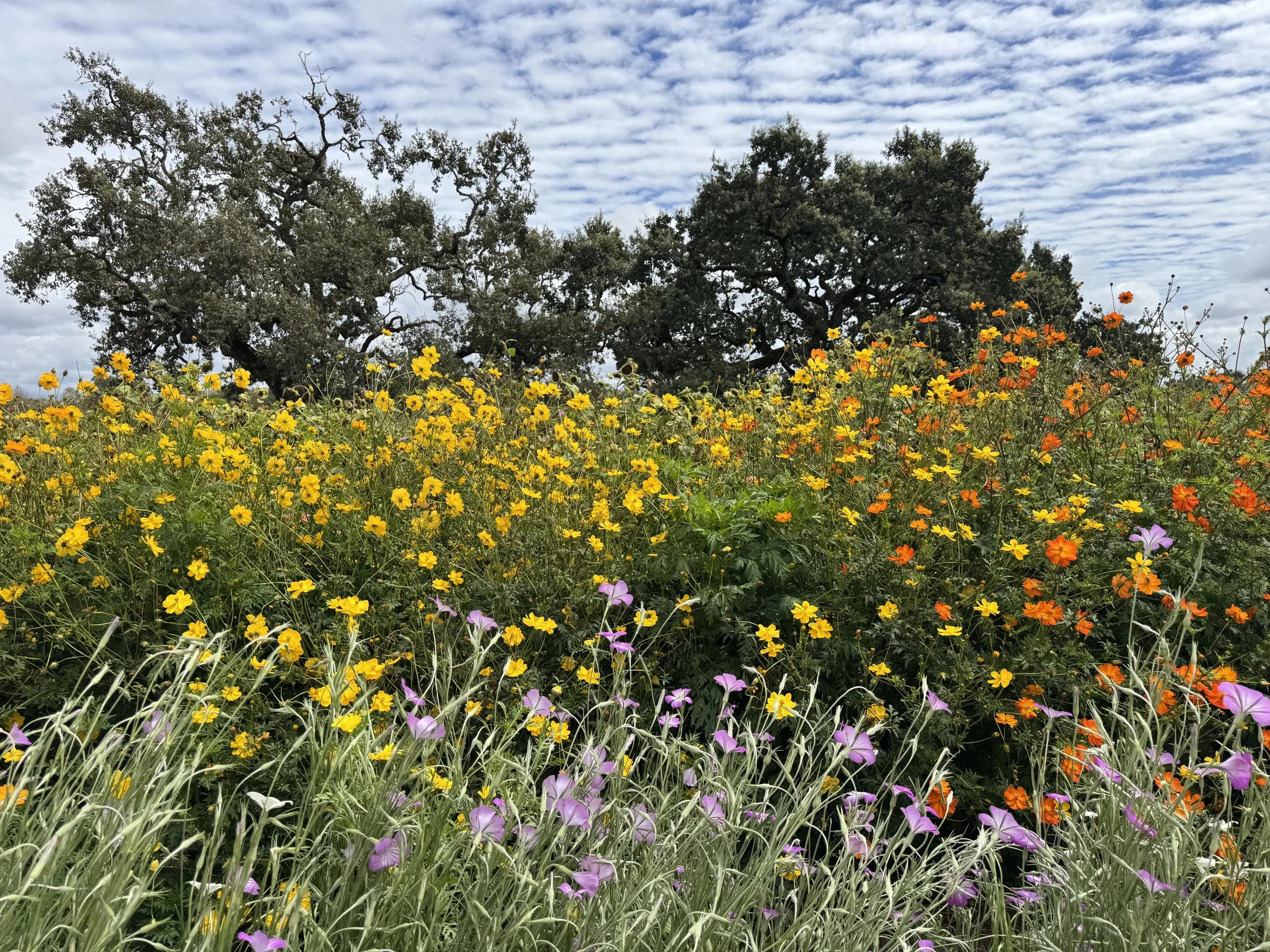
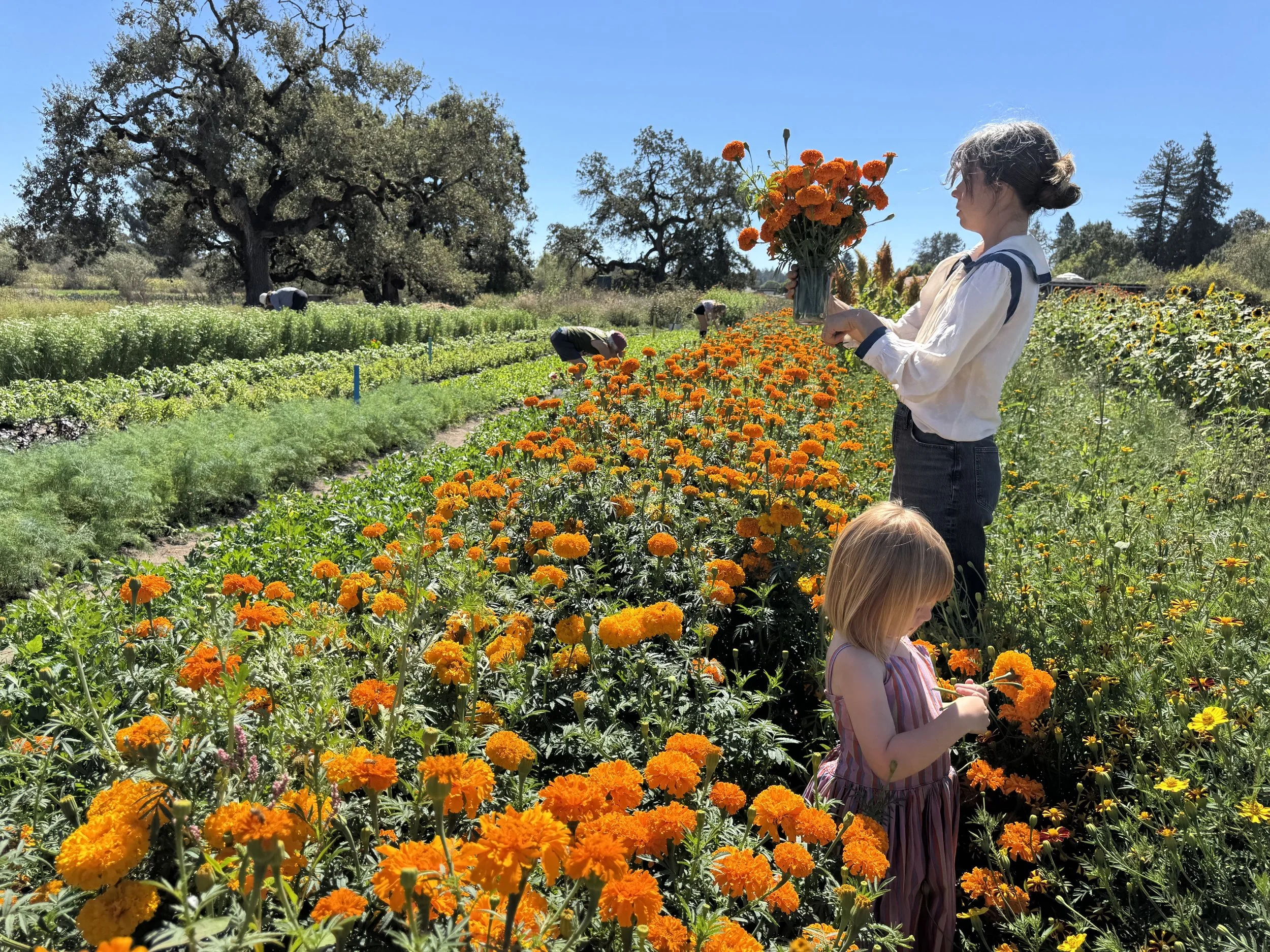
Lost in the marigolds.

HARVEST NOTES

  • Bunched Chioggia Beets: Also known as Candystripe Beets, these gorgeous pink beets have a bullseye inside and can be eaten raw to highlight their beauty and mild flavor. When cooked, the colors meld and soften into a delicate pink that is enlivened by the presence of acid like vinegar or lemon juice. While often overlooked, beet greens are delicious too — just like Swiss chard but with a thinner stem.

  • Huckleberry Gold Potatoes: These beauties are purple on the outside and gold on the inside, with a creamy, buttery texture. A Harvest Moon replacement for the potato aficionados.

SHAKSHUKA

Recipe adapted from The Mediterranean Dish

In this staple North African and Middle Eastern dish, eggs are poached in a richly spiced tomato and pepper sauce. Eaten with pita or crusty bread, it makes a hearty breakfast or satisfying dinner. Thanks to Matt for reminding us of this perfect dish for the current abundance of peppers and tomatoes!

INGREDIENTS

  • 3 tablespoons extra virgin olive oil

  • 1 large yellow onion chopped

  • 3 sweet peppers chopped

  • 2 garlic cloves, chopped

  • 1 teaspoon ground coriander

  • 1 teaspoon sweet paprika

  • 1/2 teaspoon ground cumin

  • pinch red pepper flakes optional

  • kosher salt

  • black pepper

  • 6 medium tomatoes (about 6 cups chopped tomatoes)

  • 1/2 cup tomato sauce (or blended tomatoes)

  • 6 large eggs

  • 1/4 cup chopped fresh parsley leaves

  • 1/4 cup chopped fresh mint leaves


DIRECTIONS

  1. Sauté the aromatics. Heat the olive oil in a large skillet over medium heat. Once the oil begins to shimmer, add the onions, peppers, garlic, spices, and a pinch of salt and pepper. Cook, stirring occasionally, until the vegetables have softened, about 5 minutes.

  2. Finish the sauce. Add the tomatoes and tomato sauce. Cover and let simmer for about 15 minutes. Uncover and cook a bit longer to allow the mixture to reduce and thicken. Taste and adjust the seasoning to your liking.

  3. Add the eggs. Using a wooden spoon, make 6 indentations, or "wells," in the tomato mixture. Make sure the indentations are spaced out. Gently crack an egg into each indentation.

  4. Finish the eggs. Reduce the heat to medium-low, cover the skillet, and cook on low until the egg whites are set.

  5. Garnish and serve. Uncover and add the fresh parsley and mint. You can add more black pepper or crushed red pepper flakes, if you like. Serve with warm pita, challah, or crusty bread of your choice. Also delicious with feta!

WHERE DOES THE EXTRA FOOD GO?

Our members sometimes wonder, where does extra produce from WCCF go?

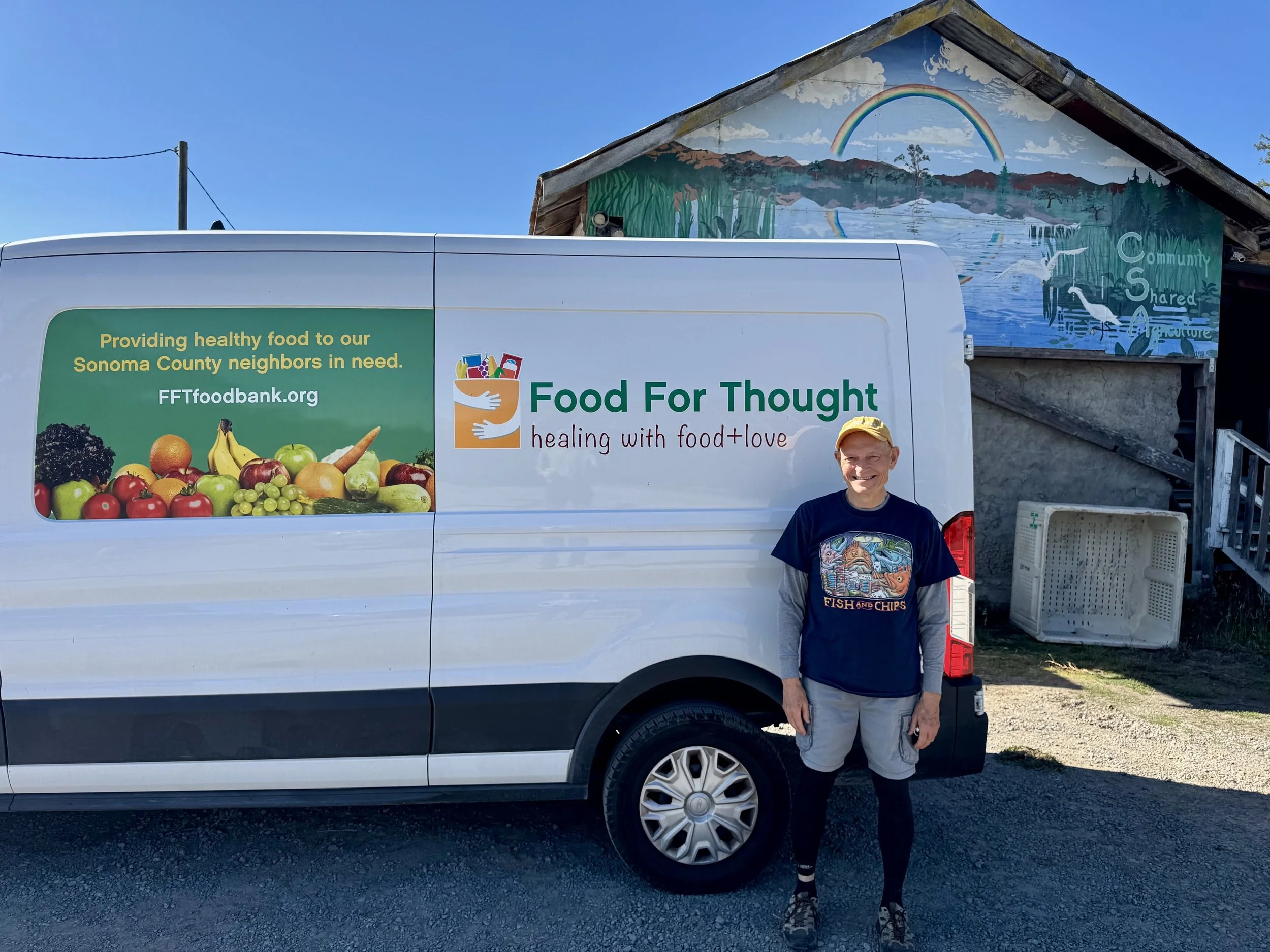
For produce that’s still yummy but not reserved for a CSA pick-up, we’re so lucky to have a long-standing relationship with Food for Thought Food Bank. Since 1988, Food for Thought has provided life-sustaining groceries, meals, and loving support for people living with serious medical conditions in Sonoma County — all free of charge. A volunteer from Food for Thought pulls up to the back of our cooler every Thursday and takes any food that we harvested and wasn’t taken, for this worthy cause. Thank you Food for Thought!

FARMER’S LOG

Equinox Musings

An oldie-but-goodie Farmer’s Log that sums up what this time of year feels like to us farmers…

This coming Tuesday, at 5:05 PM PDT, the Earth will wobble its midline straight in line with our sun — the Autumnal Equinox. At that moment, if you listen closely, you might hear a big “yipeee!” from thousands of Northern hemisphere farmers.

It’s not that we begrudge the summer. We just love the changes.

It struck me today how the tasks of a growing season harmonize — with each other and with the seasons themselves — so that somehow there's always just enough time to do what needs doing, by the hair on our chinny-chin-chins.

The Byrds were right: To everything, there is a season. 

In the spring, we aren’t harvesting yet, so we have all the lengthening-day to prep the canvas; to tune-up the equipment, build irrigation systems; to seed 200 trays a week in the greenhouse; to pot up, stake, and trellis tomatoes; to mow cover crop, turn soil, and plant, plant, plant!

Then harvest seasons comes and two, three, then four days a week are consumed by harvest. We put down the shovel and the hammer and take up the harvest knife. Projects cease. Planting and harvest become our lives (and maybe some weeding if we’re lucky). The days are at their longest. If there is ever a time to harvest hundreds of pounds of cucumbers, tomatoes and squash in the morning and then seed a mile of carrots in the afternoon, it’s summer.

Before we know it, it’s late-summer. The tomatoes start exploding, the cucumbers already are, we’re still planting like crazy and then the melons come in — and just when we think we’ll break, that there isn’t enough time in the long hot days, we scroll through our crop plan and see that the plantings are nearly done. No more bed shaping. Greenhouse seedings slow down. We plant the last Fall brassicas and the tractor sits quiet for a minute and we can spend all day amongst the vines and in the cooler playing Tetris with boxes of summer fruit. 

Then comes the Autumn Equinox.

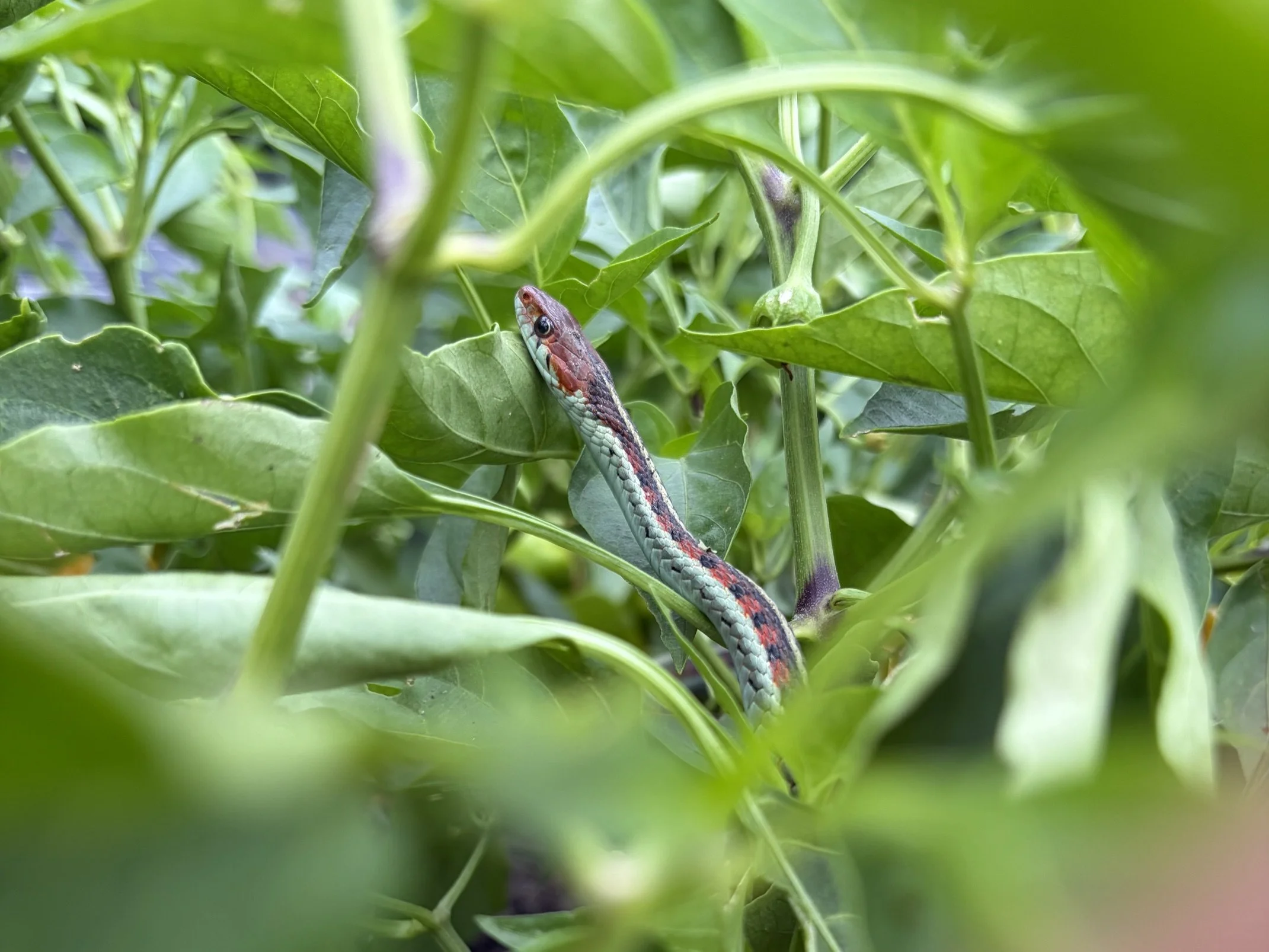
A happy Garter snake one foot up in the peppers this morning

The tomatoes are still pumping and the onions and potatoes are calling to be harvested; the winter squash and corn are crisping up. Fall harvests are here. Space needs to be cleared, fields mowed and turned into cover crop, new strawberry beds prepped and planted — and just when we think we’ll break, that there isn’t enough time in the shortening days, the heat starts to ebb and the tomatoes show signs of slowing down. Soon, a light frost will roll through the farm and nip the summer fruits. Smiling friends will come to help with the potato harvest. The chill morning air goes down like a draught of ambrosia. We plant the last lettuce bed of the season and have a moment to sit and seed cover crop.

All this is why you’ll rarely hear a farmer say, “Shucks! Summer is over.”

We are greedy for the turnings.

We love nothing more than a first harvest. But the glory of the first tomato fades under the weight of hundreds of tomato crates and then we crave cold hands and cozy coats and the crisp stem snap of winter radicchio.

Change is our tonic — and one of the great sustaining elixirs of farm life.

Soon, winter will arrive. The rains will come and we will turn in — to rest, rejuvenation, and internality. We’ll clean up the farm, look back on the year, plan, sit, think, fix things, and sleep. 

But ample sleep turns into insomnia; too much internality into angst. Our harvest muscles will atrophy and we will get pudgy. We will forget why we are out puttering in the wet and the cold.

And just when we think we’ll break, that there is too much open-endedness in the too-short days, the sun will start creeping back and we will hear the Red-winged Blackbirds calling us out to the fields, beckoning us, “Build it up again! Plant again! Turn! Turn! Turn!”

See you in the fields,
David


CSA BASICS

Check out our Brief Membership Guide: A quick-reference on the essentials of being a member.

Harvest pick-up times:

  • Friday harvest pick-ups run from 1:00 pm - 6:00 pm

  • Saturday harvest pick-ups run from 9:00 am - 2:00 pm

  • Tuesday harvest pick-ups will run from 1:00 pm - 6:00 pm

U-pick hours: Oriented members can come to the farm any time, 7 days a week, sunrise to sunset, to u-pick and enjoy the farm.

2026 CSA program dates: This year’s harvest season will run from Friday, June 12th through Tuesday, December 8th this year.

Where is the farm? The member parking lot is located at 1720 Cooper Rd., Sebastopol, CA 95472.

Slow on Cooper Rd. Please drive slowly on Cooper Road — 20 mph. It's a neighborhood with lots of kids and animals who generously share the road with us.
Harvest Week 14 - The Season of Reckoning

THIS WEEK’S HARVEST

Arugula, Flashy Trout Back Lettuce, Salanova Little Gem Lettuce, Dino Kale, Shanghai Green Bok Choi, Green Magic Broccoli, Assorted Zucchini & Summer Squash, Carrots, Cured Cipollini Onions, Sweet Peppers, Poblano Peppers, Bulk Tomatoes, Eggplant, Assorted Melons

U-PICK

Check the u-pick board in the barn for weekly u-pick limits.

  • Albion Strawberries: ✨2 pints per share✨

  • Cherry Tomatoes: No limit — take what you’ll eat!

  • Dragon Tongue Beans: No limit — take what you’ll eat! |

  • Frying Peppers:

    • Padrons: No limit — take what you’ll eat! Did you know that padrons make an incredible component of hot sauce, especially as they ripen to red and are reliably very hot.

    • Shishitos: No limit — take what you’ll eat!

  • Hot Peppers:

    • Jalapeños: 10 peppers per share

    • Thai Chilis: 5 peppers per share

    • 🌟 Habaneros: 3 peppers per share | Look for the orange peppers hiding low down under the plant. Habaneros make an incredible fresh salsa chopped with lime and salt!

    • 🌟 Ot Hiem: 10 peppers per share | Ot Hiem are Vietnamese peppers whose name means Danger Chili. We got our seeds from True Love Seeds, and they’re ripening to both red and yellow. Brightly fragrant and spicy, they’re delicious in chili pastes, jams, or eaten fresh chopped into citrusy fish sauce! 

  • Herbs & Edible Flowers: Husk Cherries, Lemon Bergamot, Dill, Cilantro, Purple Basil, Thai Basil, Lemon Basil, Italian Basil, Tulsi, Parsley, Chamomile, Calendula, Nasturtium, Pansies/Viola, Garlic Chives, Tarragon, Thyme, Oregano, Marjoram, Lemon Balm, Lemon Verbena, Vietnamese Coriander, Shiso/Perilla, Catnip, French & Culinary Lavender, Sorrel, & Assorted Mints

  • Flowers galore!

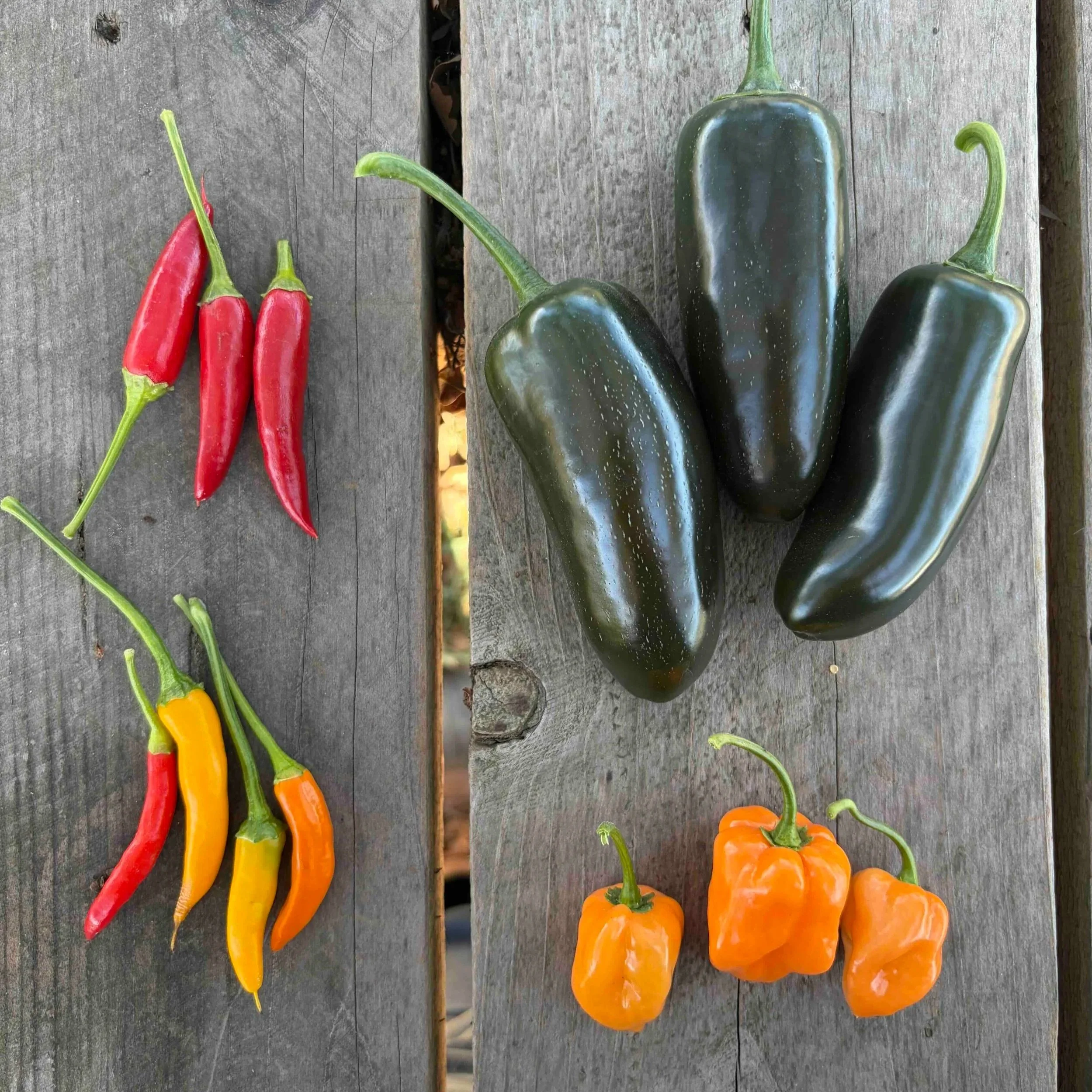
Hot pepper lineup! top left: Thai chilis / Top right: Jalapeños / Bottom left: Ot Hiem / Bottom right: Habanero.

HARVEST NOTES

  • Sweet Peppers: We’re excited to finally be welcoming sweet peppers to the party this week!

    • Cornitos: We’ll have three colors of these delicious Italian peppers whose name means “little horns” after the Italian Corno di Toro “bull’s horn” peppers. They make excellent snacks eaten out of hand, sliced into salads, fried, and roasted.

    • Jimmy Nardello: A beloved Italian heirloom, which the Nardello family preserved and named after their son Jimmy after their immigration to the U.S. These peppers look spicy, but are incredibly sweet. Their thin walls make them perfect for pan-frying and roasting.

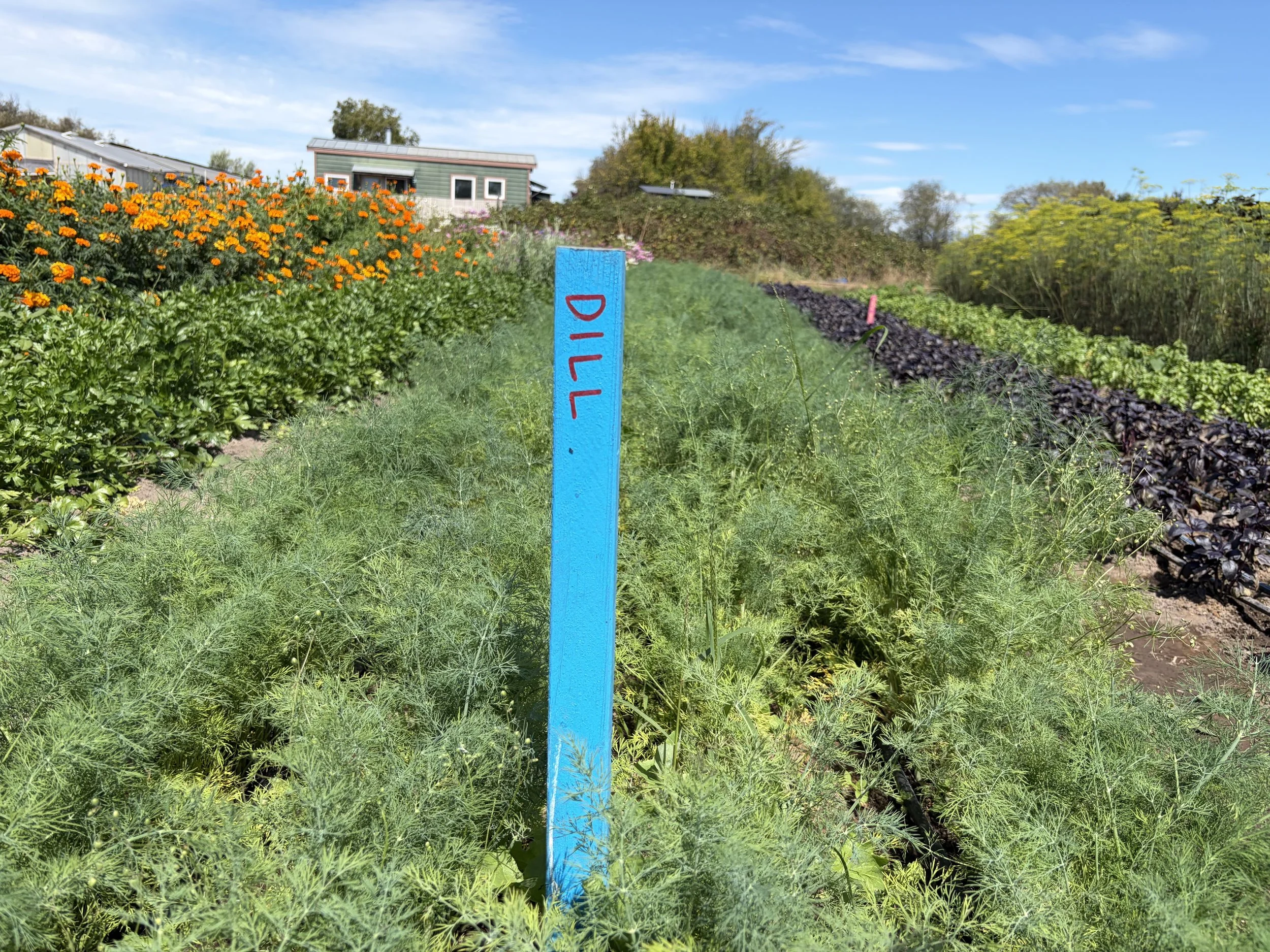
The herbs in north garden are truly exceptional right now. We recommend visiting and collecting some Dill, Cilantro, Basil (of many kinds!) and Parsley.

SAUCY CHERRY TOMATO PASTA

Adapted from Alex Weibel

This perfect peak-of-tomato-season recipe comes from CSA member Jenny Ramaswamy, whose family enjoys it so much they’ve nicknamed it “Mama’s Pasta.” It’s delicious, simple and perfect for a weeknight dinner. Check out the original recipe (linked above) for a version that includes pan-fried capers if that’s up your alley.

INGREDIENTS

  • Kosher salt and black pepper

  • 4 tablespoons olive oil

  • 3 tablespoons tomato paste (or half a tube if you don’t want to measure)

  • 3 large garlic cloves, thinly sliced

  • 1-3 teaspoons red pepper flakes (if you want a spicey sauce)

  • 1 pound of pasta

  • 1½ -2 pounds cherry tomatoes, halved (if you want it saucier, make it closer to 2lbs)

  • ½ packed cup thinly sliced fresh basil, plus small whole leaves, for garnish (optional)

  • Fresh ricotta, shaved ricotta salata, burrata or grated pecorino or Parmesan, for topping each serving (optional)


DIRECTIONS

  1. Bring a large pot of salted water to a boil over high heat.

  2. In a nonstick, deep-sided skillet, heat 2 tablespoons oil over medium-high. Add the tomato paste to the skillet and cook over medium-high, stirring frequently, until the tomato paste darkens in color and deepens in flavor, about 1-2 minutes. 

  3. Reduce the heat to medium, add the remaining 2 tablespoons olive oil, the garlic and red-pepper flakes, if using, and cook, stirring frequently, until garlic is softened and fragrant, about 1-2 minutes.

  4. Add the cherry tomatoes to the skillet, season with salt and pepper and cook over medium-high, stirring, 5 minutes. 

  5. Add the pasta to the boiling water.  Cook according to package instructions until al dente. Sauce may still be cooking, but be sure to drain the pasta when it is done to avoid over-cooking.

  6. AFTER the pasta has boiled for a few minutes, add ⅔ cup pasta cooking water from the pot and cook, stirring occasionally, until the tomatoes start to fall apart and the liquid becomes saucy, about 10 minutes.

  7. Transfer the drained pasta to the skillet with the sauce to combine. Stir in half the basil and season to taste with salt and pepper.

  8. Divide among plates or bowls and top with capers and remaining basil, plus cheese and whole basil leaves. Serve immediately

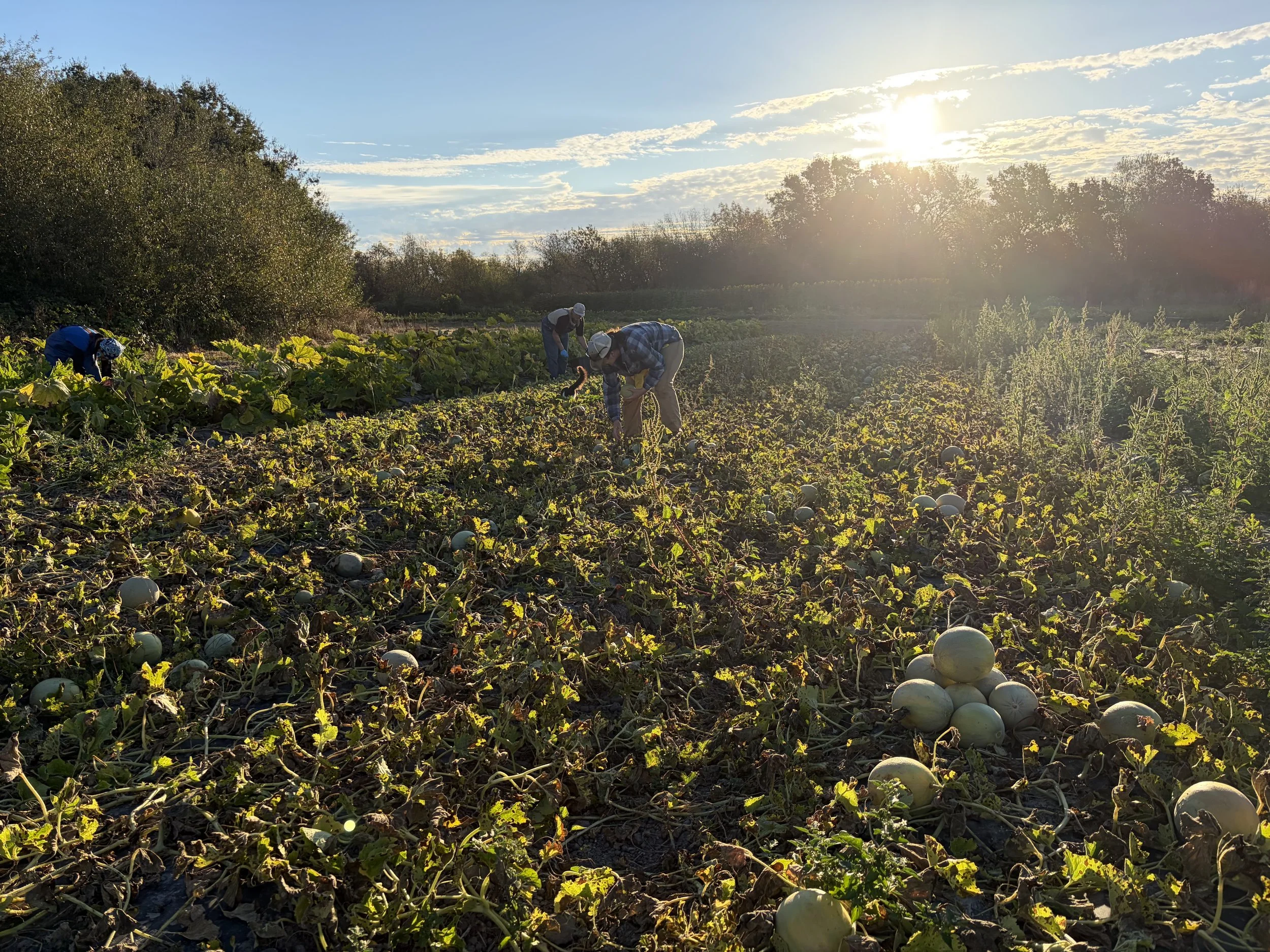
We were feeling fall vibes this morning as we picked the last of the Sarah’s Choice Cantaloupe, with a special cameo by one of the neighborhood cats.

VENDOR UPDATES:

SONOMA MOUNTAIN BREADS ON FRIDAYS!

We’re excited to share that Sonoma Mountain Breads will be offering fresh baked, whole grain breads at the Friday CSA pickup starting next Friday, the 18th. SMB has recently transitioned to baking sourdough breads with one hundred percent whole wheat flours grown in and around Northern California. SMB's signature Hillside loaf is baked with Hard White wheat grown and milled by Farmer Mai at WCCF’s old site off Green Valley Rd. outside of Graton. Offerings will include three to four kinds of rustic, hearty sourdough bread, baguettes, and chocolate chunk cookies. Sonoma Mountain Breads will also continue to be at the Saturday CSA pickups as well!

FIELD NOTES COFFEE

We’re lucky to welcome CSA member George Kuhn’s Field Notes Coffee to the pick-up barn. George will be tabling and offering samples of his delicious beans for a while. Field Notes Coffee sources the top 4-8% of coffee in the world through trusted, local, importers. Guided by a farm-to-cup philosophy, they roast their specialty-grade coffee to order, locking in freshness to celebrate each bean’s journey from remote origins to the hands of true coffee adventurers like you. They sell by the ounce so you have enough for a week or two. Bring your favorite container for the beans to reduce waste, however, if you don't have one, they can provide packaging.

FARMER’S LOG

THE SEASON OF RECKONING

The following is a bit of a nerdy ag report on how our growing season has shaped up in the fields so far this year.

As the tomato and pepper avalanche start raining down into our harvests, the tasks are starting to feel autumnal on the farm’s production side. Leaves are crisping up. Crops are being taken out. Cover crop seed is ordered. The storage harvests are beginning.

Our storage crop harvest season officially began this Tuesday and Wednesday as we brought in the big, beautiful, red Monastrell onions. They are now laid out curing on our greenhouse tables, like schools of beautiful jelly-fish. If they cure correctly it was a great year in the Monastrells.

Over the next six weeks the harvest train will roll on: Next stop, early winter squash varieties, then our yellow Calibra storage onions, potatoes, celery root, late winter squash, popcorn, and finally, storage carrots.

Late August and September is when we, as farmers, begin to be able to talk about how the growing season went — the ink isn’t dry yet, but we know what did well, what struggled, what our challenges and successes have been…

It is the Season of Reckoning.

2026’s growing season has been relatively good — abundant, we feel, but only because we plant very diversely and because we buffer (meaning we plant more than we need). Because ultimately 2026 was one of the stranger and more difficult years in our fields.

2026 was the year of fungal disease like we’ve never seen: The mild and relatively warm Winter we had (no hard frosts?) followed by a warm, wet Spring, followed by a foggy, cool summer was an ideal climate for fungi. On an organic farm, fungus is just a natural part of the biome for our crops and they usually fight it off. But the weather we’ve had can tip the scales. Heightened fungal diseases played out painfully in numerous crops this year: We had our first outright garlic crop failure due to rust — the first in our 10 year history. Downy mildew plagued our melons and late plantings of cucumbers, killing our Striped Armenian cucumbers and diminishing our watermelon harvests. A late blight fungus is even striking at our tomatoes right now, but the bulk of the crop should be harvestable.

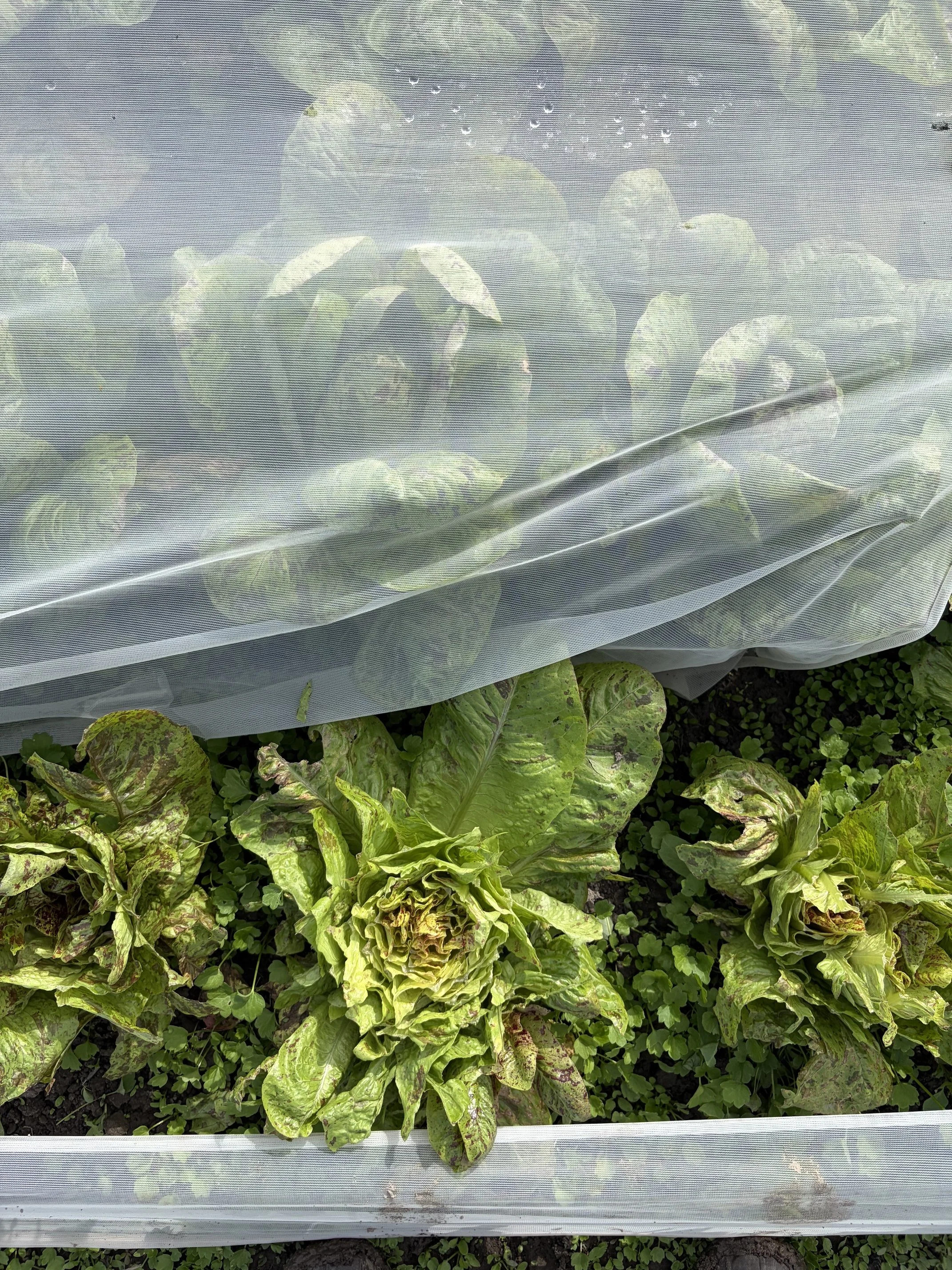
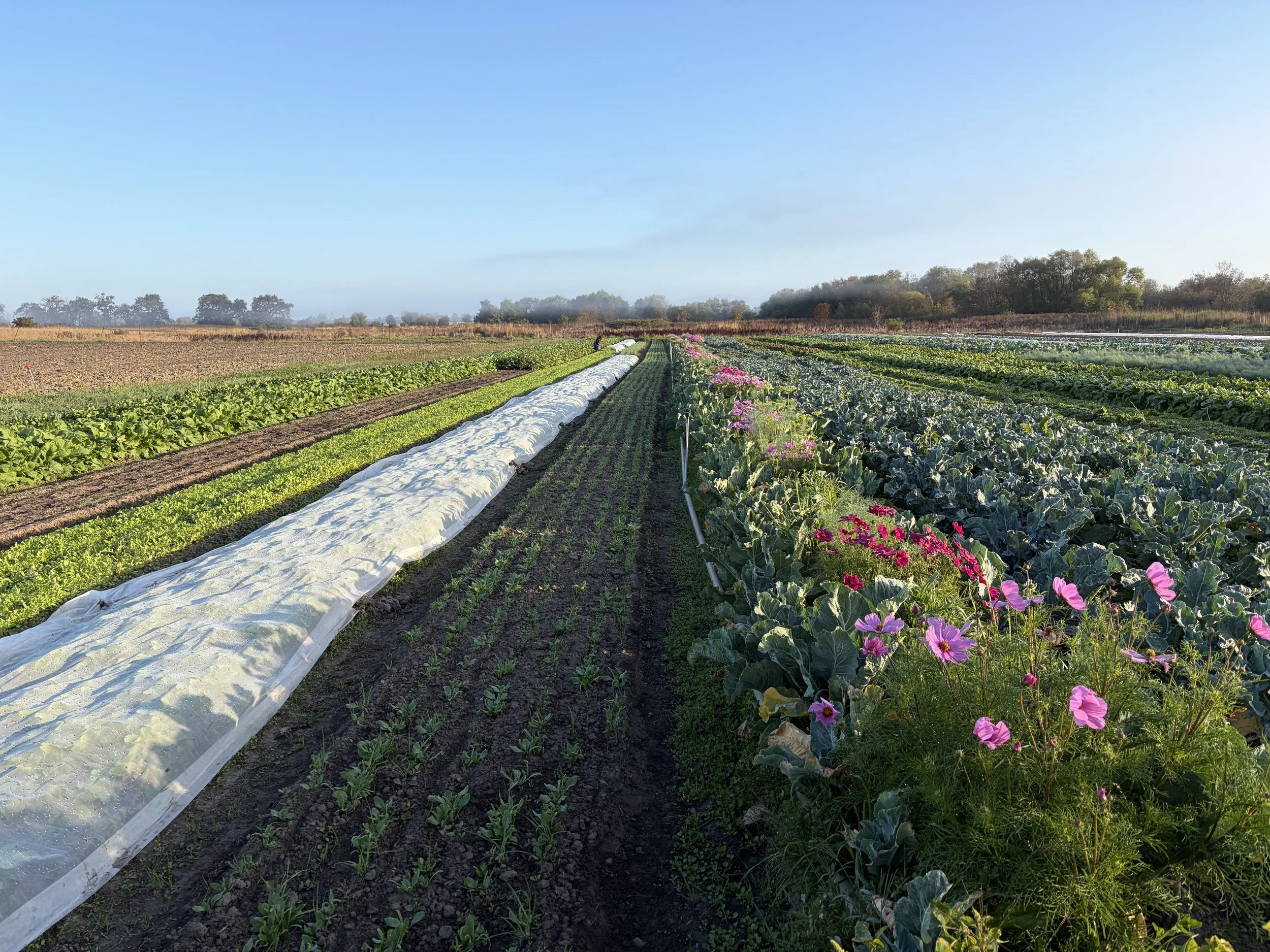
Behold the fate of lettuce (via turkeys) if the row cover slips off.

Second, and related, it’s was a dang cool summer! A lot of our fruiting crops (like tomatoes, melons, winter squash, peppers) require a certain amount of “heat units” (time spent being warm) to ripen their sweet fruits. The compounds lycopene in tomatoes and capsanthin in peppers, responsible for their fruit’s flavor and complexity, need temperatures in the upper 70’s and 80’s to biosynthesize. Similarly, watermelon need 3,600–5,400°F “heat units” to grow a big sweet fruit. We spent so much of this summer under a blanket of dripping fog that it delayed the harvests of tomatoes and sweet peppers until September (we’ve harvested them in bulk in mid August before).

This year we were also really confronted with the limits of certain soils in certain spots on the farm. WCCF is blessed with a mixed topography of rich growing ground, but scattered across our fields are blobs of shallow, magnesium-clay-heavy topsoil that follow their own logic — shaped by the land's natural contours. Magnesium and clay are stingy characters — they bind to essential plant nutrients and don’t give them up without a fight. These soils also hold onto water to a much greater degree than the sandier soils 20 ft away, This makes irrigation and field planning at our scale difficult. Some treasured crops had to be put in fields to face those blobs this year. It was a battle but things did alright.

And what of the successes?!

Those we cannot talk about right now. That would be to tempt fate. I can feel the Farm Gods stirring even as I type this.

We cannot talk about how amazing plants are. We cannot talk about the storage onions who seemed to take the excess water and the mag heavy clay on the chin and found what they needed to create softball sized bulbs. Or about the stacked potato crop curing out in Farfield. We cannot talk about the hard work of our whole team keeping the fresh veg fields on time, flowing, and protected from the voracious turkey colonies we have this year. (Like how Asa has physically covered every succession of lettuce so that the turkeys leave some for you.) We cannot talk about how the strawberries cranked.

The Farm Gods go to sleep in December. We can talk about those things then.

See you in the fields,
David


CSA BASICS

Check out our Brief Membership Guide: A quick-reference on the essentials of being a member.

Harvest pick-up times:

  • Friday harvest pick-ups run from 1:00 pm - 6:00 pm

  • Saturday harvest pick-ups run from 9:00 am - 2:00 pm

  • Tuesday harvest pick-ups will run from 1:00 pm - 6:00 pm

U-pick hours: Oriented members can come to the farm any time, 7 days a week, sunrise to sunset, to u-pick and enjoy the farm.

2026 CSA program dates: This year’s harvest season will run from Friday, June 12th through Tuesday, December 8th this year.

Where is the farm? The member parking lot is located at 1720 Cooper Rd., Sebastopol, CA 95472.

Slow on Cooper Rd. Please drive slowly on Cooper Road — 20 mph. It's a neighborhood with lots of kids and animals who generously share the road with us.