
POTATO HARVEST PARTY!
THis Saturday, September 26th, 9:00 am - 11:20 am
Join us for our 9th annual potato harvest party this Saturday morning as we watch potatoes shower up out of the ground in the wake of the tractor and then bag them, fresh from the soil, with friends & neighbors. It’s an unforgettable experience, especially for kiddos. All ages and abilities welcome.
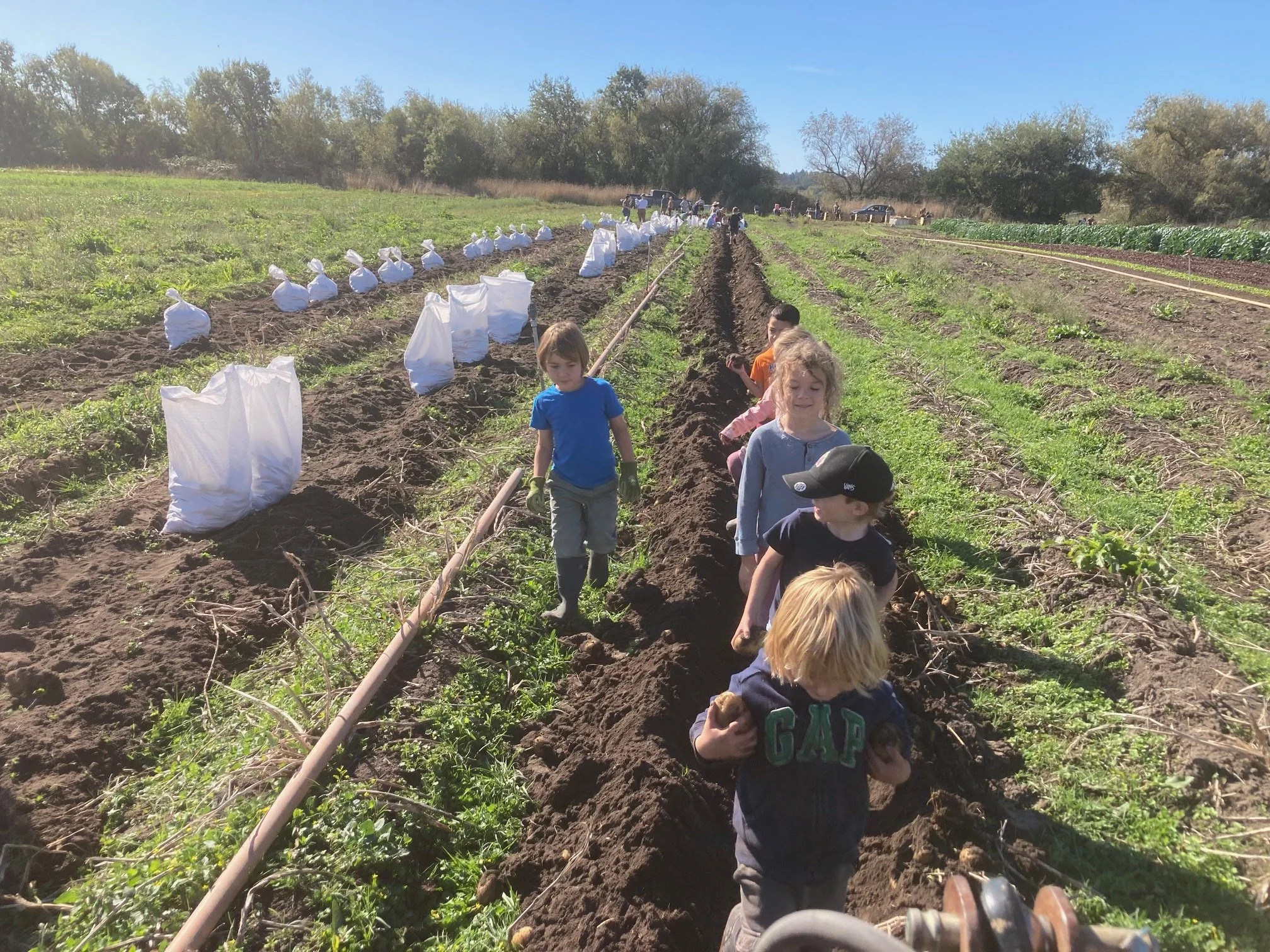
We recommend clothes you don’t mind getting dirty. Some people prefer using light gloves. We’ll have some light refreshments, music from the boombox, and an agrarianly awesome time. (For new members: This potato harvest is not required in any way for members to enjoy potatoes. We will be distributing them every week whether or not you come to harvest!)
THIS WEEK’S HARVEST
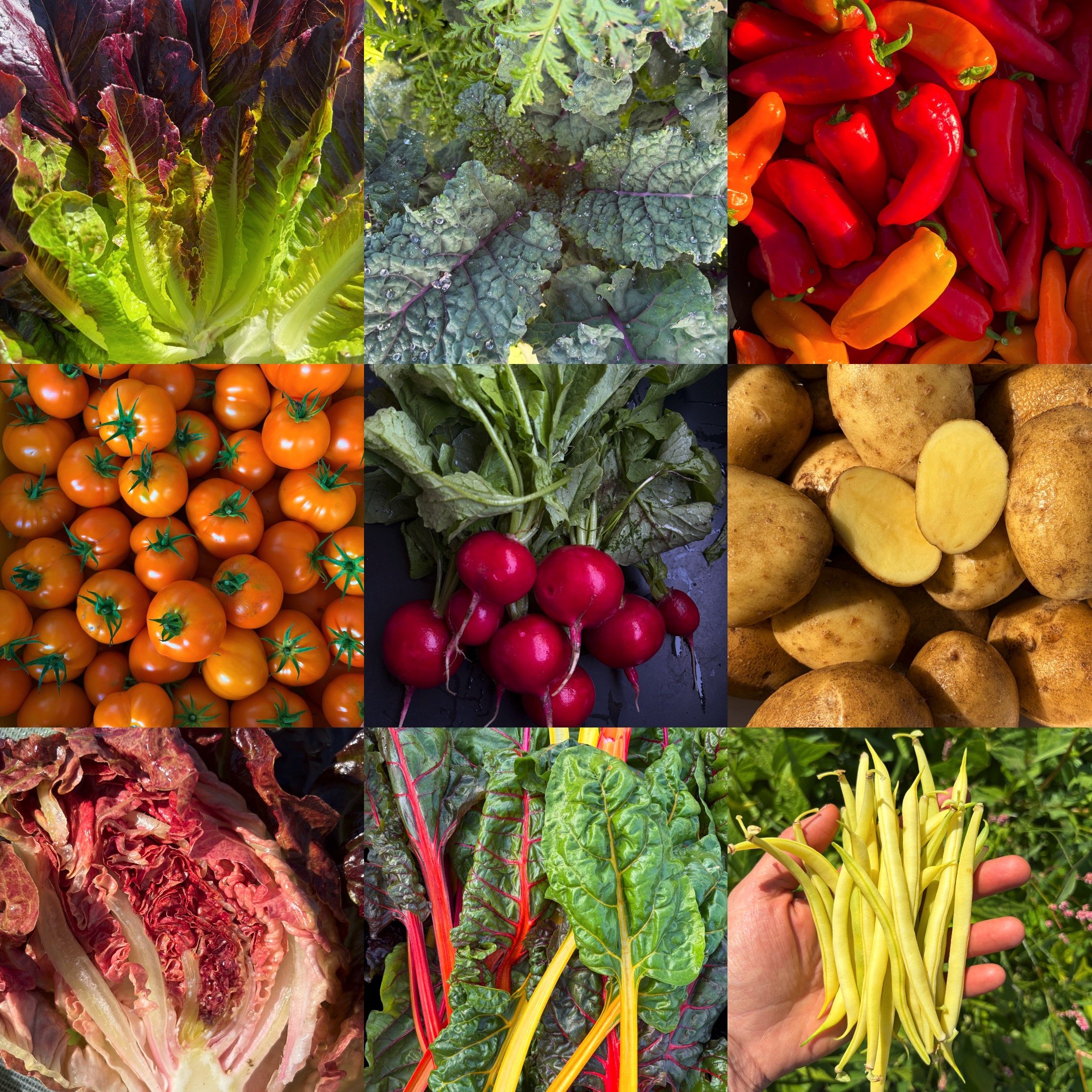
Mustard Mix, Pink Volcana Little Gem Lettuce, Red Romaine Lettuce, Rainbow Chard, Lacinato Rainbow Kale, Bunched Beets, Red Radishes, Assorted Zucchini & Summer Squash, Carrots, Fresh Yellow Onions, German Butterball Potatoes, Eggplant, Sweet Peppers, Poblano Peppers, Bulk Tomatoes
U-PICK
Check the u-pick board in the barn for weekly u-pick limits.
Albion Strawberries: ✨2 pints per share✨
Cherry Tomatoes: Gleanings | There are still cherry tomatoes to be had, but they are starting to wind down (particularly the Sungolds! — branch out to other varieties if you want to harvest more.)
🌟 Goldilocks Beans: No limit — take what you’ll eat! | Check out the harvest notes below for more info!
Frying Peppers:
Padrons: No limit — take what you’ll eat!
Shishitos: No limit — take what you’ll eat!
Hot Peppers:
Jalapeños: No limit — take what you’ll eat!
Thai Chilis: 15 peppers per share
Habaneros: 3 peppers per share | Look for the orange peppers hiding low down under the plant.
Ot Hiem: 10 peppers per share
Herbs & Edible Flowers: Husk Cherries, Lemon Bergamot, Dill, Cilantro, Purple Basil, Thai Basil, Lemon Basil, Italian Basil, Tulsi, Parsley, Chamomile, Calendula, Nasturtium, Pansies/Viola, Garlic Chives, Tarragon, Thyme, Oregano, Marjoram, Lemon Balm, Lemon Verbena, Vietnamese Coriander, Shiso/Perilla, Catnip, French & Culinary Lavender, Sorrel, & Assorted Mints
Flowers galore!
HARVEST NOTES
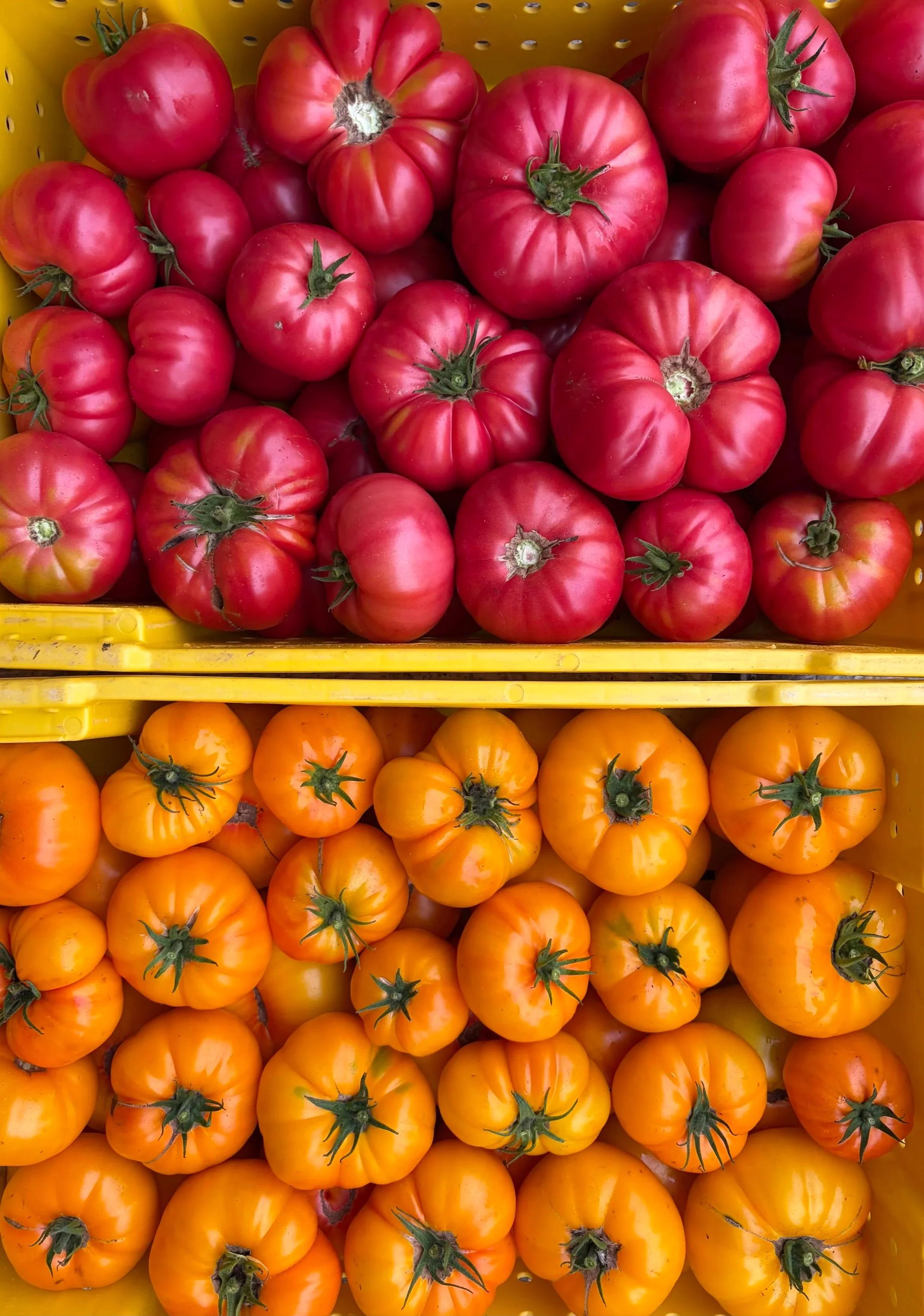
How much longer will we have tomatoes? Is the 64 million dollar question in the barn these days. We are feeling confident that we’ll be able to offer them this week and next (Week 17) but beyond that, we make no promises! If you’ve been struggling to find the time to process your bulk tomatoes, remember that you can always just throw them in a ziplock bag in the freezer and deal with them later (think of how delightful it will be to be stewing tomato sauce when it’s cold and rainy outside!). Or, if you pick out canning tomatoes that are on the less ripe side, they’d be happy to sit on your counter for most of a week til you’re ready (the smooth, elongated paste tomatoes without stripes are best for this).
Goldilocks Beans: These beautiful, pale yellow beans are our last bean succession of the year, and the one we look forward to the most. They’re delicate and sweet — perfect for fresh eating, dilly beans, or, if you haven’t made it yet this season, salade niçoise! Really, given this week’s luscious potatoes we think that’s definitely the way to go. Check out Bon Appétit’s great niçoise dressing recipe here.
German Butterball Potatoes: Seed potato grower David Ronniger introduced it in 1988 while collecting old European-style varieties, and it went on to win first place in Organic Gardening magazine's potato taste-off. It's been a cult favorite with growers and cooks ever since. The name is accurate: under the lightly netted golden skin is deep yellow flesh so rich and buttery that it barely needs any butter at all. They're a true all-purpose potato, great mashed, fried, or baked, but roasting is where they shine: cut them into chunks, toss them in olive oil and salt, and roast them hot until the outsides crisp up around a creamy, pillowy center.
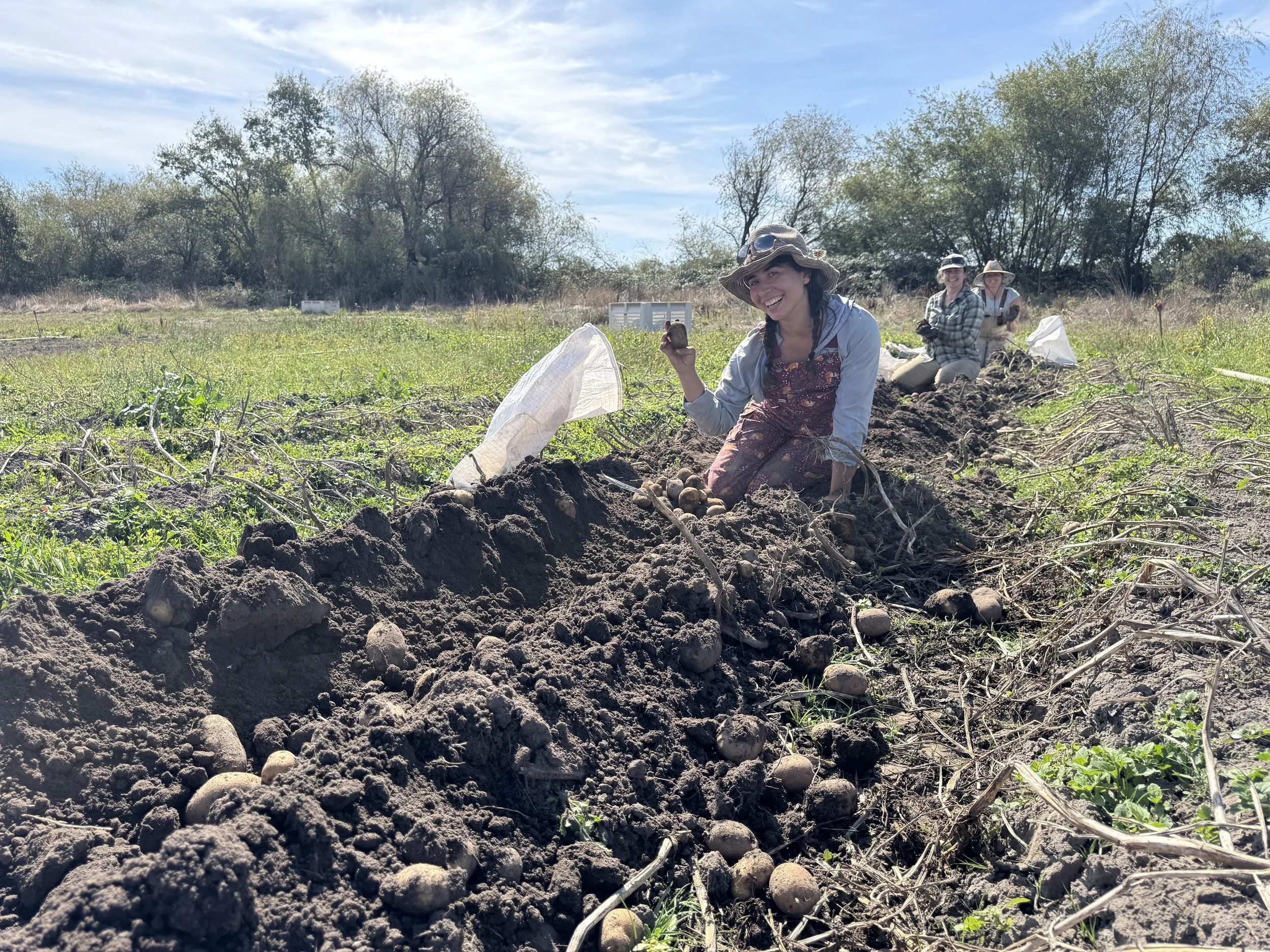
Shanga, Melinda, and Riley harvesting German Butterballs this morning
RATATOUILLE
Recipe adapted from The Kitchn
Ratatouille is made with summer veggies, but as cozy as a cool fall evening.. This recipe calls for an artful arrangement, but if you’re feeling in a rush, you can always chop the ingredients, toss with olive oil and roast on a sheet pan. And if you still have any Floriani Red Flint cornmeal hanging out in your freezer, ratatouille is delicious paired with polenta!
ingredients
1 medium zucchini
1 medium yellow summer squash
2 medium Asian eggplant or 1 Italian
2 medium Roma tomatoes
1 small yellow onion
1 small sweet pepper
3 cloves garlic
1/2 small bunch fresh thyme
1/2 small bunch fresh basil
4 tablespoons olive oil, divided
1 1/4 teaspoons kosher salt, divided
1/4 teaspoon freshly ground black pepper
1 cup tomato purée
1 teaspoon red wine vinegar
DIRECTIONS
Arrange a rack in the middle of the oven and heat the oven to 375ºF.
Trim and cut the following with a mandoline or sharp knife crosswise into 1/16-inch-thick rounds: 1 yellow summer squash, 1 zucchini, 2 Asian eggplants, and 2 medium Roma tomatoes.
Dice 1 small yellow onion and 1 sweet pepper. Mince 3 garlic cloves. Pick the leaves from 1/2 small bunch fresh thyme until you have 4 teaspoons. Pick the leaves from 1/2 small bunch fresh basil and finely chop until you have 1/4 cup.
Heat 2 tablespoons of the olive oil in a 10-inch oven-safe or cast iron skillet over medium heat until shimmering. Add the onion, bell pepper, 1 teaspoon of the kosher salt, and 1/4 teaspoon black pepper. Cook, stirring occasionally, until softened, 8 to 10 minutes.
Add the garlic, 2 teaspoons of the thyme, and basil, and cook until fragrant, about 30 seconds. Add 1 cup tomato purée and stir to combine. Bring to a simmer. Reduce the heat to maintain a gentle simmer and cook, stirring occasionally, until the flavors meld and the sauce is slightly thickened, about 10 minutes.
Remove the skillet from the heat. Add 1 teaspoon red wine vinegar and stir to combine. Spread the sauce into an even layer.
Arrange the zucchini, yellow squash, eggplant, and Roma tomatoes on top of the sauce in a concentric circle: Start at the outer edge of the skillet and work inward, alternating the vegetables and overlapping the slices so that just a little bit of each slice is visible.
Drizzle the remaining 2 tablespoons of the olive oil over the vegetables. Sprinkle the remaining 2 teaspoons thyme and remaining 1/4 teaspoon kosher salt over the top.
FARMER’S LOG
a Potato Digging
This Saturday morning, we'll come together to perform a quintessential autumn ritual: The potato harvest.
As we kneel down on the Earth, bagging cool tubers, we will join in concert thousands of people around the world performing the same ritual. We will also join untold millions of ancestors who knelt together and harvested potatoes. We will be connected, via a living, breathing chain of seed potatoes to hundreds of historic potato harvests in Europe and Asia and to thousands of harvests in the Andes and northwestern Bolivia — the cultural birthplace of this amazing crop.
There is nothing quite like an abundant potato harvest and the feeling, afterwards, of storing them away — in a pit, a cooler, a cave; the potatoes themselves alive, breathing slowly, promising food, promising life, throughout the winter months.
Potatoes have been the staff-of-life for many cultures throughout history.
When healthy, potatoes produce the most calories per acre than corn, wheat, or rice. And potatoes are the only one of these staff-of-life crops that grow (the food part, at least) in the Earth — shrouded in the dark and in mystery until they are lifted up into the light at harvest.
While we farmers check the potatoes as they grow every so often, every potato harvest is a mystery for us farmers until we hook the middle-buster shovel onto the tractor and split open the mounds.
Many have known the feeling of incredible abundance that potatoes can give and many have known the opposite. From 1845 - 1852, due to limited potato genetics in the region and the cold shoulders of powerful men, a million people starved in the poorer parts of Western Ireland and the Scottish highlands as a blighted potato crop rotted in the fields. The potato has been a powerful and painful bond between people and Mother Earth, in feast and in famine, for millennia.
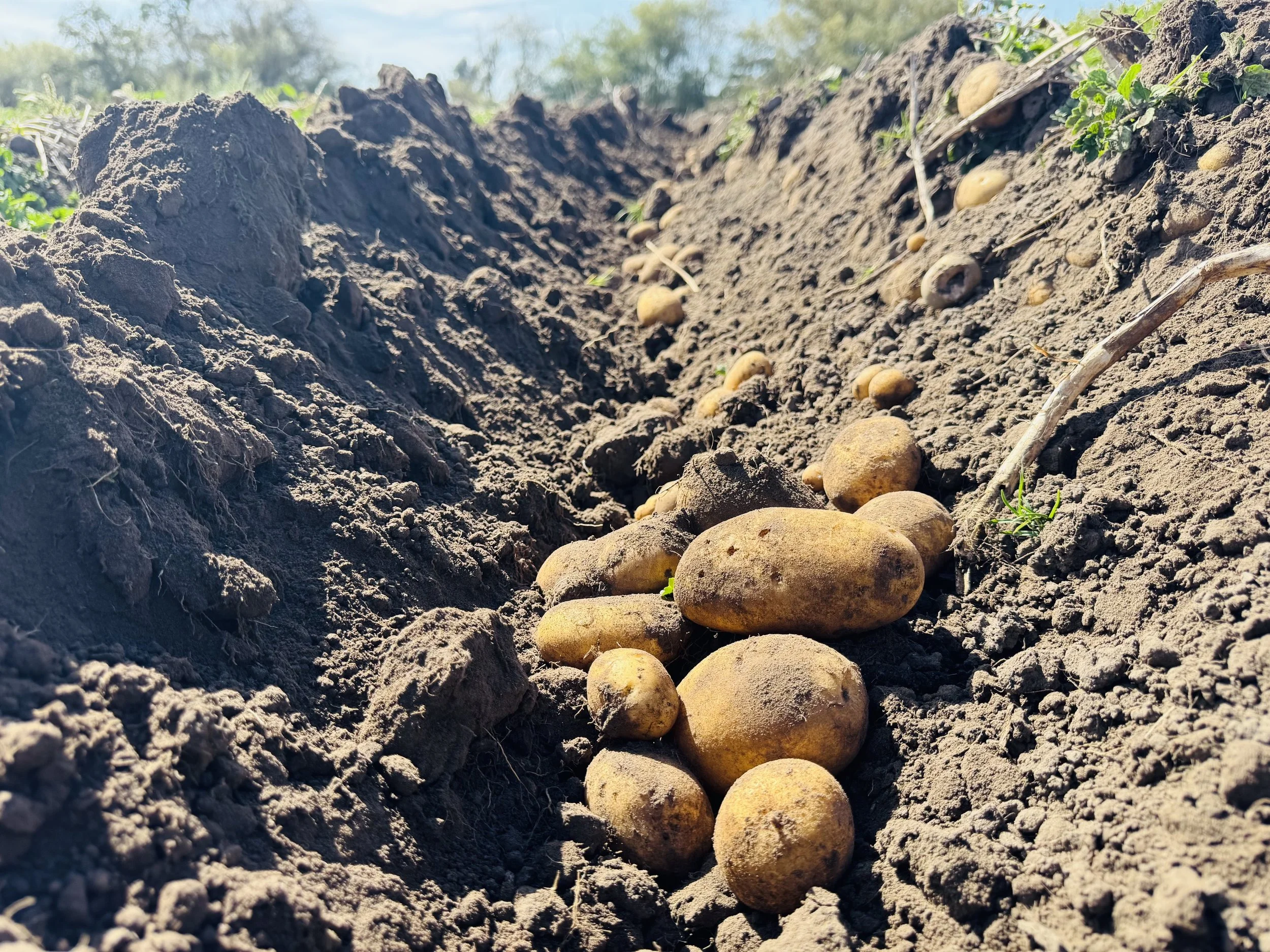
Unearthed into the light
The Nobel Prize winning Irish poet, Seamus Heaney, speaks to this history in his poem, “At a Potato Digging”.
* * * * *
I.
A mechanical digger wrecks the drill,
Spins up a dark shower of roots and mould.
Labourers swarm in behind, stoop to fill
Wicker creels. Fingers go dead in the cold.
Like crows attacking crow-black fields, they stretch
A higgledy line from hedge to headland;
Some pairs keep breaking ragged ranks to fetch
A full creel to the pit and straighten, stand
Tall for a moment but soon stumble back
To fish a new load from the crumbled surf.
Heads bow, trucks bend, hands fumble towards the black
Mother. Processional stooping through the turf
Turns work to ritual. Centuries
Of fear and homage to the famine god
Toughen the muscles behind their humbled knees,
Make a seasonal altar of the sod.
II.
Flint-white, purple. They lie scattered
Like inflated pebbles. Native
to the blank hutch of clay
where the halved seed shot and clotted
these knobbed and slit-eyed tubers seem
the petrified hearts of drills. Split
by the spade, they show white as cream.
Good smells exude from crumbled earth.
The rough bark of humus erupts
knots of potatoes (a clean birth)
whose solid feel, whose wet inside
promises taste of ground and root.
To be piled in pits; live skulls, blind-eyed.
III.
Live skulls, blind-eyed, balanced on
wild higgledy skeletons
scoured the land in 'forty-five,'
wolfed the blighted root and died.
The new potato, sound as stone,
putrified when it had lain
three days in the long clay pit.
Millions rotted along with it.
Mouths tightened in, eyes died hard,
faces chilled to a plucked bird.
In a million wicker huts
beaks of famine snipped at guts.
A people hungering from birth,
grubbing, like plants, in the earth,
were grafted with a great sorrow.
Hope rotted like a marrow.
Stinking potatoes fouled the land,
pits turned pus in filthy mounds:
and where potato diggers are
you still smell the running sore.
IV.
Under a white flotilla of gulls
The rhythm deadens, the workers stop.
White bread and tea in bright canfuls
Are served for lunch. Dead-beat, they flop
Down in the ditch and take their fill,
Thankfully breaking timeless fasts;
Then, stretched on the faithless ground, spill
Libations of cold tea, scatter crusts.
* * * * *
We include this poem, with its dark memory, not for its shock value, but for the bond it invokes.
Modern markets divorces us from the primal bond we have to our staple food crops — and from the planet that cradles them. To be sure, this bond is still as strong as ever, but we rarely, if ever, feel it like Seamus Heaney asks us to. On the eve of the harvest of one of our staple crops, we think it is important to feel it. While this bond can be scary, it is also the source of our life and deserves our most profound gratitude.
At West County Community Farm this year, we are thankful. This year’s potato crop will be super abundant and it will fill our bellies long into winter.
The potato field in July was a vision to behold — a sea of purple and white flowers. The shimmering green foliage reached to our belly-buttons, covering every inch of ground so that it was hard to walk. All that energy, all that delight, all that sunlight, was sent down below to the tubers, which are waiting for us now to unearth.
Join us Saturday for our 9th annual potato harvest as we "shower" up the living roots and scatter libations in remembrance and thanks.
See you in the fields,
David
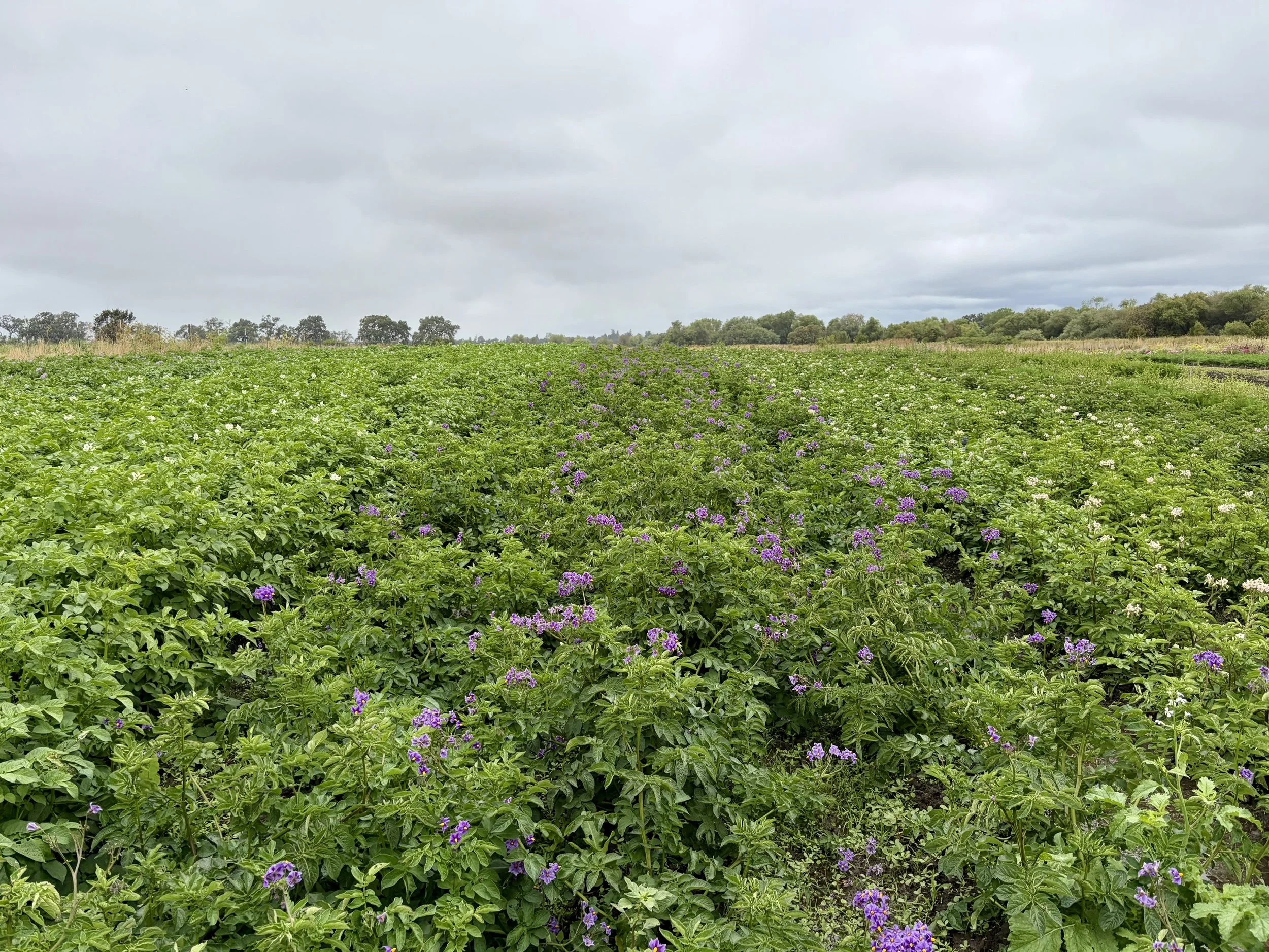
The potato field in flower on July 22nd
CSA BASICS
Check out our Brief Membership Guide: A quick-reference on the essentials of being a member.
Harvest pick-up times:
Friday harvest pick-ups run from 1:00 pm - 6:00 pm
Saturday harvest pick-ups run from 9:00 am - 2:00 pm
Tuesday harvest pick-ups will run from 1:00 pm - 6:00 pm
U-pick hours: Oriented members can come to the farm any time, 7 days a week, sunrise to sunset, to u-pick and enjoy the farm.
2026 CSA program dates: This year’s harvest season will run from Friday, June 12th through Tuesday, December 8th this year.
Where is the farm? The member parking lot is located at 1720 Cooper Rd., Sebastopol, CA 95472.
Slow on Cooper Rd. Please drive slowly on Cooper Road — 20 mph. It's a neighborhood with lots of kids and animals who generously share the road with us.
