
THIS WEEK’S HARVEST
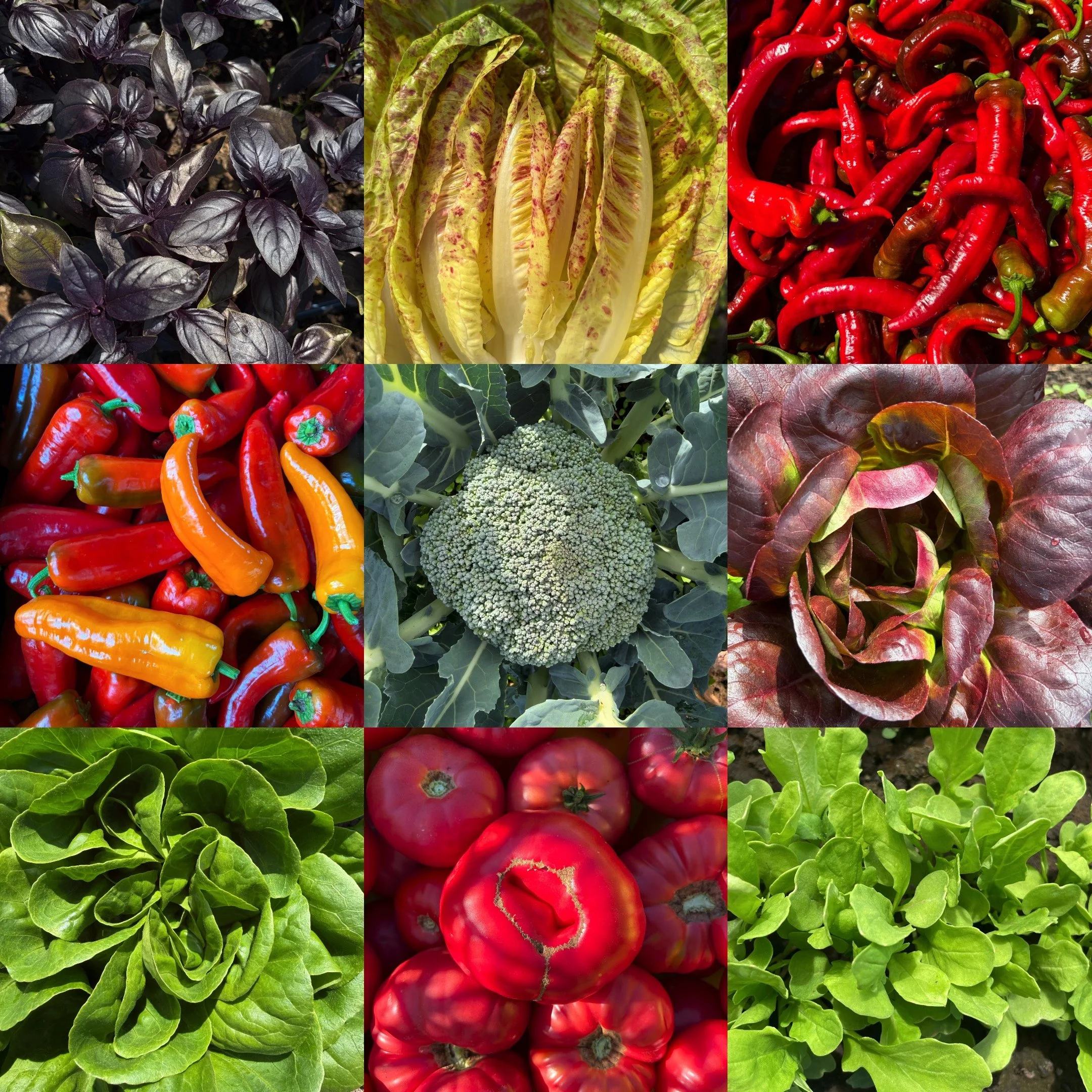
Arugula, Flashy Trout Back Lettuce, Salanova Little Gem Lettuce, Dino Kale, Shanghai Green Bok Choi, Green Magic Broccoli, Assorted Zucchini & Summer Squash, Carrots, Cured Cipollini Onions, Sweet Peppers, Poblano Peppers, Bulk Tomatoes, Eggplant, Assorted Melons
U-PICK
Check the u-pick board in the barn for weekly u-pick limits.
Albion Strawberries: ✨2 pints per share✨
Cherry Tomatoes: No limit — take what you’ll eat!
Dragon Tongue Beans: No limit — take what you’ll eat! |
Frying Peppers:
Padrons: No limit — take what you’ll eat! Did you know that padrons make an incredible component of hot sauce, especially as they ripen to red and are reliably very hot.
Shishitos: No limit — take what you’ll eat!
Hot Peppers:
Jalapeños: 10 peppers per share
Thai Chilis: 5 peppers per share
🌟 Habaneros: 3 peppers per share | Look for the orange peppers hiding low down under the plant. Habaneros make an incredible fresh salsa chopped with lime and salt!
🌟 Ot Hiem: 10 peppers per share | Ot Hiem are Vietnamese peppers whose name means Danger Chili. We got our seeds from True Love Seeds, and they’re ripening to both red and yellow. Brightly fragrant and spicy, they’re delicious in chili pastes, jams, or eaten fresh chopped into citrusy fish sauce!
Herbs & Edible Flowers: Husk Cherries, Lemon Bergamot, Dill, Cilantro, Purple Basil, Thai Basil, Lemon Basil, Italian Basil, Tulsi, Parsley, Chamomile, Calendula, Nasturtium, Pansies/Viola, Garlic Chives, Tarragon, Thyme, Oregano, Marjoram, Lemon Balm, Lemon Verbena, Vietnamese Coriander, Shiso/Perilla, Catnip, French & Culinary Lavender, Sorrel, & Assorted Mints
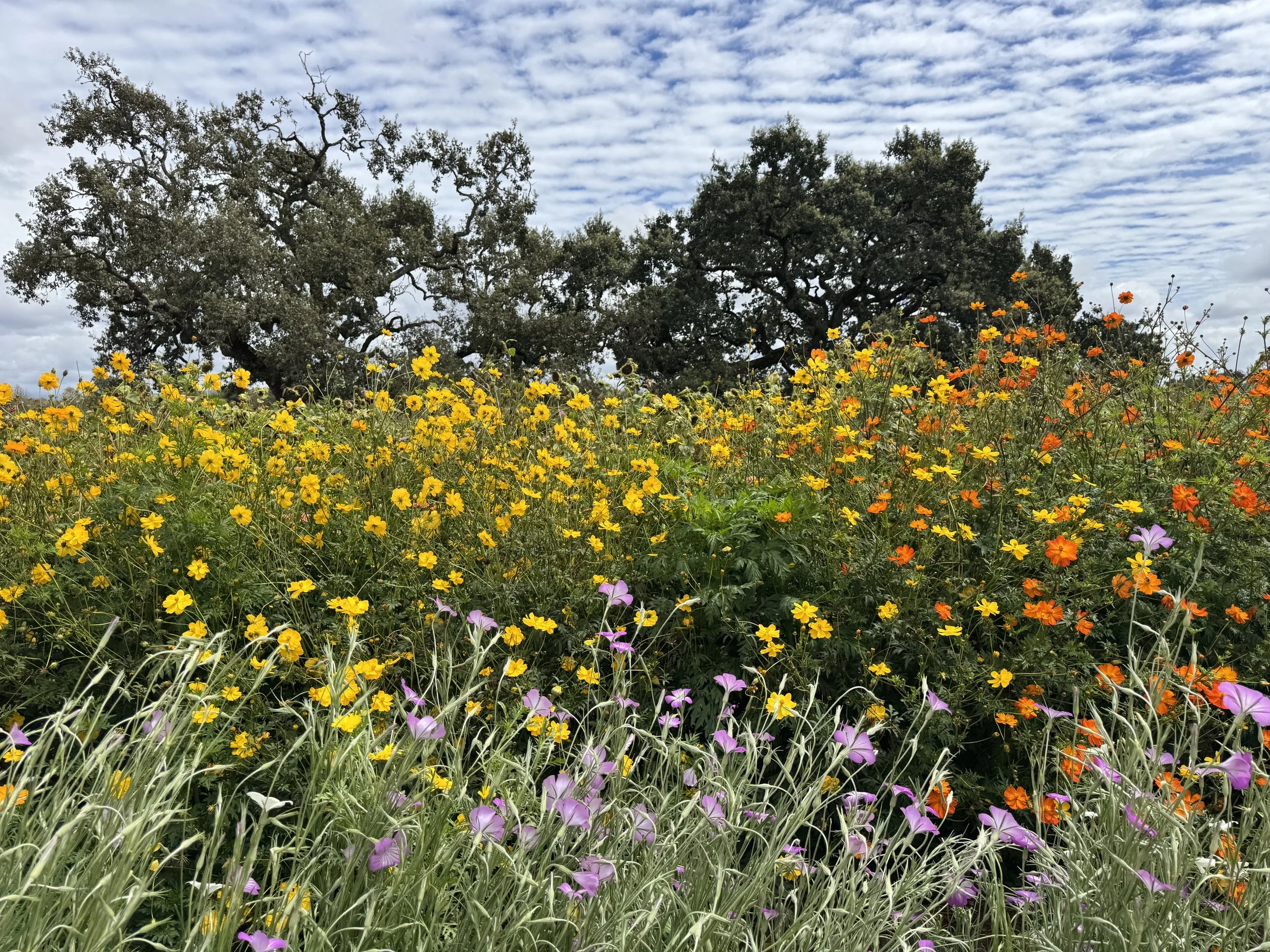
Flowers galore!
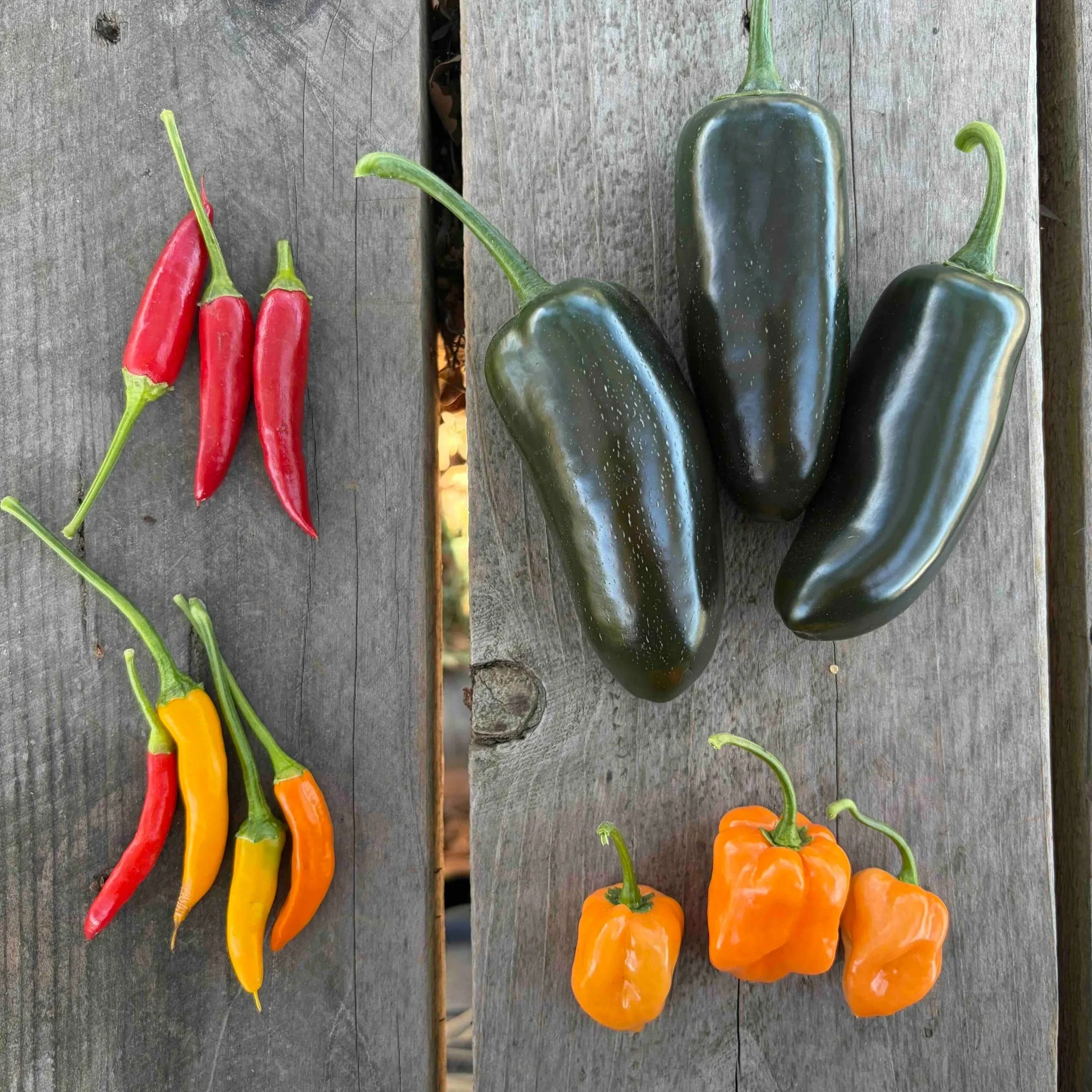
Hot pepper lineup! top left: Thai chilis / Top right: Jalapeños / Bottom left: Ot Hiem / Bottom right: Habanero.
HARVEST NOTES
Sweet Peppers: We’re excited to finally be welcoming sweet peppers to the party this week!
Cornitos: We’ll have three colors of these delicious Italian peppers whose name means “little horns” after the Italian Corno di Toro “bull’s horn” peppers. They make excellent snacks eaten out of hand, sliced into salads, fried, and roasted.
Jimmy Nardello: A beloved Italian heirloom, which the Nardello family preserved and named after their son Jimmy after their immigration to the U.S. These peppers look spicy, but are incredibly sweet. Their thin walls make them perfect for pan-frying and roasting.
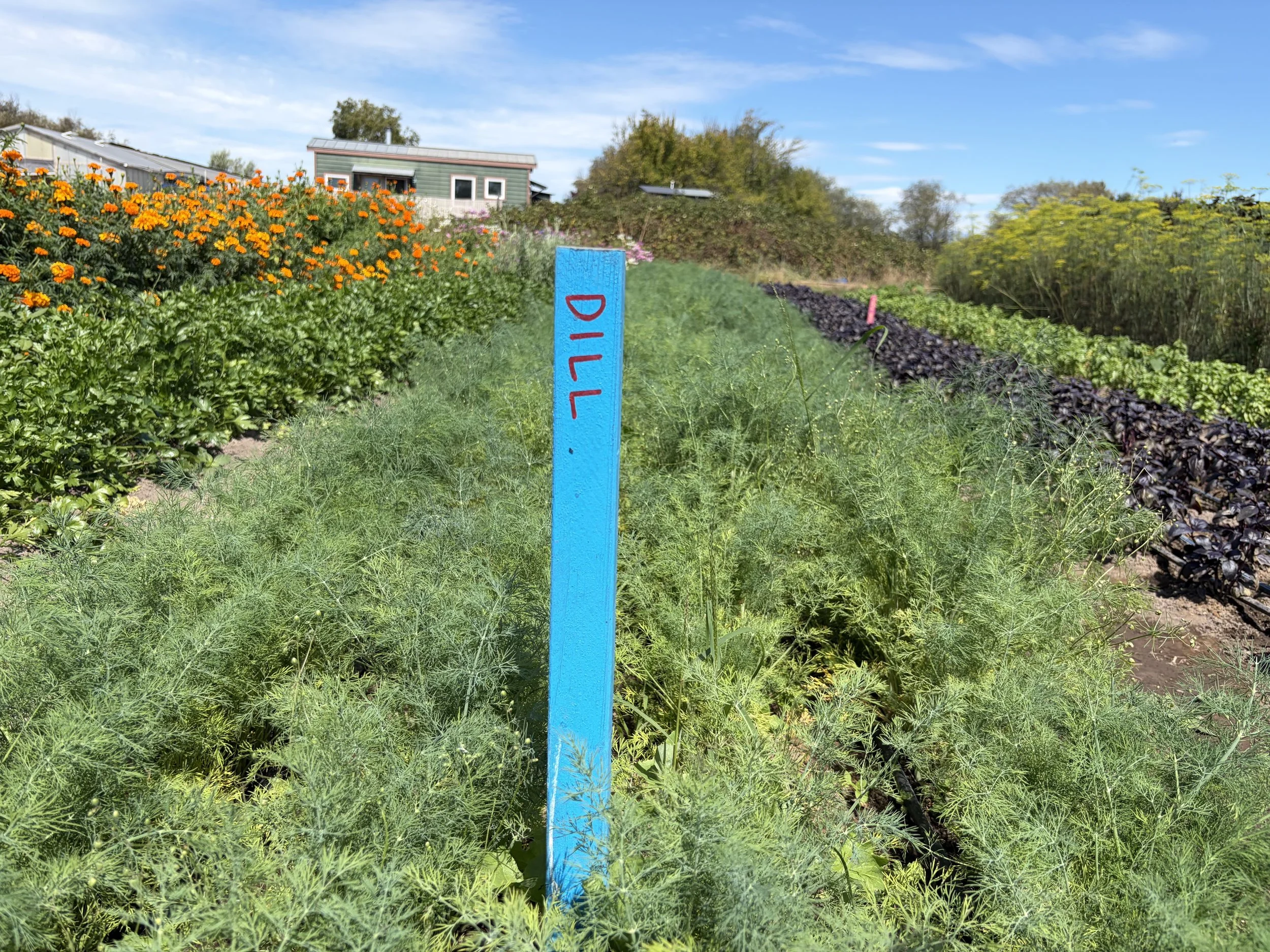
The herbs in north garden are truly exceptional right now. We recommend visiting and collecting some Dill, Cilantro, Basil (of many kinds!) and Parsley.
SAUCY CHERRY TOMATO PASTA
Adapted from Alex Weibel
This perfect peak-of-tomato-season recipe comes from CSA member Jenny Ramaswamy, whose family enjoys it so much they’ve nicknamed it “Mama’s Pasta.” It’s delicious, simple and perfect for a weeknight dinner. Check out the original recipe (linked above) for a version that includes pan-fried capers if that’s up your alley.
INGREDIENTS
Kosher salt and black pepper
4 tablespoons olive oil
3 tablespoons tomato paste (or half a tube if you don’t want to measure)
3 large garlic cloves, thinly sliced
1-3 teaspoons red pepper flakes (if you want a spicey sauce)
1 pound of pasta
1½ -2 pounds cherry tomatoes, halved (if you want it saucier, make it closer to 2lbs)
½ packed cup thinly sliced fresh basil, plus small whole leaves, for garnish (optional)
Fresh ricotta, shaved ricotta salata, burrata or grated pecorino or Parmesan, for topping each serving (optional)
DIRECTIONS
Bring a large pot of salted water to a boil over high heat.
In a nonstick, deep-sided skillet, heat 2 tablespoons oil over medium-high. Add the tomato paste to the skillet and cook over medium-high, stirring frequently, until the tomato paste darkens in color and deepens in flavor, about 1-2 minutes.
Reduce the heat to medium, add the remaining 2 tablespoons olive oil, the garlic and red-pepper flakes, if using, and cook, stirring frequently, until garlic is softened and fragrant, about 1-2 minutes.
Add the cherry tomatoes to the skillet, season with salt and pepper and cook over medium-high, stirring, 5 minutes.
Add the pasta to the boiling water. Cook according to package instructions until al dente. Sauce may still be cooking, but be sure to drain the pasta when it is done to avoid over-cooking.
AFTER the pasta has boiled for a few minutes, add ⅔ cup pasta cooking water from the pot and cook, stirring occasionally, until the tomatoes start to fall apart and the liquid becomes saucy, about 10 minutes.
Transfer the drained pasta to the skillet with the sauce to combine. Stir in half the basil and season to taste with salt and pepper.
Divide among plates or bowls and top with capers and remaining basil, plus cheese and whole basil leaves. Serve immediately
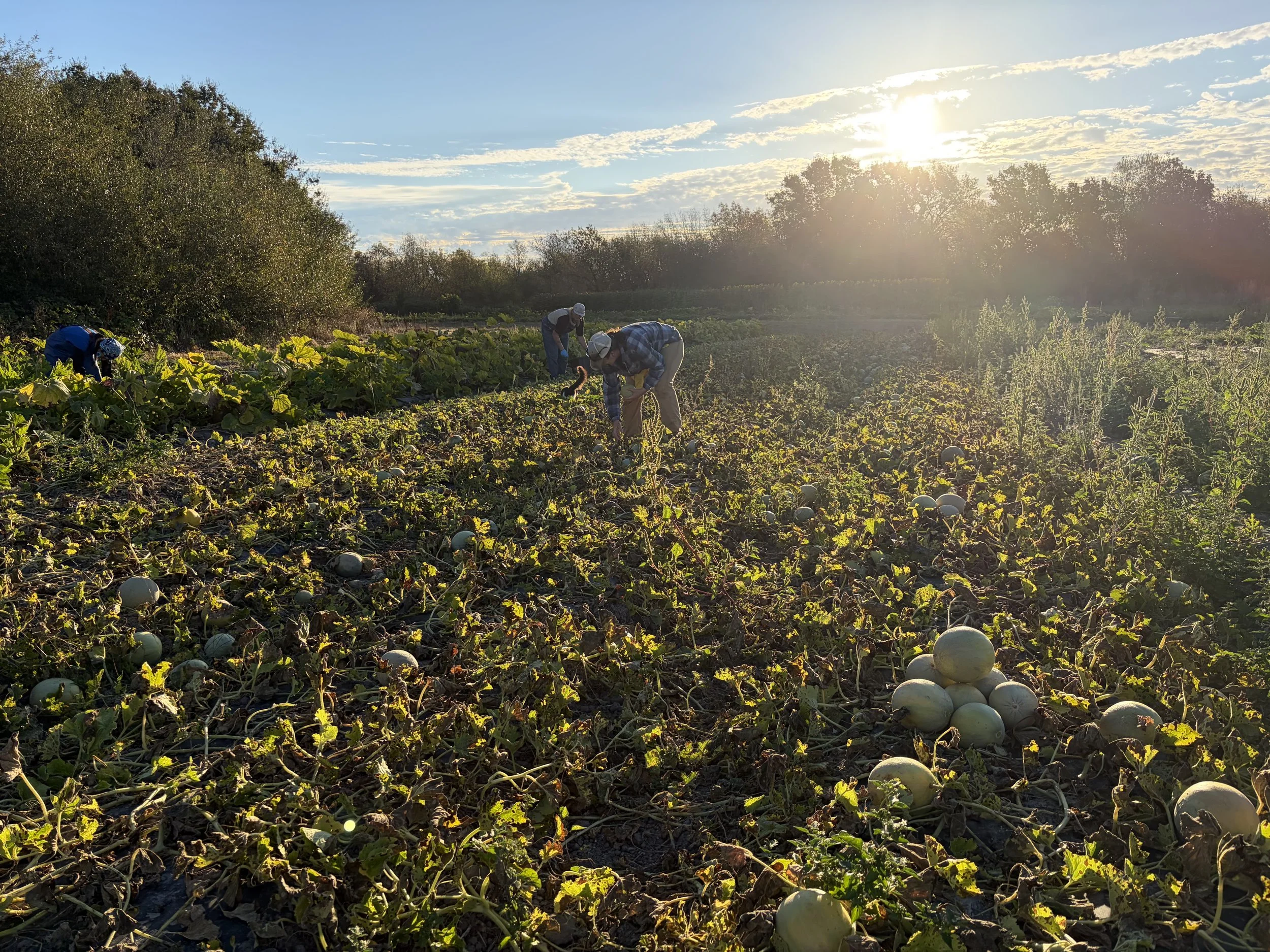
We were feeling fall vibes this morning as we picked the last of the Sarah’s Choice Cantaloupe, with a special cameo by one of the neighborhood cats.
VENDOR UPDATES:
SONOMA MOUNTAIN BREADS ON FRIDAYS!
We’re excited to share that Sonoma Mountain Breads will be offering fresh baked, whole grain breads at the Friday CSA pickup starting next Friday, the 18th. SMB has recently transitioned to baking sourdough breads with one hundred percent whole wheat flours grown in and around Northern California. SMB's signature Hillside loaf is baked with Hard White wheat grown and milled by Farmer Mai at WCCF’s old site off Green Valley Rd. outside of Graton. Offerings will include three to four kinds of rustic, hearty sourdough bread, baguettes, and chocolate chunk cookies. Sonoma Mountain Breads will also continue to be at the Saturday CSA pickups as well!
FIELD NOTES COFFEE
We’re lucky to welcome CSA member George Kuhn’s Field Notes Coffee to the pick-up barn. George will be tabling and offering samples of his delicious beans for a while. Field Notes Coffee sources the top 4-8% of coffee in the world through trusted, local, importers. Guided by a farm-to-cup philosophy, they roast their specialty-grade coffee to order, locking in freshness to celebrate each bean’s journey from remote origins to the hands of true coffee adventurers like you. They sell by the ounce so you have enough for a week or two. Bring your favorite container for the beans to reduce waste, however, if you don't have one, they can provide packaging.
FARMER’S LOG
THE SEASON OF RECKONING
The following is a bit of a nerdy ag report on how our growing season has shaped up in the fields so far this year.
As the tomato and pepper avalanche start raining down into our harvests, the tasks are starting to feel autumnal on the farm’s production side. Leaves are crisping up. Crops are being taken out. Cover crop seed is ordered. The storage harvests are beginning.
Our storage crop harvest season officially began this Tuesday and Wednesday as we brought in the big, beautiful, red Monastrell onions. They are now laid out curing on our greenhouse tables, like schools of beautiful jelly-fish. If they cure correctly it was a great year in the Monastrells.
Over the next six weeks the harvest train will roll on: Next stop, early winter squash varieties, then our yellow Calibra storage onions, potatoes, celery root, late winter squash, popcorn, and finally, storage carrots.
Late August and September is when we, as farmers, begin to be able to talk about how the growing season went — the ink isn’t dry yet, but we know what did well, what struggled, what our challenges and successes have been…
It is the Season of Reckoning.
2026’s growing season has been relatively good — abundant, we feel, but only because we plant very diversely and because we buffer (meaning we plant more than we need). Because ultimately 2026 was one of the stranger and more difficult years in our fields.
2026 was the year of fungal disease like we’ve never seen: The mild and relatively warm Winter we had (no hard frosts?) followed by a warm, wet Spring, followed by a foggy, cool summer was an ideal climate for fungi. On an organic farm, fungus is just a natural part of the biome for our crops and they usually fight it off. But the weather we’ve had can tip the scales. Heightened fungal diseases played out painfully in numerous crops this year: We had our first outright garlic crop failure due to rust — the first in our 10 year history. Downy mildew plagued our melons and late plantings of cucumbers, killing our Striped Armenian cucumbers and diminishing our watermelon harvests. A late blight fungus is even striking at our tomatoes right now, but the bulk of the crop should be harvestable.
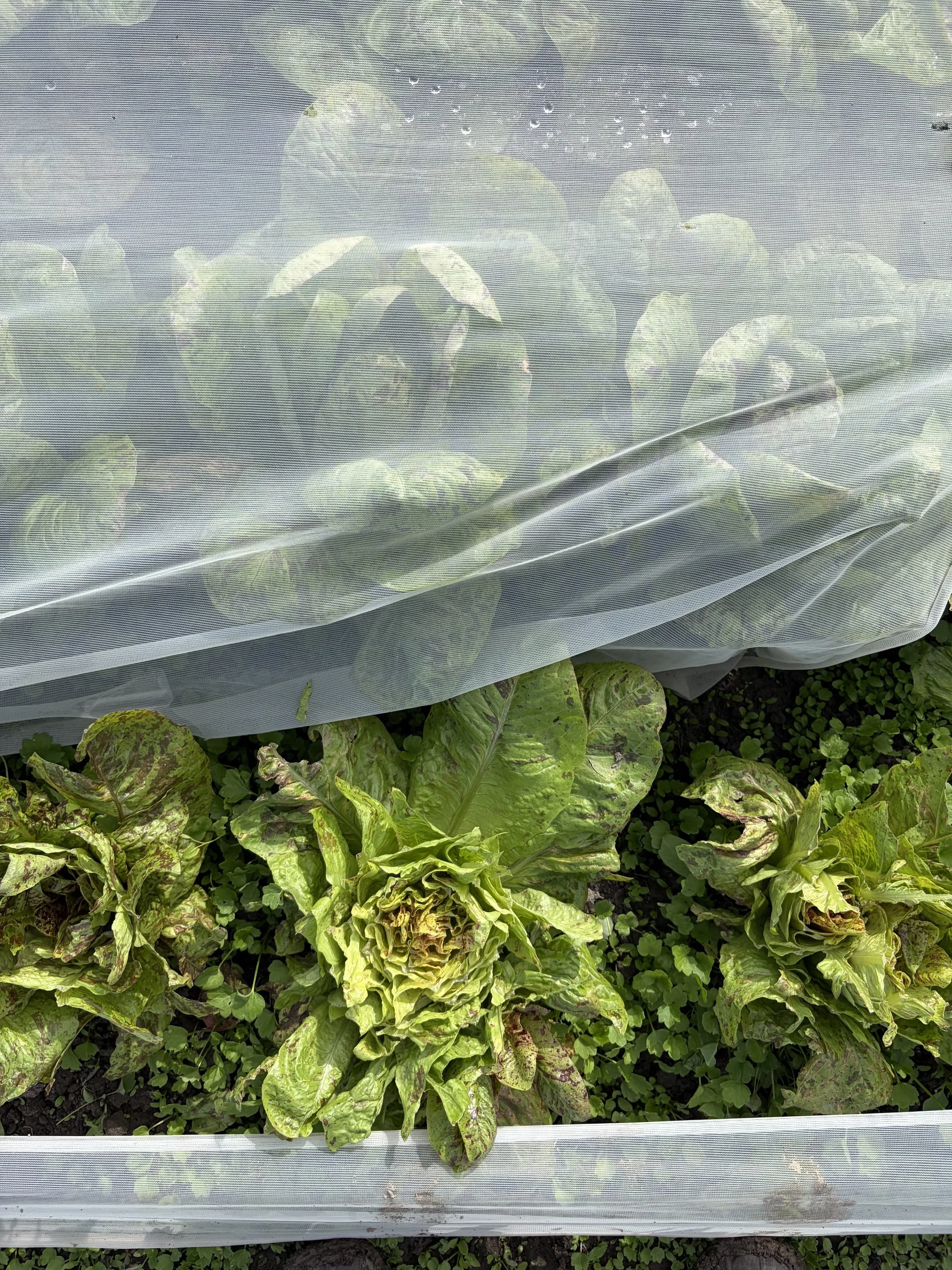
Behold the fate of lettuce (via turkeys) if the row cover slips off.
Second, and related, it’s was a dang cool summer! A lot of our fruiting crops (like tomatoes, melons, winter squash, peppers) require a certain amount of “heat units” (time spent being warm) to ripen their sweet fruits. The compounds lycopene in tomatoes and capsanthin in peppers, responsible for their fruit’s flavor and complexity, need temperatures in the upper 70’s and 80’s to biosynthesize. Similarly, watermelon need 3,600–5,400°F “heat units” to grow a big sweet fruit. We spent so much of this summer under a blanket of dripping fog that it delayed the harvests of tomatoes and sweet peppers until September (we’ve harvested them in bulk in mid August before).
This year we were also really confronted with the limits of certain soils in certain spots on the farm. WCCF is blessed with a mixed topography of rich growing ground, but scattered across our fields are blobs of shallow, magnesium-clay-heavy topsoil that follow their own logic — shaped by the land's natural contours. Magnesium and clay are stingy characters — they bind to essential plant nutrients and don’t give them up without a fight. These soils also hold onto water to a much greater degree than the sandier soils 20 ft away, This makes irrigation and field planning at our scale difficult. Some treasured crops had to be put in fields to face those blobs this year. It was a battle but things did alright.
And what of the successes?!
Those we cannot talk about right now. That would be to tempt fate. I can feel the Farm Gods stirring even as I type this.
We cannot talk about how amazing plants are. We cannot talk about the storage onions who seemed to take the excess water and the mag heavy clay on the chin and found what they needed to create softball sized bulbs. Or about the stacked potato crop curing out in Farfield. We cannot talk about the hard work of our whole team keeping the fresh veg fields on time, flowing, and protected from the voracious turkey colonies we have this year. (Like how Asa has physically covered every succession of lettuce so that the turkeys leave some for you.) We cannot talk about how the strawberries cranked.
The Farm Gods go to sleep in December. We can talk about those things then.
See you in the fields,
David
CSA BASICS
Check out our Brief Membership Guide: A quick-reference on the essentials of being a member.
Harvest pick-up times:
Friday harvest pick-ups run from 1:00 pm - 6:00 pm
Saturday harvest pick-ups run from 9:00 am - 2:00 pm
Tuesday harvest pick-ups will run from 1:00 pm - 6:00 pm
U-pick hours: Oriented members can come to the farm any time, 7 days a week, sunrise to sunset, to u-pick and enjoy the farm.
2026 CSA program dates: This year’s harvest season will run from Friday, June 12th through Tuesday, December 8th this year.
Where is the farm? The member parking lot is located at 1720 Cooper Rd., Sebastopol, CA 95472.
Slow on Cooper Rd. Please drive slowly on Cooper Road — 20 mph. It's a neighborhood with lots of kids and animals who generously share the road with us.
