
THIS WEEK’S HARVEST
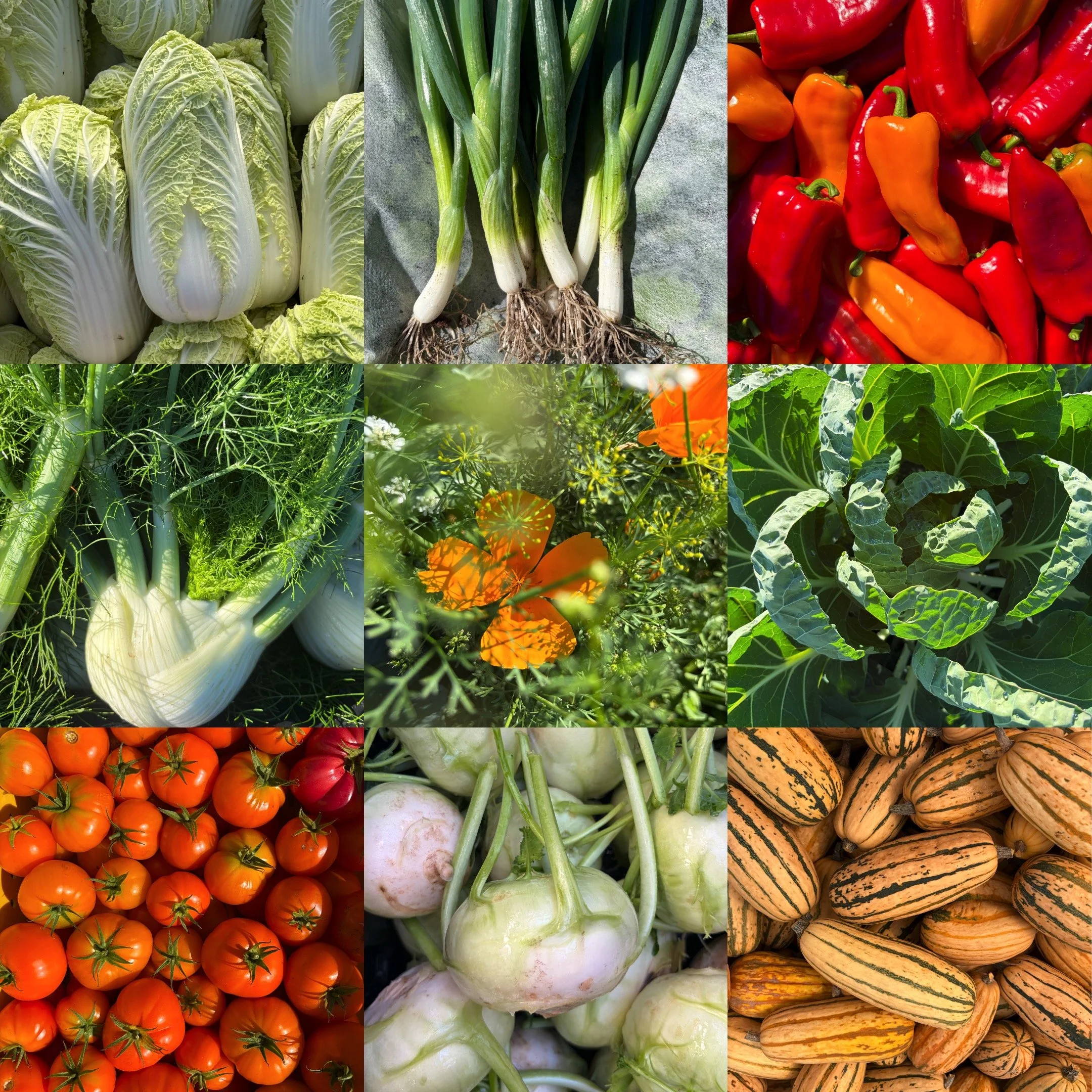
Mustard Mix, Green Little Gem Lettuce, Cherokee Lettuce, Brussel Sprout Tops, Fennel, Kohlrabi, Carrots, Assorted Onions, Masquerade Potatoes, Napa Cabbage, Daikon Radish, Scallions, Sweet Peppers, Tomatoes
U-PICK
Check the u-pick board in the barn for weekly u-pick limits.
🎃 Jack-o-Lantern Pumpkins 🎃: SEASON LIMIT: 2 per share, or 1 per child for households with more children. We have enough pumpkins that households that are alternating weeks can also take 2 per share or 1 per child! Follow the map by the barn entrance to find the pumpkins!
Albion Strawberries: ✨1 pint per share✨
Cherry Tomatoes: Gleanings
Goldilocks Beans: No limit — take what you’ll eat!
Frying Peppers:
Padrons: Gleanings
Shishitos: No limit — take what you’ll eat!
Hot Peppers:
Jalapeños: Gleanings
Thai Chilis: 20 peppers per share
Habaneros: 3 peppers per share
Ot Hiem Pepper: No limit — take what you’ll eat!
Herbs & Edible Flowers: Husk Cherries, Lemon Bergamot, Dill, Cilantro, Purple Basil, Thai Basil, Lemon Basil, Italian Basil, Tulsi, Parsley, Chamomile, Calendula, Nasturtium, Pansies/Viola, Garlic Chives, Tarragon, Thyme, Oregano, Marjoram, Lemon Balm, Lemon Verbena, Vietnamese Coriander, Shiso/Perilla, Catnip, French & Culinary Lavender, Sorrel, & Assorted Mints
Flowers galore!
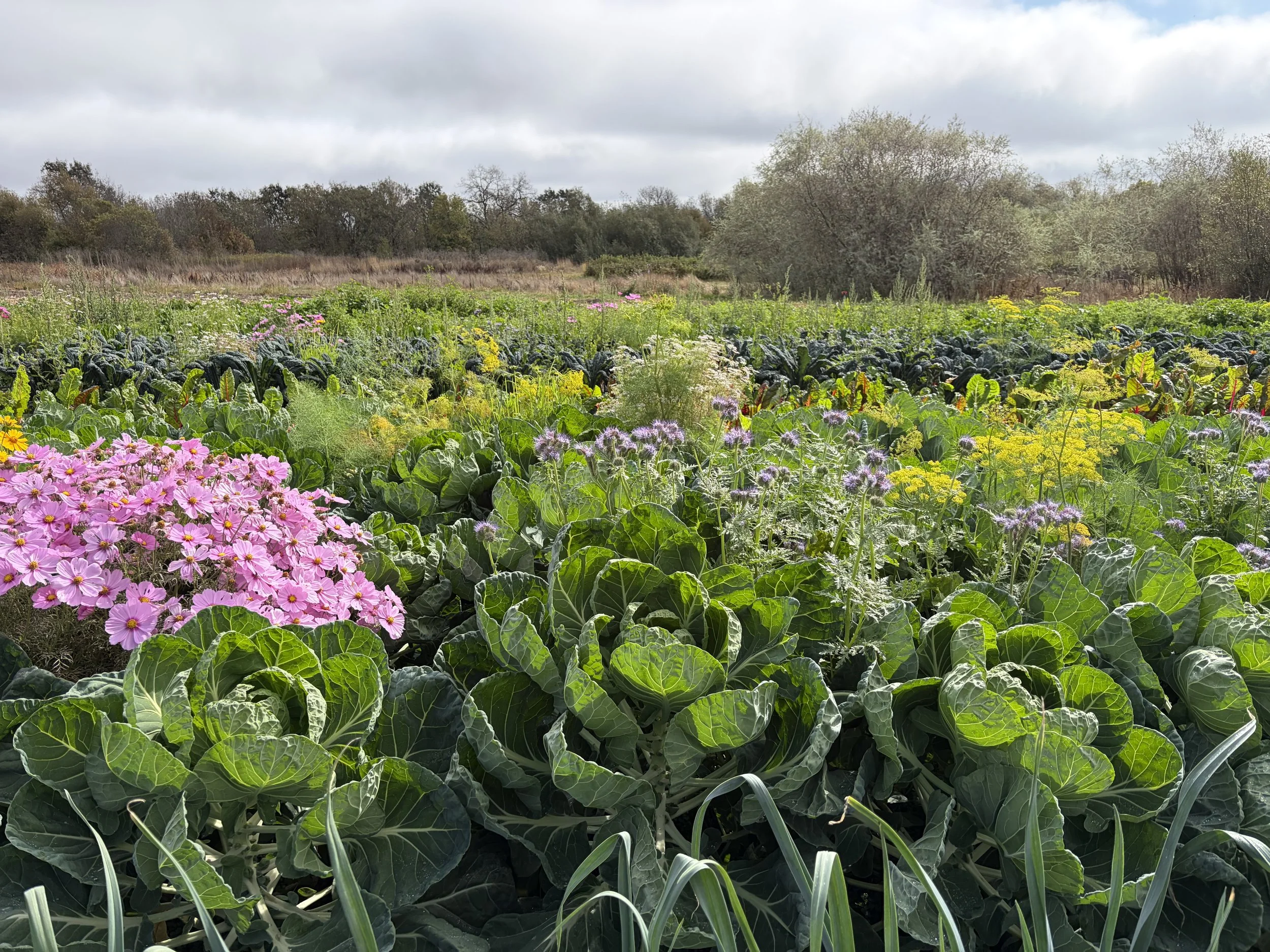
Brussel sprout tops in the field.
HARVEST NOTES
Brussel Sprout Tops: Each year around this time we trim the tops off of the Brussel Sprout plants to spur the sprouts to size up evenly. This annual necessity has the delicious benefit of giving us delicate bunches of cooking greens with that lovely Brussel Sprout flavor. Use as you would kale or collards. We love them sautéed with lots of garlic.
Honey Boat Delicata Winter Squash: Delicata are a perennial favorite of ours. Versatile, and sweet, they even have edible skins. For the easiest preparation, cut in half, scoop out the seeds and roast, cut-side down, until tender (adding a splash of water to your pan keeps the squash moist!). They are also delicious cut into rings or half circles, tossed with an oil of your choice (coconut is particularly scrumptious) and then roasted until caramelized. Enjoy!
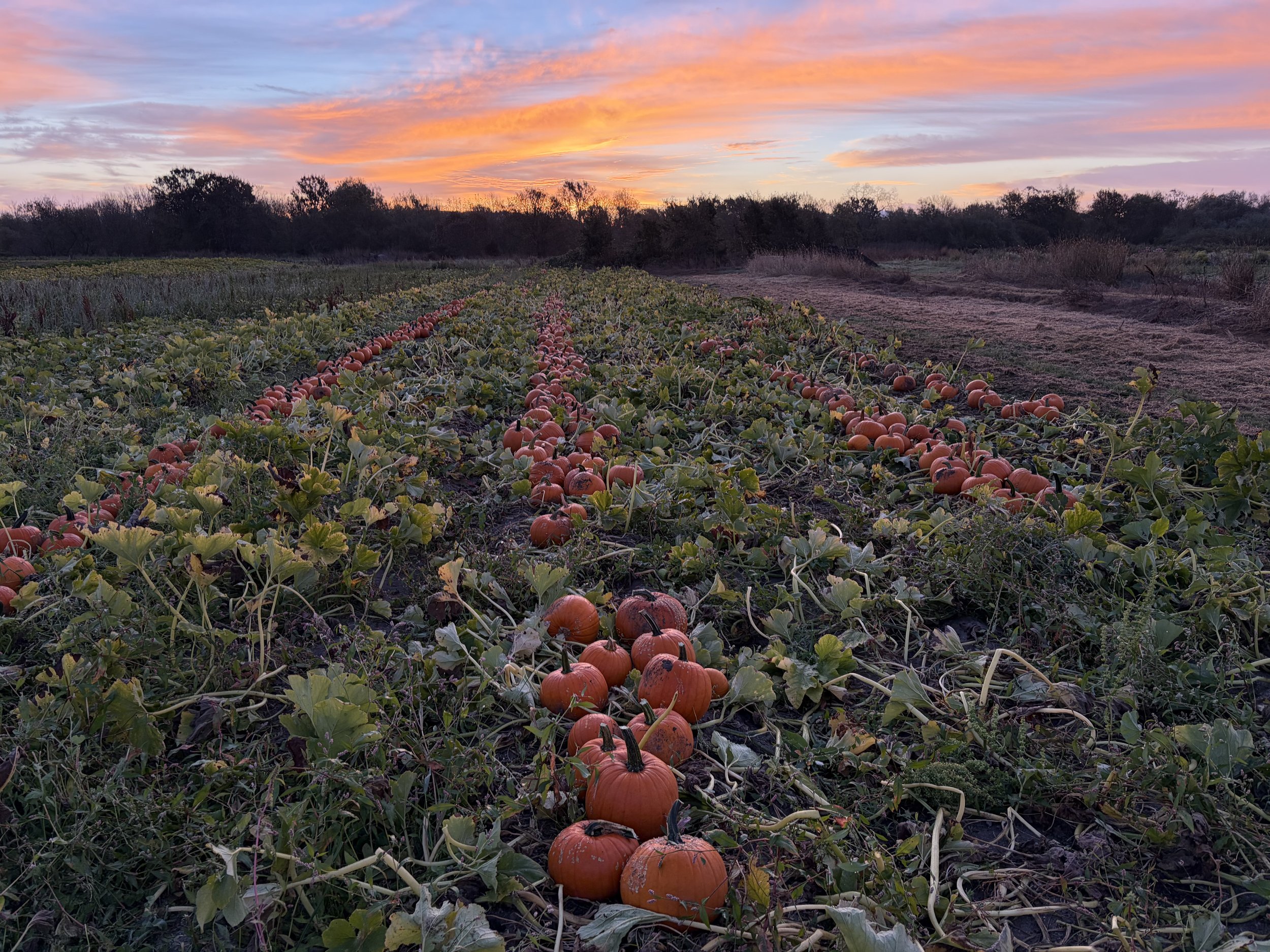
Pumpkin patch at sunrise.
BRUSSEL SPROUT TOPS & DELICATA SALAD
Adapted from NYTimes Cooking
This perfect fall salad was originally written for kale, but we’ve subbed in Brussel sprout tops here. The almond butter dressing brings a creamy richness to tie everything together. If you’d like, embellish with salty cheeses, fresh herbs (parsley would be particularly delicious) or toasted nuts.
INGREDIENTS
1 ½ pounds Delicata, halved lengthwise, seeded and sliced crosswise ½ inch thick (peel lightly if you prefer)
2 tablespoons extra-virgin olive oil
Kosher salt
2 crisp eating apples such as Honeycrisp or Pink Lady
1/2 small red onion, or 1 bunch of scallions, thinly sliced
1 teaspoon lemon zest plus ¼ cup fresh lemon juice (from about 2 lemons)
1 large bunch Brussel Sprout tops (about 1 pound), ribs removed and leaves sliced about ¼ inch thick
¼ cup almond butter
1 teaspoon Dijon mustard
½ teaspoon black pepper or red-pepper flakes, plus more to taste
DIRECTIONS
Place a rack in the bottom third of the oven and heat the oven to 425 degrees. Toss the squash with the olive oil and a generous sprinkling of salt, then spread into an even layer and roast until tender and browned underneath, 15 to 25 minutes. Remove from the oven and cool.
Meanwhile, core the apples and slice ¼ inch thick. In a large bowl, toss together the apples, onion or scallions and 2 tablespoons lemon juice. Add the brussel sprout tops, season generously with salt, then toss.
In a small bowl, stir together the lemon zest and remaining 2 tablespoons lemon juice with the almond butter, Dijon mustard and black pepper. Stir in enough water until it’s pourable (about ¼ cup, depending on the almond butter; the mixture will thicken at first, but when enough water is added, it will loosen). Season the dressing to taste with salt and pepper.
When the squash is cool enough to handle, add it to the kale mixture. Drizzle with most of the dressing. Toss until coated, adding more dressing as needed. Taste and adjust seasonings with more salt and pepper. (To make ahead, refrigerate the dressing and salad separately for up to 3 days. Adjust thickness and flavor of dressing with salt, pepper and lemon juice, then toss.)
TIPS ON SELECTING THE TASTIEST WINTER SQUASHES
POV: You approach a macro-bin of West County Winter Squash in the barn with hundreds of edible orbs. Which will you choose!?
Selecting a sweet, ripe winter squash is a little like selecting a ripe melon; you never really know what lies within until you take a bite, but you can take certain cues from the outside of the squash to make sure you get a sweet one.
In general, it is best to select squashes with rich color and deep, warm hues like oranges and reds. Bonbon Buttercup, for example, is a dark green squash but tends to be sweetest when it has a nice deep orange spot on one side. Sunshine Kabocha is best when a deep orange-red. A nice golden-brown-orange Delicata will likely be much tastier than a paler green compadre.
We try to avoid harvesting or putting out unripe squash, but in general, avoid squash that are pale or green. Go for the warm colors!
A vine-ripened, locally grown winter squash will be delicious just roasted and appreciated unadorned.
FARMER’S LOG
AN ODE TO WINTER SQUASH
This week on the farm we made a big push to finish clipping the last of our 2026 winter squash.
A few weeks ago, we penned an ode to the mighty potato. This week we save one for the beloved oldest-domesticated of the three sisters — the winter squash.
She takes on infinite forms, from voluptuous to svelte; from burning red to the palest blue. She has been kindling a loyal love in humanity's heart for over 10,000 years.
The ancestral plants of what we call squash (the species including zucchini, melons, gourds, cucumbers, pumpkins, and all winter squash) are millions of years old and native to the Americas. The earliest evidence for human domestication dates back 10,000 years to southern Mexico, earlier than the domestication of corn or beans.
Word travelled fast and inspiration abounded. By 2,000 B.C., squash had become a part of life for almost every Native American culture from Southern Canada to Patagonia. (The English word "squash" comes from the Narragansett word askutasquash, meaning fresh vegetable, and similar words can be found in the Algonquian language family.) Squash varieties were developed and cherished for everything from their protein-rich and medicinal seeds to their sweet flesh and winter-hardy skins. Botanists note at least six separate domestication events occurring in the Americas.
Here at West County Community Farm, the human + squash love affair burns bright — and we're lucky to have at our fingertips the unparalleled modern library of heirloom squash seeds to explore. Over the winter, Kayta hunkered down with a seed catalogue and a good cup of coffee and laid out a season-long love sonnet to squash: We felt the summer wind with a cool slice of Persian cucumber; we dined by candlelight over pasta with Costata Romanesca zucchini; and once we tasted a Sarah's Choice cantaloupe, we could never forget.
But in the winter, our true love came — the winter squash.
We'll have a new squash for you to get to know almost every week from now until our last CSA pickup day, December 8th. Allow us to introduce you…
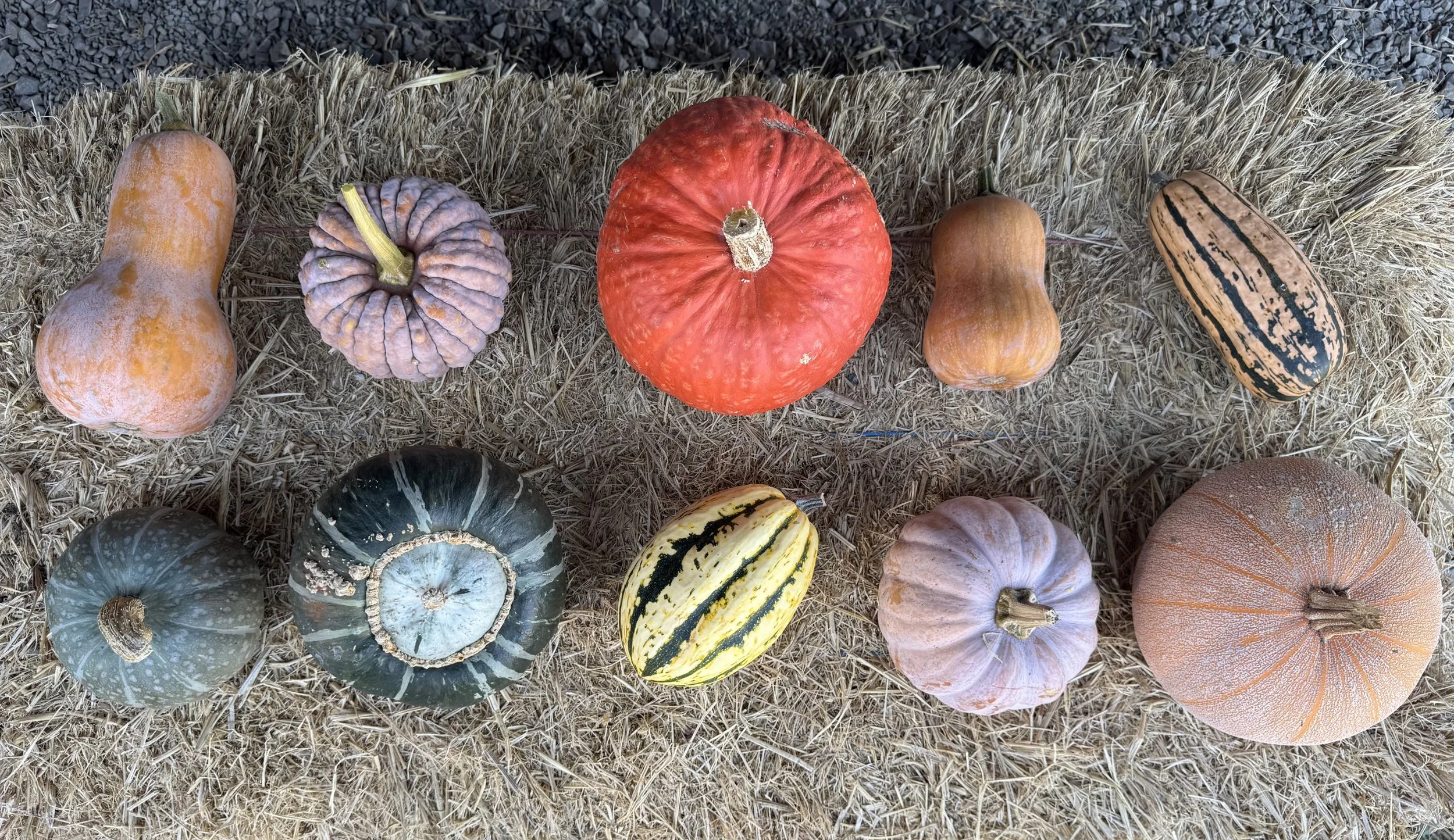
Top row from L to R: Sonca Orange Butternut, Black Futsu, Sunshine Kabocha, Honeynut Mini-Butternut | Bottom row L to R: Sweet Jade, Bon Bon Buttercup, Jester, Koginut, Winter Luxury Sugar Pie Pumpkin *NOT PICTURED = Jack-O-Lantern pumpkins. Don’t bother cooking or making those into pie, they are bred for their size, not for taste, and any of the squash above will make a much better pie filling than the Jack-O-Lantern pumpkins. Our favorites for pie are Sunshine Kabocha and Winter Luxury Sugar Pie Pumpkins, which we’ll distribute at Thanksgiving..
Sonca Orange Butternut: This Hungarian variety, new to us this year, whose name apparently translates to 'ham pumpkin,' comes recommended by our amazing neighbor, farmer, and seed saver Sara McCamant, who was raving about its unparalleled sweetness to us last winter. We can't wait to taste it.
Black Futsu: A beloved Japanese delicacy, this bite-sized, mini Butternut relative has bright orange flesh with unique fruity flavor and edible skin with a gorgeous frosted look.
Sunshine Kabocha: The village beauty. A fiery-red Kabocha squash with sugar-sweet and flaky flesh. An all-time farmer favorite that can be cooked any which way. Exceptional for pumpkin pie and straight roasted eating.
Honeynut Butternut: A highly educated squash developed by the Cornell Vegetable Breeding Institute. We fell in love with its deep orange, sweet flesh and beauty when we grew it for the first time last year.
Delicata: A real heartbreaker. The sweetest. Easiest to cook, even easier to eat.
Sweet Jade: A real cutie — a personal-sized grey-green Kabocha.
Bonbon Buttercup: The girl next door. Unassuming, humble, and cute as a button. Bonbon Buttercup is, in farmer David's opinion, the best squash ever. Marriage material.
Jester Acorn: A Delicata type that looks like a fancy Acorn Squash. A good Jester can be among the sweetest of squashes.
Koginut: A very expensive date (the priciest seed of all squash), this cutie is a hybrid of Kabocha and Butternut and has a nutty flavor with notes of citrus and vanilla. Very popular with chefs.
Winter Luxury Sugar Pie Pumpkins: The supreme pie pumpkin in lacy lingerie. The only pie pumpkin that can compete with a Sunshine Kabocha. We'll distribute this one around Thanksgiving with our go-to pumpkin pie recipe.
Set the table, pour the wine, and light the candles — we hope you fall in love with a winter squash this autumn!
See you in the fields,
David & Kayta
*PS: Don't bother cooking or making your Jack-O-Lantern pumpkins into pie — they are bred for their size, not for taste. Any of the squash above will make a much better pie filling than a Jack-O-Lantern pumpkin. Our favorites for pie are Sunshine Kabocha and Winter Luxury Sugar Pie Pumpkins.
CSA BASICS
Check out our Brief Membership Guide: A quick-reference on the essentials of being a member.
Harvest pick-up times:
Friday harvest pick-ups run from 1:00 pm - 6:00 pm
Saturday harvest pick-ups run from 9:00 am - 2:00 pm
Tuesday harvest pick-ups will run from 1:00 pm - 6:00 pm
U-pick hours: Oriented members can come to the farm any time, 7 days a week, sunrise to sunset, to u-pick and enjoy the farm.
2026 CSA program dates: This year’s harvest season will run from Friday, June 12th through Tuesday, December 8th this year.
Where is the farm? The member parking lot is located at 1720 Cooper Rd., Sebastopol, CA 95472.
Slow on Cooper Rd. Please drive slowly on Cooper Road — 20 mph. It's a neighborhood with lots of kids and animals who generously share the road with us.
