🚨IMPORTANT housekeeping notes!🚨
Read this one: Our wonderful bakers are reporting that too much of their goods are walking off unpaid. We don’t think it’s intentional — the barn is a distracting place, but these are small bakers, and every unpaid item comes out of their pocket. The cash box and Venmo code are both on the table. Please make sure to pay our vendors. If we can’t keep the honor system, we’ll lose them!
Looking for a quieter farm visit? Try Friday or Saturday pickups. Tuesdays have been really bustling lately — especially the 4–6 pm rush. As usual, whenever you come, please wrap up your veggie selection by 6 pm sharp (and 2 pm on Saturdays), so our crew can start putting the food away and get home on time. Thank you!
THIS WEEK’S HARVEST
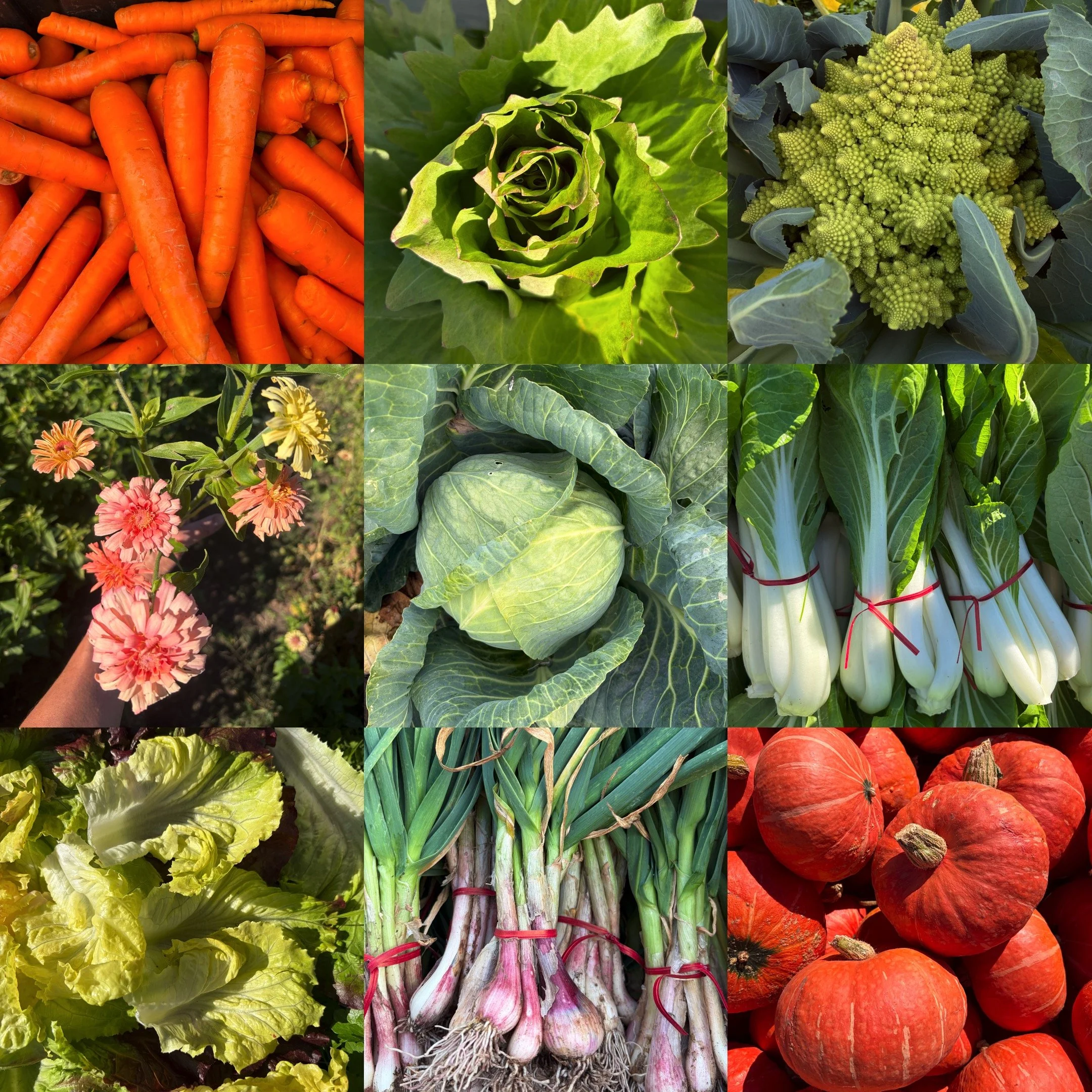
Assorted Lettuces, Giorgione Castelfranco Chicories, Bopak Bok Choi, Black Magic Dino Kale, Romanesco Cauliflower, Green Garlic, Celery, Carrots, Red Onions, Desiree Potatoes, Green Cabbage, Sunshine Kabocha Winter Squash
U-PICK
Check the u-pick board in the barn for weekly u-pick limits.
Albion Strawberries: Gleanings — There are just a few berries left to snack on!
Cherry Tomatoes & Peppers: Gleanings - We will be taking out the peppers and cherry tomatoes this coming week. Feel free to continue gleaning on them until they’re removed.
Herbs: The herbs in the garden are beginning to wind down, but there are limited quantities of a few things left, like: Husk Cherries, Cilantro, Purple Basil, Thai Basil, Lemon Basil, Italian Basil, Tulsi, Parsley,, Nasturtium, Garlic Chives, Tarragon, Thyme, Oregano, Marjoram, Lemon Balm, Lemon Verbena, Vietnamese Coriander, Shiso/Perilla, Catnip, French & Culinary Lavender, Sorrel, & Assorted Mints
Flowers!
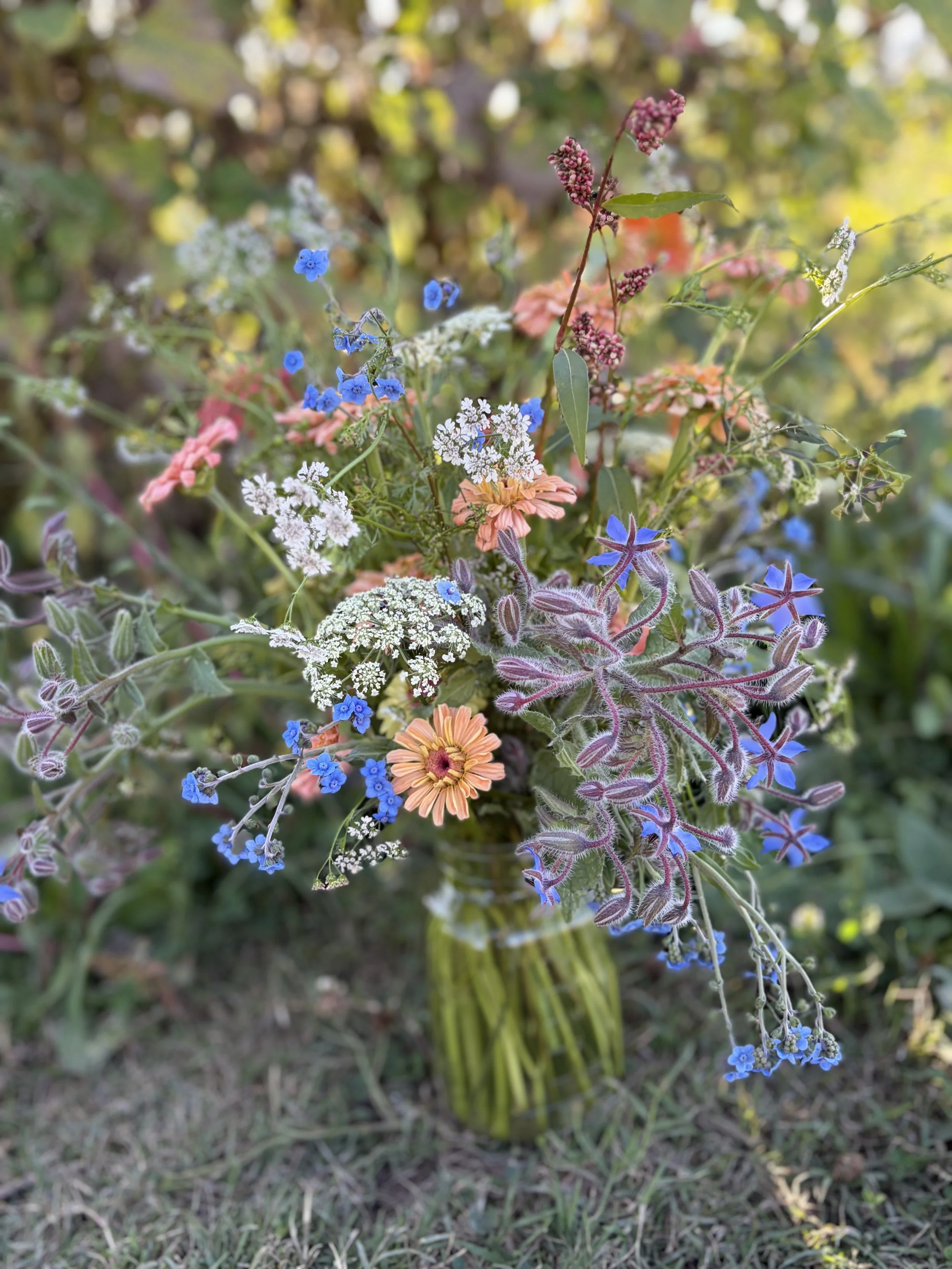
At this time of year as the flowers start to fade, try incorporating seed-pods, grasses, and other “weeds” into your arrangements! This bouquet features beautiful cilantro flowers.
HARVEST NOTES
Green Cabbage: This week we’ll be bringing you some truly giant cabbages! They’re perfect for making sauerkraut (see our favorite recipe below), or slowly carving chunks off to eat with dinner. We’ve been loving the comfort of stir-fried cabbage this fall — first searing it in hot oil, then dousing with soy sauce and seasoned rice vinegar to braise and caramelize.
Romanesco Cauliflower: Sometimes called Romanesco Broccoli, this spectacular Italian heirloom grows in green spires that look like tiny fractal Christmas trees when cut. It has a cauliflower-like texture and flavor but with a little extra nuttiness. Delicious roasted, or in your favorite cauliflower recipe.
Green Garlic: We’re delighted to have a surprise crop of small green garlic for you this fall. If you haven’t used green garlic before, think of it as garlic in the form of a little leek or green onion. The bulb hasn’t yet divided into individual cloves; instead it’s a smooth stalk, which can be sliced finely and cooked in any recipe in which you’d use garlic. As with leeks, we love using the whole stalk, and then saving the green tops as a fragrant addition to stock.
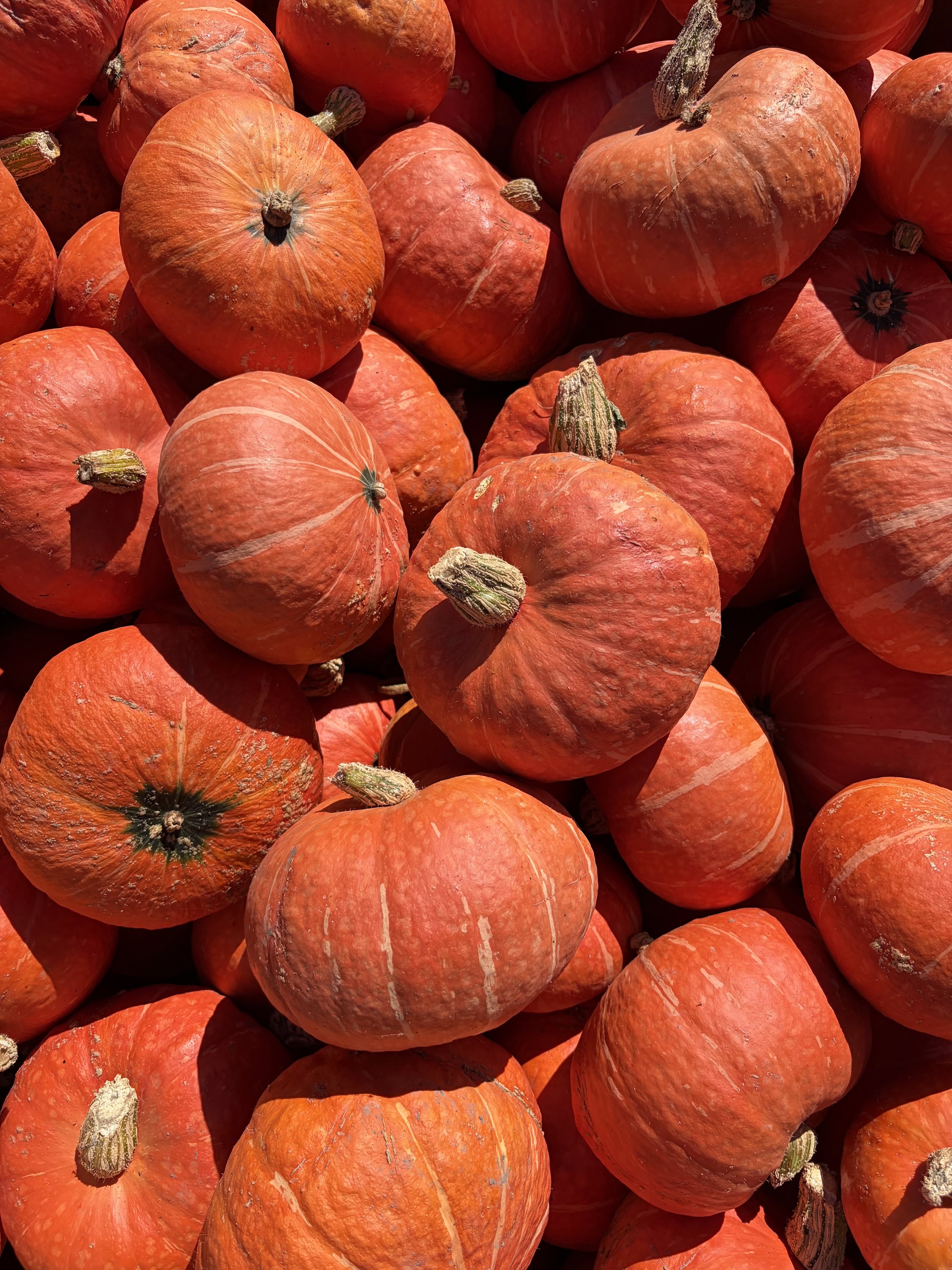
Sunshine Kabocha Squash: One of our all-time favorite winter squashes. Excellent for eating roasted or in pies, curries, soups, and baked goods (substitute for pumpkin in any recipe). Super sweet, with a velvety smooth texture.
PRESERVING THE HARVEST: LEMON DILL SAUERKRAUT
Adapted from Fermented Vegetables by Kristen & Christopher Shockey.
If you’ve feel intimidated by these giant cabbages, or have felt intimidated by making kraut, fear not! It’s basically just chopping and salting cabbage, then keeping it submerged in a brine. That, plus a couple days of waiting is all it takes to make exceptional sauerkraut.
INGREDIENTS
about 6 pounds cabbage (2 small heads or one large one)
1½-2 tablespoons unrefined sea salt
4 tablespoons lemon juice, optional
1-2 tablespoons dried dill or about 1/4 cup fresh dill, according to taste
4-5 cloves of garlic, finely grated
DIRECTIONS
To prepare the cabbage, remove the coarse outer leaves. Rinse a few unblemished ones and set them aside. Quarter and core the cabbage, thinly slice, and transfer to a large bowl.
Add the dill, lemon juice, and 1 tablespoon of the salt and massage it into the leaves, then taste. You should be able to taste the salt without it being overwhelming. Add more salt if necessary. The cabbage will soon look wet and limp, and liquid will begin to pool. At this point, add the garlic. If you've put in a good effort and don't see much brine in the bowl, let it stand, covered, for 45 minutes, then massage again.
Transfer the cabbage to a crock or 2-quart jar, a few handfuls at a time, pressing down on the cabbage with your fist or a tamper to work out air pockets. You should see some brine on top of the cabbage when you press. Leave 4 inches of headspace for a crock, or 2 to 3 inches for a jar. Top the cabbage with one or two of the reserved outer leaves. Then, for a crock, top the leaves with a plate that fits the opening of the container and covers as much of the vegetables as possible; weigh down with a sealed, water-filled jar. For a jar, use a sealed, water-filled jar or ziplock bag as a follower-weight combination. The goal here is to ensure that the cabbage stays beneath the brine.
Set aside the jar or crock on a baking sheet to ferment, somewhere nearby, out of direct sunlight and cool, for 4 to 14 days. Check daily to make sure the cabbage is submerged, pressing down as needed.
You can start to test the kraut on day 4. You'll know it's ready when it's pleasingly sour and pickle-y tasting, without the strong acidity of vinegar; the cabbage has softened a bit but retains some crunch; and the cabbage is more yellow than green and slightly translucent. If you prefer your kraut on the crunchy side, feel free to start tasting even earlier, and refrigerate as soon as you like the flavor.
Ladle the kraut into smaller jars and tamp down. Pour in any brine that's left. Tighten the lids, then store in the refrigerator. This kraut will keep, refrigerated, for 1 year.
Yields about 1 gallon of kraut.
FARMER’S LOG
THE SEASON OF DEATH
Rise and fall. Light and shadow. Summer and winter. Life and death.
Halloween is an extremely important time of year on the farm. It is the Season of Death.
The roots of our Halloween holiday lie in the ancient Gaelic Samhain (“summer’s end”) festival. The Gaels were a pastoral people, and Samhain marked the transition to the dark half of the year — the time when the shepherds brought their livestock, fattened on summer mountain pastures, back down for the winter, for shelter or for slaughter.
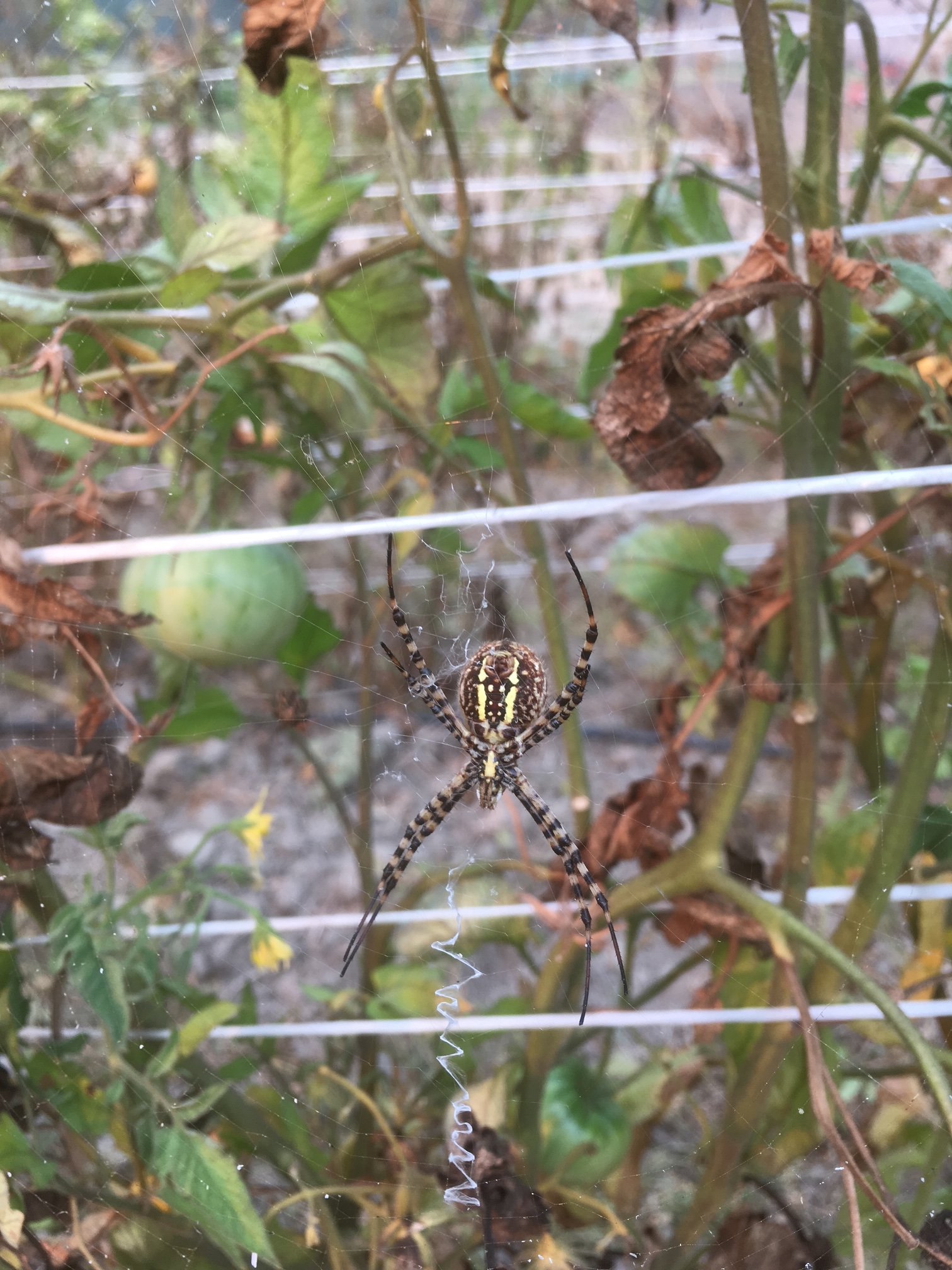
A garden spider on the dying tomatoes.
There were feasts. People opened their burial mounds (portals to the underworld) and lit cleansing bonfires. The borders between the worlds were thought to become thinner around Samhain, and supernatural spirits, along with the spirits of ancestors, were thought to walk amongst the living. The spirits were to be appeased or tricked. Tables were set for friendly spirits at the Samhain dinner. People wore costumes to disguise themselves from the evil spirits and placed candles inside carved turnips (in lieu of pumpkins) to frighten them off.
You can feel the Samhain in every nook and cranny on the farm these days. How different the farm looks now from spring’s jubilant green promise and summer’s colorful cacophony. The life cycles of the plants that showered us with riches all summer are now at an end. Their bodies hang drawn, gaunt, and ghostly on their trellises, or shriveled, mildewed, and desiccated in the rows, awaiting the final, furious whir of the flail mower.
This week, with our bulk harvests complete, we continued the portal-tending work of the Samhain. We mowed in large sections of Southfield and Creekfield, flailing our popcorn field, our pumpkins, and all of our tomatoes, eggplant, and peppers into the afterlife. We then disced their bodies into the underworld, where they will be consumed by worms and microbes.
After discing those fields lay empty: bleak, deep brown maws of bare soil. Open portals.
Eric then performed the Last Rites on those fields, spreading steaming black compost and seeding cover crop, driving processionally, rhythmically, over the fields with the seeder, flinging clover, ryegrass, triticale — like little prayers — into the maws. Finally, he closed the portals, kissing the seeds in with a light pass of the disc.
Then the water will come, the seeds will germinate. Life will start anew in those fields.
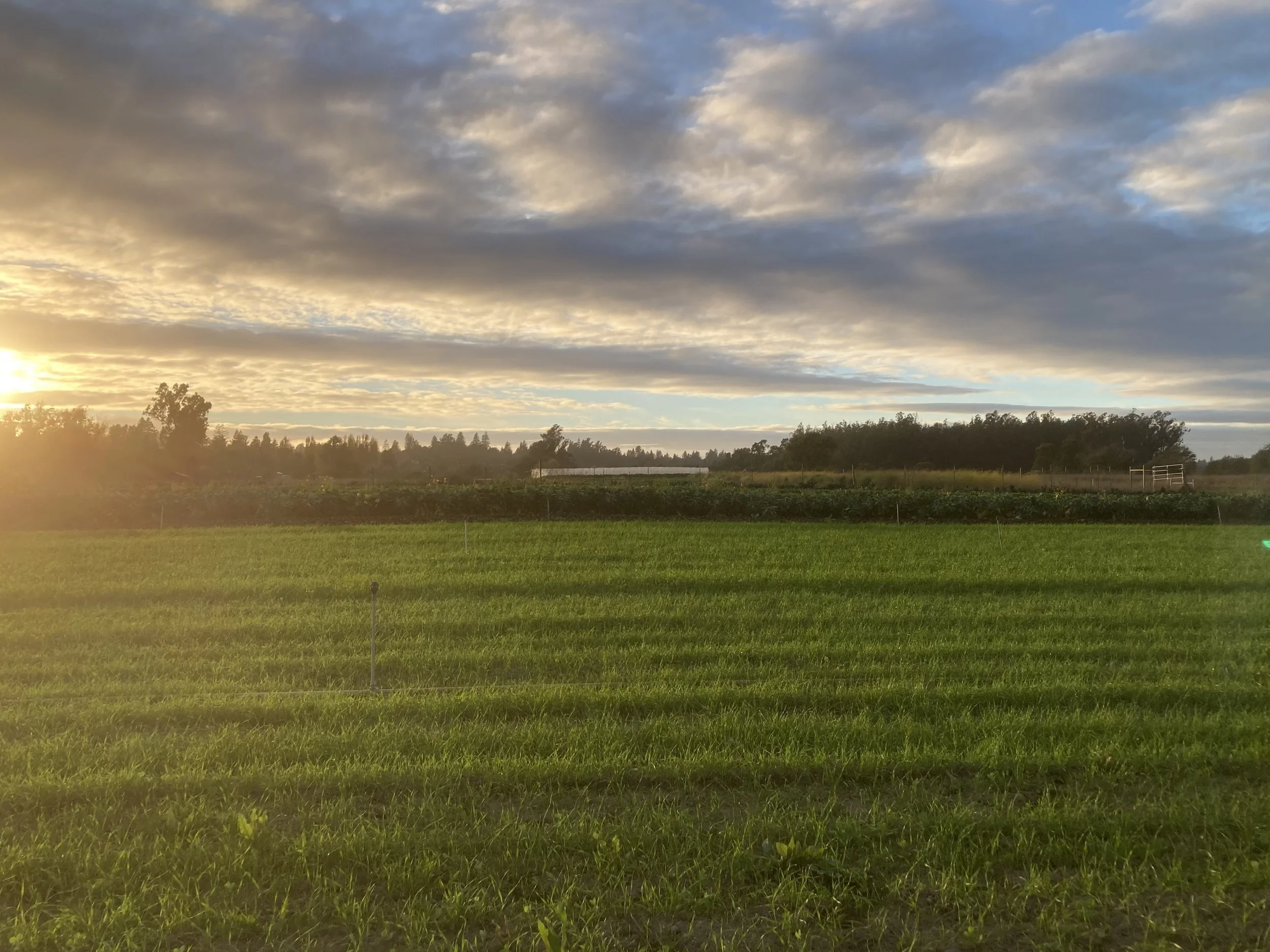
Cover crop in Farfield West
One can only marvel at the wisdom of ancient agrarian festivals, born from a bone-deep relationship to the cycles of nature: how directly death was confronted.
Those people knew.
They knew that from death comes life. They knew that death and life are only thinly separated. They knew that the rotting, decaying, destructive forces are the gateways from which life bursts forth anew in the spring. They knew that the portals, the transitions, need to be tended.
This Halloween, while you’re out there gleaning summer’s last fruits and flowers, we invite you to confront the ghoulish sight of dying plants — sagging limply, skeletal, and vacant — and the blocks of bare ground on the farm, portals now pregnant with cover crop seed.
Because death is but a doorway, and on the other side are verdant spring meadows, strawberry-scented breezes, plump sugar snap peas, and bouquet after bouquet of spring flowers.
Happy Halloween!
David
CSA BASICS
Check out our Brief Membership Guide: A quick-reference on the essentials of being a member.
Harvest pick-up times:
Friday harvest pick-ups run from 1:00 pm - 6:00 pm
Saturday harvest pick-ups run from 9:00 am - 2:00 pm
Tuesday harvest pick-ups will run from 1:00 pm - 6:00 pm
U-pick hours: Oriented members can come to the farm any time, 7 days a week, sunrise to sunset, to u-pick and enjoy the farm.
2026 CSA program dates: This year’s harvest season will run from Friday, June 12th through Tuesday, December 8th this year.
Where is the farm? The member parking lot is located at 1720 Cooper Rd., Sebastopol, CA 95472.
Slow on Cooper Rd. Please drive slowly on Cooper Road — 20 mph. It's a neighborhood with lots of kids and animals who generously share the road with us.
