Harvest Week 11 - Field Poem

The farm is in need of pint baskets! If you have an abundance at home, please bring some back to the farm so that they can be reused throughout the season.

THIS WEEK’S HARVEST

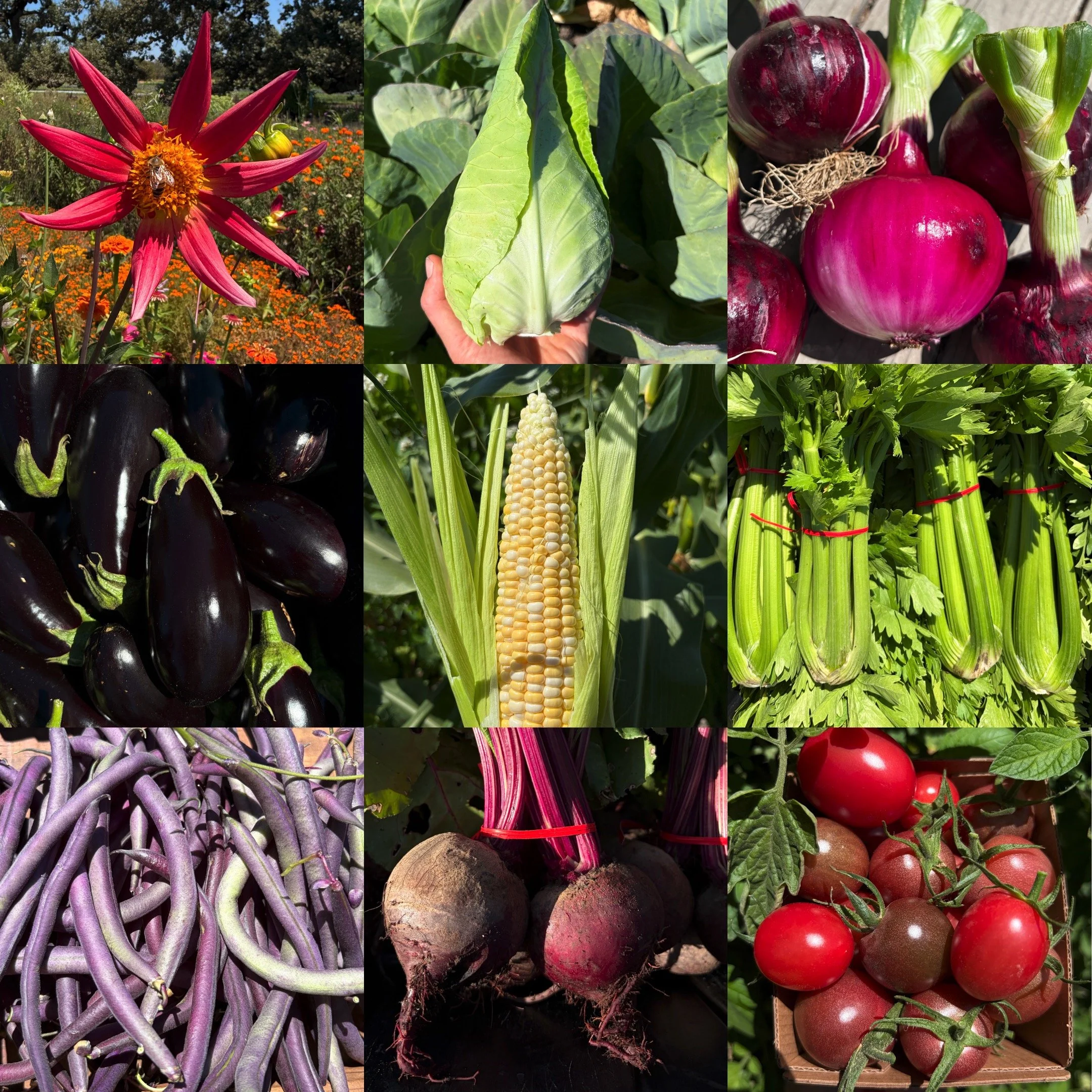
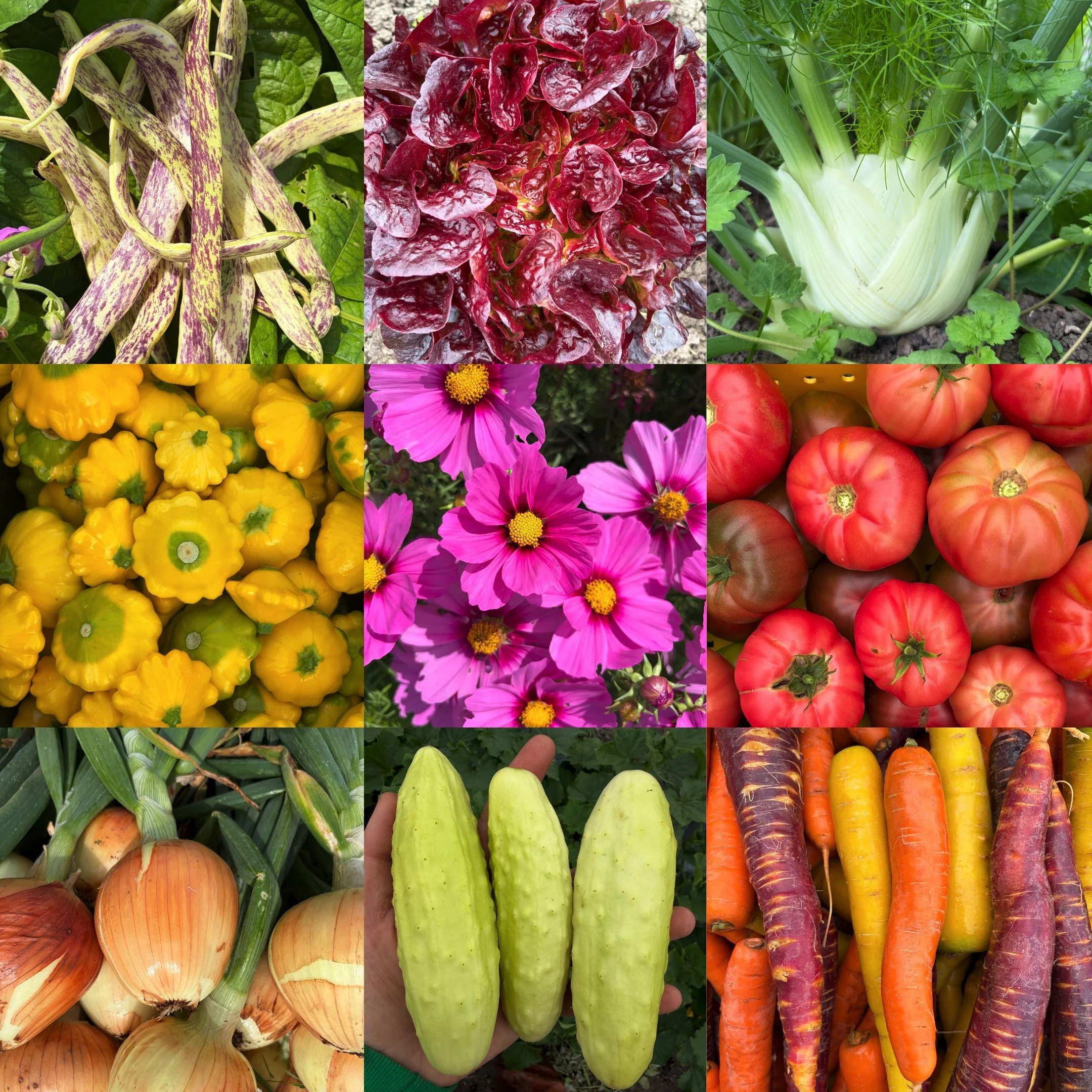
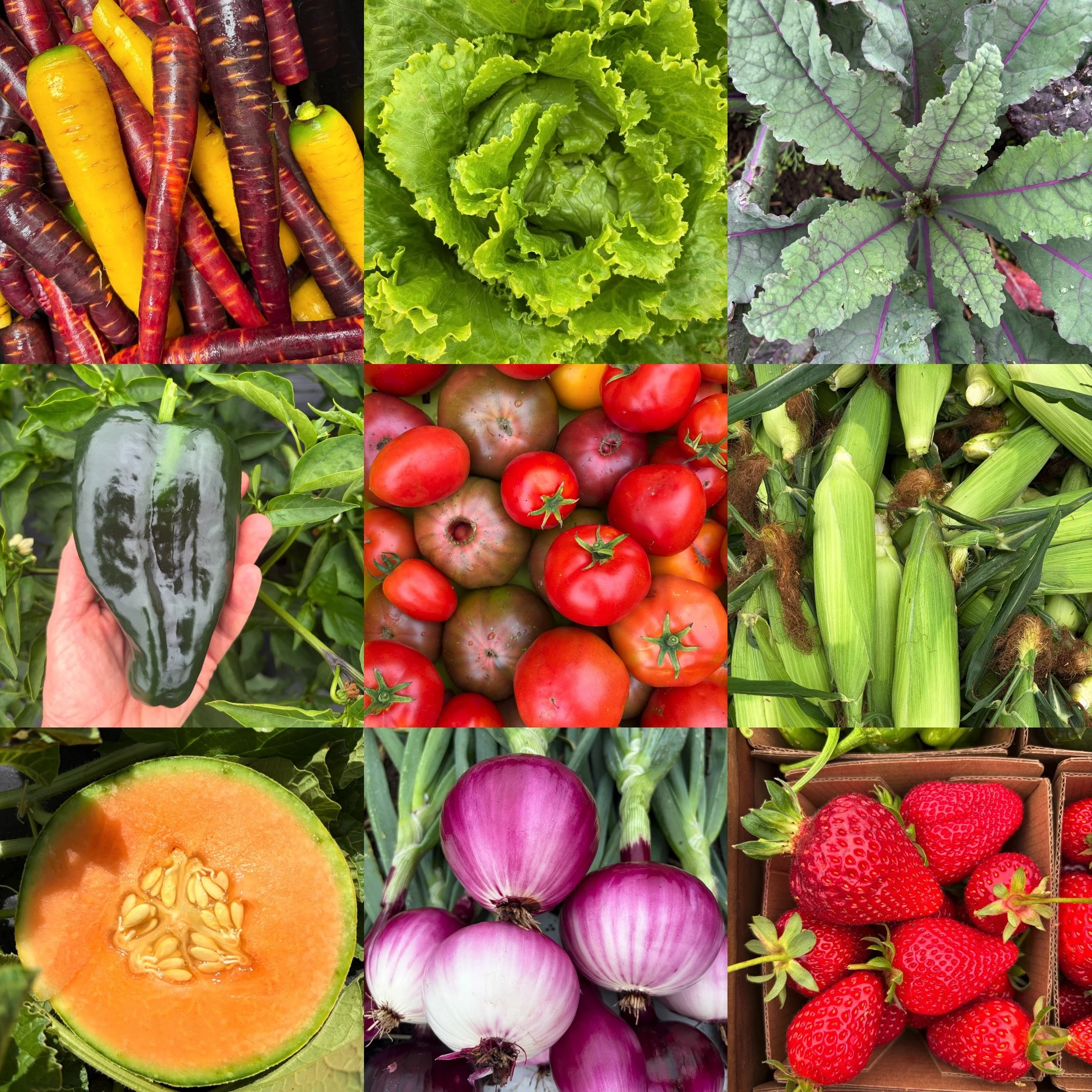
Rouxai Red Oakleaf Lettuces, Escarole, Assorted Zucchini & Summer Squash, Assorted Slicing Cucumbers, Rainbow Carrots, Fresh Candy Sweet Onions, Fennel, Celery, Italian & Asian Eggplant, Poblano Peppers, Early Tomatoes, Bicolor Sweet Corn, Assorted Melons, Caraflex Cabbage
U-PICK

Check the u-pick board in the barn for weekly u-pick limits.

  • Albion Strawberries: ✨5 pints per share✨ There are still beautiful berries languishing in the back right side of the patch. We recommend making the journey out there!

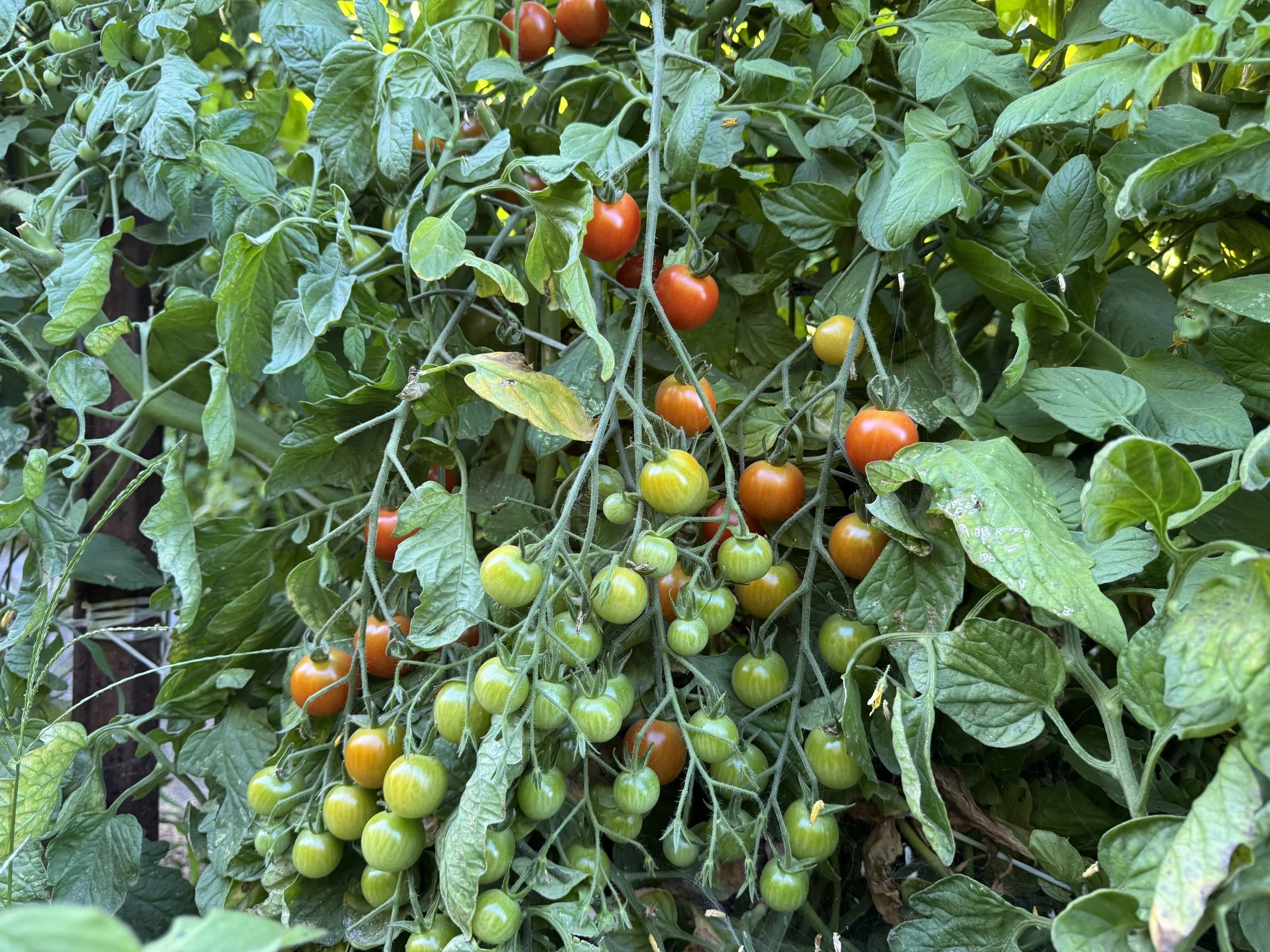
  • Cherry Tomatoes: 3 pints per share

  • 🌟 Dragon Tongue Beans: No limit — take what you’ll eat! | These flat beans are cream-colored with purple speckles, which fade when they’re cooked. Please be mindful not to walk on the base of the plants as you pick so that they can keep producing!

  • Frying Peppers:

    • Padrons: No limit — take what you’ll eat!

    • Shishitos: No limit — take what you’ll eat!

  • 🌟 Jalapeños: 5 peppers per share

  • Herbs & Edible Flowers: Husk Cherries, Lemon Bergamot, Dill, Cilantro, Purple Basil, Thai Basil, Lemon Basil, Italian Basil, Tulsi, Parsley, Chamomile, Calendula, Nasturtium, Pansies/Viola, Garlic Chives, Tarragon, Thyme, Oregano, Marjoram, Lemon Balm, Lemon Verbena, Vietnamese Coriander, Shiso/Perilla, Catnip, French & Culinary Lavender, Sorrel, & Assorted Mints

  • Flowers galore!

HARVEST NOTES

  • Fresh Candy Sweet Onions: Fresh out of the soil, these sweet, fresh-eating onions are a delicacy. Similar to the famous Walla-Walla sweets, try them in a way that you can show them off: lightly grilled on a good burger, raw in a salad with a delicate dressing, or as onion rings. They are so sweet and mild, some people even eat them raw like an apple! (We haven’t tried that yet! If you do, let us know how it goes!)
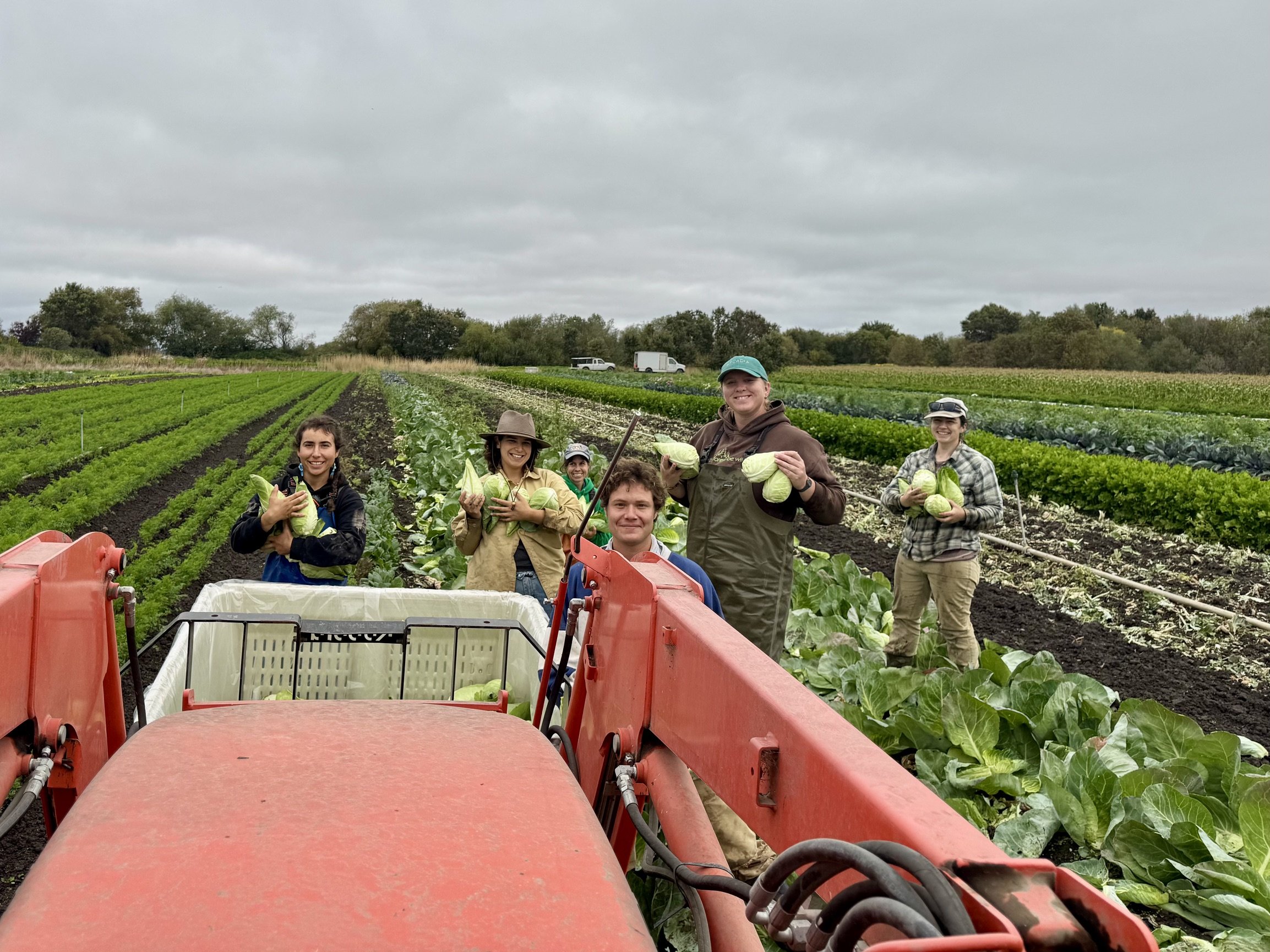
All hands Caraflex cabbage harvest this morning

roasted eggplant pasta with parmesan breadcrumbs

By Alison Roman

Serves 4–6

The genius of this recipe is that the eggplant is roasted to achieve a rich color and umami flavor, and then mixed with roasted cherry tomatoes and pasta water to create a perfectly creamy sauce with the most decadent eggplant flavor.

INGREDIENTS

  • 1 ½–2 pounds globe eggplant (about 2), sliced ¼–½”  thick

  • ½ cup plus 4 tablespoons olive oil, divided

  • 1 cup panko breadcrumbs

  • ¼ cup Parmesan or Pecorino, plus more for grating 

  • ½ cup chopped parsley, chives, oregano, or a combo of all

  • Kosher salt 

  • Freshly ground black pepper 

  • 4 cloves garlic, thinly sliced

  • 8 oz. sungolds or cherry tomatoes, halved if large

  • 1–2 tablespoons tomato paste, harissa paste, or gochujang

  • Crushed red pepper flakes (optional) 

  • 12–16 oz. dried pasta such as calamarata, rigatoni, ziti, paccheri, or any short, tubular shape
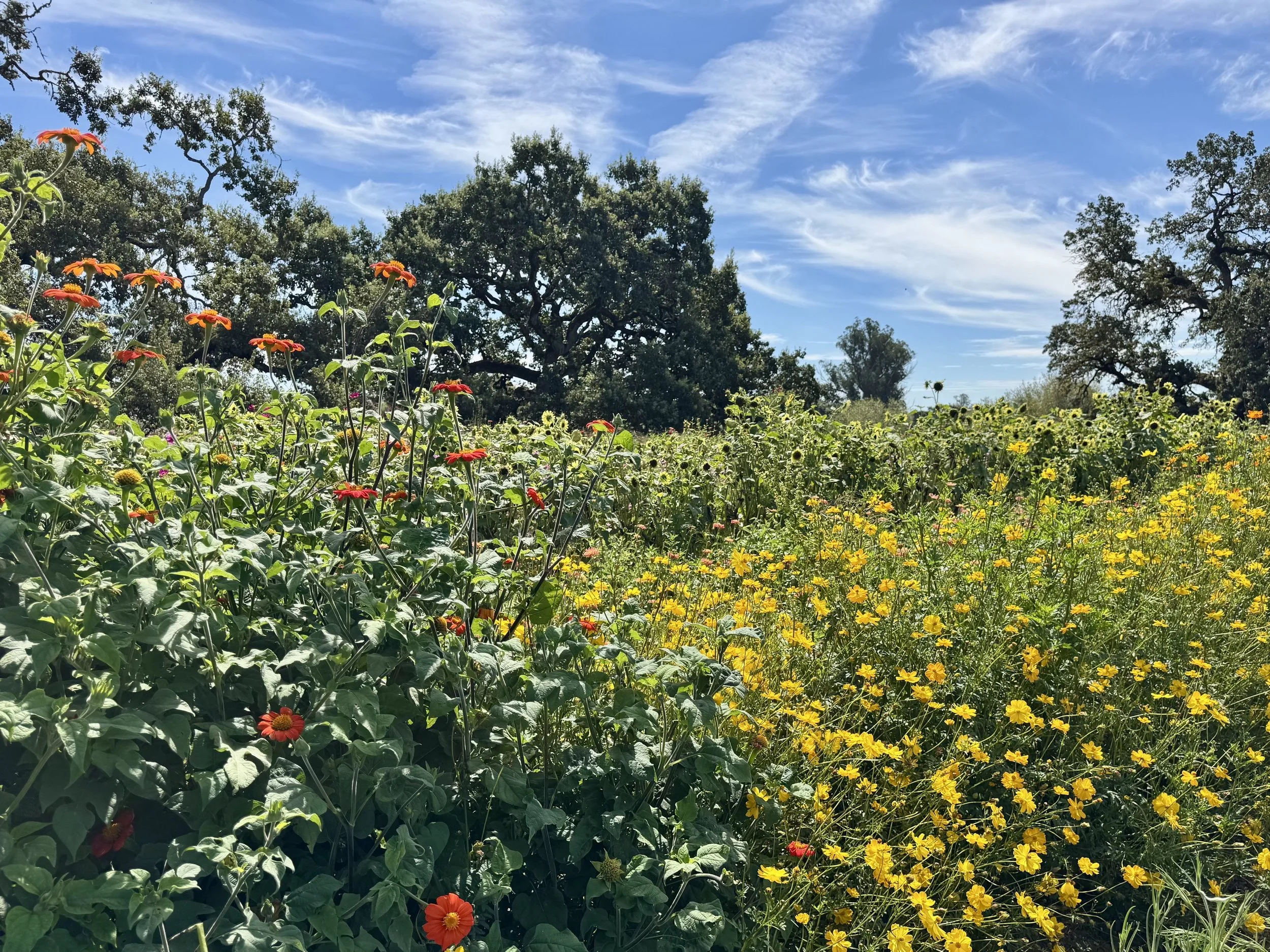
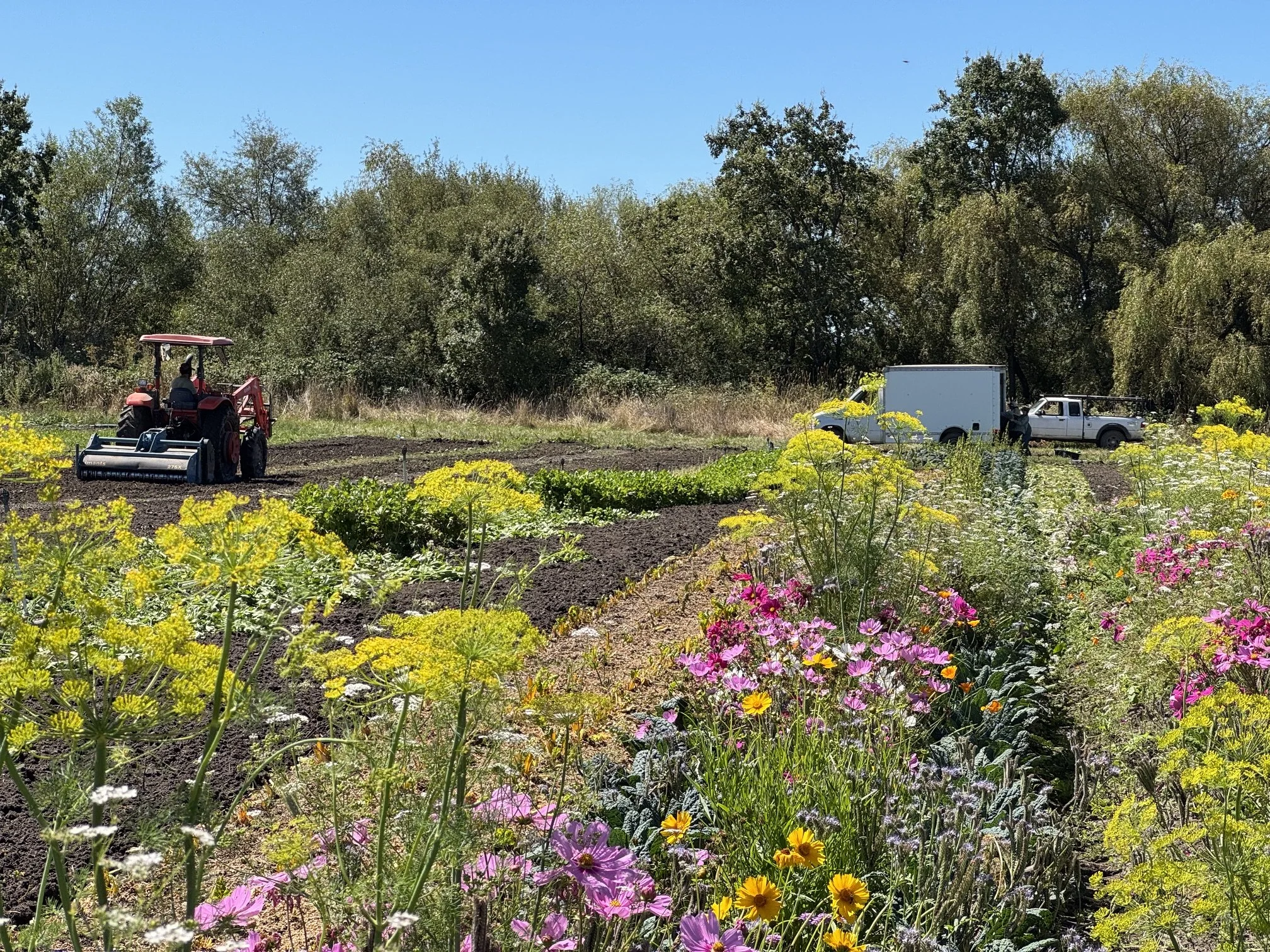
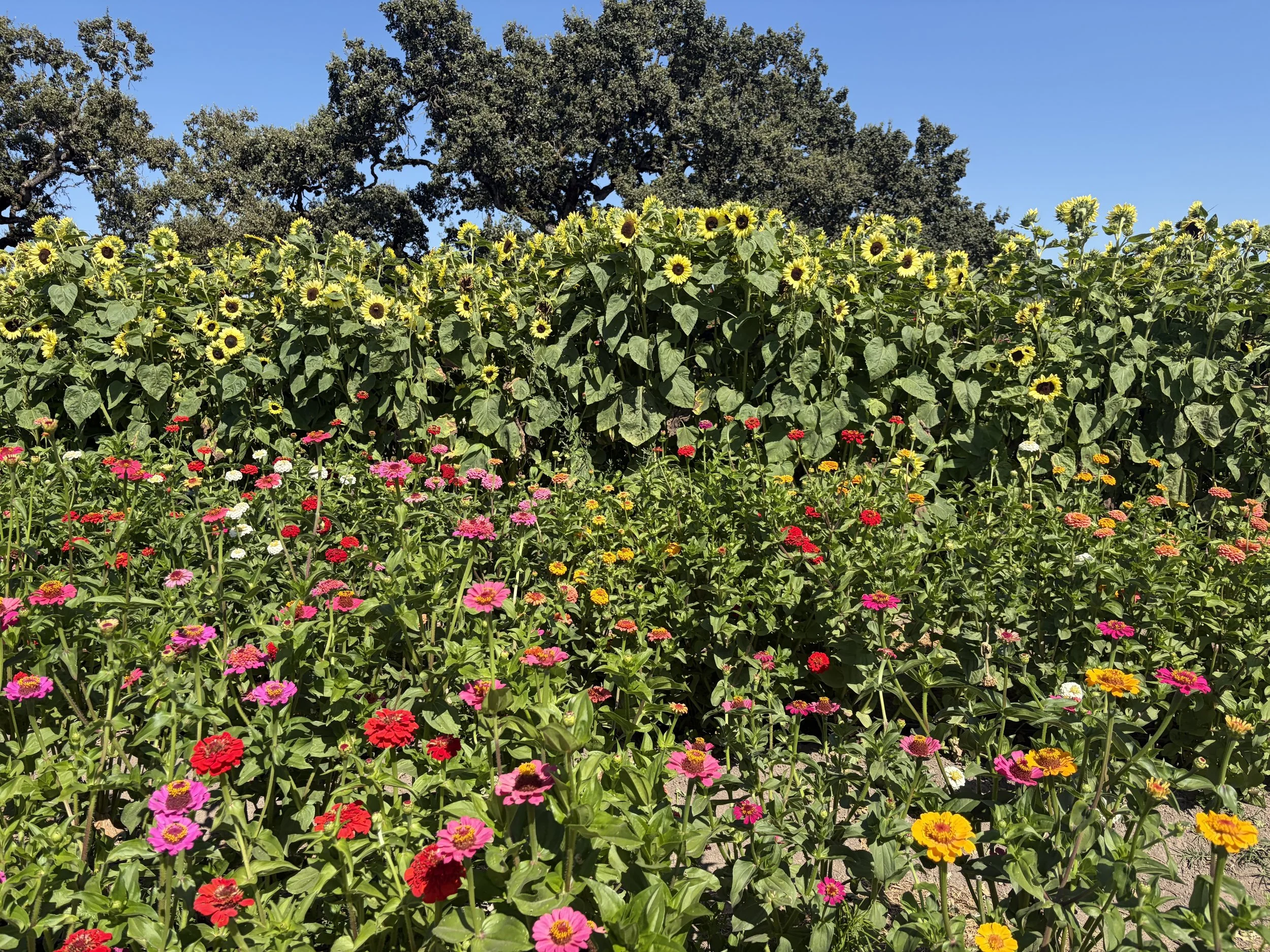
In August, our most abundant and newest flowers are mostly in the Northeast section of the garden.

DIRECTIONS

1. Preheat your oven to 425°F. Arrange eggplant in an even layer on a sheet tray (two if you have them), season with salt and pepper, and drizzle with ½ cup of the olive oil. Flip the eggplant, and season with salt and pepper on the other side. Roast eggplant for 30–45 minutes, flipping the eggplant halfway through cooking, until everything is deeply browned on both sides.*

*Roasting eggplant isn’t hard, but it is inconsistent—more so than any other vegetable maybe. Depending on your oven, the eggplant itself, and what your definition of ½-inch is, it could take anywhere from 40 to even 60 minutes. I’ve roasted eggplant at “425°F” in several different ovens and somehow, it is never the same. The only tip I have is to really roast it until it’s very, very browned, adding more oil if you think it needs it (this will help it brown vs. look white and dehydrated). Well-roasted eggplant is the single most important, make-or-break part of this recipe. 

2. Meanwhile, heat 2 tablespoons olive oil in a large skillet over medium heat. Add breadcrumbs and season with salt and pepper. Toast, tossing occasionally, until the breadcrumbs are golden brown, like individual little pieces of toast, about 5–7 minutes. Add ¼ cup cheese of your choosing and toss to coat, letting it melt into the crumbs (don’t worry if it clumps up) and toss another minute or two. Remove from heat and transfer to a small bowl. Add two or three tablespoons of chopped herbs, toss and set aside.

3. Wipe out the pot or skillet of any crumbs and add remaining 2 tablespoons of olive oil. Add the garlic and cook, stirring occasionally, until softened and nicely toasted, 3-5 minutes. Add tomatoes, tomato paste and crushed red pepper flakes, if using. Season with salt and pepper and cook, stirring occasionally, until the tomatoes burst and the tomato paste turns dark brick red, another 3–5 minutes. Remove from heat and wait for your eggplant to finish roasting. 

4. Once your eggplant is where you want it, add it all to the skillet, stirring it in so it melts into the tomatoes. It will look a little dry at first, but know you’re going to add a bunch of pasta water which will give you more of a “sauce.” 

5. Meanwhile, bring a large pot of salted water to a boil. Cook pasta of your choosing until just before al dente. Save 2 cups of pasta water and drain the rest.

6. Add the pasta and 1½ cups pasta water to your pot or skillet and cook over medium heat. Keep tossing and stirring, until the sauce goes from watery to thick and almost creamy (it happens quickly), 3–5 minutes. Each piece of pasta should be beautifully coated and perfectly cooked. Add more pasta water if you need it, seasoning with salt and pepper as you go. 

7. Divide pasta among bowls and top with breadcrumbs, more herbs, and more cheese to serve. 
FARMER’S LOG

FIELD POEM

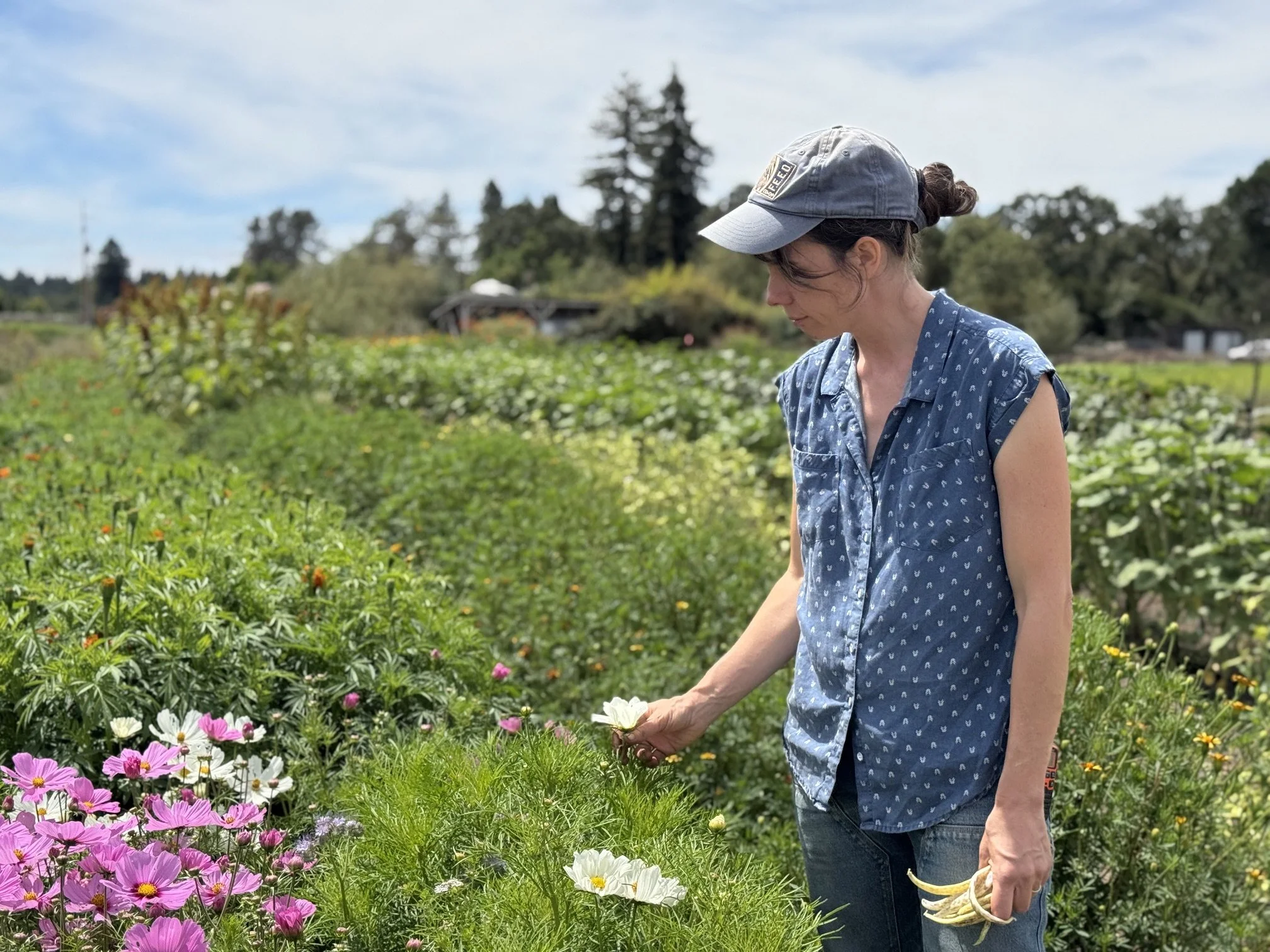
I think we develope friendships with the plants we live and work with.

It can be hard to notice. It’s quieter than the din of modern life and the volume of human speech and it can catch you by surprise.

Farmers might feel it when they haven’t been in a certain field in a long time and then they return — the smell; the feel of the leaves on their skin; the sound of the leaves; a vibration, dare I say, of their intangible personalities.

You feel a certain way — maybe a little more calm, maybe a little cocky.

Or you might you feel a certain way leaving a field after a long day in it.

I love this poem by Gary Soto, I think it speaks to that moment abruptly and clearly…

* * * * *

FIELD POEM
By Gary Soto from Selected Poems

When the foreman whistled
My brother and I
Shouldered our hoes,
Leaving the field.
We returned to the bus
Speaking
In broken English, in broken Spanish
The restaurant food,
The tickets to a dance
We wouldn’t buy with our pay.

From the smashed bus window,
I saw the leaves of cotton plants
Like small hands waving good-bye.

* * * * *

Plant friendships go deeper than we often realize. They can be healing. They’re often unconditional.

Try and close your eyes in the garden this week next to your favorite flowers. Take in the smell, feel their leaves… and say hello to an old friend.

See you in the fields,
David & Kayta

CSA BASICS

Check out our Brief Membership Guide: A quick-reference on the essentials of being a member.

Harvest pick-up times:

  • Friday harvest pick-ups run from 1:00 pm - 6:00 pm

  • Saturday harvest pick-ups run from 9:00 am - 2:00 pm

  • Tuesday harvest pick-ups will run from 1:00 pm - 6:00 pm

U-pick hours: Oriented members can come to the farm any time, 7 days a week, sunrise to sunset, to u-pick and enjoy the farm.

2026 CSA program dates: This year’s harvest season will run from Friday, June 12th through Tuesday, December 8th this year.

Where is the farm? The member parking lot is located at 1720 Cooper Rd., Sebastopol, CA 95472.

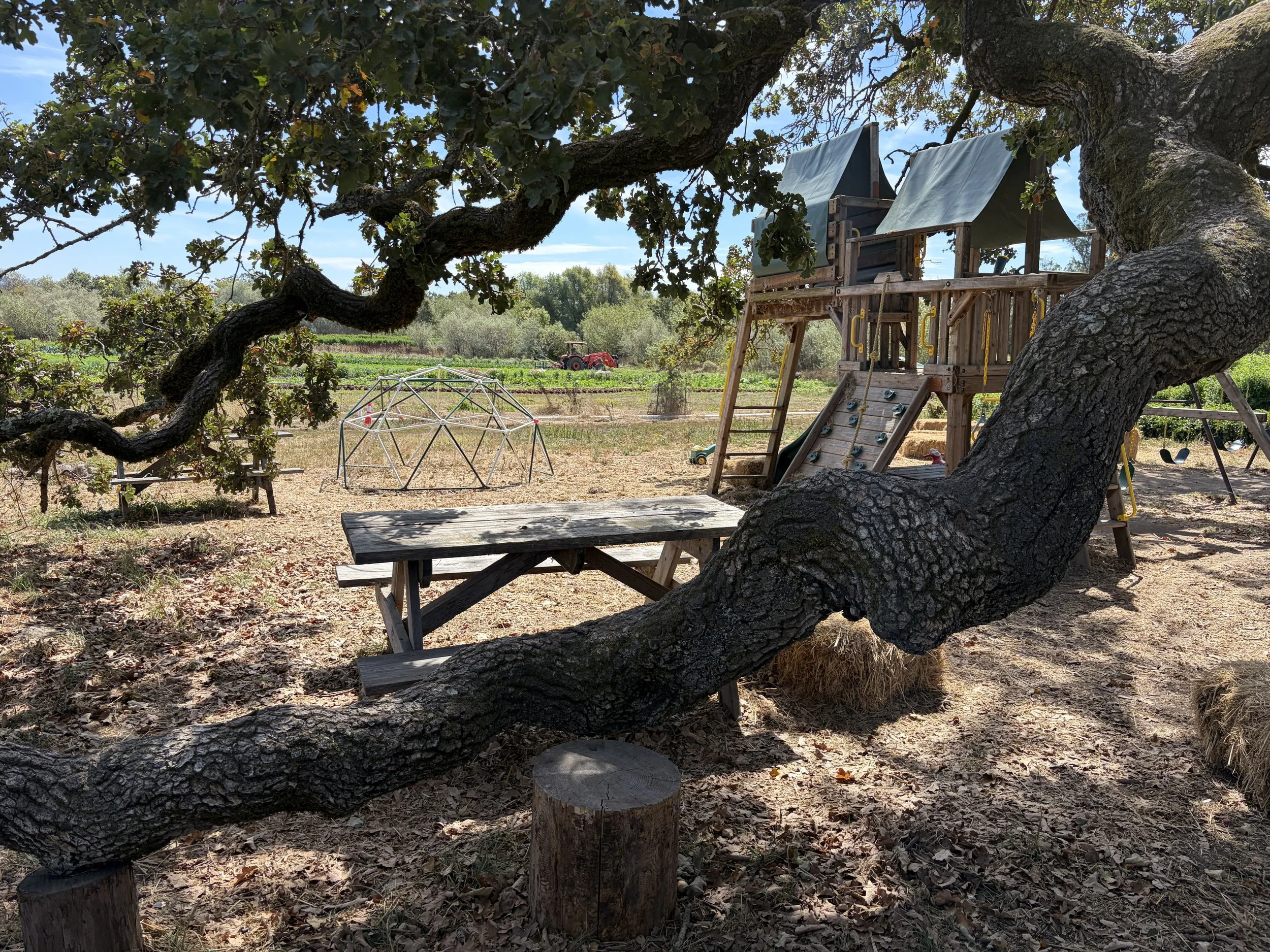
Slow on Cooper Rd. Please drive slowly on Cooper Road — 20 mph. It's a neighborhood with lots of kids and animals who generously share the road with us.
Harvest Week 10 - Plenty in a Drying Land

THIS WEEK’S HARVEST

Kolibri Little Gem Lettuces, Albachiara Lettuce, Escarole, Dazzling Blue Dino Kale, Assorted Zucchini & Summer Squash, Assorted Cucumbers, Rainbow Carrots, Fresh Red Onions, Fennel, Italian & Asian Eggplant, Poblano Peppers, Early Tomatoes, Bicolor Sweet Corn, Assorted Melons

U-PICK

Check the u-pick board in the barn for weekly u-pick limits.

  • Albion Strawberries: ✨5 pints per share✨ There are still beautiful berries languishing in the back right side of the patch. We recommend making the journey out there!

  • Cherry Tomatoes: 2 pints per share

  • Amethyst Beans: Gleanings | Gleanings are how we indicate that a crop’s main production is winding down, but that you are welcome to forage for the small amount that remains.

  • Frying Peppers:

    • Padrons: No limit — take what you’ll eat!

    • Shishitos: No limit — take what you’ll eat!

  • Herbs & Edible Flowers: Husk Cherries, Lemon Bergamot, Dill, Cilantro, Purple Basil, Thai Basil, Lemon Basil, Italian Basil, Tulsi, Parsley, Chamomile, Calendula, Nasturtium, Pansies/Viola, Garlic Chives, Tarragon, Thyme, Oregano, Marjoram, Lemon Balm, Lemon Verbena, Vietnamese Coriander, Shiso/Perilla, Catnip, French & Culinary Lavender, Sorrel, & Assorted Mints

  • Flowers galore!

HARVEST NOTES

  • Assorted Melons: This week we find ourselves between two successions of melons, so depending on when you come you may find the green-fleshed Galia Melons that have been coming on slowly over the last couple weeks, or the new Sarah’s Choice Cantaloupe that we look forward to every year. Galia are yellow on the outside when ripe, and Sarah’s choice are a cream color. With both varieties, you can choose a good melon by smelling the small scar where the stem was attached, but don’t worry — we only grow varieties that “slip from the vine” to show that they’re ripe, which makes it easy to pick a winner.

  • Escarole: One of our favorite members of the chicory family, escarole looks like hearty lettuce. While it can be eaten raw in salad for those who aren’t afraid of a little bitterness, escarole really shines when sautéed, braised or in soup, as cooking highlights its velvety texture and savory depth. For the most simple preparation, try sautéing it in olive oil with plenty of garlic, Parmesan and lemon. It’s also delicious in Italian Wedding Soup, beans with sausage and escarole and Utica Greens — all of which would be delicious this chilly summer week!

  • Poblano Peppers: The poblano chili pepper is the beloved mild chili, originating in the state of Puebla, México that when dried it is called “ancho” or chili ancho and when roasted and stuffed with cheese becomes the magnificent chili relleno. This week will be offering the first taste of these wonderful peppers. For an easy, incredibly satisfying combo, try adding them to this Esquites (Mexican Street Corn) recipe!

ZUCCHINI, HAZELNUT & BASIL SALAD

Adapted from Plenty by Yotam Ottolenghi

This perfect salad is just the thing to renew one’s enthusiasm for zucchini as we start harvesting our final succession for the season. It’s bright, herby, just slightly sweet and very satisfying. The use of a grill pan or very hot skillet allows you to sear the outside while keeping the inside texture from getting at all soggy.

INGREDIENTS

  • 1/3 cup hazelnuts or other nuts (if it’s all you have a bag of roasted, salted mixed nuts works perfectly well)

  • 7 small zucchini (about 1 3/4 lbs in total)

  • 4 tbsp olive oil

  • salt and black pepper to taste

  • 1 tsp balsamic vinegar — we like to increase this until it brings a more marked sweetness to the dish

  • 1 1/2 cups basil leaves — straight Genovese is delicious, or you could experiment with the other basil varieties in the garden: purple, sweet Thai, and lemon would all be excellent and very different

  • 3 oz. Parmesan, broken up, very thinly-sliced or shaved

  • 2 tsp hazelnut or walnut oil

PREPARATION

Preheat oven to 300 degrees F. Scatter the hazelnuts over a baking sheet and roast 12-15 minutes or until nicely browned and toasted. Let them cool down (remove skins if needed) before chopping roughly or just crushing lightly with the side of a large knife.

Place a ridged grill pan on high heat and leave it there until it is almost red hot—at least 5 minutes.

Meanwhile, trim the ends off of zucchini and cut on an angle into about 3/8-inch-thick slices. Place zucchini slices in a bowl and toss with half the olive oil, salt and black pepper. Place the slices on the hot grill pan and cook about 2 minutes on each side, turning them over using tongs. You want to get distinct char marks without cooking the zucchini through. Transfer to a mixing bowl, drizzle balsamic vinegar over and toss to combine. Set aside to cool slightly.

Once zucchini has cooled down, add the remaining olive oil, basil and hazelnuts. Mix lightly and taste for seasoning. Place salad on plates, incorporating the Parmesan, and drizzle over the hazelnut oil.     

Swallowtail on some zinnias

FARMER’S LOG

Plenty in a Drying Land: THE DOG DAYS OF SUMMER

The sun bleaches the hills gold, the fruits of summer rain down… the dog days of summer are here.

The term "dog days" comes from ancient Greece and the Mediterranean, where people tied the return of Sirius — the brightest star in the night sky, and the eye of Canis Major, the Dog that follows Orion across the heavens — to the hottest and sultriest stretch of summer. The days when, as Virgil put it, "the Dog-star cleaves the thirsty ground." The ancients associated the dog days of summer with bad luck, foul tempers, illness and heat. (Did anyone else just get hit with that scourge of a fever + cold sickness recently?)

As the West Marin based naturalist Richard Vacha observes of our own Mediterranean climate in his book The Heart of Tracking, the dog days are an abundant, raucous, frolicking time for wild canines like coyotes, as they feast on fattened prey and the ripening fruit of late summer and as canine pups leave the den and come into their own.

The dog days are also scarce, spent time in our ecosystem. It is the beginning of the great dry-down in California and the great dormant period of our year.

“For a wild animal,” Vacha writes, the late summer and early fall “can be as tough to endure as an East Coast winter. Food is scarce, water is scarce, and green vegetation is crowded into riparian corridors, drawing the animals that depend on these resources closer together. The animals who prey upon them have shifted correspondingly. Territorial patterns are all in great flux as the expansive cycle of the summer season slowly winds down.”

On the farm, this shift into the dog days — their abundance and scarcity — is clear.

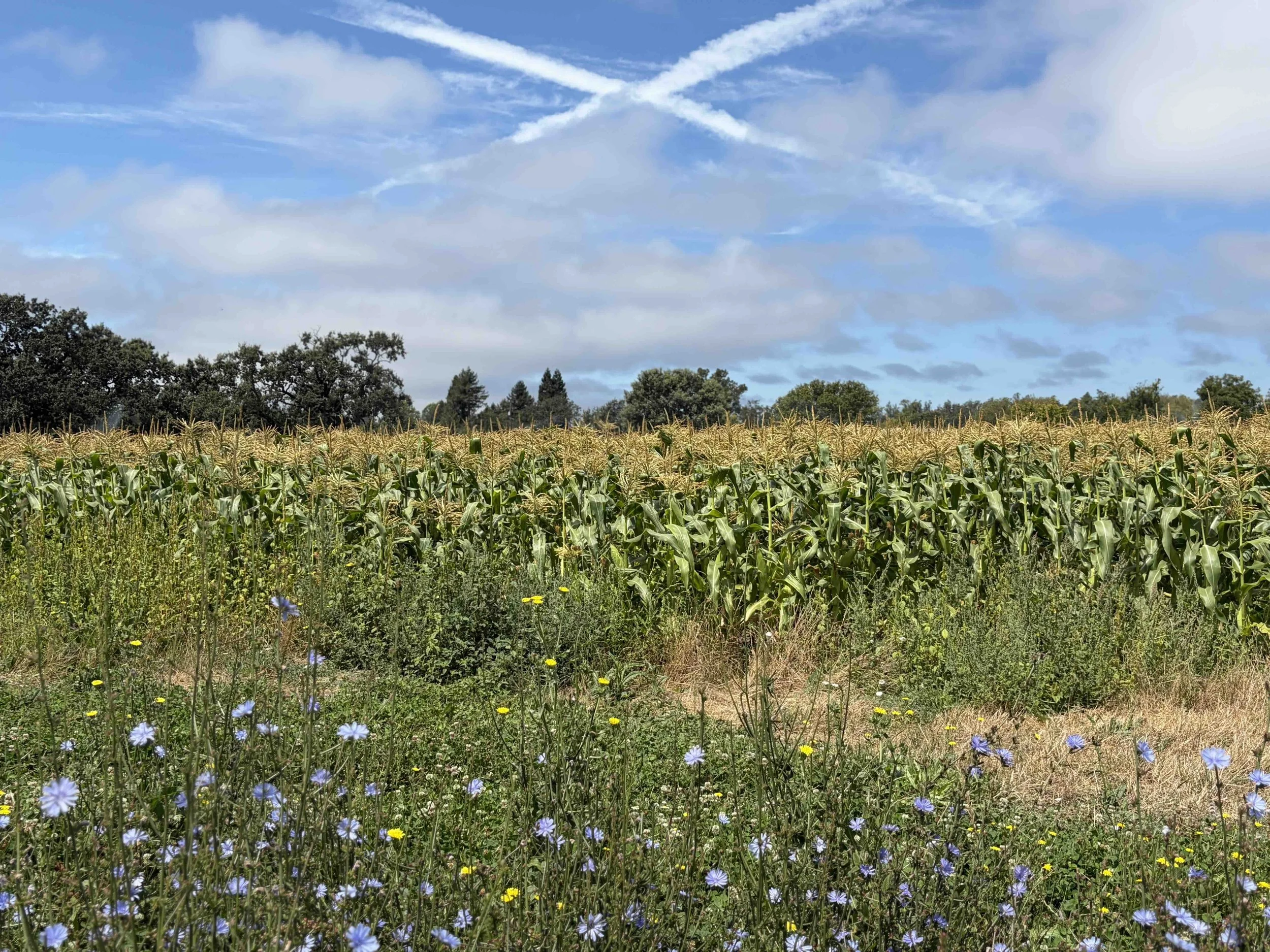
Wild chicories and the sweet corn field feeling the return of Sirius

Our harvests are more and more heavy with fruit — melons tomatoes, peppers, eggplant, sweet corn. The wild blackberries are finishing their last fruit. The wild buckeyes are dropping their leaves and turning to their nuts. In our garden, the first rounds of flowers and herbs are following the lead of the wild grasses, tapping out, and throwing seed.

So it goes in our staple field crops: If July was an outward explosion of verdant vegetation, the dog days are the beginning of the hunkering down, the drawing in, the focused inward stare toward the next generation. Our verdant green acre of winter squash is yellowing as the sun battered canopy turns its attention to the precious orbs below. Our flowering potato field is now droopy and pale, the plants senescing and focusing all they have on swelling their final tubers.

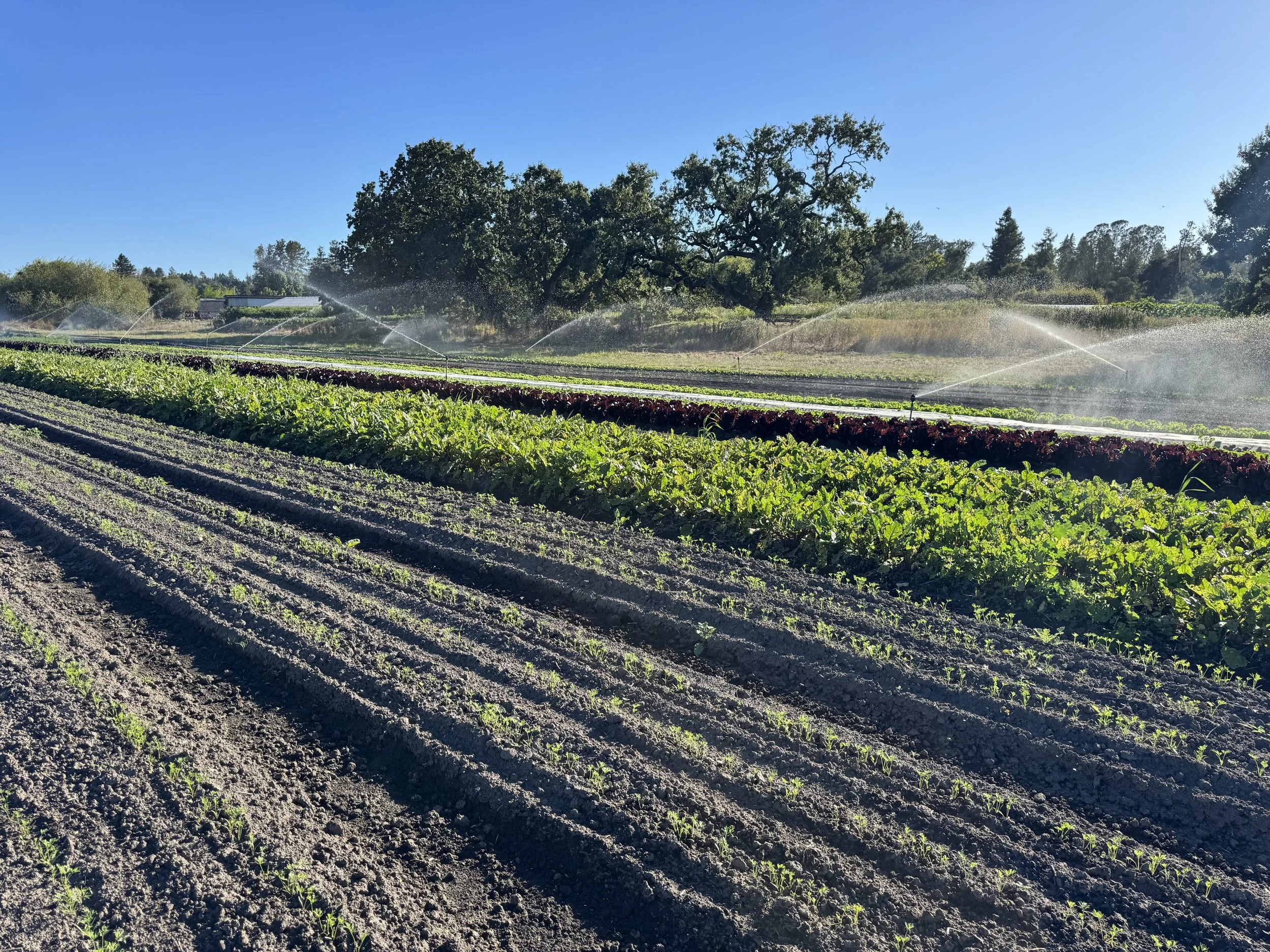
And as the wild land surrounding the farm dries out, our wild neighbors turn more and more to the farm — an irrigated green oasis — for drink and meals. The wild turkeys visit the fields every morning and evening, snipping off hydrating bits of lettuce (their favorite is green romaine lettuce!) Gophers and voles take thirsty bites out of our drip irrigation lines. Raccoons visit the melons and the sweet corn patches nightly for midnight snacks. Good choice.

But the sweet relief of the first fall rains will come soon enough.

Until then, keep cool, move slow, remember to be nice, and enjoy the fruitful abundance of the dog days of summer.

See you in the fields,
David

Nerdy fun fact #1: Athens, Greece and Sebastopol are virtually the same latitude (Athens sits at about 37.98°N, and Sonoma County runs from roughly 38.0°N to about 38.85°N, with Sebastopol at ~38.4°N.

Nerdy fun fact #2: 2,500 years ago, in Greece, Sirius reappeared in the dawn sky in July; but Earth's slow axial wobble has pushed that return later over the millennia, and here in West County it now happens in the second week of August. Step outside about an hour before sunrise on a clear morning, and if you have a very clear view low to the southeast, you can watch the Dog Star climb back into the dawn just before the sun.


CSA BASICS

Check out our Brief Membership Guide: A quick-reference on the essentials of being a member.

Harvest pick-up times:

  • Friday harvest pick-ups run from 1:00 pm - 6:00 pm

  • Saturday harvest pick-ups run from 9:00 am - 2:00 pm

  • Tuesday harvest pick-ups will run from 1:00 pm - 6:00 pm

U-pick hours: Oriented members can come to the farm any time, 7 days a week, sunrise to sunset, to u-pick and enjoy the farm.

2026 CSA program dates: This year’s harvest season will run from Friday, June 12th through Tuesday, December 8th this year.

Where is the farm? The member parking lot is located at 1720 Cooper Rd., Sebastopol, CA 95472.

Slow on Cooper Rd. Please drive slowly on Cooper Road — 20 mph. It's a neighborhood with lots of kids and animals who generously share the road with us.

Harvest Week 9 - On Limits and the Enjoyment of Life

THIS WEEK’S HARVEST

Assorted Lettuces, Flowering Purple Komatsuna, Red Beets, Assorted Zucchini & Summer Squash, Assorted Cucumbers, Carrots, Fresh Red Onions, Celery, Italian & Asian Eggplant, Bicolor Sweet Corn, Caraflex Cabbage

U-PICK

Check the u-pick board in the barn for weekly u-pick limits.

  • Albion Strawberries: ✨4 pints per share✨

  • Cherry Tomatoes: 1 pint per share | The earliest cherry tomatoes to ripen are on the very bottom of the plant!

  • Amethyst Beans: No limit

  • Frying Peppers:

    • Padrons: No limit — take what you’ll eat!

    • Shishitos: No limit — take what you’ll eat!

  • Herbs & Edible Flowers: Lemon Bergamot, Dill, Cilantro, Purple Basil, Thai Basil, Lemon Basil, Italian Basil, Tulsi, Parsley, Chamomile, Calendula, Nasturtium, Pansies/Viola, Garlic Chives, Tarragon, Thyme, Oregano, Marjoram, Lemon Balm, Lemon Verbena, Vietnamese Coriander, Shiso/Perilla, Catnip, French & Culinary Lavender, Sorrel, & Assorted Mints

  • Flowers galore!

Eric fracturing in front of our insectary flower beds in the Kale.

HARVEST NOTES

  • Fresh Red Onions: These gorgeous red onions are coming to you straight from the field, fresh and uncured. You’ll notice that they’re particularly crisp and juicy and we recommend keeping them in the fridge to preserve their texture. As with many red onions, these are on the spicy side, and perfect used in any of your favorite dishes (or the celery salad recipe below!).

  • Bicolor Sweet Corn: We’ve been watching the corn silks in anticipation for weeks, and we’re so excited that the first of the sweet corn is ready! Grill it, roast it, boil it, or just take a bite raw! NOTE: Some ears may contain a caterpillar at the top — these are corn borers, and a totally normal (and unavoidable) part of organic sweet corn. Just toss the little guy outside and enjoy your corn!

CELERY SALAD WITH APPLE AND WALNUTS

Recipe adapted from Alison Roman

In honor of this weekend’s Gravenstein Apple Fair, here’s a refreshing side salad that features our minerally, sweet & salty celery, and the sweet-tart flavor of our hometown hero apples.

INGREDIENTS

  • 1 cup walnuts, almonds, hazelnuts or pecans, coarsely chopped (optional)

  • 3 Gravenstein apples, unpeeled and thinly sliced

  • 1 bunch of celery, leaves and stalks separated, thinly sliced

  • ½ medium red onion, thinly sliced (if you’d like the onion to be milder, soak briefly in cold water, or use Torpedo onions from last week)

  • 2 lemons, zested and juiced

  • Kosher salt, freshly ground black pepper

  • 2 cups parsley, tender leaves and stems

  • Olive oil, for drizzling

PREPARATION

  1. Toast walnuts, either in a 350° oven or toaster oven for 5–7 minutes, or a pan on the stove, stirring often. 

  2. Toss apple, celery, onion, lemon zest and juice in a large bowl and season with salt and pepper. 

  3. Taste and season with more lemon juice, salt and pepper. Add parsley and walnuts and drizzle with a healthy amount of olive oil, seasoning again with salt and pepper before serving. 

TOMATOES COMING SOON!

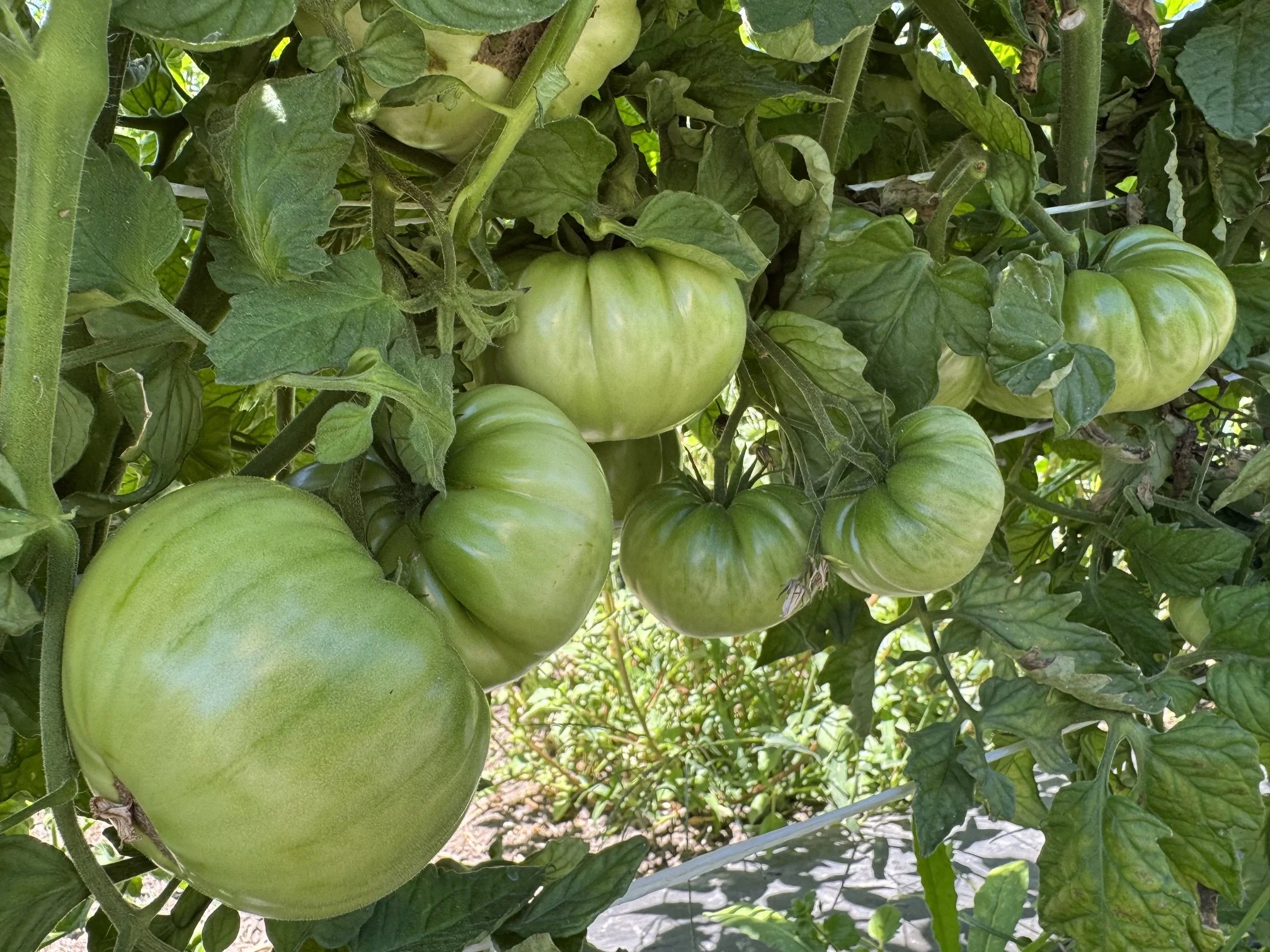
A practical update on our main-season slicing tomato crop: Sonoma County is a land of microclimates. From the baking oven of Dry Creek Valley to the fog-soaked stretches of the Petaluma Gap. Here at West County Community Farm we tilt toward the cooler side of things, low and fog kissed. For that reason, our main season slicing tomato crop usually comes in later — around mid-August — than friends in warmer areas. The fruit set on our crop is looking good and should be blessing our tables soon.

FARMER’S LOG

On Limits and the Enjoyment of Life

As our harvests transition away from the delicate greens of early summer into the colors and flavors of summer, we are reminded of why we love eating seasonally from the farm.

Nothing dictates what is on our tables more than the tilt of the Earth. As you’ve seen, the shares of mid-June are very different from those of late July and early August. The spring, with its soft waxing light, grows tender, almost translucent, baby-soft greens. While the hard summer sun condenses itself into weighty, colorful, sweet fruits. Mentally compare a silky, soft, watery Spring strawberry to the sun-hardened, acid-sweet strawberries this week.

Another cool thing about eating from the farm is that we get to experience the full arc of plant growth — from fresh onions to cured onions; from baby Spring carrots to the deep orange Fall carrots kissed by frost. In supermarkets, most produce is harvested at one standard stage of a few standard varieties. Here, life is happening, and we pull it out of the field for you to taste.

But perhaps our favorite thing about this model is an unsung hero: Limits.

Supersweet 100 trusses, going from ripe to just flowers.

Yes, limits. Not having something. “Limit: 1 per share.”

“What!?”

We live in a time and a place where we can get just about any food, anytime, en masse, if you can afford it. Tomatoes in January. Melons in the February. Mangos in Sebastopol.

We have conquered seasons. We have conquered limits.

But have we also conquered one of life’s simplest pleasures? What is the fulfillment of desire without the longing that precedes it?

Last week we cherished the year’s first slicing tomato. That first slice of vine-ripened tomato on an open faced sandwich (with a little basil, olive oil, and salt) brought back a flood of memories from last summer, and summers before that, and we smiled at our loved ones at the table in our shared remembrance and shared enjoyment of this thing that we have now, but did not have for so long.

In most (or maybe all) rooted cultures there are festivals celebrating the return of foods. In Southern France there is the plum festival and the Spring festival marking the return of the egg. In Sebastopol, we have the Gravenstein Apple Fair this weekend.

Limits, scarcity, the lean times — they help us appreciate, like really appreciate, what we have, where we are, and who we are.

Life's fleeting nature is really it's spice — and so it goes for food.

In a few short weeks, we will be rich in slicing tomatoes. We will take for granted their spiced-earth smell and the way they tie so many meals together. We may even grow sick of tomatoes. But not this week. This week we are in waiting. This week we will rotate a teasing Sungold around between our thumb and index finger — impossibly orange, impossibly perfect — and it will shine back at us and remind us where we are, in place and in time. And it will remind us how impossibly lucky we are to wait for tomatoes.

See you in the fields,
David


CSA BASICS

Check out our Brief Membership Guide: A quick-reference on the essentials of being a member.

Harvest pick-up times:

  • Friday harvest pick-ups run from 1:00 pm - 6:00 pm

  • Saturday harvest pick-ups run from 9:00 am - 2:00 pm

  • Tuesday harvest pick-ups will run from 1:00 pm - 6:00 pm

U-pick hours: Oriented members can come to the farm any time, 7 days a week, sunrise to sunset, to u-pick and enjoy the farm.

2026 CSA program dates: This year’s harvest season will run from Friday, June 12th through Tuesday, December 8th this year.

Where is the farm? The member parking lot is located at 1720 Cooper Rd., Sebastopol, CA 95472.

Slow on Cooper Rd. Please drive slowly on Cooper Road — 20 mph. It's a neighborhood with lots of kids and animals who generously share the road with us.