
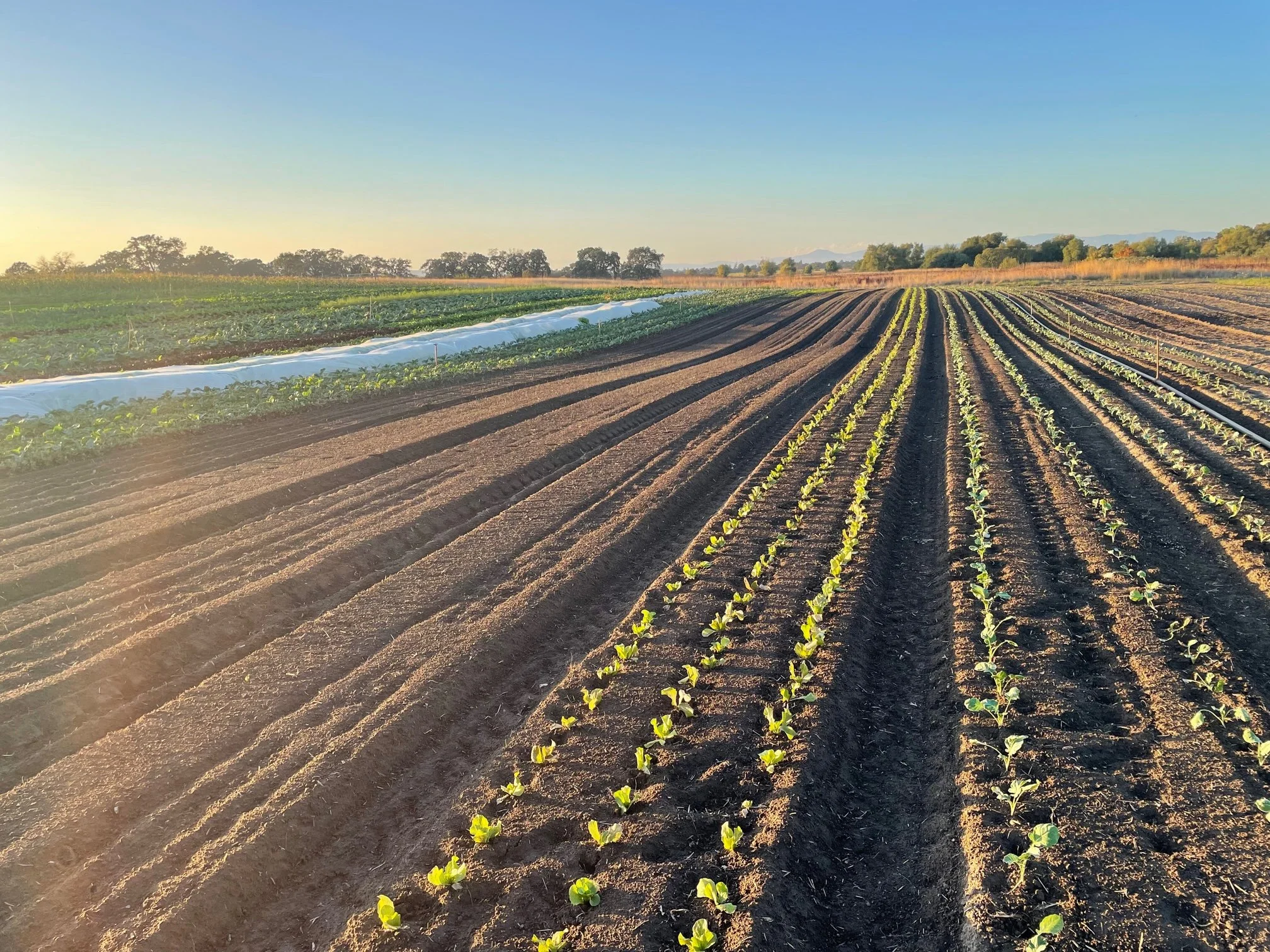
Harvest Week 21 - Thanksgiving Preview

THIS WEEK’S HARVEST

In a nutshell: Sweetened by frost and rain

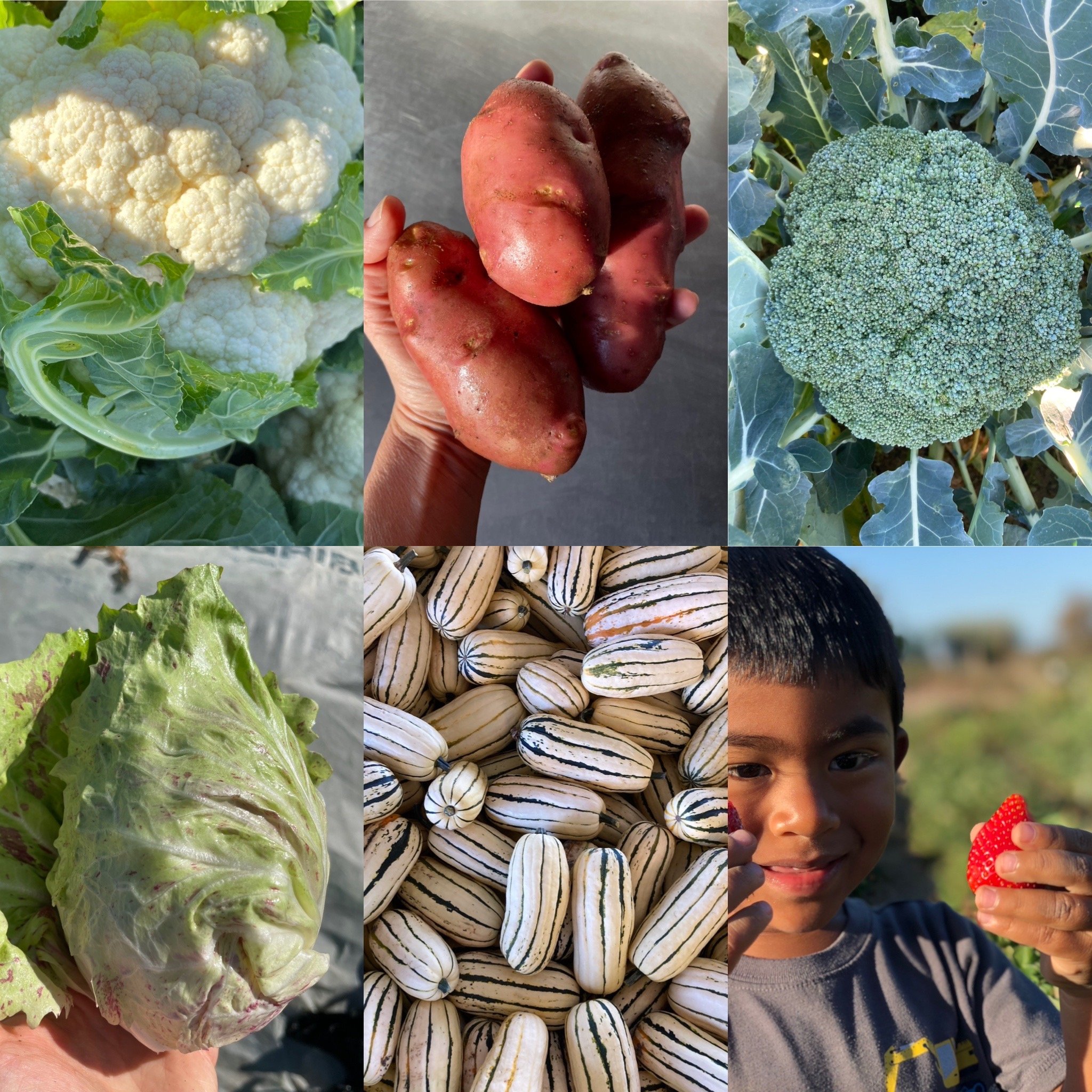
Mustard Mix, Little Gem Lettuces, Giorgione Radicchio, Rainbow Chard, Green Magic Broccoli, Romanesco, Cauliflower, Purple Cabbage, Green Bok Choi, Hakurei Salad Turnips, Romance Carrots, Delicata Winter Squash, Elsye Onions, Desiree Potatoes
U-PICK

  • Albion Strawberries: Gleanings

  • Herbs: Italian Parsley, Onion Chives, Garlic Chives, Oregano, Lemon Verbena, Thyme, French Sorrel.
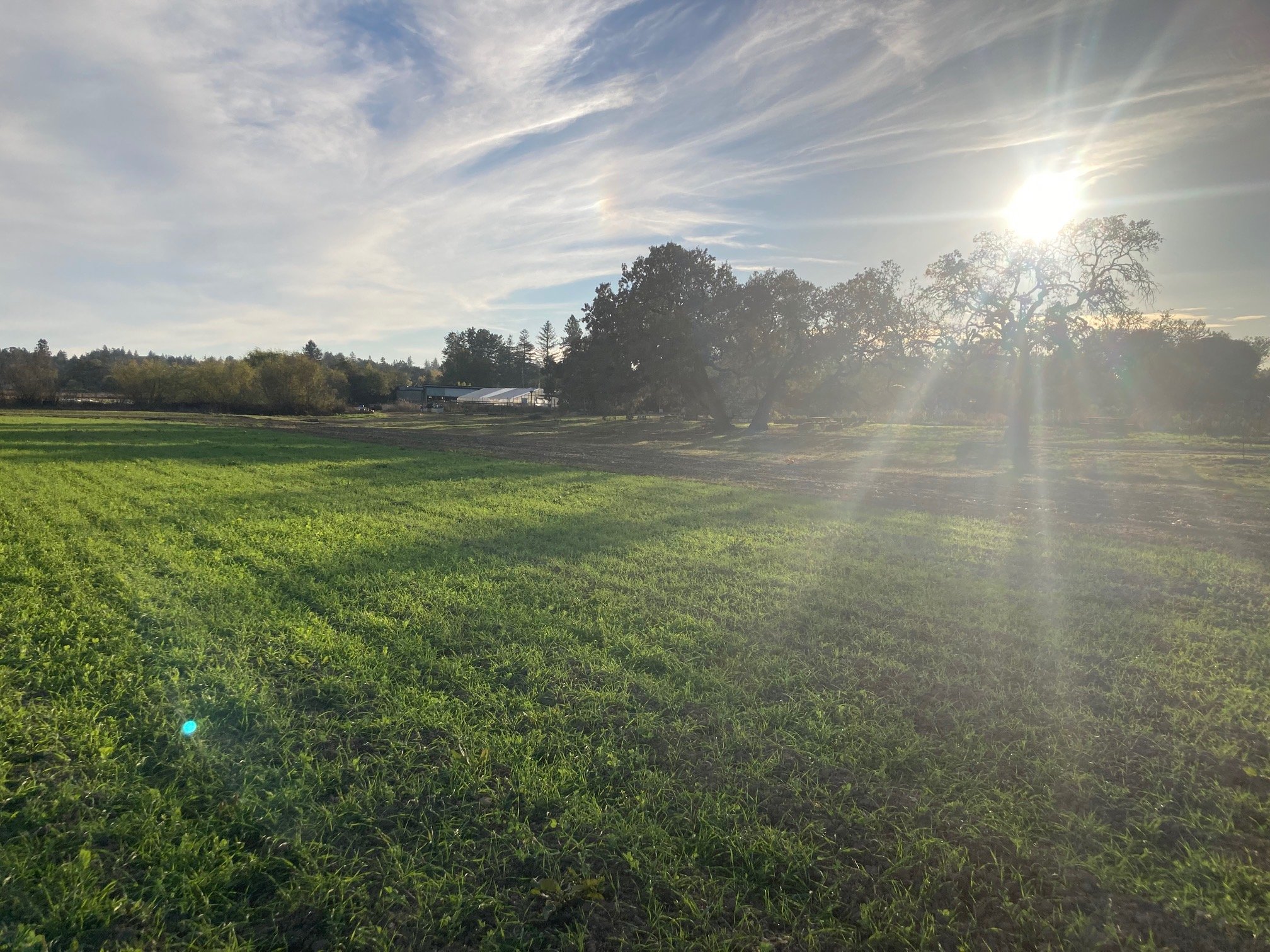
A winter blanket of cover crop sprouts in Centerfield. Thanks to Tristan and our amazing team for hustling to get this cover crop in early!

HARVEST NOTES

  • Giorgione Radicchio: This Castelfranco-type chicory is new to us this year, and we are loving its fancy, frilled leaf-edges, delicate speckling and slightly frost-sweetened flavor. Delicious and beautiful added to a lettuce salad or on its own paired with a sharp, rich dressing.

  • Desiree Potatoes: The Desiree potato is a red skinned, yellow fleshed variety bred in the 1960’s in the Netherlands. It is versatile and great for roasting, mashing, and salads. Fun fact: Desiree potatoes grown in Bhutan are highly sought after and fetch a high price in India.

  • Integro Purple Cabbage: Deliciously crisp and intensely colored, we love Integro cabbage for the vibrancy it brings to the table. We usually find ourselves making simple cabbage salad (think lemon, garlic, carrots and toasted sunflower seeds), but it would be great for any of your favorite dishes, including as a Thanksgiving side.

Thanksgiving Preview

To help you plan for the big day, here is a snapshot of the share we are planning for Harvest Week 22, the week of Thanksgiving:

Leeks, Onions, Garlic, Celery Root, Yukon Gold Potatoes, Winter Luxury Pie Pumpkin or Sunshine Kabocha, Dino Kale, Brussels Sprouts, Cauliflower, Carrots, Assorted Lettuces, Radicchio, Watermelon Radish, Butternut Squash, and Broccoli.

Brussels Sprouts fattening up in Farfield for the big day.

WINTER SISTER FARM CSA SIGN-UPS NOW OPEN!

Winter Sister Farm’s 2024 Winter CSA program is now open for registration! Winter Sister Farm, right next door to us, was started by our dear friends Anna and Sarah Dozor. Their CSA has a late-start option for WCCF members, running from December 30 through May 15th. Their CSA is a 24 weeks of the highest quality specialty winter veggies, flowers, herbs, and more — all picked up free-choice market style, on their beautiful farm here on Cooper Rd! Sign-up today!

FARMER’S LOG

AN ODE TO THE STRAWBERRIES

Of all the crops that we grow here on the farm, perhaps no other brings as much joy as the the strawberries.

We sometimes wonder if they are also the most productive crop on the farm: From early May through at least October they shower us — sometimes deluge us — with a nearly constant supply of sweet gifts. They are everbearing joy-bringers, if you will.

This week, Kayta and I had strawberries on the brain as we made a plan to replace our two older strawberry patches — which farmer’s must do every 1 to 3 years to rotate away from fungal diseases — with a new even larger planting. You will see that process in progress over the next few weeks. 

It will be very hard to say goodbye to those plants — they’ve been such amazing friends. And both strawberry patches have inspiring life stories. They each had a tough go of it early on, each in their own way, and rallied to become overachieving providers. 

Our first strawberry patch was planted after the great storm of October 2021 when it rained 11 inches in two days and flooded the Laguna. The plants were planted into very soggy soil and shortly thereafter were beset by a huge natural population of “cutworms” — the larva of the large yellow underwing moth Noctua pronuba — who fed so voraciously on the vulnerable spring shoots of that we did not know if they would survive. Then came some phytopthora, a fungus whose name means “plant destroyer” in Greek, a nearly unavoidable strawberry foe. Then came some symphylans. And then came some hungry deer, which prompted us to begin fencing our strawbs! But whether undercut at the root, snipped at the stem, or chomped by browsing ungulates, that first strawberry patch just kept growing, flowering, and — thank the Farm Gods — fruiting. Typically, the 2nd year of an everbearing strawberry is an incredibly fruitful year and indeed, this year that patch was a marvel.

Unconfirmed, but Alice’s first bite of solid food may have been an Albion strawberry.

Our newer strawberry patch this year (the one near the peppers) had an even harder winter — being planted into one of the wettest rain years in recorded history. Their roots, along with the garlic, had to try to establish themselves in constantly saturated soil. We estimate about 40% of the plants in the new patch never reached their full potential, stunted by phytopthora which thrives in wet ground. Nevertheless, this patch combined with their all-star older sisters for a grand-slam strawberry year. 

The sheer resiliency and vigor of our strawberry plants (and the amount of joy-berries they produce) is no accident. These are Albion strawberries and it is in their genes.

The Albion strawberry is, in this farmer’s opinion, one of the greatest plant breeding achievements in human history. Introduced in 2004, the Albion strawberry is the current crowning achievement UC Davis’s strawberry breeding program. In a state that produces 90% of the nation’s strawberries and 2 billion in annual strawberry revenue, the UC Davis strawberry breeding program has been around for 100 years and is serious business. The Albion strawberry is the result of a century of the careful crossing of various strawberry strains to produce a plant with a combination of vigor, disease resistance, productivity, and taste. They keep trying to out-do themselves and improve the Albion but they can’t.  

And what all that seriousness has amounted to for us is, well… joy.

So as the days get colder and our strawberry season winds down and 1 pint goes to gleanings, take a moment to stand in one of the old strawberry patches with a crisp Fall berry in your mouth and to give thanks to the wondrous plants that have given us so much this year…

Thank the sun, thank the soil, thank the plants — and thank the UC horticulturalists! 

See you in the strawberry fields, 
David & Kayta 
Harvest Week 20 - Fall Mode

THIS WEEK’S HARVEST

In a nutshell: Lots of long-maturing, frost-kissed, heading veggies — we’re in the pocket in Fall mode.

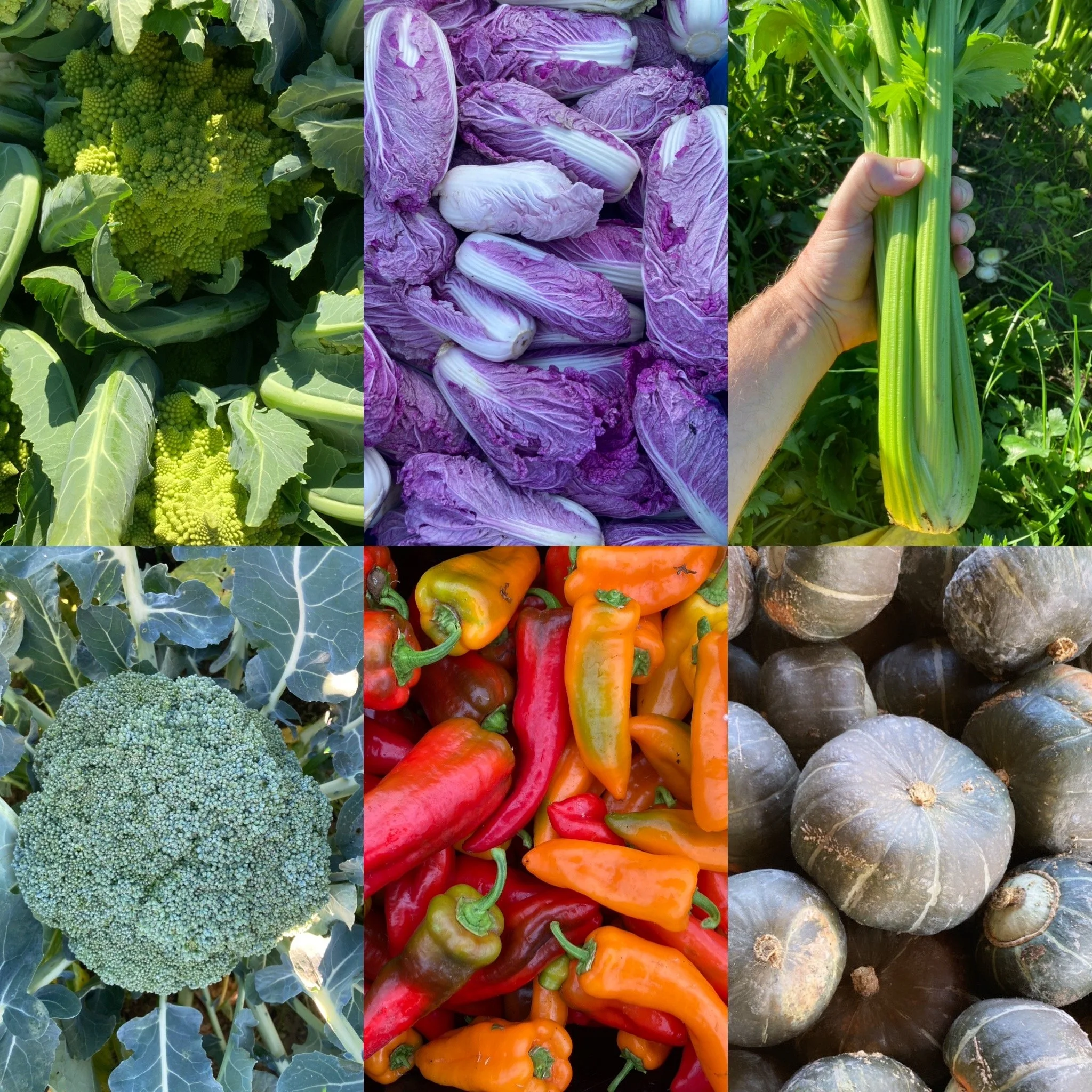
Mustard Mix, Little Gem Lettuces, Curly Endive, White Russian Kale, Green Magic Broccoli, Romanesco, Beets, Napa Cabbage, Celery, Sweet Peppers, Poblano Peppers, Romance Carrots, Bonbon Buttercup Winter Squash, Elsye Onions, Harvest Moon Potatoes

U-PICK

  • Albion Strawberries: 1 pint per share

  • Herbs: Only the hardiest of the herbs remain in small quantities: Parsley, Onion Chives, Garlic Chives, Oregano, Thyme, French Sorrel.

  • Flowers: The flowers have also been kissed by frost, so expect only a smattering of the hardiest blooms.

HARVEST NOTES

  • Curly Endive: While it may look a lot like Frisée, we find this variety of Curly Endive much more delicious for individual eating. It’s succulent and mild enough to be used as a salad green on its own, particularly when matched with bold flavors, like the Easy Ceasar Dressing recipe below, or pickled beets and blue cheese, for example. Also great braised or cooked as you would any chicory.

  • Bonbon Buttercup Winter Squash: In your farmers’ opinion, the best squash ever bred. Ultra sweet and flaky, this squash is like a dessert all on its own. Also great for use in any of your favorite Winter Squash dishes.

With last week’s frosts nipping most of the garden flowers, we look back with nostalgia and wistfulness at an amazing year of flowers. Thank you Kayta and our garden & greenhouse manager Paige!

Easy Ceasar Dressing

From Smitten Kitchen

We’ve been obsessed with this super-simple, easy Ceasar dressing that Rose of Pink Barn Farm introduced us to last winter. It comes together really quickly and provides a perfectly sharp counterbalance to hearty greens like this week’s Curly Endive, and White Russian Kale. We’ve scaled the recipe up here to make a full pint of dressing — enough for several days of generous salads, but if you’d rather make a smaller amount, check out the recipe link above. As with all dressing recipes, using high quality ingredients — particularly olive oil and mayonnaise — will make a big difference.

  • 1/2 cup mayonnaise

  • 4 small garlic cloves, minced

  • 4 teaspoons worcestershire sauce or 1 to 2 anchovies, minced

  • 4 teaspoons smooth dijon mustard

  • 1/4 cup lemon juice or champagne vinegar

  • 1 cup olive oil

  • Salt and freshly ground black pepper

Whisk all the ingredients in a small bowl and whisk until smooth, or measure directly into a pint jar and shake til smooth. Don’t skimp on the salt and pepper; they’re going to wake the whole thing up.

WINTER SISTER FARM CSA SIGN-UPS NOW OPEN!

Winter Sister Farm’s 2024 Winter CSA program is now open for registration! Winter Sister Farm, right next door to us, was started by our dear friends Anna and Sarah Dozor. Their CSA has a late-start option for WCCF members, running from December 30 through May 15th. Their CSA is a 24 weeks of the highest quality specialty winter veggies, flowers, herbs, and more — all picked up free-choice market style, on their beautiful farm here on Cooper Rd! Sign-up today!

Freehand Bakery’s Last Week!

We’re sorry to say that this Tuesday will be Freehand Bakery’s last week of the season, as the bakery space they rent will be unavailable for the next couple months. Make sure to stock up, and look forward to eating more of their incredible breads and pastries at Winter Sister Farm this winter!

FARMER’S LOG

FALL MODE

Another busy week in the fields! This week, like the last few, had at its center bulk harvest, harvest, harvest and cover cropping!

Last Saturday we had a big team led by Anayeli and Alberto out to help us finish harvesting the last third of this year’s magnificent potato crop and our popcorn and Hopi Blue corn. The corn is now drying in the greenhouse for late-Fall shares, and our hoard of 12,000 + lbs of potatoes is piled high in the big cooler.

On Wednesday and Thursday our amazing core crew worked hard to get in the very last bed and final gleanings of the potatoes (another 1,000 lbs!) as well as the Watermelon Radishes, Beets for storage, and 100 ft of Bolero Carrots, whose tops are sugar-sweet from last week’s frosts.

Tristan was racing the coming rains by hustling to plant cover crop on the last big field blocks vacated by the corn, Jack-O-Lanterns, and Potatoes. His cover cropping efforts are really starting to show and bless the farm with their green promise a delicious 2024.

Cover crop sprouting happily next to the drying Hopi Blue corn stalks.

For our cover crop, we seed a nitrogen-fixing, organic-matter-building mixture of Magnus Peas, Dundale Peas, Crimson Clover, Vetch and Triticale on pretty much every inch we planted this year. You can see the hyper-green fuzz of early cover crop sprouts out in Centerfield and Farfield. If we have a relatively mild winter (i.e. not an excessive amount of flooding) this fuzz will be let to grow into a waist high sea of green. This crop will feed, enrich, and build the soil for 2024’s bounty, and for many years to come. (A healthy cover crop stand can generate over 8,000lbs of biomass per acre. It's like growing a huge pile of compost out of thin air — right where you need it!)

In Sonoma County, it is best to plant your cover crop seed in low spots by mid-to-late-October… early-November at the latest. Any later and you risk colder temperatures and soggy soil inhibiting the germination of the cover crop seed and your fields laying relatively naked through the winter. So, this coming week, we will say farewell to the tomato trellises and the frying peppers and the spent flower beds of summer — they must now make way for a dense, lush, life-giving cover crop.

On the fresh harvest today we looked out at our bank of happy Fall crops in Farfield, chilling out there in this cooler weather — and brought in some amazing Broccoli, Romanesco, and a new (to us) Curly Endive that was so delicious we couldn’t stop tasting it as the harvest knives sang.

Enjoy the frost kissed bounty!

See you in the fields,
David & Kayta

Harvest Week 19 - The Season of Death

THIS WEEK’S HARVEST

In a nutshell: The dagger of frost marks the end of summer’s fruits and the beginning of Fall’s bounty.

Mustard Mix, Spinach, Newham Little Gem Lettuces, Dazzling Blue Dino Kale, Hakurei Salad Turnips, Romanesco, Green Bok Choi, Murdoc Cabbage, Sweet Peppers, Poblano Peppers, Romance Carrots, Jester Winter Squash, Cabernet Onions, Bodega Red Potatoes, Green Tomatoes

U-PICK

Frost has arrived!

With the arrival of the cold, all our nightshades and beans have been killed. Feel free to glean any remaining fruit on the cherry tomatoes and peppers before we rip the plants out next week!

  • Jack-O-Lantern Pumpkins: Free for all! Help yourself to any of our remaining pumpkins — but please remember that they are do not make delicious eating as they were bred for looks rather than flavor. Use your weekly Winter Squash for pies and things!

  • Albion Strawberries: 1 pint per share

  • Herbs: Only the hardiest of the herbs remain in small quantities: Parsley, Onion Chives, Garlic Chives, Oregano, Thyme, French Sorrel.

  • Flowers: The flowers have also been kissed by frost, so expect only a smattering of the hardiest blooms. Time to get creative in the vase!

HARVEST NOTES

  • Bodega Red Potatoes: These distinctively round, red-skinned tomatoes are a true local heirloom, grown in our region since the 1840’s. This is the first year that we’ve been able to track down seed potatoes to grow them, and we’re grateful to the folks at Slow Food Sonoma County North for their work in making them available! Bodega Reds have a rich, creamy and nutty potato flavor, and a texture that’s neither too starchy nor waxy. They’re quite versatile, so use them in any of your favorite dishes: baked, boiled, fried, or mashed.

  • Green Tomatoes: As a last hurrah for our beloved tomatoes this week we’ll be distributing unripe green ones, perfect for fried green tomatoes, or for adding to stews, like this luscious pork & green tomato stew.

  • Jester Winter Squash: A cross between a Delicata and an Acorn Squash. A good Jester can be among the sweetest of squashes. David’s favorite.

  • Romanesco: This vivid green, spired cauliflower is an Italian heirloom. Enjoy it any way you would cauliflower, and be sure to admire its fractal beauty and slightly nutty flavor before you devour it!

The larder is filling with Fall’s bounty.

Miso-Glazed Turnips Recipe

BY CLAIRE SAFFITZ

This simple recipe turns this week’s Hakurei Turnips into a delicacy!

Ingredients

(Makes 4 Servings)

  • 1 pound small turnips, trimmed, scrubbed, cut into 1” wedges

  • 2 tablespoons white miso

  • 2 tablespoons unsalted butter

  • 1 teaspoon sugar

  • Kosher salt and freshly ground black pepper

  • 2 tablespoons fresh lemon juice

Preparation

  1. Combine turnips, miso, butter, and sugar in a medium skillet, then add water just to cover vegetables. Season with salt and pepper.

  2. Bring to a boil over medium-high heat and cook turnips, turning occasionally, until they are tender and liquid is evaporated, 15–20 minutes.

  3. Once all the liquid has cooked off, keep cooking turnips, tossing occasionally, until they are golden brown and caramelized and the sauce thickens and glazes the vegetables, about 5 minutes longer.

  4. Add lemon juice and a splash of water to pan and swirl to coat turnips. Season with salt and pepper.

FARMERS LOG

THE SEASON OF DEATH


Rise and fall. Light and shadow. Summer and winter. Life and death. 

Halloween is an extremely important time of year on the farm. It is the season of death.

The roots of our Halloween holiday lie in the ancient Gaelic Samhain festival. The Samhain festival marked an important transition: The end of the harvest season (it means "summer’s end”) and the beginning of the darkest half of the year. The Gaelic were a pastoral people and the Samhain marked the time when the shepherds brought their livestock, fattened on summer mountain pastures, back down for the winter for shelter or for slaughter. There were feasts. People opened their burial mounds (portals to the underworld) and lit cleansing bonfires. The borders between the worlds were thought to become thinner around the Samhain and supernatural spirits and the spirits of ancestors were thought to walk amongst the living. The spirits were to be appeased or tricked. Tables were set for friendlies at the Samhain dinner. People wore costumes to disguise themselves from the evil spirits and placed candles inside of carved turnips (in lieu of pumpkins) to frighten them off.

You can feel the Samhain in every nook and cranny on the farm these days — especially after the dagger of this morning’s hard frost. How different the farm looks now from spring’s jubilant green promise and summer’s colorful cacophony! The life cycles of the plants that showered us with riches all summer are now at an end. Their bodies hang drawn, gaunt and ghostly on their trellises or shriveled, mildewed, and desiccated in the rows, awaiting the final, furious whir of the flail mower.

This week, with our major harvests nearly complete, we did the portal tending farm work of the Samhain. On Tuesday, Tristan mowed and spaded under large sections of Centerfield, transitioning our Winter Squash plants into the underworld, where they are now being devoured by worms and bugs. On Wednesday, there lay a bleak, deep brown maw of bare soil. 

A great, pregnant silence. An open portal.

On Thursday morning, Tristan performed the Last Rites on the squash field. First, he spread steaming black compost. Then he broadcast the cover crop by driving the cone spreader back and forth, processionally, rhythmically, tossing clover, peas, vetch, and grass seeds  — like little prayers — onto the black veil. Finally, he harrowed the seeds under — the little old tiller we use to “kiss” the seed into the ground whirring like a little demon — and closed the portal.

One can only marvel at the wisdom of ancient agrarian festivals, born from bone deep relationship to the cycles of nature: How directly death was confronted and dealt with.

Those people knew.

They knew that from death comes life. They knew that death and life are only thinly separated. They knew that the rotting, decaying, destructive forces are also the generative building blocks, the gateways from which life bursts forth anew in the spring and that the portals, the transitions, need to be faced and tended.

This Halloween, while you’re out there gleaning summer’s last fruits, we invite you to take-in the ghoulish site of the dying cherry tomatoes, sagging limply, skeletal, and vacant; and the blocks of bare ground on the farm — portals now pregnant with cover crop seed. 

Because this death is the doorway. And on the other side are verdant spring meadows, strawberry scented breezes, plump sugar snap peas, and bouquet after bouquet of spring flowers. 

Happy Halloween!
David & Kayta