
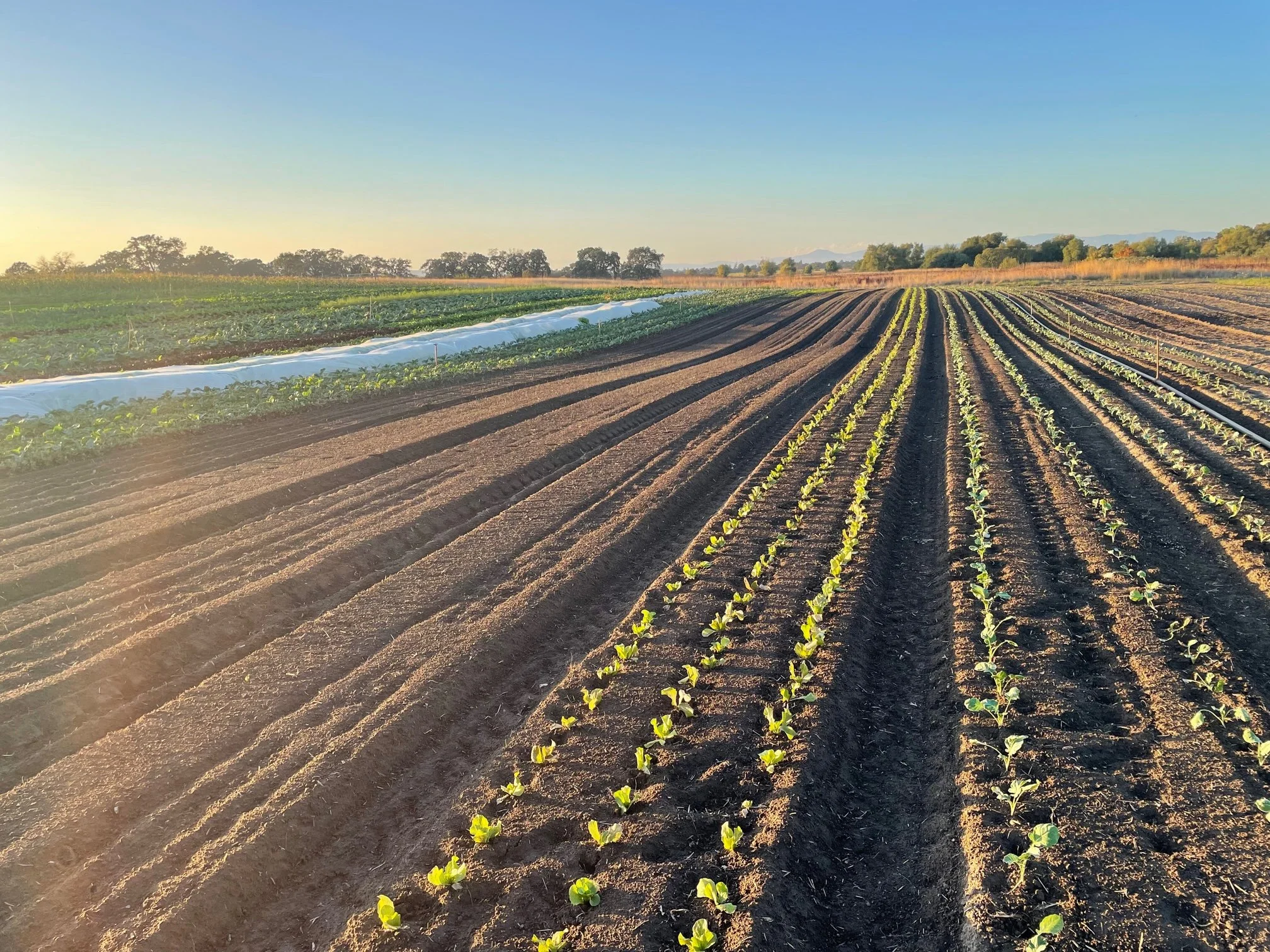
10/8/2021 - Turn! Turn! Turn!

IMG_3722.jpg

IN THE FLOWERS

This Week’s Flower Challenge: This week’s challenge comes to you from crew member Sophia Pruden!

Sophia has blessed us his year with her incredible enthusiasm, company and hard work. If you have eaten our garlic, you have her to thank for cleaning it. Her weekly care has kept the water flowing to our flowers and strawberries, as she patches the leaks constantly being chewed in the drip-tape by thirsty critters. Her help is the reason the garden is so lush and abundant even now as we head into the end of the season. In addition to working at Green Valley, she is a student at Sonoma State, where she manages their organic garden.

Sophia’s challenge: Make a bouquet based on a favorite painting. Sophia’s inspiration is “The Kiss” by Gustav Klimt, a brilliant choice for the garden this time of year — rife with rich yellows and golds. If you look carefully you’ll notice how she brought in each of the colors in the painting (the asparagus greens for the grass in the bottom, the reds and purples in the details of the dress, and the pale white gold celosia as the white rectangles in the robe), and how she chose flowers of different shapes and textures to mirror Klimt’s fascinating use of decorative shapes within the painting.

Sophia’s bouquet includes Amaranth, Bachelor’s Buttons, Rudbeckia, Zinnias, Celosia, Purple Basil, Asparagus, Strawflower, Verbena, Coreopsis, Gomphrena, and Scabiosa.

Sophia’s bouquet includes Amaranth, Bachelor’s Buttons, Rudbeckia, Zinnias, Celosia, Purple Basil, Asparagus, Strawflower, Verbena, Coreopsis, Gomphrena, and Scabiosa.

IN THE HERBS

  • Parsley, Oregano, Marjoram, Thyme, Chives & Garlic Chives, Lemon Balm, Lemon Verbena, Tulsi Basil, Mints, Italian Basil, Purple Basil, Thai Basil, Cilantro, Anise Hyssop, Tarragon, Vietnamese Cilantro, Sorrel, Husk Cherries, Lemongrass.

Herb Spotlight: While some of the herbs are winding down for the season, we have a couple fresh plantings just ready for picking - one of Cilantro and one of Parsley. You’ll find them in the beds above and just to the right of the picnic table.

WINTER SISTER FARM SIGN UPS OPEN!

Our dear friend and former employee Anna Dozor, and her sister Sarah, are deep into their first harvest season on their new farm in South Sebastopol. They are offering a winter CSA program of 24 weeks of delicious, lovingly grown winter fair (think dried beans, cabbage, winter squash, potatoes, dried flowers, herbs, and more). We HIGHLY recommend getting on board what will be a truly special winter of local produce. Spots are limited, so sign up fast!

a couple notes

  • Garlic: We are down to our last few pounds of garlic available for sale! If you were still hoping to get some now is the time as it will be first come first serve until we run out.

  • Clippers: Our small orange and black garden clippers are in scarce supply. If you’ve accidentally made your way home with some please try to bring them along with you next time you come to the farm.

FARMER’S LOG

Rest assured that your Green Valley Community Farmers are making sure that our vegetable CSA program will be back up and running next year. We’ll let you know when sign-ups open this winter.

For this week’s newsletter we’ll leave you with a Newsletter from last fall, to whet your appetite for bounteous vegetables in 2022. We’re excited to turn the page on this dry dry year and get to planting food again.

TURN! TURN! TURN!
9/18/20

It struck me today how the tasks of pulling off the farm year harmonize with the seasons in such a way that it always seems like there is just enough time to accomplish what needs to be accomplished by the skin on our chinny-chin-chins.

The Byrds were right: To everything, there is a season. 

In the Spring, you aren’t harvesting yet so you have all the time in all the medium-length days to prep the canvas and plant out the farm; to expand the propagation zone and build new irrigation systems; to fix gates; to seed 60 trays a week in the greenhouse; to pot up tomatoes, to stake tomatoes, to trellis tomatoes; to mow cover crop and turn soil and shape beds and plant! plant! plant!

Screen Shot 2021-10-08 at 6.37.25 PM.png

Then harvest seasons starts and two, then three, then then four days of the week are consumed with reaping the fruit of Spring’s labor. You put down the hammer and take up the harvest knife. All other projects cease. Planting and harvesting are your life — some weeding if you’re lucky. The days are at their longest. If there is ever a time to be harvesting 1,000+ pounds of cucumbers, tomatoes and squash in the morning, prepping and planting out half mile in the afternoon, it is when there is 16 hours of daylight.

Before you know it, it’s late Summer. The tomatoes start exploding, the cucumbers already are, you’re still planting like crazy and then the melons come in — and just when you think you’ll break, that there isn’t enough time in the day, you scroll down on your crop plan and you see that plantings are nearly done. No more compost spreading; no more bed shaping; greenhouse seedings shrink. You plant the last Fall brassicas in the field, the tractor sits quiet for a minute, and you can spend all day amongst the vines and in the cooler playing Tetris with boxes of Summer fruit. 

Then comes the Autumnal Equinox.

The tomatoes are still pumping and the potatoes and winter squash start to die back; the corn fills out, crisps up. The big harvests are coming. Space needs to be cleared. Winter is just around the corner so you need to establish garlic and strawberries for next year; mow and hold over spent beds, lime new fields, and get ready for cover cropping — and just when you think you’ll break, that there isn’t enough time in the shortening days the heat ebbs, the tomatoes start to show signs of slowing down. A light frost will soon roll through the farm. Smiling friends will come to help you harvest your winter squash. Chilling morning air goes down like a draught of ambrosia. You seed the last lettuce of the season. You have a moment sit down and calculate your garlic seed and cover crop order.

All this is why you won’t ever hear a farmer say, “Shucks! Summer is over.” We are greedy for the turnings. We love nothing more than a first harvest. But first tomato harvest glory fades under the weight of tomato crates and we crave cold hands and cozy coats and the crisp snap of the stem of a plump radicchio glowing in morning sun. Lucky for us, when scolding kiddos for running through the corn becomes sad and hackneyed, Autumn comes, and we can yell, “Come! Knock it down! Gather armfuls of cobs!” 

Change is our tonic — one of the great sustaining elixirs of farm life.

Soon, Winter will come. It’s so close now we can almost taste it. The rains will fall and we will turn in — to rest, rejuvenation, and internality. We’ll clean up our books, do our taxes; we’ll look back on the year and create next year’s crop plan and next year’s budget. We’ll open CSA sign-ups. We’ll look at spreadsheets, sit, think, build, fix things, and sleep. 

But ample sleep turns into insomnia; too much internality into angst. We will get pudgy, our harvest muscles will atrophy, and we will forget for what we are doing out in the wet and the cold — and just when we think we’ll break, that there is too much open-endedness in the too short days, the sun will return. We will hear the Swainson’s Thrush calling us, beckoning us, “Come out! Build it up again! Plant! Turn! Turn! Turn!”


See you in the fields,
David and Kayta

Click here for an archive of past newsletters

10/1/2021 - This And Every Crisping Day

IMG_3537.jpg

IN THE FLOWERS

This Week’s Flower Challenge: This week, we’d like to offer a simple challenge. When you get to the garden, instead of beginning with your old favorites, the flowers that call to you every week, do a little exploring and begin your bouquet with something you haven’t used before. It may be a color you’re not usually drawn to, or a flower that you’ve never noticed. See what new patterns and connections arise.

A bouquet featuring Wild Vetch, Agrostemma, Scabiosas, Zinderella Zinnias, Cupcake Cosmos, Wild Radish, Xeranthemum, and Goose the garden cat.

A bouquet featuring Wild Vetch, Agrostemma, Scabiosas, Zinderella Zinnias, Cupcake Cosmos, Wild Radish, Xeranthemum, and Goose the garden cat.

IN THE HERBS

  • Oregano, Marjoram, Thyme, Chives & Garlic Chives, Lemon Balm, Lemon Verbena, Tulsi Basil, Purple & Green & Bi-color Shiso (aka Perilla), Mints, Italian Basil, Purple Basil, Thai Basil, Green Coriander, Dill Flowers, Anise Hyssop, Sage, Tarragon, and Vietnamese Cilantro, Sorrel, Husk Cherries, Lemongrass.

Herb Spotlight: Have you cooked with tarragon this season? While frequently associated with the flavors of spring, this beloved French culinary herb is still producing beautifully as we slip into fall. If you’re totally unfamiliar with its flavor, try nibbling a leaf next time you’re in the garden. The French tarragon we grow has a bittersweet, anise-like flavor and the curious tendency to slightly numb your tongue when eaten raw much like Sichuan peppercorn (but without the spice!). You can find it near the picnic table in the garden, just behind the Spearmint planter. For some inspiration, check out this list of tarragon recipes from MasterClass.

  • Tarragon Vinegar - Fresh tarragon leaves gently bruised and seeped in white wine vinegar for three weeks before getting strained and stored for up to six months.

  • Béarnaise Sauce - A classic butter-based sauce made with white wine vinegar, egg yolks, lemon juice, minced shallots, and chopped fresh tarragon. A great sauce to pair with roast chicken breasts.

  • Herb Salad Dressing - A light, herbaceous dressing make of tarragon, vinegar, olive oil, salt, pepper, and fresh tarragon.

  • Omelette with Fresh Tarragon - A traditional French omelette filled with goat cheese and chopped fresh tarragon. Find the perfect omelette recipe here.

  • Chicken Tarragon - Boneless chicken thighs cooked with shallots in butter, dry white wine, tarragon, and broth in a Dutch oven, and topped with fresh tarragon leaves.

  • Tarragon Aioli - Mayonnaise combined with minced garlic, minced tarragon leaves, lemon juice, and lemon zest. Serve slathered on crusty bread with fresh tomato, lettuce, and bacon for the ultimate herbaceous BLT. (Learn how Alice Waters makes aioli here.)

  • Warm Potato Salad with Tarragon - Boiled, cubed potatoes coated in a mixture of dijon mustard, white wine vinegar, chopped tarragon, and minced garlic. Seasoned with salt and pepper and topped with more fresh tarragon.

  • Crab Cakes with Tarragon - Classic crab cakes made with crab meat, bread crumbs, egg, mayonnaise, scallions, lemon juice, tarragon, and seasonings.

  • Tomato, Mozzarella, and Tarragon Salad - A riff on a traditional Caprese salad, swapping fresh tarragon leaves for basil.

FAQ

  • When does the CSA end? Exact dates are TBD, depending on the weather. The flower and herb garden will starting winding down in October and we’ll put her to bed in November. But expect some good blooms all the way til then. The strawberries will usually wrap up a little earlier, producing through the end of September.

  • If I go away can a friend use my share? Yes! If you’ll be out of town or unable to come pick strawbs and flowers, feel free to send a friend or relative in your stead. Please verbally orient them as to the directions and how things work as we are not always around.

IMG_3459.jpg

FARMER’S LOG

As farmers, we tend to relish the closing of seasons, the quieting of the year, towards which we are now being ushered. We coax plants into fruition, make space for them, and then tuck them gently back into the sweet dark earth to feed another. We hope that as you spend time in the autumnal garden this season with the flash and glow of color slowly simmering down around you, you’ll find glimpses of the beauty of decay, and the endless rich connections of each life to another.

Lines written in the days of growing darkness

by Mary Oliver

Every year we have been
witness to it: how the
world descends

into a rich mash, in order that
it may resume.
And therefore
who would cry out

to the petals on the ground
to stay,
knowing as we must,
how the vivacity of what was is married

to the vitality of what will be?
I don’t say
it’s easy, but
what else will do

if the love one claims to have for the world
be true?

So let us go on, cheerfully enough,
this and every crisping day,

though the sun be swinging east,
and the ponds be cold and black,
and the sweets of the year be doomed.


See you in the fields,
David and Kayta

Click here for an archive of past newsletters

9/24/2021 - On a Speck in Space

Cupcake Cosmos and blue skies.

Cupcake Cosmos and blue skies.

IN THE FLOWERS

This Week’s Flower Challenge: Make your own strawflower garland!

One more way to use the flower that keeps on giving. Strawflowers make incredible garlands, whether strung tightly packed together, or with knots or beads spacing out the flowers one from another. For the longest lasting, prettiest garlands, choose flowers that haven’t yet opened very far. (If you include a flower that has opened to show it’s yellow, daisy-like center it will probably complete its seed-making process as it dries and open further to release a cloud of fluff and seeds.Perfect for seed saving but less beautiful than the shiny, color-saturated young flowers.) Garlands are beautiful hung vertically down from the ceiling with bells or bobbles at the end, strung around your Christmas tree in winter, or looping back and forth across the ceiling for a celebration. Bonus! Try adding in Gomphrena (the little round globe amaranth that remind us of gumdrops).

Strawflower and gomphrena garland.

Strawflower and gomphrena garland.

IN THE HERBS

  • Oregano, Marjoram, Thyme, Chives & Garlic Chives, Lemon Balm, Lemon Verbena, Chamomile, Tulsi Basil, Purple & Green & Bi-color Shiso (aka Perilla), Mints, Italian Basil, Purple Basil, Thai Basil, Green Coriander, Dill Flowers, Anise Hyssop, Sage, Tarragon, and Vietnamese Cilantro, Culinary Sage, Sorrel, Husk Cherries, Lemongrass.

FAQ

  • When does the CSA end? Exact dates are TBD, depending on the weather. The flower and herb garden will starting winding down in October and we’ll put her to bed in November. But expect some good blooms all the way til then. The strawberries will usually wrap up a little earlier, producing through the end of September.

  • If I go away can a friend use my share? Yes! If you’ll be out of town or unable to come pick strawbs and flowers, feel free to send a friend or relative in your stead. Please verbally orient them as to the directions and how things work as we are not always around.

IMG_3396.jpg

FARMER’S LOG

Tonight we’ll leave you with a helpful reminder from the poet Lew Welch.

Notes From a Pioneer on a Speck in Space


Few things that grow here poison us.
Most of the animals are small.
Those big enough to kill us do it in a way
Easy to understand, easy to defend against.
The air, here, is just what the blood needs.
We don’t use helmets or special suits.

The Star, here, doesn’t burn you if you
Stay outside as much as you should.
The worst of our winters is bearable.
Water, both salt and sweet, is everywhere.
The things that live in it are easily gathered.
Mostly, you eat them raw with safety and pleasure.

Yesterday my wife and I brought back
Shells, driftwood, stones, and other curiosities
Found on the beach of the immense
Fresh-water Sea we live by.
She was all excited by a slender white stone which:
“Exactly fits the hand!”

I couldn’t share her wonder;
Here, almost everything does.


See you in the fields,
David and Kayta

Click here for an archive of past newsletters