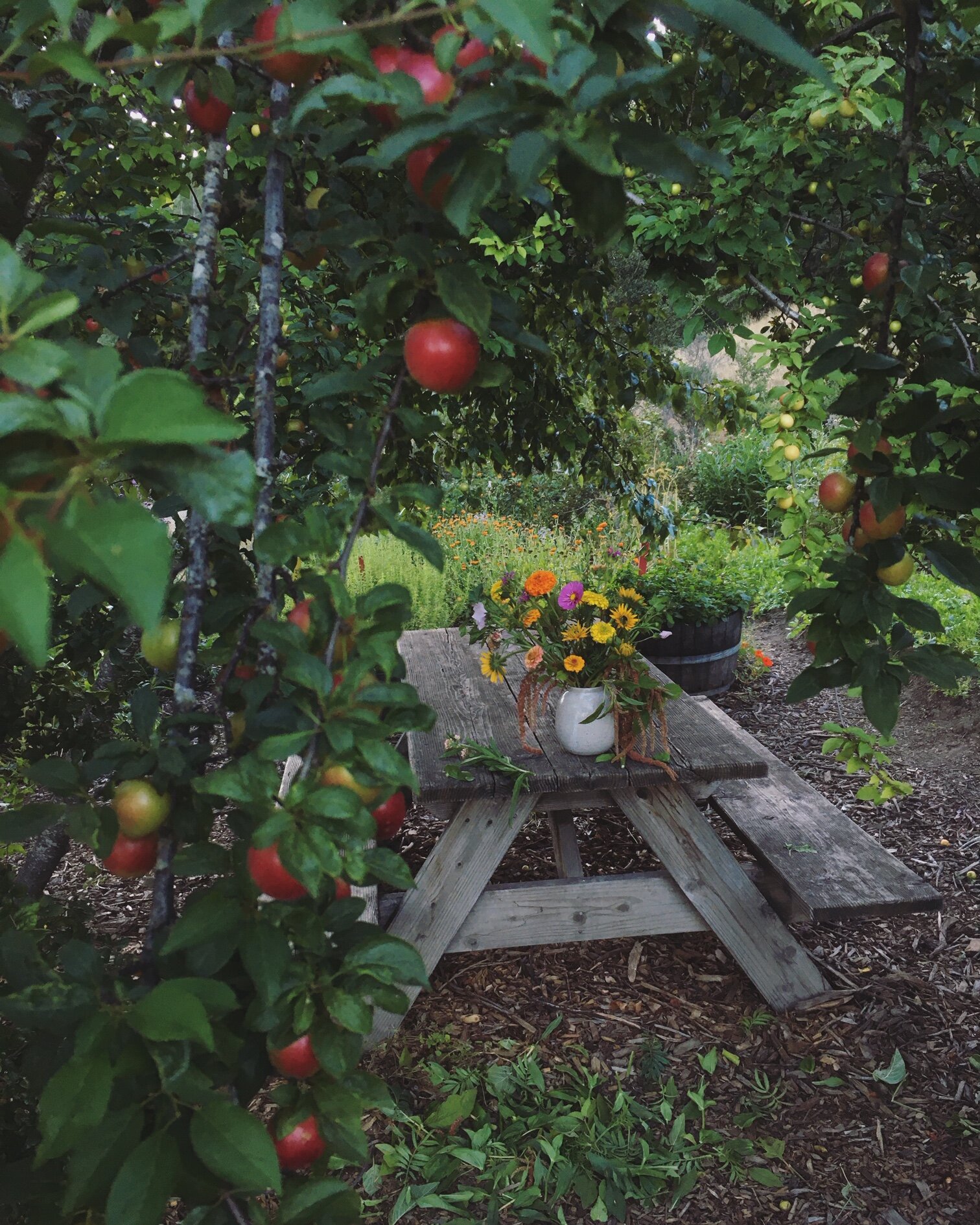
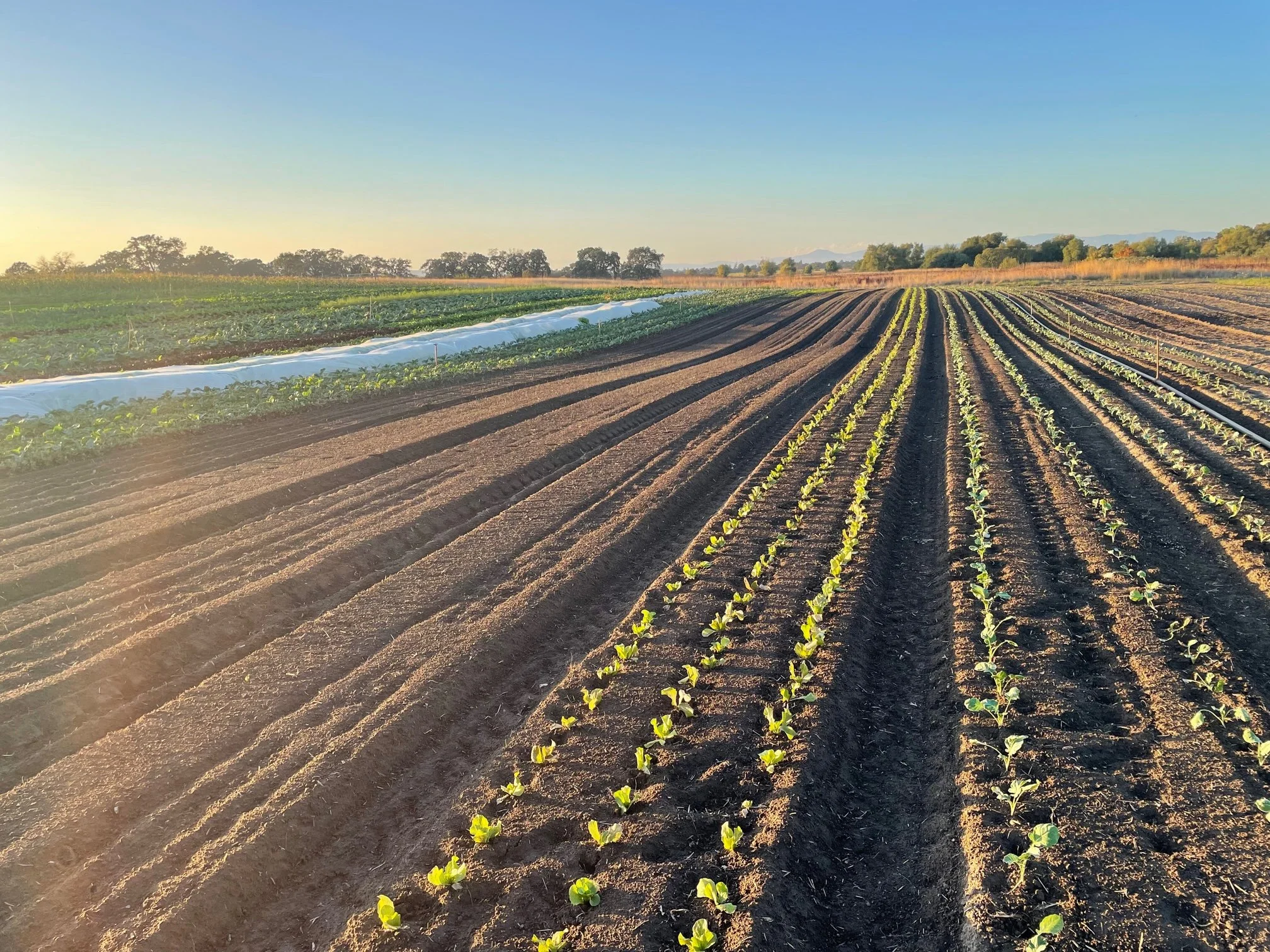
7/3/2020 - Week 4 - The Flower Garden

THIS WEEK’S HARVEST

Bunched Rainbow Carrots, Fresh Cipollini Onions, Easter Egg Radishes, Dino Kale, Rainbow Chard, Mei Qing Bok Choi, Summer Squash, Olympian Cucumbers, Arugula, Tasty Town Salad Mix, Spinach, Cegolaine Little Gems, Iceberg Lettuce, Garlic Scapes
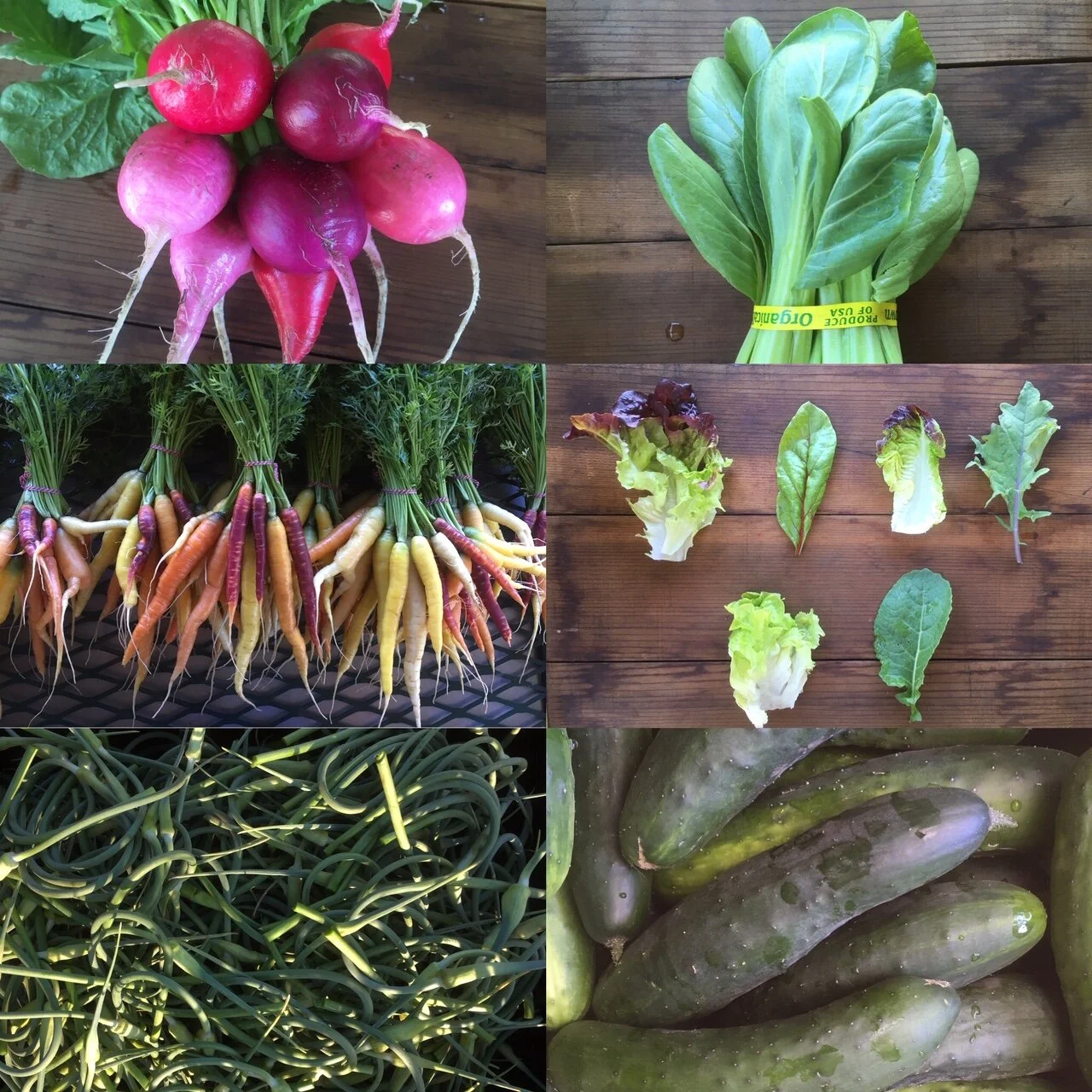
Image-1-7.jpg

U-PICK

  • Albion Strawberries

  • Sugar Snap Peas

  • Frying Peppers (see below for harvest tips)

  • Herbs: Rosemary, Thyme, Dill, Italian Basil, Thai Basil, Purple Basil, Oregano, Marjoram, Parsley, Tarragon, Onion Chives, Garlic Chives, Vietnamese Coriander, Culinary Lavender, Culinary Sage, French Sorrel, Lemon Verbena, Lemon Balm, Shiso (limited), Chamomile, Cilantro, Tulsi, Mints!

  • Flowers galore!

Frying peppers are here! Shishitos at left and in the pint basket, and a Padrón at right.

Frying peppers are here! Shishitos at left and in the pint basket, and a Padrón at right.

HARVEST NOTES

  • Tasty Town Salad Mix: All aboard the Tasty Train to Tasty Town! This week’s ready-to-eat salad mix is a totally tasty mix of baby Chard, baby Red Russian Kale, three different type of lettuce, and Amara Ethiopian Kale. Ethiopian Kale is an exceptionally tasty relative of Mustard Greens that tastes like it’s been infused with rich garlic. Choo-choo!

  • Frying Peppers: So it begins: The summer gift that keeps on giving — frying peppers. Frying peppers are little peppers commonly cooked. A little olive oil, a little salt, a little pan sear, and wallah, an incredible hors d'oeuvre!

    • Shishitos: A wonderfully mild (no heat), green frying pepper. Popular in Japan where its thin walls make it particularly suitable for tempura. Also very good in stir fries or sautés, or just seared in oil and salt. Ideally harvest at 2 to 4 inches, but bigger is fine. Older peppers turn red but are 99% mild.

    • Padróns: The famous Spanish heirloom, named after their town of origin. Padróns are served sautéed in olive oil with a little sea salt, and eaten as tapas in Spain. Ideally harvest when they are 1" to 1 1/2" long. About 1 out of 10 fruits will be hot. All the fruits become hot if allowed to grow 2-3" long.

  • Fresh Cipollini Onions: A sweet, freshly harvested delicate onion that is so mild you can cut it thin and eat in on pizza, salad, or straight up! Or trying grilling them until translucent and slightly charred.

    THE MARKETPLACE

As you all have certainly discovered by now, our humble little Mill site is now home to the sweetest Marketplace in town. Our friend and neighbor Kim LaVere and everyone at Green Valley Farm + Mill did such a good job transforming a room of the Mill office building into the most incredible ode to our local foodshed, stocking it with art, soaps, mushroom concoctions, beverages, and other pantry items. If you haven’t checked it out already, do yourself a favor! Well done all!
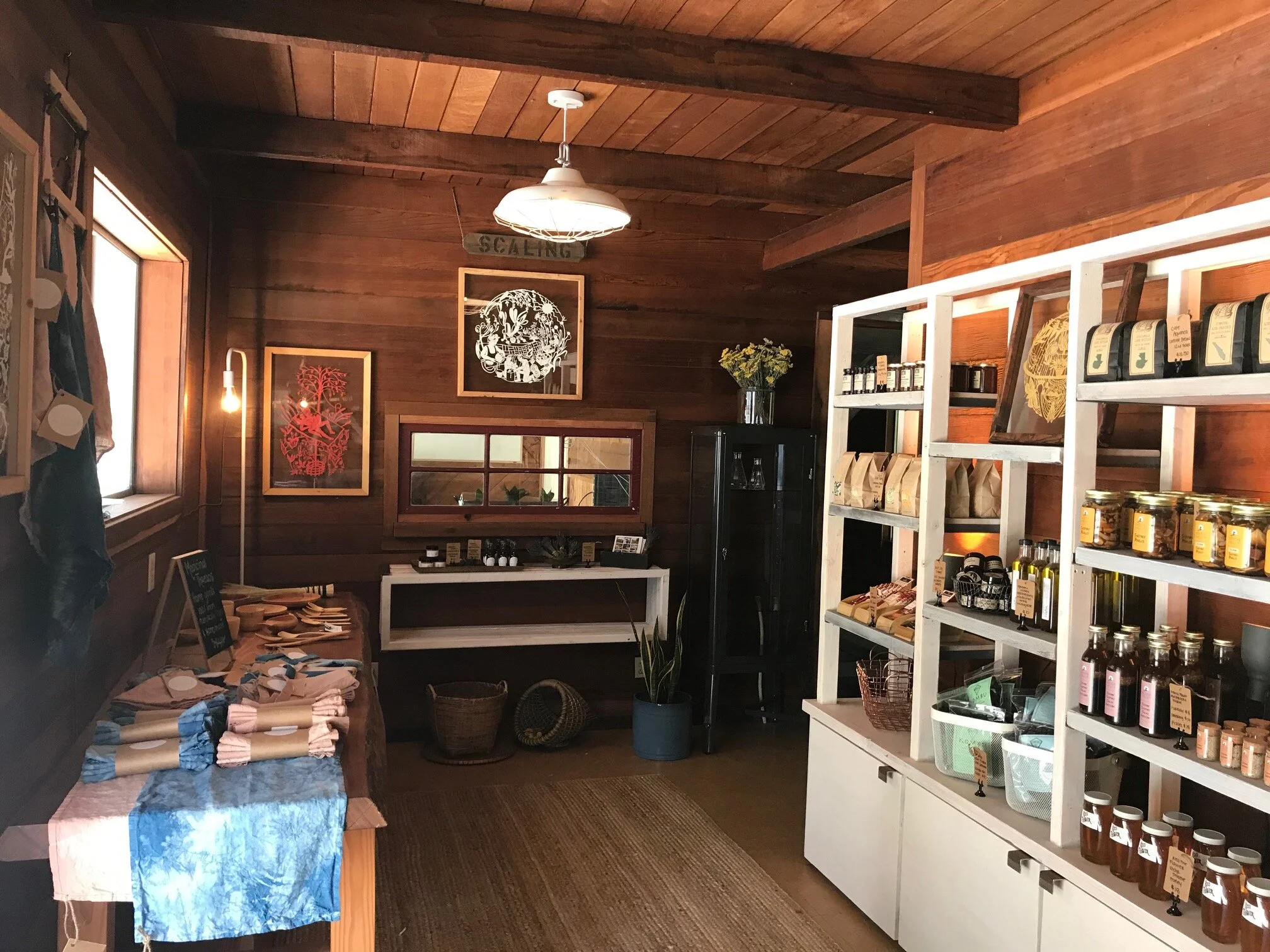
IMG_1992.JPG

TIPS FOR HARVESTING FLOWERS

  • If possible, harvest when it’s cooler out.

  • Get the stems in water immediately

  • Strip leaves that are going to be under water (avoids rotting, bad smells, and disease)

  • Cut low on the plant while ensuring there are lot of healthy leaves below where you are harvesting.

  • Ideally cut above a branching point to encourage new growth

  • Deadhead! If you have the time, clip off any dead / spent blooms on the plant to encourage more flowers next week!
IMG_8905.JPG

FARMER’S LOG

ON THE Flower Garden

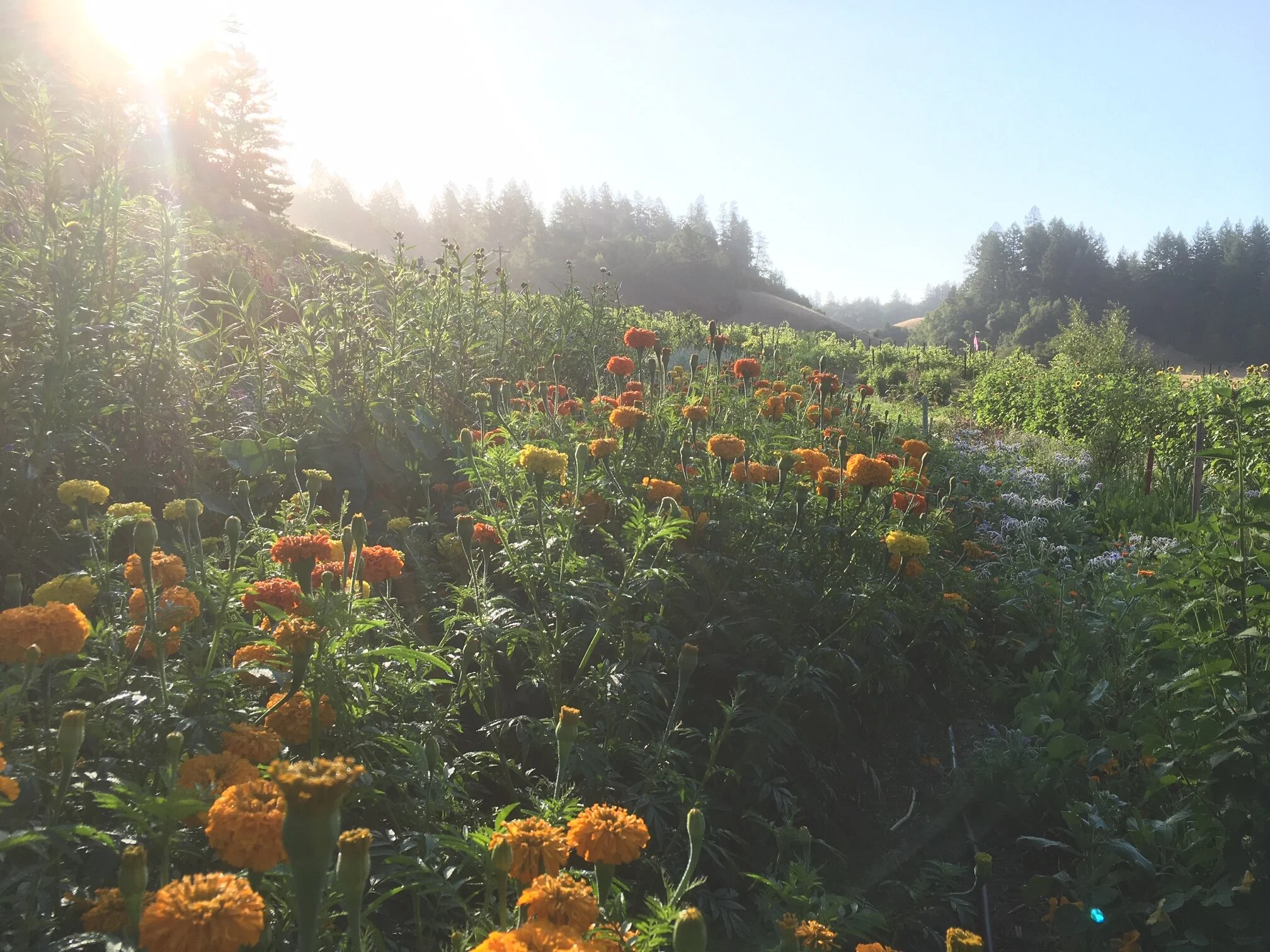
As the flowers in the garden really start to flourish, we thought we’d lift the curtain a little on our beloved blooming hillside.

While we are primarily a food farm we often feel like the symbolic heart of what we do is in the flower garden — little laughing gifts from us to you, from the land to you — the sole purpose of which is to enchant and uplift the soul.

Kayta is the mother of the flower garden. She researches, trials and chooses what we plant; designs the plantings and successions; propagates the flowers and cares for their sometimes complicated needs. In the evenings, you can usually find her up in the flowers at Golden Hour, trying to get close to Meeko the shy garden cat, or saying goodnight to a sleeping bumble bee. It is a pet project of hers, a source of joy and a living art installation whose mission is to provide cut flowers en masse while being relatively low maintenance (while we focus on the food farming) and giving back to the ecology around us.

We’ve learned some things and met some amazing flower friends along the way…

INCEPTION

The original idea for coupling a u-pick cut flower garden with a CSA pick-up comes from Caretaker Farm in Williamstown, MA, where Kayta and I apprenticed in 2012. It seemed to us a natural match, taking home a beautiful little bouquet with a bag full of produce. The flower and herb garden at Caretaker was just outside the door of their big old barn and overlooked the beautiful cultivated valley below. If we had time at the end of the day us apprentices were sent to weed the flowers. It was a modest flower garden: a few zinnias, gomphrena, celosia and other tidbits.

We moved to Sebastopol in 2013, and in 2014 Kayta started a small farm at Russian River Vineyards in Forestville. There, Kayta began experimenting with flowers, inspired by the horticultural bounty, the natural environment, and the incredible Slow Flower movement of Sonoma County (spearheaded by people like Hedda Brostrom of Fullbloom Flower Farm in Graton and Auna Fisher of Beija Flora Botanicals).

When we started GVCFarm in 2016, a friend gifted us with 50 lbs of dahlia tubers from her garden. Whether or not those tubers were devoured by gophers is beside the point — the idea of an epic u-pick flower garden was planted.

THE WORKHORSES AND THE UNICORNS

One way we conceptualize our flower garden crop plan to ourselves is by dividing it into the “workhorses” and the “unicorns”.

The “workhorses” are flowers that have proven themselves: Beautiful, hearty and reliable, super productive. Zinnias and Cosmos. We plant those twice each year so that if a meteor hit Sonoma County, we could all still make bouquets. We are always on the lookout for workhorses. Last year, Strawflower was a workhorse for us and we hope this year is the same. Snapdragons, while shorter blooming than others, are usually a sure bet. Rudbeckia, which has perennialized itself in the upper-most West bed, is worth more than its salt. Celosia, Gomphrena, and Marigolds come to mind. It seems as though Lavatera, the crazy loaded pink and white flower blooming just above the garden strawberries seems like it might be the new-to-us workhorse of 2020.

The unicorns are our little pets — delicate, special, rare, experiments, trials, and hunches. Kayta has us plant these for a number of reasons. Reason #1: Just ‘cuz. Reason #2: As a gift to the pollinators (like the Phacelia aka Bee’s Friend, rather quick to peter out, was a vision of beauty at its peak in early June humming with countless pollinators) Reason #3: They are so unique and shapely and we can’t not plant them and they make bouquets pop (hello, ornamental Amaranth!) Reason #4: Experiments to find the next workhorses or the next natives & cultivated natives.

In this way the flower garden is a living game of trial and error, the results of which we can take home to decorate with!

Some members of the Unicorn / Native Category L to R, Top to Bottom: Blue Penstemon (with Lavatera behind it), Hollyhock, cultivated California poppy, Nicotiana, Amaranth and Dahlia, Veronica (or Speedwell).

Some members of the Unicorn / Native Category L to R, Top to Bottom: Blue Penstemon (with Lavatera behind it), Hollyhock, cultivated California poppy, Nicotiana, Amaranth and Dahlia, Veronica (or Speedwell).

ADAPTING TO PLACE

A long term goal of the flower garden is to find more and more natives or cultivated native varieties to use and to transition more beds into perennial zones.

This year we are experimenting with a cultivated California poppy variety (just below the ornamental Amaranth) and a cultivated Verbascum, a domesticated version of the wild Verbascum, the Dr. Suesse-esque, long-spired, yellow-flowered tower blooming everywhere around the farm.

We also have a very special Blue Springs Penstemon blooming secretly on the upper-most bed above the garden strawberries. You’ll find it tucked in between the masses of blooming Nicotiana.

The upper-most beds (2 on the West side and one long one on the East side) are all experiments in perennials. These are great because they are low maintenance for us, provide more year around blooms for pollinators, and year ‘round habitat for other insects.

THE SLEEPING BUMBLEBEES

But really, we do it all for the sleepy bumblebees.

If you don’t already know, the best time in the garden is sunrise or the Golden Hour of late evening. These are the liminal times — the magic times.

The low light highlights the color of the flowers and they shine as if glowing from within. The plants themselves breathe easy — soaking up the first light of day, or sighing from relief from the mid-day sun. All the pollinators are out, eating their first, or their last meals of the day. Even Hummingbird Moth aka Shrimp Bee is there!

And in the evening, when the light is almost extinguished, if you tread softly, you will see them — Bumble Bees falling asleep on the Nicotiana or tucked into a Cosmo — snoring imperceptible snores. And out of the corner of your eye the red and blue flash of Nuthenroy the Gnome scurrying into the hedges…

See you in the flower garden,

David for Kayta, Anna & Kate

6/26/2020 - Week 3 - Spring in the Wake

THIS WEEK’S HARVEST

Bunched Carrots, Fresh Lorz Softneck Garlic, Scallions, French Breakfast Radishes, Hakurei Turnips, Curly Kale, Rainbow Chard, Summer Squash, Arugula, Mustard Mix, Spinach, Purslane, Rosaine Red Little Gems, Rouxai Oakleaf Lettuce

D3769B9D-9B8D-4A63-BB0E-B5634CDA811A.JPG

U-PICK

  • Albion Strawberries - 2 pints

  • Sugar Snap Peas - 2 pints

  • Herbs: Rosemary, Thyme, Dill, Italian Basil, Thai Basil, Purple Basil, Oregano, Marjoram, Parsley, Tarragon, Onion Chives, Garlic Chives, Vietnamese Coriander, Culinary Lavender, Culinary Sage, French Sorrel, Lemon Verbena, Lemon Balm, Shiso (limited), Chamomile, Cilantro, Tulsi, Mints!

  • Flowers galore!

A72B4631-372F-4238-AB0D-ADE1C1ED7CBA.JPG

HARVEST NOTES

  • Sugar Snap Peas: The ripest and the sweetest sugar snap peas are the ones that have filled out to about a quarter inch or more in thickness. These will first be found lower on the plant, and as the weeks go by they will ripen higher and higher up. Leave the thin ones for your future self of next week!

  • Purslane: Purslane is a formidable weed in farms and gardens but is also a beloved culinary green in Mexico and somewhat of a delicacy North of the border. Purslane has a lemony flavor and succulent texture and contains more omega-3 fatty acids than any other leafy vegetable plant. How to eat it? It can be added raw to any salad or side, or check out this post at Mexican Food Memories for some recipe ideas.

  • Dill: Dill is definitely popping in the garden above the ornamental amaranth. We’ve been enjoying it sprinkled on just about everything. Try it sprinkled on your salad or atop sliced French breakfast radishes on toast spread with chimichurri sauce.

    MOONFRUIT MUSHROOM FARM

B6FD991F-809C-4624-B180-CCBB9DC19A0A.JPG

Well we couldn’t be more excited to that our neighbors will be selling their fresh, forest grown, Moonfruit Mushrooms in the barn at CSA pick-up. Early birds will get the shrooms! Here’s a message from the mushroom magicians themselves:

Hello CSA members!

We are Moon Fruit Mushroom Farm and are excited to announce that we will have fresh shiitake for sale at Green Valley Community Farm CSA starting this Saturday the 27th! Let us tell you a little bit about our farm.

Ryath Beauchene and myself, Cory Brown, both have a deep affinity for fungi not only because they are delicious and medicinal, but also because they play very important roles in terrestrial ecosystems. Our first year was all about shiitake (Lentinula edodes). With the help of our friends and community, we inoculated almost 200 logs with shiitake spawn at the beginning of 2019, and now those logs are healthily fruiting. We have another 150 shiitake logs getting ready for next year and reishi (Ganoderma lucidum) on the way as well. 

We believe in imitating the natural processes of forest-grown fungi for maximum medicinal and nutritional content. We are neighboring to the north of the CSA vegetable farm, which means we walk to deliver these beauties to your goodie bag!

We will be setup as a separate booth at the CSA pickup barn this Saturday 27th and Tuesday 30th. Cash only for now, thank you!

Look forward to meeting you.

Yours,
Moonfruit

REVOLUTION BREAD RETURNS TUESDAY

Our baker is OK and fresh bread and other goodies will return this Tuesday! Huzzah!

FARM ORIENTATIONS

If you, or a member of your share, hasn’t been oriented to the farm yet. Please find one of us farmers in the barn the first time you arrive and we’ll show you the ropes!

FARMER’S LOG

SPRING in the WAKE

This week — Wednesday evening to be exact — our crew planted the last Poblano pepper plant and let out a great “huzzah!”, having at that moment finished the great planting push of Spring 2020. We then pushed off and set sail into a different season on the farm…

Indeed, April, May and June were the usual full-throttle charge of building and planting — of shaping and trimming the timber, of mending and rigging the sails; of planting-planting-planting faster than we ever thought we could, to stock this here soil borne ship full to the brim for the journey ahead. We sit now, bobbing proudly on the poop deck atop a fully planted behemoth, Spring in the wake and all eyes on the horizon.

* * * * *

What lies before us now is the rhythmic, daily life at harvest; visiting various ports of call and collecting the fruits of Spring’s labor; keeping the ship clean and relatively free of weeds; executing our weekly planting responsibilities; resting when we can; and charting the truest course possible to our final destination: The Great Harvests of Fall.

IMG_1891.JPG

ON IMPROVEMENTS TO THE SHIP

In the Winter of this year, we convened over hot tea to discuss what improvements needed to be made to this vessel to complete a circumnavigation of this magnitude . Aye, the water system would need to be upgraded. Cold storage greatly increased. The nursery greatly expanded. An additional First Mate brought onboard. And various new tools and armaments acquired as well as aesthetic and sanitization improvements.

We started with the water system…

The month of March saw the addition of the two 5,000 gallon water tanks you see to your left as you drive in. These batteries more than triple the amount of fresh water available to our crew at the beginning each work day to keep our plant babies happy and healthy during the journey. We then essentially retired our old sprinkler system and replaced it, and other aspects of the old system, with an arsenal of new, modern sprinkler heads, conveyances, and gadgets allowing for lighter, more careful, and expansive application of irrigation water. (We think we are noticing a difference in how plants look already and the crew is much relieved.)

With the plan to be dealing in more cargo than ever before we turned next to the nursery and cold storage. We knocked down the walls of the old cold-frame protecting outside seedlings from deer, and erected a new one, triple the size. It now stands nearly empty, but recently hosted the lush peppers and other nightshades on your way to the farm strawberries — all now planted.

We then relocated the old trailer-cooler astern and erected a shiny new cooler box on the starboard side of the barn — to be brought online this weekend. (This project was greatly assisted by CSA members and neighbors Michael Crivello and Scott Kelley.)

We brought a master carpenter and CSA member Ryan Bundrick to craft the beautiful arbor welcoming you to the garden — a figurehead that will also provide posts for a soon-t0-be-installed human sized gate. We threw the old gate overboard.

The grizzled pirate Jared Sutton helped us address COVID concerns by installing the new hand washing station welcoming you to the barn.

ON PROVISIONING THE FIELDS

Simultaneous to the above, April, May, and June saw the most of the soil prepped, amended, shaped and planted from a crop plan honed from the logs, charts, misadventures and discoveries of our last 3 quests.

What you see before you in the fields now is (most of) the next 5.5 months of harvest (mostly planted in 1 month, thanks to our crack crew). We will visit new winter squash and potato varieties; the sweet waters of sweet corn and watermelons; the isle of Poblano; the sea of sunshine will shimmer into Spinach leaves and onion bulbs and Striped Armenian cucumbers will play in the bow waves.

A few notes thus far….

  • We are very happy, now in our fourth year here, with the fertility we are seeing in the soil — expressed in the rich green, almost turquoise blue hue of happy leaves. The soil raining from the fresh carrots this morning was rich in mycelium.

  • We have successfully avoided the doldrums of Planting-too-Early. Much of our nightshades, melons, and corn we kicked back a few weeks in the schedule. All of them seem glad and we are seeing signs for abundant shishitos and heirloom tomatoes. We also seem hot on the trail of our Moby Dick… eggplant. Old members will notice the early season absence of Beets and Cruciferous heading crops like broccoli, all of whom suffered greatly in the doldrums of Planting-too-Early. We will rendezvous with them soon…

  • We seem to have discovered a great school of Strawberries, having finally found the right spot and time to throw our nets — Mid-December and on that nice sandy slope.

  • Our first catch of Garlic, our Lorz soft neck, was a great boon. Big bulbs lie curing in hull and will provide at least 11 weeks of nourishment. We thought we had lost our Metechi hardneck garlic to a bad case of rust (a fungal disease with really no organic control) but we took a look inside a few this week and it seems they may indeed pull through to create bulbs.

  • To the relief of all, we have taken the fight to the gopher and rodent pirates in the greenhouses and garden by hiring two mercenaries, Meeko and Goose, formerly Forgotten Felines. It is unseemly to cavort with pirates but necessary to protect the cargo.

  • Suffice to say, we are lucky to have new First Mate, Kate Beilharz, who is keeping the crew in tip-top shape and has an almost personal vendetta against untidy tomatoes.

I must leave it at that for now. The stays on the mainsails of the Sugar Snap Peas have failed and the peas are threatening to drown us all. Help!

See you in the fields, 

David for Kayta, Anna & Kate

6/19/2020 - Week 2 - Seeds of Change

Dear Members,

We had such a wonderful first week of harvest, meeting new members and reconnecting with returning ones. Thank you all for bringing the heart to this farm!

THIS WEEK’S HARVEST

Garlic Scapes, Scallions, German Butterball Potatoes, Fennel, French Breakfast Radishes, Hakurei Turnips, Dino Kale, Summer Squash, Arugula, Spring Salad Mix, Spinach, Komatsuna, Rosaine Red Little Gems, Red Butter Lettuce

U-PICK

  • Albion Strawberries - 3 pints per share this week!

  • Herbs: Rosemary, Thyme, Italian Basil, Thai Basil, Purple Basil, Oregano, Marjoram, Parsley, Tarragon, Onion Chives, Garlic Chives, Vietnamese Coriander, Culinary Lavender, Culinary Sage, French Sorrel, Lemon Verbena, Lemon Balm, Shiso (limited), Chamomile, Cilantro, Tulsi, Mints!

  • Flowers! Ornamental amaranth, strawflower, and sunflowers showing up in earnest this week. Bring your clippers!

The flower show is only just beginning…

The flower show is only just beginning…

HARVEST NOTES

  • Garlic Scapes: Garlic Scapes are the flowering stalk of hardneck garlic. A delicacy and a treat mysteriously never found in markets or stores. Treat them like you would a garlic clove. Chop them up small and sauté them gently with any dish you would use garlic for.

  • Basils: Thai, Italian and Purple Basil are all open for picking starting this week! They are located in the East side of the garden just above the gnome homes!

  • Cilantro: Our Spring cilantro patch has never looked better. Hope you have some cilantro-y plans this week!

NO REVOLUTION BREAD THIS WEEK

Eli at Revolution Bread had to take the week off baking this week.

HARVEST DISTRIBUTION SCHEDULE

  • Saturday pick-up runs from 9:00am - 2:00pm (note longer hours on Saturday, old members)

  • Tuesday pick-up runs from 1:00 pm - 6:00 pm

U-picking is now open 7-days a week, sunrise to sunset. Please close the gates behind you on off days.

Cilantro looking lush in the garden.

Cilantro looking lush in the garden.

FARM ORIENTATIONS

New and old members, if have not attended an orientation yet this year, please sign-up for one this week here.

COVID -19 POLICIES

Check out this blog post for a refresher on the COVID-19 policies we will have in place on the farm to keep the farm and garden safe for everyone.

FOR NEW MEMBERS

  • Where is the farm? The member parking lot is located at 13024-E Green Valley Rd. Sebastopol, CA 95472. The "E" is important! Google maps will send you to the first driveway of the property, 13024-A Green Valley Rd., that is not the right one. If you’re coming from Graton/Sebastopol, keep going a few driveways down (or turn back if you're coming from Guerneville) and look for our fishy logo and sign at 13024-E Green Valley Rd. It’s right across the street from the big Mt. Gilead bible camp sign.

  • Parking: After entering the gravel driveway, find a place to park on in gravel lot directly ahead of you. Please park on the peripheries in a way that leaves central avenues for entering and exiting cars. Please do not block the bay of the big open barn. 

  • Where is orientation? Our barn is in the middle of cluster of old mill buildings to your right as you drove in. Just head towards those big greenhouses to your right and you can’t miss us.

  • What should I bring?:

    • An extra tote bag for add-ons like bread, frozen yogurt, etc. We will give you a harvest tote as well.

    • Produce bags for greens

    • A face covering / mask

    • Clippers to cut flowers and herbs

    • A vase or water bottle to keep your flowers happy on the way home

    • Water / sun hat / picnic supplies if you plan to stay awhile!

    • Cash for add-on goodies in the creamery and Marketplace!

IMG_1767.JPG

FARMER’S LOG

SEEDS OF CHANGE

The last week of May and the first couple weeks of June this year panned out to be some of the most intense in memory on the farm. In that span we did all of our major field plantings — potatoes, winter squash, tomatoes, peppers and eggplant, storage onions, and grain corn — all while keeping up with our regular weekly plantings, finishing infrastructure projects, and preparing for CSA opening.

In the midst of it, George Floyd was murdered. Our little crew spent much time in the rows together, dropping potatoes, planting tomatoes, grieving his death, Breonna Taylor’s, and so many other Black and Brown Americans killed by police, and unpacking our roles, as white humans and farmers, in the systems of oppression around us — systems that have shaped nearly every aspect of our lives, including the privilege and ability to farm.

It goes without saying — land access and agriculture have been at the center of the story of race and power in this country since its inception. In the 1920’s, 14% of American farmers were black. Today, that number is 1.3%, with black farmers owning about .5% percent of total farmland, and white farmers owning 95%. 

Today, we’d like to highlight some incredible black farmers and farm organizations, most local, who are planting seeds for a more just and equitable food system. We hope you’ll spend some time learning from and supporting them.

* * * * *

Kiley Clark ~ Healdsburg, CA ~ Farmer, photographer, and CSA member Kiley Clark lives in Healdsburg with her wife, Kendall. Kiley first came to GVCFarm as part of a larger project photographing and writing about small farms in the region. (Within the hour she solved the great mystery of the dead-zones on the farm for us: Garden symphylans.) She is looking for land and raising money for capital to start her own farm. Check out her beautiful photography and her agricultural journey on Instagram @freshtofarming

Urban Tilth ~ Richmond, CA ~ When Doria Robinson, 3rd generation resident of Richmond, saw the growing lack of access to fresh food in her community she started Urban Tilth. Urban Tilth uses their “7 school and community gardens and small urban farms to teach and employ community members to grow, distribute, cook, and consume thousands of pounds of local produce each year, to create a more equitable and just food system within a healthier and more self-sufficient community.” Check them out at www.urbantilth.org

Black Earth Farms ~ East Bay, CA ~ Black Earth Farms is a “Black and Indigenous led agroecology collective composed of skilled land stewards, spiritual leaders, healers, gardeners, farmers, builders, writers, educators, artists, musicians, and organizers. We study and spread ancestral knowledge and contemporary agroecological practices to train community members to build collectivized, autonomous, and chemical free food systems in urban and peri-urban environments throughout the Occupied Karkin Ohlone & Chochenyo Territory.” They offer CSA boxes of fresh produce on a sliding scale to folks in the Bay Area. Check them out at www.blackearthfarms.com

Leah Penniman ~ Soul Fire Farm, Grafton, NY ~ Similar to Doria Robinson in Richmond, Leah and her husband started Soul Fire Farm in response to the food apartheid they saw occurring in Southern Albany. Mission: Ending racism and injustice in the food system. At Soul Fire they offer immersions and apprenticeships to empower black and latino youth, host anti-racism trainings, and provide nutritious CSA boxes to urban Albany. Leah is the author of Farming While Black: Soul Fire Farm's Practical Guide to Liberation on the Land. Check this video out.

Black Family Land Trust ~ Southeast, USA ~ Says Ebonie Alexander, Executive Director of the Black Family Land Trust, "Land is a tangible asset, with economic, human, and spiritual value, which connects African Americans with their rich history in the Americas and their ancestors." The Black Family Land Trust utilizes the core principles of land conservation and land-based community economic development to protect and preserve African-American and other historically underserved land and assets. Check them out at www.bflt.org

* * * * * 

See you in the fields, 

David for Kayta, Anna & Kate

 
Garden+Drawing+with+white+edges+small.jpg