Harvest Week 23 - Strawberry Futures

THIS WEEK’S HARVEST

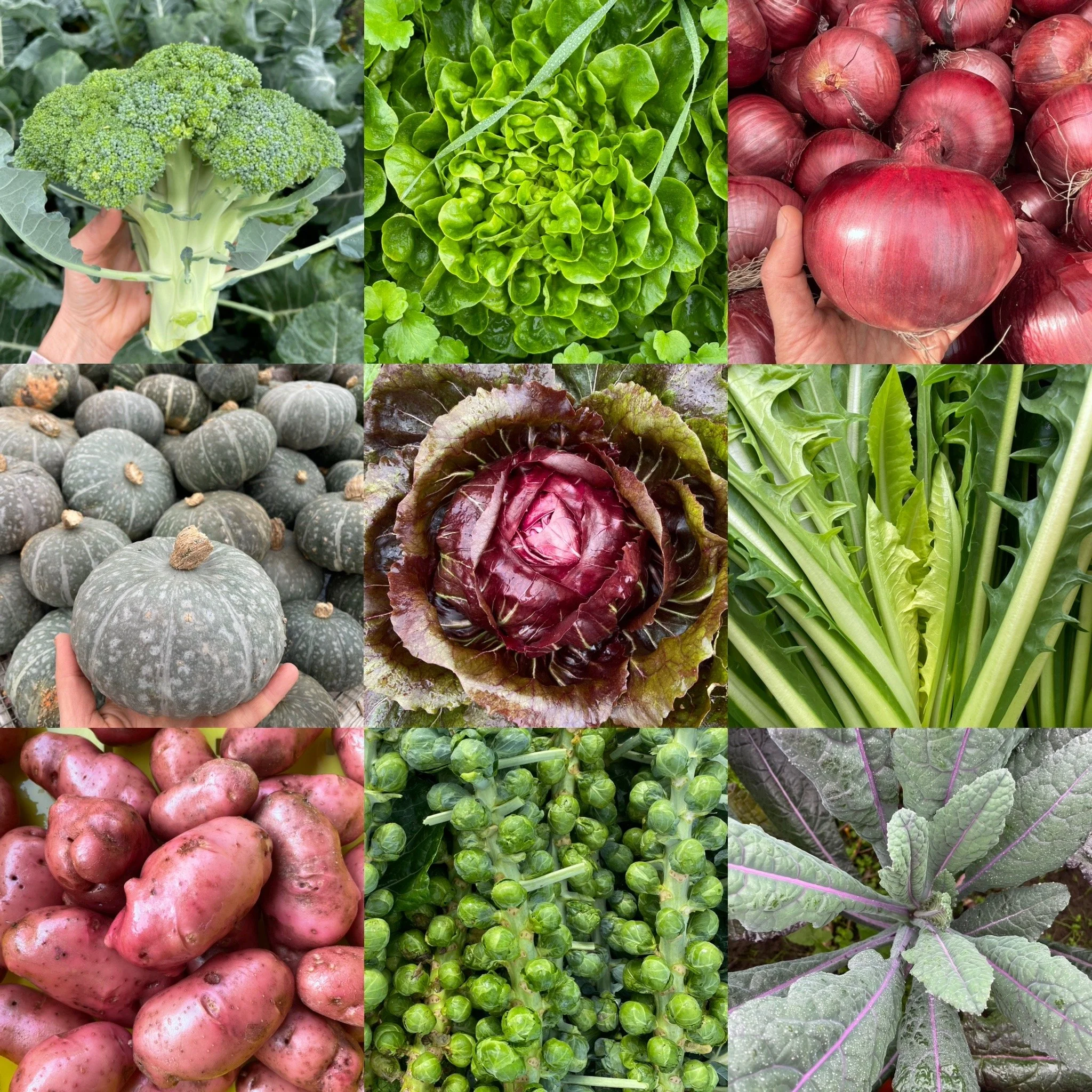
Sweet Jade Mini Kabocha Winter Squash, Brussel Sprouts, Desiree Potatoes, Multicolored Daikon Radish, Kolibra Broccoli, Calibra Yellow Onions, Monastrell Red Onions, Carrots, Dazzling Blue Dino Kale, Italian Dandelion Greens, Indigo Radicchio, Red Salanova Oakleaf Lettuce, Green Salanova Oakleaf Lettuce
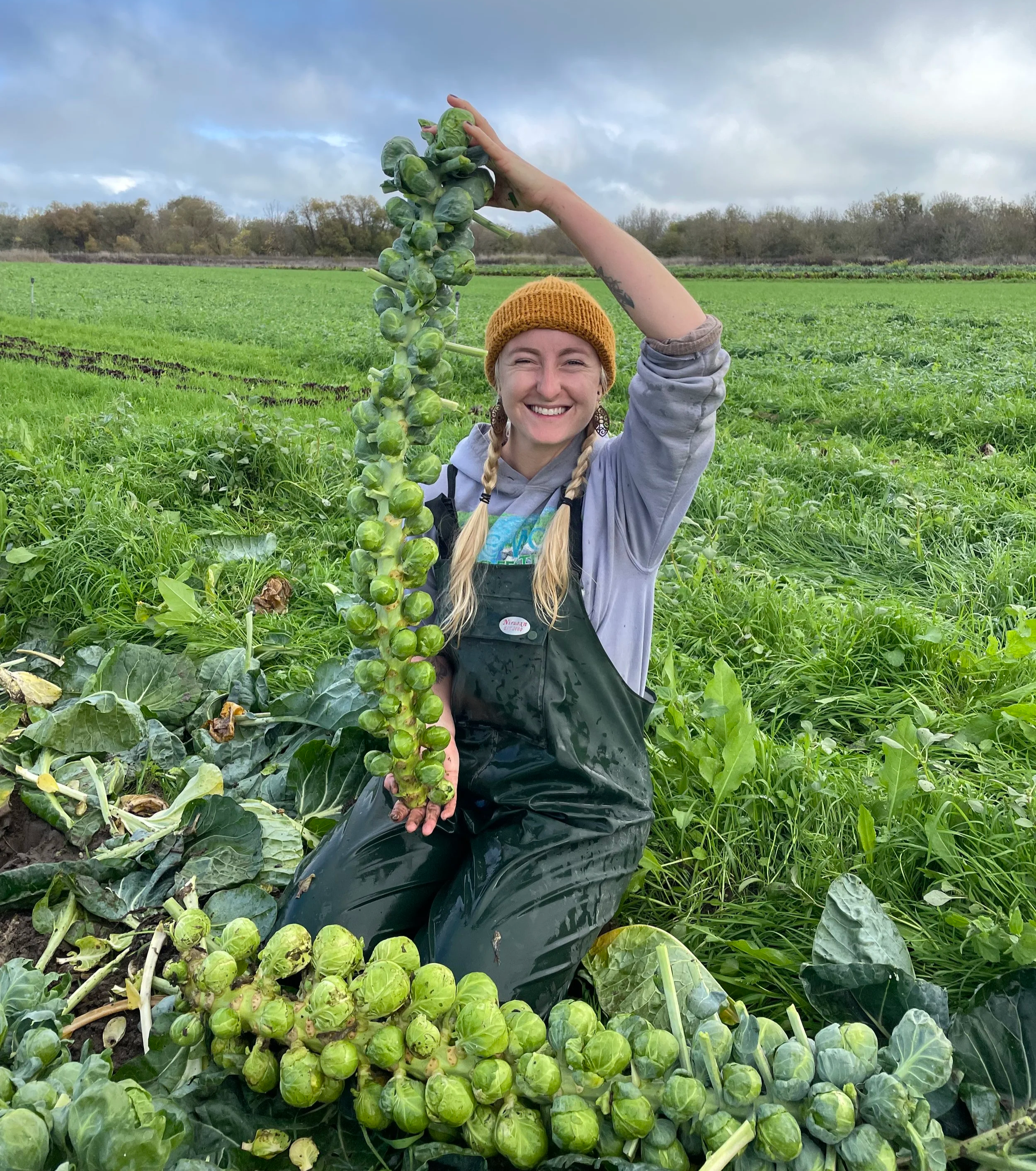
Arabella harvesting brussel sprouts this morning.

U-PICK

Check the u-pick board in the barn for weekly u-pick limits.

  • Frying Peppers:

    • Shishitos | Gleanings

    • Padróns | Gleanings

  • Hot Peppers:

    • Jalapeños | Gleanings

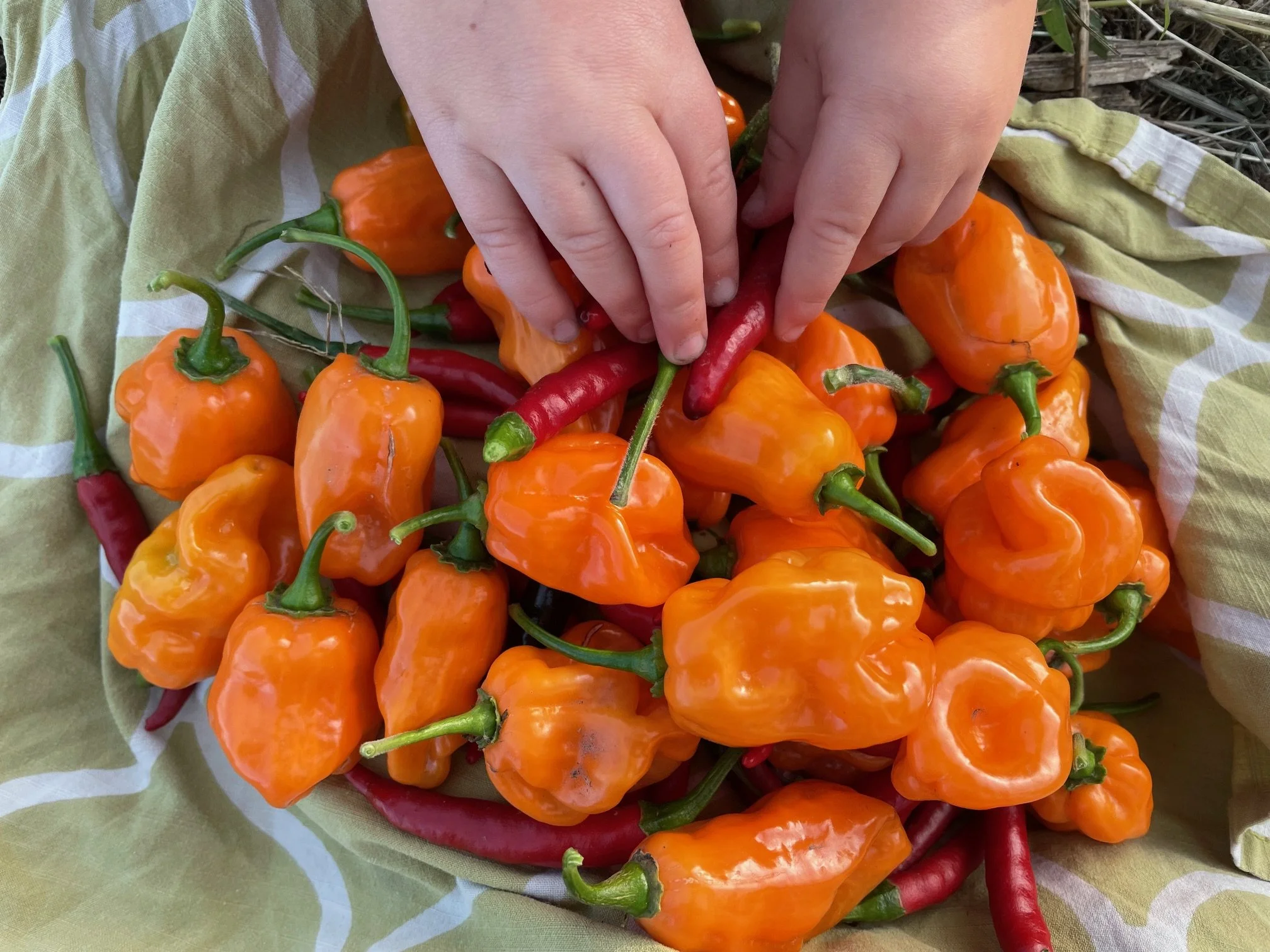
    • Habanero | Gleanings

    • Thai Chilis | Gleanings | Spicy!

    • Wilson’s Vietnamese Devil Pepper | Gleanings

  • Flowers! There are still some flowers to be had after the rains, particularly zinnias, marigolds (the solid orange ones are all the way to the north — towards Winter Sister Farm) and some late-season curios.
HARVEST NOTES

  • Sweet Jade Mini Kabocha Winter Squash: Kabocha is one of our absolute favorite families of winter squash and these personal-size, gray-green beauties have the superb sweetness and flaky texture of the best ones. They also store well, in case you find yourself in possession of what we like to call a “squard”, aka a squash hoard. For the best flavor, choose a Sweet Jade that’s more blue/turquoise rather than green.

  • Desiree Potatoes: The Desiree potato is a red skinned, yellow fleshed variety bred in the 1960’s in the Netherlands. It is versatile and great for roasting, mashing, and salads. Fun fact: Desiree potatoes grown in Bhutan are highly sought after and fetch a high price in India.

  • Brussel Sprouts: This week in anticipation of Thanksgiving we’re debuting the first of this season’s Brussel Sprouts! Seeded in the greenhouse in June, these slow-growing treasures feel like they’ve been with us all season. We’ll be distributing them on the stalk, but for storage we recommend snapping them off the stalk and storing in the fridge in a sealed container or bag.

THANKSGIVING PREVIEW

To help you plan for the big day, here is a snapshot of the share we are planning for Harvest Week 24, the week leading up to Thanksgiving:

Jelly and Harvest Moon Potatoes, Winter Luxury Pie Pumpkin or Sunshine Kabocha Squash, Butternut Squash, Celery Root, Yellow and Red Onions, Garlic, Carrots, Beets, Watermelon Radishes, Brussel Sprouts, Black Magic Dino Kale, Radicchio, and Assorted Lettuce.

WINTER SISTER FARM CSA - SIGN-UPS NOW OPEN!

Want to keep getting abundant weekly veggies through the winter? Winter Sister Farm, located right next door, is open for signups for their 2025-2026 Winter-Spring CSA! They have a range of share options and sizes, including both free-choice and box shares, all of which include access to their u-pick herb and flower garden. Visit www.wintersisterfarm.com/csa for more details!

BRUSSELS SPROUTS WITH PICKLED CARROTS, CILANTRO AND CITRUS VINAIGRETTE

From Six Seasons, by Joshua McFadden

As you may have noticed, we’ve been collectively obsessed with this brilliant cookbook this year, and we wanted to share one more recipe. While it does have a couple components, this salad is so good that it’s made its way onto Arabella’s regular Thanksgiving menu, so we think it’s worth the work. Note: Joshua McFadden uses this basic pickle brine for all kinds of vegetables, and we have been loving having it on hand for other things, most recently romanesco and cauliflower. The pickles really elevate any meal they’re included in.

INGREDIENTS

for the pickled carrots:

  • 1 bunch slender carrots

  • 1/2 cup (4 fl. oz./125 ml) rice vinegar

  • 1 Tbs. white wine vinegar

  • 1 1/2 cups (12 fl. oz./375 ml) hot water

  • 5 Tbs. sugar

  • 1 Tbs. plus 1 tsp. kosher salt

  • 5 smashed garlic cloves

  • 2 dried chiles

  • 4 fresh thyme sprigs

  • 1 Tbs. toasted coriander seeds

FOR THE VINAIGRETTE:

  • 1 orange

  • 1 lemon

  • 1 lime

  • 1 1/2 Tbs. honey

  • 1 Tbs. Champagne vinegar or white wine vinegar

  • Kosher salt and freshly ground pepper

  • 3/4 cup (6 fl. oz./180 ml) extra-virgin olive oil

FOR THE SALAD:

  • Extra-virgin olive oil

  • 2 garlic cloves, smashed and peeled

  • 1 1/2 lb. (750 g) brussels sprouts, trimmed and halved lengthwise

  • Kosher salt and freshly ground pepper

  • 1 cup (4 oz./125 g) hazelnuts, walnuts or pecans, lightly toasted and coarsely chopped

  • 2 bunches green onions, 1/2 inch (12 mm) of the green tops trimmed and discarded, then thinly sliced

  • 1 cup (1 1/2 oz./45 g) coarsely chopped fresh cilantro leaves

  • 1 cup (1 1/2 oz./45 g) coarsely chopped fresh flat-leaf parsley leaves

INSTRUCTIONS

To make the pickled carrots, cut the tops from the carrots, leaving 1/4 inch (6 mm) of the greens intact. Scrub the carrots but don’t peel them.

In a pot or big pitcher, combine the vinegars, hot water, sugar and salt and stir until the sugar and salt have dissolved.

Fill a clean 1-quart (1-l) canning jar with the carrots, arranging them standing up in the jar. Tuck the garlic, chiles, thyme and coriander seeds in between the carrots. Pour the brine over the carrots until they are completely covered and the jar is full, and screw on the lid. Refrigerate for at least 1 day and up to 2 months before using. When ready to assemble the dish, thinly slice some of the carrots on the diagonal until you have about 2/3 cup. Return the remaining carrots to the refrigerator and save for another use.

To make the vinaigrette, using a rasp-style grater, zest the orange, lemon and lime into a bowl. Halve the fruit and squeeze all the juice into the same bowl to get 2/3 cup (5 fl. oz./160 ml) juice (fish out the seeds). Whisk in the honey, vinegar, 1 tsp. salt and several grindings of pepper

Taste and adjust with more honey, vinegar and salt and pepper, if needed, to make the flavor vibrant. Whisk in the olive oil a few drops at a time or put the juice mixture into a blender or food processor and drizzle in the oil while the machine is running; the machine method will make the vinaigrette creamier and emulsified. Set aside.

Heat a large skillet over medium heat. Add 1/2 cup (4 fl. oz./125 ml) olive oil and the garlic and cook the garlic until it’s very soft, fragrant and nicely golden brown—but not burnt—about 5 minutes. Scoop out the garlic and set it aside. (This will prevent it from burning while you're cooking the brussels sprouts.)

Increase the heat a bit and add half of the brussels sprouts, cut side down. Season well with salt and pepper and cook gently until the sprouts are tender all the way through but not mushy, 8 to 10 minutes. Reduce the heat midway if the sprouts are getting too brown. Transfer the brussels sprouts to a plate and repeat to cook the second half of the brussels sprouts. Return all the brussels sprouts and the garlic to the pan, crushing the garlic to break it up and mix it with the sprouts.

Remove the pan from the heat and add the pickled carrots, half the nuts and all the green onions and toss thoroughly to mix and warm the new ingredients slightly.

Spoon 1/2 cup (4 fl. oz./125 ml) of the vinaigrette over the sprouts and toss again. Add half each of the cilantro and parsley and toss again. Taste and adjust with more salt, pepper or vinaigrette so the salad is very vibrant.

Right before serving, add a little more vinaigrette if you like, along with the rest of the nuts, cilantro and parsley. Serve slightly warm or at room temperature. Serves 6.

FARMER’S LOG

STRAWBERRY FUTURES

The steady, weekly storms this autumn have been quite the taskmasters — keeping us on our toes and racing to perform our end-of-season equipment heavy tasks before our tractors are frozen out of the landscape.

The run up to the atmospheric river that dropped 2” on Thursday was all about strawberries: Shaping beds for our new strawberry patch and saying goodbye and cover cropping the old strawberry patch that so blessed us in 2024 and 2025.

All told, we estimate that that old strawberry patch produced around 30,000 pints of strawberries for our little community: 4 pints per share per week for much of last season, and 2 pints per share per week for much of this season — plus the Spring berry deluges that returning members enjoy.

4/10ths of an acre of joy and good memories. It’s hard not to be sentimental.

Saying goodbye to our 2024 & 2025 strawberry patch.

This passed Saturday afternoon, as the tractor sat poised to start flail mowing them, I had a little moment. I hopped off the tractor and, right at my feet, was what seemed like the last little perfect berry in an otherwise spent patch. I held it up to the sky and admired it and was flooded with memories from that patch over the last two years — Kayta and little baby Alice lying on their backs in the furrows staring at the clouds, catching up with old friends, meeting and interviewing Henry for the first time.

I munched the berry and hopped back on the tractor. Au revoir, old friends.

But it was time. We’re getting very excited to be in first-year strawberries again in 2026. First year strawberry plants are more abundant, the berries are bigger, and they are much less prone to disease and pernicious weeds.

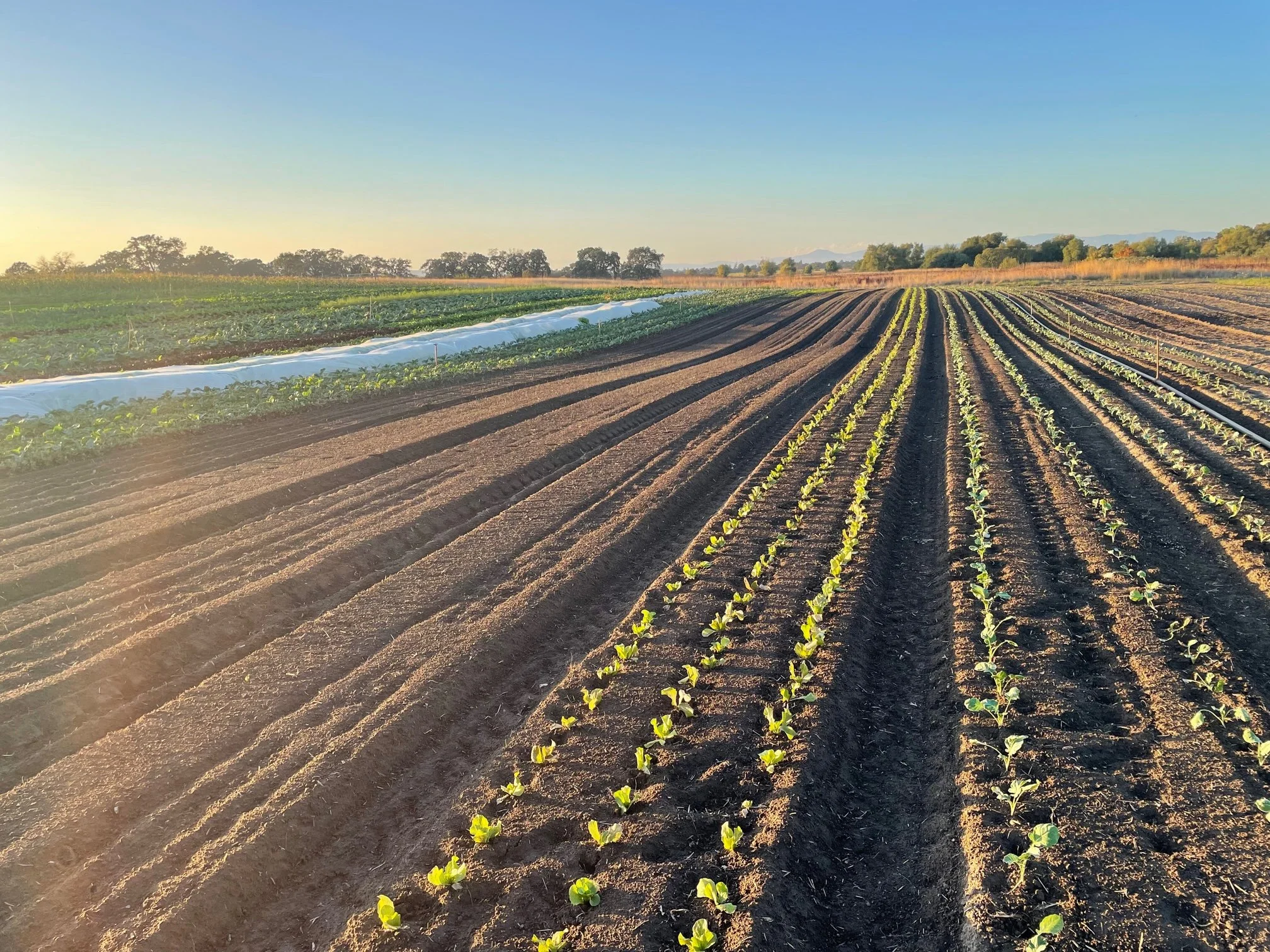
And our strawberry futures are looking bright — this new strawberry patch got the deluxe treatment: A lush summer cover crop; boatloads of compost; extra tall beds to help with winter drainage.

On Tuesday, just before the storm, the new strawberry beds were shaped, and now they wait, ready for planting next week and the sweet, sweet memories we’ll make there.

See you in the fields,
David


CSA BASICS

Slow on Cooper Road! Out of respect for our neighbors and the many kids and animals that live on Cooper Rd., please drive slow (20 mph)!

What time is harvest pick-up?:

  • Saturday harvest pick-ups run from 9:00 am - 2:00 pm

  • Tuesday harvest pick-ups will run from 1:00 pm - 6:00 pm

U-pick hours: Oriented members can come to the farm any time, 7 days a week, sunrise to sunset, to u-pick and enjoy the farm.

2025 CSA program dates: Our harvest season will run from Saturday, June 14th through Tuesday, December 9th this year.

Where is the farm? The member parking lot is located at 1720 Cooper Rd., Sebastopol, CA 95472.
Harvest Week 22 - November Echoes

THIS WEEK’S HARVEST

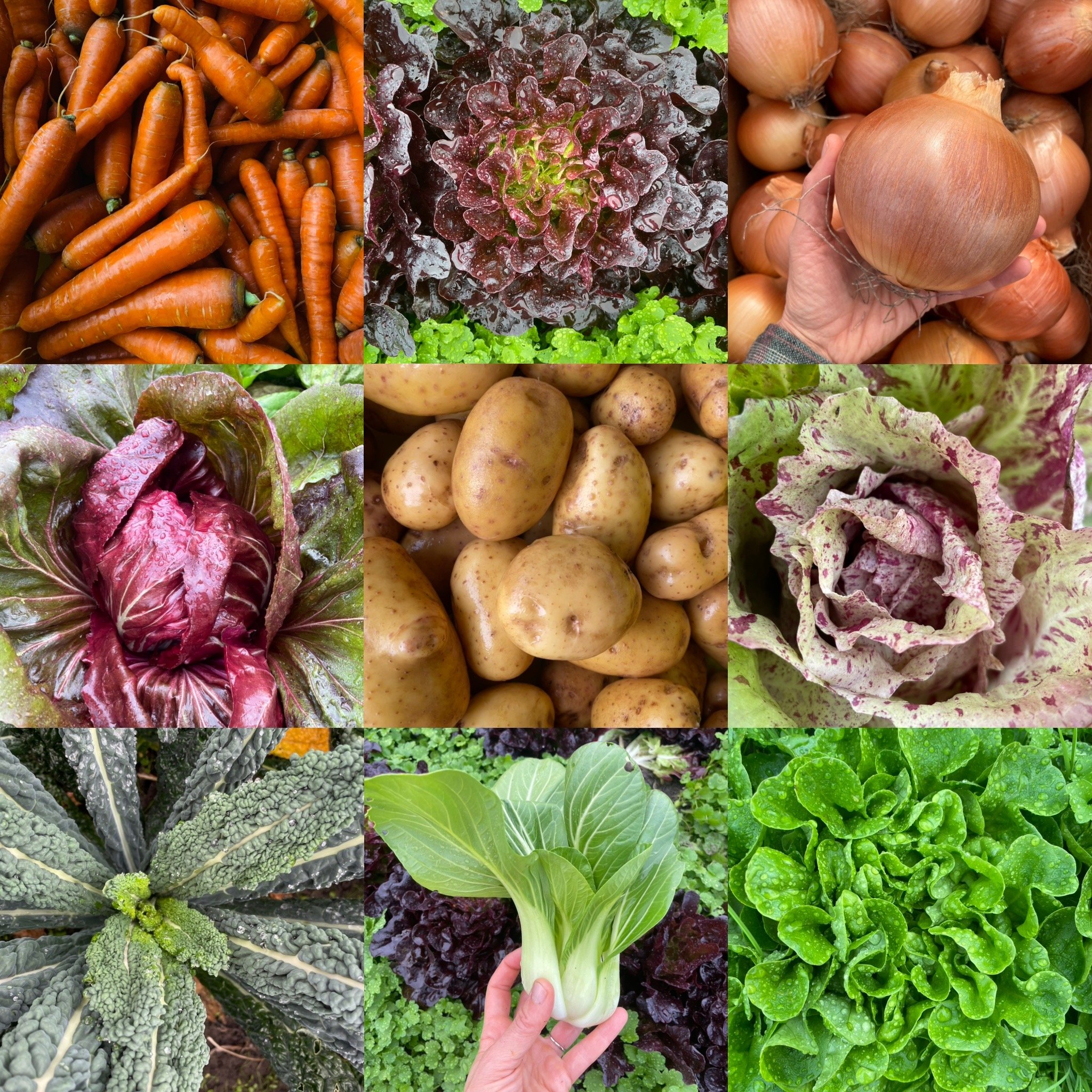
Jester Winter Squash, Delicata Winter Squash, Lorz Softneck Garlic, Jelly Potatoes, Calibra Yellow Onions, Celery, Carrots, Black Magic Dino Kale, Mei Qing Bok Choi, Castelfranco Chicories, Indigo Radicchio, Red Salanova Oakleaf Lettuce, Green Salanova Lettuce, Mustard Mix

U-PICK

Check the u-pick board in the barn for weekly u-pick limits.

  • Frying Peppers:

    • Shishitos | Gleanings

    • Padróns | Gleanings

  • Time to pickle peppers! The hot peppers will be disappearing at the first sign of frost, so now is the time to preserve the abundance! It’s a great time for pickled hot peppers and making hot sauce!

  • Hot Peppers:

    • Jalapeños | No limit

    • Habanero | No limit

    • Thai Chilis | No limit | Spicy!

    • Wilson’s Vietnamese Devil Pepper | No limit

  • Flowers! There are still some flowers to be had after the rains, particularly zinnias, marigolds (the solid orange ones are all the way to the north — towards Winter Sister Farm) and some late-season curios.

The view from the cockpit on Saturday as we began our big fall carrot harvest.

HARVEST NOTES

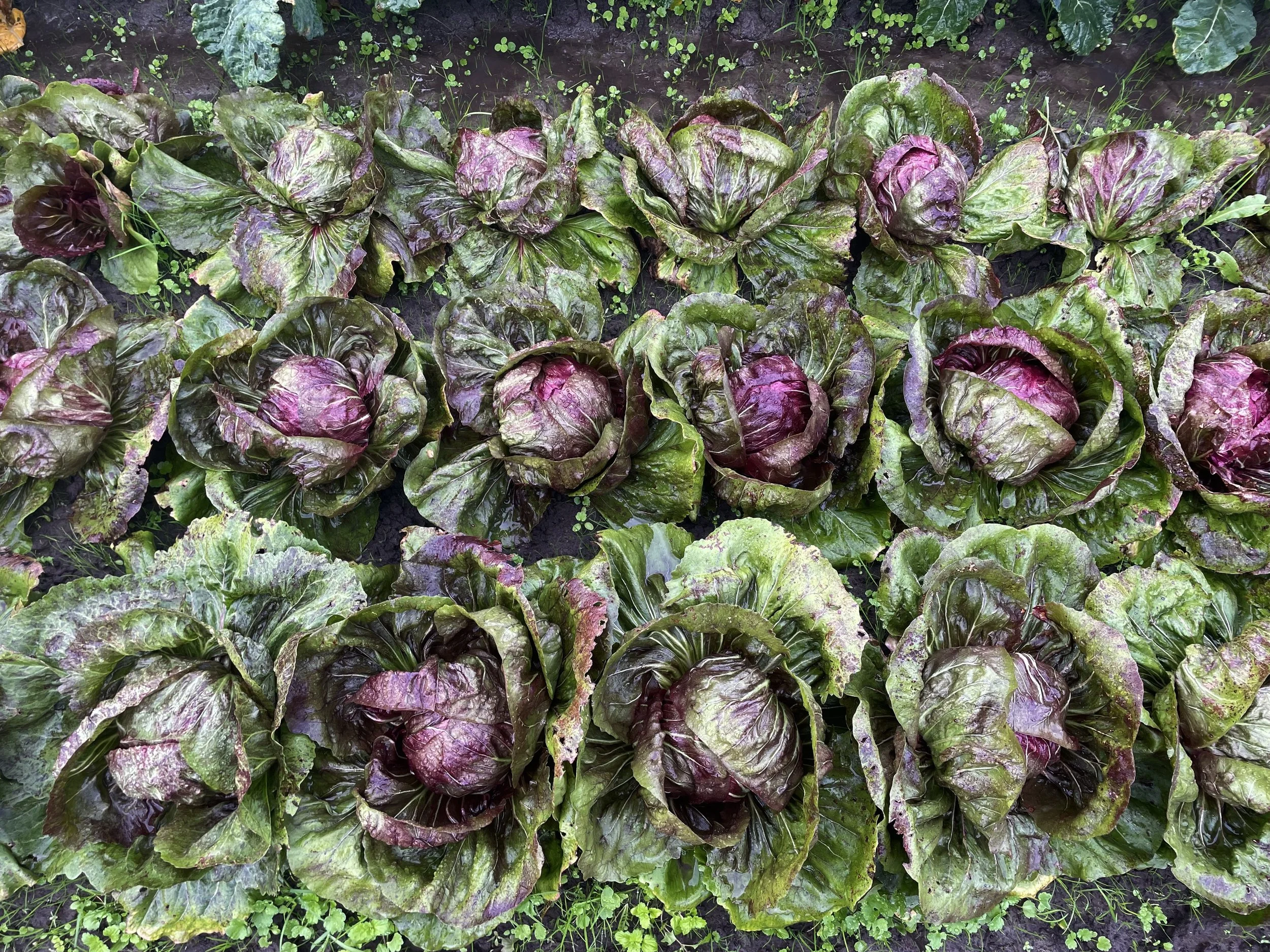
  • Indigo Radicchio: This is the classic red radicchio — savory and bitter with just a hint of sweetness from the cool nights its spent out in the field. Delightful added to a salad of mixed greens, or in a chicory-only salad such as the one below.

WINTER SISTER FARM CSA - SIGN-UPS NOW OPEN!

Want to keep getting abundant weekly veggies through the winter? Winter Sister Farm, located right next door, is open for signups for their 2025-2026 Winter-Spring CSA! They have a range of share options and sizes, including both free-choice and box shares, all of which include access to their u-pick herb and flower garden. Visit www.wintersisterfarm.com/csa for more details!

WINTER PANZANELLA WITH PUMPERNICKEL, CHICORIES AND ORANGES

By Jesse Szewczyk

This gorgeous, bright salad highlights the vibrant contrast of the 2 chicories we have the in share this week — deep magenta Indigo and the delicate speckling of the Castelfranco — and pairs their refined bitterness with sweet balsamic vinegar, oranges and mustard.

Indigo Radicchio in the Farfield.

INGREDIENTS

  • 8 oz. pumpernickel or other hearty brown bread (such as rye or whole wheat), coarsely torn (about 4 cups)

  • ⅔ cup extra-virgin olive oil, divided

  • 1½ tsp. Diamond Crystal or ¾ tsp. Morton kosher salt, divided, plus more

  • 1 tsp. freshly ground pepper, divided, plus more

  • 5–6 medium oranges, divided

  • 2 garlic cloves, finely grated

  • ½ cup plus 2 Tbsp. balsamic vinegar

  • 2 Tbsp. Dijon mustard

  • ½ large fennel bulb, cut into quarters through root end, thinly sliced lengthwise

  • 3 large shallots, thinly sliced

  • 8 oz. mixed chicories (such as radicchio and/or endive), leaves separated, torn into very large pieces if needed (about 6 cups)

  • 2 oz. Parmesan, plus more for serving

instructions

  1. Place a rack in middle of oven; preheat to 400°. Place 8 oz. pumpernickel or other hearty brown bread (such as rye or whole wheat), coarsely torn (about 4 cups), on a rimmed baking sheet, drizzle ⅓ cup extra-virgin olive oil over, and season with ½ tsp. Diamond Crystal or ¼ tsp. Morton kosher salt and ½ tsp. freshly ground pepper. Lightly massage with your hands to help bread absorb all of the oil. Bake until bread is dried out and fragrant, 13–17 minutes. Let croutons cool on baking sheet; set aside.

  2. Meanwhile, using a paring knife, remove peel and white pith from 4 medium oranges, taking care not to remove too much flesh. Cut oranges into 1" pieces, leaving center pithy parts behind; set orange pieces aside. Squeeze juice from scraps into a liquid measuring cup, then discard. Cut remaining 1–2 medium oranges in half and squeeze in juice through a mesh sieve to get to ½ cup; discard seeds.

  3. Add 2 garlic cloves, finely grated, ½ cup plus 2 Tbsp. balsamic vinegar, 2 Tbsp. Dijon mustard, 1 tsp. Diamond Crystal or ½ tsp. Morton kosher salt, ½ tsp. freshly ground pepper, and remaining ⅓ cup extra-virgin olive oil to orange juice and whisk to combine. Taste dressing and season with more salt and pepper if needed.

  4. Toss ½ large fennel bulb, cut into quarters through root end, thinly sliced lengthwise, 3 large shallots, thinly sliced, 8 oz. mixed chicories (such as radicchio and/or endive), leaves separated, torn into very large pieces if needed (about 6 cups), and reserved orange pieces and croutons in a large bowl. Using a vegetable peeler, shave 2 oz. Parmesan into bowl. Drizzle about half of dressing over and toss to coat. Let sit 3 minutes to absorb. Drizzle with more dressing if bread seems dry (it should be pleasantly soggy but not falling apart); season with more salt and pepper if needed.

  5. Arrange panzanella on a platter and top with more shaved Parmesan.

FARMER’S LOG

NOVEMBER ECHOES

On the farm, time is full of echoes.

Moments, days, tasks, feelings… they return from the long distance of the years.

All it takes is a certain smell, or taste, or the slant of the sunlight, and there you are again, flooded with memories of who you were, and who you were with, at this time in seasons passed.

Last November 7th, we also felt laden but strong — our muscles tired and honed from handling, heaving, and stacking fall’s bounty. The warm smell of drying corn drifted from the doors of the greenhouse and the coolers were filled with the pine-fresh snap of of unearthed carrots. The giggly and cacophonous laughter of the crew, gone slightly loopy from a big harvest, could be heard over the din of the tractor. Last November 7th, we also watched, with hope and pride, our cover crop sprouting and filling out and turning our worked fields into sleek sleeping meadows. And at night, then and now, we tasted winter squashes to check for ripeness in a cozy house heated by the oven.

Aye, the slanting November light is full of echoes.

We feel them in the early morning when we head out to harvest, shimmering through the fog.

And sometimes, when we are still, the echoes seem to continue on forward, strangely, and it is as if we can hear the echoes of early-November’s yet to come.

See you in the fields,
David


CSA BASICS

Slow on Cooper Road! Out of respect for our neighbors and the many kids and animals that live on Cooper Rd., please drive slow (20 mph)!

What time is harvest pick-up?:

  • Saturday harvest pick-ups run from 9:00 am - 2:00 pm

  • Tuesday harvest pick-ups will run from 1:00 pm - 6:00 pm

U-pick hours: Oriented members can come to the farm any time, 7 days a week, sunrise to sunset, to u-pick and enjoy the farm.

2025 CSA program dates: Our harvest season will run from Saturday, June 14th through Tuesday, December 9th this year.

Where is the farm? The member parking lot is located at 1720 Cooper Rd., Sebastopol, CA 95472.

Harvest Week 21 - An Ode to Winter Squash

THIS WEEK’S HARVEST

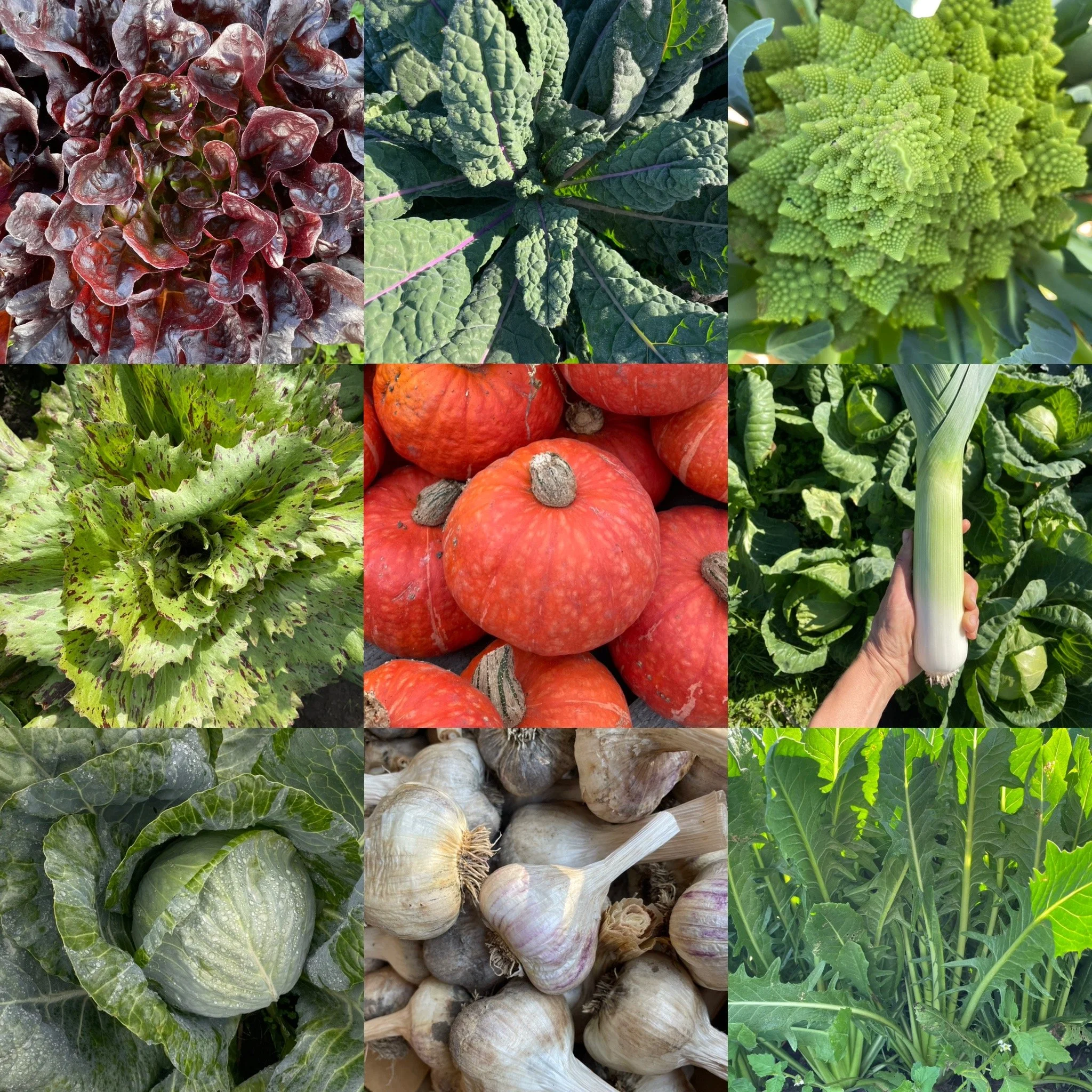
Sunshine Kabocha Winter Squash, Lorz Softneck Garlic, Green Cabbage, Purple Majesty Potatoes, Calibra Yellow Onions, Carrots, Leeks, Romanesco, Dandelion Greens, Dazzling Blue Dino Kale, Castelfranco Chicories, Red Salanova Oakleaf Lettuce, Arugula

U-PICK

Check the u-pick board in the barn for weekly u-pick limits.

  • 🎃 Jack-O-Lantern & Decorative Pumpkins | No limit | There are still a pile of nice pumpkins on the farm side of the field — help yourself if you’d like more!

  • Cherry Tomatoes | Gleanings

  • Frying Peppers:

    • Shishitos | Gleanings

    • Padróns | Gleanings

  • Time to pickle peppers! The hot peppers will be disappearing at the first sign of frost, so now is the time to preserve the abundance! It’s a great time for pickled hot peppers and making hot sauce!

  • Hot Peppers:

    • Jalapeños | No limit

    • Habanero | No limit

    • Thai Chilis | No limit | Spicy!

    • Wilson’s Vietnamese Devil Pepper | No limit

  • Herbs & Edible Flowers: Herbs are winding down but some can be scrounged.

  • Flowers! There are still some flowers to be had after the rains, particularly zinnias, marigolds (the solid orange ones are all the way to the north — towards Winter Sister Farm) and some late-season curios.

HARVEST NOTES

  • Sunshine Kabocha Squash: One of our all-time favorite squash. Excellent for eating roasted (check out our guide to roasting from last week if you need a reminder!). Also excellent in pies, curries, soups, and baked goods (substitute for pumpkin in any recipe). Super sweet, velvety smooth texture.

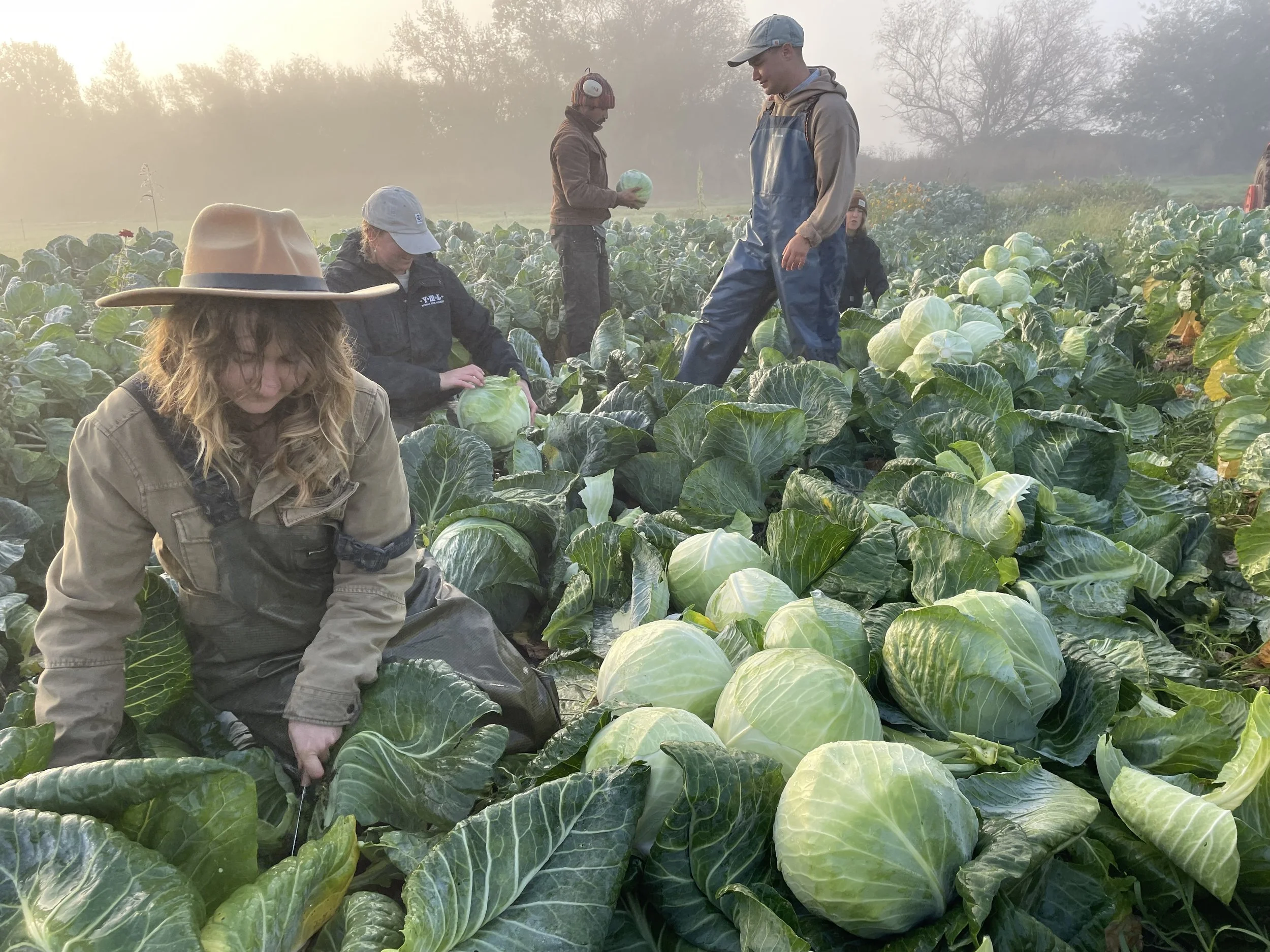
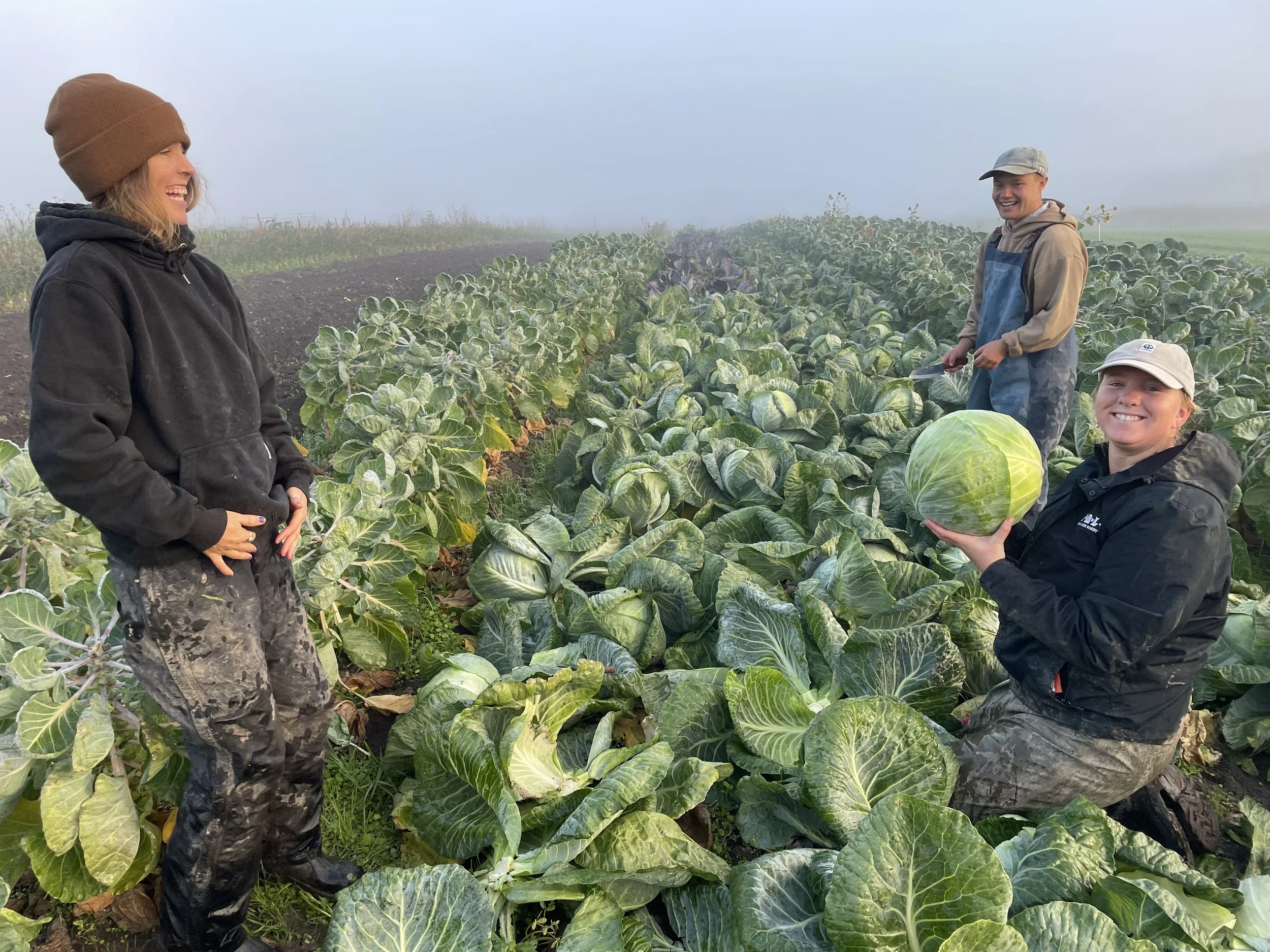
  • Green Cabbage: This week we’ll be bringing you some truly giant cabbage! They’re perfect for making sauerkraut (see our favorite recipe in Week 14’s newsletter), or slowly carving chunks off to eat with dinner. We’ve been loving eating stir-fried cabbage this fall, as in the recipe below, (and we’re also eyeing the Asian Pickled Cabbage recipe from the same source).

  • Dandelion Greens: These succulent Italian dandelions are the perfect bitter winter green. As with chicory, they pair well with rich, sharp flavors. For a simple and delicious side dish, try sautéing with olive oil (or bacon fat), plenty of garlic and a dash of red wine vinegar. Or check out this recipe for Chickpea Pancakes with Dandelions and Caramelized Onions from a past newsletter!

SELECTING A TASTY WINTER SQUASH

POV: You approach a macro-bin of West County Winter Squash in the barn with hundreds of edible orbs. Which will you choose!?

Selecting a sweet, ripe winter squash is a little like selecting a ripe melon; you never know lies within until you take a bite, but you can take certain cues from the outside of the squash to make sure you get a sweet one.

In general, it is best to select squashes with rich color, and deep warm hues like oranges and reds. Bon bon buttercup, for example, is a dark green squash but tends to be sweetest when it has a nice deep orange spot on one side. Sunshine Kabocha, which we are distributing this week, is best when a deep orange-red. A nice golden brown-orange delicata will likely be much tastier than a paler green compadre.

We try to avoid harvesting or putting out unripe squash, but in general, avoid squash that are pale or green. Go for the warm colors!

A vine-ripened, locally grown winter squash will be delicious just roasted and appreciated unadorned. See last week’s Newsletter for our tips on roasting winter squash.

WINTER SISTER FARM CSA - SIGN-UPS NOW OPEN!

Want to keep getting abundant weekly veggies through the winter? Winter Sister Farm, located right next door, is open for signups for their 2025-2026 Winter-Spring CSA! They have a range of share options and sizes, including both free-choice and box shares, all of which include access to their u-pick herb and flower garden. Visit www.wintersisterfarm.com/csa for more details!

Meg, Henry & Riley in the cabbage patch this morning.

CHINESE SHREDDED CABBAGE STIR-FRY

From The Woks of Life

This simple stir-fry is more than the sum of its ingredients.

INGREDIENTS

  • 2 tablespoons oil

  • 6 oz. pork belly (pork loin, or chicken, thinly sliced) — Optional

  • 5 cloves garlic (smashed and cut in half)

  • 5 dried red chilies (deseeded and roughly chopped)

  • 1 1/2 lb. cabbage (hand-shredded into bite sized pieces, washed, and thoroughly dried)

  • 2 teaspoons Shaoxing wine

  • 1 tablespoon soy sauce

  • 1/2 teaspoon sugar

  • 1 tablespoon water

  • 1/2 teaspoon Chinese black vinegar

  • 2 scallions (cut into 2-inch lengths)

instructions

In a wok over high heat, add the oil. Sear the meat until caramelized. Add the garlic and chili, turn down the heat to medium, and stir-fry for a minute, taking care not to burn the garlic.

Add the cabbage, wine, soy sauce, sugar, and water. Turn up the heat to high, cover the lid and let the cabbage cook for 1-2 minutes. Uncover the lid, and stir in the black vinegar, scallions, and salt to taste. The cabbage should be wilted, but still slightly crunchy and caramelized. Serve hot!

FARMER’S LOG

AN ODE TO WINTER SQUASH

This week on the farm we made a big push to finish clipping and boxing the last of our monster 2025 winter squash.

A few weeks ago, we penned an ode to the mighty potato. Last week we serenaded el maíz. Both are New World crops that changed the world and inspired poets. But this week we save for the fairest of them all: The beloved oldest of the three sisters — the winter squash.

She takes on infinite forms, from voluptuous to svelte; from burning red to the palest blue. She has been kindling a bashful and loyal love in humanity’s heart for over 10,000 years.

The ancestral plants of what we call squash (the species including zucchini, melons, gourds, cucumbers, pumpkins and all winter squash) are millions of years old and native to the Americas. The earliest evidence for human domestication dates back 10,000 years to southern Mexico, earlier than the domestication of corn or beans.

Word travelled fast and inspiration abounded. By 2,000 B.C., squash had became a part of life for almost every Native American culture from Southern Canada to Patagonia. (The English word “squash” comes from the Narragansett word, askutasquash, meaning fresh vegetable, and similar words can be found in the Algonquian language family.) Squash varieties were developed and cherished for everything from their protein rich and medicinal seeds to the sweet flesh and winter-hardy skins. Botanists note at least six separate domestication events occurring in the Americas.

Here at West County Community Farm, the human + squash love affair burns bright — and we’re lucky to have at our fingertips the unparalleled modern library of heirloom squash seeds to explore. Over the winter, Kayta hunkered down with a seed catalogue and a good cup of coffee and laid out a season-long love sonnet to squash: We felt the summer wind with a cool slice of Persian cucumber; we dined by candlelight over pasta with Costata Romanesca Zucchini; and once we tasted a Sarah’s Choice Cantaloupe, we could never forget.

But in the winter, our true love came — the winter squash.

We’ll have a new squash for you to get to know almost every week from now until our last CSA pickup day, December 9th. Allow us to introduce you…

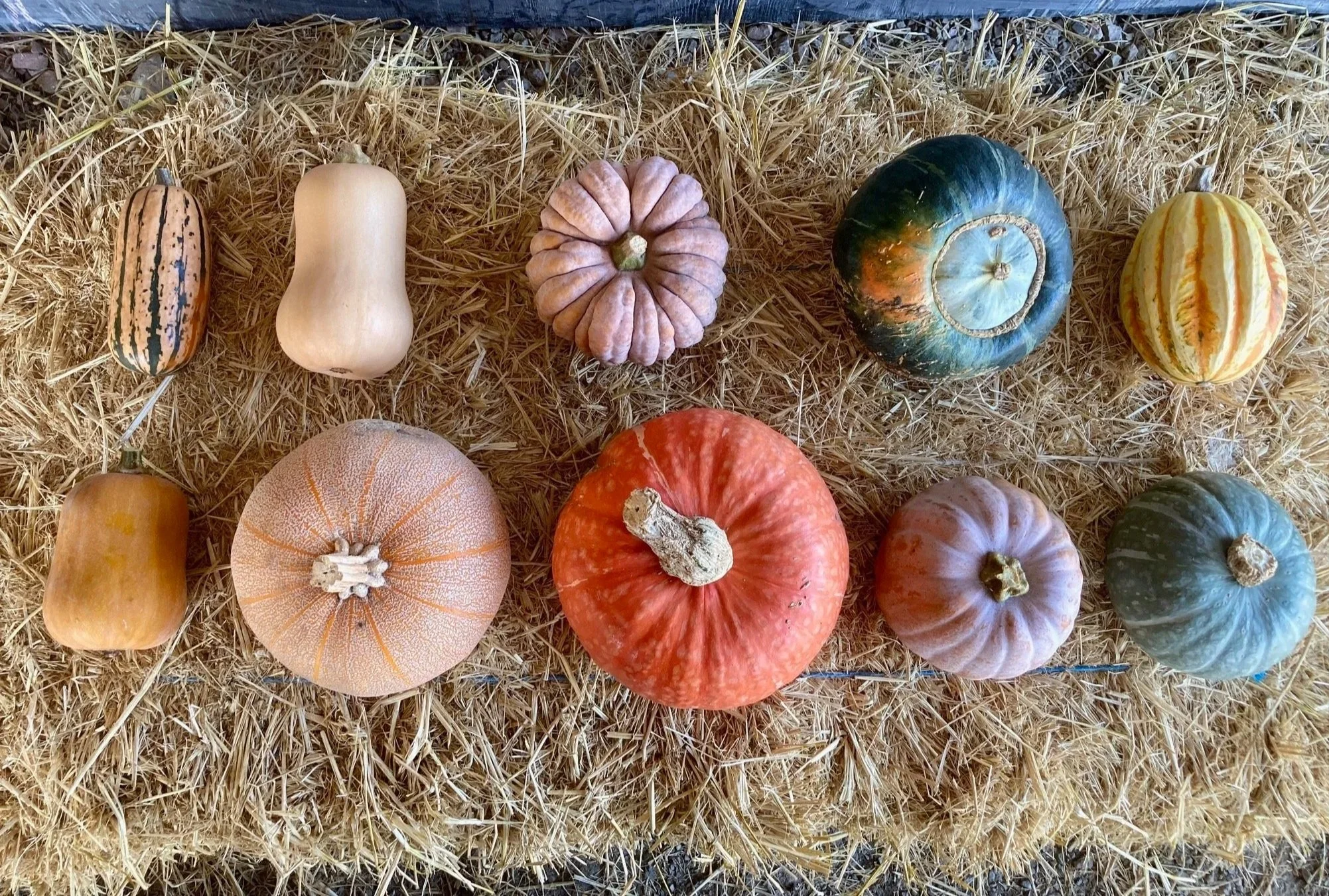
Top row from L to R: Delicata, Butternut, Futsu, Bonbon Buttercup, Jester Acorn | Bottom row L to R: Honeynut, Winter Luxury Pie Pumpkin, Sunshine Kabocha, Koginut, Sweet Jade

  • Sunshine Kabocha: The village beauty. A fiery-red Kabocha squash with sugar-sweet and flaky flesh. An all-time farmer favorite that can be cooked any which way. Exceptional for pumpkin pie and straight roasted eating.

  • Winter Luxury Pie Pumpkin: The supreme pie pumpkin in lacy lingerie. The only pie pumpkin that can compete with a Sunshine Kabocha. We'll distribute this one around Thanksgiving with our go-to pumpkin pie recipe.

  • Black Futsu: A beloved Japanese delicacy, this bite sized, mini Butternut relative has bright orange flesh with unique fruity flavor and edible skin with a gorgeous frosted look.

  • Butternut: The solid, reliable, bring-’em-home-to-Daddy squash with a nutty charm.

  • Bonbon Buttercup: The girl next door. Unassuming, humble, and cute as a button. BonBon Buttercup is, in farmer David’s opinion, the best squash ever. Marriage material.

  • Delicata: A real heartbreaker. The sweetest. Easiest to cook, even easier to eat.

  • Koginut: A very expensive date (the priciest seed of all squash), this cutie is a hybrid of kabocha and butternut and has a nutty flavor with notes of citrus and vanilla. Very popular with chefs.

  • Honeynut Butternut: A highly educated squash developed by the Cornell Vegetable Breeding Institute, this petite butternut variant is new to us this year.

  • Jester Acorn: A Delicata type that looks like a fancy Acorn Squash. A good Jester can be among the sweetest of squashes.

  • Sweet Jade: A real cutie — a personal-sized grey green Kabocha.

Set the table, poor the wine, and light the candles — we hope you fall in love with a winter squash this autumn!

See you in the fields,
David


CSA BASICS

Slow on Cooper Road! Out of respect for our neighbors and the many kids and animals that live on Cooper Rd., please drive slow (20 mph)!

What time is harvest pick-up?:

  • Saturday harvest pick-ups run from 9:00 am - 2:00 pm

  • Tuesday harvest pick-ups will run from 1:00 pm - 6:00 pm

U-pick hours: Oriented members can come to the farm any time, 7 days a week, sunrise to sunset, to u-pick and enjoy the farm.

2025 CSA program dates: Our harvest season will run from Saturday, June 14th through Tuesday, December 9th this year.

Where is the farm? The member parking lot is located at 1720 Cooper Rd., Sebastopol, CA 95472.