Harvest Week 11 - Rethinking Cover Crop

The farm is in need of pint baskets! If you have an abundance at home, please bring some back to the farm so that they can be reused throughout the season.

THIS WEEK’S HARVEST

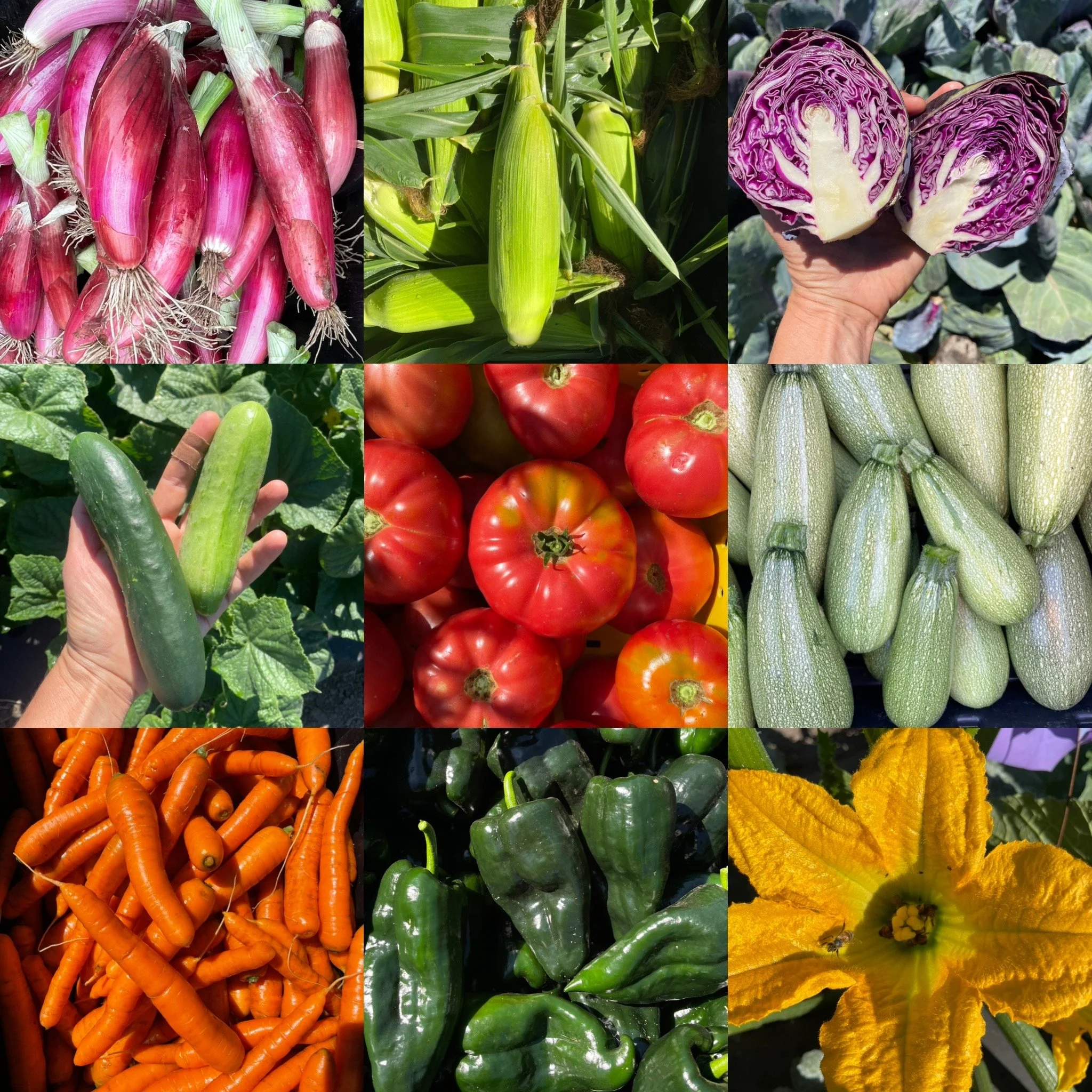
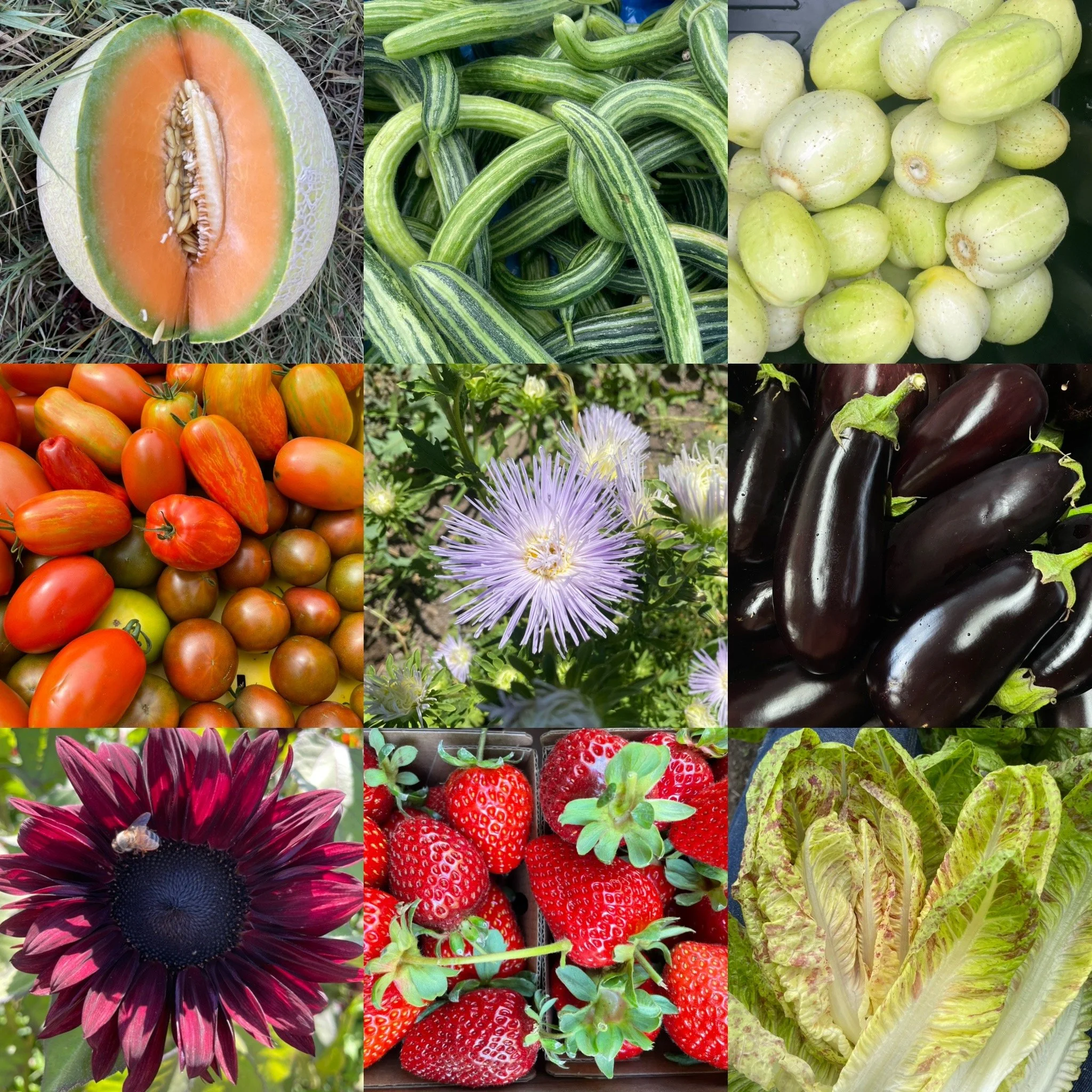
Bicolor Sweet Corn, Mini Purple Cabbage, Eggplant, Assorted Zucchini, Patty Pan & Crookneck Squash, Mojito Persian Cucumbers, Slicing Cucumbers, Lemon Cucumbers, Striped Armenian Cucumbers, Tomatoes, Poblano Peppers, Torpedo Onions, Bulk Carrots, Sarah’s Choice Cantaloupe, Assorted Little Gem Lettuce, Rouxai Red Oakleaf Lettuce, Escarole
U-PICK

Check the u-pick board in the barn for weekly u-pick limits.

  • Albion Strawberries | 2 pints per share

  • Cherry Tomatoes | 3 pint per share

  • Frying Peppers:

    • Shishitos | No Limit - Take what you’ll eat or preserve this week!

    • Padróns | No Limit - Take what you’ll eat or preserve this week!

  • Jalapeños | 2 peppers per share

  • Herbs & Edible Flowers: Husk Cherries, Italian Basil, Purple Basil, Lemon Basil, Purple Basil, Dill, Tulsi, Parsley, Cilantro, Chamomile, Calendula, Borage, Nasturtium, Pansies/Viola, Stridolo, Lemon Bergamot Bee Balm, Onion Chives, Garlic Chives, Tarragon, Thyme, Oregano, Marjoram, Culinary Sage, Lemon Balm, Lemon Verbena, Vietnamese Coriander, Shiso/Perilla, Catnip, Pineapple Sage, Sorrel, Assorted Mints

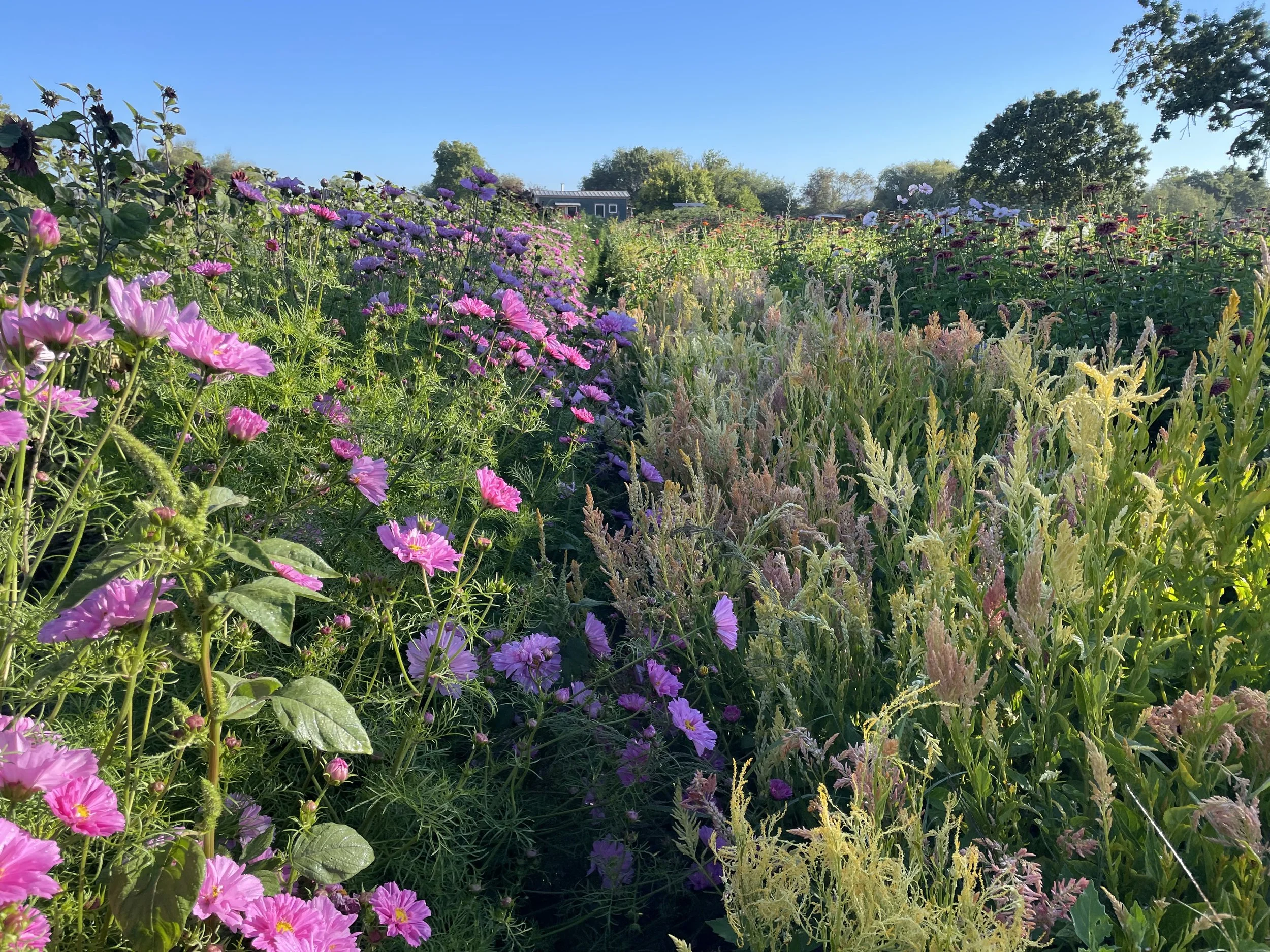
  • Flowers! Too many to list! Feel free to pick the sunflowers along the edge of the parking area in addition to everything in the garden.
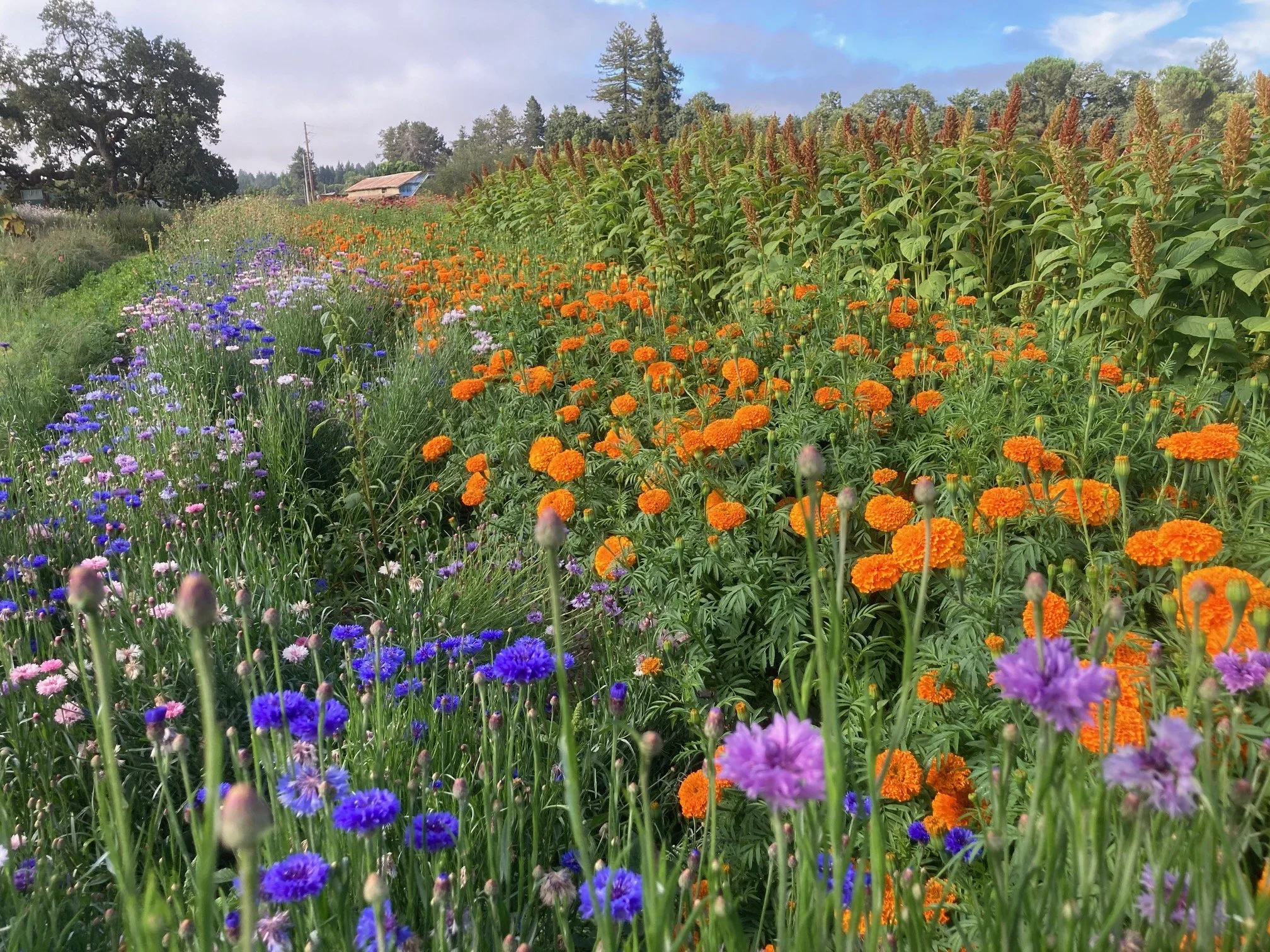
Beautiful new beds of Dill, Bachelor’s Buttons, Marigolds, and Amaranth in the North Garden

HARVEST NOTES

  • Bulk Carrots: We’ve just finished harvesting from our abundant 1st succession of carrots and the 2nd succession is right on their heels, so every share will be able to take home up to 3 pounds of carrots this week. We’re dreaming of carrot cake, carrot juice, and the delicious carrot pickles from the recipe below!
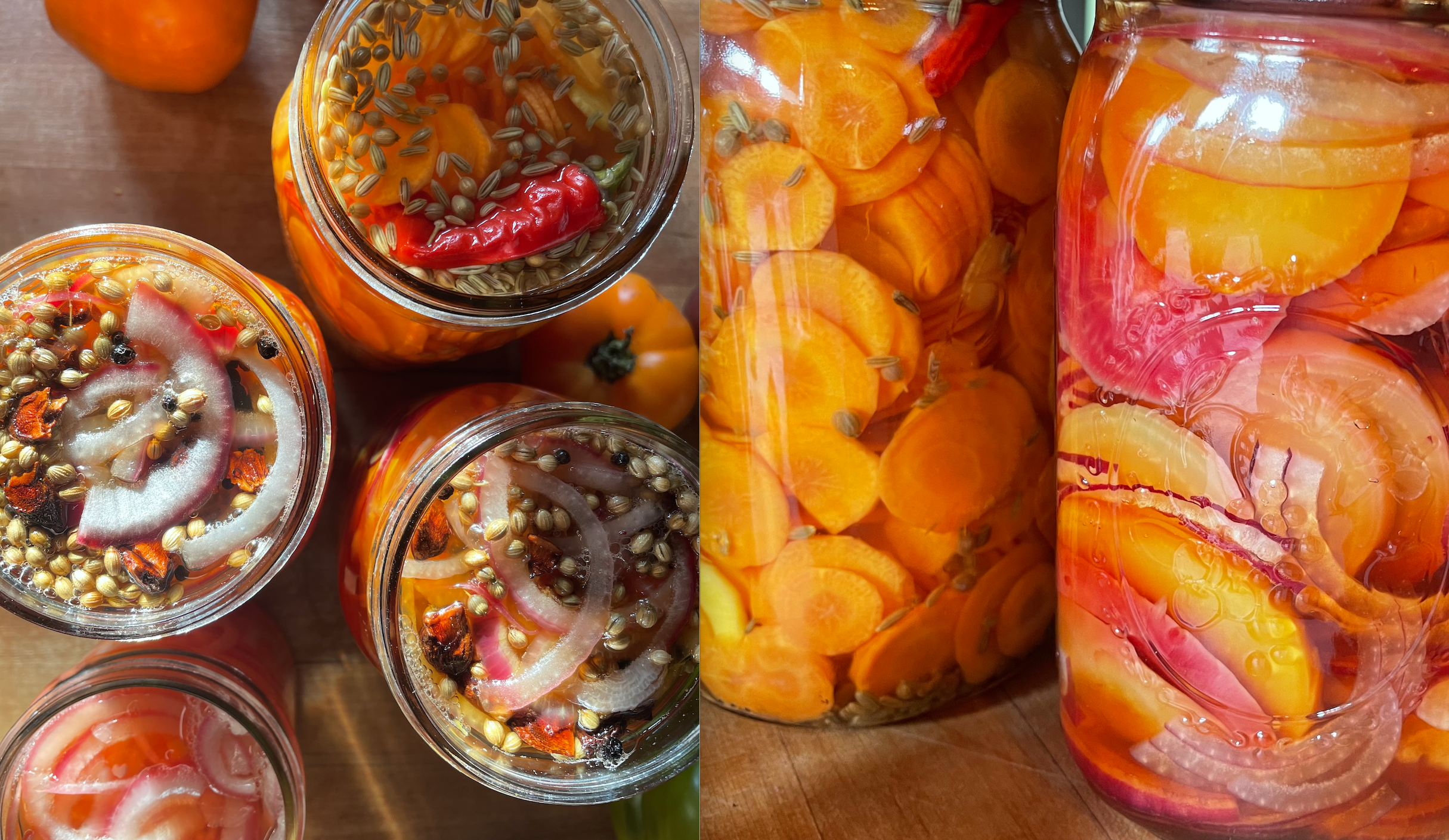
pickled carrots

These pickles come from a favorite sandwich recipe of ours. It’s maximalist in every way (think thick-sliced feta, aioli, hard-boiled eggs, and an herby, pickled-vegetable-filled salad with olives and capers on homemade focaccia!), including a name drawn from Moby Dick (The Scuttlebutt). Even if you have no intention of making the sandwich (which you should) we highly recommend the pickles. They’re easy to make, and once you have them in your fridge, they can transform almost any meal into something delicious and vegetable filled. If you still have some beets hanging out in your fridge, check out the full recipe for delicious pickled beet & onions, too!

PICKLED CARROTS

Recipe by Marian Bull

  • 8 medium carrots, peeled and very thinly sliced into rounds or on a bias

  • 2 cups apple cider vinegar

  • 2 cups water

  • 1 cup sugar

  • 1/2 cup kosher salt

  • 1 tablespoon coriander seeds

  • 1 tablespoon fennel seeds

  • 2 árbol chiles (or any of our hot peppers)

Place the sliced carrots in a heatproof quart jar. In a saucepan, combine the apple cider vinegar, water, sugar, kosher salt, coriander, fennel, and the chiles. Boil, stir, and pour over the carrots. Cool them, then store in the fridge for at least a day, and up to 2 months.

FARMER’S LOG

RE-THINKING COVER CROP

We are doing some fun experiments on the farm right now — experiments having to do with a paradigm shift in how we cover crop our fields here on the Laguna.

Cover cropping is an age-old practice, and one of the organic farmer’s primary tools for building soil fertility, organic matter, and soil biology.

Cover crops are usually seed mixes (often grasses and legumes) planted in fields and let to grow big and tall, not for human food, but to be incorporated into the soil later, as “green manure” that builds carbon in the soil and provides food for the all important microbe allies that live below. A healthy cover crop can pulse 8,000 lbs of biomass and 100 lbs of nitrogen per acre of ground. Cover crops are so named because they also cover and protect the soil against harsh winter weather.

Our lower fields (and cover crop) under water in March 2023

In climates like ours it is typical for farmer’s to seed cover crop in the fall, let it grow slowly all winter, and then to mow it and incorporate it into the soil when it is huge and flowering in the spring before planting.

We’ve learned these last few years that the Laguna is not typical.

The flooding we experience in our fields during a normally wet winter kills fall-seeded cover crops when they are small. Typical fall-planted cover crop seed can only really work here in a drought years.

Time for a paradigm shift.

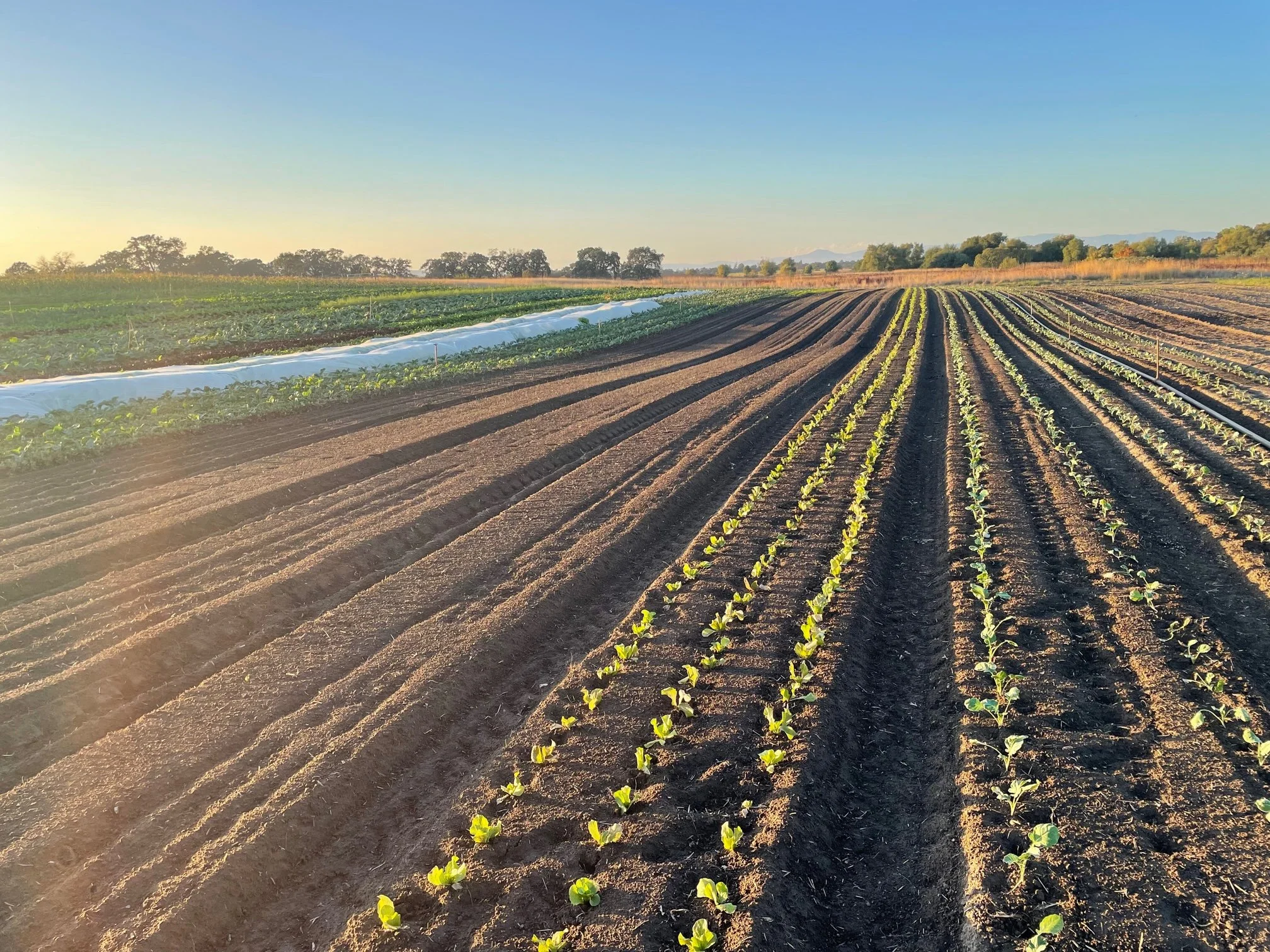
The experiments Eric is spearheading in Highgarden (to the right of the strawberries) and in various places in our lower fields represent efforts to explore new summer and overwintering cover crop mixes and to generally shift our focus to establishing overwintered cover crops much earlier than October.

Auden and Ever in head high cover crop in an area of the farm that doesn’t flood (this year’s strawberry patch).

By seeding cover crops in June, July, and August — as soon as crops are harvested, or before Fall crops are planted — we hope to get solid stands of “green manure”, that can survive the winter inundations here.

I’m most excited about a mix of triticale and crimson clover (and possibly rye grass) that we’re now seeding into the fields plots that provided our first harvest shares.

If all goes to plan the grasses will grow tall and strong before the winter storms. Even if they are killed by flooding, their robust root systems will hold the soil and their stately stalks will cover the precious soil. The crimson clover, hiding out underneath, we expect to explode in leguminous glory in the spring.

Hats off to Eric for leading this charge — passionate and prudent farmer that he is.

Wish us luck and here is to robust cover crop stands!

See you in the fields,
David


CSA BASICS

Slow on Cooper Road! Out of respect for our neighbors and the many kids and animals that live on Cooper Rd., please drive slow (20 mph)!

What time is harvest pick-up?:

  • Saturday harvest pick-ups run from 9:00 am - 2:00 pm

  • Tuesday harvest pick-ups will run from 1:00 pm - 6:00 pm

U-pick hours: Oriented members can come to the farm any time, 7 days a week, sunrise to sunset, to u-pick and enjoy the farm.

2025 CSA program dates: Our harvest season will run from Saturday, June 14th through Tuesday, December 9th this year.

Where is the farm? The member parking lot is located at 1720 Cooper Rd., Sebastopol, CA 95472.
Harvest Week 10 - The Dog Days of Summer

THIS WEEK’S HARVEST

Bicolor Sweet Corn, Eggplant, Assorted Zucchini, Patty Pan & Crookneck Squash, Lemon Cucumbers, Striped Armenian Cucumbers, Tomatoes, Poblano Peppers, Fresh Cippollini Onions, Carrots, Sarah’s Choice Cantaloupe, Gatsbi Little Gem Lettuce, Assorted Head Lettuce, Escarole

U-PICK

Check the u-pick board in the barn for weekly u-pick limits.

  • Albion Strawberries | 2 pints per share

  • Cherry Tomatoes | 2 pint per share

  • Amethyst Beans | No Limit - Take what you’ll eat or preserve this week!

  • Frying Peppers:

    • Shishitos | No Limit - Take what you’ll eat or preserve this week!

    • Padróns | No Limit - Take what you’ll eat or preserve this week!

  • 🌟 Jalapeños | 2 peppers per share

  • Herbs & Edible Flowers: Husk Cherries, Italian Basil, Purple Basil, Lemon Basil, Purple Basil, Dill, Tulsi, Parsley, Cilantro, Chamomile, Calendula, Borage, Nasturtium, Pansies/Viola, Stridolo, Lemon Bergamot Bee Balm, Onion Chives, Garlic Chives, Tarragon, Thyme, Oregano, Marjoram, Culinary Sage, Lemon Balm, Lemon Verbena, Vietnamese Coriander, Shiso/Perilla, Catnip, Pineapple Sage, Sorrel, Assorted Mints

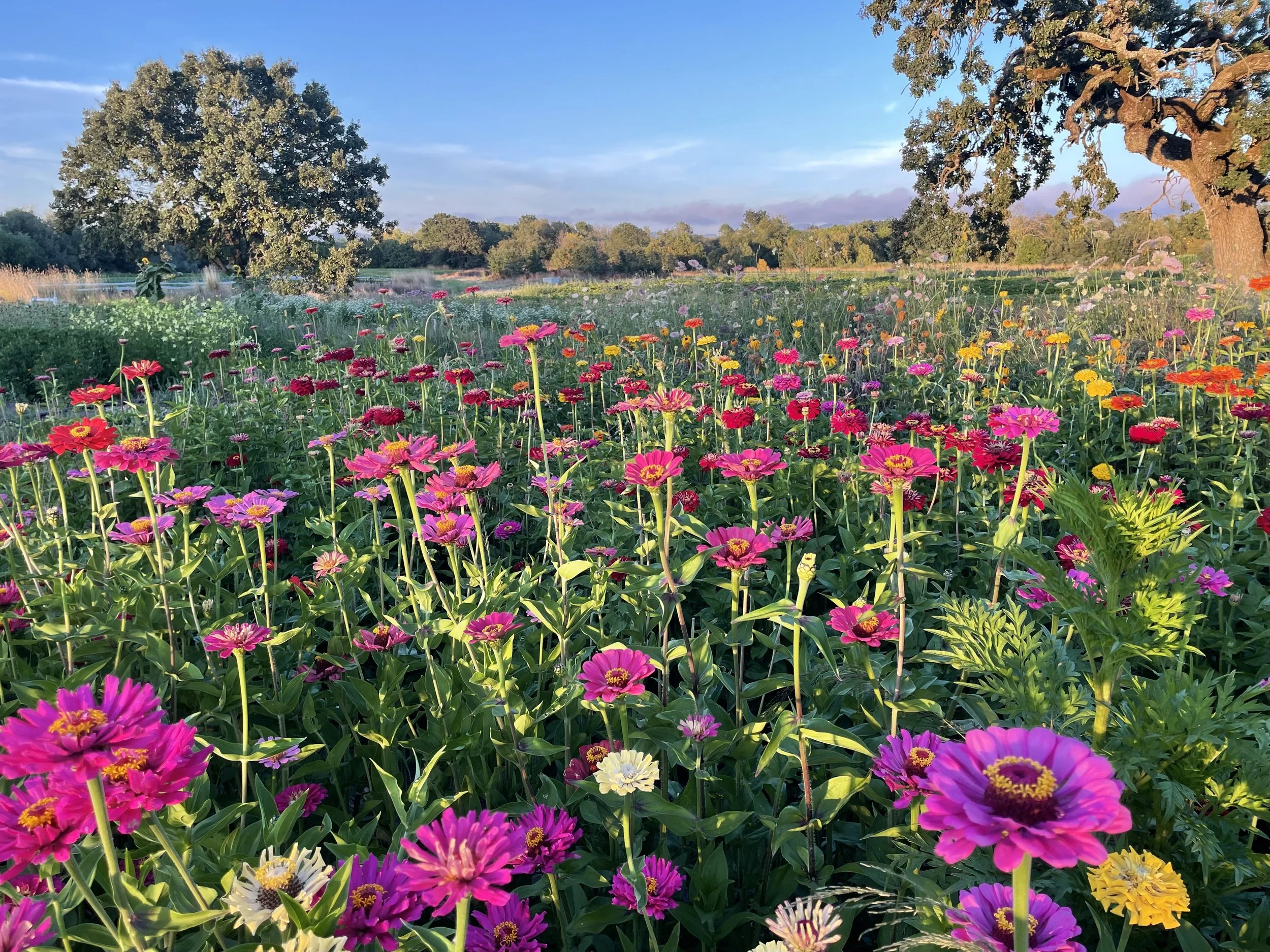
  • Flowers! Too many to list! Feel free to pick the sunflowers along the edge of the parking area in addition to everything in the garden.

The zinnias were putting on a show at the 7:30 pm golden-hour this Wednesday.

HARVEST NOTES

  • Escarole: One of our favorite members of the chicory family, escarole looks like hearty lettuce. While it can be eaten raw in salad for those who aren’t afraid of a little bitterness, escarole really shines when sautéed, braised or in soup, as cooking highlights its velvety texture and savory depth. For the most simple preparation, try sautéing it in olive oil with plenty of garlic, Parmesan and lemon. It’s also delicious in Italian Wedding Soup, beans with sausage and escarole and Utica Greens.

  • Poblano Peppers: The poblano chili pepper is the beloved mild chili, originating in the state of Puebla, México that when dried it is called “ancho” or chili ancho and when roasted and stuffed with cheese becomes the magnificent chili relleno. This week will be offering the first taste of these wonderful peppers. For an easy, incredibly satisfying combo, try adding them to the Esquites recipe below!

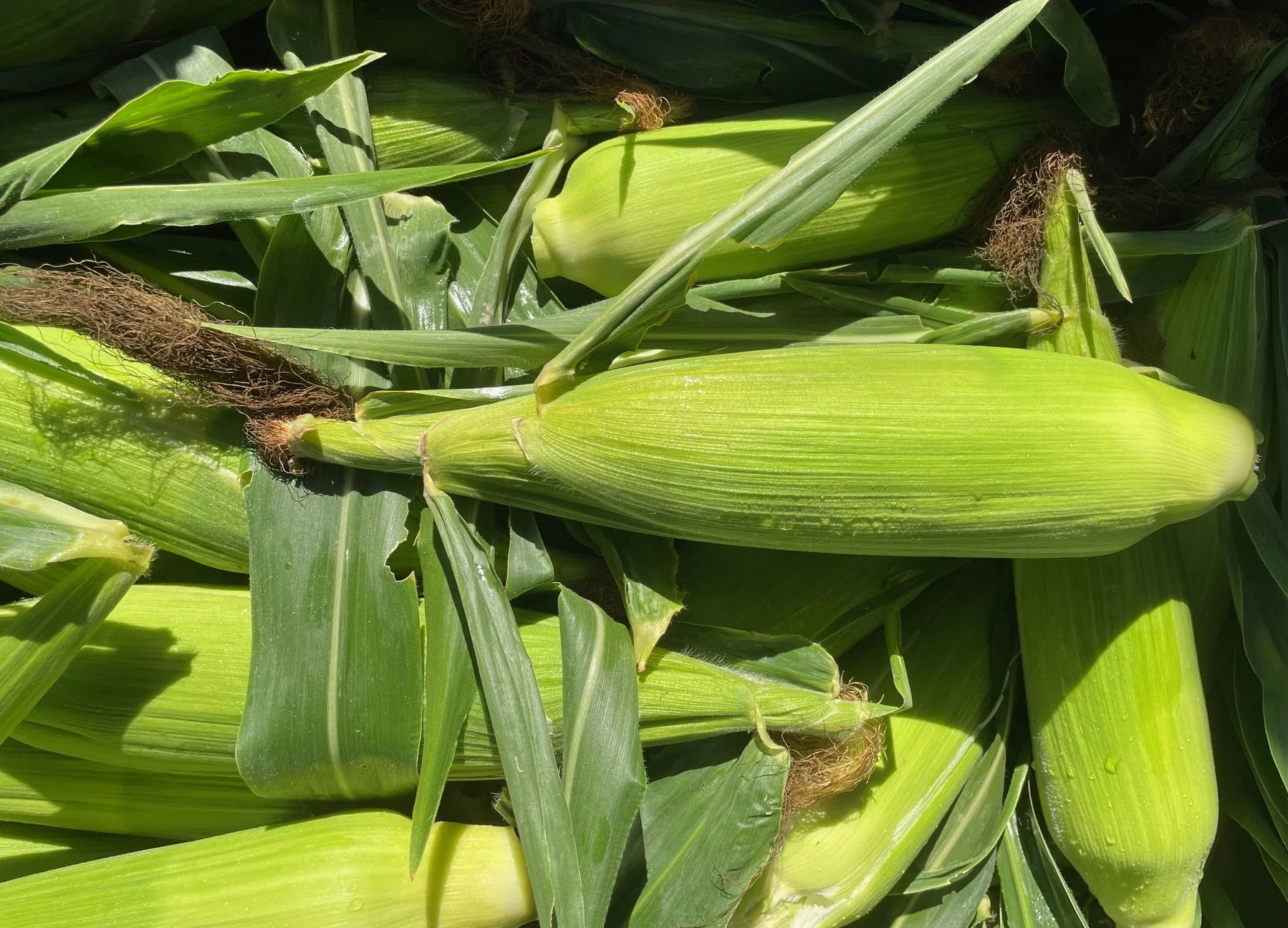
  • Bicolor Sweet Corn: Sweet corn is a nutrient and space hungry crop, so it’s kind of a delicacy for us. But if you haven’t had this sweet corn from us before, it might be the best your’ve ever had. NOTE: Some ears may contain a caterpillar at the top — these are corn borers, and a totally normal (and unavoidable) part of organic sweet corn. Just toss the little guy outside and enjoy your corn!

  • Sarah’s Choice Cantaloupe: The best cantaloupe variety there is… period.

  • Striped Armenian Cucumbers: Sometimes called serpentine for their inventive, twisting shapes, these cucumbers are technically more closely related to melons! Their skins are very slightly fuzzy and so thin that they never need to be peeled, allowing you to highlight their beautiful stripes. 

ESQUITES RECIPE

MEXICAN STREET CORN SALAD

By J. Kenji López-Alt

Smoky, sweet, spicy, and tangy, esquites are the off-the-cob version of elotes—grilled on-the-cob Mexican street corn slathered with creamy, cheesy, lime-scented, chile-flecked sauce. Farmer’s note: This week we included chopped and charred poblano peppers and sweet cipollini onions in our Esquites for a delicious twist on the original recipe.

INGREDIENTS

  • 2 tablespoons (30ml) vegetable oil

  • 4 ears fresh corn, shucked, kernels removed (about 3 cups fresh corn kernels)

  • Kosher salt

  • 2 ounces (60g) feta or Cotija cheese, finely crumbled

  • 1/2 cup finely sliced scallions, green parts only

  • 1/2 cup (1/2 ounce) fresh cilantro leaves, finely chopped

  • 1 jalapeño pepper, seeded and stemmed, finely chopped

  • 1 to 2 medium cloves garlic, pressed or minced on a Microplane grater (about 1 to 2 teaspoons)

  • 2 tablespoons (30ml) mayonnaise

  • 1 tablespoon (15ml) fresh lime juice from 1 lime

  • Chile powder or hot chile flakes, to taste

DIRECTIONS

  1. Heat oil in a large nonstick skillet or wok over high heat until shimmering. Add corn kernels, season to taste with salt, toss once or twice, and cook without moving until charred on one side, about 2 minutes. Toss corn, stir, and repeat until charred on second side, about 2 minutes longer. Continue tossing and charring until corn is well charred all over, about 10 minutes total. Transfer to a large bowl.

  2. Add cheese, scallions, cilantro, jalapeño, garlic, mayonnaise, lime juice, and chile powder and toss to combine. Taste and adjust seasoning with salt and more chile powder to taste. Serve immediately.

FARMER’S LOG

THE DOG DAYS OF SUMMER

The sun beats down, the hills are bleached gold, and the fruits of summer rain down… the dog days of summer are here.

The term “dog days”, for the late summer, comes from ancient Greece and Mediterranea where people associated the mid-July return of our brightest star, Canis Majoris (aka Sirius, aka “Orion’s Dog”), to the beginning of the hottest, sultriest days of late summer when, as Virgil put it, “the Dog-star cleaves the thirsty ground.” These ancient people associated the dog days of summer with grumpy humans, illness and fever, bad luck, and heat.

As the West Marin based naturalist Richard Vacha observes of our own Mediterranean climate in his book The Heart of Tracking, the dog days can also be an abundant, raucous, frolicking time for wild canines like coyotes, as they feast on fattened prey and the ripening fruit of late summer and as canine pups leave the den and come into their own. (Perhaps this is the wild origin of the naming of the star?)

In Mediterranean climates like ours, the dog days are also a scarce time, a spent time. They are the beginning of the great dry down in California and the great dormant period of our year.

“For a wild animal,” Vacha writes, the late summer and early fall “can be as tough to endure as an East Coast winter. Food is scarce, water is scarce, and green vegetation is crowded into riparian corridors, drawing the animals that depend on these resources closer together. The animals who prey upon them have shifted correspondingly. Territorial patterns are all in great flux as the expansive cycle of the summer season slowly winds down.”

“Fox in a Coyote Bush” illustration by Kayta from “The Heart of Tracking” by Richard Vacha from Mount Vision Press

On the farm, this shift into the dog days — their abundance and scarcity — is clear.

Our harvests are finally more and more heavy with fruit — melons tomatoes, peppers, eggplant, the first sweet corn. The wild blackberries are laden. The cherry plum tree in Farfield have just finished it’s annual downpour. That tree is a veritable watering hole for humans, crows, turkey, deer, and raccoons alike. In the garden, our first rounds of flowers and herbs are following the wild grasses and tapping out and throwing seed.

And in our staple field crops, if July was an outward explosion of verdant vegetation, the dog days are the beginning of the hunkering down, the drawing nigh, the focused inward stare toward the serious work of setting fruit, forming bulbs and tubers, and setting seed. Our verdant green acre of winter squash leaves are now starting to yellow as the sun battered plants focus on swelling their precious green and gold orbs in the shade below. Our verdant potato field is turning aswell, the plants doing important work in the soil below.

And as the wild lands surrounding the farm dry out and are scorched to gold, her wild inhabitants turn more and more to the farm — an irrigated green oasis — for moisture and succulent meals. The wild turkeys and their fluffy younglings visit the fields every morning and evening, snipping off hydrating bits of lettuce (they seem to love green romaine!). Gophers take bites out of our drip irrigation lines. Raccoons visit the melons and the sweet corn patches nightly for their midnight snacks. Good choice.

But the sweet relief of the first fall rains will come soon enough.

Until then, keep cool, move slow, remember to be nice, and enjoy the fruitful abundance as we enter the dog days of summer.

See you in the fields,
David


CSA BASICS

What time is harvest pick-up?:

  • Saturday harvest pick-ups run from 9:00 am - 2:00 pm

  • Tuesday harvest pick-ups will run from 1:00 pm - 6:00 pm

U-pick hours: Oriented members can come to the farm any time, 7 days a week, sunrise to sunset, to u-pick and enjoy the farm.

2025 CSA program dates: Our harvest season will run from Saturday, June 14th through Tuesday, December 9th this year.

Where is the farm? The member parking lot is located at 1720 Cooper Rd., Sebastopol, CA 95472.
Slow on Cooper Rd. Out of respect for our neighbors and the many kids and animals that live on Cooper Rd., please drive slow (20 mph)!

Harvest Week 9 - On Limits and the Enjoyments of Life

THIS WEEK’S HARVEST

Mustard Mix, Flashy Trout Back Lettuce, Rosaine Little Gem Lettuce, Lady Murasaki Bok Choi, Fennel, Celery, Loose Multicolored Beets, Assorted Zucchini, Patty Pan & Crookneck Squash, Pickling Cucumbers (last week!), Lemon Cucumbers, Persian Cucumbers, First of the year’s Tomatoes, Fresh Torpedo Onions, Carrots, Galia Melons, New Potatoes

U-PICK

Check the u-pick board in the barn for weekly u-pick limits.

  • Albion Strawberries | 2 pints per share

  • 🌟 Cherry Tomatoes | 1 pint per share | check out harvest note below on this year’s varieties!

  • Amethyst Beans | No Limit - Take what you’ll eat or preserve this week!

  • Purple Sugar Snap Peas | 1 pint per share

  • Frying Peppers:

    • Shishitos | No Limit - Take what you’ll eat or preserve this week!

    • Padróns | No Limit - Take what you’ll eat or preserve this week!

  • Herbs & Edible Flowers: Husk Cherries, Italian Basil, Purple Basil, Lemon Basil, Purple Basil, Dill, Tulsi, Parsley, Cilantro, Chamomile, Calendula, Borage, Nasturtium, Pansies/Viola, Stridolo, Lemon Bergamot Bee Balm, Onion Chives, Garlic Chives, Tarragon, Thyme, Oregano, Marjoram, Culinary Sage, Lemon Balm, Lemon Verbena, Vietnamese Coriander, Shiso/Perilla, Catnip, Pineapple Sage, Sorrel, Assorted Mints

  • Flowers! Too many to list! Feel free to pick the sunflowers along the edge of the parking area in addition to everything in the garden.

Double Click Rose Bon Bon Cosmos and Shimmer Celosia in the garden.

HARVEST NOTES

  • First of the year’s Tomatoes: This week we’re bringing you the very first sampling of this year’s field tomatoes. As David wrote last week, it’s been a cold, slow season so far, so this week there’s only enough for everyone to have a little preview. We’re hoping this week’s warm weather brings on the tomatoes in more abundance soon!

  • Flashy Trout Back Lettuce: We hope you’ve been enjoying the procession of different lettuces so far this season. We wanted to highlight this week’s Austrian heirloom — it’s a sweet romaine with a buttery texture and gorgeous red flecked leaves that’s making us excited about salads all over again.

ROASTED BEET, PISTACHIO & FENNEL SALAD

From Dishing up the Dirt

Prep Time: 20 minutes  |  Cook Time: 1 hour  |  Serves: 4

BEET SALAD

  • 1 bunch of beets, greens removed (save for another use) and roots scrubbed

  • salt and pepper

  • extra virgin olive oil (for roasting)

  • 1 large fennel bulb, fronds and stalks removed

  • 1/4 cup finely chopped cilantro

  • 1/4 cup roasted pistachios, chopped

  • 4 ounces goat cheese, crumbled

CITRUS VINAIGRETTE

  • 1/2 cup extra virgin olive oil

  • 1/4 cup orange juice

  • 1/4 cup lime juice

  • 1 Tablespoon honey or maple syrup

  • 1 teaspoon unrefined salt

  • 1/4 teaspoon ground cumin

PREPARATION

  1. Preheat the oven to 400F. Rub the beets with olive oil and place them in a Dutch oven or casserole style dish. Generously sprinkle salt and pepper over the beets. Pour in about 1/4 cup of water into the pan. Cover with a lid and place in the oven for 50-60 minutes or until fork tender. Timing will depend on the size of your beets.

  2. Meanwhile, use a mandoline or sharp knife and shave the fennel into very thin pieces. This works best if you slice your fennel bulb in half and then into quarters and work with quarters to achieve this.

  3. After your beets have roasted wait until they are cool enough to handle and slide the outer peel off. Then slice your beets into 1/2 inch pieces. Add the beets and sliced fennel to a large serving bowl. Sprinkle with a little salt and pepper. Drizzle the veggies with half of the dressing and toss until everything is evenly coated. Add your pistachios, cilantro and goat cheese. Drizzle with more dressing to taste and serve.

FARMER’S LOG

On Limits and the Enjoyment of Life

As our harvests transition away from the delicate greens of early summer into the colors and flavors of peak summer, we are reminded of some of the reasons why we love eating seasonally from the farm.

Nothing dictates what is on our tables more than the tilt of the Earth. As you’ve seen, the shares of mid-June are very different from those of late July. The spring, with its soft waxing light, grows tender, almost translucent, baby-soft greens. While the hard summer sun condenses itself into weighty, colorful, sweet fruits. Mentally compare a silky, soft, watery Spring strawberry to the sun-hardened, acid-sweet strawberries this week.

Another cool thing about eating from the farm is that we get to experience the full arc of plant growth — from fresh onions to cured onions; from baby Spring to deep orange Fall carrots kissed by frost. In supermarkets, most produce is harvested at one standard stage of a few standard varieties. Here, life is happening, and we pull it out of the field for you to taste.

We also love that this model allows us the chance to distribute less-than-perfect produce and to share over-abundant harvests with members. You’ll experience this more as the season goes on. Ancestral cultures were scrupulously efficient in their use of food because they had to be. There was a use for everything. And it was a duty to preserve the abundance of Summer. In this spirit, we will put out the 2nd tomatoes, split and cracked, but still perfectly good (sometimes even better) sliced on a BLT.

But perhaps our favorite thing about this model is an unsung hero: Limits.

Yes, limits. Not having something. “Limit: 1 per share.”

“What!?”

We live in a time and a place where we can get just about any food, anytime, en masse, if you can afford it. Tomatoes in January. Melons in the February. Mangos in Sebastopol. 

We have conquered seasons. We have conquered limits.

But have we also conquered one of life’s simplest pleasures? What is the fulfillment of desire without the longing that precedes it?

This week, we will cherish the year’s first slicing tomato. A satisfaction further delayed by this unusually cold Summer. That first slice of vine-ripened tomato on an open faced sandwich (with a little basil, olive oil, and salt) will bring back a flood of memories from last summer, and summers before that, and we will smile at our loved ones at the table in our shared remembrance and shared enjoyment of this thing that we have now, but did not have for so long. It will bring us together. Perhaps your first bite of Kabocha squash will unlock a similar smile this Fall.

In most (or maybe all) rooted cultures there are festivals celebrating the return of foods. In Southern France there is a plum festival and a Spring festival marking the return of the egg, when the hens start laying again. (What is life without eggs?) In Sebastopol, we have the Gravenstein Apple Fair this weekend.

Limits, scarcity, the lean times — they help us appreciate, like really appreciate, what we have and where we are, maybe even who we are.

Life's fleeting nature is really it's spice — and so it goes for food, we'd say.

In a few short weeks, we will be rich in tomatoes. We will take for granted their spiced-earth smell and the way they tie so many meals together. We may even grow sick of tomatoes. But not this week. This week we will hold up the year’s first tomato and rotate it around with our fingers — impossibly red, impossibly perfect — and it will shine back at us and remind us how impossibly lucky we are.

See you in the fields,
David


CSA BASICS

What time is harvest pick-up?:

  • Saturday harvest pick-ups run from 9:00 am - 2:00 pm

  • Tuesday harvest pick-ups will run from 1:00 pm - 6:00 pm

U-pick hours: Oriented members can come to the farm any time, 7 days a week, sunrise to sunset, to u-pick and enjoy the farm.

2025 CSA program dates: Our harvest season will run from Saturday, June 14th through Tuesday, December 9th this year.

Where is the farm? The member parking lot is located at 1720 Cooper Rd., Sebastopol, CA 95472.
Slow on Cooper Rd. Out of respect for our neighbors and the many kids and animals that live on Cooper Rd., please drive slow (20 mph)!