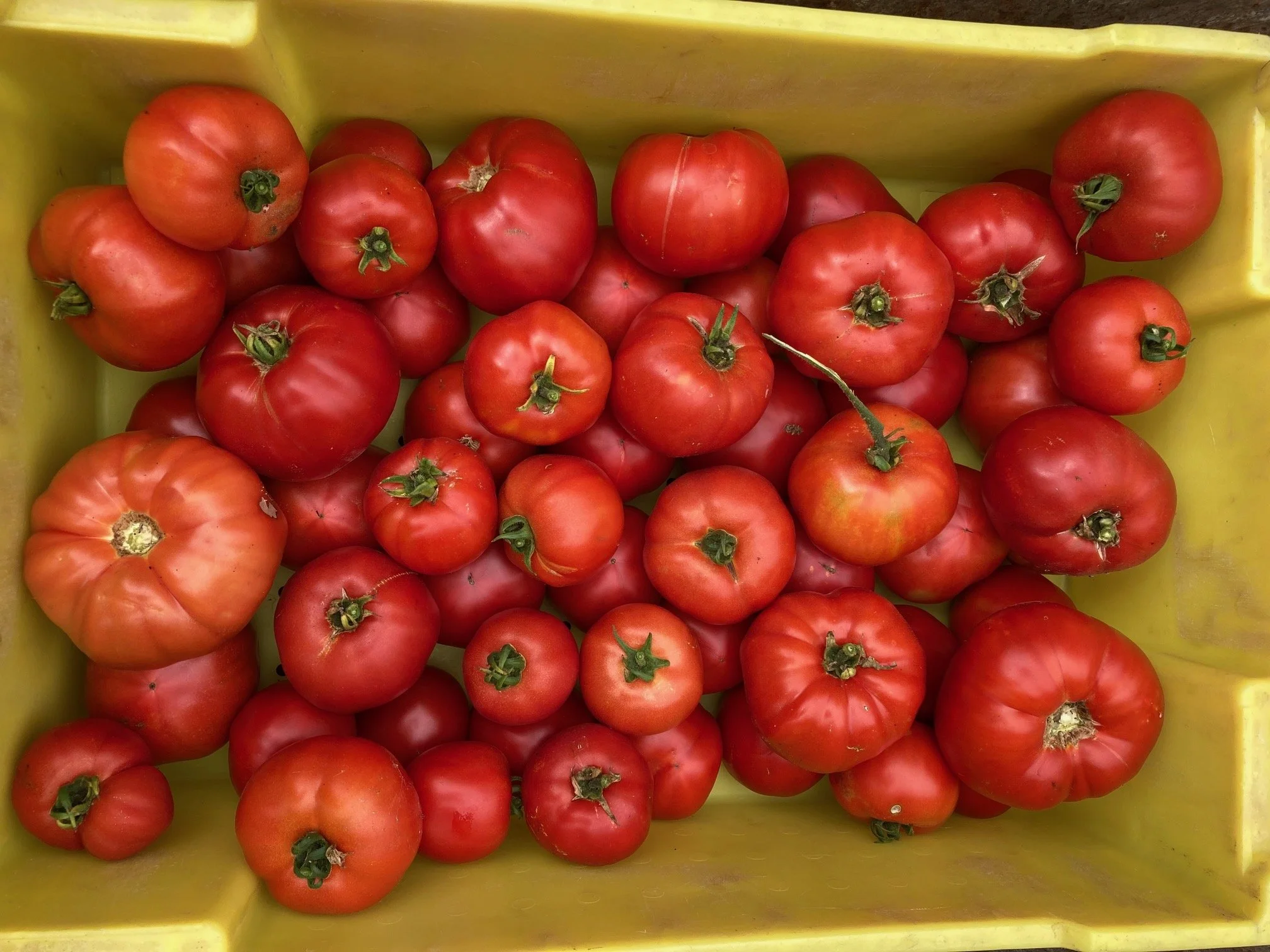
Harvest Week 9 - The Dog Days of Summer

THIS WEEK’S HARVEST

In a nutshell: Summer arrives on the harvest table! Sweet corn, melons and eggplant , oh my!

Bicolor Sweet Corn, Summer Squash & Zucchini, Lemon & Persian Cucumbers, Striped Armenian Cucumbers, Loose Romance Carrots, Fresh Cabernet Onions, Galia & Sarah’s Choice Melons, Early Girl Tomatoes, Eggplant (from Longer Table Farm), Arugula, Mustard Mix, Cegolaine Little Gem Lettuces, Romaine Lettuce, Dino Kale, Lady Murasaki Purple Bok Choi, Fennel

U-PICK

  • Albion Strawberries: 4 pints per share

  • Cherry Tomatoes: 1 pint per share | This limit will (greatly) increase as the plants come into production.

  • Shishito & Padrón Frying Peppers: 5 pints total per share | There are lots of Shishitos in the back of the beds at the moment. See Week 6’s Newsletter for harvest and preparation tips.

  • Amethyst Green Beans: 3 pints per share | Won’t be around much longer — take advantage while they’re still here!

  • Pickling Cucumbers: 1 gallon season limit | See Week 6’s Newsletter for harvests and pickling instructions.

  • Herbs: Italian Basil, Thai Basil, Tulsi Basil, Dill, Chamomile, Parsley, Onion Chives, Garlic Chives, Tarragon, Oregano, Marjoram, Culinary Sage, Lemon Balm, Lemon Verbena, Vietnamese Coriander, Shiso (Perilla), Culinary Lavender, French Sorrel, Borage, Violas, Thyme and Mints.

  • Flowers!

Kayta’s “black and white” bouquet from this evening with night blooming Nicotiana, unopened Agrostemma, Cilantro flowers, Centauria, Bishop’s Children Dahlia foliage, and Black Scabiosa

HARVEST NOTES

  • Bicolor Sweet Corn: Sweet corn is a nutrient and space hungry crop, so it’s kind of a delicacy for us (limit will be 3 ears per share this week). But if you haven’t had this sweet corn from us before, it might be the best your’ve ever had. NOTE* You are likely to find a living corn borer caterpillar in at least one of your sweet corn ears! This is a totally normal (and unavoidable) part of organic sweet corn. Just toss the little guy outside and enjoy your corn!

  • Melons! This cool, cool summer has caused our first two successions of melons to converge. This week we’ll have mostly Galia melons, with a few Sarah’s Choice mixed in, and then in a week or two they’ll switch…

    • Galia Melons: Originally developed by growers in Israel, Galia melons were the first hybrid of intensely perfumed Middle Eastern melons. The Galia melon looks like a cantaloupe on the outside and a honeydew on the inside. Its light green, smooth-textured flesh, and honey sweet.

    • Sarah’s Choice Cantaloupe: The best cantaloupe variety there is… period.

  • Striped Armenian Cucumbers: Sometimes called serpentine for their inventive, twisting shapes, these cucumbers are technically more closely related to melons! Their skins are very slightly fuzzy and so thin that they never need to be peeled, allowing you to highlight their beautiful stripes. 

  • Eggplant from Longer Table Farm: After our beautiful eggplant plants hardly produced a single ripe fruit for us last year (too cool here?), we decided to outsource this crop to our friends at Longer Table Farm. Enjoy!

WINTER SISTER FARM CSA SIGN-UPS NOW OPEN!

The hottest tickets in town are now on sale — Winter Sister Farm’s 2023 Winter CSA program is now open for registration! Winter Sister Farm, right next door to us, was started by our dear friends Anna and Sarah Dozor. Their CSA runs runs from December through May and includes 24 weeks of specialty winter veggies, flowers, herbs, and more — all picked up by CSA members, free-choice market style, on their beautiful farm here on Cooper Rd! Sign-up today!

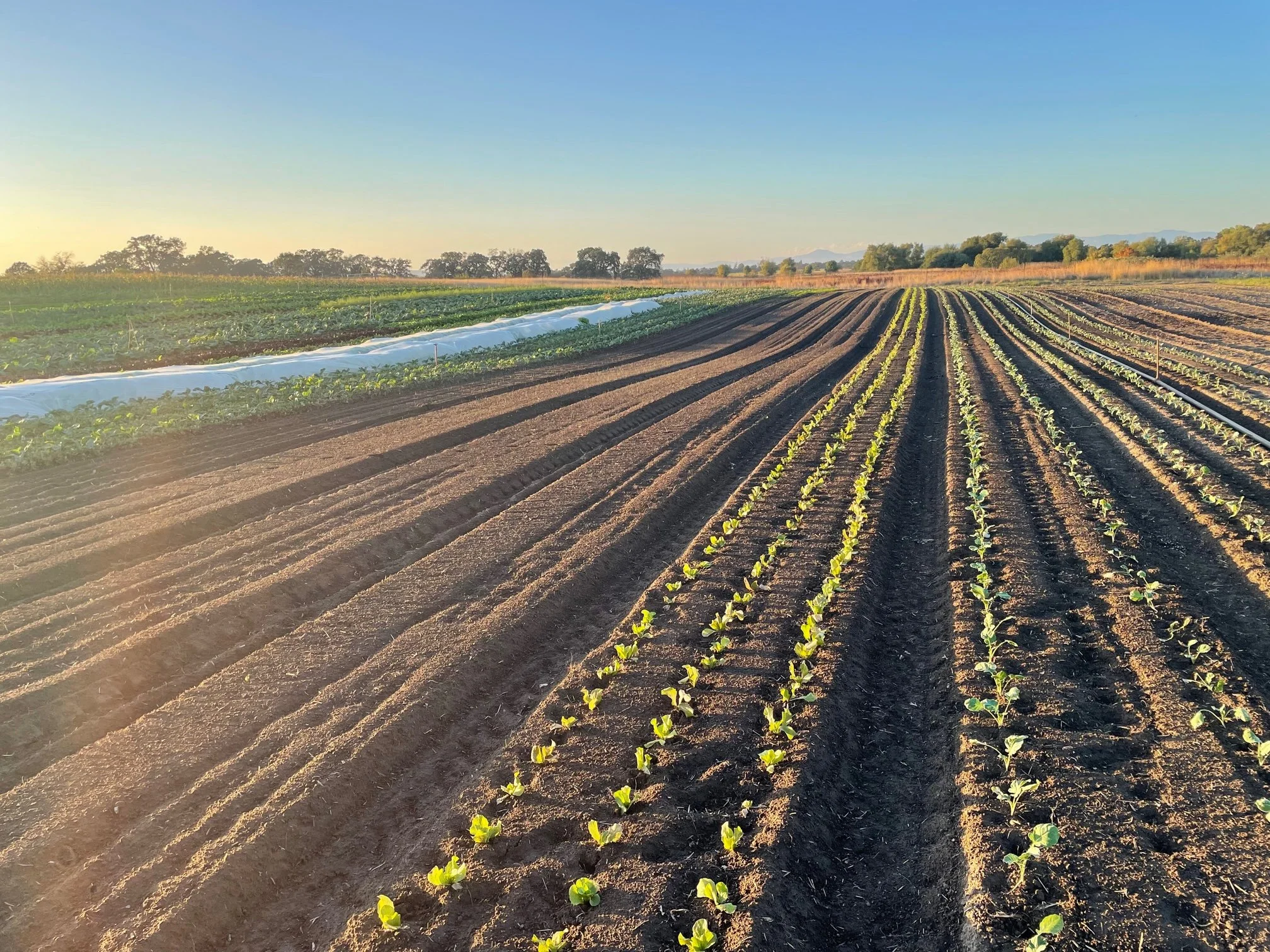
Fall carrots, chicories, and brassicas growing out in Farfield.

FARMER’S LOG

THE DOG DAYS OF SUMMER

The sun beats down, the hills are bleached gold, and the fruits of summer rain down… the dog days of summer are here.

The term “dog days”, for the late summer, traces back to the ancient Mediterranean, where people connected the night sky return of the brightest star, Canis Majoris (aka Sirius, aka “Orion’s Dog”), to the sultry days of late July-August when, as Virgil said, “the Dog-star cleaves the thirsty ground.” These ancient people associated the dog days with fever, bad luck, and heat.

As Marin naturalist and tracker Richard Vacha brilliantly observes of our own Mediterranean climate in his book The Heart of Tracking, the dog days can be a raucous, frolicking time for wild canines as they feast on the fattened prey and fruit of summer and as canine pups leave the den and come into their own. (Perhaps this is the wild origin of the naming of the star?)

But, in Mediterranean climates like ours, the dog days are also a scarce time, a spent time. They are the beginning of a great dry down and the great dormant period of our year.

“For a wild animal,” Vacha writes, the late summer and early fall “can be as tough to endure as an East Coast winter. Food is scarce, water is scarce, and green vegetation is crowded into riparian corridors, drawing the animals that depend on these resources closer together. The animals who prey upon them have shifted correspondingly. Territorial patterns are all in great flux as the expansive cycle of the summer season slowly winds down.”

On the farm, this shift into the dog days — their abundance and scarcity — has been clear.

Our harvests are more and more heavy with fruit: Melons, tomatoes, cucumbers; soon we will be enjoying our first poblanos and sweet peppers; the wild blackberries are laden. In the garden, our first rounds of flowers and herbs are following the wild grasses, tapping out and throwing seed.

And in our staple field crops, if July was an outward explosion of verdant vegetation, the dog days are the beginning of a hunkering down, a drawing nigh, a focused inward stare toward the serious work of setting fruit, forming bulbs and tubers, and setting seed. The jubilant field of winter squash flowers is now metamorphosizing as green and gold orbs swell in the shade of their sun battered leaves. Similarly, in the potatoes, a perfect waist-high sea of leaves and flowers is now shrinking down, as the plants throw all their energy into swelling their secret tubers in the black earth below. Our Hopi Blue corn and Dutch Butter Popcorn are in silks, with ears swelling.

And as the wildland plants dry out and are scorched to gold, her wild inhabitants turn more and more to the farm — an irrigated green oasis — for moisture and succulent meals. The wild turkeys and their fluffy younglings visit the fields every morning and evening, snipping off hydrating bits of lettuce (they seem to love romaine!). Gophers take bites out of our drip irrigation lines nightly, seeking the cool water flowing within. 

But the sweet relief of the first Fall rains will come soon enough.

Until then, keep cool, move slow, and enjoy the fruitful abundance of the dog days of summer!

See you in the fields,
David & Kayta

“Fox in a Coyote Bush” illustration by Kayta from The Heart of Tracking by Richard Vacha from Mount Vision Press

CSA BASICS

ATTENTION MEMBERS: Please make sure to drive slow (15 - 20 mph) on Cooper Rd. out of respect for our human and pet neighbors! Thank you!

What time is harvest pick-up?:

  • Saturday harvest pick-ups run from 9:00 am - 2:00 pm

  • Tuesday harvest pick-ups will run from 1:00 pm - 6:00 pm

When can I u-pick?: Oriented members can come to the farm any time, 7 days a week, sunrise to sunset, to u-pick and enjoy the farm.

2023 CSA program dates: Our harvest season will run this year from June 24th - December 19th

Where is the farm? The member parking lot is located at 1720 Cooper Rd., Sebastopol, CA 95472.

Where should I park?: Follow our sign on Cooper Rd. down a short gravel driveway. Please find a parking spot next to the solar panels or along the road further down. Please don’t park behind the solar panels.

Where’s the bathroom!: Under the big solar panels in the parking lot.

What should I bring?:

  • Your WCCF tote bag

  • Pint baskets or small containers for measuring your allotment of u-pick crops like strawberries

  • A vase, bucket, or water bottle to keep your flowers and herbs happy

  • Clippers or secateurs to cut flowers (if you have some), we also have some in the barn

  • Water / sun hat / picnic supplies if you plan to stay awhile!

  • Friends and family!

Newsletters & email communication: All our important CSA communications are through this email address, which seems to be getting spam blocked a lot. Please make sure this email address is in your address book so you get important CSA communications. All newsletters and important updates are also posted on the Newsletters page of our website weekly.
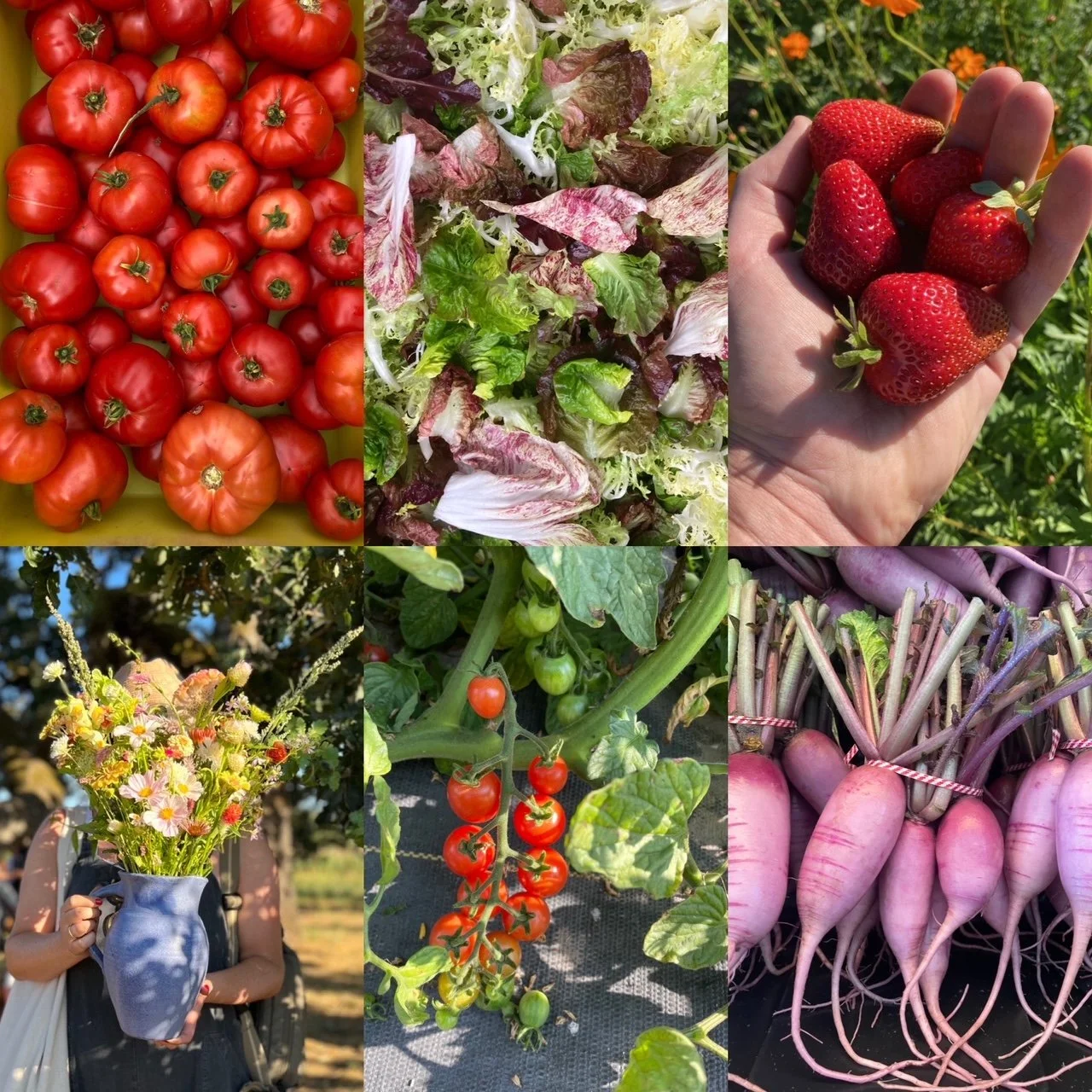
Harvest Week 8 - On Limits and the Enjoyment of Life

ATTENTION MEMBERS: Please make sure to drive slow (15 - 20 mph) on Cooper Rd. out of respect for our human and pet neighbors! Thank you!

THIS WEEK’S HARVEST

In a nutshell: Tomato avalanches start but with a trickle and the first BIG walla walla onions herald the beginning of summer’s big orbs

Lettuce and Chicory Salad Mix, Red Butter Lettuce, Green Romaine Lettuce, Sugarloaf Chicories, Collard Greens, Purple Bok Choi, Farao Cabbage, Celery, Summer Squash & Zucchini, Lemon & Persian Cucumbers, Purple Daikon Radish, Corinto Cucumbers, Walla Walla Sweet Onions, Loose Romance Carrots, Loose Multicolored Beets, Early Girl Tomatoes

U-PICK

  • Albion Strawberries: 3 pints per share

  • 🌟 NEW! Cherry Tomatoes: 1/2 pint per share | This limit will (greatly) increase as the plants come into production.

  • Shishito & Padrón Frying Peppers: 5 pints total per share | There are lots of Shishitos in the back of the beds at the moment. See Week 6’s Newsletter for harvest and preparation tips.

  • Amethyst Green Beans: 5 pints per share

  • Pickling Cucumbers: 1 gallon season limit | See Week 6’s Newsletter for harvests and pickling instructions.

  • Herbs: Italian Basil, Thai Basil, Tulsi Basil, Chamomile, Parsley, Onion Chives, Garlic Chives, Tarragon, Oregano, Marjoram, Culinary Sage, Lemon Balm, Lemon Verbena, Vietnamese Coriander, Shiso (Perilla), Culinary Lavender, French Sorrel, Borage, Violas, Thyme and Mints.

  • Flowers!

HARVEST NOTES

  • Walla Walla Sweet Onions: Fresh out of the soil, this delicate, sweet, fresh-eating onion was developed in Walla Walla, Washington. These are a delicacy. Try them in a way that you can show them off: Lightly grilled in a good burger or raw in a salad with a delicate dressing. Onion rings for the hard core. They are so sweet and mild, some people even eat them raw like an apple! (We haven’t tried that yet! If you do, let us know how it goes!) Read more about Walla Wallas here.

  • Early Girl Tomatoes: A classic red slicing tomato, aptly named as they are always the first to the party. These first tomatoes are a little on the mild side, not yet distilled with summer heat, but we’re so glad they’ve arrived. Tomatoes will limited for the first few weeks as we wait for the tomato avalanche.

  • Purple Daikon: Purple daikon are a gorgeous, mild, hardy radish that adds delightful color to any plate. Try slicing them raw to dress up your salad or crudités platter, or adding them to kimchi. For extra magic, toss them with a little acidic salad dressing or lemon juice and watch their color change to hot pink!

FLOWER POWER HAPPY HOUR!

Thanks to Cassidy, Kayta, and everyone who came out and made our first Flower Power Happy Hour so special.

We’ll let you know when the next organized FPHH is — but don’t let that stop you from having your own! We’ve been loving seeing all the picnics in the garden lately so much!

FARMER’S LOG

ON LIMITS AND THE ENJOYMENT OF LIFE

As our fields and harvests transition away from the delicate greens of early summer into the cacophonous colors and flavors of peak summer, we’re reminded of some of the reasons why we love this CSA model and eating from the farm.

First, we eat with the seasons. Nothing dictates what is on our tables more than the tilt of the Earth. As you’ve seen, the shares of mid-June are very different from those of mid-August. The spring, with its soft waxing light, grows tender, almost translucent, baby soft greens. While the hard summer sun condenses itself into weighty, colorful, sweet fruits. Mentally compare an early Spring strawberry, with it’s silky soft skin and wateriness, to the more sun hardened, acid-sweet, candy-packet strawberries this week.

Another cool thing about eating from the farm is that we get to experience the full arc of plant growth — from fresh onions to cured onions; from baby Spring carrots to deep orange Fall carrots kissed by frost — and the whole arc of taste in between. In supermarkets, most produce is harvested at one standard stage of a few standard varieties. Here, life is happening, and we pull it out of the field for you to witness!

We also love that this model allows us the chance to distribute damaged produce and to share over-abundant harvests with members. You’ll experience this more as the season goes on. Ancestral cultures were scrupulously efficient in their use of food because they had to be. There was a use for everything. And it was a duty to preserve the abundance of Summer. In this spirit, we put out the 2nd tomaotes, split and cracked, but still perfectly good (sometimes even better) sliced on a BLT.

But perhaps our favorite thing about this model is an unsung hero: Limits.

The first of many… bins.

Yes, limits. Scarcity. Not having something. “Limit: 1 per share.”

“What!?”

We live in a time and a place where we can get just about any food, anytime, en masse, if you can afford it. Tomatoes in January. Melons in the February. Mangos in Sebastopol.

We have conquered seasons. We have conquered limits.

But have we also conquered one of the simplest pleasures in life? What is the fulfillment of desire without the longing that precedes it?

This week, we will cherish the year’s first tomato. That first juicy sweet acid slice of heirloom tomato on an open faced sandwich (with a little basil, olive oil, and salt) will bring back a flood of memories from last summer, and summers before that, and we will smile at our loved ones at the table in our shared remembrance and shared enjoyment of this thing that we have now, but did not have for so long. It will bring us together. Perhaps your first bite of Kabocha squash this Fall will unlock a similar smile.

In most (or maybe all) cultures there are festivals celebrating these moments — basically giant parties celebrating the return of a certain food. In Southern France there is a plum festival and a Spring festival marking the return of the egg, when the hens start laying again. What is life without eggs!? In Sebastopol, we have the Gravenstein Apple Fair this weekend. In Italy, in the Fall, there is a conference on all things Radicchio and Chicory.

Limits, scarcity, the lean times — they help us appreciate, like really appreciate, what we have.

Life's fleeting nature is really it's spice — and so it goes for food, we'd say.

In a few short weeks, we will be drowning in tomatoes. We will be filthy rich in tomatoes of all stripes and colors. We will take for granted their spiced earth smell and the way they tie so many meals together. We may even grow sick of tomatoes. But not this week. This week we will hold up the year’s first tomato and rotate it around — impossibly red, impossibly perfect — and it will shine back at us and remind us how impossibly lucky we are.

See you in the fields,
David

CSA BASICS

What time is harvest pick-up?:

  • Saturday harvest pick-ups run from 9:00 am - 2:00 pm

  • Tuesday harvest pick-ups will run from 1:00 pm - 6:00 pm

When can I u-pick?: Oriented members can come to the farm any time, 7 days a week, sunrise to sunset, to u-pick and enjoy the farm.

2023 CSA program dates: Our harvest season will run this year from June 24th - December 19th

Where is the farm? The member parking lot is located at 1720 Cooper Rd., Sebastopol, CA 95472.

Where should I park?: Follow our sign on Cooper Rd. down a short gravel driveway. Please find a parking spot next to the solar panels or along the road further down. Please don’t park behind the solar panels.

Where’s the bathroom!: Under the big solar panels in the parking lot.

What should I bring?:

  • Your WCCF tote bag

  • Pint baskets or small containers for measuring your allotment of u-pick crops like strawberries

  • A vase, bucket, or water bottle to keep your flowers and herbs happy

  • Clippers or secateurs to cut flowers (if you have some), we also have some in the barn

  • Water / sun hat / picnic supplies if you plan to stay awhile!

  • Friends and family!

Newsletters & email communication: All our important CSA communications are through this email address, which seems to be getting spam blocked a lot. Please make sure this email address is in your address book so you get important CSA communications. All newsletters and important updates are also posted on the Newsletters page of our website weekly.
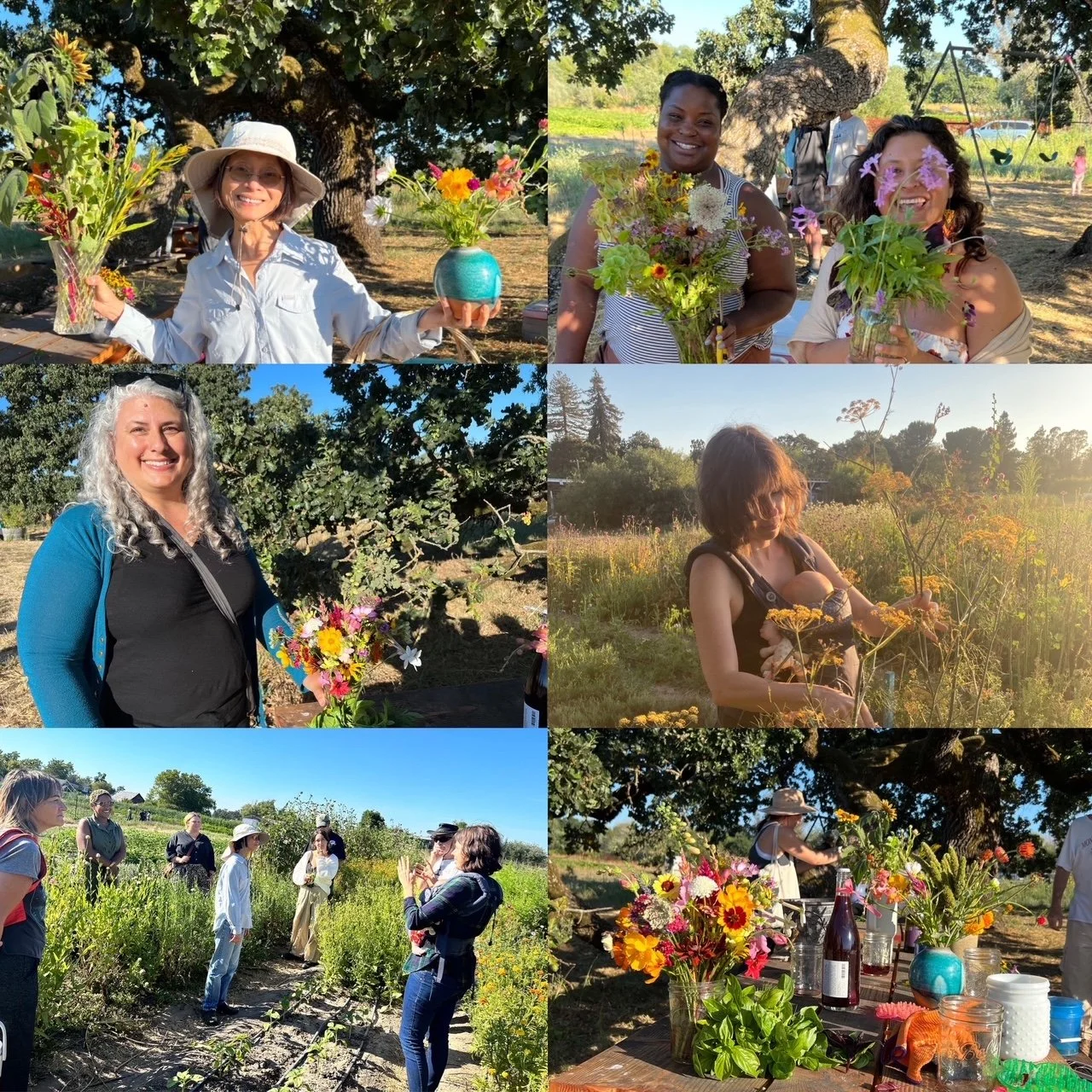
Harvest Week 7 - The Peace of Wild Things

ATTENTION MEMBERS: Please make sure to drive slow (15 - 20 mph) on Cooper Rd. out of respect for neighbors and pets! Thank you!

THIS WEEK’S HARVEST

In a nutshell: Lots of u-pick options as this cool summer makes us wait on tomatoes and peppers in the main harvest.

Salad Mix (with Mustard Greens and Frisee), Rosaine Little Gem Lettuces, Red Romaine Lettuce, Sugarloaf Chicories, Red Russian Kale, Farao Cabbage, Fennel, Celery, Patty Pan, Costata & Dunja Summer Squash, Lemon & Persian Cucumbers, Corinto Cucumbers, Fresh Torpedo Onions, Loose Mokum Carrots.

Sulfur cosmos just started blooming West of the big sunflowers.

U-PICK

  • Albion Strawberries: 2 pints per share

  • Shishito & Padrón Frying Peppers: 3 pints total per share —there are lots of Shishitos and relatively few Padróns at the moment. See Week 6’s Newsletter for harvest and preparation tips.

  • Amethyst Green Beans: 3 pints per share

  • Pickling Cucumbers: See Week 6’s Newsletter for instructions.

  • Tomatillos: 1 pint per share

  • Herbs: Dill, Italian Basil, Thai Basil, Tulsi Basil, Chamomile, Parsley, Onion Chives, Garlic Chives, Tarragon, Oregano, Marjoram, Culinary Sage, Lemon Balm, Lemon Verbena, Vietnamese Coriander, Shiso (Perilla), Culinary Lavender, French Sorrel, Borage, Violas, Thyme and Mints.

  • Flowers!

Just waiting on some heat to kick the cherry tomatoes and hot peppers into gear to reach peak u-pick cruising altitude!

HARVEST NOTES

  • Amethyst Green Beans: These gorgeous purple green beans have a delicious flavor and sweetness when eaten raw. And when cooked, they magically turn green! To show off their purple skins and green interiors, we love to use them fresh in salads, chopped on the bias, but they are also incredible as you would use any green bean: Blanched, roasted, or sautéed.

  • Sugarloaf Chicories: We would die happy farmers if our one accomplishment in this life was to initiate our all our CSA members into a deep and abiding love for Sugarloaf Chicories. We harvested an abundance of these beauties and will be distributing them out-of-bag. Our favorite way to prepare them is to roast them in the oven. Try cutting a Sugarloaf head into quarters, coat the quarters completely with olive oil, rub on some garlic, and then broil them until the outer leaves are slightly crisped and blackened the leaves are melted and soft. Then top with salt and ample grated parmesan and eat as a side. For a raw chicory salad, check out CSA member Sarah Kate Benjamin’s simple and masterful recipe in Week 5’s newsletter.

FLOWER POWER HAPPY HOUR!

Join Flower Ambassador Cassidy in the garden this Tuesday evening to enjoy summer in it’s full bloom glory for a Flower Power Happy Hour!

Next Tuesday, August 8th, bring your clippers, your fave flower vessel and perhaps a beverage to share and let’s enjoy the gorgeous garden vibes! 

Farmer Kayta will kick us off with a garden tour telling us about some of the blooms. Then we will spend time picking and arranging our own bouquets.  We will wrap with a show and tell. 

Tuesday, August 8th

5:00 pm: Garden Tour with Kayta 
5:20 pm: Pick! Arrange! Sip!
6:00 pm: Show’n’Tell

home chef ambassador: CUCUMBER SALADS

Hey y’all, I’m Adam, your Home Chef Ambassador!

I love to cook, but am by no means a professional, and I hate wasting food. My favorite style of cooking is “what do we have, how do I make the most of it without having to go back to the store.”  In that spirit, what I have in mind for this series is to give you really easy ideas on how to use the produce that comes out of the farm. I’ll likely focus on the harvests that are abundant to give maximum inspiration. I’ll also avoid full-on recipes, there are tons of those all over the internet, I’m mostly trying to give some foundational techniques to spark your own creativity.

This week I wanted to focus on cucumber salads. There are so many cucumbers, they are just exploding. Similar to my first article, I’m going to give you two axes on which you can mix-and-match for amazing cucumber salads.

First, choose your texture:

  • Zebra coins: For these, first use your peeler to peel long stripes in the cucumber, leaving space between each stripe. Then you cut into discs, revealing a cute little pattern on the coins. (see photo for detail). This method also helps for cucumbers that have tough skins, as you end up still getting the nutritional benefits of some skin, while avoiding anything too chewy. Lastly, they also look much fancier for virtually no extra effort.

  • Spears: These are classic “pickle shapes”.  Just cut lengthwise into wedges.  My favorite shape for picnics so I can eat with my hands.

  • Ribbons: Again, with your peeler, peel lengthwise, revealing long, thin ribbons.  These are great for wrapping around something else, another item that looks really fancy, but comes together instantly! (I wrapped mine around last night’s leftover chicken, and dipped in hoisin)

  • Smashed: This one is a classic in chinese cooking. Cut into 2” lengths, then just smash with the broad side of your knife (or put in a plastic bag, and channel any angry energy into smashing them with a rolling pin. Invite your kids to participate, they love this method). This creates a craggy texture that really holds onto sauces and dressings.

Next choose your flavors:

  • Greek: Red onions, feta, olives, oregano, red wine vinegar

  • Szechuan: Toss with your favorite chili crisp (shout out to West Sonoma County’s homegrown Big Spoon)

  • Fruits and Cukes: Melon, mint, lemon, toasted nuts

  • Mediterranean: Tahini, lime, cumin, crispy chickpeas

Also, don’t forget to put cucumber in all your cold, summery drinks. A simple cucumber water is fantastic, or go full CDMX with a spicy agua fresca (blend the cucumber with water, agave, jalapeños and tajin).

Have fun, and please show me what you come up with. I’m excited to hear from you all!

-Adam

FARMER’S LOG

The Peace of Wild Things
by Wendell Berry

When despair for the world grows in me
and I wake in the night at the least sound
in fear of what my life and my children’s lives may be,
I go and lie down where the wood drake
rests in his beauty on the water, and the great heron feeds.
I come into the peace of wild things
who do not tax their lives with forethought
of grief. I come into the presence of still water.
And I feel above me the day-blind stars
waiting with their light. For a time
I rest in the grace of the world, and am free.

CSA BASICS

What time is harvest pick-up?:

  • Saturday harvest pick-ups run from 9:00 am - 2:00 pm

  • Tuesday harvest pick-ups will run from 1:00 pm - 6:00 pm

When can I u-pick?: Oriented members can come to the farm any time, 7 days a week, sunrise to sunset, to u-pick and enjoy the farm.

2023 CSA program dates: Our harvest season will run this year from June 24th - December 19th

Where is the farm? The member parking lot is located at 1720 Cooper Rd., Sebastopol, CA 95472.

Where should I park?: Follow our sign on Cooper Rd. down a short gravel driveway. Please find a parking spot next to the solar panels or along the road further down. Please don’t park behind the solar panels.

Where’s the bathroom!: Under the big solar panels in the parking lot.

What should I bring?:

  • Your WCCF tote bag

  • Pint baskets or small containers for measuring your allotment of u-pick crops like strawberries

  • A vase, bucket, or water bottle to keep your flowers and herbs happy

  • Clippers or secateurs to cut flowers (if you have some), we also have some in the barn

  • Water / sun hat / picnic supplies if you plan to stay awhile!

  • Friends and family!

Newsletters & email communication: All our important CSA communications are through this email address, which seems to be getting spam blocked a lot. Please make sure this email address is in your address book so you get important CSA communications. All newsletters and important updates are also posted on the Newsletters page of our website weekly.