
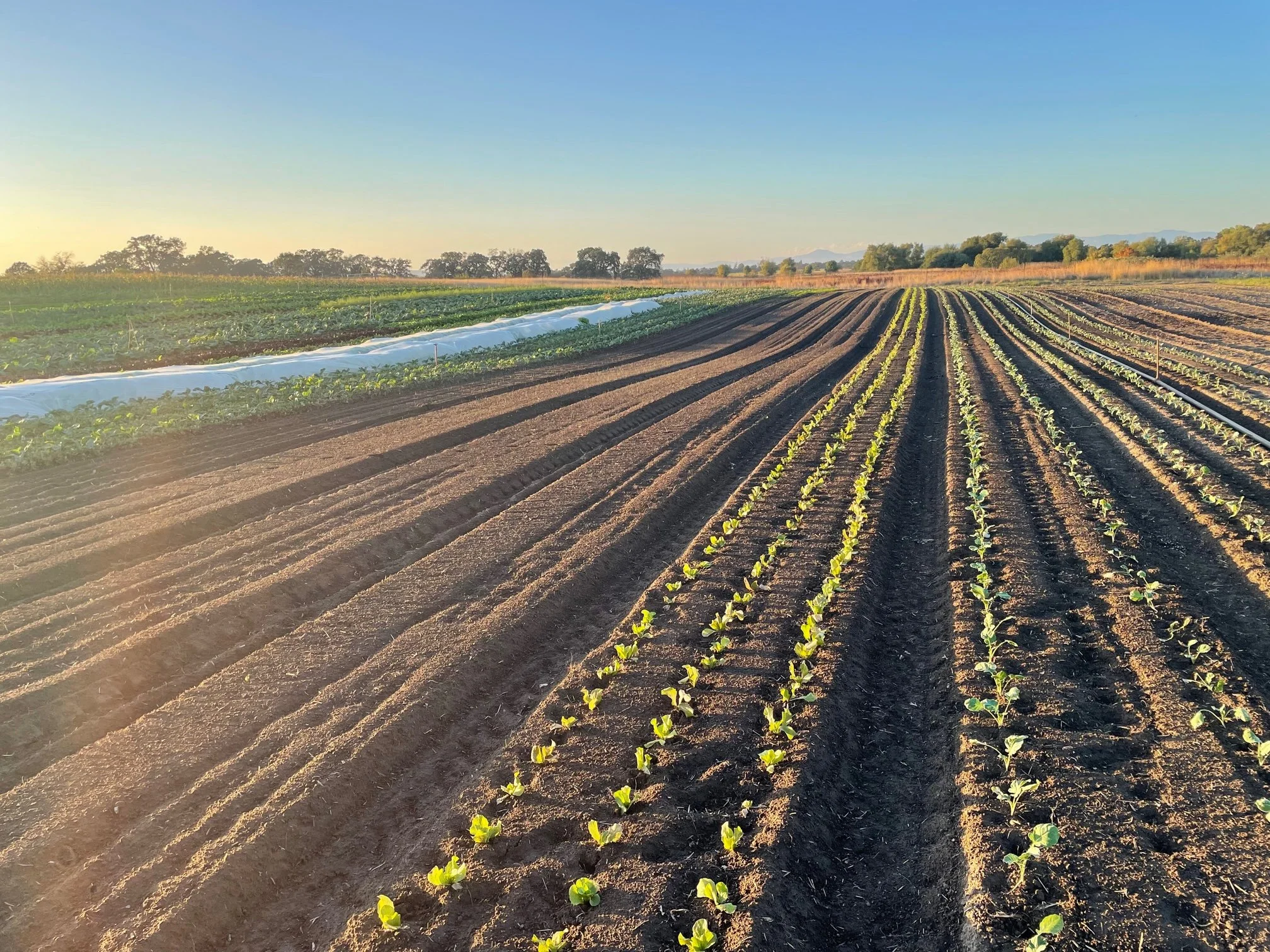
10/22/2022 - Week 20 - On Strawberries

THIS WEEK’S HARVEST

Fancy Fall Salad Mix (with Arugula, Mustard Greens, Radicchio and Frisee), Little Gem Lettuce, Mei Qing Bok Choi, Sugarloaf Chicories, Dazzling Blue Dino Kale, Celery, Hakurei Salad Turnips, Fennel, Carrots, Bintje Gold Potatoes, Sweet Peppers, Poblano Peppers, Summer Squash & Zucchini, Jester Delicata Winter Squash, Cabernet Onions, Lorz Italian Softneck Garlic

U-PICK

Please remember to check the u-pick board for updated weekly limits before going out to pick

  • 🌟 Romano Beans: See Harvest Notes below for details

  • Jack-O-Lantern Pumpkins: 🌟 Increased pumpkin limits! 2 pumpkins per share for shares without kids or 3 pumpkins per share for shares with kiddos.

  • Albion Strawberries: beginning to wind down for the season

  • Cherry Tomatoes, Frying & Hot Peppers: Gleanings (Last week!)

  • Herbs: Dill, Thyme, Oregano, Marjoram, Tarragon, Onion Chives, Garlic Chives, Vietnamese Coriander, Culinary Lavender, Culinary Sage, French Sorrel, Lemon Verbena, Cilantro, Tulsi, Various Mints, Catnip, Chamomile, Purple Basil, Genovese Basil, Thai Basil

  • Flowers!

HARVEST NOTES

  • Jester Acorn Winter Squash: A true gem. The sweetest Acorn squash we've ever tasted. A hard ribbed shell hides pudding-sweet flesh. A good Jester can be among the sweetest of all winter squashes. David's favorite. Try halving long ways, scooping out the seeds, and roasting at 400 until you can poke a fork in the skin and the flesh is soft and creamy. Add a dash of water to the baking sheet while roasting to keep your squash moist. Eat straight out of the shell with a spoon like pudding! Try adding butter, coconut oil, and/or maple syrup.

  • Romano Beans: The last of our upick crops for the season is here and it was worth the wait. Romano beans are large, flat, Italian green beans with great flavor that really shines when cooked. If you're unfamiliar with Romanos, check out Christina Chaey's Bon Appetit article "Romanos are the Queen of Snap Beans and I Want to Eat Them All" for a glowing description and list of recipes she loves to use them in. Romanos are great in any of your favorite green bean dishes, or even subbed in for sugar snap peas. There’s a chance that the Romanos won’t be with us long as the nights are turning increasingly cold so make sure to take advantage of them while they’re here.

MORE JACK-O-LANTERN PUMPKINS!

There’s nothing sadder than a Jack-O-Lantern pumpkin without a home on Halloween night. We’ve increased the pumpkin limit to 2 pumpkins per share for shares without kids or 3 pumpkins per share for shares with kiddos.

VOLUNTEER OPPORTUNITIES

Thank you so much to everyone who came out to help us this week with the Calico popcorn harvest! The harvest train keeps on rolling — please join us this Wednesday as we pull up hundreds of pounds of Fall carrots! This is a relatively chill harvest that entails chatting with us farmers whilst kneeling on the ground and pulling the tops off of carrots. Come join!

Fall Carrot Harvest
Wednesday, October 26th: 9:00 am - 1:00 pm

HOW TO USE ESCAROLE, SUGARLOAFS AND OTHER CHICORIES

In the Fall, we harvest a lot of chicories (a family of leafy greens including Dandelion, Frisée, Radicchio, Endive, and Escarole).

People who are unfamiliar with them are intimidated by chicories at first, not knowing how to use them, because they are bitter. But once you break on through to the other side, they is no turning back and they become a staple.

Chicories are pleasantly bitter, with a succulent, crunchy sweetness, especially near the base of the stems. They are thicker in texture and heartier than lettuce, and softer and more easily cooked than cabbage. Generally they can be used like you would any cooking green like Kale or Chard — you can sauté them, use them in omelets, casseroles, pastas, or raw on salad with a rich dressing. Their sweet bitterness offers a wonderful counterpoint to savory, fatty, and spicy flavors. For your Escarole or Sugarloaf Chicory this week try Utica Greens, a staple dish among Italians in upstate New York.

FARMER’S LOG

ON STRAWBERRIES

Of all the crops that we grow here on the farm, perhaps no other brings as much joy as our beloved strawberries.

We also sometimes wonder if they are the most productive crop on the farm. From early May through October they shower us — sometimes with a deluge, sometimes a trickle — with a nearly constant supply of sweet gifts. Everbearing, if you will.

Planted here in early December 2021 from crowns grown near Mt. Shasta our strawberry plants did not have an easy life this year. 

Planted into very wet soil (remember that storm last October?) our young strawberries were then beset by a huge natural population of “cutworms” — the larva of the large yellow underwing (Noctua pronuba) — who fed so voraciously on the vulnerable spring shoots of that we did not know if they would survive. Then came some phytopthora (a fungus with the Greek name “plant destroyer”). Then came some symphylans. And then came the deer! But whether undercut at the root, snipped at the stem, or chomped by a browsing ungulate, our strawberry plants just kept growing, flowering, and — thank the farm gods — fruiting. 
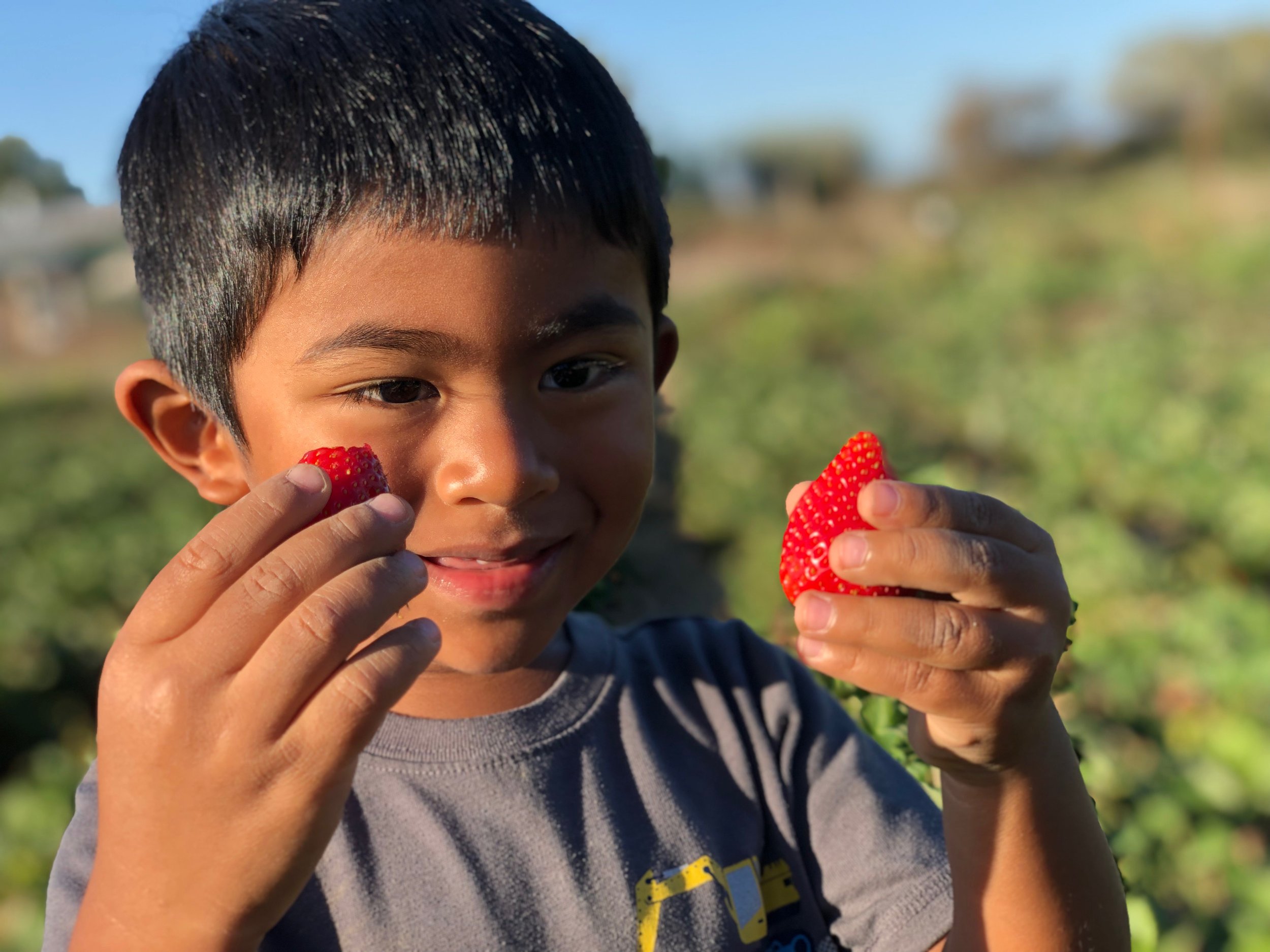
Ever beholds the wondrous Albion strawberry.

The resilience and vigor of our strawberry plants, and the amount of joy they produce, is no accident: These are Albion strawberries and it is in their genes.

The Albion strawberry is, in this farmer’s opinion, one of the greatest plant breeding achievements in human history. Introduced in 2004, the Albion strawberry is the current crowning achievement UC Davis’s strawberry breeding program. In a state that produces 90% of the nation’s strawberries and 2 billion in annual strawberry revenue, the UC Davis strawberry breeding program has been around for 100 years and is seriousness business. The Albion strawberry is the result of a century of the careful crossing of various strawberry strains to produce a plant with a combination of vigor, disease resistance, productivity, and taste.

And what all that seriousness has amounted to for us is, well… joy.

So as the days get colder and our strawberry season winds down and 4 pints goes to 1 pint, and 1 pint goes to gleanings, take a moment to stand in the strawberry patch with a crisp Fall berry in your mouth and to give thanks to the wondrous plants that have given us so much this year….

Thank the sun, thank the soil, thank the water — and thank the UC scientists!

See you in the strawberry fields, 
David & Kayta 

10/14/2022 - Week 19 - Ode to Winter Squash

THIS WEEK’S HARVEST

Fancy Fall Salad Mix (with Arugula, Mustard Greens and Frisee), Panisse Oak Leaf Lettuce, Sugarloaf Chicories, Brussels Sprout Tops, Napa Cabbage, Alpine and Scarlet Daikon Radish, Scallions, Fennel, Sunrise Carrots, Asterix Red Potatoes, Sweet Peppers, Poblano Peppers, Olympian Cucumbers, Summer Squash & Zucchini, Sunshine Kabocha Winter Squash, Lorz Italian Softneck Garlic

U-PICK

Please remember to check the u-pick board for updated weekly limits before going out to pick

  • Jack-O-Lantern Pumpkins: Season limit: 1 pumpkin per share for shares without kids or 1 pumpkin per kid for shares with kiddos.

  • Albion Strawberries

  • Cherry Tomatoes: Gleanings

  • Herbs: Dill, Thyme, Oregano, Marjoram, Tarragon, Onion Chives, Garlic Chives, Vietnamese Coriander, Culinary Lavender, Culinary Sage, French Sorrel, Lemon Verbena, Cilantro, Tulsi, Various Mints, Catnip, Chamomile, Purple Basil, Genovese Basil, Thai Basil

  • Flowers!

This year’s Brussels Sprout Tops grew up next to a beautiful insectary row of Sweet Alyssum, Clarkia, Sulfur Cosmos, Sunflowers, Borage, and Phacelia seeded by CSA member Gwena Gardon!

HARVEST NOTES

  • Sunshine Kabocha Winter Squash: Sunshine Kabocha is an all-time favorite squash. Excellent for eating straight roasted. Also excellent in pies, curries, etc. Super sweet, velvety smooth texture.

  • Poblano Peppers: These beauties won’t be around much longer, so may we suggest that before they go you indulge? Try roasting them and then freezing them for summer-time flavor in the winter. Or make this super simple 4-ingredient Roasted Poblano Cream Sauce recipe.

  • Brussels Sprout Tops: Each year around this time we trim the tops off of the Brussel sprouts plants to spur the sprouts to size up evenly. This annual necessity has the delicious benefit of giving us delicate bunches of cooking greens with that lovely Brussel sprout flavor. Use as you would any of your favorite cooking greens like Kale or Collards.

  • Napa Cabbage & Kimchi: Welcome to Kim-chi week, the week when Kayta’s magical crop planning skills make Napa Cabbage, Scallions, and Daikon Radish align together on the harvest table. Try this classic spicy Kim-chi recipe and/or this more mellow, kid friendly, white Kim-chi recipe from CSA member Robin Kim. Robin made a vegan version of the white Kim-chi recipe for us last year that was one of our all-time favorite farm preserves. She substituted the salted shrimp and fish sauce with Bragg’s aminos / soy sauce and also omitted the alliums. It was mellow but still packed with flavor. For the jujubes, chestnuts, pine nuts, and rice flour, Robin recommends visiting Asiana Market in Cotati or Asia Mart in Santa Rosa. (The Napa cabbage took a beating this year from cabbage moths, so they will be limited to 1 per share.)

VOLUNTEER OPPORTUNITIES

Thank you so much to everyone who came out to help us bring in this year’s Hopi Blue Corn! It was a joy to spend the morning with you. As we get deeper into Fall, Wednesday mornings will be full of fun harvests to participate in. Please join us for these volunteers mornings below!

Calico Popcorn Harvest & Winter Squash Toss
Wednesday, October 19th: 9:00 am - 1:00 pm

Fall Carrot Harvest
Wednesday, October 26th: 9:00 am - 1:00 pm

HOW TO USE ESCAROLE, SUGARLOAFS AND OTHER CHICORIES

In the Fall, we harvest a lot of chicories (a family of leafy greens including Dandelion, Frisée, Radicchio, Endive, and Escarole).

People who are unfamiliar with them are intimidated by chicories at first, not knowing how to use them, because they are bitter. But once you break on through to the other side, they is no turning back and they become a staple.

Chicories are pleasantly bitter, with a succulent, crunchy sweetness, especially near the base of the stems. They are thicker in texture and heartier than lettuce, and softer and more easily cooked than cabbage. Generally they can be used like you would any cooking green like Kale or Chard — you can sauté them, use them in omelets, casseroles, pastas, or raw on salad with a rich dressing. Their sweet bitterness offers a wonderful counterpoint to savory, fatty, and spicy flavors. For your Escarole or Sugarloaf Chicory this week try Utica Greens, a staple dish among Italians in upstate New York.

FARMER’S LOG

AN ODE TO WINTER SQUASH

Last week, we penned an Ode to Maize, and a couple of weeks prior we serenaded the potato. Both are New World crops who changed the world and inspired poets. But this week we set aside for the fairest of them all: The beloved oldest of the Three Sisters.

She takes on infinite forms, from voluptuous to svelte; from burning red to the palest blue. She has been kindling a bashful and loyal love in humanity’s heart for over 10,000 years…

Ladies and gentlemen: The Winter Squash.

The ancestral plants of what we call squash (the species including zucchini, melons, gourds, cucumbers, pumpkins and all winter squash) are millions of years old and native to the New World. The earliest evidence for human domestication dates back 10,000 years to Southern Mexico… earlier than the domestication of corn or beans.

Word travelled fast and inspiration abounded. By 2,000 B.C., squash had became a part of life for almost every Native American culture from Southern Canada to Patagonia — varietals were kept and cherished for everything from the protein rich and medicinal seeds of some, to the sweet flesh and tough, winter hardy skins of others. (The English word “squash” comes from the Narragansett word, askutasquash, meaning fresh vegetable, and similar words can be found in the Algonquian language family.) Botanists note at least six separate domestication events by native peoples in the New World.

Here at WCCF, the human + squash love affair burns bright — and we’re lucky to have at our fingertips the unparalleled modern library of heirloom squash seeds to play with. Over the winter, Kayta hunkered down by a roaring fire with a seed catalogue and a good cup of coffee and laid out a season-long love sonnet to squash: We felt the summer wind with a cool slice of Persian cucumber. We dined by candlelight over pasta with Costata Romanesca Zucchini. Once we tasted a Sarah’s Choice Cantaloupe, we could never forget.

But in the Winter, our true love came — the Winter Squash.

We’ll have a new squash for you to get to know every week until December 6th. Allow us to introduce you…

2022’s Winter Squash varieties: Top Row from L to R: Koginut, Delicata, Sweet Dumpling, Winter Luxury Pie Pumpkin, Racer Jack-O-Lanter Pumpkin /// Bottom Row from L to R: Bonbon Buttercup, Butternut, Marina di Chioggia, Sunshine Kabocha, Jester

  • Koginut: New to us this year and a newly developed variety, this stately little pumpkin is creating a lot of buzz. Tell us what you think!

  • Delicata: A real heartbreaker. The sweetest. Easy to cook, even easier to eat.

  • Sweet Dumpling: Just like a delicata but round and cute as a button

  • Winter Luxury Pie Pumpkin: The supreme pie pumpkin in lacy, netted lingerie. The only pie pumpkin that can compete with a Sunshine Kabocha. We'll distribute this one around Thanksgiving with our go-to pumpkin pie recipe.

  • Racer Jack-O-Lantern Pumpkin: A classic Jack-O-Lantern to help you celebrate All Hallow’s Eve. Don’t forget to try roasting the seeds when you hollow yours out to carve a scary face!

  • Bonbon Buttercup: A cute little buttercup variety with a light green belly button and orange, creamy, rich, sweet flesh

  • Butternut: The classic, reliable, bring-em-home-to-daddy squash with a nutty charm

  • Marina di Chioggia: An Italian bombshell, this squash is "deliziosa, especially for gnocchi and ravioli... a culinary revelation." We'll include some tips on how to cook it when we distribute this later on.

  • Sunshine Kabocha: The village beauty. A gorgeous fiery red Kabocha squash with sweet and flaky flesh. A farm favorite. Exceptional for pumpkin pie or straight roasted eating.

  • Jester Acorn: A Delicate type that looks like a fancy Acorn Squash. A good Jester can be among the sweetest of squashes.

We hope you fall in love with a squash this fall!

See you in the fields,
David & Kayta

10/7/2022 - Week 18 - Pumpkin Patch!

CORN HARVEST party!

This wednesday, October 12th from 9 am - 12 pm

Join us for one of the most magical harvests of the year this Wednesday from 9 am - noon!

We’ll be pulling popping off ears and pulling husks off of our beautiful Hopi Blue corn (and maybe a little bit of popcorn too!). Every ear is a present, waiting to be unwrapped and marveled at. We hope you can join us!

THIS WEEK’S HARVEST

Arugula, Mustard Mix, Assorted Lettuce, Purple Bok Choi, Rainbow Chard, Easter Egg Radishes, Celery, Scallions, Bishop Cauliflower, Carrots, Bintje Gold Potatoes, Sweet Peppers, Olympian Cucumbers, Summer Squash & Zucchini, Farao Cabbage, Heirloom & Slicing Tomatoes, Delicata Winter Squash

U-PICK

Please remember to check the u-pick board for updated weekly limits before going out to pick

  • 🌟NEW Jack-O-Lantern Pumpkins: See below for details!

  • Albion Strawberries: Check u-pick board

  • Cherry Tomatoes: Gleanings

  • Frying Peppers: Shishitos & Padrons | Gleanings | See week 4’s newsletter for harvest and preparation tips

  • Hot Peppers: Buena Mulata, Habanero, Ali Limo and Jalapeño Hot Peppers

  • Tomatillos: Gleanings

  • Herbs: Dill, Thyme, Oregano, Marjoram, Tarragon, Onion Chives, Garlic Chives, Vietnamese Coriander, Culinary Lavender, Culinary Sage, French Sorrel, Lemon Verbena, Cilantro, Tulsi, Various Mints, Catnip, Chamomile, Purple Basil, Genovese Basil, Thai Basil

  • Flowers!

HARVEST NOTES

  • Delicata Winter Squash: Debuting our first of 9 Winter Squash varieties grown this year, Delicata are a perennial favorite. Versatile, and sweet, they even have edible skins. For the easiest preparation, cut in half, scoop out the seeds and roast, face down, until tender (adding a little water to your pan to keep the squash moist!). They are also delicious cut into rings or half circles, tossed with an oil of your choice (coconut is particularly scrumptious) and then roasted until caramelized. Enjoy!

PUMPKIN PATCH OPEN!

Halloween is coming and our pumpkin patch is now open! 420 plump pumpkins are out there waiting for you!

Season limit this year is: 1 pumpkin per share for shares without kids or 1 pumpkin per kid for shares with kids up to 3 pumpkins.

WINTER SISTER FARM CSA SIGN-UPS NOW OPEN!

The hottest tickets in town are getting snatched up — Winter Sister Farm’s 2023 Winter CSA program is now open for registration! Winter Sister Farm, right next door to us, was started by our dear friends Anna and Sarah Dozor. Their CSA runs runs from December through May and includes 24 weeks of specialty winter veggies, flowers, herbs, and more — all picked up by CSA members, free-choice market style, on their beautiful farm here on Cooper Rd. Sign-up today!

FARMER’S LOG

AN ODE TO CORN

In honor of our upcoming flour corn harvest this Wednesday, we wanted this newsletter to be a song of praise to maize: Humanity is bound to no other plant more than maize, in life and myth.

Since it’s domestication in Southern Mexico some 10,000 years ago, maize has become the staff of life to human civilization as we know it.

We can testify to it’s power just as farmers: From a small, armored, long-storing kernel of radiant color springs forth a plant (a grass) with vigor unmatched. In a week or so it out-competes any weed, reaching for the sun with jaw-dropping, almost hallucinatory speed. In what seems like the blink of an eye ,maize creates a shady, complete canopy over the ground, soaking up every ray of sun with palm thick spears. After reaching full height, maize enters the most beautiful phase, a month of beautiful wind tossed sex. The pollen, contained in the brown tassels atop the plant, feeds thousands of pollinators and floats town to the silks below. Each silk, if pollinated, becomes a kernel. And from just one kernel, up to 800 kernels can grow — multiplicities of nourishment.

As for the poets, we’ll let them speak for themselves. First, we’ll hear from our dear friend, former neighbor, and CSA members, Rebecca Harris, the veritable poet in residence of our CSA, who wrote this poem in 2019 after walking through the corn field. Second, we’ll hear from Pablo Neruda.

Notice that both poets name the sea, laughter, blue, children — undoubtedly tapping into the same collective song of praise to the spirit of Mother Maize.

* * * * *

The Symphony of Harvest
by Rebecca Harris

I go down to the
Corn stalks just to listen
To them.
The way you might go
To hear the ocean.
Or bear a child to share
Laughter.
Here in a world that feels
Like a desert,
I hear rain in this
Corn-
Hear voices-
Melted with sunlight,
Made soft and strong-
Such a wild way-
The corn dances,
As strange
As lions
Dancing,
Or finding a melody in the
Dirt,
Or light in a cave.
Here,
They reach so tall,
They are browning,
Golden and green-
The farthest cousin from
The sea-
Yet I hear them murmur
The same words.
And I am bathed
In music.

Weeks later,
I heard that children were stamping
On the corn
After harvest,
Finally allowed to run tender and
Wild through and over the stalks.
I imagine they blew through them like
Wind colored with blue,
Dragging the sky behind them.
Blue corn sits in baskets
Like fallen arrows
Waiting to dance.

Now,
I see the corn stalks and as I
Let go of the sea wind that it
Brought into my hair
I am filled with children and their
Games
And the memory in my body
Joining them,
As beautifully as the corn and I
Make music.

* * * * *

Ode to Maize
by Pablo Neruda

America, from a grain
of maize you grew
to crown
with spacious lands
the ocean foam.

A grain of maize was your geography.
From the grain
a green lance rose,
was covered with gold,
to grace the heights
of Peru with its yellow tassels.

But, poet, let
history rest in its shroud;
praise with your lyre
the grain in its granaries:
sing to the simple maize in
the kitchen.

First, a fine beard
fluttered in the field
above the tender teeth
of the young ear.
Then the husks parted
and fruitfulness burst its veils
of pale papyrus
that grains of laughter
might fall upon the earth.
To the stone,
in your journey,
you returned.
Not to the terrible stone,
the bloody
triangle of Mexican death,
but to the grinding stone
sacred
stone of your kitchens.
There, milk and matter,
strength-giving, nutritious
cornmeal pulp,
you were worked and patted
by the wondrous hands
of dark-skinned women.

Wherever you fall, maize,
whether into the
splendid pot of porridge, or among
country beans, you light up
the meal and lend it
your virginal flavor.

Oh, to bite into
the steaming ear beside the sea
of distant song and deepest waltz.
To boil you
as your aroma
spreads through
blue sierras.

But is there
no end
to your treasure?
In chalky, barren lands
bordered
by the sea, along
the rocky Chilean coast,
at times
only your radiance
reaches the empty
table of the miner.

Your light, your cornmeal,
your hope
pervades America’s solitudes,
and to hunger
your lances
are enemy legions.

Within your husks,
like gentle kernels,
our sober provincial
children’s hearts were
nurtured,
until life began
to shuck us from the ear.

* * * * *

We hope to see you in the corn this Wednesday!

See you in the fields,
David & Kayta