
10/4/2019 - Week 16 - Turn! Turn! Turn!

Potato Harvest: Saturday, October 12th: 9:30am - 12:00pm

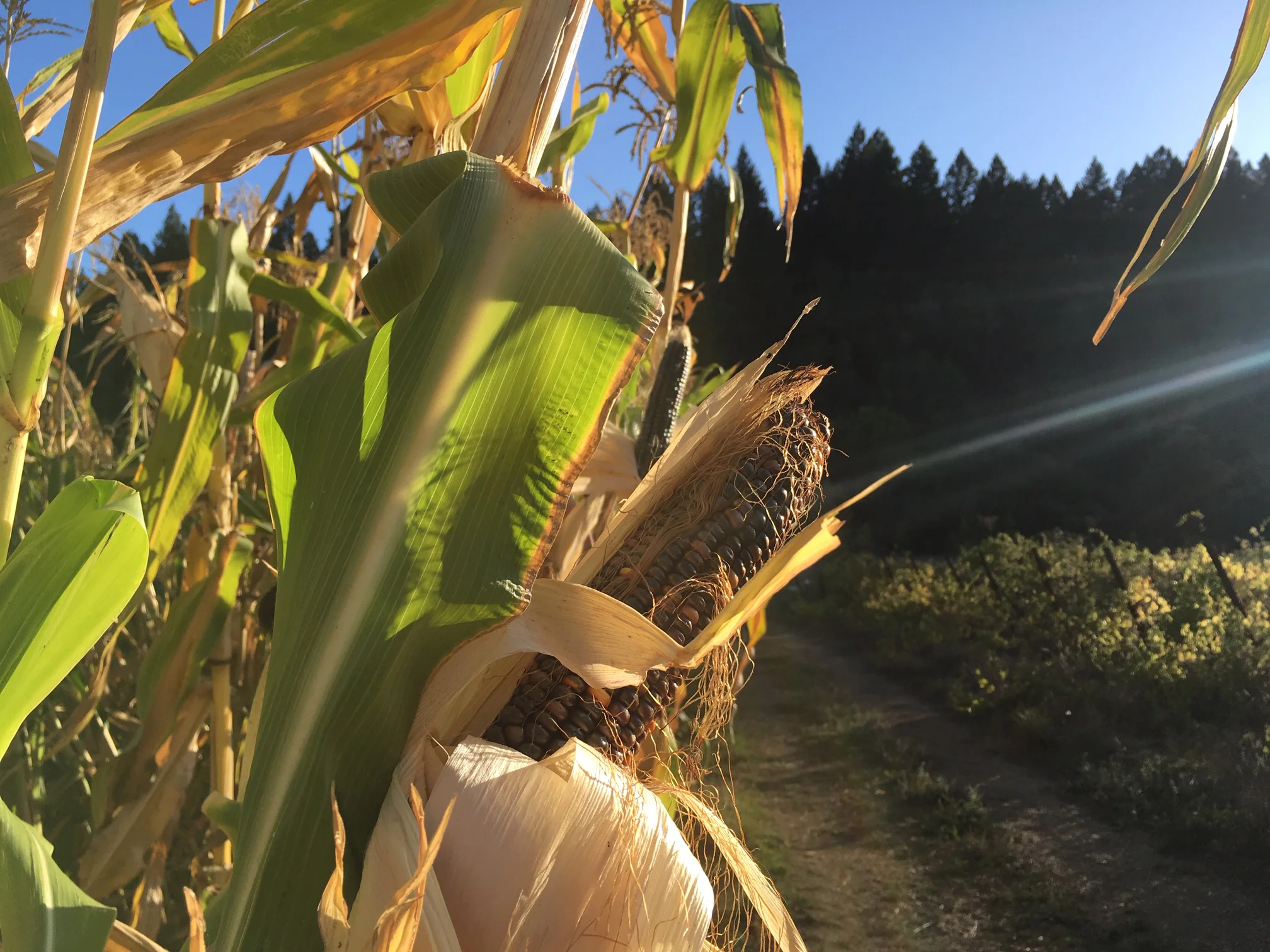
The corn harvests were so much fun! Next up potatoes! We hope you can make it to lend a hand or just take in the scene and hang out. It’s a big, unforgettable experience, especially for kids, pulling a ton of potatoes out of the earth together. All abilities and interest (and snacks!) welcome. We recommend light gloves and a sunhat.

IMG_9728.JPG

THIS WEEK'S HARVEST

Desiree Red Potatoes, Green Tomatoes, Cauliflower, Broccoli Spigariello, Cabbage, Sweet Peppers, Mixed Loose Beets, Rainbow Chard, Cucumbers (likely the last), Watermelon Radishes, Summer Squash and Zucchini, Rainbow Carrots, Bel Fiore Radicchio, Cherokee Summercrisp Head Lettuce, Italian Softneck Garlic, Cured Cabernet Onions

U-PICK

  • Classic Green Beans: NO LIMIT

  • Cherry Tomatoes

  • Herbs: Italian Basil, Tulsi Basil, Thai Basil, Purple Basil, Italian Parsley, Rosemary, Lemon balm, Lemon Verbena, Vietnamese Coriander, Cilantro, French Sorrel, Onion Chives, Garlic Chives, Tarragon, Oregano, Thyme, Chamomile, Mints, Anise Hyssop, Culinary Lavender, Lemongrass

  • Flowers! There some really nice new Zinnia and Cosmo beds to the left of the cherry tomatoes

  • Frying Peppers: Just gleanings.

  • Jalapeños: Just gleanings. Winding down. Located below the frying peppers

  • Strawberries

A33DA174-8724-4A11-93ED-67F24D55B6C7.JPG

HARVEST NOTES

  • Bel Fiore Radicchio: This beautiful chicory is delicious eaten both raw and cooked. For a raw salad think pears and pecans with a honey-lemon dressing, or, for a more savory twist, a mustardy dressing topped with this week’s watermelon radishes and shaved parmesan. Alternately, try quartering the radicchio, tossing it with oil and garlic and braising or broiling until slightly crisped and melting.

  • Broccoli Spigariello: A broccoli grown for its leaves rather than its flower. Can be used like a delicate Dino kale. Popular in southern Italy.

PRESERVING THE HARVEST

  • Bulk Pink Lady Slipper Radishes: We’ll have loads of these perfect beauties on the back table for all your pickling dreams. Their radiant pink color will make a gorgeous pickle to enjoy throughout the year. Try this elegant pickling recipe from Bon Appetite. It’s particularly good at showcasing the variety of vibrant colors coming out of the farm right now (think a rainbow of beets, carrots, turnips and radishes).

  • Bulk White Satin Carrots: Don’t underestimate the White Satin Carrot. We feel it is consistently our best tasting, sweetest carrot. It also happens to be extraordinarily vigorous. We’ll be putting out bulk White Satins on the back table for pickling, juicing, etc. Out of bag. Don’t be shy, take 10 pounds! Check out this wonderful recipe for pickling carrots… or any vegetable!

  • Pickled Green Beans: This might be the last week good no limit green bean picking before the green beans say sayonara until next year! Check out this great dilly bean recipe.

IMG_9421.JPG

CORN MAGIC!

A huge thank you to everyone who came out to harvest corn with us Tuesday and Wednesday! Your many hands made such light work and cherished memories! Now, the corn will cure in our greenhouse for a few weeks before finding its way into your harvest tote and your Saturday morning pancakes! Or tortillas…

The Magic of Corn in the Kitchen and Garden
Saturday, November 2nd: 10am - 12pm

Want to make tortillas and tamales from Green Valley corn? Learn to work with the magic of corn. CSA member, ecological educator, and deep student of corn, Lindsay Dailey will demonstrate how to grind corn for flour, discuss recipes, and explore the alchemy of nixtamalization which makes corn sticky in order to make masa for tortillas and tamales. While we work, Lindsay and the farmers will talk about the natural history and mythology of corn and discuss planting, growing, and saving seed from this amazing plant in the home garden! And then we'll eat some fresh made tortillas! Yum!

VOLUNTEER WEDNESDAYS, 8:00-10:00 AM

Interested in some farm therapy? Come out on Wednesday mornings to help us tend the garden and farm together. Come find us in the garden or out in the main fields on Wednesdays from 8:00am 'til 10:00 am. All abilities welcome, we’ll find something comfortable for you to do!

FARMER’S LOG

Turn! Turn! Turn!

The Byrds were right: To everything, there is a season. 

It struck me today how the tasks of pulling off the farm year harmonize with the seasons in such a way that it always seems like there is just enough time to accomplish what needs to be accomplished by the skin on our chinny-chin-chins.

In the Spring, you aren’t harvesting yet so you have all the time in all the medium-length days to build up and plant out the farm; to build gnome homes and irrigation systems; to fix gates; to seed 40 trays a week in the greenhouse; to pot up tomatoes, to stake tomatoes, to trellis tomatoes; to mow cover crop and turn soil and shape beds and plant! plant! plant!

Then the harvest seasons starts and two, then three, then then four days of the week are consumed with reaping the fruit of Spring’s labor. You put down your hammer and take up your harvest knife and planting trowel. All other projects cease. Planting and harvesting are your life — and some weeding if you’re lucky. The days are at their longest — thankfully. If there is ever a time to be harvesting 1,000+ pounds of cucumbers, tomatoes and squash in the morning, prepping and planting out half mile in the afternoon, it is when there is 16 hours of daylight.

Before you know it, it’s late Summer. The tomatoes start peaking, the cucumbers already are, you’re still planting like crazy and then the melons come in — and just when you think you’ll break, that there isn’t enough time in the day, you scroll down on your crop plan and you see that plantings are nearly done. No more compost spreading; no more bed shaping; greenhouse seedings shrink. And just as the summer crop avalanche really starts thundering you plant the last Fall brassicas in the field, the tractor sits quiet, and you can spend all day amongst the vines and in the cooler playing Tetris with boxes of Summer fruit. 

IMG_4241.jpg

Then comes the Autumnal Equinox.

The tomatoes are still pumping and the potatoes and squash start to die back; the corn fills out, crisps up, and starts to fall over. The big harvests are scheduled and space for storage cleared. Rain is coming you must establish garlic and strawberries for next year; mow and hold over spent beds; lime new fields; get ready for cover cropping — and just when you think you’ll break, that there isn’t enough time in the day, the days get shorter, and the heat ebbs, and the tomatoes slow down. A light frost rolls through the farm and the cucumbers leaves brown and curl. A hardworking mobs of smiling friends come to crush the corn harvests. You have a second to sit down and calculate your garlic seed and your cover crop. A breath of crisp autumn air goes down like a draught of ambrosia.

All this is why you won’t ever hear a farmer say, “Shucks! Summer is over.” We are greedy for the turnings. We love nothing more than a first harvest. But first tomato glory fades and our bodies tire under the weight of tomato crates and we crave cold hands and cozy coats — the crisp snap of the stem and the luminance of a plump radicchio glowing in morning sun. Lucky for us, when scolding kiddos for running through the corn becomes sad and hackneyed, Autumn comes, and we yell, “Come! Knock it down! Gather armfuls of grain!” 

Change is a tonic — one of the great sustaining elixirs of farm life.

Soon, Winter will come. It’s so close now we can almost taste it. The rains will fall and we will turn in— to rest, healing, rejuvenation, and internality. We’ll clean up our accounting, do our taxes; we’ll look back on the year and create next year’s crop plan and next year’s budget. We’ll open CSA sign-ups. We’ll look at spreadsheets, sit, think, build and fix things, and sleep. 

But ample sleep turns into insomnia; too much internality into angst. We will get pudgy, our harvest muscles will atrophy, and we will forget for what we are building a new cooler in the wet and the cold — and just when we think we’ll break, that there is too much time in the too short day, the sun will return and we will hear the Swainson’s Thrush calling us, beckoning us, “Come out! Build it up again! Plant again! Turn! Turn! Turn!”

See you in the fields,
David & Kayta
9/27/2019 - Week 15 - Corn Harvest!

CORN HARVESTS THIS WEEK!

Come one come all! It’s harvest time! We had a nice conversation with the corn (and potatoes) this morning and scheduled three major harvests in the coming weeks. We hope you can make it to one or all of these harvests to lend a hand or just take in the scene. They can be so fun and it’s an unforgettable experience bringing in a big harvest as a community. All abilities and interest levels welcome.

Hopi Blue Corn Harvest
THIS Tuesday
, October 1st: 4:30pm - 6:30pm

Floriani RED FLINT Corn Harvest
THIS Wednesday
, October 2nd: 10:00am - 12:00pm

Storage Potato Harvest
Saturday, October 12th: 9:30am - 12:00pm

IMG_9331.JPG

THIS WEEK'S HARVEST

Freshly Dug La Reine Fingerling Potatoes, Green Tomatoes, Cauliflower, Green Magic Broccoli, Sweet Peppers, Mixed Loose Beets, King Richard Leeks, Rainbow Chard, Dazzling Blue Dino Kale, Olympian Cucumbers, Summer Squash and Zucchini, Rainbow Carrots, Four Families Salad Mix (with Frisee, Arugula, Nasturtium & Shungiku), Cegolaine Little Gem Lettuce, Italian Softneck Garlic

U-PICK

  • Classic Green Beans: NO LIMIT

  • Cherry Tomatoes: NO LIMIT

  • Frying Peppers: Winding down. Still a good number of shishitos.

  • Jalapeños: Just gleanings. Winding down. Located below the frying peppers

  • Strawberries

  • Herbs: Italian Basil, Tulsi Basil, Thai Basil, Purple Basil, Italian Parsley, Rosemary, Lemon balm, Lemon Verbena, Vietnamese Coriander, Annual Cilantro, French Sorrel, Onion Chives, Garlic Chives, Tarragon, Oregano, Thyme, Chamomile, Mints, Anise Hyssop, Culinary Lavender, Lemongrass

  • Flowers! There some really nice new Zinnia and Cosmo beds to the left of the cherry tomatoes

38051FC4-7EDE-497A-8A65-DAE1BEB06CCB.JPG

HARVEST NOTES

  • Four Families Salad Mix: This week’s salad mix is a mixture of 4 different plant families! It is a flavor packed combo of arugula (brassica), frisee (chicory), nasturtium (tropaeolaceae) and shungiku (chrysanthemum). Try it straight, or cut it with your little gem lettuces to soften its mildly spicy flavor. Shungiku is a chrysanthemum cultivated in East Asia for its leaves and flowers, which have a mild, herbal taste.

  • Freshly Dug La Reine Fingerling Potatoes: The final of the four potato varieties we’ve been debuting this month: La Reine, is French heirloom fingerling is prized by chefs for its buttery, waxy texture and hazelnutty flavor. It holds shape well when cooked which makes it a perfect salad potato variety. The texture when pureed makes an exceptional base for rich soups and sauces. Or, just treat them like you would any other potato! Bon appetite!

  • Green Tomatoes: As our summer tomato season comes to a close we’re bringing you a different form of this cherished food. In addition to the classic — fried green tomatoes — you can also use these gems in soups, stews and pots of beans as a subtly tart thickener. Check out this Green Tomato Pork Stew recipe for inspiration.

PRESERVING THE HARVEST

  • Bulk Pink Lady Slipper Radishes: We’ll have loads of these perfect beauties on the back table for all your pickling dreams. Their radiant pink color will make a gorgeous pickle to enjoy throughout the year. Try this elegant pickling recipe from Bon Appetite. It’s particularly good at showcasing the variety of vibrant colors coming out of the farm right now (think a rainbow of beets, carrots, turnips and radishes).

  • Bulk White Satin Carrots: Don’t underestimate the White Satin Carrot. We feel it is consistently our best tasting, sweetest carrot. It also happens to be extraordinarily vigorous. We’ll be putting out bulk White Satins on the back table for pickling, juicing, etc. Out of bag. Don’t be shy, take 10 pounds! Check out this wonderful recipe for pickling carrots… or any vegetable!

129FD9E0-1BA8-4B35-A914-0AD2FF985686.JPG

FALL HARVEST WORKSHOPS

We’re super excited to be hosting two Fall workshops put on by our neighbor, CSA member, and ecological educator, Lindsay Dailey. The first, tomorrow morning, is on making dye from farm flowers and the other is on corn. Both workshops are will be in our pick-up barn and are free to CSA members. Thank you, Lindsay!!

Colors of the Land
Tomorrow!
Saturday, September 28th: 9am - 11am

In addition to providing beauty, pollen, nectar (and joy!), the flowers at GVCF are full of wearable color. Join us to learn the process of natural dyeing, utilizing plants to saturate fibers with various hues from nature. We’ll take a walk through the garden, look at some wild and cultivated dye plants that are abundant on the farm, and then harvest a few batches of plant material to cook up some color! We’ll discuss the process of natural dyeing, while the pots simmer, and you’ll have a colorful scarf or hankie to take home at the end of pickup. Silk bandanas and scarves (pre-mordanted) will be available to dye during the class and take home for a suggested donation of $5 - $10.

The Magic of Corn in the Kitchen and Garden
Saturday, November 2nd: 10am - 12pm

Want to make tortillas and tamales from Green Valley corn? Learn to work with the magic of corn. Lindsay — a deep student of corn — will demonstrate how to grind corn for flour, discuss recipes, and explore the alchemy of nixtamalization which makes corn sticky in order to make masa for tortillas and tamales. While we work, Lindsay and the farmers will talk about the natural history and mythology of corn and discuss planting, growing, and saving seed from this amazing plant in the home garden! And then we'll eat some fresh made tortillas! Yum!

VOLUNTEER WEDNESDAYS, 8:00-10:00 AM

Interested in some farm therapy? Come out on Wednesday mornings to help us tend the garden and farm together. Come find us in the garden or out in the main fields on Wednesdays from 8:00am 'til 10:00 am. All abilities welcome, we’ll find something comfortable for you to do!

FARMER’S LOG

pestS ON THE FARM

Fortunately, the fields and garden we tend here are home to many many friends. Unfortunately, some of them fancy the human food we grow as much as we do — but neglect to sign up for the CSA! Fortunately, due to the wildness of this place, these “pests” are kept relatively in check by myriad lifeforms that fancy to eat them. Unfortunately, the pests still cause semi-severe losses and your farmers must muster a resistance.

A CSA member requested a newsletter entry about pests and their management on the farm. For organization’s sake, we thought we’d start with the biggest honkers and go down to the smallest fries.

* * * * *

Turkeys: The chunkiest pests at Green Valley Community Farm are our dear wild turkeys. Turkeys are a non-native that seem to be gaining a strong foothold in Sonoma County. They are beautiful, intelligent creatures with intricate social relationships and can fly over a deer fence easily. They are omnivores, and cruise the landscape morning and late-afternoon and evening, browsing for seeds, insects, the occasional frog or two, and juicy leaves and forbs. Most of the year we live in happy co-habitation with our fine feathered friends. We do the dishes and mow the lawn, they eat weed seeds, cucumber beetles and pill bugs. Thanks, Turkeys! However, every few months they discover a farm food that they love more than anything and go on a binge. We usually look the other way and don’t mind the lost lettuce or two or ten. But sometimes, especially during this driest part of the year, it becomes a problem. Most of the white fabric coverings you see on crops right now are there to deter the turkeys. As for keeping the turkeys in check, we have help from Coyote (who killed one on the farm near the back fence a couple weeks ago) Bobcat, and Golden Eagle.

Gophers: The next (dimensionally) largest pesty friend on the farm is the mighty gopher. There is an old NorCal adage that gophers are what chased the Russians away from Fort Ross. Lucky for us, Green Valley Community Farm lies mostly in a wet valley that sees long periods of standing water in the winter. Gophers, therefore, cannot make year-round runs in our main fields. They do tunnel there in the dry months and cause a fair bit of damage, but winter rains flood whatever inroads they make so they live in higher concentrations up in the hills. Also lucky for us, Green Valley Community Farm is a wild place and we have tons of gopher predators: Coyotes digging for them at night and bobcats pouncing; hawks, kestrels, and owls swopping from above; gopher snakes spelunking their burrows. Last summer a Great White Egret named Ingrid took up residence on the farm from August through December and ate two or three gophers a day. We believe Ingrid’s presence last year, and that very wet winter we had, temporarily reduced their population and has made 2019 our least Gophery year thus far.

We miss you, Ingrid!

We miss you, Ingrid!

Rats and Mice in the Greenhouse: We flew under the radar our first two years here, but we’ve been found out. This year, rats and mice eating seeds and seedlings from our greenhouse trays was a huge headache. We’re nervous about curing our corn and Winter Squash in the greenhouses and are contemplating adopting a feral feline friend as a greenhouse cat.

Slugs: On which day of creation were slugs created? Monday morning!? Just kidding, slugs are beautiful in their own special way (to other slugs). Slugs get crazy for us in the Spring and late Fall, which is when their population surges due to moisture. In the Spring we must put down “Sluggo”, an organic iron phosphate pellet in order to germinate carrots, otherwise they would all get gobbled up. Other than that, it’s live and let live with the pretty little slugs and the ugly little holes they make on the bottom of our lettuce. Big props to all the frogs in the field enjoying slug escargot.

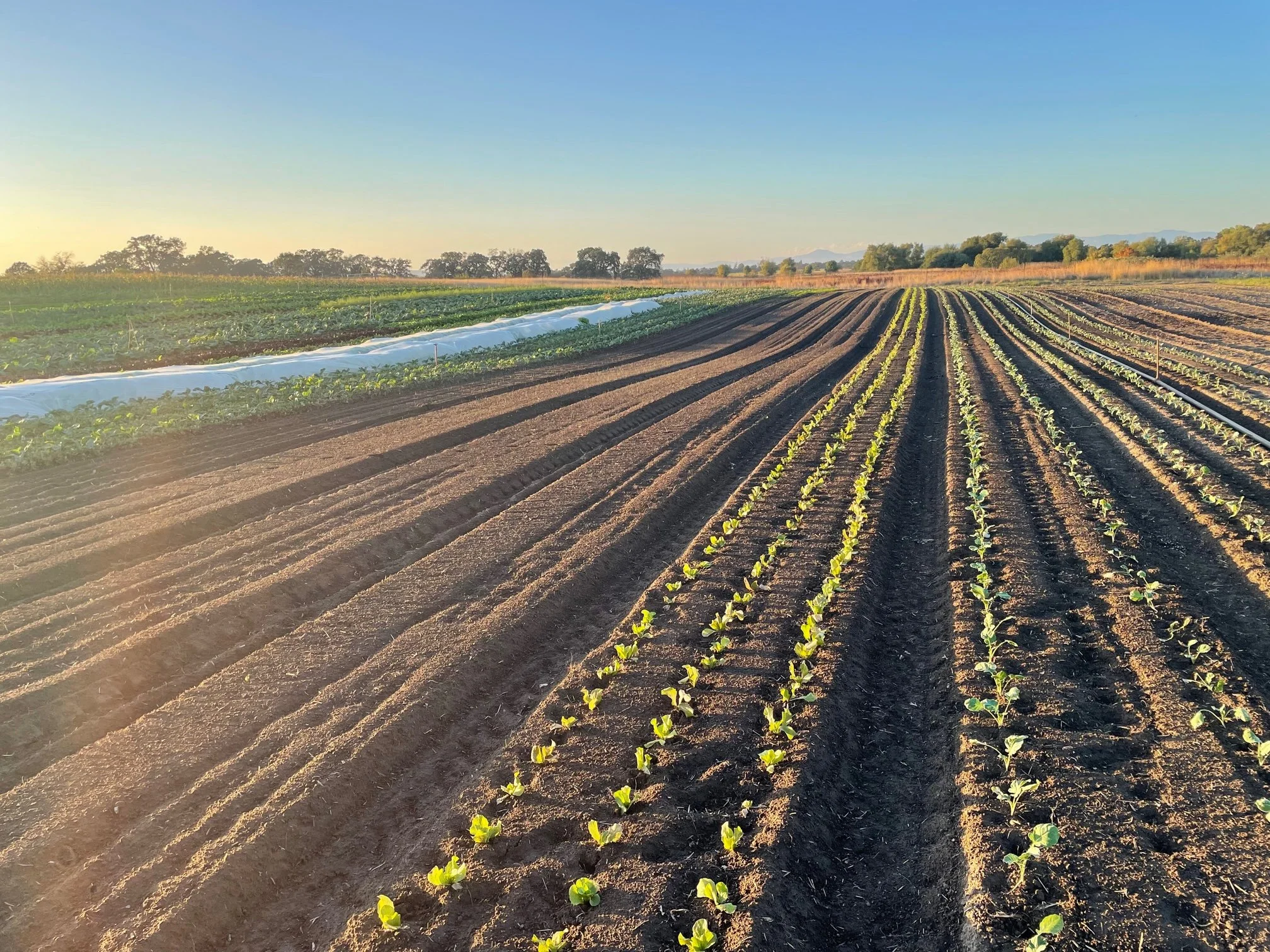
Insects: Our insect pests offer a textbook example of the natural ecology of food sources at work. Our first year we had very few classic garden insect pests. The farm had been fallow for a couple years and their populations were scant. As soon as we started planting they started eating and breeding and now we have flea beetles and cucumber beetles in good supply — but less, I think, than other farms because of our wild locale. Flea beetles, for example, who feed on brassicas and make the little pin holes on the arugula and mustard greens, are relatively chill here. This may be because we aren’t close to a large vineyard. A lot of local vineyards plant mustard as a cover crop in the winter for its anti-fungal properties. Large flea beetle populations over-winter on this cover crop. Come Spring, the vineyards mow the mustard, and the flea beetles jump on the nearest kale, broccoli, or cabbage they can find! Singing Frogs farm, next to a large Dutton vineyard, has a famously epic Spring flea beetle attack when Dutton mows. We’re lucky to have just a normal attack. As for the cucumber beetles (who look like green ladybugs), they would do a lot of damage were it not for the organic Kaolin clay (that white stuff) we spray on all our new cucurbit plantings until the plants grow strong enough to repel them on there own. And, again, the myriad birds, frogs, lizards, turkeys, and predatory insects who feed on the pest insects help us so much. One of the most beautiful things to watch on the farm is the swarms of swallows and dragonflies swooping over the fields and feeding on insects in the evenings.

Note chew marks bottom center

Note chew marks bottom center

Garden Symphylans: They who shall not be named. Of all the antagonists written about above, none are smaller and none are scarier than the garden symphylan. Garden symphylans are quarter-inch long, blind, super fast crawling, soil dwelling arthropods that look like little white centipedes. They thrive in soils with high organic matter, good soil structure, and earth worms for they cannot dig themselves and rely on the tunnels of others to move about. They feed on decaying organic matter and, tragically, the fine white root hairs of growing plants. In high enough concentrations they annihilate everything growing in their biosphere, even weeds. We have garden symphylans in high concentrations in small patches and are still determining exactly where they are. (A strip of high-ground in field 1, a diffuse swath of the middle of field 3...) Like a photo-negative, they are where the crops are not. In a 200 foot bed of arugula 170 feet will be growing happily, with a 30 foot patch of bare ground. Garden symphylans cause more crop loss, affect the harvest share, and determine the placement of our plantings more than any other creature on the farm. They are partially responsible for why we aren’t having another 2 more weeks of melons. Unfortunately, there are no known biological, organic, or even inorganic controls for garden symphylans. We are in decent company, both Santa Rosa Junior College’s Shone Farm and UCSC’s Farm have them. One known plant deterrent is potatoes (they do not eat potato roots). That is why we planted potatoes where we did this year — in an area hard hit by them last year. And so, we will continue to experiment with plant allies as deterrents in our dance with the little white ghosts of Green Valley Community Farm.

* * * * *

Hopefully wild pigs don’t cross the Russian River because that’s all folks — A pretty short list of creatures that we must vie with for Green Valley Community Farm fare!

In the end, we are eternally grateful for them. They keep us in check. They humble us and remind us of our place in the grand scheme of things: Not above anyone, not below, but woven firmly within of the web of interrelation and inter-dependence that sustains us all.

See you in the fields,
David and Kayta

9/20/2019 - Week 14 - Autumn Greetings

THIS WEEK'S HARVEST

New German Butterball Potatoes, Heirloom & Slicing Tomatoes, Sweet Peppers, Golden Beets, King Richard Leeks, Curly Green Kale, Green Cabbage, Broccoli, Pink Lady Slipper Radishes, Olympian Cucumbers, San Juan Melons, Summer Squash and Zucchini, Rainbow Carrots, Fall Braising Mix (with Frisee, Radicchio, Baby Chard & Baby Kale), Red Butter & Muir Summercrisp Head Lettuce, B-Grade Creole Garlic

A9C1766B-F7D8-4483-A916-828F9E4C6AA6.JPG

U-PICK

  • 🌟NEW Classic Green Beans: Sweet and delicate. Limit 5 pints

  • Dragon Tongue Green Beans: NO LIMIT. Getting larger. See Week 13’s newsletter for a great pickled green bean recipe

  • Cherry Tomatoes: NO LIMIT

  • Frying Peppers: Winding down. Shishito, Black Hungarian, Padrón / See Week 2's newsletter for harvest tips

  • Jalapeños: Winding down. Located below the frying peppers

  • Strawberries

  • Husk Cherries - Gleanings - See week 8’s newsletter for harvest tips

  • Herbs: Italian Basil, Tulsi Basil, Thai Basil, Purple Basil, Italian Parsley, Rosemary, Lemon balm, Lemon Verbena, Perennial Cilantro, Annual Cilantro, French Sorrel, Onion Chives, Garlic Chives, Tarragon, Oregano, Thyme, Chamomile, Mints, Anise Hyssop, 🌟 Culinary Lavender, 🌟 Lemongrass

  • Flowers! There some nice new zinnias and cosmos beds on the farm to the left of the cherry tomatoes

Chase helps Jaime harvest from the new green bean plants

Chase helps Jaime harvest from the new green bean plants

HARVEST NOTES

  • Fall Braising Mix: We’ve been loving this week’s greens mix at home. It is a mixture of baby red Russian kale, baby chard, frisee, and radicchio. (Frisee and radicchio both being in the chicory family of leafy vegetables which also includes endives. Chicories have a rich, sweet, slightly bitter flavor.) Try using this mix in three ways:

    • Eat it raw on its own drenched in your favorite dressing

    • Mix it up: Mix it in with the lettuce this week to add a hearty note to your lettuce salad

    • Broil it: Our favorite method. In a bowl, toss the Fall Braising Mix lightly with oil, coating every leaf. Lay the coated leaves out on a pan and put in the broiler just long enough to wilt the leaves and brown some of them. Watch carefully to keep from burning! Take out of the broiler and toss with raw garlic, lemon juice, perhaps more olive oil, and salt to taste. Top with shredded parmesan to take it to the next level. Bon appetite!

  • New German Butterball Potatoes: The third of four potato varieties we’re debuting this month, German Butterballs are aptly named. A creamy, rich, yellow-fleshed beauty with sublime flavor. These potatoes are sometimes called the gold standard of gold potatoes. New potatoes are potatoes harvested fresh while the mother plant is still green and the skins haven’t hardened. They are crisp, turgid, fresh vegetables and something of a delicacy.

  • San Juan Melons: A type of Ananas melon. Ananas are oval, netted melons originally from the Mideast. Renowned for their sweet, aromatic, and slightly pear spiced flavor. Some San Juans are the sweetest melons ever.

  • Lemongrass: Lemongrass, common in Thai cooking, is now available in the garden. The part used is generally the fat, fibrous lower portion of the stem (although on this fresh, garden lemongrass, even the tips of the leaves are delightfully fragrant). Harvest by following a blade of grass to the very base of the plant where it meets soil/root system and snap a stem off from there. In Thai soups this fibrous bottom-stem is smashed and cooked into the soup, imbuing it with that distinct lemony-flavor.

Summer sets on field 4 Napa cabbage, Brussels sprouts, Blue Dino kale, frisee and radicchio, beets, and more!

Summer sets on field 4 Napa cabbage, Brussels sprouts, Blue Dino kale, frisee and radicchio, beets, and more!

PRESERVING THE HARVEST

  • Tomatoes 2nds: Still a few.

  • Bulk White Satin Carrots: Don’t underestimate the White Satin Carrot. We feel it is consistently our best tasting, sweetest carrot. It also happens to be extraordinarily vigorous. We’ll be putting out bulk White Satins on the back table for pickling, juicing, etc. Out of bag. Don’t be shy, take 10 pounds! Check out this wonderful recipe for pickling carrots… or any vegetable!

FALL HARVEST WORKSHOPS

We’re super excited to announce two Fall workshops put on by our neighbor, CSA member, and ecological educator, Lindsay Dailey, one on making dye from farm flowers and the other on making masa for tamales and tortillas. Both workshops are free to CSA members.

Colors of the Land
Saturday, September 28th: 9am - 11am

In addition to providing beauty, pollen, nectar (and joy!), the flowers at GVCF are full of wearable color. Join us to learn the process of natural dyeing, utilizing plants to saturate fibers with various hues from nature. We’ll take a walk through the garden, look at some wild and cultivated dye plants that are abundant on the farm, and then harvest a few batches of plant material to cook up some color! We’ll discuss the process of natural dyeing, while the pots simmer, and you’ll have a colorful scarf or hankie to take home at the end of pickup. Silk bandanas and scarves (pre-mordanted) will be available to dye during the class and take home for a suggested donation of $5 - $10.

The Magic of Corn in the Kitchen and Garden
Saturday, November 2nd: 10am - 12pm

Want to make tortillas and tamales from Green Valley corn? Learn to work with the magic of corn. Lindsay — a deep student of corn — will demonstrate how to grind corn for flour, discuss recipes, and explore the alchemy of nixtamalization which makes corn sticky in order to make masa for tortillas and tamales. While we work, Lindsay and the farmers will talk about the natural history and mythology of corn and discuss planting, growing, and saving seed from this amazing plant in the home garden! And then we'll eat some fresh made tortillas! Yum! .

FRESH BREAD SATURDAY!

Gaby Tiradani fired up her oven and is baking us 20 loaves of country sourdough and olive bread loaves for Saturday. Any leftover loaves will the available frozen in the freezer. $9, cash only.

MUSHROOMS COMING SOON…

If the what our forest friends are telling us is true, we will have mushrooms available for sale at CSA pickup very soon. Check it out…

shroom.jpg

Hello CSA members!

We are Moon Fruit Mushroom Farm and are excited to announce that our first year of fresh shiitake mushrooms is coming to the Green Valley Community Farm CSA very soon! Let us tell you a little bit about our farm.

Ryath Beauchene and myself, Cory Brown, both have a deep affinity for fungi not only because they are delicious and medicinal, but also because they play very important roles in terrestrial ecosystems. Our first year has been all about shiitake and reishi. With the help of our friends and community, we inoculated almost 200 logs with shiitake spawn at the beginning of 2019, and now our first batch is about to begin fruiting. We believe in imitating the natural processes of forest-grown fungi for maximum medicinal and nutritional content. We are located in the neighboring forest to the north of the vegetable farm, which means we can walk to deliver these beauties to your goodie bag!

Our shiitake logs have let us know they’re ready to begin fruiting by offering us two beautiful mushrooms, and we’re anticipating a strong flush within the next month or so. If all goes well, we will have plenty of shiitake for purchase in October and through the rest of the CSA season.

Next year, we will inoculate even more shiitake logs and begin reishi production as well. We will be hanging around the CSA pickup area for you to meet us and potentially take home some extras in your bag.

We will update you through the newsletter to let you know the exact days we will start selling. See you soon!

-Ryath and Cory

GARLIC TRIMMERS WANTED

Thank you to Susan Bendinelli, Ralph Elder and Kathy Meechan for trimming up so much garlic! We are looking for a few more lovely volunteers to finish off trimming for the year. Let us know if you are interested!

VOLUNTEER WEDNESDAYS, 8:00-10:00 AM

Interested in some farm therapy? Come out on Wednesday mornings to help us tend the garden and farm together! Find us in the garden or out in the main fields on Wednesdays from 8:00am 'til 10:00 am. People of all abilities welcome, we’ll find something comfortable for you to do!

FARMER’S LOG

Autumn Greetings

At 12:50 AM Monday morning, the Earth will wobble its midline back straight in line with the sun. At that moment a loud "WAAHOO!" will be heard from space, coming from the Northern Hemisphere. That would be the farmers…

The coming of Fall is a special time on a temperate farm like ours for many reasons.

With the Equinox begins a slow changing of the guard on the harvest table. This past week, a mysterious internal switch seems to have been flipped in our summer crops; Tomatoes, cucumbers, summer and winter squash all know what time it is, and seem content to let themselves wind down and finish setting their final fruits. Take heed! One by one the sweet, tangy, colorful characters of Summer will be replaced by the rich, earthy, ponderous patrons of Fall.

It is a time of great change in the fields. The big field harvests draw nigh. Soon we will harvest our staple, long storing field crops and enjoy the satisfaction of reaping a season's worth of work in the form of potatoes, corn, and winter squash, which will sustain and nourish us until the Winter Solstice. (The potato harvest is about 3 weeks away, we'll let you know!) Every field or garden bed finished now will be taken out of production and put into buckwheat (a short cover crop) or covered to await Winter cover crop in late October.

Kayta checking on our King Richard Leeks

Kayta checking on our King Richard Leeks

The Equinox also signifies rest is on the horizon for the farmer! The softer Fall light feels like balm on a sun-scorched skin. We can't work much past seven these days — it’s too dark! The long fall shadows play beautifully on the flowers. The mornings are crisp. The nights are long. Aye, there are big pushes to be made bringing in the big harvests, planting next year’s garlic, and putting the fields to bed — rest is near.

Change is afoot in the wild plant and animal worlds as well.

In a Mediterranean climate like ours, the Autumn Equinox is akin to the Spring Equinox in a place like Maine. The great annual dormancy — here caused by dryness, in Maine by cold and snow — hasn’t lifted yet, but relief is near. And everyone is antsy with anticipation…

The baby Turkeys we first glimpsed as tiny fluff balls in June have matured into birds nearly indistinguishable from their parents. With corresponding appetites they stalk the fields for tasty bites. Likewise, Turkey, Deer, Hare and Gopher have all have developed voracious appetites for succulent farm fare lately as they forage the landscape in this, the driest, hungriest month before the first life giving rains. The countdown is on.

Until then, the irrigation system is running full bore fattening up our Fall crops greedily drinking the waning sunlight; Coyote, Bobcat, Fox, Hawk and the Owls are keeping the ravenous gophers in check; we’re sharpening our harvest knives, doing our backbends, and girding for the big Fall final push. And we're excited to begin sharing the magic and bounty of Fall on the farm with you…

See you in the fields,
David and Kayta