12/8/17 - Week 26 - last week 2017

Dear Members,

2018 CSA MEMBERSHIP RENEWAL: We can't wait for next season and we hope you can't either! We'll send out an email opening sign-ups in early January -- and you'll be first in line. 2018's CSA season will start in late May or early June. Tell your friends as we will be expanding the CSA next year. Thank you SO much for your support this year and we hope to see you on the farm this winter and next year!

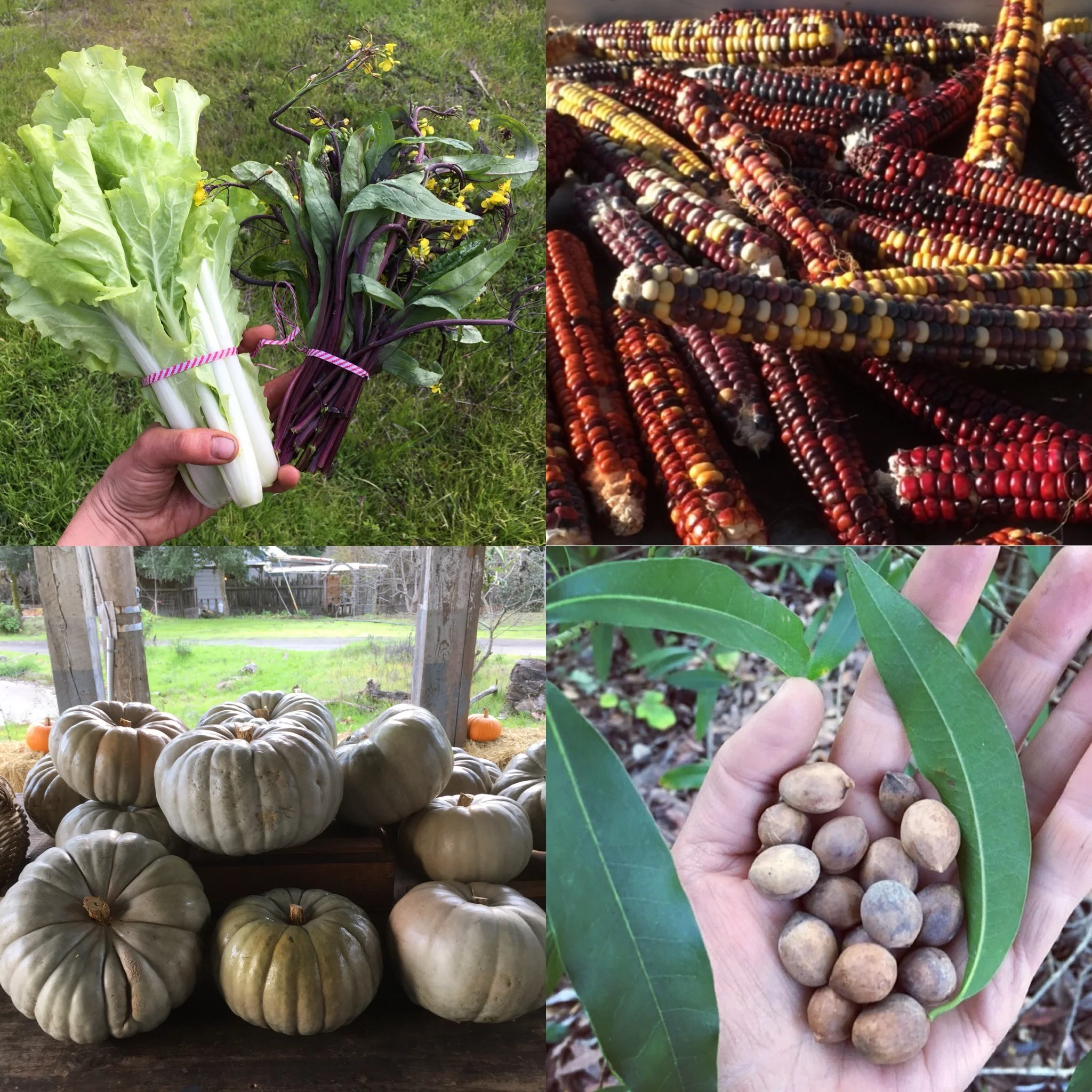
THIS WEEKS HARVEST: California Bay Laurel Nuts, Painted Mountain Corn Flour, Jarrahdale Large Pumpkins, Delicata Squash, Butterscotch Butternut Squash, Bodega Red Potatoes, Cured Yellow Onions, Kohlrabi, Fennel, Celery, Broccoli Shoots, Cauliflower, "Kaitlin" Sauerkraut Cabbage, Mixed Beets, Carrots, Collards, Rainbow Chard, Dandelion Greens, Bunching Napa Cabbage Greens, Hon Tsai Tai Kailaan, Red Little Gems and Hearts-Aglow Lettuce Mix

New goodies this week: Bunching Napa cabbage and *Hon Tsai Tai Kailaan, Jarrahdale pumpkins, Painted Mountain cornflour, and California bay laurel nuts

*Hon Tsai Tai Kailaan a Chinese speciality green brassica with pencil-thin, red-purple, budded flower stems. It has a pleasing mild mustard taste for use raw in salads or lightly cooked in stir-fries or soups.

U-PICK in the GARDEN: 

  • Strawberry snacks (The strawberries are putting out a nice December flush)
  • Herbs: Lemongrass, Lemonbalm, Lemon Verbena, Anise Hyssop, Sorrel, Thyme, Sage, Oregano, Onion Chives, Garlic Chives, Tarragon, French Culinary Lavender, Chocolate Mint, Julep Mint, and Peppermint

CALIFORNIA BAY NUTS:

We're excited to bring our first wild foraged native food to the share this week. 

The California Bay Laurel (Umbellularia californica aka Oregon myrtle, bay tree, pepperwood, spice-tree, California olive) is a tree endemic to California and southern Oregon. It thrives in coastal forests within 160 miles of the ocean and produces olive sized fruits with oily flesh and a seed shaped like a little avocado pit. 

The leaves and flesh of the fruit contain strong smelling volatile oils that kill germs, fungi, and even insects. (Woodrats nibble bay leaves and spread the around their homes to keep fleas and parasites away.) Bay leaves were used by native peoples as a medicine, a purifier, a food seasoning, and an insect repellent.

The fruits, both the flesh and the nut, were eaten by many native tribes. Ohlone and Pomo people ground dried nuts into "energy balls" or cakes eaten when traveling or hunting or sprinkled it on around food as a condiment. The nut contains a caffeine-like stimulant, so think twice before feeding them to the kids before bedtime! 

California laurel nuts mature and drop in late October and November.

(Info from Secrets of the Oak Woodlands by Kate Marianchild)

California Bay Nut Chocolates, adapted from livingwild.org

  • 1 cup California Bay nuts Umbellularia californica
  • 1 bar organic dark chocolate
  • Salt

1. Preheat oven to 350 degrees
2. Place unshelled nuts on a cookie sheet and bake for approximately 35 minutes to evaporate oils -- they are done when the nut inside the shell is somewhere between the color of coffee with cream and the color of chocolate. The most important indicator is that there are not enough of the essential oils left to create an unpleasant burning sensation in the back of your throat. The desirable flavor is reminiscent of unsweetened cacao or burnt popcorn.
3. Shell the outer protective hull of the nut with a nutcracker or you teeth, revealing the edible, two sided egg shaped nut within
4. Melt chocolate in a double boiler.
5. Place one or two bay nuts in each compartment of an ice cube tray.

6. Pour melted chocolate over nuts, fulling ice cube trays

7. Sprinkle top with a little bit of salt
8. Set in freezer for about 15 minutes.
IMG_3742.JPG

Variation #1: The Occidental Arts and Ecology Center has a great Bay nut infused cheese cake recipe.

Variation #2: After roasting nuts, grind with sugar and cocoa powder to create a delicious chocolate-like dessert.

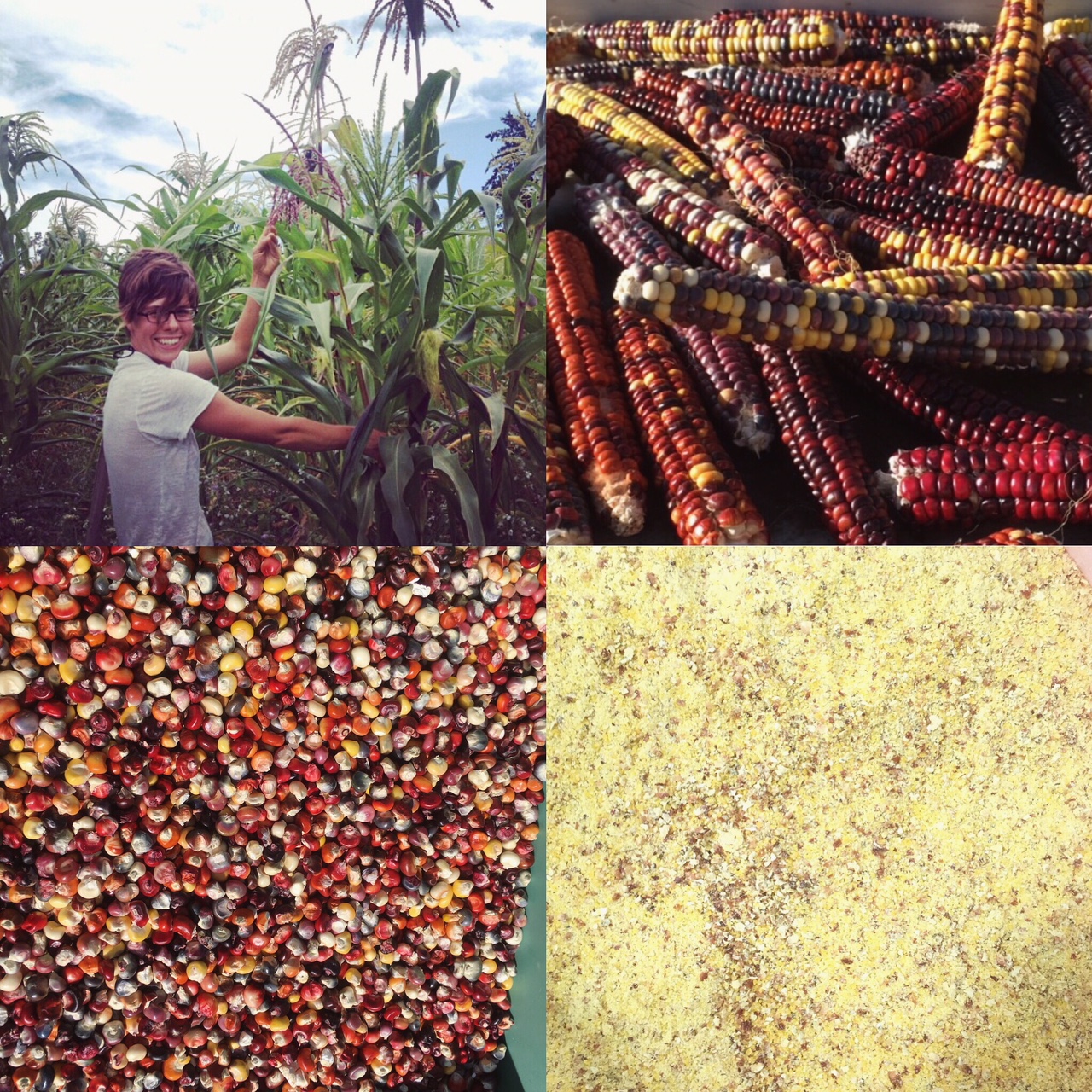
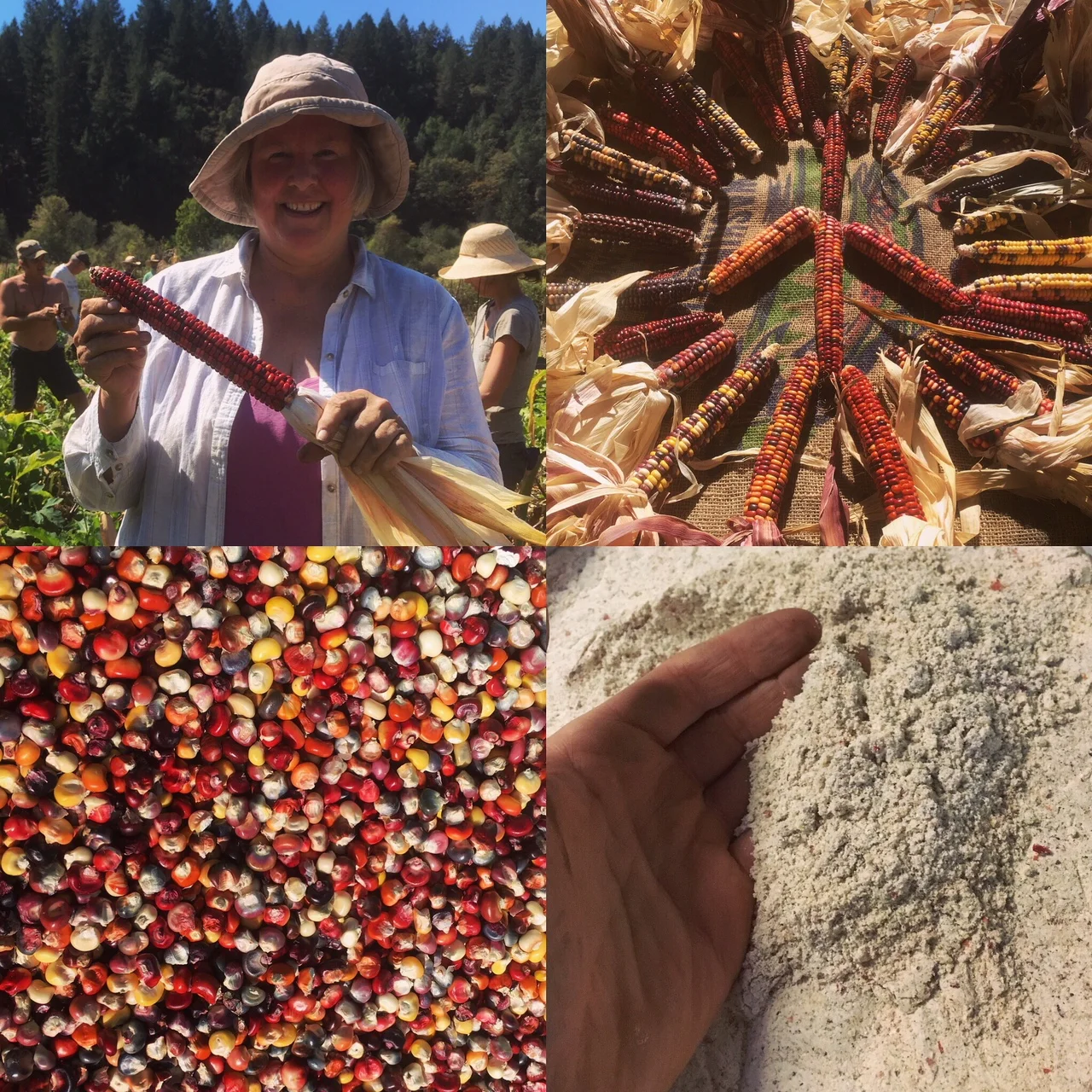
PAINTED MOUNTAIN CORN FLOUR:Grown next to the Jack-O-Lanterns, harvested by you(!), milled at Tierra Vegetables in Windsor, and to your table, we're excited to bring the Painted Mountain Cornflour to the share this week. Painted Mountain corn is a hearty heirloom from Montana bred as an early-harvesting, all-purpose flour corn. This fresh flour (harvested in October and ground last Thursday) can be used in infinite ways; pancakes, crepes, cornbread, etc. Here is a link to a great corn pancake recipe from Bob's Red Mill. 


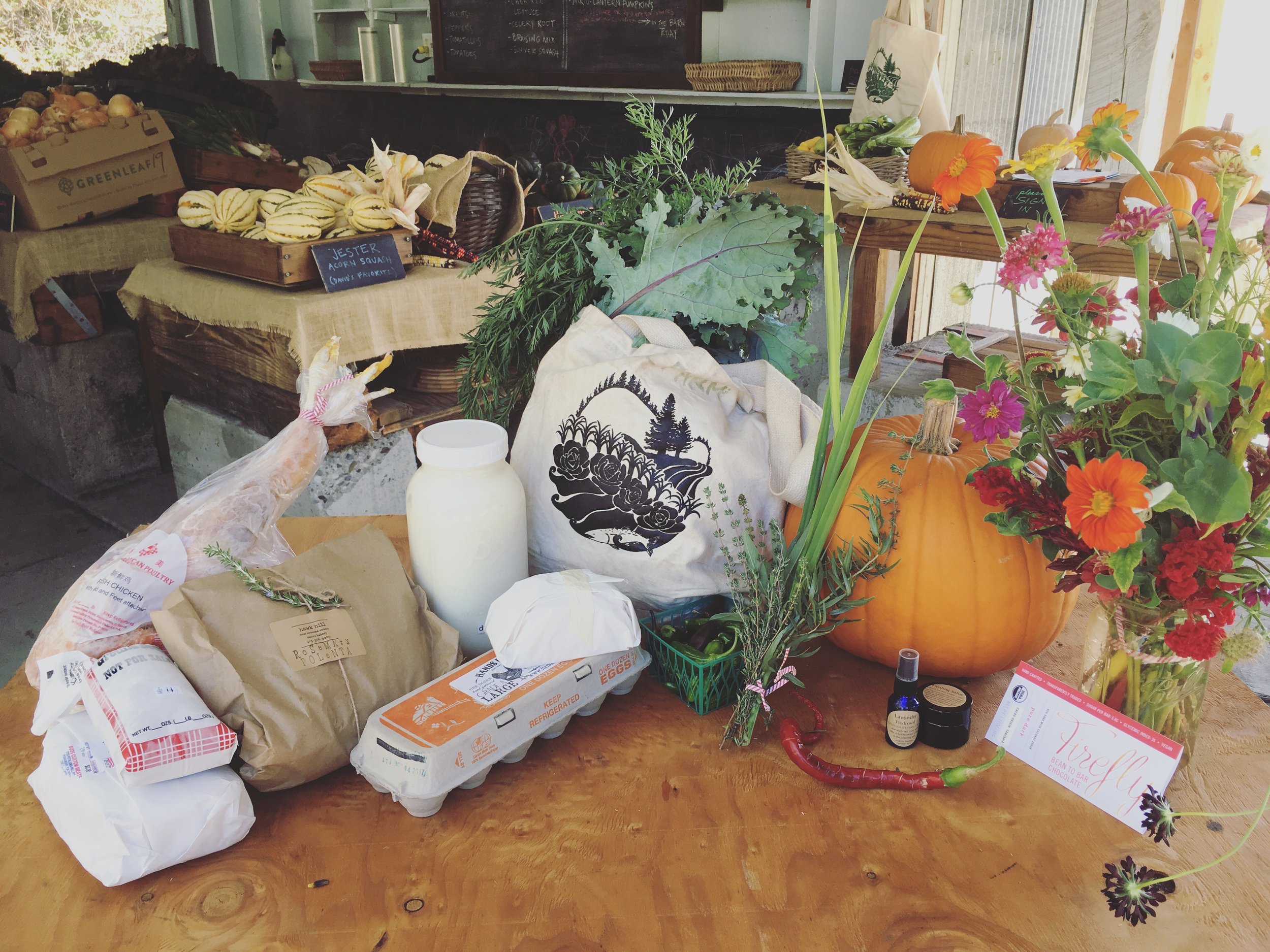
FARMSTORE: A new supply of whole chickens from Parade the Land arrived at the Bramble Tail Creamery today. There's also beef raised 100% on Green Valley pasture, Hands Full Farm eggs, Bramble Tail milk and cheese (herdshare members only), new herbal remedies by Aubrie, and Firefly chocolate. A couple last frozen Hawk Hill Sourdough Bread loaves await you in the white freezer in our barn.

FARMER'S LOG:

It was a bittersweet harvest morning for Kayta and I today -- the last Friday morning harvest of our 2017 CSA season.

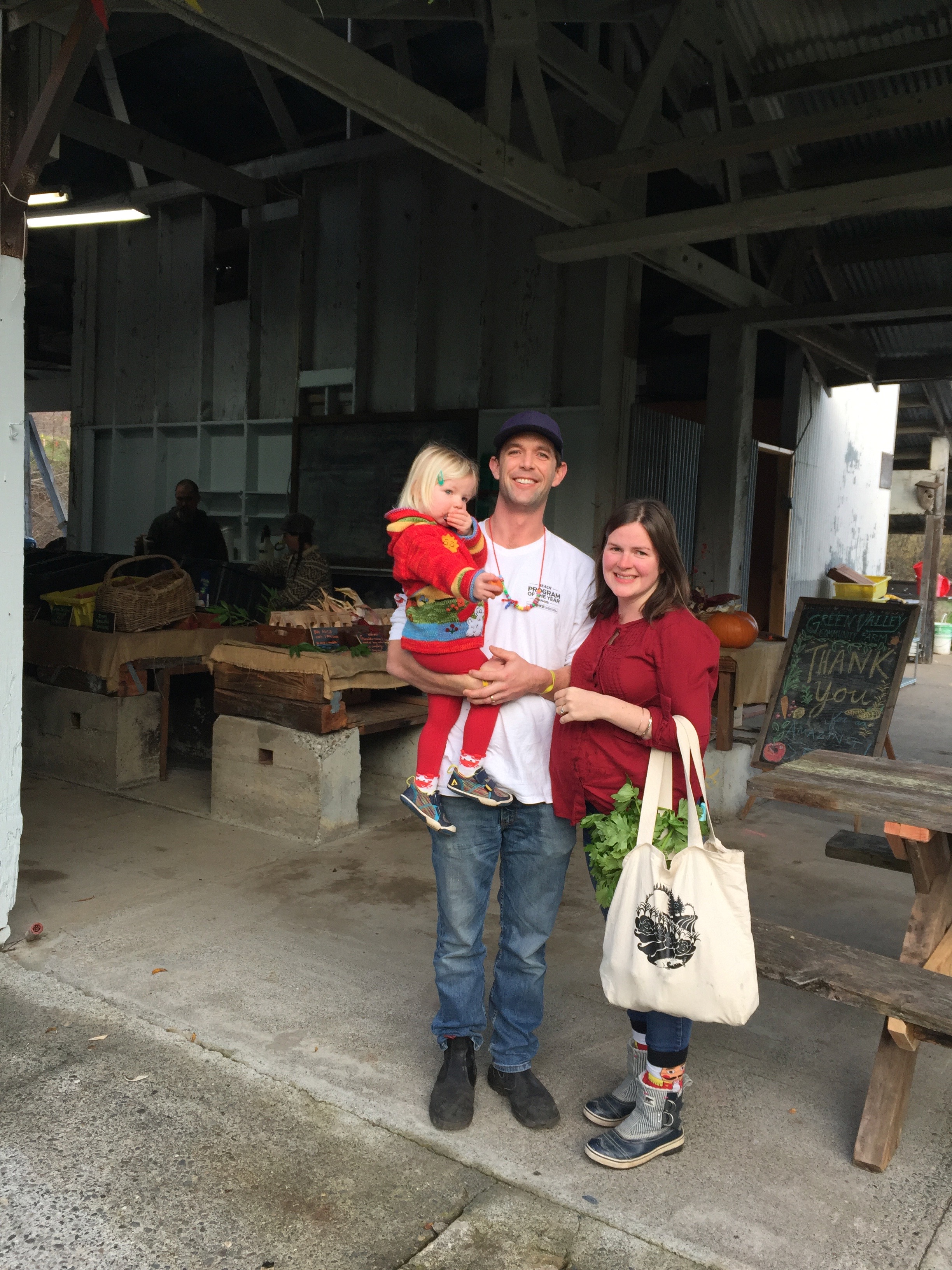
It has been such a wonderful year of growth, joy, and community... the highlight for us being getting to know each of you, your wonderful children, and seeing you interact with the farm. We cherished the presence you all brought to the farm this season and we will miss seeing you each week! 

We encourage you all to visit the farm at least once this winter -- to say hi, to pick some herbs or late strawberries. And, if you have a moment, to stand still for a moment in the fields.

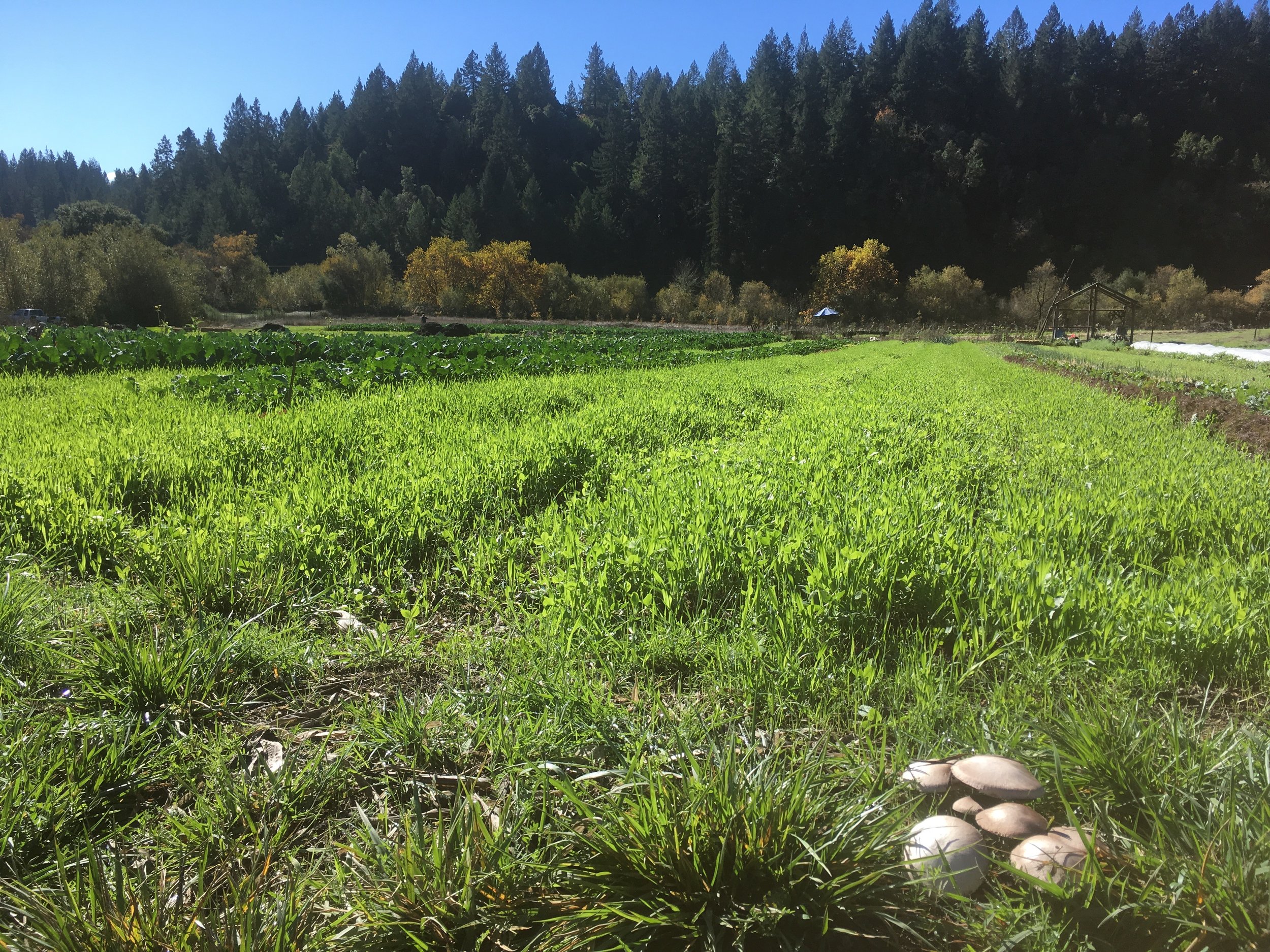
There, you will find silence... broken only by the screech of a hawk or the soft chattering of a quail. A coolness will emanate up from damp soil, chilling your knees. Before you will lay the farm, the soft curves of the fields and hills draped under a blanket of green, asleep. But tread softly and listen closely....

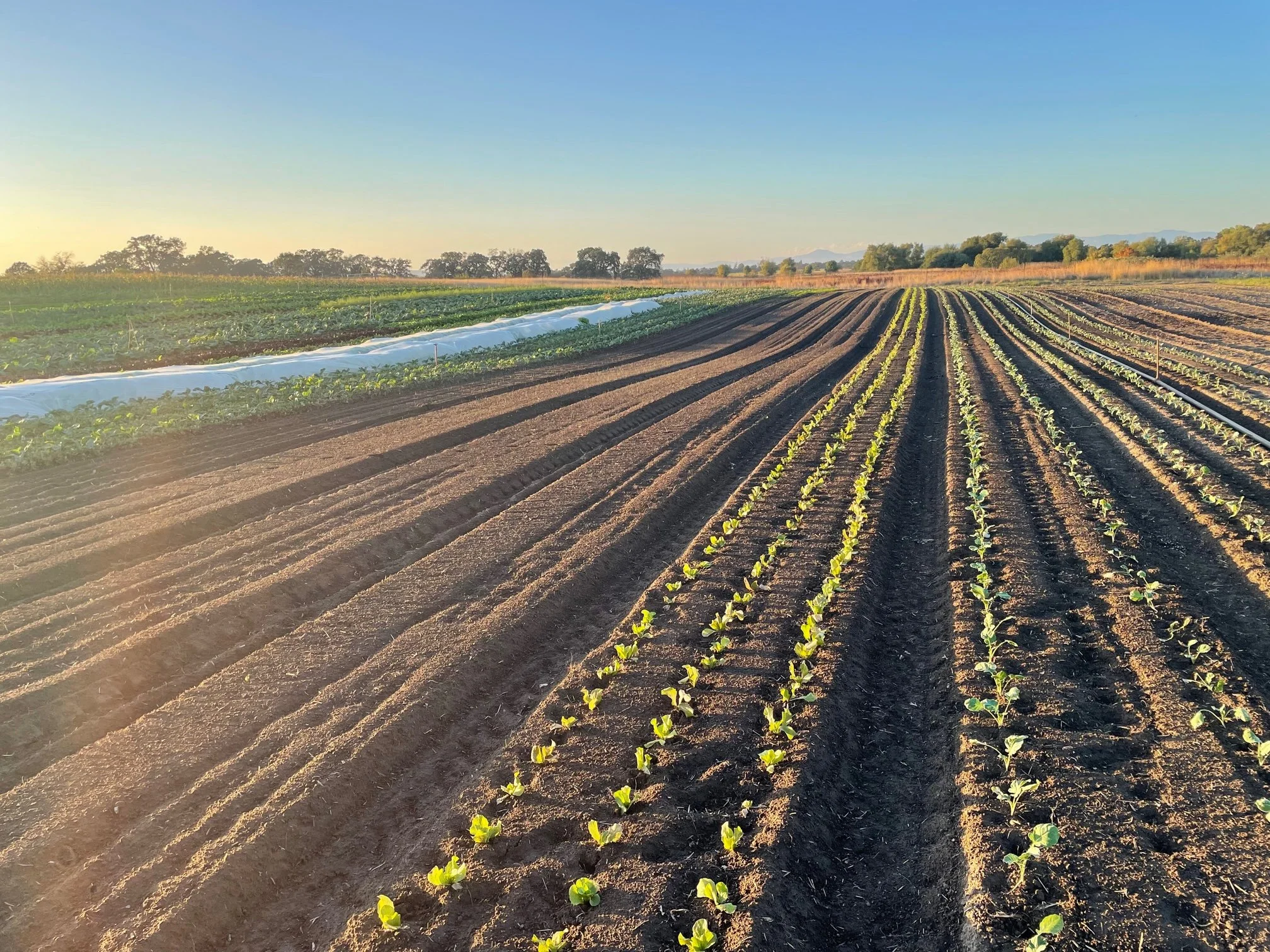
Next season's intensive veggie fields awash in long fall shadows

Next season's intensive veggie fields awash in long fall shadows

Within that slumber next season churns: The cover crop stretches its living roots deep into the soil below where subterranean creatures break down this year's crop residue, like so many memories, into the raw materials that will make up next year's bounty -- next year's story. Listen closely and you can hear the land dreaming.

IMG_5207-2.jpg

For now, it is time for your farmers to rest, to reflect, and to do a little dreaming ourselves. Thank you all so much for the memories this year, here's to many more to come.

See you in the fields,

David and Kayta (and Bilbo)

12/1/17 - Week 25 - farm vision

IMG_3732.jpg

THIS WEEKS HARVEST: Floriani Red Flint Cornmeal, Wintersweet Kabocha Squash, Delicata Squash, Yukon Gold Potatoes, Cured Cabernet Red Onions, Azur Star Purple Kohlrabi, Broccoli, Cauliflower, Assorted Cabbage, Purple Top Turnips, Loose Mixed Beets, Celery, Bolero Orange Carrots, Brussels Sprouts, Broccoli Spigarello, Rainbow Chard, Komatsuna, Dandelion Greens, Spinach, Red Butter & Baby Romaine Head Lettuce

U-PICK in the GARDEN: 

  • Shishito Frying Peppers
  • Padrones & Jalapeños
  • Strawberry snacks (Due to the warm weather, the strawberries are putting out a little December flush)
  • Lemongrass, Lemonbalm,Lemon Verbena, Anise Hyssop, Sorrel,Thyme, Sage, Oregano, Onion Chives, Garlic Chives, Tarragon, French Culinary Lavender Chocolate Mint, Julep Mint, and Peppermint

POLENTA RECIPE:

This week we will be distributing Floriani Red Flint Cornmeal. Floriani is an heirloom variety from Northern Italy, bred for the delicious and beautifully red-speckled polenta it makes. Our cornmeal is special in that it is fresh: Harvested in October, ground on Thursday, and kept frozen to preserve the germ. Grain this fresh is hard to find nowadays. We think you'll notice a difference.

Basic Polenta

  • 1 part cornmeal
  • 4 parts liquid: This can be a combination of water, milk, or stock. We usually do half milk, half water. The more milk you add the brighter the color the final dish will be.
  • Salt
  • Olive oil or butter (lots of butter is good!)

Bring the liquid, salt, and butter or oil to a boil. Once you have a rolling boil, whisk in the polenta meal slowly. Turn the heat down low and continue simmering either as long as you have time for or until the polenta reaches a creamy consistency. If you cook for 20 minutes or longer, you may wish to continue to add a little liquid as it absorbs. For variations, add crushed garlic, sundried tomatoes, or Parmesan. Pour any leftover polenta into a shallow pan and refrigerate. After it sets, this can be sliced and pan fried.

ADD-ONS:

Don't forget to check out the Bramble Tail Creamery for more add-on to your share: Beef raised 100% on Green Valley pasture, Hands Full Farm eggs, Parade the Land Whole Chickens, Bramble Tail milk and cheese (herdshare members only), herbal remedies by Aubrie, and Firefly chocolate. Hawk Hill Sourdough Bread loaves will be available in our barn this week.

FARMERS LOG:

A Vision for the Future at Green Valley Community Farm

“There are, it seems, two muses: the Muse of Inspiration, who gives us inarticulate visions and desires, and the Muse of Realization, who returns again and again to say "It is yet more difficult than you thought." This is the muse of form. It may be then that form serves us best when it works as an obstruction, to baffle us and deflect our intended course... The impeded stream is the one that sings.” 


“A community is the mental and spiritual condition of knowing that the place is shared, and that the people who share the place define and limit the possibilities of each other's lives." - Wendell Berry

This year, as a community, we shared the inherent risks of agriculture; we shared the labor and the fruits. Kayta and I feel it is only fitting we share a vision as well. Here, two weeks away from the end of our 2017 CSA season, we thought we might share with you our vision for the future of Green Valley Community Farm.

Of course, the fate of the farm and the exact shape it takes are beholden to myriads of unknowns. But as a community we have the reigns; we have the power to steer a course, to outline a shape, to work on building something needful together. This is the true spirit of Community Supported Agriculture -- to involve a community of eaters in the life and growth of a farm.

First, let's recap.

This year, we cultivated about 2 acres. The harvest from this land was focused toward the CSA program, which reached 30 shares (households), while two summer Farmer's Markets (Forestville and Occidental), a little bit of wholesale, and donations to the CERES Community Project captured the overflow. The year was challenging in the ways we expected it would be as we established our systems and tried our trade on this land for the first time. In the end, it was a very encouraging year -- especially the CSA program. Having you all here interacting with the farm reaffirmed our love for this model of agriculture and our vision for the farm.

IMG_3005.jpg

What of the future?

Buoyed by this year, we'll increase the size of the CSA to around 50 shares next year (tell your friends!) while dropping the Forestville Market. We'll plant about the same acreage, refine our systems and our crop planning, and plant our first fruit trees. We're excited for the raspberry canes and the strawberry patch to experience their first true spring. Otherwise, next year should look much the same this one has, with its own unique terroir and it's own story.

As the years role on, as the CSA grows by word-of-mouth, as the perennials grow, and as Kayta and I grow as farmers, we envision Green Valley Community Farm as an exclusively CSA farm supported by around 200 shares. At 200 shares, couple farmers can start making a living, and this number is around what we feel our land base can support while allowing us to rest fields in the summer... an important part of keeping things sustainable here.

We envision perennial fruit in the share with fruiting trees, shrubs, and natives contouring the hillsides above the fields and quilted alongside and possibly within the lower fields, providing three dimensional, continuous habitat and refuge for wildlife... and people. We envision more shade structures, more seating areas, and pathways on the farm and connecting the fields to Green Valley Creek.

We envision more animals in the mix. Already there are whispers on the wind about bringing in chickens next year. Next year, or whenever they arrive, chickens rotating on fallow fields and on adjacent hillsides will enliven the soil, the landscape, and our omelets. As soon as we get a big enough swath of resting summer cover crop, we hope to commission some of Bramble Tail's Jerseys to lend their services to the soil.

We envision more farmers in the mix! We're looking forward to introducing you to our friend and farmer extra-ordinare Elliot, who'll be helping us out next year! As the farm grows we envision welcoming the gifts of fellow farmers to this land, perhaps an apprenticeship program someday when we stop being disciples.

Whatever obstacles and challenges the future holds for this farm, if the vision shapes up to be half as fun as this year, the future looks bright. 

See you in the fields,

David

11/24/17 - Week 24 - Thoughts on our soil

"Grow healthy soil. The rest will follow." -Unknown

Going into this year, Kayta and I really didn't know what to expect from Green Valley's soil. How would the veggies look throughout the demanding growing season?

Not all soils are the same. Some require much more work out of a farmer than others. Very sandy soils, for example, require farmers to focus much more on the nutritional side of things, as nutrients leach out of sandy soils. Very clayey soils are more challenging to create and maintain healthy soil structure. The "Goldilocks" loams found in places like California's Central Valley and the Great Plains, built up by eons of carbonaceous plant activity, are described as "boy's soil" -- in that you don't have to do anything to get stuff to grow.

Going into this year, we had heard rumors of tougher growing conditions here from the previous farmers: Occasionally stunted plants, discoloration, etc. Our soil tests in the fall of 2016 indicated that with some standard amending (lime, for example, as Sonoma County soils are usually slightly acidic) the "clayey" sandy loam here had much of what happy fruits and veggies need. We could only do our best and see how the plants grew...

To establish a good baseline here, Kayta and I did some pretty textbook organic amending, based on our soil tests, to the fields and garden in the Spring. We added oyster shell lime and gypsum (to balance the PH and add calcium), sulphur of potash (because the soil was lacking in potassium), bonemeal (for phosphorus), feather meal (for nitrogen), and hefty amounts of compost to add organic matter; the glue of all soil biology and chemistry. If a bed was planted a second time this Summer, we added a small amount of feather meal and bone meal. 

We were thrilled to see that this relatively modest treatment, combined with the native soil composition and biology here, yielded very healthy plants... even some super phatty cauliflower and broccoli heads (a good litmus test of soil fertility.) There were ample earthworms and mycelium (fungal networks). Roots and crop residues broke down very quickly, indicating vigorous soil biology. 

All this is exciting. It means that each year, as the PH and nutrients are balanced, we can rely less-and-less on these outside inputs and more-and-more on closed loop, multi-functional systems like cover cropping, rotating livestock on fallow fields, compost made from farm waste, and the resident soil biology thriving under these practices. As we speak, the thick leguminous cover crop sinking its roots into the soil out there should, among other things, provide most or all of the nitrogen we need next year for phat cauliflower heads. The clayey nature of this soil means that nutrients and organic matter will be retained by the soil, those small particles hugging them tight. The soil should only continue to improve by years of thoughtful management and care. 

It's not "boy's soil" out there, but we're all lucky to have fertile little Green Valley.

See you in the fields,

David

IMG_3713.jpg

THIS WEEK'S HARVEST: Honeybear Acorn Squash, Butterscotch Baby Butternut Squash Bodega Red Potatoes, Cured Yellow Onions, Kohlrabi, Red Bok Choi, Broccoli, Cauliflower, Napa Cabbage, Daikon Radish, Loose Mixed Beets, Celery Root, Rainbow Carrots, Brussels Sprouts, Red Russian Kale, Rainbow Chard, Hazel's Salad Mix (Mustards, Chicories, Arugula, Spinach) Hearts-aglow Lettuce Mix, Red Butter Lettuce

U-PICK in the GARDEN: 

  • Shishito and Black Hungarian Frying Peppers
  • Padrones & Jalapeños
  • Lemongrass, Lemonbalm,Lemon Verbena, Anise Hyssop, Sorrel,Thyme, Sage, Oregano, Onion Chives, Garlic Chives, Tarragon, French Culinary Lavender Chocolate Mint, Julep Mint, and Peppermint, late Fall flowers

FARMSTORE: Don't forget to check out the Bramble Tail Creamery for goodies to add-on to your share: Beef raised 100% on Green Valley pasture, Hands Full Farm eggs, Bramble Tail milk and cheese (herdshare members only), herbal remedies by Aubrie, and Firefly chocolate. Frozen Hawk Hill Sourdough Bread is located in the white freezer in our barn.