8/4/17 - Week 8 - Owlets

FARMERS LOG:

The Flight of the Owlets

We farmers, out here rooting around in the muck all day, are sometimes chanced privy to the spectacularly goofy things wild creatures do. Such as today, when the wild turkeys got and boggled out by the thunder, and couldn't help gobbling back at it every time.

Once in a blue moon, we are chanced privy to the mystical side of Mother Nature. To the occult. To moments where the cosmic wold and the animal world of flesh and blood aline in such a way as to reveal the source of fairy tales and superstitions.

Such a day, or night rather, for both, was the full moon of July.

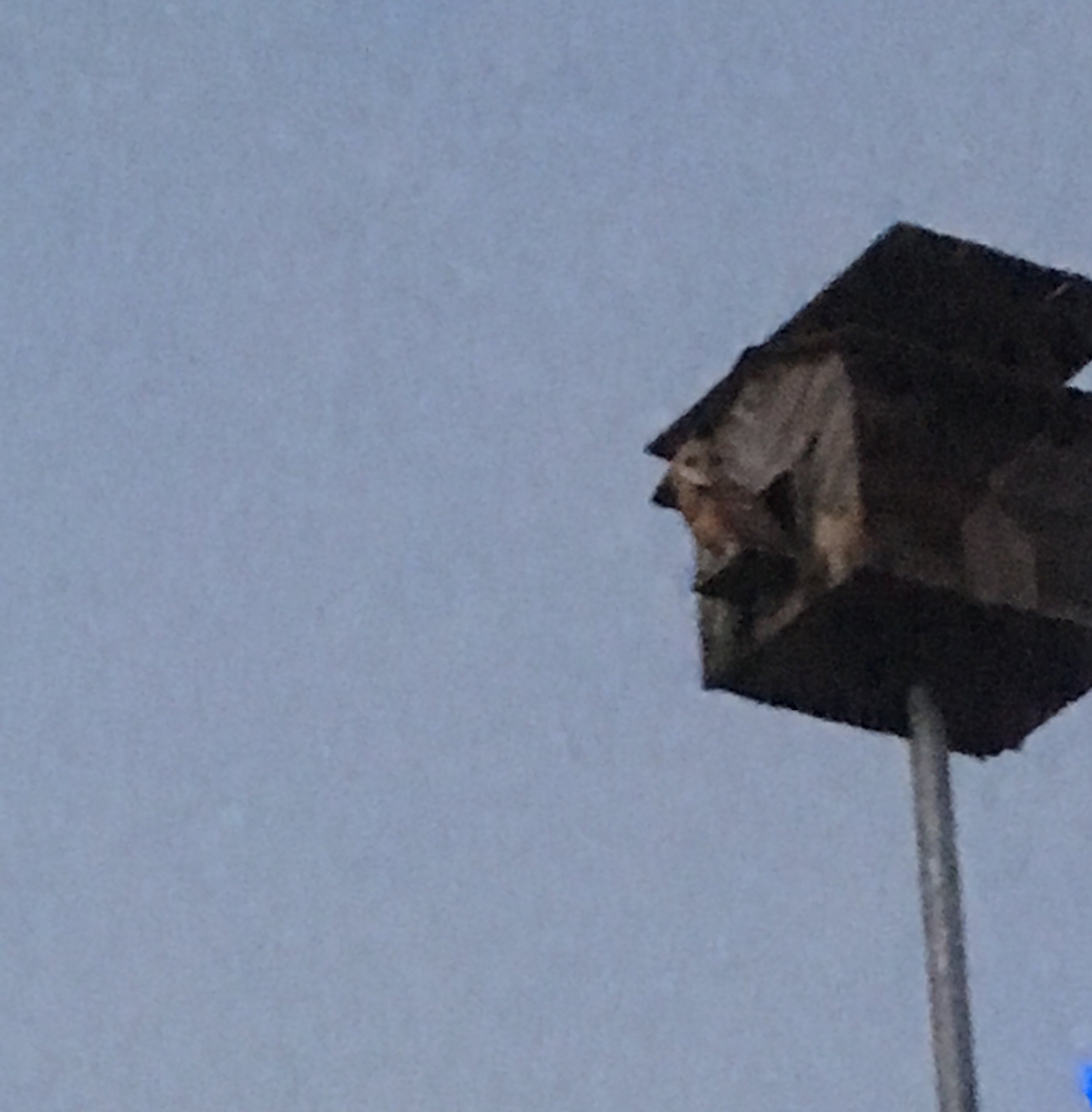
We told in these annals, just a few weeks past, of the family of Barn Owls growing up in the owl box near our house. Four owlets there were...

We first learned of their birth into this World by tiny, hideous, rasping noises coming from the previously vacant aery. This was in March. Every twilight thenceforth, when out to check the mail or out to check the plums or out returning in from out, their insistent rasps accompanied us, "Feed us, Mommy! Feed us!" And feed them she did. 

Once in a while we would spy Mother Owl, silent and ghostly white, hovering through the air as if suspended. She would alight upon the doorway, the rasps would increase in urgency and change in tone, and she would float away.

Weeks passed, moons passed, and the little rasps grew in power and potency. They became so loud they entered the house and became the soundtrack of our nocturnal lives. From dusk to dawn, cooking in the kitchen, turning over in between dreams, or in the predawn brushing our tooths, rasp. rasp. RAAAASP! 

Sometime in early May, they started showing themselves. Far from the little demons we expected to see, cute little white monkey faces began popping out of the box. A few weeks later, be-winged fuzzy monkeys bravely perched upon the porch. And screeched.

In June, they got their driving permits and could be seen and heard screeching to and from the a nearby tree. They awkwardly would crash into the tree, screech a few times, and try to hide from us, the bemused audience below.

As June waned and the moon waxed the owlets came into their own. The nights brightened and their presence increasingly dominated the little meadow valley below. They began whipping lithely hither and thither, perching on Big Doug Firs far from their nest, and piercing the air with chilling warning calls when we would approached their box. But same infant screeching continued. All night. Every night. We started to wonder how they all fit in the box during the day. And what power could compel these grown-children to stop haunting the meadow?

The full moon of July 9th, the "Thunder Moon" it is sometimes called, was a bright one this year. On my bedtime walk to check on the irrigation around 10pm, I remember the long shadow I cast on the silvery path and an eery feeling. One of the shortest nights of the year, I remember tossing and turning in bed, the bright window shades, shadows on the white walls, and silence. At morning tea we realized they were gone.

Since the Thunder Moon we have not heard or seen the owlets. We know they are out there. A pellet consisting of the front half of a lizard and the back half a mouse happenstanced on our doorstep the other day. But they have changed. The awkward monkey faces are no more. It seems the giant monkey face in the heavens may have held the key.

See you in the fields,

David & Kayta

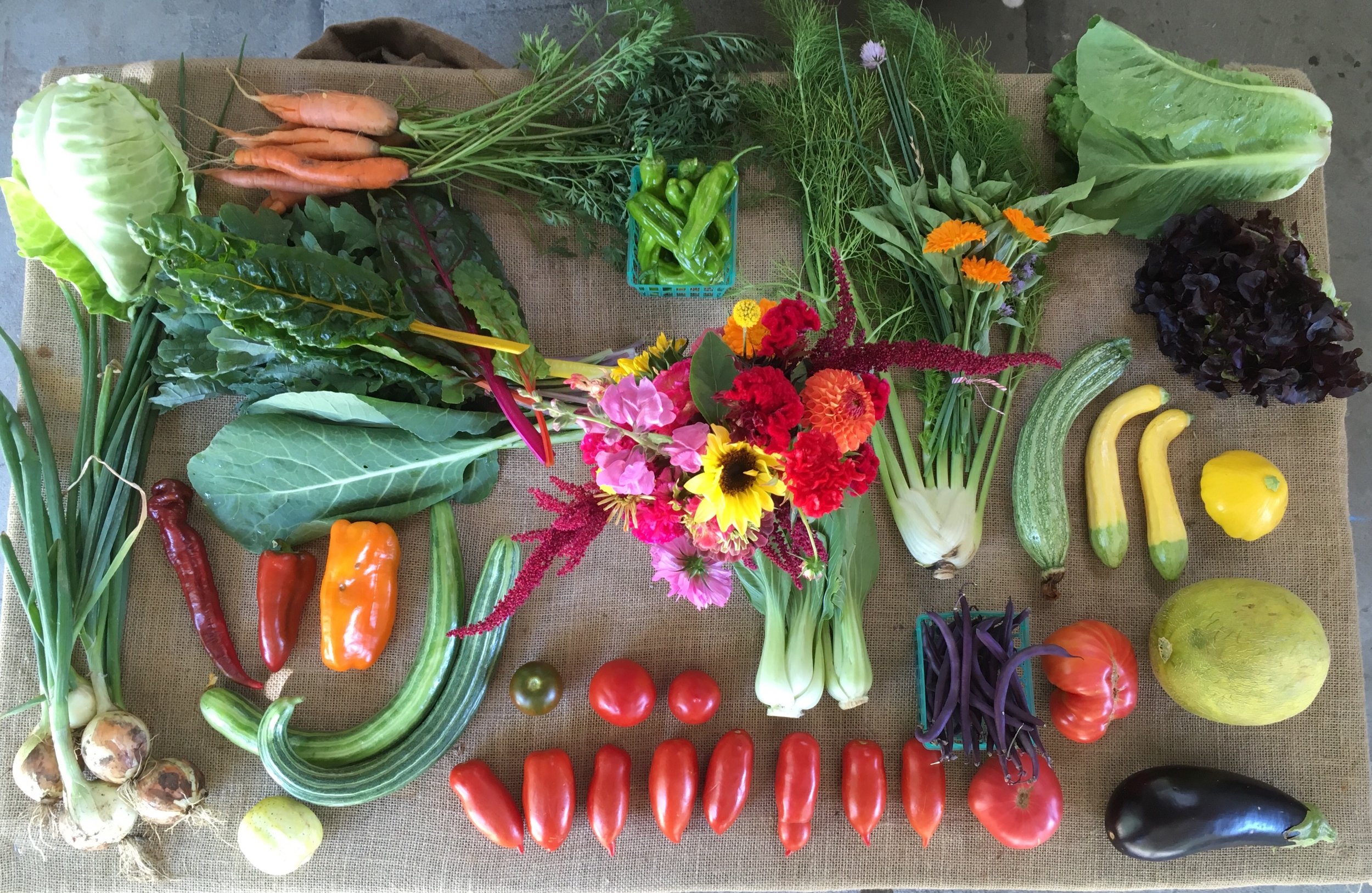
THIS WEEK'S HARVEST: Heirloom Tomatoes, New Girl Slicing Tomatoes, San Marzano Sauce Tomatoes, Italian Eggplant, Sweet Peppers, Summer Squash (Italian Zucchini, Crookneck and Patty Pan), Striped Armenian & Lemon Cucumbers, Melons, Fennel, Broccoli, Murdoch Cabbage, Beets, Carrots, Bok Choi, Red Russian Kale, Rainbow Chard, Collard Greens, Mustard Greens, Romaine and Red Summercrisp Head Lettuces, Fresh Yellow Spring Onions

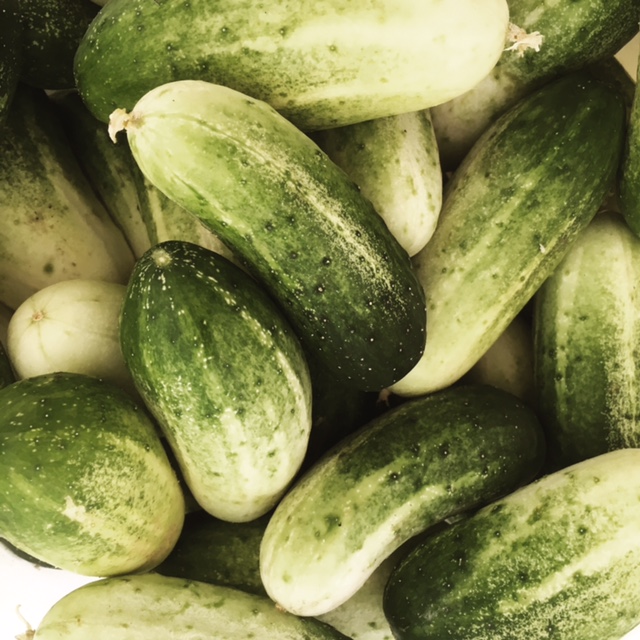
PICKLING CUCUMBERS: We're increasing the pickling cucumber quota to 20lbs per share. If you have already picked up one 10lb bag, take home a second. If you haven't received any pickling cucumbers yet, your future-self will thank your past-self when you are rolling in pickles this winter. We'll have ready to go bags in the glass fronted fridge in the back of the pick up barn. 

U-PICK in the GARDEN: 

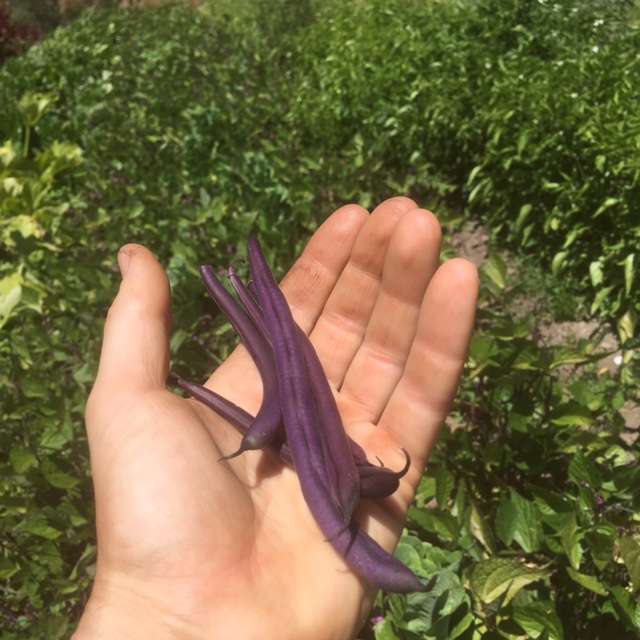
  • Amethyst Beans: This is a beautiful purple green bean variety great raw or cooked. Beans pods turn green when cooked. Picking is unlimited, the plants are loaded. They are located just below the frying peppers and are somewhat hard to spot because they are the same color as the vines.
  • Herbs: Genovese Italian Basil, Cilantro, Savory, Onion Chives, Parsley, Sage, Oregano, Dill, Thymes, Mints, Sorrel, Chamomile, Lemon Verbena, Lemon Balm, Anise Hyssop
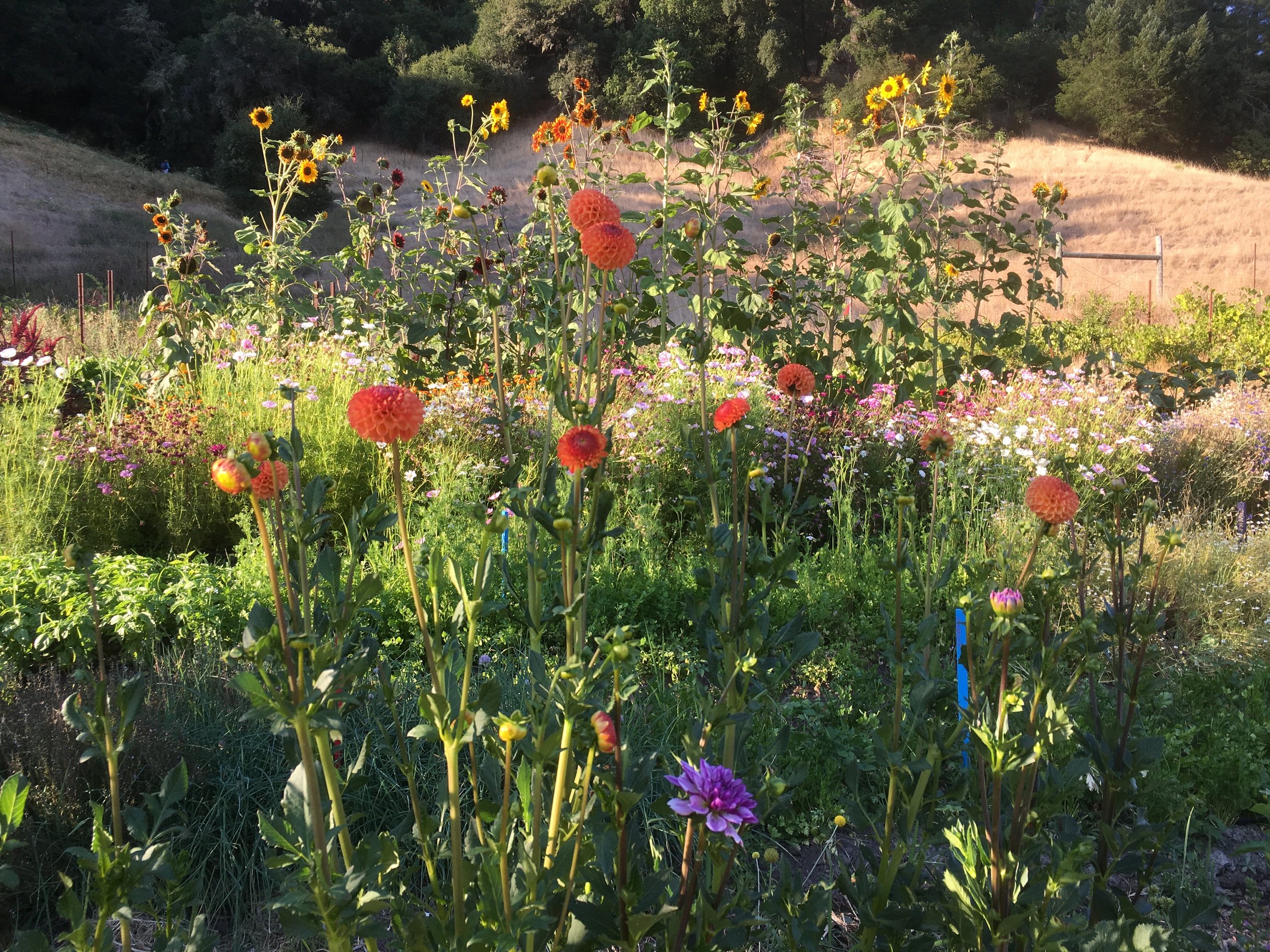
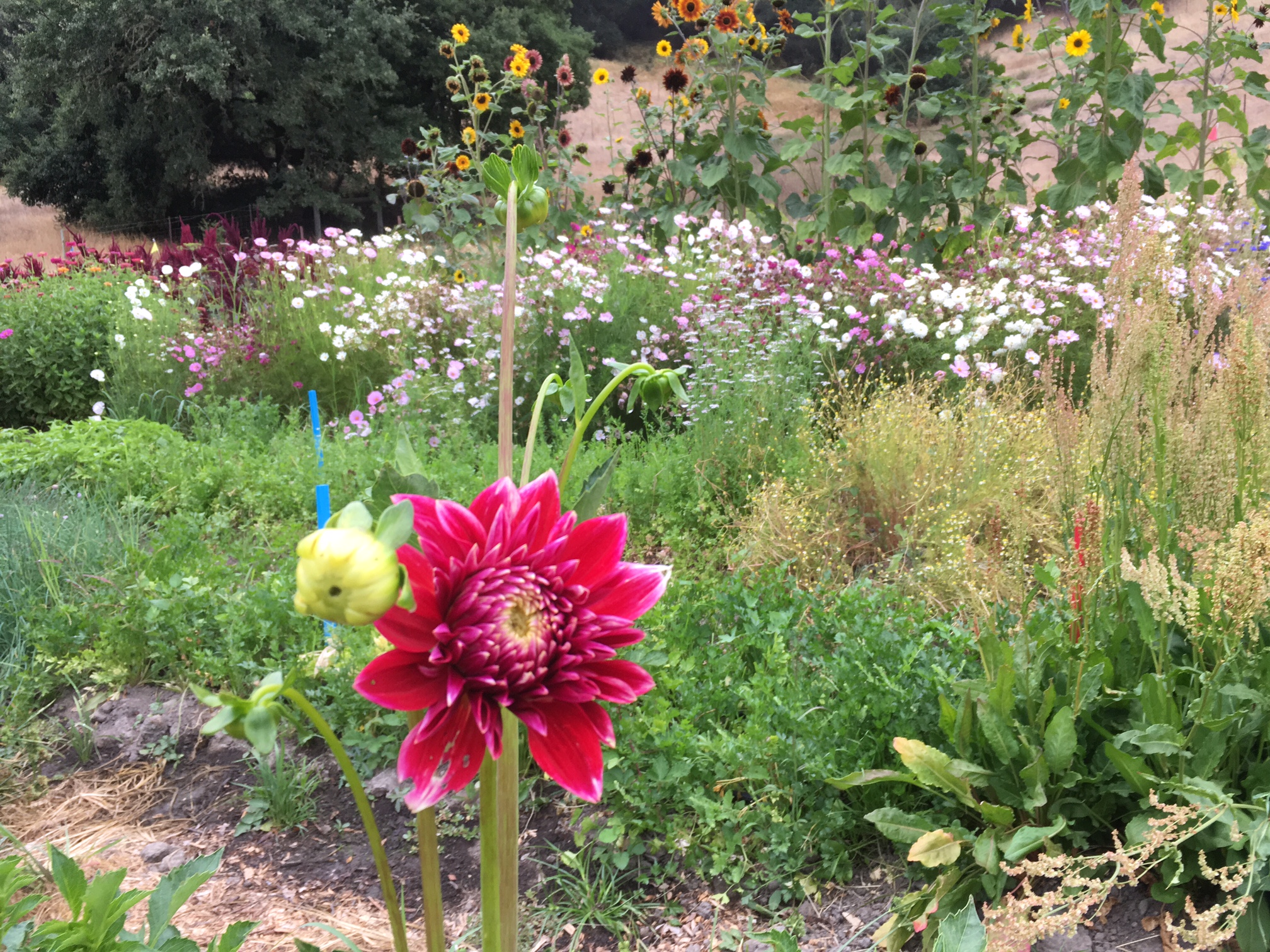
  • Cut flowers: Dahlias (limit 4 per season per share), Celosia, Craspedia, Cosmos, Nasturtium, Bachelor's Buttons, Zinnias, Calendula, Snapdragons, Red Spike Amaranth, Sunflowers, Love-in-a-Mist
  • Frying peppers: Shishitos, Black Hungarian, Padrones, Jalapeños
  • Cherry Tomatoes
  • Husk Cherries aka Ground Cherries aka Cape Gooseberries: A delightful sweet little nightshade berry wrapped inside a cool little "wrapper". Kids love them. Just peel the papery wrapper off and eat! Husk Cherries are ripe when the wrapper is golden. (Green = unripe). Look low down under the canopy of leaves for the ripe ones.

7/27/17 - Week 7 - Farm Labor

IMG_2518.jpg

FARMERS LOG:

One day in early July, I realized we were in trouble. Our electric cultivation (aka weed killing) tractor was more broken than we thought -- ground faults everywhere, potentiometer acting all screwy. The weeds on the other had were not broken. The weeds in our quarter acre of winter squash were notably unbroken and had been growing so rapidly during our tractor troubleshooting that mechanical cultivation became impossible. Ironic. We needed help. We needed grit and agricultural experience.

Enter the Graton Day Labor Center. We're lucky to live close to a one-of-a-kind worker led non-profit that "organizes with domestic workers and day laborers in west Sonoma County, CA for the advancement of their rights and dignity as workers, as immigrants, and as members of the broader community." The workers there have organized so that everyone is paid decently ($15/hour is baseline) and everyone knows their rights. And needless to say, there is a wealth of agricultural experience there. 

I made an appointment and the following morning, Sebastian and Alexandra showed up at 7am. We got to talking a bit. Both in their 20's, Sebastian had come to Santa Rosa as a boy, the son of Mexican immigrants. Alexandra, from Kazakstan, had come to the states via Mexico. She spoke Spanish fluently and had been in the U.S. for a month. 

Over the course two 95 degree days, Alexandra and Sebastian rescued our winter squash planting. Their skill and care was obvious from the start. They were thorough and took care not to harm the fragile squash stems and blossoms as they removed the two foot tall, deeply rooted weeds surrounding the plants (easier said than done).

Naturally, Sebastian and Alexandra's presence on the farm made me think of the current political "discourse" around immigrants. For Kayta and I, it is impossible separate this conversation from people we know and the work we love because Latin American immigrants are the backbone of agriculture in Sonoma County and beyond. They run the vineyards, manage the lands, tend and harvest our food up and down North America.

One reason we like the CSA model is that it brings eaters into closer connection with where their food comes from and how it comes to be. To us this feels like one helpful antidote for a culture that participates little in its food production, and is therefore sometimes able to think little of the people who do it.

So, we wanted to give Sebastian and Alexandra and their work a little shout out here. Every time Kayta and I look at the plump, happy baby winter squash filling out under a clean canopy of squash leaves, we think of them and their critical contribution to our season. And we'll all have them to thank for every bite of sweet winter squash this Fall. 

See you in the fields, 

David & Kayta

THIS WEEK'S HARVEST: Heirloom Tomatoes, New Girl Slicing Tomatoes, San Marzano Type Sauce Tomatoes, Italian Eggplant, Summer Squash (Italian Zucchini, Crookneck and Patty Pan), Striped Armenian & Lemon Cucumbers, Galia Melons, Fennel, Cauliflower, Radishes, Savoy Cabbage, Beets, Carrots, Bok Choi, Red Russian Kale, Arugula, Mustard Greens Mix, Muir Summer Crisp and Red Little Gem Head Lettuces

U-PICK in the GARDEN: 

  • Herbs: Genovese Italian Basil, Cilantro, Savory, Onion Chives, Parsley, Sage, Oregano, Dill, Thymes, Mints, Sorrel, Chamomile, Lemon Verbena, Lemon Balm, Lemon Grass, Anise Hyssop
  • Cut flowers: Dahlias (limit 3 per season per share), Celosia, Craspedia, Cosmos, Nasturtium, Bachelor's Buttons, Zinnias, Calendula, Snapdragons, Red Spike Amaranth, Sunflowers, Love-in-a-Mist
  • Frying peppers: Shishitos, Black Hungarian, Padrones, Jalapeños
  • Husk Cherries aka Ground Cherries aka Cape Gooseberries: These are a delightful sweet little nightshade berries wrapped inside a cool little "wrapper". Kids love them. Just peel the papery wrapper off and eat! Husk Cherries are ripe when the wrapper is golden. (Green = unripe). Look low down under the canopy of leaves for the ripe ones.
U-PICK on the FARM: 

  • Cherry tomatoes:  Sungolds, Black Cherry, and Super Sweet 100's in three Rows marked with the blue flags in the main fields.
  • Wild Blackberries:  Two epic patches along the fence on the far side of our main fields (behind the winter squash and potatoes). Marked with pink flags. Let us know if you need help locating them!

7/20/17 - Week 6 - What is CSA?

THIS WEEK'S HARVEST: Rosaine Red & Green Little Gem Lettuces, Arugula, Mustard Salad Greens Mix, Rainbow Chard, Olympic Red Kale, Dino Kale, Mixed Summer Squash (Italian Zucchini, Crookneck and Patty Pan), Striped Armenian Cucumbers, Chioggia/Red Ace/and Golden Beets, Heirloom and New Girl Tomatoes, Hakurei Turnips, Cauliflower, Murdoch Cabbage, Bok Choi, Scallions, Romance/Purple Haze/Yellow Star Carrots, Nadia Italian Eggplant

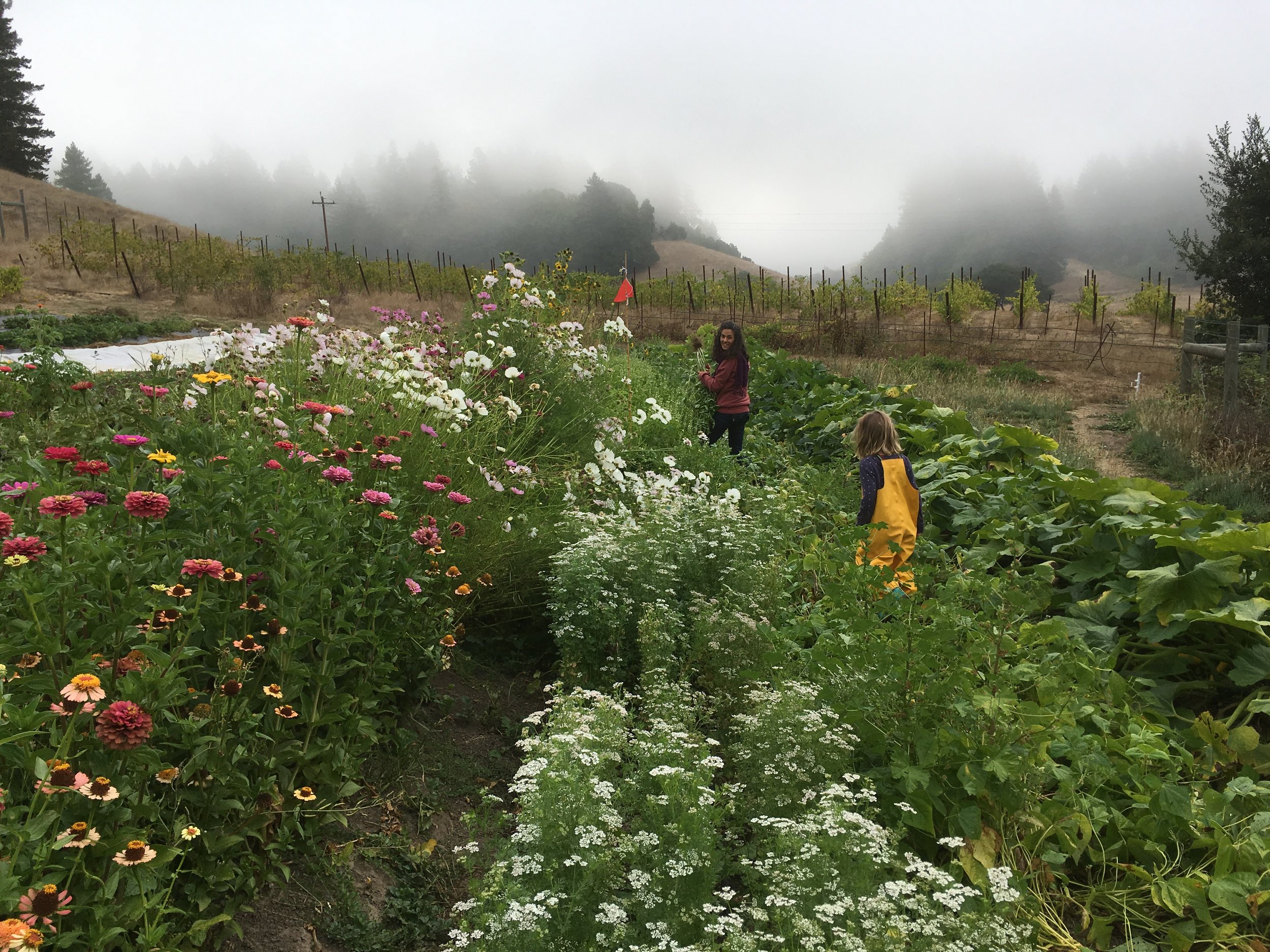
U-PICK in the GARDEN: Herbs: Basil, Cilantro, Savory, Onion Chives, Parsley, Sage, Oregano, Dill, Thymes, Mints, Sorrel, Chamomile, Lemon Verbena, Lemon Balm, Lemon Gras, Anise Hyssop Cut flowers: *Dahlias, Celosia, Craspedia, Cosmos, Nasturtium, Bachelor's Buttons, Zinnias, Calendula, Snapdragons, Red Spike Amaranth, Sunflowers, Love-in-a-Mist Frying peppers: Shishitos, Black Hungarian, Padrones, Jalapeños

PRESERVES: Pickling Cucumbers

Husk Cherries aka Ground Cherries aka Cape Gooseberries: These are a delightful sweet little nightshade berries wrapped inside a cool little "wrapper". Kids love them. Just peel the papery wrapper off and eat! Husk Cherries are ripe when the wrapper is golden. (Green = unripe). Look low down under the canopy of leaves for the ripe ones.
U-PICK on the FARM: 

Cherry tomatoes:  Sungolds, Black Cherry, and Super Sweet 100's in three Rows marked with the blue flags in the main fields.

Wild BlackberriesWe can't take any credit for growing them but they sure make a delicious u-pick delight. There are some pretty epic wild blackberry patches on the farm this year. Two being along the fence on the far side of our main fields. They will be marked with pink flags. If you need help locating them, or other patches, just ask. Cobblers await.

FARMERS LOG:

What the heck is this Community Supported Agriculture anyway? Where did it come from? I have a lot of time to think in the fields. This week got me thinking about the history and origins of the CSA model, and I wanted to relay some of that history to you, as I understand it, in the hopes that it gives you a little context for the special errand you're making next time you're traveling down Green Valley Rd.

After World War II, agriculture in Japan, Europe and the U.S. began to change drastically. The mechanization and industrialization of the war effort turned inward into industry and food production. Farms got bigger and more mechanized, family farms got swallowed up, importing exporting and shipping expanded, supermarkets were spawned, even rural communities began to lose the neighborly connection to their food and food producing lands.

As a reaction to this, people in Japan and Europe formed groups that rallied around a single farm or producer in order to sidestep the conventional market. (Legend has it that one of the first formal such arrangements was a group of Japanese women organizing with a local dairy farmer to get fresh milk... hey, Bramble Tail!). 

In Europe, these arrangements interwove with and were influenced by the work of Rudolph Steiner (Austrian philosopher who also inspired Waldorf Education and Biodynamic Agriculture). Steiner posited that maybe... just maybe... how we grow our food and tend the earth is such an important undertaking that we should not subject farms and their produce to the cut-throat transactional market but rather care for them and tend to them as communities so that they sustain us. Lots of people agreed.

Biodynamic CSA's thrived in Europe and jumped the Atlantic in the 1980's. Some of the earliest CSA communities followed Steiner's economic prescriptions and left the farmers to farm while other members took care of the bookkeeping, did outreach, helped with strategic planning, etc. I worked on such a farm in Patagonia, Argentina and remember tending a meeting of all the members led by the farmer. He asked for a slight raise in his salary the following season so that he could visit his new niece in Oregon the following winter. They agreed.

CSA's practicing this Old School type of arrangement are rare, for better or worse, and most CSA's nowadays are owned and operated exclusively by the farmers. But the CSA DNA remains,

To bring it home: Your share payments helped pay for the seeds you are eating the fruits and roots of now. They also helped pay for Kayta's and my rent, our lights, the computer I'm typing this on. Your hands harvested a good bit of the food in your body and may plant the garlic you eat next season. Your feedback will help determine what plants go in the ground next year.

There is something magical about food and land and people coming together around one place. It. Just. Makes. Sense.

Thanks for being an integral part of this budding farm community. We're happy we're a part of it.

See you in the fields.

David