
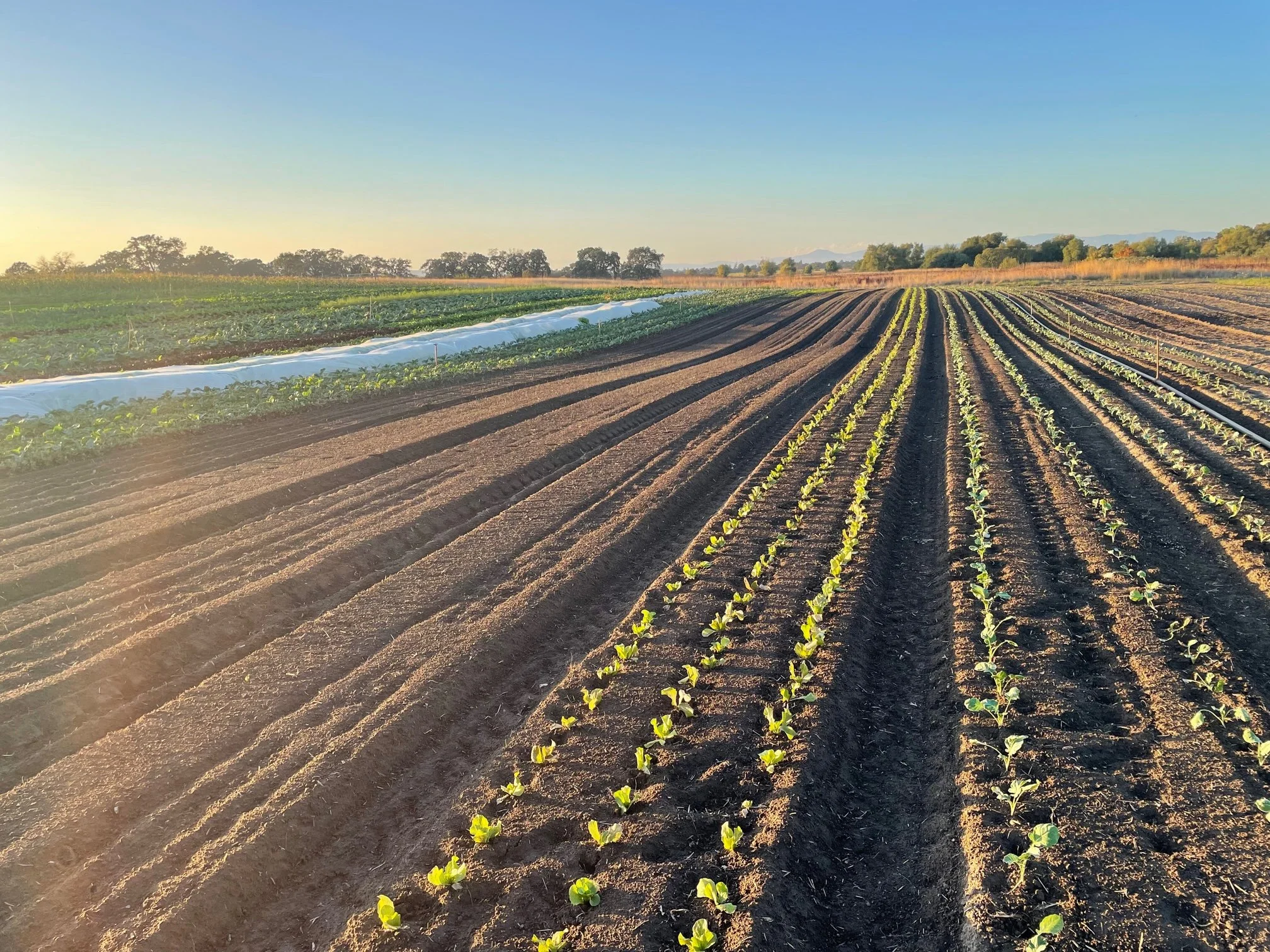
Harvest Week 20 - Fall Mode

THIS WEEK’S HARVEST

In a nutshell: Lots of long-maturing, frost-kissed, heading veggies — we’re in the pocket in Fall mode.

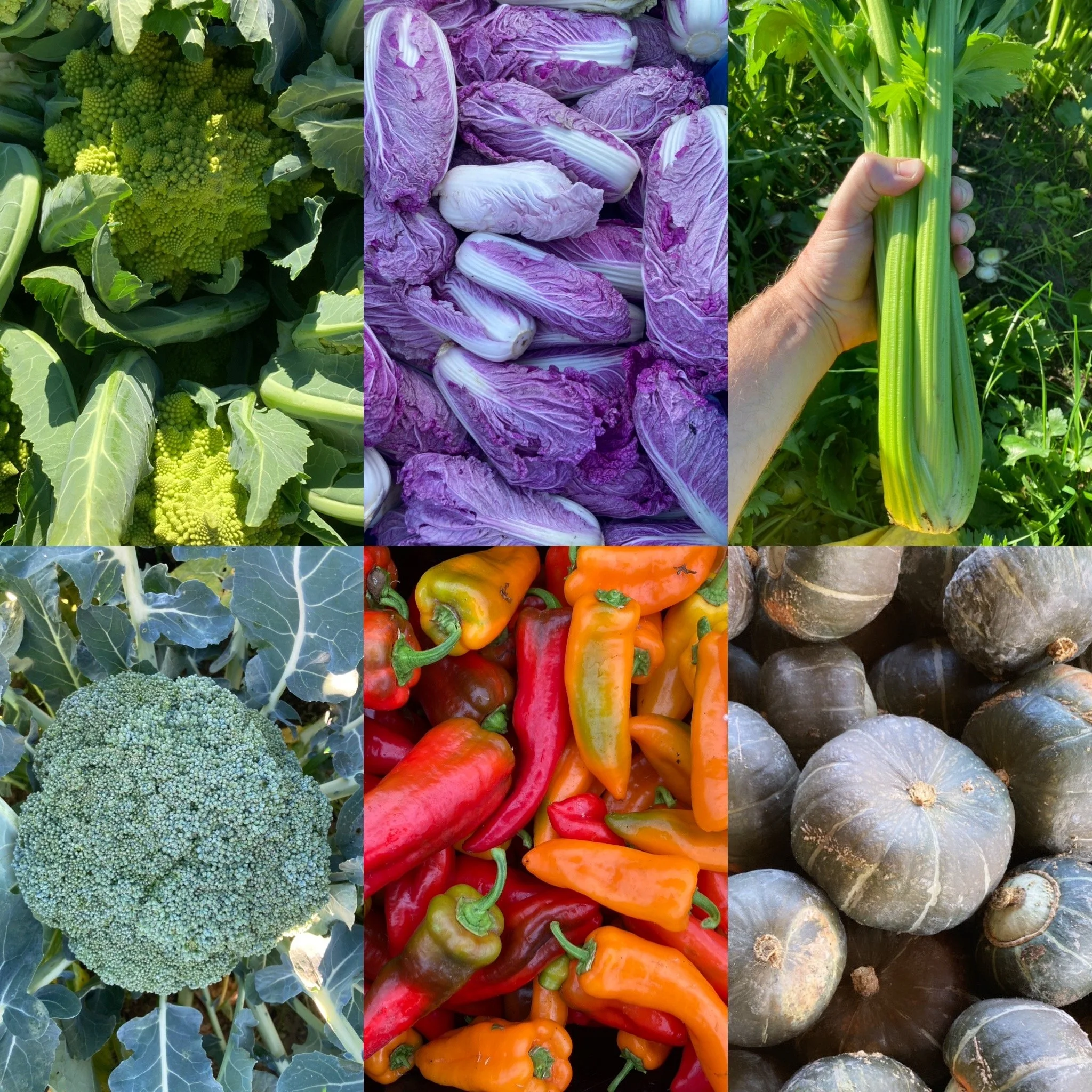
Mustard Mix, Little Gem Lettuces, Curly Endive, White Russian Kale, Green Magic Broccoli, Romanesco, Beets, Napa Cabbage, Celery, Sweet Peppers, Poblano Peppers, Romance Carrots, Bonbon Buttercup Winter Squash, Elsye Onions, Harvest Moon Potatoes
U-PICK

  • Albion Strawberries: 1 pint per share

  • Herbs: Only the hardiest of the herbs remain in small quantities: Parsley, Onion Chives, Garlic Chives, Oregano, Thyme, French Sorrel.

  • Flowers: The flowers have also been kissed by frost, so expect only a smattering of the hardiest blooms.

HARVEST NOTES

  • Curly Endive: While it may look a lot like Frisée, we find this variety of Curly Endive much more delicious for individual eating. It’s succulent and mild enough to be used as a salad green on its own, particularly when matched with bold flavors, like the Easy Ceasar Dressing recipe below, or pickled beets and blue cheese, for example. Also great braised or cooked as you would any chicory.

  • Bonbon Buttercup Winter Squash: In your farmers’ opinion, the best squash ever bred. Ultra sweet and flaky, this squash is like a dessert all on its own. Also great for use in any of your favorite Winter Squash dishes.

With last week’s frosts nipping most of the garden flowers, we look back with nostalgia and wistfulness at an amazing year of flowers. Thank you Kayta and our garden & greenhouse manager Paige!

Easy Ceasar Dressing

From Smitten Kitchen

We’ve been obsessed with this super-simple, easy Ceasar dressing that Rose of Pink Barn Farm introduced us to last winter. It comes together really quickly and provides a perfectly sharp counterbalance to hearty greens like this week’s Curly Endive, and White Russian Kale. We’ve scaled the recipe up here to make a full pint of dressing — enough for several days of generous salads, but if you’d rather make a smaller amount, check out the recipe link above. As with all dressing recipes, using high quality ingredients — particularly olive oil and mayonnaise — will make a big difference.

  • 1/2 cup mayonnaise

  • 4 small garlic cloves, minced

  • 4 teaspoons worcestershire sauce or 1 to 2 anchovies, minced

  • 4 teaspoons smooth dijon mustard

  • 1/4 cup lemon juice or champagne vinegar

  • 1 cup olive oil

  • Salt and freshly ground black pepper

Whisk all the ingredients in a small bowl and whisk until smooth, or measure directly into a pint jar and shake til smooth. Don’t skimp on the salt and pepper; they’re going to wake the whole thing up.

WINTER SISTER FARM CSA SIGN-UPS NOW OPEN!

Winter Sister Farm’s 2024 Winter CSA program is now open for registration! Winter Sister Farm, right next door to us, was started by our dear friends Anna and Sarah Dozor. Their CSA has a late-start option for WCCF members, running from December 30 through May 15th. Their CSA is a 24 weeks of the highest quality specialty winter veggies, flowers, herbs, and more — all picked up free-choice market style, on their beautiful farm here on Cooper Rd! Sign-up today!

Freehand Bakery’s Last Week!

We’re sorry to say that this Tuesday will be Freehand Bakery’s last week of the season, as the bakery space they rent will be unavailable for the next couple months. Make sure to stock up, and look forward to eating more of their incredible breads and pastries at Winter Sister Farm this winter!

FARMER’S LOG

FALL MODE

Another busy week in the fields! This week, like the last few, had at its center bulk harvest, harvest, harvest and cover cropping!

Last Saturday we had a big team led by Anayeli and Alberto out to help us finish harvesting the last third of this year’s magnificent potato crop and our popcorn and Hopi Blue corn. The corn is now drying in the greenhouse for late-Fall shares, and our hoard of 12,000 + lbs of potatoes is piled high in the big cooler.

On Wednesday and Thursday our amazing core crew worked hard to get in the very last bed and final gleanings of the potatoes (another 1,000 lbs!) as well as the Watermelon Radishes, Beets for storage, and 100 ft of Bolero Carrots, whose tops are sugar-sweet from last week’s frosts.

Tristan was racing the coming rains by hustling to plant cover crop on the last big field blocks vacated by the corn, Jack-O-Lanterns, and Potatoes. His cover cropping efforts are really starting to show and bless the farm with their green promise a delicious 2024.

Cover crop sprouting happily next to the drying Hopi Blue corn stalks.

For our cover crop, we seed a nitrogen-fixing, organic-matter-building mixture of Magnus Peas, Dundale Peas, Crimson Clover, Vetch and Triticale on pretty much every inch we planted this year. You can see the hyper-green fuzz of early cover crop sprouts out in Centerfield and Farfield. If we have a relatively mild winter (i.e. not an excessive amount of flooding) this fuzz will be let to grow into a waist high sea of green. This crop will feed, enrich, and build the soil for 2024’s bounty, and for many years to come. (A healthy cover crop stand can generate over 8,000lbs of biomass per acre. It's like growing a huge pile of compost out of thin air — right where you need it!)

In Sonoma County, it is best to plant your cover crop seed in low spots by mid-to-late-October… early-November at the latest. Any later and you risk colder temperatures and soggy soil inhibiting the germination of the cover crop seed and your fields laying relatively naked through the winter. So, this coming week, we will say farewell to the tomato trellises and the frying peppers and the spent flower beds of summer — they must now make way for a dense, lush, life-giving cover crop.

On the fresh harvest today we looked out at our bank of happy Fall crops in Farfield, chilling out there in this cooler weather — and brought in some amazing Broccoli, Romanesco, and a new (to us) Curly Endive that was so delicious we couldn’t stop tasting it as the harvest knives sang.

Enjoy the frost kissed bounty!

See you in the fields,
David & Kayta

Harvest Week 19 - The Season of Death

THIS WEEK’S HARVEST

In a nutshell: The dagger of frost marks the end of summer’s fruits and the beginning of Fall’s bounty.

Mustard Mix, Spinach, Newham Little Gem Lettuces, Dazzling Blue Dino Kale, Hakurei Salad Turnips, Romanesco, Green Bok Choi, Murdoc Cabbage, Sweet Peppers, Poblano Peppers, Romance Carrots, Jester Winter Squash, Cabernet Onions, Bodega Red Potatoes, Green Tomatoes

U-PICK

Frost has arrived!

With the arrival of the cold, all our nightshades and beans have been killed. Feel free to glean any remaining fruit on the cherry tomatoes and peppers before we rip the plants out next week!

  • Jack-O-Lantern Pumpkins: Free for all! Help yourself to any of our remaining pumpkins — but please remember that they are do not make delicious eating as they were bred for looks rather than flavor. Use your weekly Winter Squash for pies and things!

  • Albion Strawberries: 1 pint per share

  • Herbs: Only the hardiest of the herbs remain in small quantities: Parsley, Onion Chives, Garlic Chives, Oregano, Thyme, French Sorrel.

  • Flowers: The flowers have also been kissed by frost, so expect only a smattering of the hardiest blooms. Time to get creative in the vase!

HARVEST NOTES

  • Bodega Red Potatoes: These distinctively round, red-skinned tomatoes are a true local heirloom, grown in our region since the 1840’s. This is the first year that we’ve been able to track down seed potatoes to grow them, and we’re grateful to the folks at Slow Food Sonoma County North for their work in making them available! Bodega Reds have a rich, creamy and nutty potato flavor, and a texture that’s neither too starchy nor waxy. They’re quite versatile, so use them in any of your favorite dishes: baked, boiled, fried, or mashed.

  • Green Tomatoes: As a last hurrah for our beloved tomatoes this week we’ll be distributing unripe green ones, perfect for fried green tomatoes, or for adding to stews, like this luscious pork & green tomato stew.

  • Jester Winter Squash: A cross between a Delicata and an Acorn Squash. A good Jester can be among the sweetest of squashes. David’s favorite.

  • Romanesco: This vivid green, spired cauliflower is an Italian heirloom. Enjoy it any way you would cauliflower, and be sure to admire its fractal beauty and slightly nutty flavor before you devour it!

The larder is filling with Fall’s bounty.

Miso-Glazed Turnips Recipe

BY CLAIRE SAFFITZ

This simple recipe turns this week’s Hakurei Turnips into a delicacy!

Ingredients

(Makes 4 Servings)

  • 1 pound small turnips, trimmed, scrubbed, cut into 1” wedges

  • 2 tablespoons white miso

  • 2 tablespoons unsalted butter

  • 1 teaspoon sugar

  • Kosher salt and freshly ground black pepper

  • 2 tablespoons fresh lemon juice

Preparation

  1. Combine turnips, miso, butter, and sugar in a medium skillet, then add water just to cover vegetables. Season with salt and pepper.

  2. Bring to a boil over medium-high heat and cook turnips, turning occasionally, until they are tender and liquid is evaporated, 15–20 minutes.

  3. Once all the liquid has cooked off, keep cooking turnips, tossing occasionally, until they are golden brown and caramelized and the sauce thickens and glazes the vegetables, about 5 minutes longer.

  4. Add lemon juice and a splash of water to pan and swirl to coat turnips. Season with salt and pepper.

FARMERS LOG

THE SEASON OF DEATH


Rise and fall. Light and shadow. Summer and winter. Life and death. 

Halloween is an extremely important time of year on the farm. It is the season of death.

The roots of our Halloween holiday lie in the ancient Gaelic Samhain festival. The Samhain festival marked an important transition: The end of the harvest season (it means "summer’s end”) and the beginning of the darkest half of the year. The Gaelic were a pastoral people and the Samhain marked the time when the shepherds brought their livestock, fattened on summer mountain pastures, back down for the winter for shelter or for slaughter. There were feasts. People opened their burial mounds (portals to the underworld) and lit cleansing bonfires. The borders between the worlds were thought to become thinner around the Samhain and supernatural spirits and the spirits of ancestors were thought to walk amongst the living. The spirits were to be appeased or tricked. Tables were set for friendlies at the Samhain dinner. People wore costumes to disguise themselves from the evil spirits and placed candles inside of carved turnips (in lieu of pumpkins) to frighten them off.

You can feel the Samhain in every nook and cranny on the farm these days — especially after the dagger of this morning’s hard frost. How different the farm looks now from spring’s jubilant green promise and summer’s colorful cacophony! The life cycles of the plants that showered us with riches all summer are now at an end. Their bodies hang drawn, gaunt and ghostly on their trellises or shriveled, mildewed, and desiccated in the rows, awaiting the final, furious whir of the flail mower.

This week, with our major harvests nearly complete, we did the portal tending farm work of the Samhain. On Tuesday, Tristan mowed and spaded under large sections of Centerfield, transitioning our Winter Squash plants into the underworld, where they are now being devoured by worms and bugs. On Wednesday, there lay a bleak, deep brown maw of bare soil. 

A great, pregnant silence. An open portal.

On Thursday morning, Tristan performed the Last Rites on the squash field. First, he spread steaming black compost. Then he broadcast the cover crop by driving the cone spreader back and forth, processionally, rhythmically, tossing clover, peas, vetch, and grass seeds  — like little prayers — onto the black veil. Finally, he harrowed the seeds under — the little old tiller we use to “kiss” the seed into the ground whirring like a little demon — and closed the portal.

One can only marvel at the wisdom of ancient agrarian festivals, born from bone deep relationship to the cycles of nature: How directly death was confronted and dealt with.

Those people knew.

They knew that from death comes life. They knew that death and life are only thinly separated. They knew that the rotting, decaying, destructive forces are also the generative building blocks, the gateways from which life bursts forth anew in the spring and that the portals, the transitions, need to be faced and tended.

This Halloween, while you’re out there gleaning summer’s last fruits, we invite you to take-in the ghoulish site of the dying cherry tomatoes, sagging limply, skeletal, and vacant; and the blocks of bare ground on the farm — portals now pregnant with cover crop seed. 

Because this death is the doorway. And on the other side are verdant spring meadows, strawberry scented breezes, plump sugar snap peas, and bouquet after bouquet of spring flowers. 

Happy Halloween!
David & Kayta

Harvest Week 18 - An Ode to Winter Squash

THIS WEEK’S HARVEST

In a nutshell: Kim-chi week! And the Winter Squash train starts rolling

Arugula, Mustard Mix, Little Gem Lettuces, Assorted Head Lettuce, Rainbow Chard, Bok Choi, Celery, Nabechan Scallions, Napa Cabbage, Daikon Radish, Sweet Peppers, Romance Carrots, Sunshine Kabocha Winter Squash, Summer Squash & Zucchini, Elsye Yellow Onions, Bintje Potatoes, Heirloom & Red Slicing Tomatoes

U-PICK

  • Jack-O-Lantern Pumpkins: 1 pumpkin per person in your share — season limit

  • Albion Strawberries: 2 pints per share

  • Cherry Tomatoes: 3 pint per share

  • Jalapeños: 5 peppers per share | If you like your jalapeños hot, look for peppers with checking (little cracks) on them

  • Buena Mulata Peppers: 1 peppers per share | Usable at any color, but with more fruity flavor when ripe red or orange

  • Habanero Peppers: 5 pepper per share | Ripe when orange

  • Aji Limo Peppers: 4 pepper per share | Ripe when yellow. This citrusy Peruvian pepper is traditionally used in ceviche. Sometimes called Lemon Drop in the US.

  • Goldilocks Beans: Gleanings

  • Herbs: Italian Basil, Thai Basil, Tulsi Basil, Parsley, Onion Chives, Garlic Chives, Tarragon, Oregano, Marjoram, Culinary Sage, Lemon Balm, Lemon Verbena, Vietnamese Coriander, Shiso (Perilla), Culinary Lavender, French Sorrel, Violas, Thyme and Mints.

  • Flowers!

HARVEST NOTES

  • This is likely the last week for Tomatoes and Summer Squash! We hope you’ve indulged in Summer to its fullest and are now ready to enjoy the rich bounty of Fall.

  • Sunshine Kabocha: The village beauty. A fiery-red Kabocha squash with sugar-sweet and flaky flesh. An all time farmer favorite and down for anything. Exceptional for pumpkin pie and straight roasted eating. Beautiful in soups, curries and pumpkin bread. See the Farmer’s Log below for a description of all the varieties of Winter Squash we’re set to enjoy this year!

  • Napa Cabbage & Kimchi: Welcome to Kimchi week, the week when Kayta’s magical crop planning skills make Napa Cabbage, Scallions, and Daikon Radish align together on the harvest table! We’ll include a recipe below for classic mak kimchi, where the cabbage is chopped before being seasoned. For a more mellow version without red pepper, check out this white Kim-chi recipe sent to us by CSA member Robin Kim. Robin made a vegan version of the white Kim-chi recipe for us last year that was one of our all-time favorite farm preserves. She substituted the salted shrimp and fish sauce with Bragg’s aminos / soy sauce and also omitted the alliums. It was mellow but still packed with flavor. For the jujubes, chestnuts, pine nuts, and rice flour, Robin recommends visiting Asiana Market in Cotati or Asia Mart in Santa Rosa.

KIMCHI Recipe

by Amy Kim of Kimchi Mom, via Steamy Kitchen

INGREDIENTS

  • 7 pounds of napa cabbage

  • about 1/3 cup kosher salt

  • 1 cup sweet rice flour (Mochiko is a popular brand)

  • 2 cups water

  • 3/4 cup red pepper flakes, medium coarseness

  • 1/4 cup chopped saewoo jjut (salted shrimp)

  • 3 tablespoons fish sauce

  • A scant 1/2 cup sugar

  • 5-7 stalks green onion, chopped

  • 2 ounces ginger (2-inch long, 1-inch diameter piece), minced

  • 8-9 medium garlic cloves, minced

  • 3 medium carrots, julienned

  • 1 medium-sized daikon or 1 small mu (Korean radish), thinly sliced in 2-inch sections

  • water

INSTRUCTIONS

 Preparing the sweet rice flour paste:

  • Whisk together the sweet rice flour and water in a small saucepan. Keep whisking the mixture until bubbles form on the surface. Once this occurs, take the saucepan off the heat and set aside to cool.

Preparing the cabbage:

  • Discard any wilted or discolored leaves. Starting at the base of the stem, cut the cabbage about one-third of the way down. Then pull apart the cabbage halves to completely separate them. Do the same with the halved portions - cut and pull apart. Repeat for all the cabbage heads. At this point, you can give the quarters a quick rinse under running water and shake off any excess water.

  • Trim the core at a diagonal. Cut the quarters into 2-inch wide pieces and place in an oversized bowl (I used a 12 qt. bowl) or use a couple of large bowls. Sprinkle generously with salt. Alternate layers of cabbage and salt. Once all the cabbage is cut, give the cabbage a toss and sprinkle more salt on top. Place a weight on top of the cabbage. Two dinner plates works well for me.

  • Let the salted cabbage sit for at least 3 hours. Don't worry if you go over (in the video, I let mine sit overnight since I couldn't tend to it at 3 hours). After 1 hour, give the cabbage another toss.

Preparing the sauce:

  • While the cabbage is close to being ready, prepare the red pepper sauce. In a medium bowl, mix kochukaru (red pepper flakes), water, saewoo jjut, fish sauce, green onions, sugar, ginger, garlic, rice flour paste, and about a 1/2 cup water. Mix thoroughly. Taste. It should be balanced – not too salty, not too fishy, not to spicy and not too sweet. Adjust seasonings at this point. The consistently should be akin to very thick batter. Add a bit more water if necessary. Mix in carrots and radish. Set aside.

  • Once the cabbage is ready (the volume of the cabbage should have decreased, and it should be a bit wilted), rinse the cabbage under cold running water and let drain in a colander. Once drained, place the cabbage in a large bowl.

  • At this point you may want to put clean plastic gloves on especially if you have sensitive skin. Add the sauce to the cabbage. Thoroughly mix the sauce and cabbage and make sure every piece of cabbage is coated with the red pepper sauce. Taste. If it needs more salt, add a bit of fish sauce. But you don’t want it to be too salty.

  • Transfer the cabbage mixture into a large glass jar. Press down on the cabbage as you are filling the jar. Leave about 1-inch of space from the top.

  • Don’t throw the empty bowl in the sink just yet. Pour in about 1 cup of water into the bowl. Add about a teaspoon of salt to start, and stir. Swirl the water around to make sure you get all the remaining pepper mixture. Taste. Again, you don’t want it too salty – just a hint of salt. Fill the jar with the water until it barely covers the cabbage.

  • Press down on the cabbage again and make sure the liquid has made its way throughout the jar. Close the lid tightly.

  • Leave the jars at room temperature** for about a day away from direct sunlight. I leave mine out for about 24-30 hours. This is when the magic happens. You may want to place the jar in a shallow bowl or plate in case there is leakage.

  • After those 24 or so excruciating hours, sample the kimchi. There should be a slight tang. At this point it is ready to be refrigerated. You can eat the kimchi right away, but I prefer to wait at least a week to indulge. The kimchi will continue to ferment at a much slower pace in the refrigerator and will keep for about 4 weeks. The kimchi will turn really sour at this point and if you have any left in the jar, it will be perfect for jigae, fried rice, ramen or jun.

Morning light on our Fall veg field with the dried sweet corn stalks in the distance.

FARMERS LOG

AN ODE TO WINTER SQUASH

Last week, we penned an ode to the mighty Potato. In few weeks we’ll serenade Corn. Both are New World crops that changed the world and inspired poets. But this week we save for the fairest of them all: The beloved oldest of the three sisters — the Winter Squash.

She takes on infinite forms, from voluptuous to svelte; from burning red to the palest blue. She has been kindling a bashful and loyal love in humanity’s heart for over 10,000 years.

The ancestral plants of what we call squash (the species including zucchini, melons, gourds, cucumbers, pumpkins and all winter squash) are millions of years old and native to the Americas. The earliest evidence for human domestication dates back 10,000 years to Southern Mexico… earlier than the domestication of corn or beans.

Word travelled fast and inspiration abounded. By 2,000 B.C., squash had became a part of life for almost every Native American culture from Southern Canada to Patagonia — varietals were kept and cherished for everything from the protein rich and medicinal seeds to the sweet flesh and winter hardy skins. Botanists note at least six separate domestication events. (The English word “squash” comes from the Narragansett word, askutasquash, meaning fresh vegetable, and similar words can be found in the Algonquian language family.)

Here at West County Community Farm, the human + squash love affair burns bright — and we’re lucky to have at our fingertips the unparalleled modern library of heirloom squash seeds to explore. Over the winter, Kayta hunkered down by a roaring fire with a seed catalogue and a good cup of coffee and laid out a season-long love sonnet to squash: We felt the summer wind with a cool slice of Persian cucumber; we dined by candlelight over pasta with Costata Romanesca Zucchini; and once we tasted a Sarah’s Choice Cantaloupe, we could never forget.

But in the Winter, our true love came — the Winter Squash.

We’ll have a new squash for you to get to know almost every week from now until December 19th. Allow us to introduce you…

2023’s Winter Squash crew: Top Row from L to R: Sunshine Kabocha, Winter Luxury Pie Pumpkin, Black Futsu, Butternut /// Bottom Row from L to R: Bonbon Buttercup, Delicata, Marina di Chioggia, Jester Acorn, Sweet Jade Kabocha

  • Sunshine Kabocha: The village beauty. A fiery-red Kabocha squash with sugar sweet and flaky flesh. An all time farmer favorite and down for anything. Exceptional for pumpkin pie and straight roasted eating.

  • Winter Luxury Pie Pumpkin: The supreme pie pumpkin in lacy lingerie. The only pie pumpkin that can compete with a Sunshine Kabocha. We'll distribute this one around Thanksgiving with our go-to pumpkin pie recipe.

  • Black Futsu: A beloved Japanese delicacy, this bite sized, mini Butternut relative has bright orange flesh with unique fruity flavor and edible skin. New to the farm this year!

  • Butternut: The solid, reliable, bring-’em-home-to-Daddy squash with a nutty charm.

  • Bonbon Buttercup: The girl next door. Unassuming, humble, and cute as a button. BonBon Buttercup is, in your farmer’s opinion, the best squash ever. Marriage material.

  • Delicata: A real heartbreaker. The sweetest. Easy to cook, even easier to eat.

  • Marina di Chioggia: Beauty is in the eye of the beholder for this warty wonder. A beloved squash of Venice, Italy, we'll include some tips on how to handle this bombshell when we distribute it later on.

  • Jester Acorn: A delicata type that looks like a fancy Acorn Squash. A good Jester can be among the sweetest of squashes.

  • Sweet Jade: A real stunner, we’re excited to taste this new to us, personal-sized grey green Kabocha.

So set the table, poor the wine, and light the candles — we hope you fall in love with one of these Winter Squash this Autumn!

See you in the fields,
David & Kayta