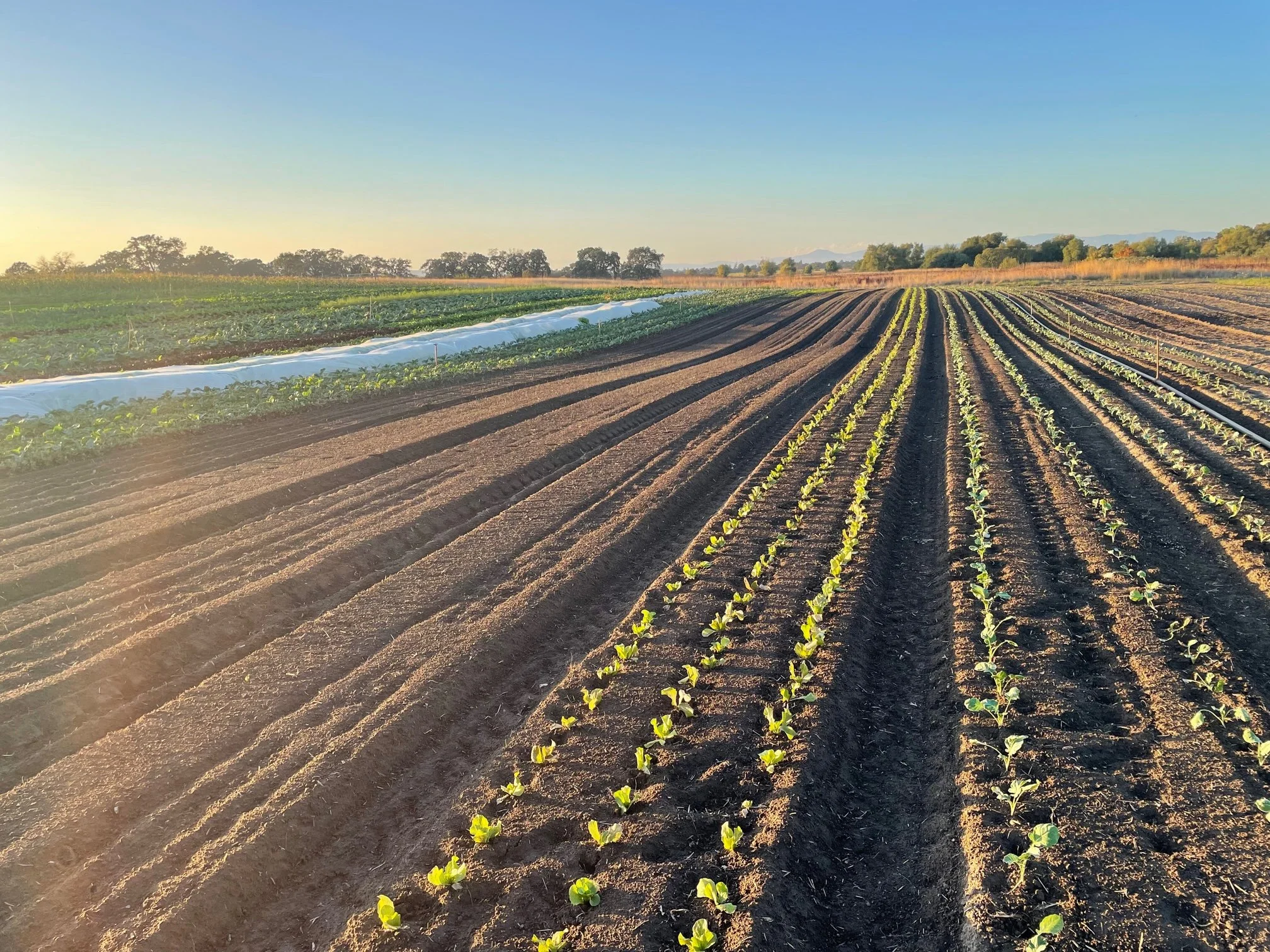
THIS WEEK’S HARVEST
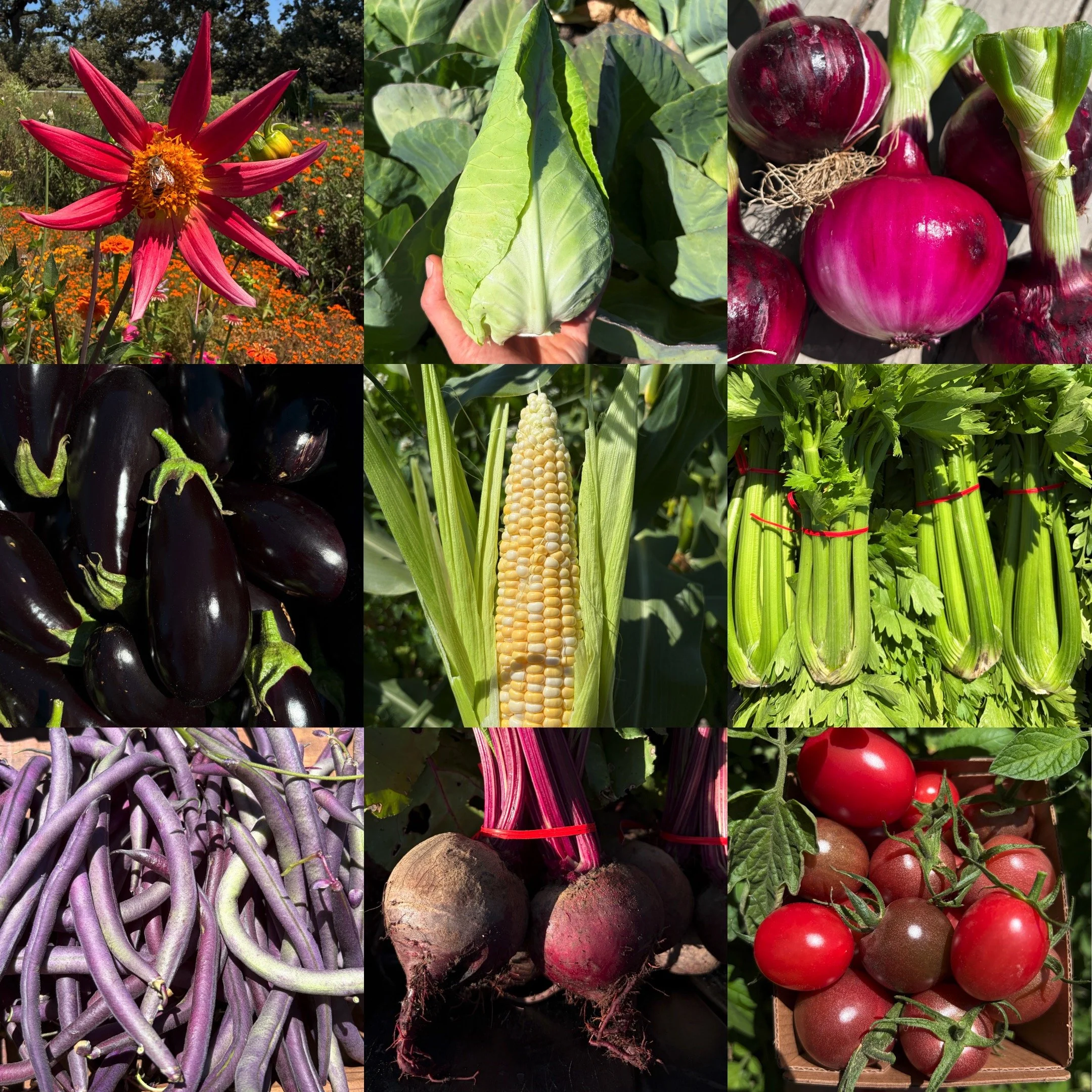
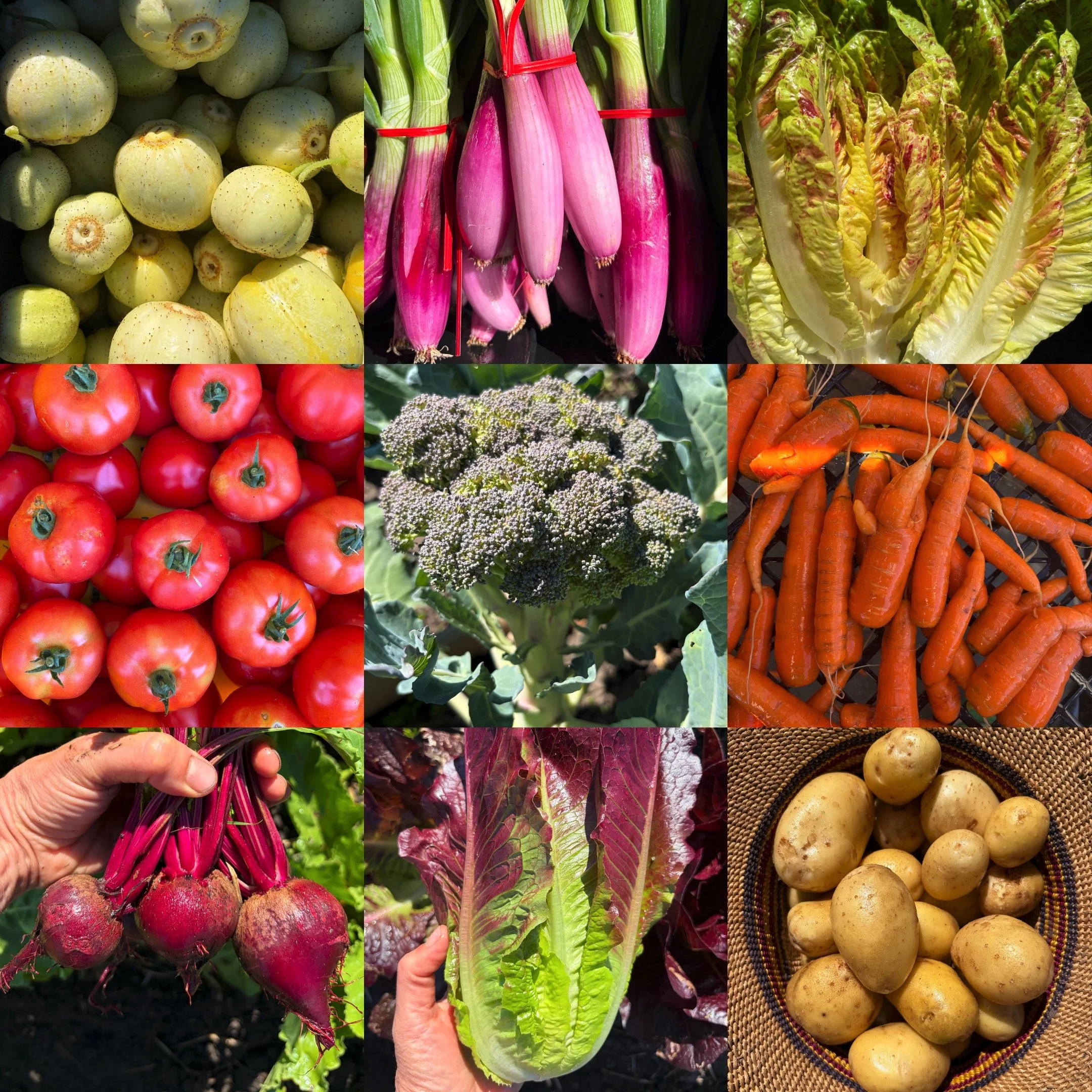
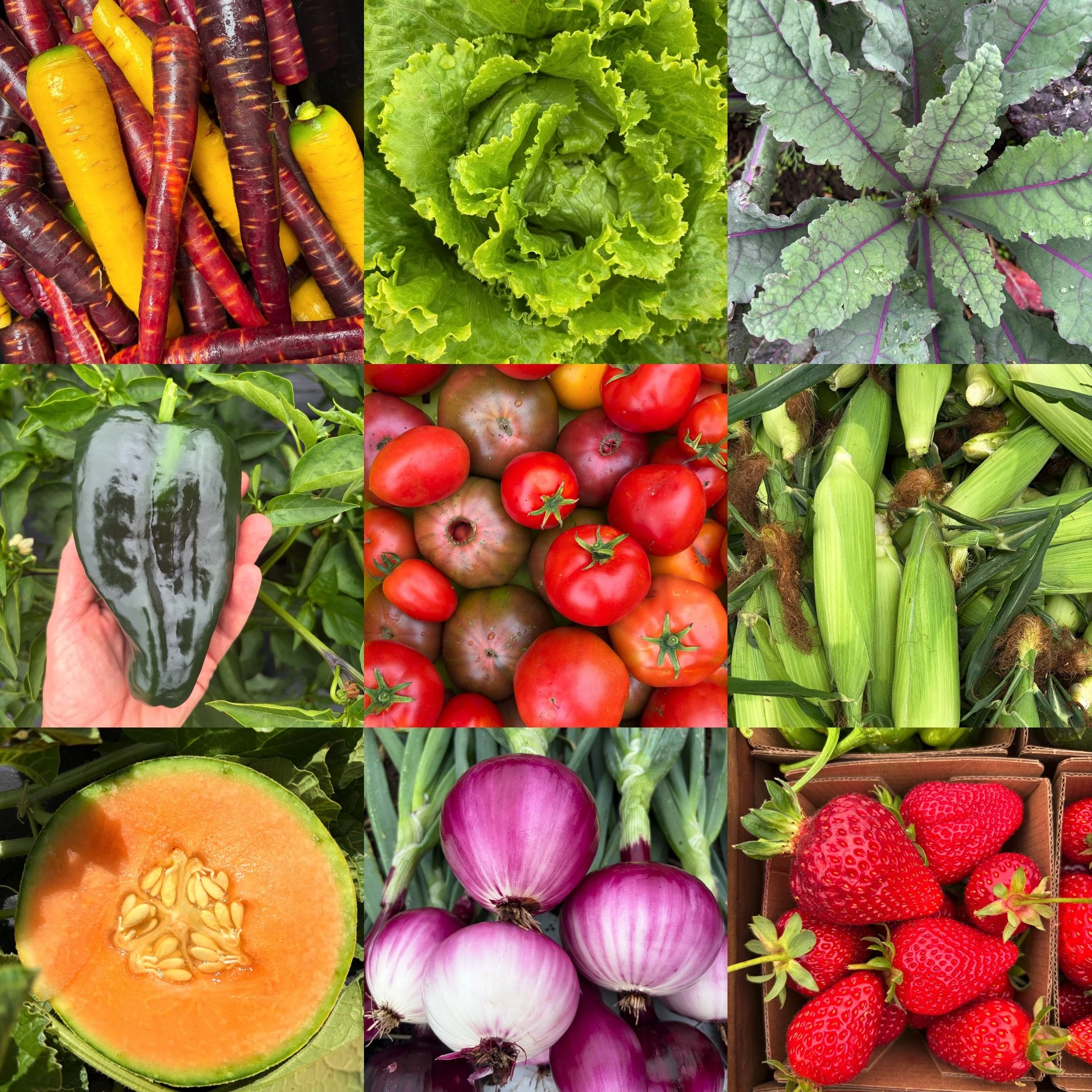
Kolibri Little Gem Lettuces, Albachiara Lettuce, Escarole, Dazzling Blue Dino Kale, Assorted Zucchini & Summer Squash, Assorted Cucumbers, Rainbow Carrots, Fresh Red Onions, Fennel, Italian & Asian Eggplant, Poblano Peppers, Early Tomatoes, Bicolor Sweet Corn, Assorted Melons
U-PICK
Check the u-pick board in the barn for weekly u-pick limits.
Albion Strawberries: ✨5 pints per share✨ There are still beautiful berries languishing in the back right side of the patch. We recommend making the journey out there!
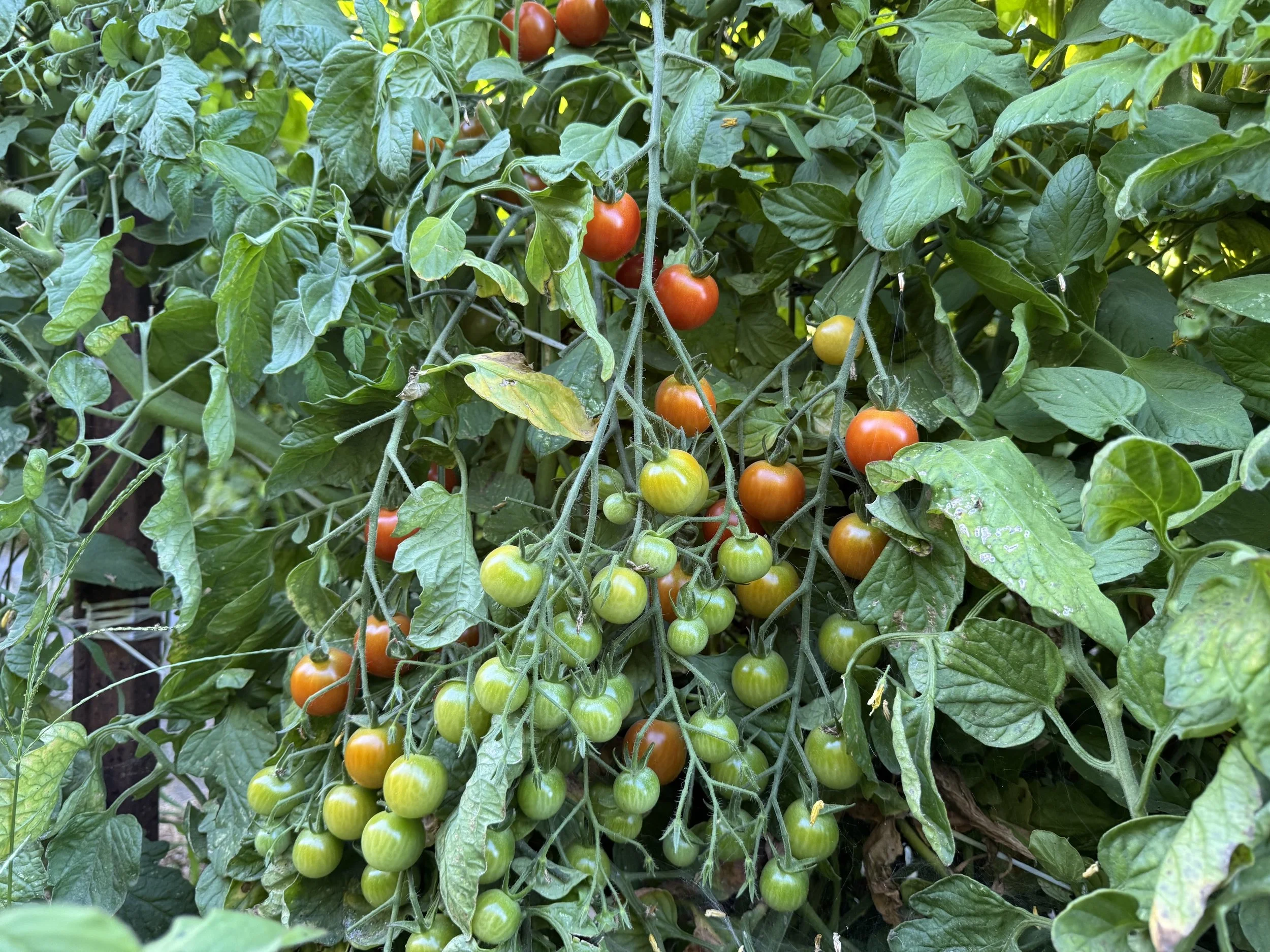
Cherry Tomatoes: 2 pints per share
Amethyst Beans: Gleanings | Gleanings are how we indicate that a crop’s main production is winding down, but that you are welcome to forage for the small amount that remains.
Frying Peppers:
Padrons: No limit — take what you’ll eat!
Shishitos: No limit — take what you’ll eat!
Herbs & Edible Flowers: Husk Cherries, Lemon Bergamot, Dill, Cilantro, Purple Basil, Thai Basil, Lemon Basil, Italian Basil, Tulsi, Parsley, Chamomile, Calendula, Nasturtium, Pansies/Viola, Garlic Chives, Tarragon, Thyme, Oregano, Marjoram, Lemon Balm, Lemon Verbena, Vietnamese Coriander, Shiso/Perilla, Catnip, French & Culinary Lavender, Sorrel, & Assorted Mints
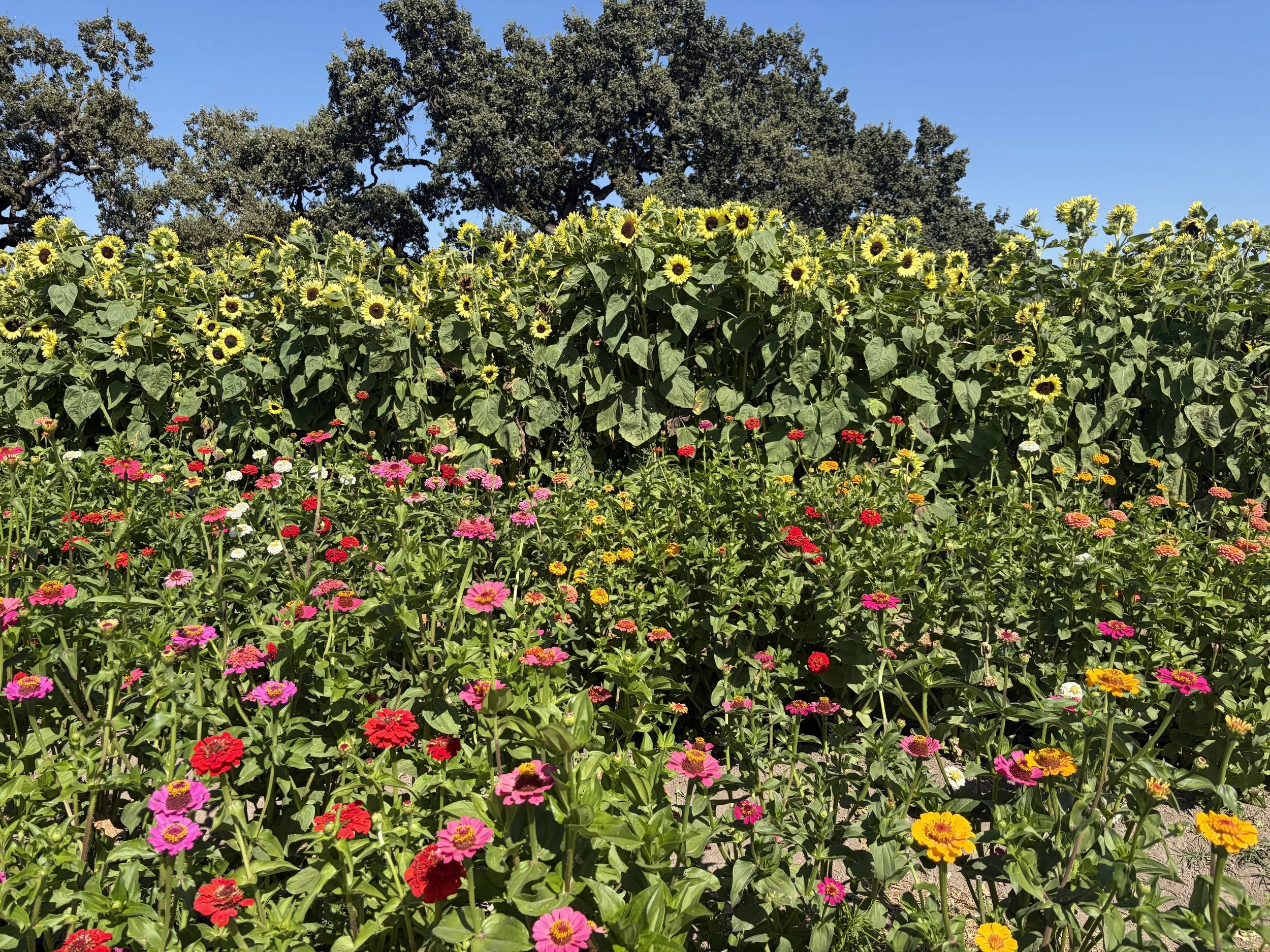
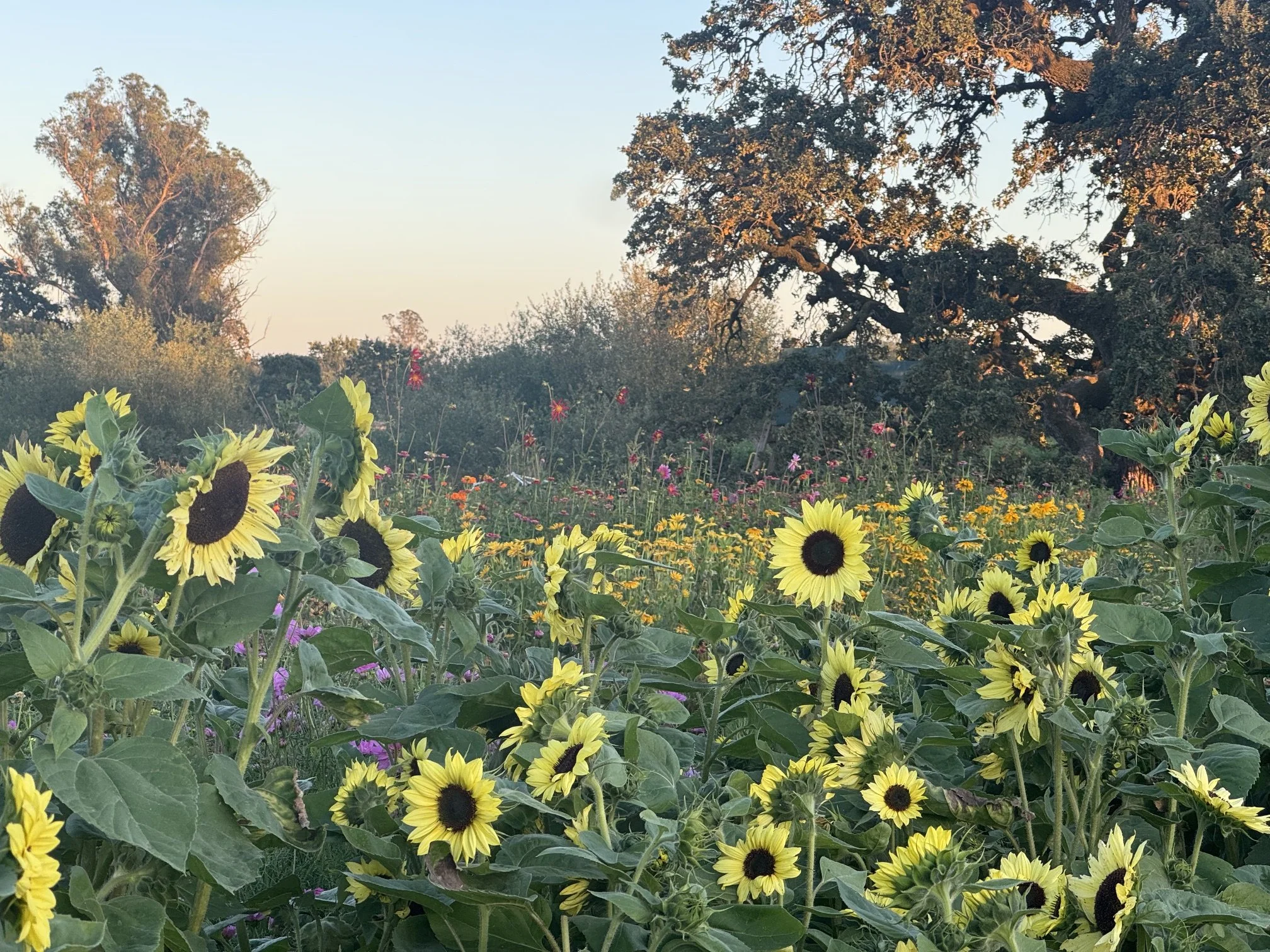
Flowers galore!
HARVEST NOTES
Assorted Melons: This week we find ourselves between two successions of melons, so depending on when you come you may find the green-fleshed Galia Melons that have been coming on slowly over the last couple weeks, or the new Sarah’s Choice Cantaloupe that we look forward to every year. Galia are yellow on the outside when ripe, and Sarah’s choice are a cream color. With both varieties, you can choose a good melon by smelling the small scar where the stem was attached, but don’t worry — we only grow varieties that “slip from the vine” to show that they’re ripe, which makes it easy to pick a winner.
Escarole: One of our favorite members of the chicory family, escarole looks like hearty lettuce. While it can be eaten raw in salad for those who aren’t afraid of a little bitterness, escarole really shines when sautéed, braised or in soup, as cooking highlights its velvety texture and savory depth. For the most simple preparation, try sautéing it in olive oil with plenty of garlic, Parmesan and lemon. It’s also delicious in Italian Wedding Soup, beans with sausage and escarole and Utica Greens — all of which would be delicious this chilly summer week!
Poblano Peppers: The poblano chili pepper is the beloved mild chili, originating in the state of Puebla, México that when dried it is called “ancho” or chili ancho and when roasted and stuffed with cheese becomes the magnificent chili relleno. This week will be offering the first taste of these wonderful peppers. For an easy, incredibly satisfying combo, try adding them to this Esquites (Mexican Street Corn) recipe!
ZUCCHINI, HAZELNUT & BASIL SALAD
Adapted from Plenty by Yotam Ottolenghi
This perfect salad is just the thing to renew one’s enthusiasm for zucchini as we start harvesting our final succession for the season. It’s bright, herby, just slightly sweet and very satisfying. The use of a grill pan or very hot skillet allows you to sear the outside while keeping the inside texture from getting at all soggy.
INGREDIENTS
1/3 cup hazelnuts or other nuts (if it’s all you have a bag of roasted, salted mixed nuts works perfectly well)
7 small zucchini (about 1 3/4 lbs in total)
4 tbsp olive oil
salt and black pepper to taste
1 tsp balsamic vinegar — we like to increase this until it brings a more marked sweetness to the dish
1 1/2 cups basil leaves — straight Genovese is delicious, or you could experiment with the other basil varieties in the garden: purple, sweet Thai, and lemon would all be excellent and very different
3 oz. Parmesan, broken up, very thinly-sliced or shaved
2 tsp hazelnut or walnut oil
PREPARATION
Preheat oven to 300 degrees F. Scatter the hazelnuts over a baking sheet and roast 12-15 minutes or until nicely browned and toasted. Let them cool down (remove skins if needed) before chopping roughly or just crushing lightly with the side of a large knife.
Place a ridged grill pan on high heat and leave it there until it is almost red hot—at least 5 minutes.
Meanwhile, trim the ends off of zucchini and cut on an angle into about 3/8-inch-thick slices. Place zucchini slices in a bowl and toss with half the olive oil, salt and black pepper. Place the slices on the hot grill pan and cook about 2 minutes on each side, turning them over using tongs. You want to get distinct char marks without cooking the zucchini through. Transfer to a mixing bowl, drizzle balsamic vinegar over and toss to combine. Set aside to cool slightly.
Once zucchini has cooled down, add the remaining olive oil, basil and hazelnuts. Mix lightly and taste for seasoning. Place salad on plates, incorporating the Parmesan, and drizzle over the hazelnut oil.

Swallowtail on some zinnias
FARMER’S LOG
Plenty in a Drying Land: THE DOG DAYS OF SUMMER
The sun bleaches the hills gold, the fruits of summer rain down… the dog days of summer are here.
The term "dog days" comes from ancient Greece and the Mediterranean, where people tied the return of Sirius — the brightest star in the night sky, and the eye of Canis Major, the Dog that follows Orion across the heavens — to the hottest and sultriest stretch of summer. The days when, as Virgil put it, "the Dog-star cleaves the thirsty ground." The ancients associated the dog days of summer with bad luck, foul tempers, illness and heat. (Did anyone else just get hit with that scourge of a fever + cold sickness recently?)
As the West Marin based naturalist Richard Vacha observes of our own Mediterranean climate in his book The Heart of Tracking, the dog days are an abundant, raucous, frolicking time for wild canines like coyotes, as they feast on fattened prey and the ripening fruit of late summer and as canine pups leave the den and come into their own.
The dog days are also scarce, spent time in our ecosystem. It is the beginning of the great dry-down in California and the great dormant period of our year.
“For a wild animal,” Vacha writes, the late summer and early fall “can be as tough to endure as an East Coast winter. Food is scarce, water is scarce, and green vegetation is crowded into riparian corridors, drawing the animals that depend on these resources closer together. The animals who prey upon them have shifted correspondingly. Territorial patterns are all in great flux as the expansive cycle of the summer season slowly winds down.”
On the farm, this shift into the dog days — their abundance and scarcity — is clear.
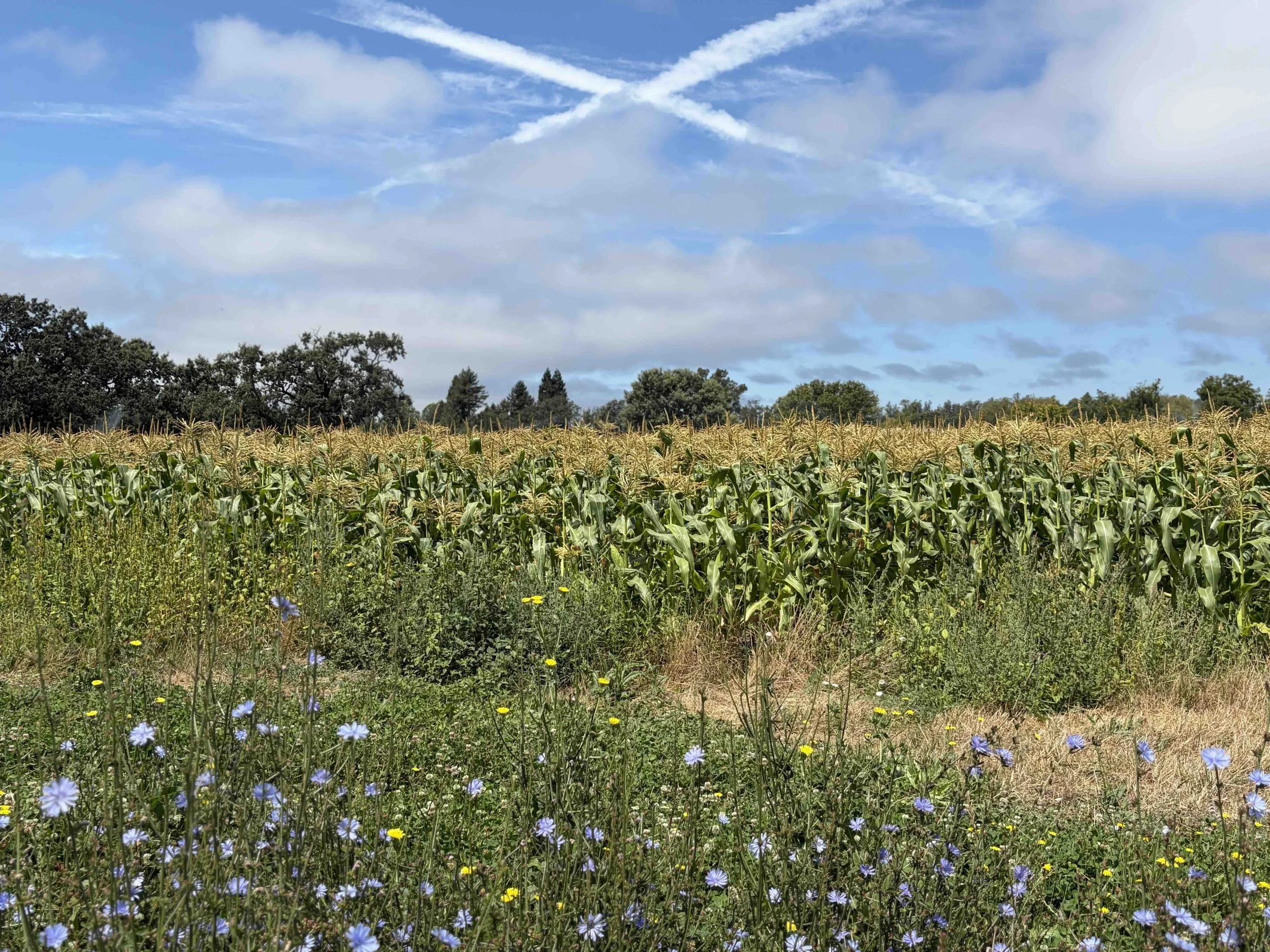
Wild chicories and the sweet corn field feeling the return of Sirius
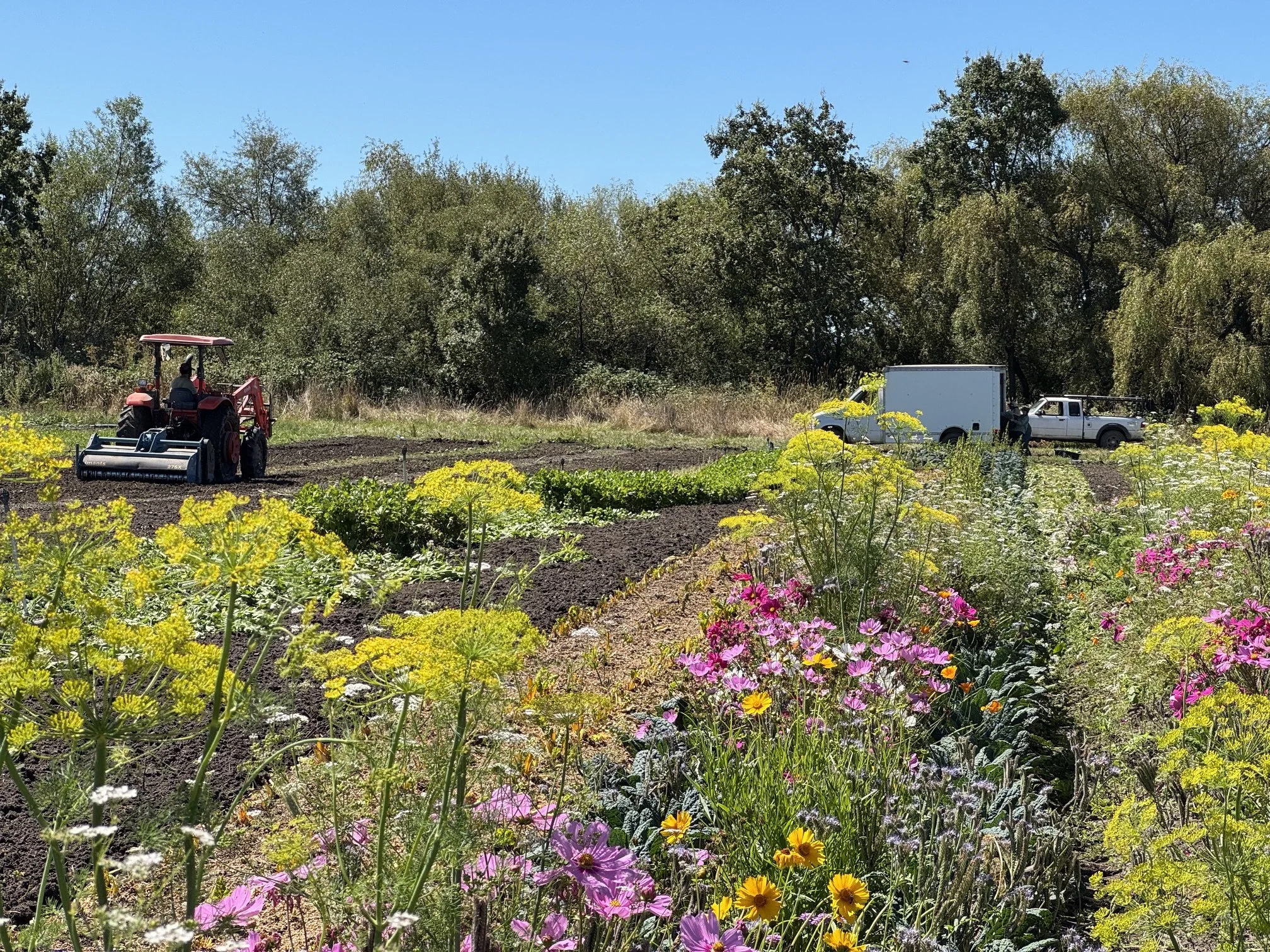
Our harvests are more and more heavy with fruit — melons tomatoes, peppers, eggplant, sweet corn. The wild blackberries are finishing their last fruit. The wild buckeyes are dropping their leaves and turning to their nuts. In our garden, the first rounds of flowers and herbs are following the lead of the wild grasses, tapping out, and throwing seed.
So it goes in our staple field crops: If July was an outward explosion of verdant vegetation, the dog days are the beginning of the hunkering down, the drawing in, the focused inward stare toward the next generation. Our verdant green acre of winter squash is yellowing as the sun battered canopy turns its attention to the precious orbs below. Our flowering potato field is now droopy and pale, the plants senescing and focusing all they have on swelling their final tubers.
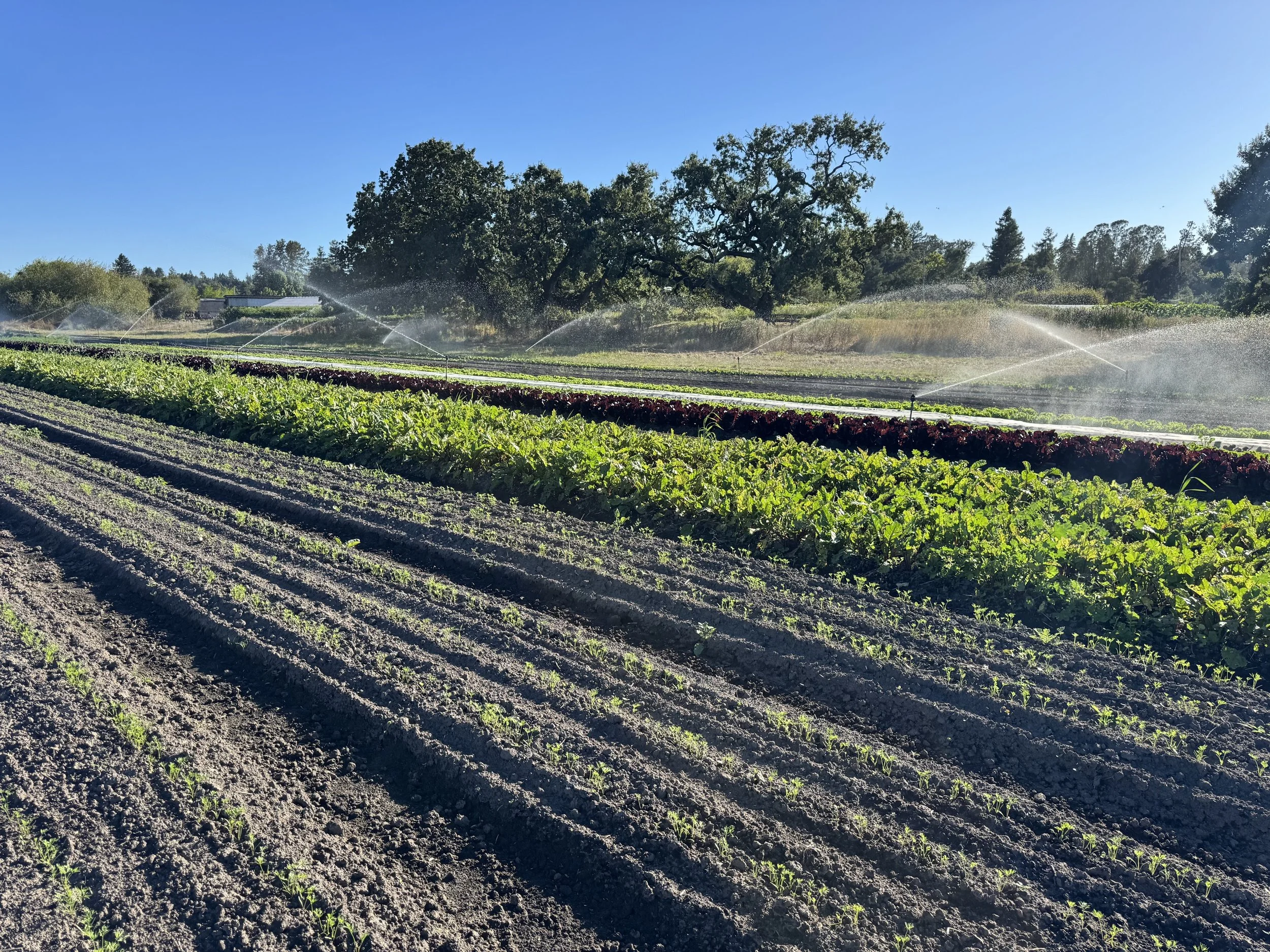
And as the wild land surrounding the farm dries out, our wild neighbors turn more and more to the farm — an irrigated green oasis — for drink and meals. The wild turkeys visit the fields every morning and evening, snipping off hydrating bits of lettuce (their favorite is green romaine lettuce!) Gophers and voles take thirsty bites out of our drip irrigation lines. Raccoons visit the melons and the sweet corn patches nightly for midnight snacks. Good choice.
But the sweet relief of the first fall rains will come soon enough.
Until then, keep cool, move slow, remember to be nice, and enjoy the fruitful abundance of the dog days of summer.
See you in the fields,
David
Nerdy fun fact #1: Athens, Greece and Sebastopol are virtually the same latitude (Athens sits at about 37.98°N, and Sonoma County runs from roughly 38.0°N to about 38.85°N, with Sebastopol at ~38.4°N.
Nerdy fun fact #2: 2,500 years ago, in Greece, Sirius reappeared in the dawn sky in July; but Earth's slow axial wobble has pushed that return later over the millennia, and here in West County it now happens in the second week of August. Step outside about an hour before sunrise on a clear morning, and if you have a very clear view low to the southeast, you can watch the Dog Star climb back into the dawn just before the sun.
CSA BASICS
Check out our Brief Membership Guide: A quick-reference on the essentials of being a member.
Harvest pick-up times:
Friday harvest pick-ups run from 1:00 pm - 6:00 pm
Saturday harvest pick-ups run from 9:00 am - 2:00 pm
Tuesday harvest pick-ups will run from 1:00 pm - 6:00 pm
U-pick hours: Oriented members can come to the farm any time, 7 days a week, sunrise to sunset, to u-pick and enjoy the farm.
2026 CSA program dates: This year’s harvest season will run from Friday, June 12th through Tuesday, December 8th this year.
Where is the farm? The member parking lot is located at 1720 Cooper Rd., Sebastopol, CA 95472.
Slow on Cooper Rd. Please drive slowly on Cooper Road — 20 mph. It's a neighborhood with lots of kids and animals who generously share the road with us.