
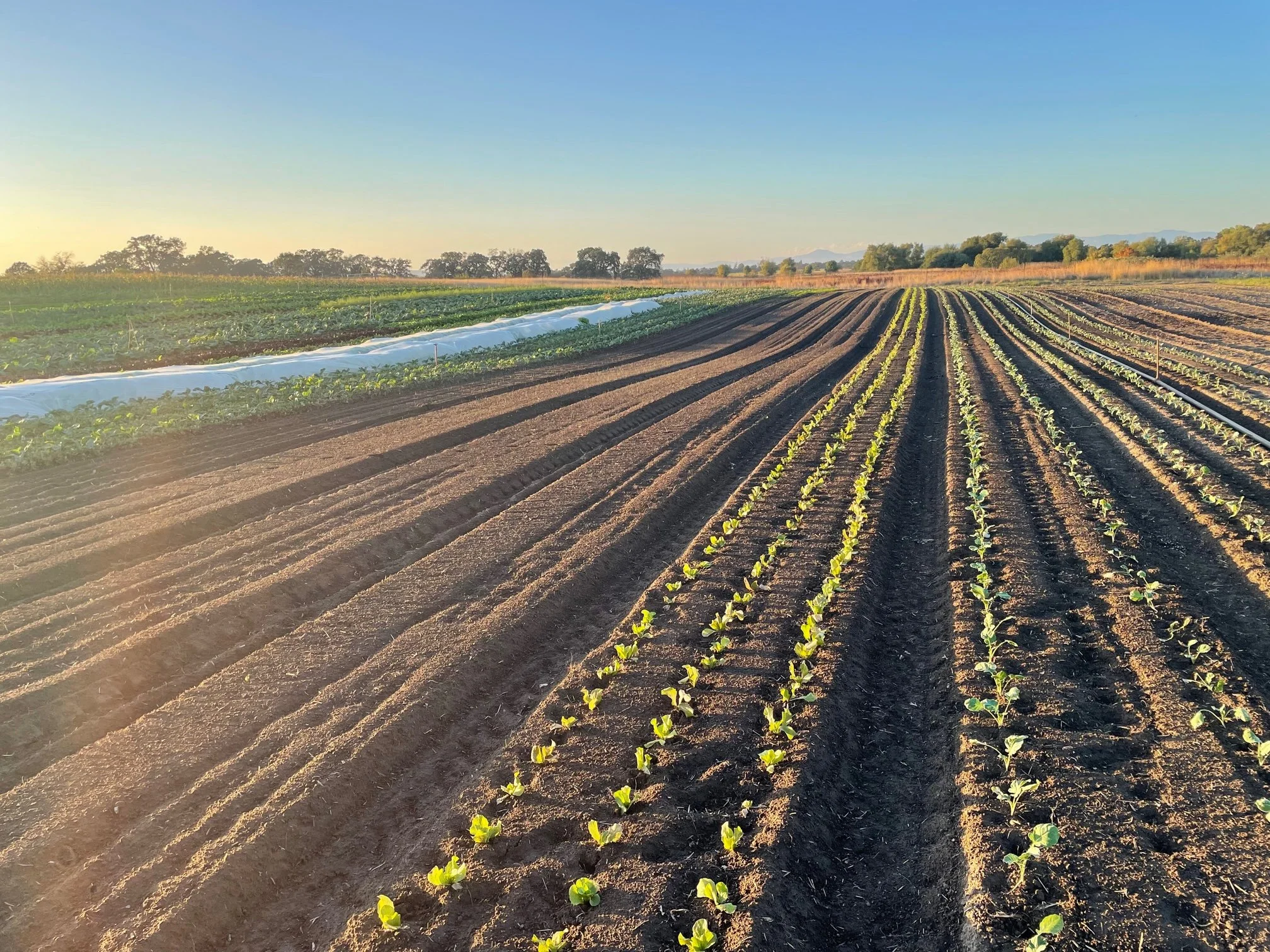
Harvest Week 8 - On Limits and the Enjoyment of Life

ATTENTION MEMBERS: Please make sure to drive slow (15 - 20 mph) on Cooper Rd. out of respect for our human and pet neighbors! Thank you!

THIS WEEK’S HARVEST

In a nutshell: Tomato avalanches start but with a trickle and the first BIG walla walla onions herald the beginning of summer’s big orbs

Lettuce and Chicory Salad Mix, Red Butter Lettuce, Green Romaine Lettuce, Sugarloaf Chicories, Collard Greens, Purple Bok Choi, Farao Cabbage, Celery, Summer Squash & Zucchini, Lemon & Persian Cucumbers, Purple Daikon Radish, Corinto Cucumbers, Walla Walla Sweet Onions, Loose Romance Carrots, Loose Multicolored Beets, Early Girl Tomatoes
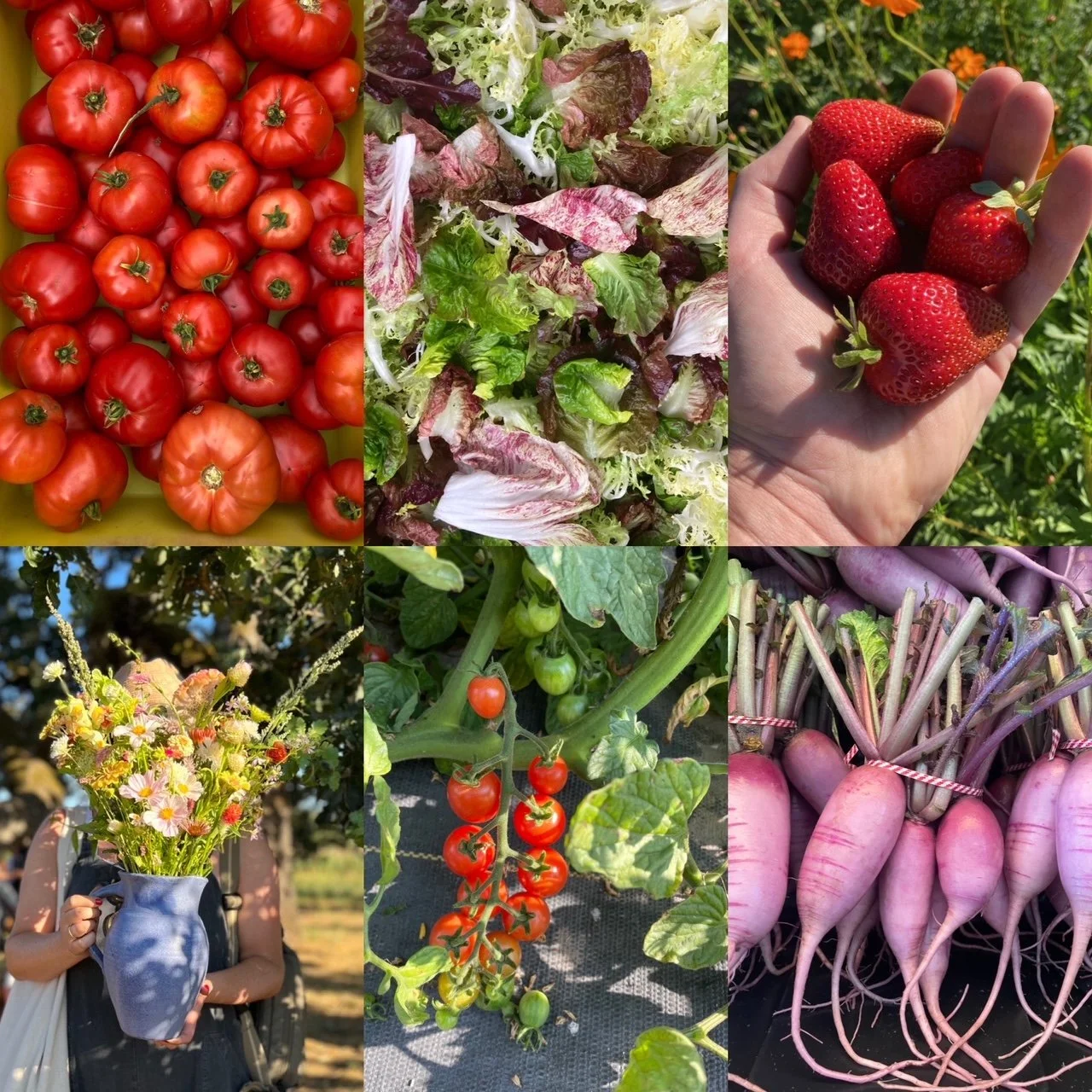
U-PICK

  • Albion Strawberries: 3 pints per share

  • 🌟 NEW! Cherry Tomatoes: 1/2 pint per share | This limit will (greatly) increase as the plants come into production.

  • Shishito & Padrón Frying Peppers: 5 pints total per share | There are lots of Shishitos in the back of the beds at the moment. See Week 6’s Newsletter for harvest and preparation tips.

  • Amethyst Green Beans: 5 pints per share

  • Pickling Cucumbers: 1 gallon season limit | See Week 6’s Newsletter for harvests and pickling instructions.

  • Herbs: Italian Basil, Thai Basil, Tulsi Basil, Chamomile, Parsley, Onion Chives, Garlic Chives, Tarragon, Oregano, Marjoram, Culinary Sage, Lemon Balm, Lemon Verbena, Vietnamese Coriander, Shiso (Perilla), Culinary Lavender, French Sorrel, Borage, Violas, Thyme and Mints.

  • Flowers!

HARVEST NOTES

  • Walla Walla Sweet Onions: Fresh out of the soil, this delicate, sweet, fresh-eating onion was developed in Walla Walla, Washington. These are a delicacy. Try them in a way that you can show them off: Lightly grilled in a good burger or raw in a salad with a delicate dressing. Onion rings for the hard core. They are so sweet and mild, some people even eat them raw like an apple! (We haven’t tried that yet! If you do, let us know how it goes!) Read more about Walla Wallas here.

  • Early Girl Tomatoes: A classic red slicing tomato, aptly named as they are always the first to the party. These first tomatoes are a little on the mild side, not yet distilled with summer heat, but we’re so glad they’ve arrived. Tomatoes will limited for the first few weeks as we wait for the tomato avalanche.

  • Purple Daikon: Purple daikon are a gorgeous, mild, hardy radish that adds delightful color to any plate. Try slicing them raw to dress up your salad or crudités platter, or adding them to kimchi. For extra magic, toss them with a little acidic salad dressing or lemon juice and watch their color change to hot pink!

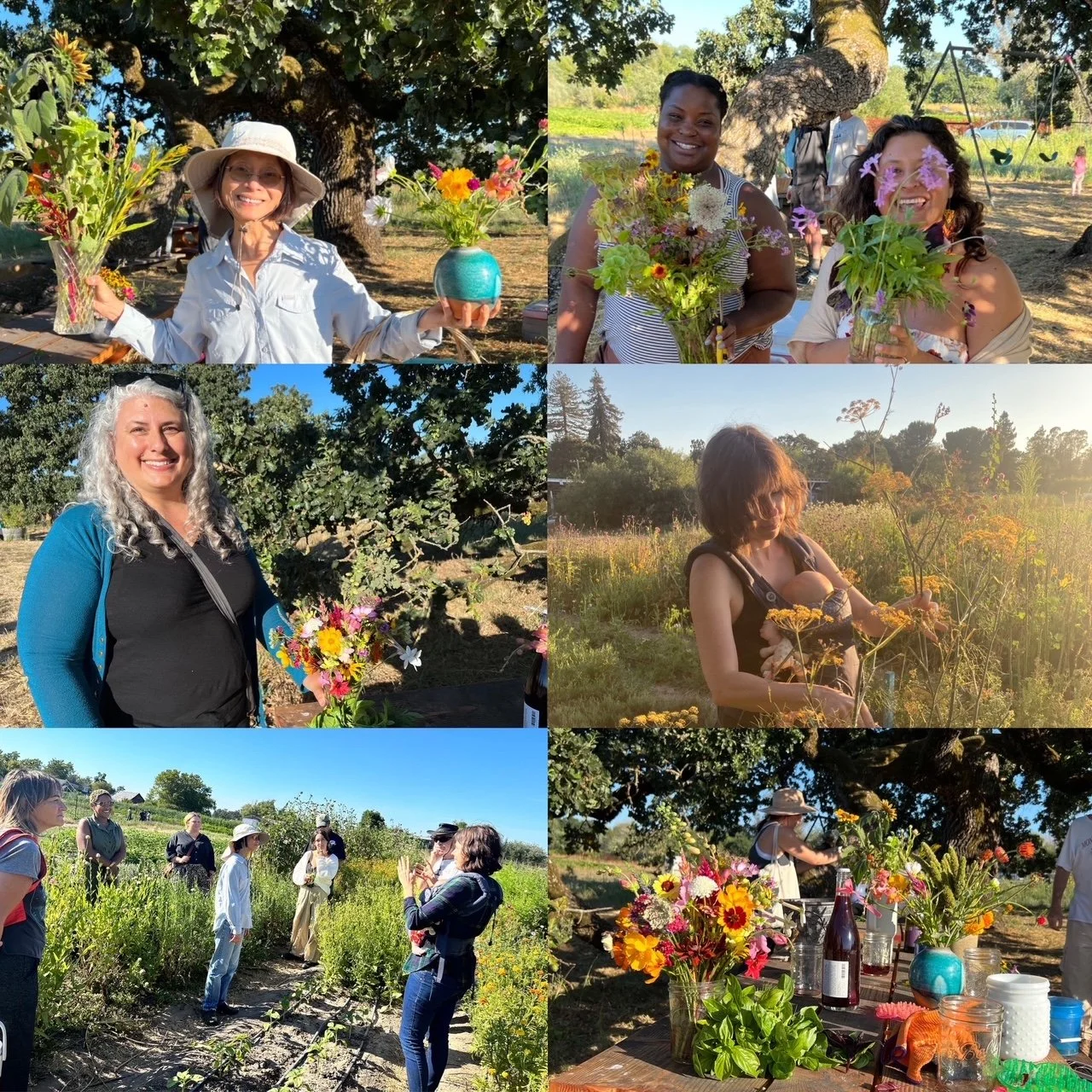
FLOWER POWER HAPPY HOUR!

Thanks to Cassidy, Kayta, and everyone who came out and made our first Flower Power Happy Hour so special.

We’ll let you know when the next organized FPHH is — but don’t let that stop you from having your own! We’ve been loving seeing all the picnics in the garden lately so much!
FARMER’S LOG

ON LIMITS AND THE ENJOYMENT OF LIFE

As our fields and harvests transition away from the delicate greens of early summer into the cacophonous colors and flavors of peak summer, we’re reminded of some of the reasons why we love this CSA model and eating from the farm.

First, we eat with the seasons. Nothing dictates what is on our tables more than the tilt of the Earth. As you’ve seen, the shares of mid-June are very different from those of mid-August. The spring, with its soft waxing light, grows tender, almost translucent, baby soft greens. While the hard summer sun condenses itself into weighty, colorful, sweet fruits. Mentally compare an early Spring strawberry, with it’s silky soft skin and wateriness, to the more sun hardened, acid-sweet, candy-packet strawberries this week.

Another cool thing about eating from the farm is that we get to experience the full arc of plant growth — from fresh onions to cured onions; from baby Spring carrots to deep orange Fall carrots kissed by frost — and the whole arc of taste in between. In supermarkets, most produce is harvested at one standard stage of a few standard varieties. Here, life is happening, and we pull it out of the field for you to witness!

We also love that this model allows us the chance to distribute damaged produce and to share over-abundant harvests with members. You’ll experience this more as the season goes on. Ancestral cultures were scrupulously efficient in their use of food because they had to be. There was a use for everything. And it was a duty to preserve the abundance of Summer. In this spirit, we put out the 2nd tomaotes, split and cracked, but still perfectly good (sometimes even better) sliced on a BLT.

But perhaps our favorite thing about this model is an unsung hero: Limits.
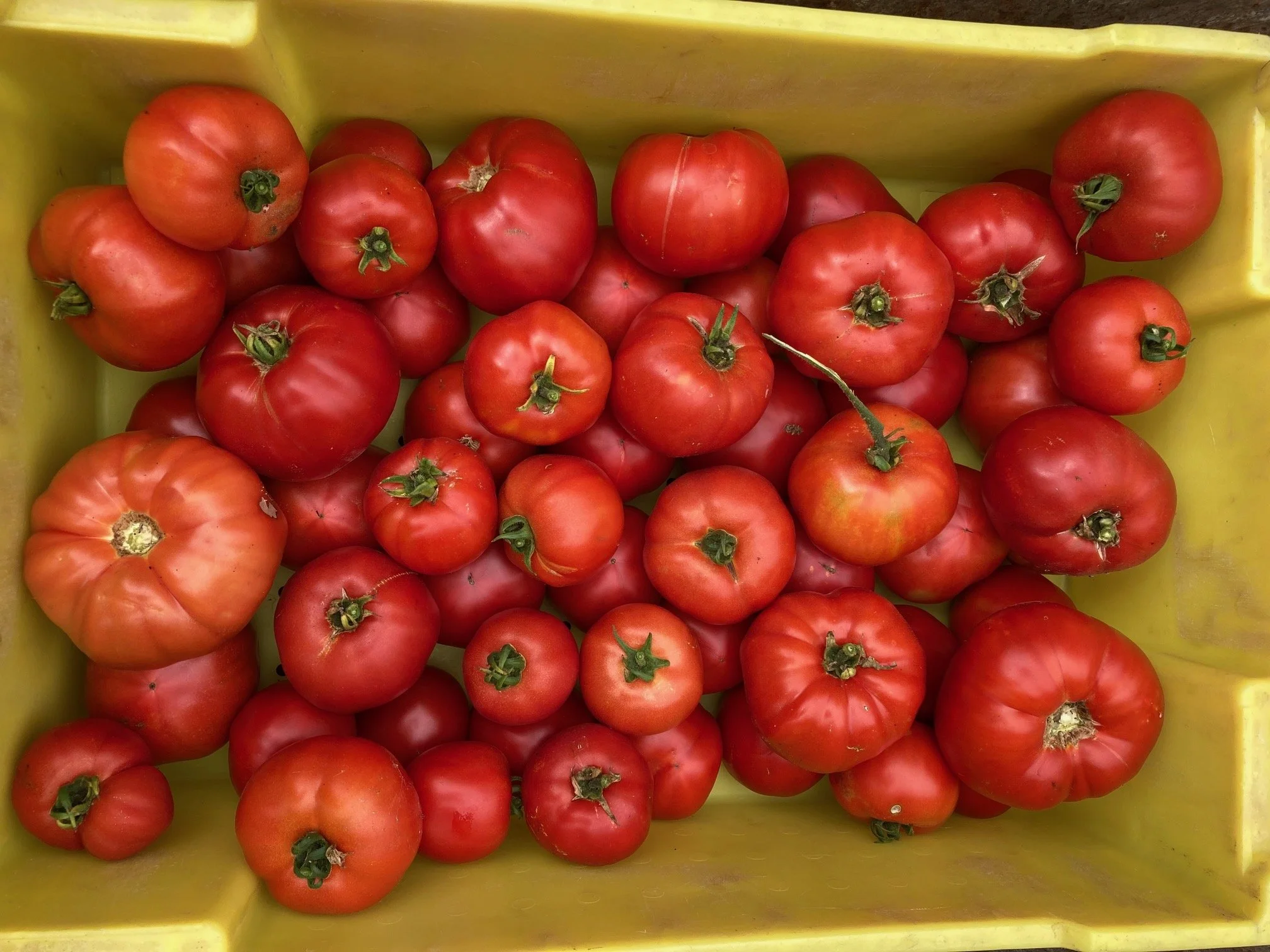
The first of many… bins.

Yes, limits. Scarcity. Not having something. “Limit: 1 per share.”

“What!?”

We live in a time and a place where we can get just about any food, anytime, en masse, if you can afford it. Tomatoes in January. Melons in the February. Mangos in Sebastopol.

We have conquered seasons. We have conquered limits.

But have we also conquered one of the simplest pleasures in life? What is the fulfillment of desire without the longing that precedes it?

This week, we will cherish the year’s first tomato. That first juicy sweet acid slice of heirloom tomato on an open faced sandwich (with a little basil, olive oil, and salt) will bring back a flood of memories from last summer, and summers before that, and we will smile at our loved ones at the table in our shared remembrance and shared enjoyment of this thing that we have now, but did not have for so long. It will bring us together. Perhaps your first bite of Kabocha squash this Fall will unlock a similar smile.

In most (or maybe all) cultures there are festivals celebrating these moments — basically giant parties celebrating the return of a certain food. In Southern France there is a plum festival and a Spring festival marking the return of the egg, when the hens start laying again. What is life without eggs!? In Sebastopol, we have the Gravenstein Apple Fair this weekend. In Italy, in the Fall, there is a conference on all things Radicchio and Chicory.

Limits, scarcity, the lean times — they help us appreciate, like really appreciate, what we have.

Life's fleeting nature is really it's spice — and so it goes for food, we'd say.

In a few short weeks, we will be drowning in tomatoes. We will be filthy rich in tomatoes of all stripes and colors. We will take for granted their spiced earth smell and the way they tie so many meals together. We may even grow sick of tomatoes. But not this week. This week we will hold up the year’s first tomato and rotate it around — impossibly red, impossibly perfect — and it will shine back at us and remind us how impossibly lucky we are.

See you in the fields,
David

CSA BASICS

What time is harvest pick-up?:

  • Saturday harvest pick-ups run from 9:00 am - 2:00 pm

  • Tuesday harvest pick-ups will run from 1:00 pm - 6:00 pm

When can I u-pick?: Oriented members can come to the farm any time, 7 days a week, sunrise to sunset, to u-pick and enjoy the farm.

2023 CSA program dates: Our harvest season will run this year from June 24th - December 19th

Where is the farm? The member parking lot is located at 1720 Cooper Rd., Sebastopol, CA 95472.

Where should I park?: Follow our sign on Cooper Rd. down a short gravel driveway. Please find a parking spot next to the solar panels or along the road further down. Please don’t park behind the solar panels.

Where’s the bathroom!: Under the big solar panels in the parking lot.

What should I bring?:

  • Your WCCF tote bag

  • Pint baskets or small containers for measuring your allotment of u-pick crops like strawberries

  • A vase, bucket, or water bottle to keep your flowers and herbs happy

  • Clippers or secateurs to cut flowers (if you have some), we also have some in the barn

  • Water / sun hat / picnic supplies if you plan to stay awhile!

  • Friends and family!

Newsletters & email communication: All our important CSA communications are through this email address, which seems to be getting spam blocked a lot. Please make sure this email address is in your address book so you get important CSA communications. All newsletters and important updates are also posted on the Newsletters page of our website weekly.

Harvest Week 7 - The Peace of Wild Things

ATTENTION MEMBERS: Please make sure to drive slow (15 - 20 mph) on Cooper Rd. out of respect for neighbors and pets! Thank you!

THIS WEEK’S HARVEST

In a nutshell: Lots of u-pick options as this cool summer makes us wait on tomatoes and peppers in the main harvest.

Salad Mix (with Mustard Greens and Frisee), Rosaine Little Gem Lettuces, Red Romaine Lettuce, Sugarloaf Chicories, Red Russian Kale, Farao Cabbage, Fennel, Celery, Patty Pan, Costata & Dunja Summer Squash, Lemon & Persian Cucumbers, Corinto Cucumbers, Fresh Torpedo Onions, Loose Mokum Carrots.

Sulfur cosmos just started blooming West of the big sunflowers.

U-PICK

  • Albion Strawberries: 2 pints per share

  • Shishito & Padrón Frying Peppers: 3 pints total per share —there are lots of Shishitos and relatively few Padróns at the moment. See Week 6’s Newsletter for harvest and preparation tips.

  • Amethyst Green Beans: 3 pints per share

  • Pickling Cucumbers: See Week 6’s Newsletter for instructions.

  • Tomatillos: 1 pint per share

  • Herbs: Dill, Italian Basil, Thai Basil, Tulsi Basil, Chamomile, Parsley, Onion Chives, Garlic Chives, Tarragon, Oregano, Marjoram, Culinary Sage, Lemon Balm, Lemon Verbena, Vietnamese Coriander, Shiso (Perilla), Culinary Lavender, French Sorrel, Borage, Violas, Thyme and Mints.

  • Flowers!

Just waiting on some heat to kick the cherry tomatoes and hot peppers into gear to reach peak u-pick cruising altitude!

HARVEST NOTES

  • Amethyst Green Beans: These gorgeous purple green beans have a delicious flavor and sweetness when eaten raw. And when cooked, they magically turn green! To show off their purple skins and green interiors, we love to use them fresh in salads, chopped on the bias, but they are also incredible as you would use any green bean: Blanched, roasted, or sautéed.

  • Sugarloaf Chicories: We would die happy farmers if our one accomplishment in this life was to initiate our all our CSA members into a deep and abiding love for Sugarloaf Chicories. We harvested an abundance of these beauties and will be distributing them out-of-bag. Our favorite way to prepare them is to roast them in the oven. Try cutting a Sugarloaf head into quarters, coat the quarters completely with olive oil, rub on some garlic, and then broil them until the outer leaves are slightly crisped and blackened the leaves are melted and soft. Then top with salt and ample grated parmesan and eat as a side. For a raw chicory salad, check out CSA member Sarah Kate Benjamin’s simple and masterful recipe in Week 5’s newsletter.

FLOWER POWER HAPPY HOUR!

Join Flower Ambassador Cassidy in the garden this Tuesday evening to enjoy summer in it’s full bloom glory for a Flower Power Happy Hour!

Next Tuesday, August 8th, bring your clippers, your fave flower vessel and perhaps a beverage to share and let’s enjoy the gorgeous garden vibes! 

Farmer Kayta will kick us off with a garden tour telling us about some of the blooms. Then we will spend time picking and arranging our own bouquets.  We will wrap with a show and tell. 

Tuesday, August 8th

5:00 pm: Garden Tour with Kayta 
5:20 pm: Pick! Arrange! Sip!
6:00 pm: Show’n’Tell

home chef ambassador: CUCUMBER SALADS

Hey y’all, I’m Adam, your Home Chef Ambassador!

I love to cook, but am by no means a professional, and I hate wasting food. My favorite style of cooking is “what do we have, how do I make the most of it without having to go back to the store.”  In that spirit, what I have in mind for this series is to give you really easy ideas on how to use the produce that comes out of the farm. I’ll likely focus on the harvests that are abundant to give maximum inspiration. I’ll also avoid full-on recipes, there are tons of those all over the internet, I’m mostly trying to give some foundational techniques to spark your own creativity.

This week I wanted to focus on cucumber salads. There are so many cucumbers, they are just exploding. Similar to my first article, I’m going to give you two axes on which you can mix-and-match for amazing cucumber salads.

First, choose your texture:

  • Zebra coins: For these, first use your peeler to peel long stripes in the cucumber, leaving space between each stripe. Then you cut into discs, revealing a cute little pattern on the coins. (see photo for detail). This method also helps for cucumbers that have tough skins, as you end up still getting the nutritional benefits of some skin, while avoiding anything too chewy. Lastly, they also look much fancier for virtually no extra effort.

  • Spears: These are classic “pickle shapes”.  Just cut lengthwise into wedges.  My favorite shape for picnics so I can eat with my hands.

  • Ribbons: Again, with your peeler, peel lengthwise, revealing long, thin ribbons.  These are great for wrapping around something else, another item that looks really fancy, but comes together instantly! (I wrapped mine around last night’s leftover chicken, and dipped in hoisin)

  • Smashed: This one is a classic in chinese cooking. Cut into 2” lengths, then just smash with the broad side of your knife (or put in a plastic bag, and channel any angry energy into smashing them with a rolling pin. Invite your kids to participate, they love this method). This creates a craggy texture that really holds onto sauces and dressings.

Next choose your flavors:

  • Greek: Red onions, feta, olives, oregano, red wine vinegar

  • Szechuan: Toss with your favorite chili crisp (shout out to West Sonoma County’s homegrown Big Spoon)

  • Fruits and Cukes: Melon, mint, lemon, toasted nuts

  • Mediterranean: Tahini, lime, cumin, crispy chickpeas

Also, don’t forget to put cucumber in all your cold, summery drinks. A simple cucumber water is fantastic, or go full CDMX with a spicy agua fresca (blend the cucumber with water, agave, jalapeños and tajin).

Have fun, and please show me what you come up with. I’m excited to hear from you all!

-Adam

FARMER’S LOG

The Peace of Wild Things
by Wendell Berry

When despair for the world grows in me
and I wake in the night at the least sound
in fear of what my life and my children’s lives may be,
I go and lie down where the wood drake
rests in his beauty on the water, and the great heron feeds.
I come into the peace of wild things
who do not tax their lives with forethought
of grief. I come into the presence of still water.
And I feel above me the day-blind stars
waiting with their light. For a time
I rest in the grace of the world, and am free.

CSA BASICS

What time is harvest pick-up?:

  • Saturday harvest pick-ups run from 9:00 am - 2:00 pm

  • Tuesday harvest pick-ups will run from 1:00 pm - 6:00 pm

When can I u-pick?: Oriented members can come to the farm any time, 7 days a week, sunrise to sunset, to u-pick and enjoy the farm.

2023 CSA program dates: Our harvest season will run this year from June 24th - December 19th

Where is the farm? The member parking lot is located at 1720 Cooper Rd., Sebastopol, CA 95472.

Where should I park?: Follow our sign on Cooper Rd. down a short gravel driveway. Please find a parking spot next to the solar panels or along the road further down. Please don’t park behind the solar panels.

Where’s the bathroom!: Under the big solar panels in the parking lot.

What should I bring?:

  • Your WCCF tote bag

  • Pint baskets or small containers for measuring your allotment of u-pick crops like strawberries

  • A vase, bucket, or water bottle to keep your flowers and herbs happy

  • Clippers or secateurs to cut flowers (if you have some), we also have some in the barn

  • Water / sun hat / picnic supplies if you plan to stay awhile!

  • Friends and family!

Newsletters & email communication: All our important CSA communications are through this email address, which seems to be getting spam blocked a lot. Please make sure this email address is in your address book so you get important CSA communications. All newsletters and important updates are also posted on the Newsletters page of our website weekly.

Harvest Week 6 - FULLNESS & EMPTINESS

THIS WEEK’S HARVEST

In a nutshell: A peak of the richness of fall in the year’s first potatoes and cabbage, surrounded in a niçoise of summer treats and primo arugula.

Arugula, Mustard Mix, Assorted Lettuces, Mixed Chicories, Black Magic Dino Kale, Farao Cabbage, Green Magic Broccoli, Kohlrabi, Easter Egg Radishes, Patty Pan, Costata & Dunja Summer Squash, Lemon & Persian Cucumbers, Corinto Cucumbers, Fresh Cipollini Onions, Loose Mokum Carrots, Masquerade New Potatoes

U-PICK

  • Albion Strawberries | 3 pints per share

  • Shishito & Padrón Frying Peppers | 1 pint per share

  • Amethyst Green Beans | (Check the u-pick chalkboard for limit)

  • Pickling Cucumbers | (See below for instructions)

  • Sugar Snap Peas | Gleanings (1 pint per share max)

  • Herbs: Cilantro, Dill, Italian Basil, Thai Basil, Tulsi Basil, Chamomile, Parsley, Onion Chives, Garlic Chives, Tarragon, Oregano, Marjoram, Culinary Sage, Lemon Balm, Lemon Verbena, Vietnamese Coriander, Shiso (Perilla), Culinary Lavender, French Sorrel, Borage, Violas, Calendula, Nasturtium (Thyme and Mints are taking a break to regrow a bit.)

  • Flowers!

A masterpiece by CSA member Irisha Steele.

HARVEST NOTES

  • Padrón Frying Peppers: The famous Spanish heirloom, named after their town of origin. Padróns are served sautéed in olive oil with a little sea salt, and eaten as tapas in Spain. Ideally harvest when they are 1" to 1 1/2" long. About 1 out of 10 fruits will be hot. All the fruits become hot if allowed to grow 2-3" long. While Padróns and Shishitos are both excellent prepared in the same way — fried in a hot pan — we recommend cooking them separately to achieve the perfect level of caramelization on each type.

  • New Masquerade Potatoes: Masquerade potatoes, which are also called Pinto after their gorgeous purple and yellow spots, have a buttery flavor. “New” potatoes are potatoes that are harvested fresh, uncured, straight out of the ground. They are delightfully fresh and delicate compared to cured potatoes. You can prepare them in any way you would a normal potato, but we recommend making potato salad or salade niçoise (recipe below!) to show off their special freshness and the gorgeous coloring of the Masquerades. Inspired by European markets and to preserve their fragile skins, we have opted not to wash them after harvest — they’ll store better that way. Store these potatoes in your fridge dirty and rinse right before preparing them.

  • Amethyst Green Beans: These gorgeous purple green beans have a delicious flavor and sweetness when eaten raw. And when cooked, they magically turn green! To show off their purple skins and green interiors, we love to use them fresh in salads, chopped on the bias, but they are also incredible as you would use any green bean: Blanched, roasted, or sautéed.

PICKLING CUCUMBERS

Each year, we plant a large patch of pickling cucumbers so members can have the joyful experience of making fresh pickles at home! The plants are just starting to produce so there are enough for about 8 early birds to pick this week!

The season limit to start off this year is 1 gallon per share. (A “season limit” means the total amount you are able to harvest over the course of the season in contrast to a “weekly limit”. You are responsible for keeping track of how much you’ve picked. You’re welcome to pick incrementally, or all at once.) The pickling cucumbers should on from now until late-August.

See below for instructions on how to pick them and a tried-and-true crunchy pickle recipe from CSA member Kate Seely.

HOW TO PICK PICKLING CUCUMBERS

  • Bring a bucket or bag from home to measure and pick your cucumbers into.

  • When you get to the farm, check the u-pick board for the current season limit.

  • The pickling cucumbers are located in the big vegetable field below the big twin-oaks. Look for the color coded flags in the big field, or ask a farmer.

  • Comb through the plants doing your best not to step on cucumber vines or the adjacent beds. The ideal sized pickling cucumber is around 4 inches long and 1 inch thick. Please don't pick too many that are smaller than this. If you see a monster cucumber (7 inches long and 3 inches wise) please pick it anyway and leave it in the pathway. This will help the plant produce many more nice small ones.

  • Pick however many you want up to the season limit. Please note that this is a season limit rather than weekly limit.

  • Make pickles!

MAKING PICKLES

The following recipe is from CSA member Kate Seely. It is a tried and true pickling method that can be used not just on cucumbers but on other vegetables as well! Pickled radishes, anyone!?

Kate’s recipe includes instructions for water-bath canning to preserve the pickles for up to a year, but if you’re short on time or know that you’ll eat them sooner, you can always pop your pickles in the fridge rather than canning, where they’ll keep for a month or two.

******

For crispy crunchy pickles, Kate has found that the trick is to keep them cool after picking and to pickle them as fresh as you can — i.e. as soon after picking as possible. (Some people swear by putting grape leaves or citric acid in with the pickles to make them crispy, but Kate hasn’t found that to work.) If you can’t get to pickling right away, try getting them into the ice water / salt brine as soon as possible. Another helpful trick for crunchier pickles is to pick your cucumbers in the morning rather than the heat of the day.

BRINE INGREDIENTS

  • 1:1 ratio water : organic distilled white vinegar

  • 1/3 cup pickling salt for every 8 cups liquid

  • **If you like it a little less vinegary, go 2/3 water : 1/3 vinegar instead of 1:1. Also, you really can use this brine to vinegar pickle any vegetable.

PICKLE INGREDIENTS

  • Fresh WCCFarm pickling cucumbers!

  • WCCFarm Garlic!

  • Fresh spicy peppers (a jalapeño works, or any spicy pepper) or red pepper chili flakes

  • Yellow mustard seed

  • Fresh dill (if you don't have fresh, dried is fine). Try using the dill flowers in the garden.

  • Peppercorns

EQUIPMENT

  • Canning Pot

  • Pint Jars (or Quart if you want to go big!)

  • New lids for sealing

  • Tongs and/or can removers

STEP-BY-STEP

CAUTION: Canning can be dangerous. If it is is not done properly, bacteria that can make you very sick, or even kill you, can develop in the jars. If you have never canned before, make sure you do your homework and feel confident in your ability to can safely before starting.

Step 1 - Soak Cucumbers: Cut your cukes, removing ends and sizing the slices to the size of the jars you will use, and set in water, salt and ice. Use about three TBSP of salt for 5 pounds of cukes. Let sit anywhere between 4 and 24 hours.

Step 2 - Make Brine: Begin this step when you're ready to pickle. Put the brine measurements into a separate pot and bring to a boil. 1:1 water to white vinegar, and 1/3 cup salt for every 8 cups of liquid. Once boiling, reduce to a simmer.

Step 3 - Sterilize Jars: Fill canning pot with water, bring to a boil. To sterilize, wash jars with soap and water, then place in boiling water for 10 minutes. Remove and set aside. Be mindful not to touch the insides of the jars with your hands as that will de-sterilize them. Sterilize lids in a smaller pot as well.

Step 4 - Fill Jars: Drain the cucumbers you have soaking in the ice / salt mixture. Trim them to the length of the jar as needed.. Jars should have 1/4 inch of space between liquid and jar top. Pack cucumbers, dill (1-2 sprigs), and garlic (one clove for a pint jar). Really, PACK them in there.

Add spices: Pour 1 tsp yellow mustard seed, 3/4 tsp (or more or less depending on the spice you want, I like them spicy!), 6 peppercorns on top of cucumbers.

Step 5 - Pour Brine: Pour your brine over pickles, covering them, but leaving 1/4 inch until top of jar. Remove lid from small pot with tongs, being mindful not to touch lids. Screw on cap so that it is not tight, so that air can escape from jars as you water process them.

Step 6 - Sealing Jars: Place jars in canning pot and water process for 15 minutes. (If you do not have a canning pot with a metal insert to hold cans, make sure to put a buffer between your glass jars and the bottom of the metal pot, like an old dish towel. Your jars will break if they touch the hot metal. Heck, they might break anyways if you're reusing jars. That's just the way it goes.

Step 7 - Remove Jars: Remove jars and let cool. As they cool the lids should seal tightly. Once cooled and sealed, tighten the jar lids down. Any jars that did not seal properly should be kept in the fridge and eaten first. Store your sealed pickles in a cool dark place and enjoy for many months!

Tuna Niçoise Salad

by ANNA STOCKWELL via Bon Appetit

We are obsessed with the versatility of nicoise salad and how beautifully it highlights the flavor and freshness of really good vegetables. We recommend using this recipe as a template for beautiful meals throughout the season.

This tuna niçoise salad recipe delivers big briny Mediterranean-inspired flavors, with lots of satisfying crunch. Bonus: It requires the bare minimum of prep time.

Just a handful of quality ingredients makes this summer salad special. Canned tuna plays the leading role, so splurge on a really good tin. For the briny elements, choose your own adventure. Tiny niçoise olivesare traditional, but meaty green Castelvetranos or robust black olives like Kalamata work too. Capers make another great addition, and they’re even better when you crisp them up. Peperoncini bring both tang and a touch of heat. Look for fresh green beans or haricot verts at the farmers market as well as crisp seedless cucumbers, which are at their best in summer.

To keep everything as simple as possible, the cooked elements are all boiled in a single pot of water: Cook the eggs first, then blanch the green beans, and finally simmer baby gold or red potatoes until they’re fork-tender. Use the cooking time to assemble everything else. When ready, drizzle a lemon vinaigrette over the composed salad, slice some crusty bread, and pour that rosé. No garnish is necessary, but if you have some fresh basil on hand, don’t let it go to waste.

Photo By Alex Lau, Food Styling By Rebecca Jurkevich, Prop Styling By Kalen Kaminski

Ingredients

6–8 servings

  • ¾ cup extra-virgin olive oil

  • ¼ cup fresh lemon juice

  • 2 Tbsp. Dijon mustard

  • 1 tsp. honey

  • 1 tsp. freshly ground black pepper

  • 1 tsp. kosher salt, plus more

  • 6 large eggs

  • 1 lb. green beans, trimmed and/or new or baby potatoes, halved if larger

  • 4 cups thinly sliced seedless cucumbers

  • 3 cups oil-packed tuna

  • Olives, capers, peperoncini, pickles, anchovies, or other pickled-briny ingredients, drained well (for serving)

  • Flaky sea salt

Preparation

  1. Whisk ¾ cup extra-virgin olive oil, ¼ cup fresh lemon juice, 2 Tbsp. Dijon mustard, 1 tsp. honey, 1 tsp. freshly ground black pepper, and 1 tsp. kosher salt in a medium bowl; set niçoise salad dressing aside.

  2. Bring a medium pot of salted water to a boil. Carefully add 6 large eggs and cook 7 minutes. Using a slotted spoon, transfer eggs to a bowl of ice water (keep pot over high heat); chill eggs until cold, about 5 minutes. Peel; set aside.

  3. Meanwhile, add 1 lb. green beans, trimmed and/or new or baby potatoes, halved if larger to the same pot of boiling water and cook until just tender, 2–4 minutes for green beans, 10–15 minutes for potatoes. Using a slotted spoon, transfer to bowl of ice water; let sit until cold, about 3 minutes. Transfer to paper towels; pat dry.

  4. To serve, slice eggs in half and arrange on a large platter with green beans and/or potatoes, 4 cups seedless cucumbers, thinly sliced on a diagonal, and 3 cups oil-packed tuna. Top with olives, capers, peperoncini, pickles, anchovies, or other pickled-briny things, drained well, sprinkle with flaky sea salt, and drizzle some reserved dressing over. Serve with remaining dressing alongside.

    Do Ahead: Niçoise salad dressing can be made 5 days ahead; cover and chill. Eggs can be boiled and vegetables blanched 2 days ahead; cover and chill separately. 

FARMER’S LOG

FULLNESS & EMPTINESS

At this time of year it is hard to find the headspace for a thoughtful Farmer’s Log — the steady rhythm of the bulky harvests drowns out softer notes of self-reflection. The summer sun blares down and the plants are jumping.

To sneak in planting, seeding, and weeding in the margins of harvest your only thoughts are farm thoughts, your only feelings are farm feelings. You must remain disciplined, focused… you can’t miss a beat.

This week, while the harvest share gets more summery, we turned the fields another turn towards fall. Paige seeded 6,400 ft of Fall storage carrots. (That’s over a mile!) We transplanted our fall broccoli and beets. We busted our first potato bed. And we cultivated our fruiting and flowering winter squash and our swelling leeks and celery root.

Jumpin! What a difference 40 days makes. Our winter squash field on June 18th and July 27th.

It’s a strange feeling: This time of year, our internal lives, our emotions, dreams, and whimsies — feel far away, shoved aside by the harvest and urgent needs in the field — but at the same time we never feel more full. 

There is a sort of innocence, a strange fullness, in being so busy as to be empty.

Then, the swelling of the corn stalks can you lift you up to the eaves. The heat is your sorrow. The flowering potatoes are your whimsical thoughts. And the little things — a good sip of coffee, a crew mate’s joke, a good harvest —  can fill you up to the brim.

See you in the fields,
David

CSA BASICS

What time is harvest pick-up?:

  • Saturday harvest pick-ups run from 9:00 am - 2:00 pm

  • Tuesday harvest pick-ups will run from 1:00 pm - 6:00 pm

When can I u-pick?: Oriented members can come to the farm any time, 7 days a week, sunrise to sunset, to u-pick and enjoy the farm.

2023 CSA program dates: Our harvest season will run this year from June 24th - December 19th

Where is the farm? The member parking lot is located at 1720 Cooper Rd., Sebastopol, CA 95472.

Where should I park?: Follow our sign on Cooper Rd. down a short gravel driveway. Please find a parking spot under the solar panels to your left, or up against the straw bales further down. Please do not park behind the solar panels.

Where’s the bathroom!: Under the big solar panels in the parking lot.

What should I bring?:

  • Your WCCF tote bag

  • Pint baskets or small containers for measuring your allotment of u-pick crops like strawberries

  • A vase, bucket, or water bottle to keep your flowers and herbs happy

  • Clippers or secateurs to cut flowers (if you have some), we also have some in the barn

  • Water / sun hat / picnic supplies if you plan to stay awhile!

  • Friends and family!

Newsletters & email communication: All our important CSA communications are through this email address, which seems to be getting spam blocked a lot. Please make sure this email address is in your address book so you get important CSA communications. All newsletters and important updates are also posted on the Newsletters page of our website weekly.