1/16/20 - Farm Stand Update

Dear members, 

We’re busy planning next year and will open 2021 CSA sign-ups within the next month. You will be the first to know!

Until then, a quick Farm Stand update…

WINTER SQUASH SALE!

We’re having a Winter Squash flash sale in the Farm Stand — all squash is now $1/lb!

IMG_9823.jpg

ENJOY FARM CITRUS AND TURMERIC FOR SALE!

We had a number of inquiries about getting more of the fresh, local organically grown citrus and turmeric from Kate's mom’s property in Occidental! Starting today, January 16th, they will have a selection of citrus and turmeric in the cooler where you come to pick up our other fresh produce. 

  • Indira Yellow turmeric makes a wonderful addition to curries, soups, teas, or blended raw into creamy turmeric lattes!

  • Yuzu limes quintessential of Japanese cooking that work wonderfully with fish, marinades, and also specialty cocktails, and

  • Lima Dulce (sweet limes that can go in almost anything and are amazing with fish, salsas, guacamoles, and make great margaritas! 

Enjoy Farm will have their own cash box and ledger in the walk-in cooler.

Turmeric $20/lb
Yuzu Limes $10/lb
Lima Dulce $4/lb

IMG_3141.jpg

FARMSTAND COVID PROTOCOL

We will be asking everyone to follow a COVID protocol similar to the summer:

  • Wash your hands immediately before entering.

  • Wear a mask that covers your nose and mouth.

  • Leave the cooler door open while you shop to invite air flow. (If the door closes behind you don’t worry — just push on the door to open it back up)

  • No sorting please — only touch the food you’re purchasing.

PURCHASING:

Purchasing will be cash only from a cash box located in the cooler. No IOU’s please.

We hope the farm stand is a nice excuse for you to visit the farm in Winter mode and to stock up on other farm fresh goodies in the Creamery and Marketplace.

See you all soon!
David & Kayta

12/4/2020 - Week 26 - Harbour

FARMER’S LOG

HARBOUR


It was a bittersweet harvest morning today — the last Friday harvest of our 2020 harvest season. This Tuesday’s harvest pick-up will be the last of our 2020 CSA harvest season. Earlier in the year we wrote of the farm like a ship, setting out to sail in the Spring on a grand adventure. We have reached our harbour now.

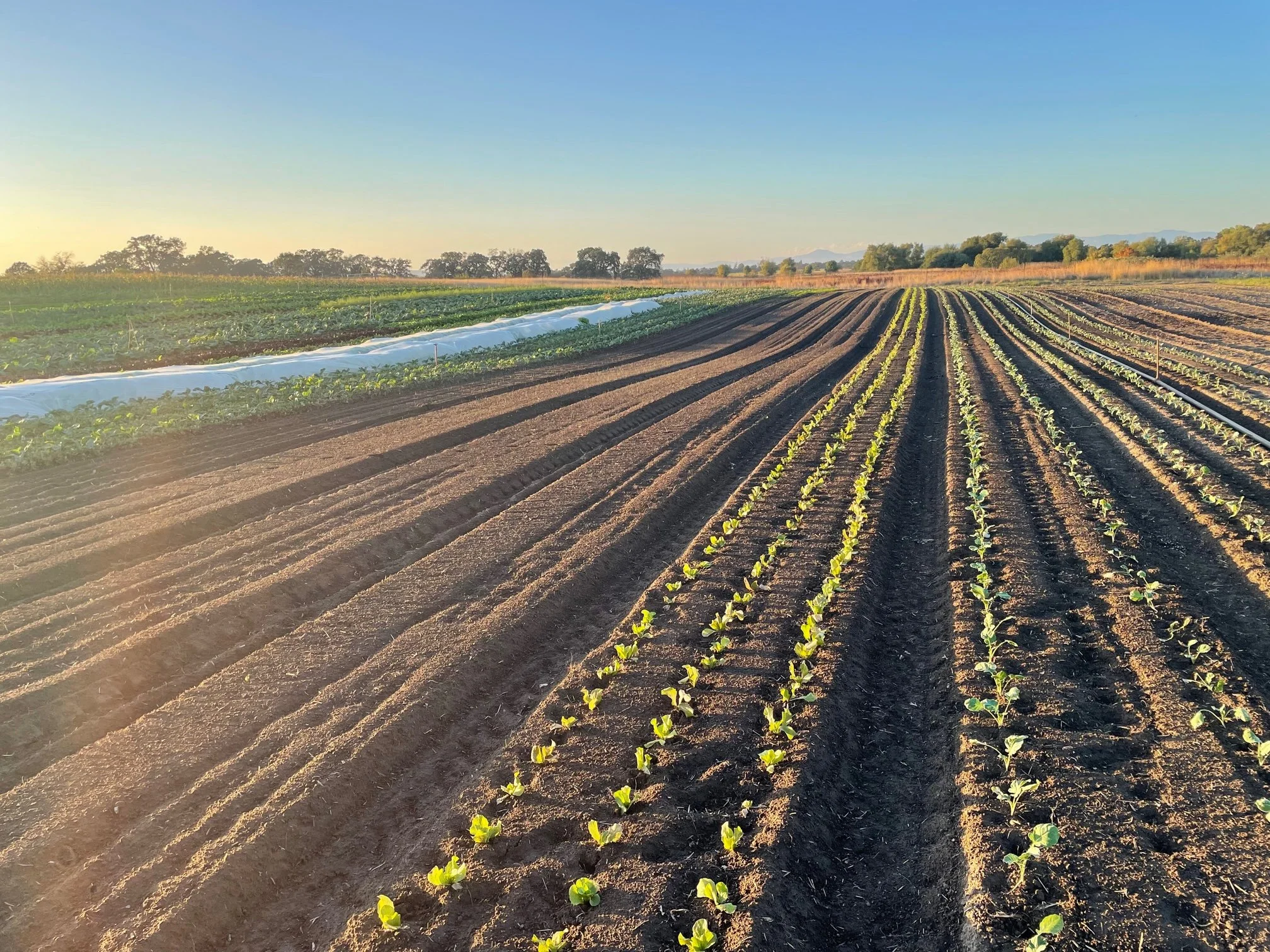
Around 10 am, as we knelt in the frost kissed lettuce, Ingrid, our resident Great White Egret, glided down from the pond. She spotted something in the grass near us and walked over, closer than she has ever come before. Kayta and I, entranced, set down our harvest knives and watched her for the better part of an hour as she patiently, gracefully tracked the movement of a gopher. Her trust and comfort with us felt like a gift — a parting gift from our 4th season here.

As we watched Ingrid, her feathers smooth like one translucent porcelain, I began to ponder: What happened over this last six months? What did we, as a farm community, just do? And what does it mean?

IMG_2241.jpg

In the world around the farm, 2020 was year of immense tumult, flux, and suffering in our world. Even the lucky had the rug pulled out from under them more times than they could count.

But here in the fields, on the farm, 2020 felt very normal. More than that, it was a year of growth; of uber-abundant strawberries and flowers; of new members, neighbors, opportunities, and friends; of softball sized onions; of Wesley the Weasel and Ingrid returning to the pond. We grew and harvested for over 260 adults and 100 Sonoma County kiddos.

That the farm remained a nourishing table and a place of respite, even in a year like 2020, was not luck and was not an accident. It was because of you, dear members.

You see, the community supported agriculture that we practice here, that we ask you to practice here, is not a gimmick or a fad. It is not a clever way to sell farm produce ahead of time. It embodies a direct relationship between a human community and the land and the farmers that feed it.

And while this CSA model is a blessing in a normal year, 2020 showed it’s true strength. While so many of our farmer friends were suffering incredibly stressful years — pivoting their entire business plans while planting fields for unknown buyers — this model, you, meant that we could keep our heads down, trim strawberry runners, and stay the course.

This is not to brag. No, this is to remind ourselves. This is to mark that even in a storm, in a year that shook supply chains and shattered every idea of normalcy, the simple model of a community supporting a farm held fast. This is to mark that people who know their farm are lucky people and a farm that knows it’s people is a lucky farm.

Each year, each Spring, human beings all over the world set out on adventures of gathering and growing food. When farmers kick off from shore, they know not what awaits them; whether their nets will come up empty; if they’ll make it back to shore. It is scary. As the climate changes, these voyages are only going to get more and more precarious.

Vanishingly few farmers have a community behind them on their voyages as we do.

So as we close out this Farmer’s Log on the voyage of 2020, let it be known that we couldn’t have survived this year were it not for you — who taught us that even in the nastiest of gales we can nourish ourselves if we take care of each other and the land. There is no safer harbour than that.

Screen Shot 2020-12-04 at 10.59.56 PM.jpg

And now for our customary parting words: If, in the dark season ahead, you feel pent up, like you need to get out and stretch your legs, come visit the farm and stand still for a moment in the fields…

There you will find silence, broken only by the screech of a hawk or the chattering of quail. A coolness will emanate up from the wet soil, chilling your knees. Before you will lay the sleeping farm and the soft curves of the land draped in a blanket of green.

But listen closely...

For within that slumber next season churns. The cover crop stretches its living roots deep into the soil where subterranean creatures break down this year's roots and residue, processing them — like so many memories — into the raw materials that will make up next year’s story, next year’s bounty, next year's life.

Listen closely and you’ll hear the land dreaming.

Now, it is time for your farmers to rest, to reflect, and to do a little dreaming ourselves. Thank you all so much for the memories this harvest season. Here’s to many more to come.

See you in the fields,
David for Kayta, Kate, and Anna

LAST HARVEST WEEK OF 2020!

This Tuesday’s pick-up will be the last of our 2020 harvest season.

BULK WEEK: Pick-up will be a little different this week: We will be offering larger than usual quantities of potatoes, carrots, onions, and winter squash so that you can fill your larders and eat from the farm on into the Solstice. We recommend bringing an extra tote bag this week!

THIS WEEK’S HARVEST

German Butterball + Harvest Moon + Desiree Potatoes, Zoey Yellow Onions, Bolero Carrots, Loose Mixed Beets, Watermelon Radishes, Green Daikon Radish, Turnips, Celery Root, Assorted Salad & Cooking Greens, Cabbage, Butternut + Jester Delicata + Kabocha Winter Squash, Hopi Blue Cornmeal, Lorz Softneck Garlic

IMG_2246.jpg

HARVEST NOTES

  • Storing your roots: Potatoes and Carrots and other roots should be stored in a bag or container in your fridge.

  • Storing your squash: Keep your extra Winter Squash in a cool, dry place. Eat the smaller ones (Delicata & Jester) first as their flavor doesn’t last as long.

  • Hopi Blue Heirloom Cornflour: This beautiful corn flour is from the tall stand of corn that watched over our Jack-O-Lanterns all season long. Ground today, then frozen, this cornflour contains fresh oils, fats, and flavor that only fresh ground grain can have. Store frozen to preserve freshness. See last Week 24’s newsletter for our favorite Hopi Blue Corn Recipe.

NEXT YEAR’s CSA SIGN-UPS

We will send out an email in January letting you know when sign-ups open for our 2021 harvest season. Returning members will have first chance to sign-up before we open it up to folks on the waitlist . If you have friends who are interested in joining the CSA next year, please have them sign-up for our waitlist on our website.

WINTER FARM STAND

Starting Monday, January 4th, we will be running a self-serve farmstand for CSA members out of our cooler in the barn. For sale will be any leftover root vegetables like potatoes and carrots, as well as cabbage, winter squash, and other goodies we can scrape from the fields as long as they last. We’ll send an announcement in January with details.

SPECIAL ADD-ONS THIS WEEK

All while keeping this ship afloat, Anna and Kate have both had side project this year from which they will be selling their lovingly crafted harvests. Please bring cash or be ready to Venmo.

Screen Shot 2020-12-04 at 10.31.49 PM.jpg

ENJOY FARM CITRUS AND TURMERIC

Looking to add a little zest or spice to your winter cooking? You’re in luck! This week, Kate will be selling fresh, local organically grown citrus and turmeric from her mom’s property in Occidental! From Indira Yellow to Hawaiian Red (and even a small amount of a rare White Mango variety) these turmerics make a wonderful addition to curries, soups, teas or blended raw into creamy turmeric lattes! The specialty citrus ranges from Yuzu limes quintessential of Japanese cooking, little sweet mandarins perfect for snacking or making into marmalade, kaffir limes ready for your next Thai dish, and Persian limes that can go in almost anything but will definitely add something special to a good gin and tonic! Turmeric and citrus available both Saturday and Tuesday while supplies last!

ANNA’S LAMB

Anna will be selling rotationally grazed lamb from the sheep she raises on pasture (with the occasional treat of leftover farm greens) just five minutes down the road from the farm. Cuts ranging from stew meat, leg of lamb, various chops, bones, etc. will be available in the freezer at the back of the pickup barn (where the frozen bread was). Prices range from $12-20 per pound.

STAY CONNECTED

There are many ways to connect to this beautiful land:

  • Green Valley Farm + Mill, the umbrella entity that manages this land, hosts events, workshops, provides event space, and other offerings that connect people with land. Check out their website and sign-up for their newsletter.

  • Bramble Tail Homestead’s creamery and their amazing herdshare runs year ‘round. To sign up for the herdshare contact Aubrie at brambletailhomestead@gmail.com

  • The Green Valley Marketplace will remain open this winter with amazing local dried goods, crafts, and bevvies.

  • Food and Farm Tours’ Alex Fox and Kim LaVere host beautiful tours of area farms combined with one-of-a-kind feasts from our amazing food shed. Check them out. They’ve also been offering an incredible experience right here on this farm. Pamper your pod, or give an unforgettable gift, with a Feast on the Farm.

8BD6906A-A20A-43FE-B523-F467E33E4BAE.JPG

11/27/2020 - Week 25 - Belonging

THIS WEEK'S HARVEST

Winter Sweet Kabocha Squash, Desiree Potatoes, Celery Root, Assorted Cabbage, Lorz Italian Softneck Garlic, Cured Cabernet Onions, Collard Greens, Brussels Sprouts, Turnips, Kohlrabi, Green Luobo Daikon Radish, Loose Bolero Carrots, Little Gem Lettuces, Baby Spinach, Dakota Black Popcorn

Tomatoes of yore

Tomatoes of yore

U-PICK

Gleanings: After the hard frosts we got last week, only a few of the most cold hardy plants remain for u-picking. A few intrepid strawberries can be found among the browning leaves.

HARVEST NOTES

  • Winter Sweet Kabocha Squash: Winter Sweet Kabochas deliver a combination of sweetness, flaky texture, and depth of flavor that has made it a favorite on our farm. "Unparalleled eating quality," says the legendary Johnny's seed catalogue. Best after two months of curing, so it should be yummy now, but also feel free to store it for another month or two!

  • Dakota Black Popcorn: We will be distributing whole ears of this beautiful, black popcorn this week. To eat:

    • Thumb the kernels loose from the ears into a bowl.

    • Heat a generous amount of oil (something that can handle high heat) on the bottom of a heavy-bottomed pot.

    • Pour the kernels into the pot and put a lid on it!

    • PopPOPpopPOPpOP pOP!!!

    • Enjoy with your favorite seasonings!

D79C63A7-4EDA-4522-91F7-A016A3A80BE9.JPG

NOTES & REMINDERS

  • When does the CSA end? The last week of our 2020 CSA harvest season is the week of December 5th. The last Saturday pick-up is December 5th. The last Tuesday pick-up is December 8th.

IMG_2566.jpg

ENJOY FARM CITRUS AND TURMERIC

Heads up! Kate and her family tend a beautiful homestead up in the Banana Belt above Occidental with amazing citrus trees and a greenhouse full of lovingly grown Turmeric. Local turmeric!? Yes. Stay tuned; she’ll be selling citrus and turmeric here next week, our last week of CSA pickup.

FARMER’S LOG

With the frost, the time of rest, reflection, and gratitude settles on the valley.  

As a farmer, it is hard to not feel filled with gratitude on the deep frosty mornings. Most of the year’s work is behind you. You can breath, and look up.

How lucky we are to live here — to experience the beauty, and the bounty of this valley, and to share it with our friends.

Looking out over the misty fields, the mind wanders: Who lived here before us? What were their names? What were their joys? What were their songs? What did they dream of?

This valley lies in the southern end of Southern Pomo territory and the northern end of Coast Miwok land — these people lived, hunted, tended, and dreamed on this spot for thousands and thousands of years. Everyday we walk over obsidian shards and flakes glinting in the worn path on the knoll past the little gate leading out to the fields. Midden sites, giant stone mortars and pestles, and other marks of their lives can be found dotting the valley.  

I like to imagine a small group camping on the knoll by the gate overlooking the valley preparing to hunt in the morning: A father teaches his growing son how to fashion elegant bird points from precious obsidian. The wetland below brims with life; tall oaks dot the valley; chittering quail families bustle in the brush; spawning salmon leap up the clear creek bed; deeply worn grizzly bear trails line the creek bank. At this time California is one of most linguistically and culturally diverse places on the planet — home to over 300 dialects and 90 languages. The most precious thing here? The elders: Carriers of immense wisdom, passed down for centuries, of how to tend, how to nurture, how to care for, and how to belong to a place.

Photo by Amy Winzer

Photo by Amy Winzer

The story of how California Indigenous people were murdered, enslaved, and displaced from their land is as brutal as it comes. The Southern Pomo and Coast Miwok were spared no exception. It is seldom taught or discussed. And it is not ancient lore. As recently as 1958, Congress passed a law stripping the last collectively governed land (in what is now Graton) from a confederacy of Coast Miwok and Southern Pomo (the Graton Rancheria) and granted it to three private owners, making the tribe landless.

Nevertheless, Southern Pomo and Coast Miwok people, communities, languages, and cultures have persisted. The Graton Rancheria is again a federally recognized tribe with land of their own. Language groups meet monthly. Elders still teach their ways.

One of the most intellectually and emotionally fulfilling subjects you can learn about, as a Californian, is California indigenous stories, songs, and culture. I wasn’t taught much at all about Indigenous Californian cultures in school and sought it out as an adult. Books like Tending the Wild by M. Kat Anderson, The Ohlone Way and The Way We Lived by Malcolm Margolin, feeble as books are, offer glimpses into cultures and land tending ethics of colossal wisdom, part and parcel to their places, woven within and from them — the sheer beauty and genius hinted at hits a European styled farmer, with just enough sense to grasp what he is reading about, like a ton of bricks. There are chapters and stories so rich I had to put the book down, ask myself, “What the hell am I doing?”, and grab my coat, and head outside.

Walking along Green Valley creek, my feet crunch along the hardpack gravel road. Gone are the grizzly bear trails. Ascending the hill to the lookout, the Tan Oaks I pass, a staple food for the Southern Pomo, are all succumbing to Sudden Oak death. Who said post-apocalypse is sci-fi? We are living in one.

Reaching the top of the hill, I turn around, sit down. The rows and fields of the farm lie below. The beauty of the people and cultures that called this place home coupled with the recent horror of their removal is too much too bear.

The resinous tang of rotting Bay Nut fruit on the moist soil fills the air. The light is falling and the air is cold. I get up and start heading down the hill — it is slippery and steep.

It is too much to bear, my friends, but I think there are two beacons of hope: 1.) The opportunity to celebrate and lift up indigenous people, voices, projects, and culture; to face our history and to help rebuild and re-land what we has been displaced. (More on that below.) 2.) The opportunity to learn from indigenous wisdom and land tending ethics and practices so that someday we too might begin to belong to this place, as they did, not just occupy it. 

Walking along Green Valley creek, my feet crunch along the hardpack gravel road. I pass under the two towering twin Live Oak trees on the farm road. Acorns roll and dart out from under my shoes. There are thousands and thousands of them — each a seed, each the hope, of a towering Oak tree. I pick one up and plant it, sideways, in the soft soil of the spillway.

The next time you walk on the farm, I invite you to think of the Coast Miwok and Southern Pomo who walked this valley for so long, and to think of ways we can support their communities and projects in Sonoma County in the coming year.

Similarly, as we eat our first cornmeal and popcorn this week, let us think of the hands and cultures who stewarded those crops, and so so many of the crops we have enjoyed in our harvest shares this year. As we eat, let’s give thanks to the Indigenous seed keepers, land tenders, and cultures that have nourished us and take action to return the favor.

Resources and organizations to learn from and support:

  • Federated Indians of Graton Rancheria: The federally recognized confederacy of Coast Miwok and Southern Pomo people. They have a Donation page in the works. Their website contains a concise history of the Rancheria and news of current cultural initiatives.

  • California Indian Museum and Culture Center in Santa Rosa which in addition to its other work offers programs for Tribal youth.

  • Sogorea Te' Land Trust is an urban, indigenous women-led land trust that facilitates the return of indigenous land to indigenous people in the East Bay.

  • We have been grateful to follow along and learn from the amazing Indigenous farmer and seedkeeper Rowen White. She can be found here and at Sierra Seeds.

  • We highly recommend the documentary Gather. In the filmmakers words, "Gather is an intimate portrait of the growing movement amongst Native Americans to reclaim their spiritual, political and cultural identities through food sovereignty, while battling the trauma of centuries of genocide."

  • mak-'amham / Cafe Ohlone: Vincent Medina and Louis Trevino created Cafe Ohlone as, in their words "an Ohlone cultural institution empowering our community with tradition—and we teach the public, through taste, of our unbroken roots." They have a thoughtful post about their relationship to the Thanksgiving holiday that includes a list of great Native-run organizations to support.

    * * * * *

See you in the fields,
David & Kayta

Click here for an archive of past newsletters