
Harvest Week 16 - Gordon the Potato

THIS WEEK’S HARVEST

Spinach, Newham Little Gem Lettuces, Romaine Hearts, Panisse Green Oakleaf Lettuce, Bel Fiore Radicchio, Black Magic Dino Kale, Fennel, Easter Egg Radishes, Assorted Zucchini & Summer Squash, Sweet Peppers, Murdoc Cabbage, Bintje Potatoes, Torpedo Onions, Early Girl & Heirloom Tomatoes.

U-PICK

Don’t forget to branch out to the back areas to find the jack-pots!

  • Albion Strawberries | 4 pints per share

  • Padrón Peppers | Gleanings

  • Shishito Peppers | Gleanings

  • Cherry Tomatoes | 3 pints per share | Mostly the later varieties: Purple Bumblebee & Indigo Cherry Drop

  • 🌟 Goldilocks Beans | 2 pints per share | Fancy golden beans — our last succession of “green beans”

  • Dragon Tongue Green Beans | Gleanings

  • Hot Peppers:

    • Jalapeños | 10 peppers per share | To find the hottest ones, look for “checking”, the delicate cracks in the skin that indicate the pepper has aged into its heat, or pick the red ones for a sweet and spicy flavor.

    • Thai Chilis | 10 peppers | Pick when red

    • Cherry Bomb Peppers | Gleanings (help yourself to the little that’s left) | Pick when red

    • Habanero | 10 peppers per share | Pick when orange

  • Herbs: Italian, Purple and Thai Basil, Dill, Tulsi, Chamomile, Parsley, Onion Chives, Garlic Chives, Tarragon, Thyme, Oregano, Marjoram, Culinary Sage, Lemon Balm, Lemon Verbena, Vietnamese Coriander, Shiso (Perilla), Catnip, Pineapple, Sorrel, Assorted Mints & Husk Cherries!

  • Flowers!

Goldilocks beans, Strawberries and Cherry Tomatoes.

HARVEST NOTES

  • Bintje Potatoes: These yellow potatoes were bred in the Netherlands and have become popular world-wide due to their delicious nutty flavor. Many believe them to be the best potato variety for making French Fries!

PRESERVING THE HARVEST

While the Heirloom Tomatoes are almost done, we hope to have Early Girls in decreasing quantities for the next couple weeks (or until our first frost!).

This week’s Murdoc Cabbage is gorgeous, conical, and giant! — Perfect for preserving projects. If you haven’t tried it yet, check out our favorite Garlic Dill Sauerkraut recipe from past newsletters, or the Curtido recipe below.

SONOMA MOUNTAIN BREAD OUT THIS WEEK

Sonoma Mountain Bread will be taking this Saturday — the 28th — off from baking, but he’ll be back next week!

WINTER SISTER FARM CSA

Going to miss us this winter? Well you’re in luck! Our dear friends next door at Winter Sister Farm have got you covered with the freshest veggies money can buy all winter and spring.

All memberships include diverse winter-hardy veggies such as broccoli, carrots, potatoes, onions, winter squash, lettuce, kale, chard, as well as access to a small u-pick garden with cold hardy herbs and spring flowers. Click here to get all the details on this wonderful CSA program and to reserve your spot today!

Curtido

(Salvadoran Cabbage Relish)

By Rick Martinez / Bon Appetit

If you’re new to fermenting, this curtido recipe is a good place to start as it pickles quickly and easily. You can taste the difference in flavor every day, and the longer you let this Salvadoran cabbage relish ferment, the better it’s going to taste. Sure, it’s great as a fresh slaw, but by day three, you’ll see what we mean. The salty brine becomes tangier as it sits, meaning you may not need to add the vinegar.

Traditionally, curtido is served with Pupusas and pairs well with Salvadoran Salsa Roja, but it is also excellent used alongside grilled meats and heavier mains, or any time you want a bright and pickle-y topping.

Farmers’ note: Because this recipe doesn’t specify the exact quantity of cabbage, and the salt level is important for lacto-fermentation, we recommend adding salt by taste. You should aim to be able to taste the salt without it being overwhelming. Feel free to substitute farm jalapeños (less spicy) or habaneros (spicier and fruitier) for the Serrano chiles.

YIELD: Makes about 6 cups

Ingredients

  • ½ large head of green cabbage, thinly sliced

  • 3 medium carrots, grated on the large holes of a box grater

  • ½ large white onion, thinly sliced

  • 2 serrano chiles, thinly sliced

  • 1 garlic clove, finely grated

  • 2 teaspoons dried oregano, preferably Mexican

  • 5 tsp. Diamond Crystal or 3 tsp. Morton kosher salt, plus more

  • ¼ cup extra-virgin olive oil

  • Apple cider vinegar (for serving)

Preparation

  1. Toss cabbage, carrots, onion, chiles, garlic, oregano, and 5 tsp. Diamond Crystal or 3 tsp. Morton kosher salt in a large bowl to combine. Let sit 30 minutes for cabbage to wilt. Transfer to an airtight container (such as a 2-qt. glass jar) and press down firmly on cabbage to release juices; liquid should be at or above level of vegetables. Tightly cover curtido and let sit at room temperature, tasting daily, until flavor is to your liking, at least 1 day and up to 5 days.

  2. Just before serving, drizzle oil into curtido and toss to combine. Taste and season with vinegar and more salt if needed. (If serving after 48 hours or longer, curtido will be tangy and may not need vinegar.)

    Do Ahead: Curtido can be made 1 week ahead. Chill after you have added the oil and seasoned.

Roasted Red Pepper Dip

From The Mediterranean Dish

Muhammara (roasted red pepper and walnut dip) makes the perfect addition to the mezze table next to other favorites like baba ganoush or hummus. Serve it with warm pita bread or pita chips.

Farmer’s note: While we can really feel Fall’s influence starting to creep into the share this week, we wanted to highlight the Sweet Peppers while they’re still at their best and most abundant!

Ingredients

  • 2 red bell peppers

  • 4 tbsp Extra Virgin Olive Oil divided

  • 1/4 lb shelled toasted walnuts

  • 1 garlic clove roughly chopped

  • 2 1/2 tbsp tomato paste

  • 3/4 cup bread crumbs

  • 2 tbsp pomegranate molasses

  • 1 tsp Aleppo pepper

  • 1/2 tsp sugar

  • 1 tsp sumac

  • 1/2 tsp salt

  • 1/2 tsp cayenne pepper optional

INSTRUCTIONS

  1. Preheat the oven to 425 degrees F.

  2. Brush the bell peppers with 1 tbsp of olive oil, and place in a lightly oiled oven-safe pan or cast-iron skillet. Roast the peppers in the 425 degrees F heated oven for 30 minutes or so, turning them over once or twice.

  3. Remove from the oven and place the peppers in a bowl. Cover with plastic wrap for a few minutes. This traps the steam from the roasted peppers, making them easy to peel. When cool enough to handle, simply peel the peppers, remove the seeds and slice the peppers into small strips.

  4. Now in the bowl of a large food processor, combine the roasted red pepper strips with 3 tbsp extra virgin olive oil, garlic, walnuts, tomato paste, bread crumbs, pomegranate molasses, Aleppo pepper, sugar, sumac, salt and cayenne. Blend into a smooth paste.

  5. Transfer to a serving bowl. You may cover the muhammara and refrigerate, but be sure to bring the dip to room temperature before serving.

  6. When ready to serve, top the dip with a drizzle of extra virgin olive oil, and garnish with a little more walnuts and fresh parsley, if you like. Serve with pita bread or pita chips. Enjoy!

FARMER’S LOG

GORDON THE POTATO

This week we started digging up the first beds of potatoes for bulk harvest. This is the moment when we can really start to get a picture of the kind of potato company we will be keeping this fall. 

The verdict? There are tons of potatoes out there, enough for all-you-can-eat potatoes for CSA members from now until December 10th. 

But boy are they ugly! (Mostly).

Why? What makes an ugly potato?

The reason for these ugly potatoes has to do with the intricate geography of the Laguna and a central tenet of regenerative farming. 

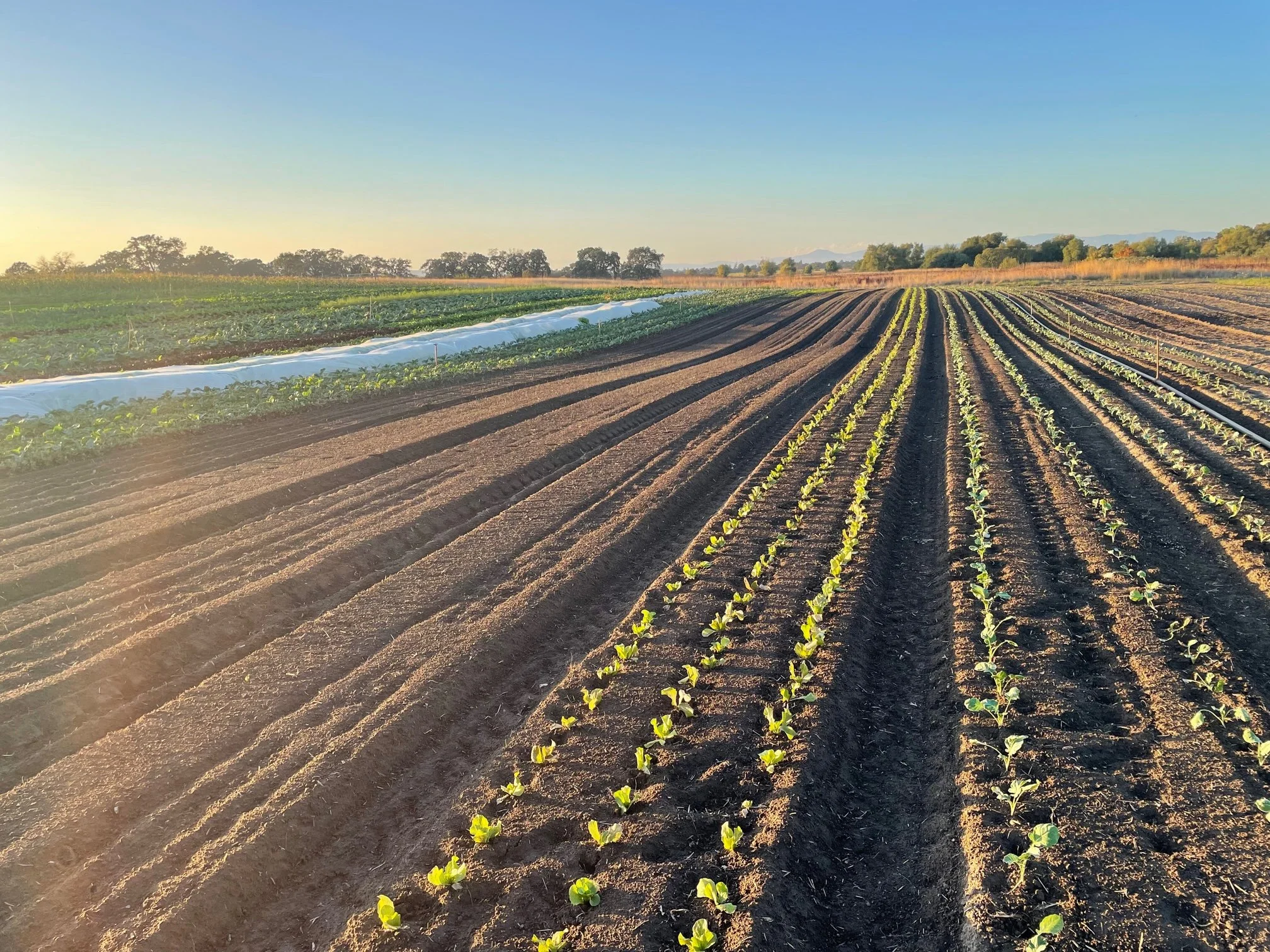
Geography: We have a complex tapestry of soils in our fields here at West County Community Farm. The thousands and thousands of years of the varied activity of water on the Laguna — the flooding, depositing, flowing, and sitting still water — has sorted our soils by slope and elevation. The soil up in the garden above the oaks, in Highgarden where the strawberries and tomatoes are, and the upper part of Farfield, is “Blucher loam”. This is prime agricultural soil. It is balanced, silty, soft and fluffy to the touch; it drains well and holds onto nutrients. 

Our lower fields, with their subtle undulations and slopes, though technically all recorded as “Wright loam”, are really more of a graded mixture between Wright loam and Blucher. Wright loam has more clay and the Wright loam influence makes these fields more stubborn to work with; the soil is harsher to the touch and holds tighter to water and nutrients but can grow great vegetables with coaxing. 

Characters

Our fields are also sprinkled with a few spots of “Riverwash”, a very sandy soil deposited by faster moving water near the creek and the main channel of the Laguna.

So if you were a potato, where would you like to grow up? On the mean streets of Wright loam or the plush estates of Blucher?

When I imagine a potato growing up in Blucher loam I picture down comforters and silk upholstery. Potatoes grown there are oval and plump, with smooth skin and not a scar or wrinkle in sight. Potatoes from Wright loam, on the other hand, would not be allowed in the ballroom. I picture them navigating a harsh and unpredictable world. They come out of the ground with scars, broken bones, and wrinkles. And lots of character. 

At harvest this Thursday, when we busted our first two beds of Bintje potatoes — beds that happen to span the soil gradient — we were met with the full cast of characters. The few lucky potatoes in the Blucher loam or Riverwash were oval and perfectly coifed. But most of the inhabitants looked like they had stories to tell. We saw a hippo and so many amazing faces. We even named one “Gordon”.

Crop rotation: So why not always grow our potatoes in Blucher loam? The short answer is we simply do not have enough of it — it is Park Ave. — and as any farmer with a clean conscience will tell you, crop rotation is key. 

We’d rather keep our fields healthy and hygienic by moving our potatoes to different plots and fields each year to keep the diseases and pests guessing. For this reason, every third year or so, when we have to farm potatoes in a Wright loam-heavy field, we will be hanging with the below deck crowd.

But when you’re chopping up a potato with character this fall, just remember: We may all want the soft, luxurious life of the Blucher loam potato, but wouldn’t you rather have a beer with Gordon?

See you in the fields,
David


CSA BASICS

Drive slow! Please drive slow on Cooper Rd. and in our driveway / parking lot area. Kids at play!

No dogs: Unfortunately, dogs are not allowed on the farm.

What time is harvest pick-up?:

  • Saturday harvest pick-ups run from 9:00 am - 2:00 pm

  • Tuesday harvest pick-ups will run from 1:00 pm - 6:00 pm

Oriented members can come to the farm any time, 7 days a week, sunrise to sunset, to u-pick and enjoy the farm.

Where is the farm? The member parking lot is located at 1720 Cooper Rd., Sebastopol, CA 95472.

Where is the food? The produce pick-up barn is just to the right of the solar panels and above our big greenhouse. You can’t miss it!

2024 CSA program dates: Our harvest season will run from Saturday, June 15th through Tuesday, December 10th this year.

Harvest Week 15 - Turn, Turn, Turn!

THIS WEEK’S HARVEST

Arugula, Mustard Mix, Little Gem Lettuces, Red Romaine Lettuce, Bel Fiore Radicchio, Escarole, Celery, Purple Daikon Radish, Carrots, Assorted Zucchini & Summer Squash, Sweet Peppers, Poblano Peppers, Eggplant, Bodega Red Potatoes, Cabernet Onions, Early Girl & Heirloom Tomatoes, Garlic

U-PICK

Don’t forget to branch out to the back areas to find the jack-pots!

  • Albion Strawberries | 4 pints per share

  • Padrón Peppers | 2 pints per share | We have it on good authority that the Padróns are now spicier than the Jalapeños!

  • Shishito Peppers | 3 pints per share | While still most likely to be mild, even shishitos can have a little heat towards the end of the season.

  • Cherry Tomatoes | 4 pints per share

  • Dragon Tongue Green Beans | 4 pints per share | See harvest note below

  • Hot Peppers:

    • Jalapeños | 10 peppers per share | To find the hottest ones, look for “checking”, the delicate cracks in the skin that indicate the pepper has aged into its heat, or pick the red ones for a sweet and spicy flavor.

    • Thai Chilis | 10 peppers | Pick when red

    • Cherry Bomb Peppers | Gleanings (help yourself to the little that’s left) | Pick when red

    • Habanero | 10 peppers per share | Pick when orange

  • Herbs: Italian, Purple and Thai Basil, Dill, Tulsi, Chamomile, Parsley, Onion Chives, Garlic Chives, Tarragon, Thyme, Oregano, Marjoram, Culinary Sage, Lemon Balm, Lemon Verbena, Vietnamese Coriander, Shiso (Perilla), Catnip, Pineapple, Sorrel, Assorted Mints & Husk Cherries!

  • Flowers!

HARVEST NOTES

  • Bodega Red Potatoes: These distinctively round, red-skinned tomatoes are a true local heirloom, grown in our region since the 1840’s. As with many true heirlooms, it’s often difficult to track down seed (in this case seed potatoes) to grow them, and we’re grateful to the folks at Slow Food Sonoma County North for their work in making them available! Bodega Reds have a rich, creamy and nutty potato flavor, and a texture that’s neither too starchy nor waxy. They’re quite versatile, so use them in any of your favorite dishes: baked, boiled, fried, or mashed. You’ll notice that the skin on the potatoes this week is quite delicate as they’re not fully cured.

PRESERVING THE HARVEST

With the Equinox, the tomatoes are showing signs of slowing down. Make sure to take advantage of bulk quantities while they’re still around! If you just don’t have time to process, but really want to save some for the cooler months, consider blending whole tomatoes, and pouring into freezer bags to make sauce out of later.

WINTER SISTER FARM CSA

Going to miss us this winter? Well you’re in luck! Our dear friends next door at Winter Sister Farm have got you covered with the freshest veggies money can buy all winter and spring.

All memberships include diverse winter-hardy veggies such as broccoli, carrots, potatoes, onions, winter squash, lettuce, kale, chard, as well as access to a small u-pick garden with cold hardy herbs and spring flowers. Click here to get all the details on this wonderful CSA program and to reserve your spot today!

LOCAL FLOUR SHARES AVAILABLE!

We’re excited to share that our friend Farmer Mai is making their locally-grown flour available again this year as a winter subscription. Their freshly-ground, heirloom wheat flour is the most magical that we’ve ever baked with. There’s only one week left to sign up, so if you’re interested hop on it now!

The Farmer Mai Flour Share is a four-month subscription of freshly stone-milled, whole wheat flour each month. Choose from different bundles of identity-preserved, single-origin, and flavorful heirloom wheat. Pick-up is available at Green Valley Farm and Mill in Sebastopol.

NIÇOISE SALAD

by ANNA STOCKWELL via Bon Appetit

Farmer’s note: We are love the versatility of nicoise salad and how beautifully it highlights the flavor and freshness of really good vegetables. We recommend using this recipe as a template for beautiful meals all season.

This tuna niçoise salad recipe delivers big briny Mediterranean-inspired flavors, with lots of satisfying crunch. Bonus: It requires the bare minimum of prep time.

Just a handful of quality ingredients makes this summer salad special. Canned tuna plays the leading role, so splurge on a really good tin. For the briny elements, choose your own adventure. Tiny niçoise olivesare traditional, but meaty green Castelvetranos or robust black olives like Kalamata work too. Capers make another great addition, and they’re even better when you crisp them up. Peperoncini bring both tang and a touch of heat. Look for fresh green beans or haricot verts at the farmers market as well as crisp seedless cucumbers, which are at their best in summer.

A couple of Nicoise Salad-inspired dinners. On the left: Dragon Tongue beans with caramelized onions, cucumber, carrot, celery, lettuce, tomato and hard boiled egg with herby Ranch dressing. On the right: heirloom tomato, pan-fried potatoes, roasted zucchini, cucumbers and purple daikon with blue cheese, lettuce and sweet pepper, capers and sardines with the classic Nicoise dressing below.

To keep everything as simple as possible, the cooked elements are all boiled in a single pot of water: Cook the eggs first, then blanch the green beans, and finally simmer baby gold or red potatoes until they’re fork-tender. Use the cooking time to assemble everything else. When ready, drizzle a lemon vinaigrette over the composed salad, slice some crusty bread, and pour that rosé. No garnish is necessary, but if you have some fresh basil on hand, don’t let it go to waste.

INGREDIENTS

6–8 servings

  • ¾ cup extra-virgin olive oil

  • ¼ cup fresh lemon juice

  • 2 Tbsp. Dijon mustard

  • 1 tsp. honey

  • 1 tsp. freshly ground black pepper

  • 1 tsp. kosher salt, plus more

  • 6 large eggs

  • 1 lb. green beans, trimmed and/or new or baby potatoes, halved if larger

  • 4 cups thinly sliced seedless cucumbers

  • 3 cups oil-packed tuna

  • Olives, capers, peperoncini, pickles, anchovies, or other pickled-briny ingredients, drained well (for serving)

  • Flaky sea salt

PREPARATION

  1. Whisk ¾ cup extra-virgin olive oil, ¼ cup fresh lemon juice, 2 Tbsp. Dijon mustard, 1 tsp. honey, 1 tsp. freshly ground black pepper, and 1 tsp. kosher salt in a medium bowl; set niçoise salad dressing aside.

  2. Bring a medium pot of salted water to a boil. Carefully add 6 large eggs and cook 7 minutes. Using a slotted spoon, transfer eggs to a bowl of ice water (keep pot over high heat); chill eggs until cold, about 5 minutes. Peel; set aside.

  3. Meanwhile, add 1 lb. green beans, trimmed and/or new or baby potatoes, halved if larger to the same pot of boiling water and cook until just tender, 2–4 minutes for green beans, 10–15 minutes for potatoes. Using a slotted spoon, transfer to bowl of ice water; let sit until cold, about 3 minutes. Transfer to paper towels; pat dry.

  4. To serve, slice eggs in half and arrange on a large platter with green beans and/or potatoes, 4 cups seedless cucumbers, thinly sliced on a diagonal, and 3 cups oil-packed tuna. Top with olives, capers, peperoncini, pickles, anchovies, or other pickled-briny things, drained well, sprinkle with flaky sea salt, and drizzle some reserved dressing over. Serve with remaining dressing alongside.

    Do Ahead: Niçoise salad dressing can be made 5 days ahead; cover and chill. Eggs can be boiled and vegetables blanched 2 days ahead; cover and chill separately. 

FARMER’S LOG

Turn, Turn, Turn!

At 5:43 am this Sunday morning, the Earth will wobble its midline straight to the sun — the Autumnal Equinox. At that moment, if you listen closely, you might here a big “yipeee!” from thousands of Northern hemisphere farmers.

It’s not that we begrudge the summer. No. We just love the changes.

It struck me today how the tasks of pulling off a growing season harmonize with each other, and the seasons, such that it always seems like there is just enough time to do what needs to be done by the skin on our chinny-chin-chins.

The Byrds were right: To everything, there is a season. 

In the spring, we aren’t harvesting yet, so we have all the lengthening-day to prep the canvas; to tune-up the equipment and build irrigation systems; to seed 200 trays a week in the greenhouse; to pot up, stake, and trellis tomatoes; to mow cover crop, turn soil, and plant, plant, plant!

Then harvest seasons comes and two, three, then four days a week are consumed by harvest. We put down the shovel and the hammer and take up the harvest knife. All other projects cease. Planting and harvest become our lives (and maybe some weeding if we’re lucky). The days are at their longest. If there is ever a time to harvest hundreds of pounds of cucumbers, tomatoes and squash in the morning and then seed a mile of carrots in the afternoon, it’s summer.

Before we know it, it’s late-summer. The tomatoes start exploding, the cucumbers already are, we’re still planting like crazy and then the melons come in — and just when when we think we’ll break, that there isn’t enough time in the long hot days, we scroll through our crop plan and see that the plantings are nearly done. No more bed shaping. Greenhouse seedings slow down. We plant the last Fall brassicas and the tractor sits quiet for a minute and we can spend all day amongst the vines and in the cooler playing Tetris with boxes of summer fruit. 

Brent, Char and Sarah planting the very last seedlings of the year — 3,000 row ft of Salanova lettuce!

Then comes the Autumnal Equinox.

The tomatoes are still pumping and the onions and potatoes are calling to be harvested; the winter squash and corn are crisping up. The fall harvests are here. Space needs to be cleared, fields mowed and turned into cover crop, new garlic beds prepped and planted — and just when we think we’ll break, that there isn’t enough time in the shortening days, the heat starts to ebb and the tomatoes show signs of slowing down. Soon, a light frost will roll through the farm and nip the summer fruits. Smiling friends will come to help with the potato harvest. The chill morning air goes down like a draught of ambrosia. We plant the last lettuce bed of the season and have a moment to sit and seed cover crop.

All this is why you’ll rarely hear a farmer say, “Shucks! Summer is over.”

We are greedy for the turnings.

We love nothing more than a first harvest. But the glory of the first tomato fades under the weight of hundreds of tomato crates and then we crave cold hands and cozy coats and the crisp stem snap of a plump winter radicchio.

Change is our tonic — and one of the great sustaining elixirs of farm life.

Soon, winter will come. The rains will come and we will turn in — to rest, rejuvenation, and internality. We’ll clean up the farm, look back on the year, plan the next, sit, think, fix things, and sleep. 

But ample sleep turns into insomnia; too much internality into angst. Our harvest muscles will atrophy and we will get pudgy. We will forget why we are out puttering in the wet and the cold.

And just when we think we’ll break, that there is too much open-endedness in the too short days, the sun will start creeping back and we will hear the Red-winged Blackbirds calling us back out to the fields, beckoning us, “Build it up again! Plant again! Turn! Turn! Turn!”

See you in the fields,
David


CSA BASICS

Drive slow! Please drive slow on Cooper Rd. and in our driveway / parking lot area. Kids at play!

No dogs: Unfortunately, dogs are not allowed on the farm.

What time is harvest pick-up?:

  • Saturday harvest pick-ups run from 9:00 am - 2:00 pm

  • Tuesday harvest pick-ups will run from 1:00 pm - 6:00 pm

Oriented members can come to the farm any time, 7 days a week, sunrise to sunset, to u-pick and enjoy the farm.

Where is the farm? The member parking lot is located at 1720 Cooper Rd., Sebastopol, CA 95472.

Where is the food? The produce pick-up barn is just to the right of the solar panels and above our big greenhouse. You can’t miss it!

2024 CSA program dates: Our harvest season will run from Saturday, June 15th through Tuesday, December 10th this year.

Harvest Week 14 - September Echoes

THIS WEEK’S HARVEST

Arugula, Baby Mustard Mix, Cegolaine Little Gem Lettuce, Assorted Head Lettuce, Bel Fiore Radicchio, Dazzling Blue Dino Kale, Mei Qing Choi Bok Choi, Purple Daikon Radish, Fennel, Carrots, Assorted Zucchini & Summer Squash, Sweet Peppers, Eggplant, Fresh Walla Walla Onions, Early Girl & Heirloom Tomatoes

U-PICK

Don’t forget to branch out to the back areas to find the jack-pots!

  • Albion Strawberries | 4 pints per share

  • Padrón Peppers | 2 pints per share | Note that as Padróns age, they are more likely to be spicy!

  • Shishito Peppers | 3 pints per share | While still most likely to be mild, even shishitos can have a little heat towards the end of the season.

  • Cherry Tomatoes | 5 pints per share

  • Dragon Tongue Green Beans | 4 pints per share | See harvest note below

  • Hot Peppers:

    • Jalapeños | 7 peppers per share | To find the hottest ones, look for “checking”, the delicate cracks in the skin that indicate the pepper has aged into its heat.

    • Thai Chilis | 5 peppers | Pick when red

    • Cherry Bomb Peppers | 2 peppers per share | Pick when red

    • 🌟 Habanero | 2 peppers per share | Pick when orange

  • Herbs: Italian, Purple and Thai Basil, Dill, Tulsi, Chamomile, Parsley, Onion Chives, Garlic Chives, Tarragon, Thyme, Oregano, Marjoram, Culinary Sage, Lemon Balm, Lemon Verbena, Vietnamese Coriander, Shiso (Perilla), Catnip, Pineapple, Sorrel, Assorted Mints & Husk Cherries!

  • Flowers!

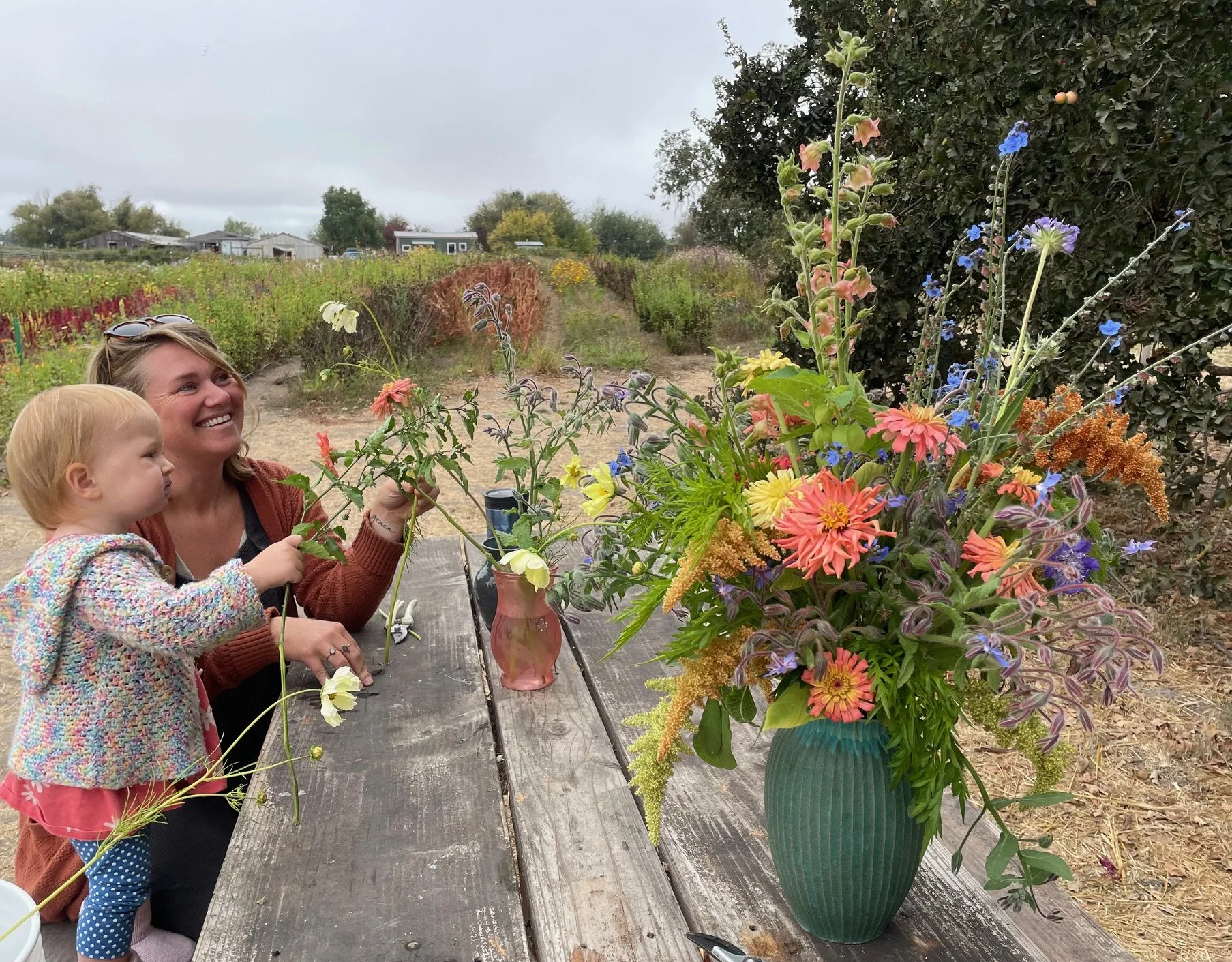
A big thank you to our floral ambassador, Cassidy, and everyone who made August 31's Flower Power Happy Hour so special!

HARVEST NOTES

  • Habanero Peppers: Habanero chilis, originally from the Amazon, and very popular in Yucatán Peninsula, are very hot, rated 100,000–350,000 on the Scoville scale. They’re very commonly used to make hot sauces and, if you can handle the heat, is often described as “fruity”.

  • Fresh Walla Walla Onions: Fresh out of the soil, this delicate, sweet, fresh-eating onion was developed in, you guessed it, Walla Walla, Washington. These are a delicacy. Try them in a way that you can show them off: lightly grilled on a good burger, raw in a salad with a delicate dressing, or as onion rings. They are so sweet and mild, some people even eat them raw like an apple! (We haven’t tried that yet! If you do, let us know how it goes!) Read more about Walla Wallas here.

PRESERVING THE HARVEST

The Tomatoes are showing signs of slowing down slightly, so make sure to take advantage of bulk quantities while they’re still around! If you just don’t have time to process, but really want to save some for the cooler months, consider blending whole tomatoes, and pouring into freezer bags to make sauce out of later.

WINTER SISTER FARM CSA SIGN-UPS OPEN!

Going to miss us this winter? Well you’re in luck! Our dear friends next door at Winter Sister Farm have got you covered for veggies all winter and spring. All memberships include diverse winter-hardy veggies such as broccoli, carrots, potatoes, onions, winter squash, lettuce, kale, chard, as well as access to a small u-pick garden with cold hardy herbs and spring flowers. Click here to get all the details on this wonderful CSA program and to reserve your spot today!

LOCAL FLOUR SHARES AVAILABLE!

We’re excited to share that our friend Farmer Mai is making their locally-grown flour available again this year as a winter subscription. Their freshly-ground, heirloom wheat flour is the most magical that we’ve ever baked with.

Farmer Mai is a James Beard award-winning farmer and social justice activist, the only Bay Area honoree in 2024, who uses agroecological methods to grow climate change-adapted and nutritious grains in Sebastopol, Sonoma County. 

Join the Farmer Mai Flour Share to receive a four-month subscription of freshly stone-milled, whole wheat flour each month. Choose from different bundles of identity-preserved, single-origin, and flavorful heirloom wheat. Pick-up is available at Green Valley Farm and Mill in Sebastopol.

APPLE CHICORY SALAD WITH FENNEL, WALNUTS, AND GRANA

Recipe by Alanna Taylor-Tobin

This simple salad highlights the gorgeous colors of this week’s Bel Fiore Chicory, Purple Daikon and Fennel and creates a perfect pairing of bitter, sweet and umami.

Ingredients

Vinaigrette:

  • 1 teaspoon minced shallot or yellow onion

  • ¼ teaspoon fine sea salt

  • 3 tablespoons (45 ml) apple cider vinegar

  • 3 tablespoons extra virgin olive oil (more to taste)

Salad:

  • 4 cups chicory leaves, torn into large pieces

  • 1 medium apple, thinly sliced

  • 1 medium watermelon radish or purple daikon, peeled lightly, halved and thinly sliced

  • 1 small fennel bulb, thinly sliced

  • 1-2 ounces grana, shaved (or other aged cheese such as parmesan, manchego, gruyere, or asiago)

  • ½ cup (50 g) walnuts, toasted and coarsely chopped or broken up

  • arils from half a large pomegranate (optional)

  • flaky salt such as Maldon

  • ground black pepper

Instructions

  • In a small jar, combine the shallot and salt. Mash with a small spoon until pulpy. Add the vinegar, stir to combine, then add the olive oil.

  • In a large bowl, combine the chicories with the apple, radish, and fennel. Spoon over some of the vinaigrette, making sure to grab some of the vinegar and shallot that will settle on the bottom, and toss to combine. Sprinkle over the cheese, walnuts, pomegranate if using, and a few pinches of salt and pepper and toss gently. Taste, adding more vinaigrette, salt, pepper, or olive oil if you feel the salad needs it. Serve right away.

FARMER’S LOG

SEPTEMBER ECHOES

On the farm, time is like an echo.

Moments, days, tasks, seasons… they return as if from a long distance, the long distance of a year, like a deja-vu.

All it takes is a certain smell or taste, a certain slant of light, and there you are again, flooded with memories of who you were, and who you were with, last year at this time.

Last September 13th, we were also rich in late summer’s bounty with fall knocking at the door. Pig weed and prickly goat weed were scratching up our arms while we harvested storage onions. The earthy tang of freshly-mowed potatoes filled the morning air. The first rustle of dry corn leaves could be heard on the wind. We were eating our last melons. The sulfur cosmos would light up like fire in the setting sun.

The slanting-yet-strong mid-September light is full of echoes. We can hear them in the early morning, shimmering though the fog, and they make us smile.

And sometimes, when we are still, the echoes seem to continue on forward, strangely, and it is as if we can hear the echoes of mid-Septembers yet to come.

See you in the fields,
David


CSA BASICS

Drive slow! Please drive slow on Cooper Rd. and in our driveway / parking lot area. Kids at play!

No dogs: Unfortunately, dogs are not allowed on the farm.

What time is harvest pick-up?:

  • Saturday harvest pick-ups run from 9:00 am - 2:00 pm

  • Tuesday harvest pick-ups will run from 1:00 pm - 6:00 pm

Oriented members can come to the farm any time, 7 days a week, sunrise to sunset, to u-pick and enjoy the farm.

Where is the farm? The member parking lot is located at 1720 Cooper Rd., Sebastopol, CA 95472.

Where is the food? The produce pick-up barn is just to the right of the solar panels and above our big greenhouse. You can’t miss it!

2024 CSA program dates: Our harvest season will run from Saturday, June 15th through Tuesday, December 10th this year.