11/25/2022 - Week 25 - Belonging

THIS WEEK'S HARVEST

Romanesco, Leeks, Hakurei Salad Turnips, Brussels Sprouts, Fingerling Potatoes, Celery Root, Kohlrabi, Purple-Top Turnips, Yellow Bridger Onions, Lorz Softneck Garlic, Purple Cabbage, and your choice of Marina di Chioggia, Butternut, or Bonbon Buttercup Winter Squash, Fancy Fall Salad Mix (with Arugula and Mustards from Winter Sister Farm and Radicchio), Assorted Lettuce, Assorted Kale

U-PICK

  • Only frost nipped herbs: Thyme, Oregano, Marjoram, Tarragon, Onion Chives, Garlic Chives, Culinary Lavender, French Sorrel, various frost nipped Mints

HARVEST NOTES

  • Purple Top Turnips: These versatile turnips are sweet and delicate enough to be eaten raw, shaved or micro-planed on salads and hardy enough to handle the stoutest stews and vegetable-medley roasts.

  • Marina di Chioggia Winter Squash: (aka Sea Pumpkin or Suca Braca, "warty pumpkin") is an Italian heirloom from the seaside town of Chioggia and is the staple squash of Venice. This is a versatile pumpkin that can be utilized in any recipe where a traditional pumpkin is called for. It is an excellent dessert pumpkin for pies, muffins and quick bread; it makes an ideal filling for pasta such as ravioli and tortellini; and it can also be used to make gnocchi. The pumpkin itself will keep for up to six months when stored in a cool, dry, and dark place. We love the diverse bounty that can be made from this pumpkin! When we have the time we love to make a big batch of gnocchi (check out this recipe ) for the freezer so that we have many incredibly fast and delicious meals to look forward to.

SQUASH PARMESAN RECIPE

This hearty winter squash recipe, from Bon Appetit, is a twist on traditional eggplant Parmesan with fewer steps (there’s no need to wait around for the squash pieces to dry, plus you don’t have to fry them!) but no less satisfaction.

Our good friends, and CSA members, Adam Kahn and Cassidy Blackwell dropped off a casserole dish of this lasagna last winter and we think about that meal frequently: It was that good. It is one of the best squash dishes we know of. They used Marina di Chioggia squash and it was exceptional — though the original recipe calls for butternut. Basically, any good squash will do.

INGREDIENTS

  • 6 Tbsp. extra-virgin olive oil, divided

  • 3 oil-packed anchovies, finely chopped

  • 3 garlic cloves, finely grated

  • 1 tsp. crushed red pepper flakes

  • 1 28-oz. can whole peeled tomatoes

  • 1 small butternut squash (about 2½ lb.)

  • 2 tsp. kosher salt, divided, plus more

  • 8 oz. fresh mozzarella, shredded

  • 2 oz. finely grated Parmesan (about ¾ cup)

  • ¼ cup whole-milk Greek yogurt

  • Freshly ground black pepper

  • ¾ cup panko (Japanese breadcrumbs)

  • 3 sprigs basil

PREPARATION

Step 1

Preheat oven to 425°. Heat 1 Tbsp. oil in a medium saucepan over medium. Cook anchovies, garlic, and red pepper flakes, stirring often with a wooden spoon, until sizzling, 30–60 seconds. Add tomatoes and gently break apart with spoon. Reduce heat to low and bring sauce to a low simmer. Cook, stirring occasionally, until sauce is slightly thickened and flavors have melded, about 15 minutes.

Step 2

Meanwhile, cut off neck from squash. Peel neck and bulb until you reveal the orange flesh underneath (you might need to take off a few layers). Stand bulb upright on cut end. Starting on one side, slice top to bottom into ¼"-thick planks until you reach the core (you don’t want holes or seeds in your squash). Rotate squash and repeat until you’ve worked all the way around the bulb. Slice neck in half lengthwise, then cut crosswise into ¼"-thick pieces. Transfer squash to a large bowl. Add 2 Tbsp. oil and 1½ tsp. salt and toss to coat.

Step 3

Mix mozzarella, Parmesan, and yogurt in a small bowl; season with salt and black pepper.

Step 4

Using an immersion blender directly in pot or transferring tomato sauce to a food processor, purée until mostly smooth. Taste and season with salt and black pepper.

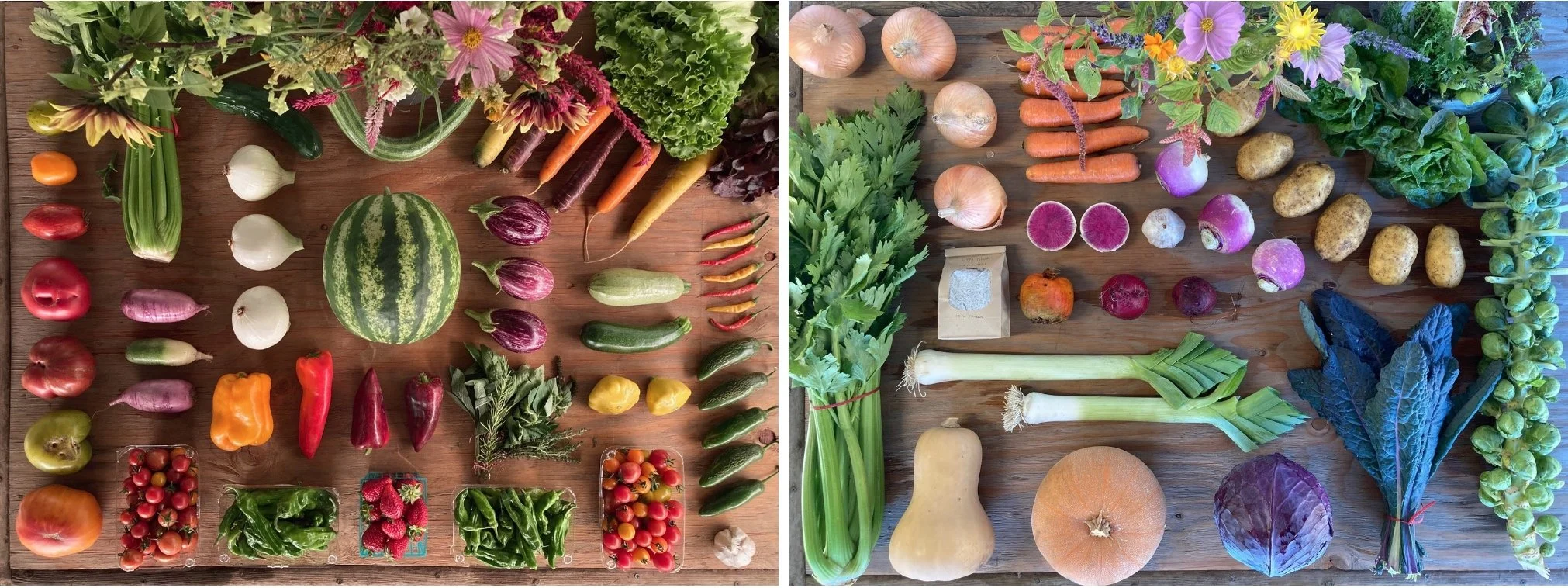
Marina di Chioggia is that beautiful big warty one in the center of the bottom row

Step 5

Drizzle 1 Tbsp. oil in an 8x8" glass or metal baking dish. Spread with ½ cup sauce. Arrange 5–6 squash pieces in a mostly even layer over sauce (it’s okay if some pieces overlap). Sprinkle with ½ cup cheese mixture, then spread with ½ cup sauce. Layer again with squash, followed by ½ cup cheese mixture and ½ cup sauce. Repeat with a final layer of squash and remaining cheese mixture and sauce.

Step 6

Cover pan with foil and bake 50 minutes. Uncover and continue to bake until cheese is browned and sauce is bubbling, 15–20 minutes.

Step 7

Meanwhile, toss panko and remaining 2 Tbsp. oil and ½ tsp. salt in a small bowl with your hands until well coated.

Step 8

Top squash Parmesan with breadcrumb mixture and continue to bake until golden brown, about 10 minutes (don't worry if things look liquidy; the breadcrumbs and squash will soak them up as everything rests). Tear basil leaves over. Let cool 10 minutes before serving.

Step 9

Do Ahead: Sauce can be made 3 days ahead. Cover and chill. Unbaked squash Parmesan (without panko) can be assembled 8 hours ahead. Cover and chill.

WHEN DOES THE CSA END?

Our 2022 harvest season runs until the first week of December. The last Saturday pickup will be December 3rd, and the last Tuesday pick-up of the year will be December, 6th.

WHEN CAN I RESERVE MY SPOT FOR 2023?

We are deep in the planning phases for next season, rest assured, current members will be given the first chance to reserve a spot in 2023 CSA program!

FARMER’S LOG

BELONGING

With the frost, the time of rest, gratitude, and reflection settles on the Laguna.

It was a quiet day today on the farm. I was on the tractor, shaping next year’s garlic and strawberry beds over what was the tomatoes and u-pick peppers, when a perennial Fall question occurred to me:

“What does it mean to belong to a place?”

Big questions like this are perhaps never answerable. Or perhaps if they are answerable the answers always change. Or, perhaps the point is not in the answers you get but in asking the question. And if that’s the case, which I think it is, then it is a good practice to ask those questions at least once a year.

So today on the tractor I wondered, “What does it mean to belong to a place”, for the first time on the new farm. I was struck by how different it felt from the last time I asked.

Though we just moved a few miles across town this year, it was a big move for Kayta and I and the farm. We uprooted from the place where we started the farm as a 30 member CSA 7 years ago and where we cut our teeth shaping fields, growing food, building soil, and trying to build community together. We made a lot of memories there. Every nook, cranny, and field in that valley was becoming a layer cake of memory for us: Of our first harvests; of getting engaged on the hill on a crisp Fall afternoon; of getting married in the barn in front of our dearests; of meeting so many dear friends and CSA members for the first time; of countless conversations in the sun drenched fields; of Kayta carrying our baby kitten home on her shoulder across the valley.

A palimpsest (from the Greek “scraped again”) is a writing material or surface (like a parchment or tablet) used again after earlier writing as been erased. It’s a surface that is being continuously redone but that is etched and marked by layers and aspects apparent beneath the surface.

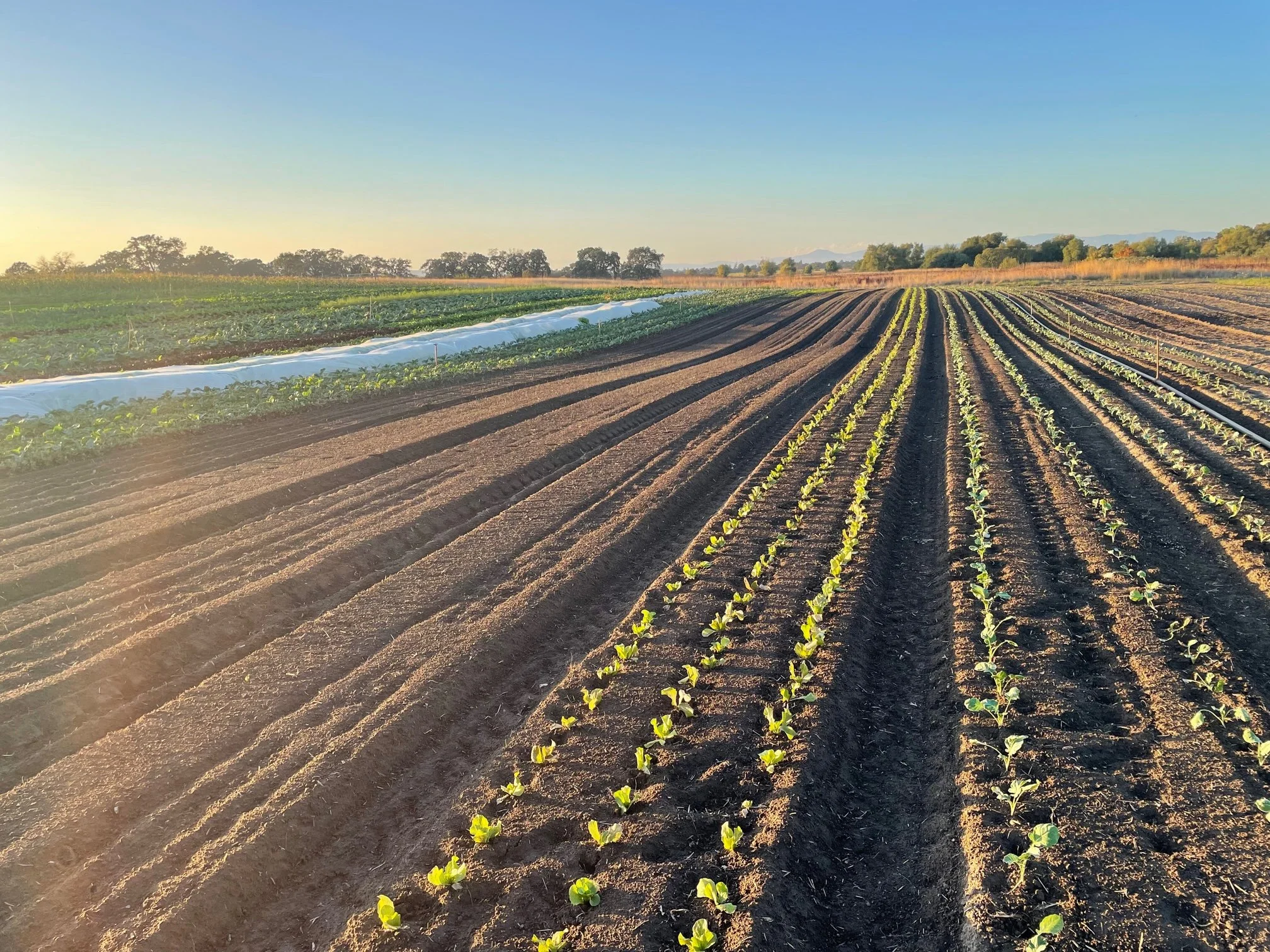
Next year’s strawberry patch and garlic beds — a little further from the drainage.

A farm is a palimpsest for a farmer: The more years you’ve lived and worked in a place, the more the marks of memory add depth and color to continuously renovated and renewed fields. The last time I asked the “belonging” question at Green Valley it was on an old palimpsest with that backdrop of memory to hold and buffer the question. When we moved here we were given an entirely blank slate and I’ve been too scared to ask.

When you come to a new farm, the heaviest lifting isn’t physical — it’s mental. You have to try to manifest a vision onto a physical place you know very little about. “Where should the garden go?”, “Where should we plant the garlic?” You don’t have memory to guide you so you make a lot of mistakes — some big, some small. One small mistake we made this Spring was shaping our tomato and u-pick beds too close to the drainage that separates that field from the garden so it ended up we couldn’t drive a truck comfortably around those oft visited zones.

So today, as I was outlining 2023’s strawberry and garlic fields over 2022’s erased tomatoes, I gave us another 6 feet of leeway. And then as I drove back and forth etching the final beds, whenever I faced East, I could see the garden and the strawberry patch and was flooded with memories; of planting our first perennials on the pillow soft soil; of second-breakfasts under the oak trees; of the site of friends and families perusing the resplendent July flower garden and kiddos plucking strawberries in the evening light.

And in that reverie the question finally arose: “What does it mean to belong to this place?”

It feels good to be asking again.

* * * * *

In asking the “belonging” question, the one thing we do know is that it is imperative to learn from and support the people and cultures who have belonged to this place for many thousands of years:

  • mak-'amham / Cafe Ohlone: Vincent Medina and Louis Trevino created Cafe Ohlone as, in their words "an Ohlone cultural institution empowering our community with tradition—and we teach the public, through taste, of our unbroken roots." They have a thoughtful post about their relationship to the Thanksgiving holiday that includes a list of great Native-run organizations to support.

  • Federated Indians of Graton Rancheria: The federally recognized confederacy of Coast Miwok and Southern Pomo people. They have a Donation page in the works. Their website contains a concise history of the Rancheria and news of current cultural initiatives.

  • California Indian Museum and Culture Center in Santa Rosa which in addition to its other work offers programs for Tribal youth.

  • Sogorea Te' Land Trust is an urban, indigenous women-led land trust that facilitates the return of indigenous land to indigenous people in the East Bay.

  • We have been grateful to follow along and learn from the amazing Indigenous farmer and seedkeeper Rowen White. She can be found here and at Sierra Seeds.

  • We highly recommend the documentary Gather. In the filmmakers words, "Gather is an intimate portrait of the growing movement amongst Native Americans to reclaim their spiritual, political and cultural identities through food sovereignty, while battling the trauma of centuries of genocide."

* * * * *

See you in the fields,
David & Kayta

11/18/2022 - Week 24 - Giving Thanks

THIS WEEK'S HARVEST

Calico Popcorn, Winter Luxury Pie Pumpkins or Sunshine Kabocha, Koginut Winter Squash, Harvest Moon Potatoes, Leeks, Broccoli, Romanesco, Celery Root, Lorz Italian Softneck Garlic, Cured Cabernet Onions, Dino Kale, Brussels Sprouts, Multicolored Daikon Radishes, Bolero Carrots, Multicolored Beets, Cherokee Batavian Lettuce, Fancy Fall Salad Mix (with Arugula from Winter Sister Farm and our own Radicchio and Frisee)

U-PICK

  • Albion Strawberries: Slim pickings

  • Herbs: Thyme, Oregano, Marjoram, Tarragon, Onion Chives, Garlic Chives, Culinary Lavender, French Sorrel, Various Mints, Lemongrass (located near the picnic bench next to the far oak tree & strawberries, look for the tall grass and sign)

HARVEST NOTES

  • Winter Luxury Pie Pumpkin: This lacy, pale-orange beauty is the best pumpkin we’ve found for pumpkin pie (although Sunshine Kabocha also makes an exquisite pie!). See below for Kayta’s tried and true pumpkin pie recipe.

  • Calico Popcorn: This corn can serve double duty: As decoration, or popcorn! When you’re done savoring their beauty, remove the kernels from the cob with your hands by starting at the bottom of the ear and pushing downward. Once you’ve gotten a few kernels off, the going gets easier.

WHEN DOES THE CSA END?

Our 2022 harvest season runs until the first week of December. The last Saturday pickup will be December 3rd, and the last Tuesday pick-up of the year will be December, 6th.

WHEN CAN I RESERVE MY SPOT FOR 2023?

We are deep in the planning phases for next season, rest assured, current members will be given the first chance to reserve a spot in 2023 CSA program!

FARMER’S LOG

A FARMER’S THANKSGIVING

Kayta and I both grew up in the suburbs and, like everyone, we would encountered those ubiquitous expressions — “make hay while the sun shines,” “three shakes of a lamb's tail,” “like a horse who’s seen the barn,” “chomping at the bit,” etc. It wasn’t until we started farming that we began to feel the visceral poetry of these expressions and understand their roots. And it wasn’t until we started farming that we began to understand — like really understand — the need to give thanks in the Fall.

The Fall is an incredible time of year in the temperate world. It is a season of unimaginable bounty. The plants of forest and field have spent all Spring and Summer harnessing the sun’s energy into their fruits, seeds, roots, and leaves and we have harvested. In the Fall the root cellar is full, the larder is full, the granary is full — the land has burst forth at its seams and we have gathered the overflow.

The farmer, sitting at home with his feet up next to the fire, is keenly aware of the bounty in the root cellar below. He feels a great contentment in this but no pride because he realizes how little we did to create it. Sure, he worked hard all year — moving things here and there — but it was others, present now and before, that filled that cellar. It was others who dug it out and laid the roof. Others who forged the tools and taught him how to use them. Others who saved the seeds and taught others, who taught others, who taught others, who taught him how to care for them. And what (or who) made those seeds sprout? Not he.

For all this, there is nothing to give but thanks.

We’d like to take a moment to give thanks those who made this year's harvest season possible.

First, to the indigenous people and cultures who stewarded into existence, and who continue to steward, so many of the seeds we grow for our harvest shares. As we enjoy this week’s popcorn, and our decadent pumpkin pies, let us think of these people, their communities, and give meaningful thanks for these gifts. Similarly, to the people and cultures on whose ancestral land we live and farm — the Southern Pomo — the next time we walk out to the farm, let us think of them and give active thanks in the year by finding tangible ways help support and empower their communities.

To all the volunteers who helped on the farm this year — with a special shout-outs to Wes Look, Juli Thomollari, the Seely’s, Cassidy Blackwell and Adam Kahn. Once again, we really leaned on our community to help us with our big harvests this year. It is simultaneously so helpful and so joyful to be out in the field with you.

To our amazing farming comrades here on Cooper corner; Will, Gina, Lucas and everyone at Longer Table Farm; Anna, Sarah, Kate and everyone over at Winter Sister Farm; Sarah McAmant and Graham; thank you all for insights, favors, tool use, shop talk, and camaraderie through the long days.

To our neighbors; Walter, Graham and Gwen, Kevin and Kerri Lee, Sherri, BJ and everyone at the Herb Xchange for your patience and support for what is often a very smelly and loud business in your back (or front) yard.

A very special thanks to Scott Mathieson and Laurel Anderson, who have done so much, over the last 3 years (and beyond) to shepherd our farm to this special place. Scotty (who started Laguna Farm in the 1980’s, when organic farming wasn’t even cool yet) is the reason why we are here in so many tangible and intangible ways. We benefit from the vision, care, and hard work you put into this place everyday. Our farm, the land, and our community are lucky that you two, and your amazing family, has come to steward this place for so long. Thank you.

To Jared Sutton for carrying our 2nd cooler over here on his back; to Tristan Benson for saving our mechanical butts numerous times; to Rusty Davis for the pad; to our parents Carl & Martha Plescia, Kathy & Bob Brady, for all your work getting us moved and settled here; to Nicole Plescia for the help rebranding; and to our sweet friends and families for your unconditional love and support: Let’s hang out!

To our incredible regular crew this year Grace, Ashlynn and Lauren and to our sensational ringers, Anayeli and Alberto. It’s no small feat pulling off a season like this even in a normal year — let alone one as transitional as this year was for the farm. We are endlessly grateful for all your hard work, ideas, grit, grace, patience, laughter, snacks, and the Tapatio you brought to the farm this year.

And finally, to you, our members. Whatever bounty we’ve enjoyed this year is because of you. You made a real connection to, and shared in the very real risk of, a growing season with farmers — something extremely rare and important, we think, in this crazy world. So you were there with us as we planted each seed, spread the compost, laid the irrigation lines and did the work that went into planting your food — and you did quite a bit of u-picking yourself! You showed up each week with sweet smiles and words of encouragement and appreciation that lifted our hearts.

You reminded us, day after day, week after week, that real, life-sustaining bounty comes from a community rolling up its collective sleeves and building something needful and beautiful together.

Thank you.

See you in the fields,
David & Kayta

Click here for an archive of past newsletters

11/12/2022 - Week 23 - On Limits and the Enjoyment of Life

THIS WEEK’S HARVEST

Fancy Fall Salad Mix (with Arugula, Frisee and Radicchio), Little Gem Lettuces, Rainbow Chard, Leeks, Green Magic Broccoli, Romanesco, Watermelon Radishes, Celery Root, Bolero Carrots, Bintje Gold Potatoes, Cabernet Red Onions, Butternut Winter Squash, Lorz Italian Softneck Garlic

U-pICK

  • Albion Strawberries: Gleanings

  • Herbs: Thyme, Oregano, Marjoram, Tarragon, Onion Chives, Garlic Chives, Culinary Lavender, French Sorrel, Various Mints, Lemongrass (located near the picnic bench next to the far oak tree & strawberries, look for the tall grass and sign)

HARVEST NOTES

  • Butternut Winter Squash: The classic, reliable squash with a nutty charm. Perfect for soups or your Thanksgiving table.

  • Celery Root: Aka celeriac, aka turnip celery, is a variety of celery cultivated for its starchy bulbous stem. It is somewhat like a turnip that tastes like celery. Try adding it to a hardy winter stew, mashing it along with potatoes, or roasting in the oven . We’ve also heard legend that celery root fries (i.e. deep fried celery root sticks) are the best thing ever. For a more refreshing take, celery root can be grated or julienned into a fresh salad of apples and a creamy or mustardy dressing.

Take a load off and let the Oaks hold you for a while!

Pumpkin, parmesan and sage torta Recipe

by NICOLA LAMB

Looking for some inspiration for how to use up our autumnal abundance of winter squash? This savory, Italian-inspired rustic pie can be made with any of our larger squash or pumpkins (think Kabocha, Bonbon, Butternut, or Marina di Chioggia). We discovered it in Nicola Lamb’s deeply researched and exciting pastry newsletter Kitchen Projects, which we highly recommend for the pastry-curious. You can find and subscribe to it here. (One of her other recent deep-dives was into finding the perfect apple cake, and she has a wealth of other pumpkin recipes, including Pumpkin Basque Cheesecake and Pumpkin Maple Tart!)

Serves 6

Sage flaky olive oil pastry

  • 230g plain flour

  • 120g fridge cold butter

  • 40g olive oil

  • 5g salt

  • 10g white wine vinegar

  • 75g ice water

  • 5g sage, chopped finely

  • 5-8 sticks of thyme, leaves removed

Pumpkin filling

  • 225g mashed pumpkin / puree

  • 200g thinly sliced pumpkin (keep this aside before you roast it!)

  • 55g whole egg

  • 110g ricotta

  • 40g good parmesan

  • 1 tsp salt, plus more for flavour!

  • Lots of black pepper - about 100 twists!

Plus egg wash and sage leaves for the top

Photos by Nicola Lamb

Method - Pumpkin Puree and filling

  • First keep around 250g pumpkin for slices for the top of the torta. Then roast the rest cut face down on a baking tray with parchment.

  • Bake at 350 degrees for 40 mins until very soft. A knife should easily pierce the flesh

  • Allow to cool completely. Remove the flesh. For the pie, smash it up with a fork or if its really dry and lumpy (as some delicas) whizz it through a food processor. For sweet applications, puree through a food processor and pass through a sieve, twice, if you can be bothered

  • For the pie filling, add the ricotta, parmesan, then check the seasoning. When you are happy, mix in the egg. I don’t mind eating raw egg, so i like to check the seasoning again, but it is now ready to use.

Method - Pastry

  • Weigh out ice water and vinegar. Set aside in fridge until ready to use.

  • Weigh out flours, salt and herbs. Mix with paddle until all combined.

  • Add in cubed butter and mix on a low speed until the butter is in irregular sized pieces - you want some to be breadcrumb style and some to still be large - around 1.5cm. Then add the olive oil and paddle until well distributed, about 10 seconds.

  • Immediately add in your cold water/vinegar and mix until it looks hydrated - about 20 seconds. You will still have dry bits at the bottom of the bowl

  • Move onto a clean surface and add flour if you need to underneath

  • Roll the pastry out to be 40cm long and perform a double fold - this is when you fold both edges into the middle and then fold it over itself again

  • Perform two more double folds, immediately, adding flour when you need

  • Chill in the fridge for 1 hour before using

Assembly

  • Divide the pastry into 1/3 (about 150g) and 2/3. Reserve the smaller piece in the fridge. Roll out the pastry using firm strokes of the rolling pin, turning it a quarter turn between each roll to keep it in an even shape. Roll it to about 3mm and about 12 inches wide.

  • Use a cake tin to make a rough mark in the middle of the pastry to guide the build of the free-form torta. Spread the pumpkin mixture out evenly

  • Thinly slice around 200g of pumpkin (about 1-2mm!) and toss with 1 tsp olive oil then layer on top of the pumpkin ricotta mix. Grate a layer of parmesan.

  • Place in fridge whilst you roll out the other sheet of pastry to around 3mm thick and 9 inches wide.

  • Lay the pastry on top of the pumpkin, trim if required, then egg wash. Trim any excess pastry before folding the base up over the top in a slightly pleated but overall rustic fashion. Egg was the top and decorate with small sage leaves. Chill in fridge for 1 hour or in the freezer for 20 minutes before baking

  • Pre-heat oven to 400 degrees with fan. Turn down to 350 degrees with fan and bake for 40-50 minutes until golden.

WHEN DOES THE CSA END?

Our 2022 harvest season runs until the first week of December. The last Saturday pickup will be December 3rd, and the last Tuesday pick-up of the year will be December, 6th.

WHEN CAN I RESERVE MY SPOT FOR 2023?

We are deep in the planning phases for next season, rest assured, current members will be given the first chance to reserve a spot in 2023 CSA program!

FARMER’S LOG

ON LIMITS AND THE ENJOYMENT OF LIFE

As our fields and harvests transition fully away from the cacophonous colors and flavors of Summer, and toward the rich, baritone notes of Fall, we’re reminded of some of the reasons why we love this CSA model and eating from the farm.

First, we eat with the seasons. Perhaps nothing dictates what is on our tables more than the tilt of the Earth. And as you have seen, the shares of early June are very different from those of late July, and those of mid-November. The Spring, with it’s soft waxing light, lends itself to tender, almost translucent, baby softness in vegetables. Mentally compare an early Spring strawberry, with it’s silky soft skin and water content, to the more sun hardened acid-sweet, candy-packet strawberries of July, to the crisp, crunch of a Fall strawberry gleaning.

Another cool thing about eating from the farm is that we get to experience the full arc of plant growth — from fresh onions to cured onions; from baby Spring carrots to deep orange Fall carrots kissed by frost; from green garlic to fully cured bulbs — and all the flavors and textures in between. In supermarkets buyers only accept, and are often only offered, produce of a certain size and shape... in other words, produce that is at a particular growth stage when it is harvested. In this way, vegetables have become standardized and rote. But out on the farm, life is happening. In our harvests here, we are beholden to these growth arcs and get to cook and enjoy the whole arc of taste.

What a difference a few months make!

We also love that this model allows us the chance to distribute damaged produce and to share over-abundant harvests with members. Older cultures, agrarian cultures, were scrupulously efficient in their use of food because they had to be. There was a use for everything. And it was a duty to preserve the abundance of Summer. In this spirit, we put out the 2nd tomaotes, split and cracked, but still perfectly good (sometimes even better!) sliced on a BLT.

But perhaps our favorite thing about this model and about eating from the farm is an unsung hero: Limits. Yes, limits. Scarcity. Not having something. “Limit: 1 per share.”

“What!?”

We live in a time and a place where we can get just about any food, anytime, en masse, if you can afford it. Tomatoes in February. Melons in the Winter. Mangos in Sebastopol. We have conquered seasons and limits and scarcity.

But have we also conquered one of the simplest pleasures in life? What is the fulfillment of desire without the longing that precedes it?

In August, before unlimited tomatoes, we cherished our first 1 or 2 or 3 tomatoes. After seven, tomato-less months, that first juicy sweet acid slice of heirloom tomato on an open faced sandwich brought back a flood of memories of last summer, and summers before that, and we smiled at our loved ones in our shared remembrance and shared enjoyment of this thing that we have now, but did not have for so long. It brought us together. Perhaps your first bite of Delicata squash unlocked a similar smile.

In most (or maybe all) ancient cultures there are festivals celebrating these moments — basically giant parties celebrating the return of a certain food. In Southern France there is a Spring festival marking the return of the egg, when the hens finally start laying again. Finally. What is cake without eggs!? In Sebastopol, we have the Apple Blossom festival. In Italy, in the Fall, there is a conference on all things Radicchio and Chicory.

Limits, scarcity, the lean times — they help us appreciate, like really appreciate, what we have.

Life's fleeting nature is really it's spice. So it goes for food, we'd say.

Next week, to stock you up for Thanksgiving, we’ll harvest our first Brussels sprouts and distribute our beautiful Calico popcorn. The intoxicating aroma of fresh popcorn popping on the stove might make you forget, at least for moment, that longing for sweet Summer tomatoes.

See you in the fields,
David & Kayta