
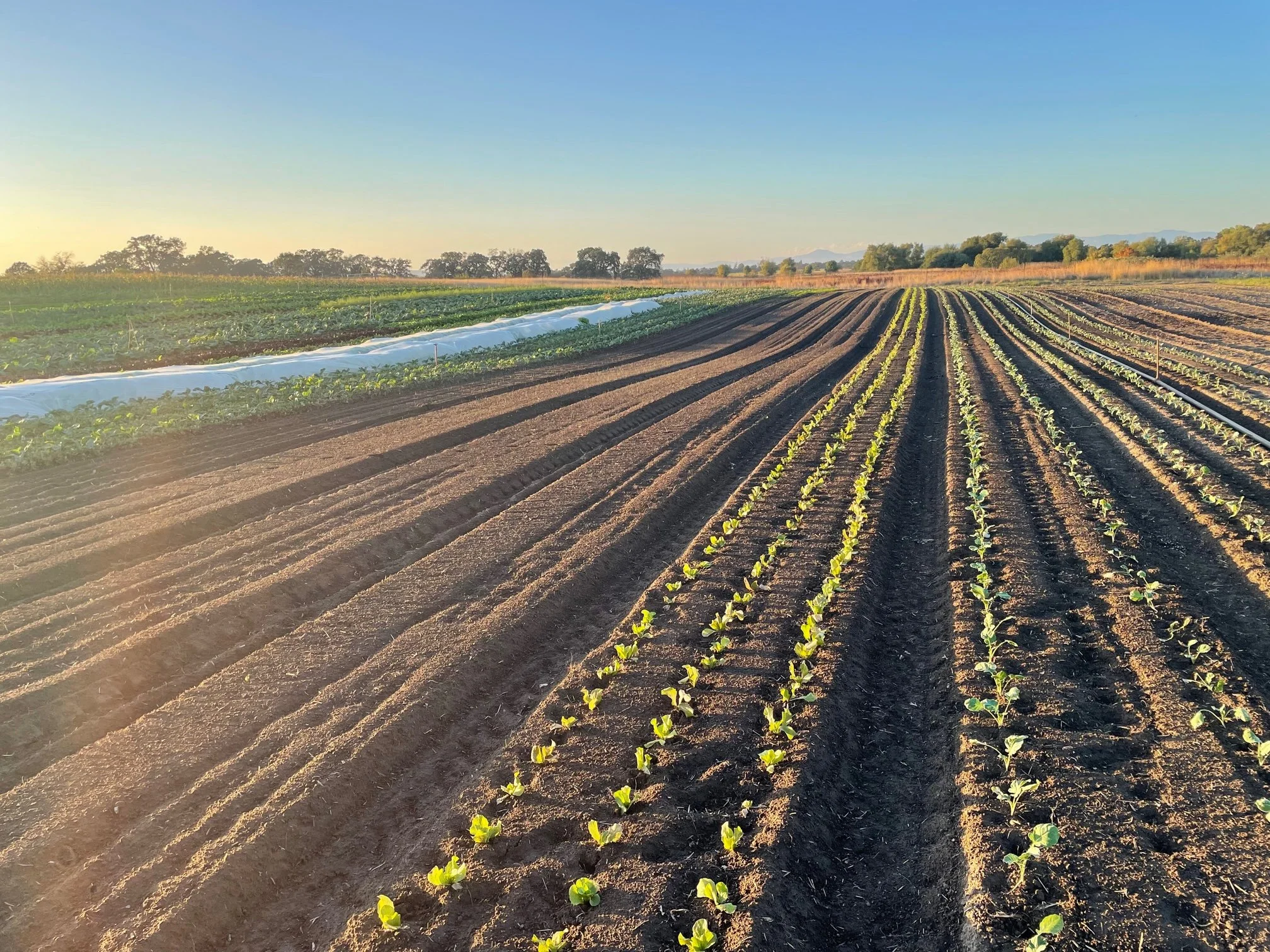
8/13/2022 - Week 10 - Farming in the Aftermath Redux

THIS WEEK’S HARVEST

Arugula, Mustard Mix, Cegolaine Little Gem Lettuce, Magenta Summer Crisp Lettuce, Red Butter Lettuce, Red Russian Kale, Komatsuna, Poblano Peppers, Rainbow Carrots, Multicolored Beets, Fresh Torpedo and Walla Walla Sweet Onions, Summer Squash & Zucchini, Persian & Lemon Cucumbers, Sarah’s Choice Cantaloupe, Early Tomatoes (limited)

U-PICK

Please remember to check the u-pick board for updated weekly limits before going out to pick

  • Albion Strawberries: Rehabilitation in progress, still only enough for everyone to have a snack this week

  • Pickling Cucumbers: Likely the last week! | See week 6’s newsletter for harvest and pickling tips

  • Cherry Tomatoes: See week 8’s newsletter for variety descriptions

  • Amethyst Green Beans: Likely the last week

  • Frying Peppers: Shishitos & Padrons | See week 4’s newsletter for harvest and preparation tips

  • Jalapeño Peppers

  • 🌟Buena Mulata Hot Peppers: See below for tips

  • 🌟Tomatillos: Located next to the frying peppers

  • Herbs: Dill, Thyme, Oregano, Marjoram, Tarragon, Onion Chives, Garlic Chives, Vietnamese Coriander, Culinary Lavender, Culinary Sage, French Sorrel, Lemon Verbena, Cilantro, Tulsi, Various Mints, Catnip, Chamomile, Purple Basil, Genovese Basil, Thai Basil

  • Flowers!

HARVEST NOTES

Fresh Torpedo Onions: These onions are mild and delicate. Use like a normal onion or try slicing very thin and using raw.

Sarah’s Choice Cantaloupes: The best cantaloupe variety there is… period.

Poblano Peppers: The poblano chili pepper is the beloved mild chili, originating in the state of Puebla, Mexico that when dried it is called “ancho” or chili ancho and when roasted and stuffed with cheese becomes the magnificent chili relleno. This week will be offering the first taste of these wonderful peppers.

Buena Mulata Peppers: We're excited to introduce these gorgeous and new-to-us peppers. Seeds came from Truelove Seeds, a farm-based seed company specializing in culturally important seeds. Here's how they describe this pepper and its story:

"Beautiful, spicy, and flavorful cayenne pepper that starts purple and then passes through salmon and orange on the way to turning a gorgeous red. The tall striking plants are laden with 4-5 inch fruits, which are tasty at all stages, but we prefer the added sweetness of the fully red fruit.

Buena Mulata Pepper was the name on the baby food jar next to the name "Pippin" in the bottom of the deep freezer in William Woys Weaver's grandmother's basement, a decade after his plant-loving grandfather's untimely death. If you've heard of the Fish Pepper, this story probably sounds familiar. There were many other seeds besides those of the beautiful, delicious, and now widely-available Fish Pepper in that frozen trove, and many that passed through Horace Pippin's hands, including this Buena Mulata. Horace Pippin is now a well-known artist who beautifully depicted everyday life, landscapes, religion, WWI, and themes of the injustices of slavery and segregation. In the 1940s, he traded seeds from his friends in the Black catering communities of Philly and Baltimore in exchange for bee sting therapy for WWI arm injury from William Woys Weaver's grandfather H. Ralph Weaver's hives. Seeds stay viable longer in the freezer; our heirlooms only survive if someone removes them from storage and places them in soil; and stories only live when they are told."

As they ripen to red, Buena Mulata develop a sweetness in addition to their spice. They're particularly great for making beautiful pickles or drying to crush into pepper flakes or powder.

VOLUNTEER WEDNESDAYS

Come work with us! Find us in the garden or fields from 9am - 11am on Wednesday mornings for our standing volunteer morning. We’ll work together on tasks like weeding the garden, deadheading flowers, cleaning garlic. Come meet your farmers and put your hands in the soil! All ages and abilities welcome!

FARMER’S LOG

FARMING IN THE AFTERMATH REDUX

We have family visiting this weekend, so this week we wanted to revisit a newsletter from August 2020 on what our farm might look like, and how it would have to change, in an “apocalyptic” scenario.

* * * * *

Whether evoked by current events or not, apocalyptic reveries are, it seems, a recurring obsession of human imagination across cultures. Why? Perhaps because they tell us about ourselves in the present. Imagining an extreme future holds up a mirror. What is important to us? What is essential? What are we afraid of? And what luxuries do we take for granted? 

Assuming we were all still here and had to eat, how would our farm have to change and adapt after the breakdown of most or all of the supply chains that sustain it now? 

We tossed this admittedly fantastical subject around and the conversation was illuminating — not as exercise in science fiction or doomsday thinking, but because it taught us about the farm now.

The subjects we honed in on were seeds, manure, labor and motive power. 

SEEDS

Seed saving is a beautiful task. You lovingly grow something until it matures. You select the most beautiful and store it with care. You give some to friends. The seed ties you to past seasons — to past generations — to time itself. You repeat the cycle — a cycle of love and discipline — each year.

We save some seed at Green Valley Community Farm. We’ve been saving the Hopi Blue Corn seed we plant for several years now. We’ve been saving our big Lorz Garlic seed for 5 season now — and generally they look better and better every harvest. We’ve occasionally saved seed potato. Kayta has been saving several flower seeds from the garden: Nigella, hollyhock, agrostemma — last year, Sora, Ahn, and Tuli helped gather the celosia you see blooming today. 

But most of the vegetables we grow we do not save seed from. Why?

First, time and space management. Seed saving is a meticulous, labor intensive craft and takes special equipment. Seed saving also ties up field space as you must allow lettuce, for example, to grow, flower, and make seed a month and a half after the delicious head has passed. We pay other farmers for seeds because then we can devote more of our limited space and time to the food part of farming.

Secondly, saving our own seed would mean we couldn’t offer nearly the diversity we do. This is because of cross pollination. The cross pollination of two different varieties of the same species creates a vigorous hybrid that is often not yummy to eat. The carefully isolated genetics in open-pollinated food crops is why a lot of heirloom varieties have place names. Marina di Chioggia winter squash, for example, comes from a certain region of Italy. People from that region started to fall in love with a certain sweet pumpkin. Farmers grew fields of them in isolated patches, and slowly the region developed a fairly consistent strain of squash that became a local staple. If we saved seed from our Marina di Chioggia squash, which is currently being grown next to 8 other varieties of winter squash originating from other other regions, what we would get would end up next year would possibly be bitter, hard skinned, and ugly!  

A luxuriously modern salad nicoise spread with farm fresh tomatoes, vinegared daikon, beets and carrots; Amethyst green beans with fresh basil, garlic, and balsamic; new potatoes with garden fresh dill; Persian cucumber salad; all over Magenta romaine lettuce and arugula.

So the vast, and relatively affordable modern seed exchange we have access to allows us to grow 10 different brassica varieties in the same field at the same time. GVCFarm is very much a product of modern times in this way. We take advantage of our access to a world library of seeds at our fingertips to grow an extreme amount of diversity in our fields. In this way we are deeply connected to myriad regions, farms, and farm workers devoted to growing vegetable seeds for market farmers like us. 

After the apocalypse we’d have to focus. We’d have to drop sweet corn in favor of massive field of hardy Hopi Blue to feed us through the winter. We’d have to choose a brassica, possibly a hardy turnip to harvest both for storage and for cooking greens. We’d gather tomatoes from the healthiest Aunt Ruby’s German Green. We’d let those tomatoes rot and ferment. We’d dry the seeds and store them away safe. We’d trade with neighbors growing a different tomato.

If you could only pick one squash to save in your family for generations, which seed would you start with?

MANURE

But before we even thought about planting seeds we’d be thinking about poop. 

Similar to seeds, a functional modern supply chain gives modern farmers like us cheap and easy access to fertility. For a very reasonable price, you can go to a warehouse in Roseland, or call up Adam in Cloverdale, and within 24 hours get 24 tons of compost delivered to your fields; or 500 lbs of the dried, processed, neatly packaged, and potent manure of Petaluma chickens loaded into the back of your truck.

This is all because of cheap energy, which we will get to next.  

In the olden times, or the end times as it were, the amount of energy involved in mixing that compost (Caterpillar D9’s) or processing and shipping that chicken manure, would not be possible. Indeed, a post apocalyptic Green Valley Community Farmers would need to devote much more time and energy to manure.

We would capture human manure in carefully managed composting toilets that we’d spread on fields and pastures (after a long ferment for sure). In fact, we would encourage, possible demand that you, dear members, donate some of your own manure! We would trade our neighbors handsomely for cow manure, and each month venture into their meadows with a giant pooper scooper, harvesting the fertile gold.

In order to sustain the level of vegetable production we do, we would need many more human hands managing many more animals, and their manures, and funneling them into piles and then into the fields. We would all miss our clothes washing machines greatly. 

LABOR AND MOTIVE POWER

We never think apoco-thoughts more viscerally than during power outages. For a farm reliant on electric power to irrigate — if feels a little bit like having a knife to your throat. 100 degree heat, no electricity, and a field of baby brassicas = not comfortable. We have a generator (as of this week) in for those emergencies, but in our imagined future we’d have no fossil fuels to power that generator.

That’s where things get really interesting. Indeed, our farm — and our society — without fossil fuels would be hard to recognize.

For starters, all of our irrigation would be done with lower powered solar pumps. Without access to plastic and aluminum irrigation supplies we would likely have to flood irrigate, as so many of our ancestral cultures did, releasing water down careful canals shaped in the fields. Because this method of irrigation would limit the crops amenable to this arid climate, gone would be the lettuce and arugula of August, relegated now, perhaps, to a short fling of succulent greens in the early Spring. We would forage for our greens and herbs in the creek beds and wetlands. Our fields would focus on the hardy, deep rooted staples amendable to flood irrigation and dry summers: Potatoes, corn, winter squash… some hardy roots. We would plant fruit and nut trees and look to the indigenous people and the indigenous foodways of California. We would tend oaks religiously. 

When we did prep a valley field for food, we would all do it together. Gone would be the luxury of a Kubota doing the day’s work of a village in one hour. Green Valley Community Farm members would become Green Valley Community Farm farmers. The horse and mule and donkey would rule again. 

The reason why 95% of humans were, before the industrial revolution, involved in agriculture is because that is how many human bodies and human hands it takes to tend landscapes without fossil power.  

IN CONCLUSION

It struck us, in the carrots, tossing around this imagined future both how close and how far we are from it.

Our modern luxuries can feel like a thick, insurmountable wall between us and both the pain and, possibly, the deliverance of this kind of future. 

In reality, these luxuries are only a thin veil between this paradise and hell. Perhaps, by recognizing the tenuousness of this veil, we can glean its lessons and spur our technologies and actions toward paradise — toward simplicity, grace, and balance.

See you in the fields.
David for Kayta

8/6/2022 - Week 9 - On a Speck in Space

THIS WEEK’S HARVEST

Arugula, Mustard Mix, Mini Romaine Lettuce, Magenta Summer Crisp Lettuce, Sugarloaf Chicory, Red Russian Kale, Komatsuna, Green Magic Broccoli, Rainbow Carrots, Multicolored Beets, Fresh Torpedo and Walla Walla Sweet Onions, Summer Squash & Zucchini, Persian & Lemon Cucumbers, Tendersweet Cabbage, Early Tomatoes (limited)

U-PICK

Please remember to check the u-pick board for updated weekly limits before going out to pick

  • Strawberries Rehabilitation is in progress | See below for an update

  • Pickling Cucumbers | 2 gallon season limit (see week 6’s newsletter for harvest and pickling tips)

  • Cherry Tomatoes (See week 8’s newsletter for a primer)

  • Amethyst Green Beans

  • Shishito & Padron Frying Peppers (See week 4’s newsletter for harvest and cooking tips)

  • Jalapeño Peppers

  • Herbs: Dill, Thyme, Oregano, Marjoram, Tarragon, Onion Chives, Garlic Chives, Vietnamese Coriander, Culinary Lavender, Culinary Sage, French Sorrel, Lemon Verbena, Cilantro, Tulsi, Various Mints, Catnip, Chamomile, Purple Basil, Genovese Basil, Thai Basil

  • Flowers!

STRAWBERRY UPDATE

Over the last three to four weeks we noticed a precipitous dip in the number of strawberries (and strawberry flowers) in our strawberry patch. There is usually a normal dip in production in early July as the plants produce runners after their spring/early summer berry explosion. But as the weeks went by, the nipped off strawberry flowers became more and more numerous and suspicious. CSA member Prentice Danner installed a game camera and, lo and behold, we learned that no less than 6 individual deer were habitually visiting the strawberries every night by jumping over and through the fence. (And they didn’t even sign up for CSA share!) This week we put up a more fortified strawberry fence and we expect our beloved strawberry plants will rebound for a productive late summer and fall!

Party in the strawberries!

VOLUNTEER WEDNESDAYS

Come work with us! Find us in the garden or fields from 9am - 11am on Wednesday mornings for our standing volunteer morning. We’ll work together on tasks like weeding the garden, deadheading flowers, cleaning garlic. Come meet your farmers and put your hands in the soil! All ages and abilities welcome!

BEE SWARM!

This week the picnic area was blessed by a beautiful swarm of bees (in the elbow of the northern big twin oak tree). Please be peaceful and quiet around them if you say hello. We’d love for them to feel safe and welcome in that tree hole. Honeybees are very gentle and peaceful unless their hive is threatened.

PRESERVING THE HARVEST

SAUERKRAUT TIME!

We have two big macro bins of green cabbage fresh out of the field that we’ll be distributing over the next few weeks. With the dill going gangbusters in the garden, now is a great time to make sauerkraut! Here is out go to lemon dill kraut recipe from the book Fermented Vegetables by Kristen and Christopher Shockey 

This recipe yields about 1 gallon of kraut 

2 heads (about 6 pounds) cabbage
1 1/2-2 tablespoons unrefined sea salt
4 tablespoons lemon juice
1-2 tablespoons dried dill 
4-5 cloves of garlic, finely grated

Step 1. To prepare the cabbage, remove the coarse outer leaves. Rinse a few unblemished ones and set them aside. Rinse the rest of the cabbage on cold water. With a stainless steel knife, quarter and core the cabbage. Thinly slice with the same knife or a mandoline, then transfer the cabbage to a large bowl. 

Step 2. Add the dill, lemon juice, and 1 tablespoon of the salt and, with your hands, massage it into the leaves, then taste. You should be able to taste the salt without it being overwhelming. Add more salt if necessary. The salt will soon look wet and limp, and liquid will begin to pool.  At this point, add the garlic. If you've put in a good effort and don't see much brine in the bowl, let it stand, covered, for 45 minutes, then massage again. 

Step 3. Transfer the cabbage to a crock or 2-quart jar, a few handfuls at a time, pressing down on the cabbage with your fist or a tamper to work out air pockets. You should see some brine on top of the cabbage when you press. Leave 4 inches of headspace for a crock, or 2 to 3 inches for a jar. Top the cabbage with one or two of the reserved outer leaves. Then, for a crock, top the leaves with a plate that fits the opening of the container and covers as much of the vegetables as possible; weigh down with a sealed, water-filled jar. For a jar, use a sealed, water-filled jar or ziplock bag as a follower-weight combination. 

Step 4. Set aside the jar or crock on a baking sheet to ferment, somewhere nearby, out of direct sunlight and cool, for 4 to 14 days. Check daily to make sure the cabbage is submerged, pressing down as needed. 

Step 5. You can start to test the kraut on day 4. You'll know it's ready when it's pleasingly sour and pickle-y tasting, without the strong acidity of vinegar; the cabbage has softened a bit but retains some crunch; and the cabbage is more yellow than green and slightly translucent. 

Step 6. Ladle the kraut into smaller jars and tamp down. Pour in any brine that's left. Tighten the lids, then store in the refrigerator. This kraut will keep, refrigerated, for 1 year.


Roasted Carrots with Carrot-Top Pesto

from bon appetit

Ingredients

  • 3 pounds small carrots with tops (any color)

  • 2 tablespoons vegetable oil

  • Kosher salt, freshly ground pepper

  • 1 garlic clove

  • 3 tablespoons macadamia nuts or pine nuts

  • 1/2 cup (packed) fresh basil leaves

  • 1/4 cup finely grated Parmesan

  • 1/2 cup extra-virgin olive oil

Preparation

  1. Preheat oven to 400°. Trim carrot tops, leaving some stem attached. Measure out 2 cups carrot tops and set aside; reserve any remaining carrot tops for another use.

  2. Toss carrots and vegetable oil on a rimmed baking sheet; season with salt and pepper. Roast, tossing occasionally, until carrots are golden brown and tender, 25–35 minutes. Let cool.

  3. Pulse garlic and nuts in a food processor until a coarse paste forms. Add basil, Parmesan, and reserved carrot tops; process until a coarse puree forms. Add olive oil and pulse until combined; season with salt and pepper. Serve carrots with pesto.

FARMER’S LOG

Tonight we’ll leave you with a helpful reminder from the poet Lew Welch.

* * * * *

NOTES FROM A PIONEER ON A SPECK IN SPACE


Few things that grow here poison us.
Most of the animals are small.
Those big enough to kill us do it in a way
Easy to understand, easy to defend against.
The air, here, is just what the blood needs.
We don’t use helmets or special suits.

The Star, here, doesn’t burn you if you
Stay outside as much as you should.
The worst of our winters is bearable.
Water, both salt and sweet, is everywhere.
The things that live in it are easily gathered.
Mostly, you eat them raw with safety and pleasure.

Yesterday my wife and I brought back
Shells, driftwood, stones, and other curiosities
Found on the beach of the immense
Fresh-water Sea we live by.
She was all excited by a slender white stone which:
“Exactly fits the hand!”

I couldn’t share her wonder;
Here, almost everything does.

* * * * *


See you in the fields,
David and Kayta

land + local boxes available for pickup at the farm

Interested in some herbal support and deliciousness this summer? Land + Local culinary & herbal wellness boxes highlight seasonal foods and medicinal herbs local to Sonoma County, CA. Each season's offering ranges from botanical shrubs & syrups to herbal tea blends, spice mixtures, and herbal vinaigrettes that rotates with the seasons, making it easy for you to incorporate the power of plants into your daily meals + routines.

SUMMER OFFERING’s is all about keeping you cool, calm, and hydrated. 


'Summer Soother' BOTANICAL SYRUP, 8 oz  - a nourishing and hydrating blend of local blackberries, basil, and fresh squeezed Lima Dulce limes.  simmered with organic marshmallow root, sweetened with a bit of organic cane sugar + honey, and a slight pinch of cooling, atlantic grey salt to improve hydration and keep you cool. try a splash in bubbly water or in your next summer cocktail spritzer!
 
'Lunar Tides' HERBAL VINAIGRETTE, 8 fl oz - ethically wildcrafted sonoma coast kombu steeped in local gravestein apple cider vinegar, allowing for this mineral-rich seaweed to be best extracted and bioavailable to you! seasoned with organic honey, atlantic grey salt + ground black peppercorn, and finished with preston farms biodynamic olive oil, douce this vinaigrette onto everything from your bitter, cooling greens to veggie side dishes.
 
'Cool + Collected' FLORAL SPRITZ, 2 oz - all the cooling plants distilled + combined into one bottle. with a dream team of damask rose, lemon balm, and local cucumber from longer table farm, this floral spritz was designed to cool you down in the heat of summer. keep handy for those muggy afternoons with no AC, or spritz all over to calm you down after a heated argument (heat outside leads to heat on the inside, which can show up as anger + irritability at this time of year).

Link to shop —> HERE

7/29/2022 - Week 8 - Up On That Hill

THIS WEEK’S HARVEST

Arugula, Mustard Mix, Assorted Lettuces, Dino Kale, Bel Fiore & Sugarloaf Chicories, Celery, Green Magic Broccoli, Fennel, Fresh Onions, Purple Daikon, Multicolored Carrots, Persian & Lemon Cucumbers, Summer Squash & Zucchini, Garlic.

Fall crops in our field across the creek. Read this week’s Farmer’s Log below as we take stock of the planting season so far.

U-PICK

Please remember to check the u-pick board for updated weekly limits before going out to pick

  • Strawberries are still off | Read the Farmer’s Log below for why!

  • Pickling Cucumbers | 2 gallon season limit (see Week 6’s Newsletter for harvest and pickling tips)

  • 🌟Cherry Tomatoes (See below for notes)

  • Amethyst Green Beans

  • Shishito & Padron Frying Peppers (See Week 4’s Newsletter for harvest and cooking tips)

  • Jalapeño Peppers

  • Herbs: Dill, Thyme, Oregano, Marjoram, Tarragon, Onion Chives, Garlic Chives, Vietnamese Coriander, Culinary Lavender, Culinary Sage, French Sorrel, Lemon Verbena, Cilantro, Tulsi, Various Mints, Catnip, Chamomile, Purple Basil, Genovese Basil, Thai Basil

  • Flowers!

HARVEST NOTES

Sugarloaf Chicories: Chicories (which include Frisee, Radicchio, Dandelions and Escarole) are closely related to lettuces, but heartier and with a bitter edge. People are sometimes intimidated by their bitterness — but fear not, properly prepared, chicories contain a world of deliciousness. Chicories pair best with assertive dressings, and particularly tangy and umami flavors. Sugarloaf are among the least bitter of the chicories. They are delicious included in a leafy salad, and incredible chopped and tossed with olive oil, garlic and salt, and put under a broiler until caramelized. With a little added lemon and parmesan, caramelized chicories make a perfect pairing with beans, polenta, or other hearty dishes.

Cherry Tomatoes!

The first tomatoes in our u-pick cherry tomato patch, slowed by the recent cold, are finally starting to ripen! This week’s trickle will become a deluge of sunny sweetness in just a couple of weeks.

Here is a brief introduction to the six varieties of cherry tomato we planted for you this year.

Note: the first ripe tomatoes will be found very very low on the plants, near the ground, and they will ripen higher and higher up as the season progresses.

From L to R, top row: Copper Beauty, Pink Princess, Sunpeach. Bottom row: Supersweet 100, Sungold, Indigo Cherry Drops

  • Copper Beauty: One of our favorites, these are a gorgeous, oblong variety, a little larger than most cherry tomatoes and perfect for slicing into a fancy tomato salad. Mellow, very low acid, sugar sweet. Ripe when auburn red, with copper gold streaks. These are the latest, they are just beginning ripen, but should soon be abundant.

  • Pink Princess: Developed by an oxen-driving, seed-saving wizard in Massachusetts, this gem is such a favorite of ours that when the seed was temporarily unavailable a couple years ago, we saved our own! Mellow and sweet, with a hint of grapefruit, these cherry tomatoes are on the smaller size and ripen to a beautiful matte pink.

  • Sunpeach: This immaculate beauty is one we’re trialing this year. They are ripe when pink. Let us know how you like them!

  • Supersweet 100: A classic red cherry tomato for a shock of red sweet tang. Ripest when deep scarlet red. The secret to Supersweets is to leave them out on the counter for a day or two after you pick them — they sweeten up off the vine.

  • Sungold: The sun... captured. An unbeatable classic. Ripe when deep orange. Candy sweet, super productive. Is it even summer until you have a handful of Sungolds?

  • Indigo Cherry Drops: These striking purple orbs are chock-full of healthy anthocyanins (anti-oxidants) and a deliciousness They are ripe when the green side darkens to red -- keep a close eye out when picking as even the unripe tomatoes of this variety are purple!

CELERY and FENNEL with WALNUTS and BLUE CHEESE

Recipe by Alison Roman

Grace has been recommending this delicious salad to us all season, and now, with celery and fennel in the share this week, is the perfect time to try it! Grace says that she loves making a variation of the recipe using white wine vinegar in the dressing instead of lemon juice, and leaving out the walnuts. Play around with it!

Serves 4 to 6

  • 1⁄2 cup toasted walnuts, coarsely chopped

  • Kosher salt and freshly ground black pepper

  • 4 celery stalks, with leaves, thinly sliced on the bias

  • 1 large fennel bulb, trimmed and thinly sliced lengthwise

  • 1⁄2 small shallot, thinly sliced

  • 2 tablespoons fresh lemon juice, plus more as needed

  • 1⁄4 cup olive oil, plus more as needed and for drizzling

  • 1 1⁄2 ounces firm blue cheese, such as Bayley Hazen or Valdeon, or a mild Stilton, thinly sliced or crumbled

  1. Toss the walnuts with a bit of olive oil so they are nicely coated, then season with salt and pepper and set aside.

  2. Toss the celery stalks (reserve the leaves for garnish), fennel, shallot, and lemon juice in a large bowl; season with salt and pepper. Drizzle with the olive oil and season with enough lemon juice to make it very tangy.

  3. Transfer to a large serving platter or large shallow bowl and top with the walnuts, cheese, celery leaves, and another drizzle of olive oil and plenty of pepper.

PICKLE PARTY!

This week we harvested an abundance of carrots and purple daikon! Consider taking advantage of this vibrant duo by making this super simple quick pickle recipe. Daikon can be treated just like carrots to make pickled carrot and daikon sticks, or, if you'd prefer, julienne or grate them both (and skip the blanching step) to create a simple variation on Vietnamese do chua that can be used as topping on bahn mi or a multitude of other dishes.

Makes 10 to 12 servings
1 pound carrots, cut into 3 1/2- by 1/3-inch sticks
1 1/4 cups water
1 cup cider vinegar
1/4 cup sugar
2 garlic cloves, lightly crushed
1 1/2 tablespoons dill seeds
1 1/2 tablespoons salt

Step 1

Blanch carrots in a 4-quart non-reactive saucepan of boiling salted water for 1 minute, then drain in a colander and rinse under cold water to stop cooking. Transfer carrots to a heatproof bowl.

Step 2

Bring remaining ingredients to a boil in a saucepan, then reduce heat and simmer for 2 minutes. Pour pickling liquid over carrots and cool, uncovered. Chill carrots, covered, at least 1 day for flavors to develop.

Carrots keep, chilled in an airtight container, 1 month.

FARMER’S LOG

UP ON THAT HILL

Late July is a complex time of year on the farm. Spring, Summer, Fall and Winter, collide, intermix and interweave in the harvest share and in the fabric of the fields. Winter sown garlic is tossed in with Spring sown onions and simmered with the first cherry tomatoes of summer, while the bass note of Fall can be heard swelling in the greenhouse and from our fields across the creek.

It is perhaps the most important and informative time of year for us farmers to gaze out over the entire complex tapestry to learn and observe.

This year, our first here, is especially fascinating for us, it being the first time we have planted, well, anything here.

So, with a few week’s of harvest behind us, let’s walk up that hill together to take stock of how things are faring. 

In the harvest share and on our tables right now is a lot of Winter and Spring and early Summer sunlight — crops that were sown and planted in those early months (garlic, carrots, celery, the first cucumbers, kale, onions, etc). Overall, we are grateful and encouraged by how these, are first pieces of feedback, performed in this new (to us) soil, weather, and ecological system. Most crops seemed more “relaxed” here than in the tougher soils of Green Valley. Our first ever garlic crop was easeful. Our first carrots grew straight and deep into the loam. Our first heading brassica crop, broccoli — a crop that will show it’s discontent — expressed happiness in well formed orbs. Celery too, a task master, found it suitable enough here to erect stately green columns. Our lessons from these months, so far, seems to be around pest protection: We need to invest in special Protect-Net netting to protect our chard, and certain brassicas and lettuce from the voracious civilizations of flea beetles and cucumber beetles here. We need to better fence out the robust deer population here that visit our lettuce and have ransacked our strawberries the last couple weeks.

Summer… Ahh, summer. We’ve only just started reading our first chapter on Summer here. But the plot has us hooked. Namely, there is an antagonist here that was only a side character in our Green Valley summer’s. Fog. Sweet, soothing fog; farmer’s relief; life giving draught of the redwoods; sculptor of fine broccoli; but not so liked by tomatoes and eggplant. If you’ve been feeling like the poblanos, eggplant, and tomatoes are running a little bit late, we have fog to thank. Analogies aside, the last 2 or 3 weeks have been quite cool here, and most nights have been dripping with fog. While this is a normal and seasonal weather pattern that will shift, like all weather patterns, we do feel like it will be a regular character in this place, unlike in the sun drenched oven of Green Valley. The tomatoes will come; the melons will come; sweet corn and eggplant should come; in the meantime we’ll be eating sweet summer broccoli while raptly reading what role this new noir character, Mr. Foggy Cold Wind, has in our Summer tale.

Winter squash field and popcorn looming on the horizon

Fall. At this point, Fall is just foreshadowing. Most of our main harbingers of Fall (potatoes, storage onions, dried corn, winter squash) are all located in our fields across the creek, so you cannot see them, but they are looming large. Check out the snapshot above. Things are going well. Our winter squash and dried corn both pulled through an extended bout of transplant shock (cause unknown) but recently found their feet and we couldn’t be prouder. Our storage onions and potatoes, conversely, knew nothing but perfect health until Mr. Foggy Cold Wind, gave them the plant versions of a cold (they should be OK). We were encouraged last week when we dug those new potatoes — a shower of multitudinous tubers. But the text stops there. The tale of this Fall is not yet written. We await the next episode.

And then Winter. Well, next winter is but a sketch, in our minds, of where next year’s strawberries and garlic will go.

As we stand on this hill, and pull back from the complexities of the farm right now, we feel humbled. The word "humble" comes from the same root of the word "humus”. To be humbled means to be close to the Earth; to be close to her seasons, her weather, her moods. To be humbled means to not always get what you want. We want the strawberries to still be raging and for the heirloom tomatoes to be ripening now. We’ve been humbled.

For most of us in Sonoma County, living in this time and this way, we rarely, if ever are humbled when it comes to food. The experience of being humbled by cold or fog, or by deer, is not available to us in the aisles of Whole Foods. But it is an essential human experience. 

It makes us grateful for what we have. And it can bring people together.

That’s why we love this CSA model. It allows a group of people to be humbled together. To be close to one piece of land and its moods together. This also allows us to celebrate together, to celebrate the abundances together because we are having the same experience of lack, and then of gain. And so we celebrate what we have together.

Thank you for joining us on this hill!

See you in the fields,
David and Kayta