7/2/2022 - Week 4 - Ode to the Onion

THIS WEEK’S HARVEST

Cipollini Onions, Sunrise Carrots, Easter Egg Radishes, Garlic, Fennel, Olympian Cucumbers, Green Zucchini and Yellow Crookneck Squash, Collards, Cegolaine Little Gems, Green Butter Lettuce, Salanova Mini Lettuces, Arugula, and Mustard Mix

U-PICK

  • Albion Strawberries

  • Sugar Snap Peas

  • Jalapeño Peppers

  • Frying Peppers: Shishitos and Padrons

  • Herbs: Dill, Thyme, Oregano, Marjoram, Italian Parsley, Tarragon, Onion Chives, Garlic Chives, Vietnamese Coriander, Culinary Lavender, Culinary Sage, French Sorrel, Lemon Verbena, Cilantro, Tulsi, Various Mints, Catnip, Chamomile, Purple Basil, Genovese Basil, Thai Basil

  • Flowers!

David surveying the potatoes in the far field on a foggy morning.

HARVEST NOTES

Frying Peppers are here! Every year we grow two different varieties of these beloved peppers. Both are incredibly delicious fried in hot olive oil until browned, sometimes with a dash of lemon or smoked paprika, and always with a liberal sprinkle of salt. Because of their differing thicknesses, we recommend frying them separately so as to get each variety perfectly done. A plate of just-off-the-stove frying peppers is an irresistible appetizer or snack.

  • Shishitos: these Japanese frying peppers are long and wrinkled with delicate, thin walls. Best picked between 3-4” long, they are almost never spicy, and will eventually ripen to a sweet red. Also incredible as tempura.

  • Padróns: The famous Spanish heirloom, named after their town of origin. Padróns are served sautéed in olive oil with a little sea salt, and eaten as tapas in Spain. Ideally harvest when they are 1" to 1 1/2" long. About 1 out of 10 fruits will be hot. All the fruits become hot if allowed to grow 2-3" long.

Herb Inspiration: This is probably the last week to pick from our abundant cilantro succession before it begins sending up its white flowers (and later coriander seeds!). To take advantage of it before it goes, we highly recommend making a green sauce that’s a play on chimichurri or pesto. While you can use any combinations of herbs from the garden, we’ve been enjoying equal parts parsley and cilantro, with a little bit of mint, chopped or blended with raw garlic, lemon and lemon zest, olive oil and salt. Use as a zingy topping on any hearty food — roasted cipollini onions or grilled summer squash for instance. Will keep one week in the fridge, so if you make a big batch it’s best to freeze some for later use.

Fresh Cipollini Onions: “Round roses of water.” Fresh, turgid, a summer treat. The innocent, uncured form of the onion.

From left to right: Shishitos, Jalapeños, and Padrons.

FARMER’S LOG

ODE TO THE ONION

It was a busy week on the farm as we started to turn our attention to maintenance after Spring’s big planting push. In between harvests, we planted the last of the years melons (watermelons and Sarah’s Choice Cantaloupe); the 2nd to last cucumber succession; and our Fall leeks! We trellised lots of tomatoes and finally got around to hilling our potatoes, and we had some amazing help cultivating some overgrown areas of the farm.

Today was a fun harvest. Lots of new things to share with you all.

It is always a happy day the day we harvest the first fresh onions of the year, their bellies “grown round with dew”. So this week, in honor of this week’s Cipollinis, we'll leave you with the one-and-only, Pablo…

Schizanthus, also known as Poor Man’s Orchid, or Angel’s Wings.

Ode to the Onion
by Pablo Neruda

Onion,
luminous flask,
your beauty formed
petal by petal,
crystal scales expanded you
and in the secrecy of the dark earth
your belly grew round with dew.
Under the earth
the miracle
happened
and when your clumsy
green stem appeared,
and your leaves were born
like swords
in the garden,
the earth heaped up her power
showing your naked transparency,
and as the remote sea
in lifting the breasts of Aphrodite
duplicating the magnolia,
so did the earth
make you,
onion
clear as a planet
and destined
to shine,
constant constellation,
round rose of water,
upon
the table
of the poor.

You make us cry without hurting us.
I have praised everything that exists,
but to me, onion, you are
more beautiful than a bird
of dazzling feathers,
heavenly globe, platinum goblet,
unmoving dance
of the snowy anemone

and the fragrance of the earth lives
in your crystalline nature.

See you in the fields,

David & Kayta

FARM ORIENTATION TOURS

If you are a new or returning member who hasn’t had an orientation tour yet, please check in with one of the farmers when you come to a pickup.

FARM BASICS

Times & Dates: Our 2022 CSA harvest season will run from June 11th - December 6th.

  • Saturday harvest pick-ups run from 9:00am - 2:00pm

  • Tuesday harvest pick-up run from 1:00 pm - 6:00 pm

Members and their guests may visit the farm any time, 7 days a week, sunrise to sunset, to enjoy the farm and u-pick.

Where is the farm? The member parking lot is located at 1720 Cooper Rd., Sebastopol, CA 95472. It is the long gravel driveway to the left. Kiddos crossing. Please drive slowly.

Parking: Please find a parking spot under the solar panels to your left, or along the straw bales further down.

Where is the food! The pick-up barn is to your right with the beautiful mural on it.

What should I bring to the farm?:

  • Extra plastic produce bags (if you have them) to cut down on plastic waste

  • A pint basket or other pint measure and a basket for u-pick crops

  • A vase or water bottle to keep your flowers and herbs happy on the drive home!

  • Clippers to cut flowers and herbs

  • Water / sun hat / picnic supplies if you plan to stay awhile!

6/24/2022 - Week 3 - Apples to Oranges

THIS WEEK’S HARVEST

French Breakfast Radishes, Fennel, Scallions, Hakurei Turnips, Rainbow Chard, Green Zucchini and Yellow Crookneck Squash, White Satin Carrots, Kohlrabi, Rosaine Little Gems, Cherokee Summer Crisp Lettuce, Salanova Mini Lettuces, Arugula, and Mustard Mix

U-PICK

  • Albion Strawberries

  • Sugar Snap Peas

  • Herbs: Thyme, Italian Parsley, Tarragon, Onion Chives, Garlic Chives, Vietnamese Coriander, Culinary Lavender, Culinary Sage, French Sorrel, Lemon Verbena, Cilantro, Tulsi, Various Mints, Catnip, Chamomile, Purple Basil

  • Flowers!

STORING YOUR STRAWBERRIES

If you manage to make it home with a few pints of strawberries, you might wonder how best to store them. CSA member Lillie Dignan was kind of enough to share her tried and true method for storing ripe strawberries in the fridge so they last all week, or more!

Estimated kitchen time: 5-10 minutes

  • Step 1. Pick lots of delicious, red strawberries from the fields of your amazing CSA. (If any berries are almost over ripe, just eat them immediately. Yum.)

  • Optional: Cleanup the berries a bit by simply pinching off the leaves or totally hulling with a knife.

  • Step 2. Fill a pot, bowl, or sink basin with cool water. Add some vinegar to the water. (I’ve read directions for up to a 1:3 ratio of vinegar to water, but I just use a glug per quart of water and it works just fine.) Put all your berries into the vinegar-water for 1-5 minutes. They get a nice, cleansing rinse! And no lingering vinegar tang, I promise!

  • Step 3. Spread the berries out on a towel to dry a bit. I like to put a cooling rack underneath for max airflow. The drier the better, but often I just wait a few minutes.

  • Step 4. Line an airtight container with a cloth napkin or paper towel, and carefully tuck all the strawberries into it. Cover and store in fridge. The towel absorbs extra moisture, and the lid protects these gentle berries from your fridge.

  • Step 5. Eat ‘em all up! Every day! Enjoy the taste of these SWEET BURSTS OF SUMMER JOY.

FARMER’S LOG

APPLEs to ORANGES

Some curious members have asked us what differences we’ve noticed farming here compared to Green Valley. We are so new here that we’re still sorting it all out ourselves, but here are a few first impressions…

The soils: Like Green Valley, the topography here is complex. This isn’t Kansas, Toto. There are slopes and drainages, dips and mesas. So, like Green Valley, there is a gradient of soils ranging from light and sandy to sticky clay. Technically, the gradient is between two soils, Blucher loam and Wright loam. The Blucher loam (which hosts the garden, the strawberries, the u-pick field, and the upper part of our fields across the creek) is like a Sunday picnic in the park. It is so sandy, easy, light and forgiving. The gophers and the spades swim through it like water. I would give lots of things for the whole farm to be this soil. We didn’t have anything like Blucher loam in Green Valley, and farming it feels like a we’ve died and gone to heaven… except for the Dune sandworm sized gophers. But that would make things too easy, so the majority of the farmable land here in the flooding low lands is Wright loam, which is actually quite similar to the soil at Green Valley. It is good, rich soil, but not super easy to work. It has more clay and takes some skill to get good tilth. But we cut our teeth on similar stuff at Green Valley we feel right at home.

The critters: Green Valley was a relatively remote place, surrounded by forest. It was also quite a dry place being so high up in the watershed. The Laguna de Santa Rosa is the opposite, it is a veritable freshwater oasis. And an oasis is a busy place. Critters abound! We’ve noticed there are a lot more “pests” here than there were at Green Valley. Some of that has to do with this having been a vegetable farm for almost 40 years — classic farm pests like flea beetles, as well as classic farm weeds, are much more predominant. But the ecosystem also just feels busier here. With the Laguna so close, there are a lot more birds, deer, aforementioned gophers, and buggies all making their boisterous lives here. While it might mean a few more chomped lettuces, at the end of the day we are so grateful for the company.

The light: Our crops and the weeds have grown so astonishingly fast in the last couple of weeks it has us contemplating solar energy all over again. In our area, there is about 20% more daylight on June 21st than there is on March 21st. That’s not to mention the changing angle of the sun. Furthermore, at the new farm, we aren’t surrounded by hills to the East and West like we were at Green Valley which, we estimate, shaved off about %15 of the direct-sun day-length to our fields there. All that’s to say, stuff is growing faster than we’ve ever seen here right now! Case in point, the Jack-O-Lanterns growing right next to the parking lot were planted just 21 days ago.

Proximity: Perhaps the most exciting difference we’ve noticed about the new farm is how much easier it is for most of our members to access. That has meant more people than ever before just dropping in to enjoy the farm and garden on off-days, in the mornings, in the evenings, enjoying a solitary morning picking, bringing friends through to picnic, picking flowers with their kids, etc… which is basically the whole point of the farm, so we are over the moon about that.

That’s it for some off-the-cuff observations after our first few months farming here. Many more to come!

See you in the fields,

David & Kayta

FARM ORIENTATION TOURS

If you are a new or returning member who hasn’t had an orientation tour yet, please check in with one of the farmers when you come to a pickup.

FARM BASICS

Times & Dates: Our 2022 CSA harvest season will run from June 11th - December 6th.

  • Saturday harvest pick-ups run from 9:00am - 2:00pm

  • Tuesday harvest pick-up run from 1:00 pm - 6:00 pm

Members and their accompanied guests may visit the farm any time, 7 days a week, sunrise to sunset, to enjoy the farm and u-pick.

Where is the farm? The member parking lot is located at 1720 Cooper Rd., Sebastopol, CA 95472. It is the long gravel driveway to the left. Kiddos crossing. Please drive slowly.

Parking: Please find a parking spot under the solar panels to your left, or along the straw bales further down.

Where is the food! The pick-up barn is to your right with the beautiful mural on it.

What should I bring to the farm?:

  • Extra plastic produce bags (if you have them) to cut down on plastic waste

  • A pint basket or other pint measure and a basket for u-pick crops

  • A vase or water bottle to keep your flowers and herbs happy on the drive home!

  • Clippers to cut flowers and herbs

  • Water / sun hat / picnic supplies if you plan to stay awhile!

6/17/2022 - Week 2 - Great Spring Plant Out

THIS WEEK’S HARVEST

French Breakfast Radishes, Baby Fennel, Scallions, Hakurei Turnips, Dino Kale, Green Zucchini and Yellow Crookneck Squash, Merida Carrots (from Winter Sister Farm), Bulk Spinach, Komatsuna, Rosaine Little Gems and Assorted Lettuces, New Arugula, and Salad Mix (with Ethiopian Kale, Baby Napa Cabbage, Lettuce, and Mustard Greens)

U-PICK

  • Albion Strawberries

  • Sugar Snap Peas

  • Herbs: Thyme, Italian Parsley, Tarragon, Onion Chives, Garlic Chives, Vietnamese Coriander, Culinary Lavender, Culinary Sage, French Sorrel, Lemon Verbena, Cilantro, Tulsi, Various Mints, Catnip, Chamomile, Purple Basil

  • Flowers!

HARVEST NOTES

  • Bulk Spinach: Our spinach bed came on strong with the heat. It is no longer delicate baby spinach but is great for cooking. We harvested a lot so plan on cooking some spinach this week if you so desire!

  • Sugar Snap Peas: The sugar snap peas are juuuust starting. They always start slow, with just a few ready, and will become an avalanche of peas for weeks 3 and 4.

  • Strawberries: The strawberries are at their peak of abundance and flavor this week. Come ready to pick some berries!

The purple flowers glowing in the middle of the garden right now are California-native Phacelia, also called Bee’s Friend. Spend a moment admiring them and you’ll find out why!

FARM ORIENTATION TOURS

It was so lovely touring you around the farm last week! If you missed the tour, please join us for one at the time slots below this week, or next.

WEEK 2:
Saturday, June 18th: 9:00 am, 11:00 am, 1:00 pm
Tuesday, June 21st: 1:00 pm. 3:00 pm, 5:30 pm

WEEK 3:
Saturday, June 25th: 9:00 am, 11:00 am, 1:00 pm
Tuesday, June 28th: 1:00 pm. 3:00 pm, 5:30 pm

Orientations should take about 30 minutes. All adults who will be coming to the farm regularly should attend one.

If you can’t attend any of the above, please reach out to us to schedule a time to get shown the ropes!

FARM BASICS

Times & Dates: Our 2022 CSA harvest season will run from June 11th - December 6th.

  • Saturday harvest pick-ups run from 9:00am - 2:00pm

  • Tuesday harvest pick-up run from 1:00 pm - 6:00 pm

Members and their accompanied guests may visit the farm any time, 7 days a week, sunrise to sunset, to enjoy the farm and u-pick.

Where is the farm? The member parking lot is located at 1720 Cooper Rd., Sebastopol, CA 95472. It is the long gravel driveway to the left. Kiddos crossing. Please drive slowly.

Parking: Please find a parking spot under the solar panels to your left, or along the straw bales further down.

Where is the food! The pick-up barn is to your right with the beautiful mural on it.

What should I bring to the farm?:

  • Extra plastic produce bags (if you have them) to cut down on plastic waste

  • A pint basket or other pint measure and a basket for u-pick crops

  • A vase or water bottle to keep your flowers and herbs happy on the drive home!

  • Clippers to cut flowers and herbs

  • Water / sun hat / picnic supplies if you plan to stay awhile!

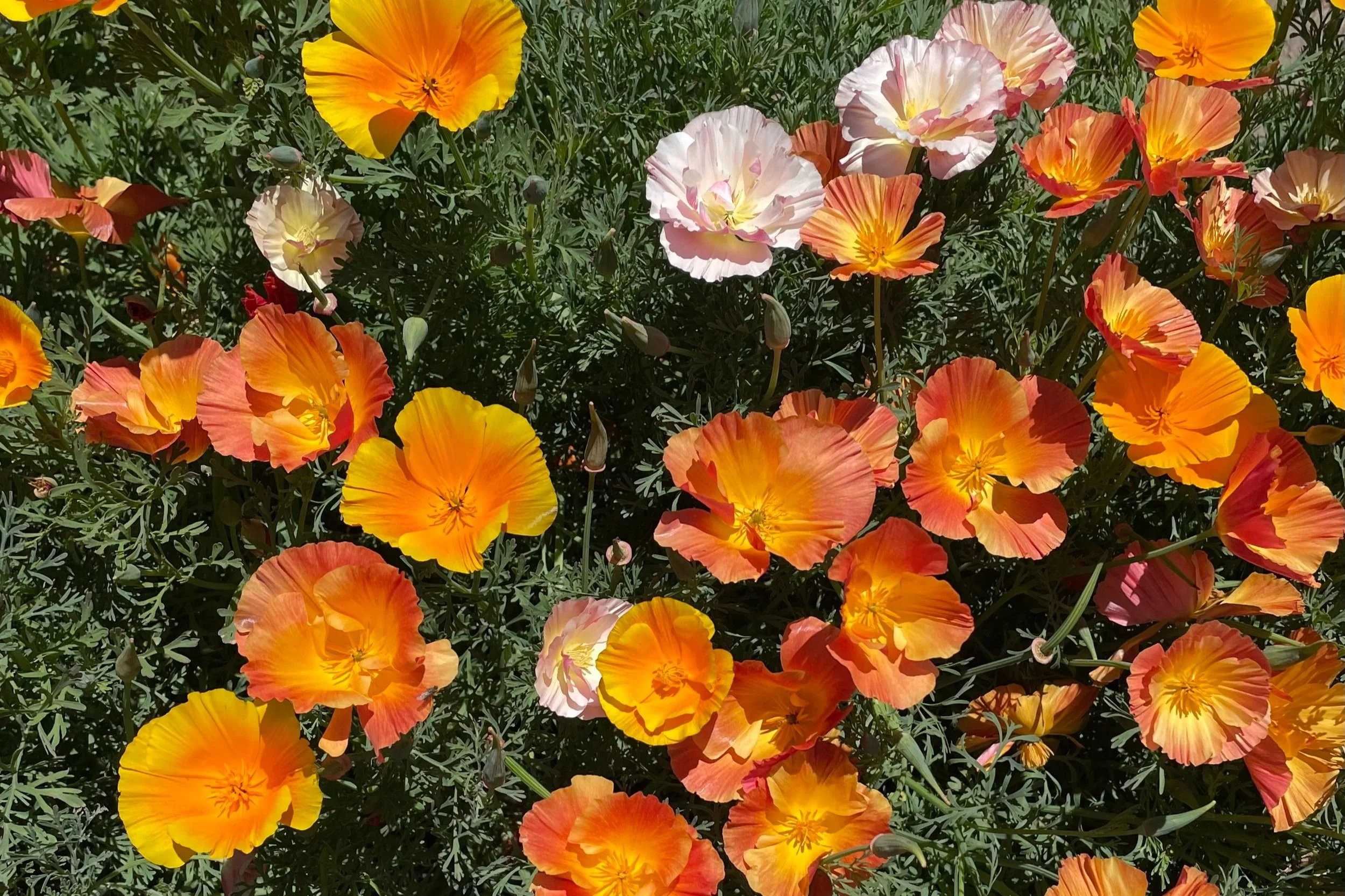
Our fancy California poppies are exploding with color right now in the garden. They have a surprisingly long vase life, and stunningly contrasting petals. They do not need to be cauterized like European poppies. Pro tip: pick a long stem that includes some unopened buds — these should start to bloom in your bouquet as the week goes on.

TURNIPS glazed in miso & butter

Recipe by Claire Saffitz

Have you tried the Hakurei Salad Turnips yet? While we love crunching on them raw as a snack, and slicing them onto our salads, it’s hard to beat the richly satisfying flavor of glazing them with miso and butter. Check this recipe out with this week’s Hakurei Turnips!

  • 1 pound turnips, cut into 1” wedges

  • 2 tablespoons white miso

  • 2 tablespoons unsalted butter

  • 1 teaspoon sugar

  • Kosher salt and freshly ground black pepper

  • 2tablespoons fresh lemon juice

Step 1

Combine turnips, miso, butter, and sugar in a medium skillet, then add water just to cover vegetables. Season with salt and pepper.

Step 2

Bring to a boil over medium-high heat and cook turnips, turning occasionally, until they are tender and liquid is evaporated, 15–20 minutes.

Step 3

Once all the liquid has cooked off, keep cooking turnips, tossing occasionally, until they are golden brown and caramelized and the sauce thickens and glazes the vegetables, about 5 minutes longer.

Step 4

Add lemon juice and a splash of water to pan and swirl to coat turnips. Season with salt and pepper.

FARMER’S LOG

WHEW!

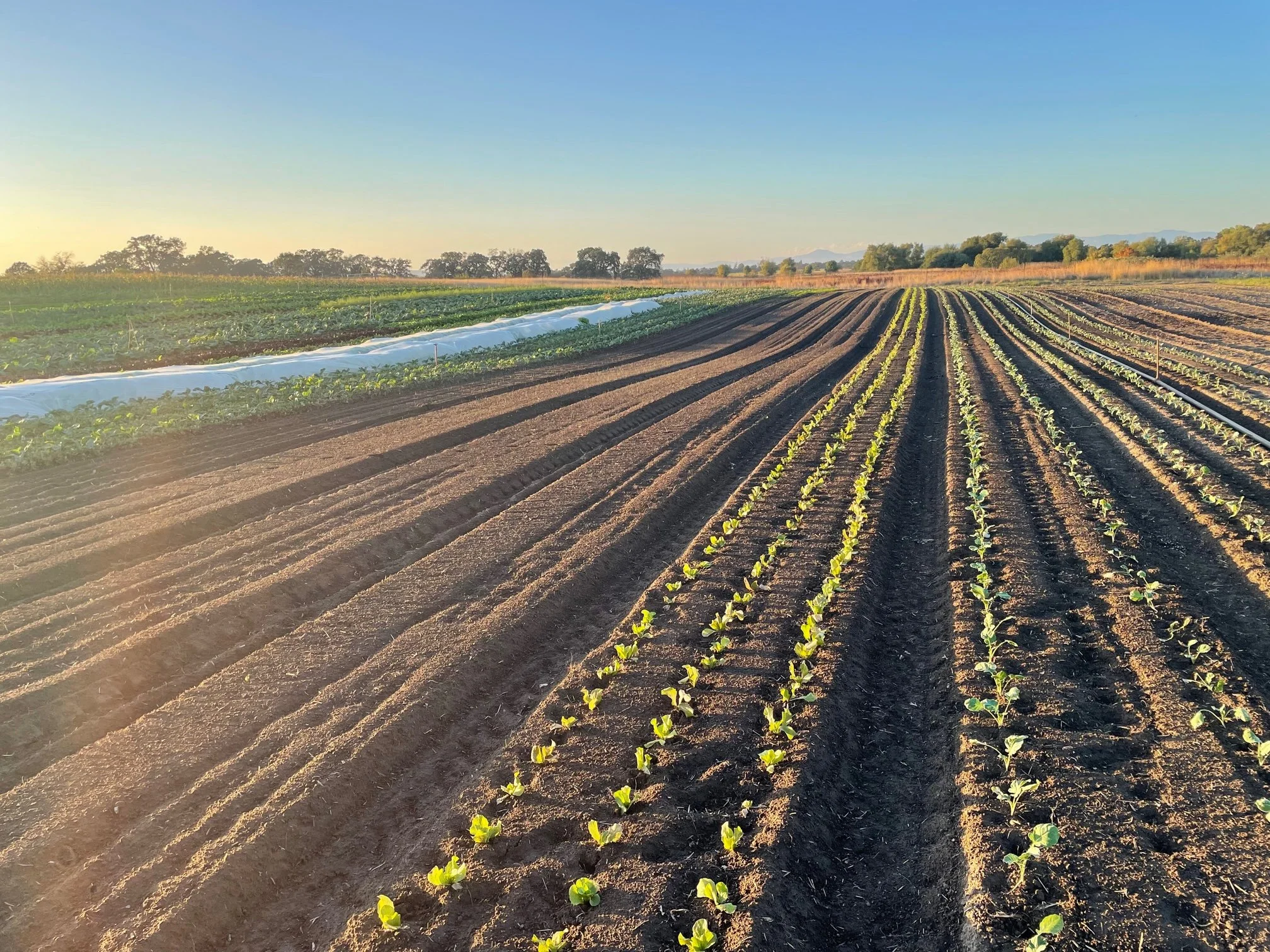
Earlier this afternoon, at around 4pm, Kayta, Grace, Lauren and I finished transplanting the our winter squash transplants in the far field. That last little squash plant (a Sunshine Kabocha, I believe) represented the last transplant of 2022’s great big Spring plant out.

While our harvest season has only just begun, we’ve just finished the lion’s share of the year’s planting by mid-June. Aye, by this time of year 75% of our fields are planted in the year’s potatoes, spring and storage onions, dried corn, winter squash, tomatoes, and peppers and 50% of the year’s carrots and most of the year’s melons and cucumbers are in the ground.

Whew!

The great Spring plant-out has a different rhythm than harvest season. It is infrastructure and equipment heavy: Tractors hum constantly as fields are shaped from cover crop to plantable beds and the irrigation shed gets ransacked daily as the year’s irrigation lines get built. It’s hard on the body: Weekly row-feet needing to be planted is in the thousands of feet before lunch and tomato trellis stake pounding is what’s for dessert.

Always the Great Taskmaster watches over us: A greenhouse full of bursting seedling trays cascading out the front door, demanding a space in the field.

But now, with that Winter Squash planting completed, the greenhouse is like a relative ghost town.

Now, the weeds start demanding our attention and we’ll shift to maintenance of our crops. To cultivating our growing babies. To halting the weeds from encroaching on them too much; to trellising the tomatoes so they can grow tall; to hilling the potatoes to encourage more tubers; to coupling leaks in the irrigation lines and adjusting waterings schedules. And, of course, to harvesting.

We’re looking forward to this phase. We start to reap the tangible rewards of all that hard work — in glowing scallions and plump sugar snap peas — and we get to express a softer side of our farmer selves — observation, care, attention, and sharing.

We hope you enjoy this week’s share!

See you in the strawberries,

David & Kayta